We unleash your business potential by maximize the business innovation.
Send EmailAspartic Acid, L-Aspartic Acid, L-Aspartate, Asparagic Acid, 56-84-8
Aspartic Acid
1. Product Identity
| Property | Details |
|---|---|
| Product Name | Aspartic Acid |
| CAS Number | 56-84-8 |
| Molecular Formula | C₄H₇NO₄ |
| Molecular Weight | 133.10 g/mol |
| Appearance | White crystalline powder |
| Solubility | Soluble in water |
| IUPAC Name | 2-Aminobutanedioic acid |
2. Synonyms and Other Names
| Name | Context |
|---|---|
| L-Aspartic Acid | Biologically active form |
| L-Aspartate | Anionic form |
| Asparagic Acid | Alternative name |
| L-Aminosuccinic Acid | Chemical description |
| Asp | Three-letter code |
| D | One-letter code |
| Aspartic Acid | Common name |
| 2-Aminobutanedioic acid | Systematic name |
| D-Aspartic Acid | D-isomer form |
3. Product Description
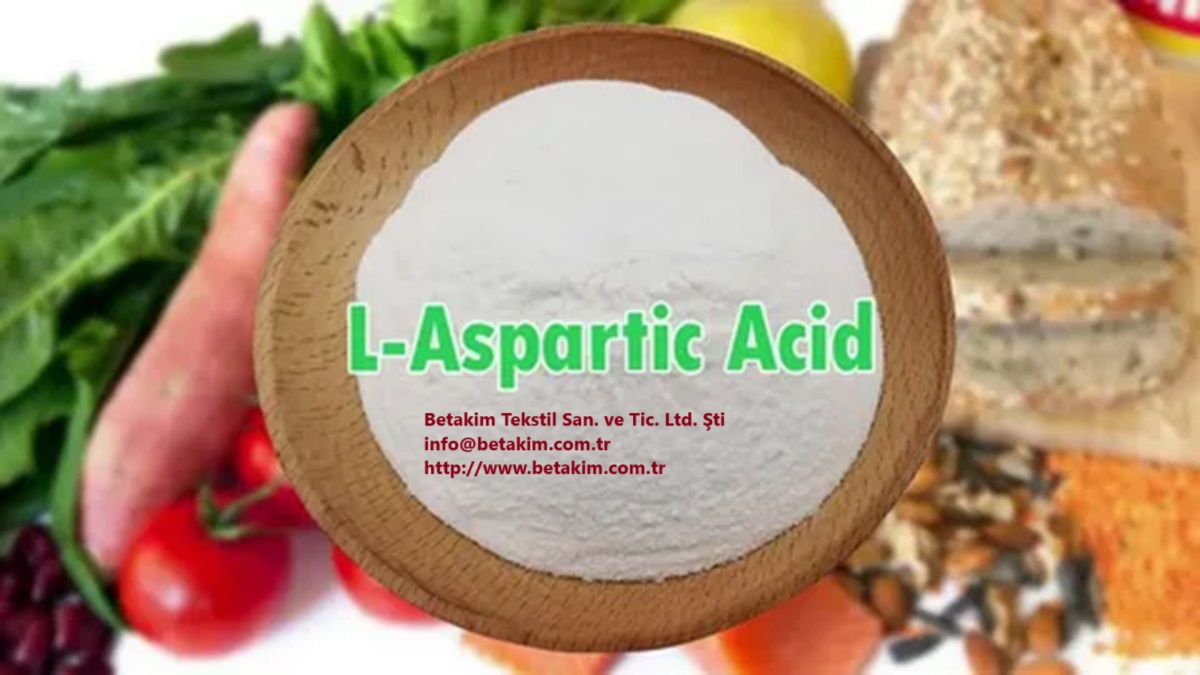
Aspartic acid, also known as L-Aspartic Acid, is one of the 20 standard amino acids that serve as building blocks of proteins. It is a non-essential amino acid, meaning the human body can synthesize it naturally. Its anionic form is called aspartate.
Key Characteristics:
-
One of the 20 standard amino acids in proteins
-
Non-essential amino acid (produced by the body)
-
Exists in both L- and D-isomer forms
-
The biologically active form is L-Aspartic acid
-
White crystalline powder
-
Soluble in water
Important Note: Like many other amino acids, aspartic acid has both L- and D-isomers. The biologically active form, or the form that exists in nature, is L-Aspartic acid. When referred to simply as "aspartic acid" in scientific literature, it typically means L-Aspartic acid.
4. Physical and Chemical Properties
| Property | Value |
|---|---|
| Appearance | White crystalline powder |
| Molecular Formula | C₄H₇NO₄ |
| Molecular Weight | 133.10 g/mol |
| CAS Number | 56-84-8 |
| PubChem CID | 424 |
| Melting Point | 270 °C (decomposes) |
| Solubility | Soluble in water |
| Acidity/Basicity | Acidic amino acid (moves toward positive electrode) |
5. Isomer Forms
| Isomer | Description |
|---|---|
| L-Aspartic Acid | Biologically active form; found in nature; used in protein synthesis |
| D-Aspartic Acid | D-isomer form; involved in hormone regulation; not used in protein synthesis |
Note: These two isomers do not produce the same effects in the body.
6. Biological Functions
| Function | Description |
|---|---|
| Protein Synthesis | One of the 20 standard amino acids that make up proteins |
| Ammonia Detoxification | Helps remove harmful ammonia from the body; prevents ammonia from acting as a toxic substance in the circulatory system that can damage the central nervous system |
| Neurotransmitter | Can be used as a neurotransmitter in the brain |
| Urea Cycle | Plays a role as a metabolite in the urea cycle |
| Gluconeogenesis | Involved as a metabolite during gluconeogenesis |
| Hormone Regulation | D-aspartic acid is involved in testosterone regulation |
7. Health Benefits and Effects
7.1. Testosterone and Male Fertility
| Effect | Description |
|---|---|
| Testosterone Increase | Studies on D-aspartic acid (D-AA) have shown a 42% increase in testosterone levels in 20 out of 23 men (average increase 30-60%) |
| Target Population | Most effective in individuals with low testosterone levels; not beneficial in men with normal or high testosterone levels |
| Sperm Health | Increases sperm count, motility, and mobility |
| Fertility | Men using aspartic acid showed increased birth rates in their partners |
| Erectile Dysfunction | Effective for erectile dysfunction treatment by increasing testosterone levels |
Note: These effects are associated with D-aspartic acid, not L-aspartic acid.
7.2. Energy and Endurance
| Effect | Description |
|---|---|
| Endurance | May increase endurance and resistance to fatigue |
| Fatigue Reduction | Helps reduce chronic fatigue by providing cells with energy for renewal |
7.3. Other Potential Benefits
| Benefit | Description |
|---|---|
| Central Nervous System | Prevents ammonia toxicity that can damage the central nervous system |
| Liver Health | Helps prevent liver problems associated with ammonia accumulation |
8. Applications and Uses
8.1. Dietary Supplements
| Application | Function |
|---|---|
| Sports Nutrition | Used by athletes and bodybuilders to increase energy and endurance |
| Testosterone Support | D-aspartic acid supplements for testosterone enhancement |
| Male Fertility | Supplements to improve sperm count and quality |
8.2. Pharmaceutical Industry
| Application | Function |
|---|---|
| Drug Formulations | Used in pharmaceutical formulations |
| Drug Intermediates | Used in the synthesis of pharmaceutical compounds |
8.3. Agriculture
| Application | Function |
|---|---|
| Fertilizers | Used in fertilizers to promote plant growth |
9. Food Sources
| Food Source | Aspartic Acid Content |
|---|---|
| Corn Protein | Up to 40% |
| Casein | Approximately 31% |
| Uncreamed Cottage Cheese | Approximately 17% |
| Cured Pork Bacon | Approximately 13% |
| Soy Protein | Approximately 9% |
| Beef | 3707 mg per 100g |
| Lentils | 3102 mg per 100g |
| Tuna | 3069 mg per 100g |
| Chicken | 3021 mg per 100g |
| Almonds | 2839 mg per 100g |
Note: L-aspartate can convert to D-aspartate during cooking. Pasteurized milk contains twice as much D-aspartate as raw milk due to the pasteurization process.
10. Deficiency
10.1. Causes of Deficiency
Although the body produces aspartic acid, deficiency can occur if the required daily intake is not met. A healthy adult should consume approximately 500-2000 mg of aspartic acid daily.
10.2. Symptoms of Deficiency
| Symptom | Description |
|---|---|
| Fatigue | Chronic fatigue due to cells lacking energy for renewal |
| Low Testosterone | Decreased testosterone levels |
| Ammonia Toxicity | Accumulation of ammonia and associated liver problems |
| Depression | Mood disorders |
Note: Deficiency is not common because the body can produce aspartic acid.
11. Excess and Toxicity
| Parameter | Details |
|---|---|
| Scientific Evidence | No scientific studies indicate risk factors associated with excessive use |
| Recommendation | Avoid excessive consumption as with all amino acids |
| Safe Use Period | No problems observed with use up to 90 days |
| Long-term Safety | More definitive clinical results needed for long-term safety assessment |
12. Supplements
| Aspect | Information |
|---|---|
| Forms | Available as powder, capsules, tablets |
| Daily Dosage (Supplement) | 2000-3000 mg for adults |
| Daily Dosage (Natural Foods) | 500-2000 mg |
| Usage | Mix powder with water or milk; do not exceed daily recommended amount |
| Brand Selection | Choose reliable and high-quality brands |
| Consultation | Always consult a healthcare professional before use |
13. Aspartic Acid and Exercise Performance
| Aspect | Information |
|---|---|
| Direct Performance Enhancement | Not typically used specifically for performance enhancement |
| Fatigue Reduction | May help reduce fatigue by renewing cells |
| More Effective Alternatives | Amino acids that cannot be produced by the body (like BCAA) have greater positive effects on performance |
| Muscle Development | Studies show D-aspartic acid does not have significant effects on building or repairing lean muscle mass |
14. Safety and Usage
| Aspect | Information |
|---|---|
| Safety | Safe for use through both natural foods and supplements |
| Age Groups | Can be safely consumed by all age groups from infancy (present in breast milk and formula) |
| Pregnancy | Pregnant and breastfeeding women should consult a doctor before use |
| Long-term Use | Safe for up to 90 days; more research needed for long-term safety |
15. Frequently Asked Questions
| Question | Answer |
|---|---|
| Is aspartic acid an essential amino acid? | No, it is non-essential because the body can produce it. |
| Are aspartic acid and aspartate the same? | Yes, aspartate is the anionic form of aspartic acid. |
| Why is aspartic acid acidic? | It is classified as an acidic amino acid that moves toward the positive electrode. |
| Is asparagine acidic or basic? | Asparagine is an acidic amide that moves toward the positive electrode. |
| Is asparagine polar or nonpolar? | Asparagine is a polar amino acid with uncharged side chains. |
| Does aspartic acid increase sperm count? | D-aspartic acid increases sperm count, motility, and mobility. |
| Is aspartic acid important for joint health? | No clinical studies show significance for joint health. |
| Is aspartic acid beneficial for heart health? | No direct proven contribution, but testosterone increase may reduce heart disease risk. |
| Does aspartic acid affect sleep? | No direct studies, but hormone effects and fatigue reduction may have positive effects on sleep. |
16. History
| Event | Year |
|---|---|
| Discovery | First discovered through experiments in 1806 |
| Concept Established | 1827 |
| Discoverers | Chemists Auguste-Arthur Plisson and Étienne Ossian Henry |
| Method | Discovered through hydrolysis of asparagine isolated from asparagus juice |
17. Summary
Aspartic Acid (CAS: 56-84-8, Molecular Formula: C₄H₇NO₄, Molecular Weight: 133.10 g/mol) is one of the 20 standard amino acids that serve as building blocks of proteins. It is a non-essential amino acid, meaning the human body can produce it naturally.
Key Properties:
-
White crystalline powder
-
Soluble in water
-
Exists in both L- and D-isomer forms
-
Biologically active form is L-Aspartic acid
Biological Functions:
-
Protein synthesis
-
Ammonia detoxification
-
Neurotransmitter in the brain
-
Metabolite in urea cycle and gluconeogenesis
-
Hormone regulation (D-aspartic acid)
Health Benefits:
-
Increases testosterone levels in individuals with low testosterone
-
Improves sperm count, motility, and mobility
-
Enhances male fertility
-
Reduces fatigue and increases endurance
-
Prevents ammonia toxicity
Food Sources:
-
High-protein foods: beef, chicken, tuna
-
Legumes: lentils
-
Nuts: almonds
-
Dairy products
-
Soy and corn proteins
Applications:
-
Dietary supplements for athletes and male fertility
-
Pharmaceutical formulations
-
Agricultural fertilizers
Aspartic acid, particularly its D-isomer, plays an important role in hormone regulation and male reproductive health. While the body can produce it naturally, supplementation may benefit individuals with specific health concerns, especially those related to testosterone levels and fertility.