We unleash your business potential by maximize the business innovation.
Send EmailZinc Mercaptobenzothiazole, Accelerator, ZMBT, ZMBT-80, 155-04-4
ZINC MERCAPTOBENZOTHIAZOLE (ZMBT)
CAS Number: 155-04-4
EC Number (EINECS): 205-840-3
Molecular Formula: C₁₄H₈N₂S₄Zn
Molecular Weight: 397.85 g/mol
REACH Status: Registered
SECTION 1: PRODUCT IDENTIFICATION AND CHEMICAL IDENTITY
| Parameter | Description |
|---|---|
| Chemical Name (IUPAC) | Zinc 2-mercaptobenzothiazole (2-Mercaptobenzothiazole zinc salt) |
| Other Names | ZMBT, Zinc Mercaptobenzothiazole, 2-Benzothiazolethiol zinc salt, Bis(2-benzothiazolylthio)zinc, Zinc 2-Benzothiazolethiolate, Zinc bis(1,3-benzothiazole-2-thiolate) |
| CAS Number | 155-04-4 |
| EC Number (EINECS) | 205-840-3 |
| Molecular Formula | C₁₄H₈N₂S₄Zn |
| Molecular Weight | 397.85 g/mol |
| Chemical Class | Benzothiazole accelerator (organic zinc salt) |
| Structure | Two 2-mercaptobenzothiazole ligands bonded to zinc |
| Appearance | Light yellow to light brown powder |
| Odor | Mild characteristic |
| Purity | ≥ 97.0% (typical commercial grade) |
SECTION 2: PHYSICAL AND CHEMICAL PROPERTIES
| Property | Value |
|---|---|
| Molecular Formula | C₁₄H₈N₂S₄Zn |
| Molecular Weight | 397.85 g/mol |
| Appearance | Light yellow to light brown powder |
| Odor | Mild characteristic |
| Melting Point | ~300 °C (decomposes) |
| Density | ~1.70 g/cm³ (20°C) |
| Bulk Density | ~400 - 600 kg/m³ |
| Solubility in Water | Insoluble |
| pH (Aqueous) | Neutral (~7.0) |
| Loss on Drying | ≤ 0.4% |
| Zinc Content | 20.0 - 25.0% |
| Free MBT Content | ≤ 2.0% |
| Residue on Sieve (150 µm) | ≤ 0.1% |
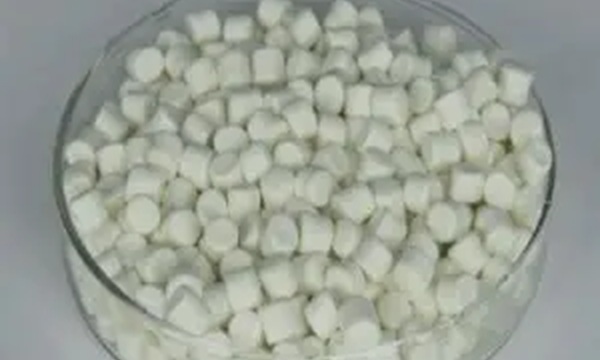
| Commercial Forms | Powder, granule, masterbatch (ZMBT-80 - 80% active) |
| Autoignition Temperature | > 400 °C |
| Explosion Risk | Dust/air mixtures may be explosive |
SECTION 3: SOLUBILITY PROFILE
| Solvent | Solubility | Condition |
|---|---|---|
| Water | Insoluble | - |
| Acetone | Soluble (10 g/100 mL) | - |
| Alkalies | Soluble | - |
| Alkali Carbonates | Soluble | - |
| Alcohol | Partially soluble | - |
| Ether | Partially soluble | - |
| Benzene | Partially soluble | - |
| Chloroform | Partially soluble | - |
| Carbon Tetrachloride | Partially soluble | - |
| Kerosene | Insoluble | - |
| Ethyl Acetate | Insoluble | - |
Critical Note: ZMBT is insoluble in water but soluble in acetone and alkaline solutions. This solubility profile affects its incorporation into rubber formulations and its dispersion in latex systems.
SECTION 4: CHEMICAL PROPERTIES AND REACTIONS
| Property | Description |
|---|---|
| Chemical Class | Benzothiazole accelerator (organic zinc salt) |
| Functional Group | 2-Mercaptobenzothiazole zinc salt |
| Reactivity | Decomposes in strong acids and alkalies |
| Thermal Decomposition | Decomposes at ~300°C; releases toxic sulfur oxides, nitrogen oxides, and zinc fumes |
| Critical Curing Temperature | ~138°C |
| pH Sensitivity | Decomposes in acidic or basic environments |
| Oxidation | Reacts with strong oxidizers |
4.1. Rubber Curing Mechanism
ZMBT is a secondary accelerator belonging to the benzothiazole class:
-
Exhibits transition properties between MBT and MBTS
-
Provides the longest scorch safety (processing safety)
-
Curing speed is moderate
-
Shows synergistic effect with MBTS/DPG system
-
Provides lower crosslink density compared to MBT and MBTS
-
In latex applications, provides higher modulus without extending curing time
4.2. Stability
| Parameter | Information |
|---|---|
| Thermal Stability | Stable up to ~300°C |
| Light Sensitivity | May decompose under direct sunlight |
| Moisture Sensitivity | Sensitive to moisture |
| Incompatibilities | Strong acids, strong alkalies, strong oxidizers |
| Decomposition Products | Sulfur oxides (SOₓ), nitrogen oxides (NOₓ), zinc oxide (ZnO), mercaptobenzothiazole |
SECTION 5: SPECTRAL DATA
| Parameter | Value |
|---|---|
| FTIR (KBr, cm⁻¹) | 3050 (C-H aromatic), 1590 (C=N), 1450 (C=C), 1380 (C-N), 1250 (C-S), 1100 (C-S-C), 620 (Zn-S) |
| UV (λmax, MeOH) | 280 nm, 320 nm |
| Mass Spectrometry (ESI-MS) | 398 [M]⁺, 333 [M - C₇H₅NS₂]⁺, 167 [C₇H₅NS₂]⁺ |
| XRD | Crystalline structure |
SECTION 6: PURITY AND QUALITY SPECIFICATIONS
| Parameter | Standard Grade | High Purity Grade |
|---|---|---|
| Purity (HPLC) | ≥ 97.0% | ≥ 99.0% |
| Appearance | Light yellow to light brown powder | Light yellow powder |
| Melting Point | ~300°C (decomposes) | ~300°C (decomposes) |
| Loss on Drying (105°C, 2h) | ≤ 0.4% | ≤ 0.2% |
| Ash Content | ≤ 0.5% | ≤ 0.3% |
| Zinc Content | 20.0 - 25.0% | 21.0 - 24.0% |
| Free MBT | ≤ 2.0% | ≤ 1.0% |
| Free Zinc Oxide | ≤ 0.5% | ≤ 0.3% |
| Residue on Sieve (150 µm) | ≤ 0.1% | ≤ 0.05% |
| Color (Hunter L*a*b*) | Not specified | Specified |
| Density (20°C) | ~1.70 g/cm³ | ~1.70 g/cm³ |
| pH (Suspension) | 6.0 - 8.0 | 6.5 - 7.5 |
SECTION 7: MAJOR APPLICATIONS AND END-USES
7.1. Rubber Accelerator (Primary Application)
| Application | Function | Suitability |
|---|---|---|
| Natural Rubber (NR) | Secondary accelerator, wide curing range | High |
| Synthetic Rubber (SBR, NBR, IR, BR, EPDM) | Widespread use in technical rubber systems | High |
| Latex Systems | Primary accelerator (with ZDMC/ZDEC) | High |
| Colored Rubber Products | Non-staining, non-discoloring | High |
| Automotive Tires | Suitable as secondary accelerator | High |
| Technical Rubber Products | Seals, hoses, vibration parts, belts | High |
| Conveyor Belts | Provides durability and abrasion resistance | High |
| Cable Insulations | Rubber compounds for electrical insulation | High |
| Footwear Products | Rubber soles, colored products | High |
| Sponge Rubber | Latex foam production | High |
| Medical Products | Limited due to nitrosamine risk | Limited |
| Food Contact Products | Subject to FDA/BgVV regulations | Regulated |
7.2. Corrosion Inhibitor
| Application | Function | Suitability |
|---|---|---|
| Metal Surfaces | Used as corrosion inhibitor | Moderate |
| Lubricant Additives | Antioxidant and corrosion inhibiting additive | Moderate |
7.3. Dosage Levels
| Application | Dosage (phr) |
|---|---|
| General Rubber Use | 0.5 - 1.5 |
| Latex Systems | 0.3 - 1.0 |
| High Modulus Applications | 1.0 - 2.0 |
| Food Contact Applications | According to FDA limits |
SECTION 8: COMPARATIVE PROPERTIES
8.1. Comparison of Thiazole Accelerators
| Property | ZMBT | MBT | MBTS |
|---|---|---|---|
| Chemical Structure | Zinc salt | Free thiol | Disulfide |
| Scorch Safety | Highest | Low | Moderate |
| Curing Speed | Moderate | Fast | Moderate |
| Crosslink Density | Low | High | High |
| Staining | Low | High | Low |
| Discoloration | Low | High | Low |
| Toxicity | Low | Moderate | Moderate |
| Food Contact Approval | Yes (FDA) | Limited | Limited |
SECTION 9: INDUSTRY SUITABILITY MATRIX
| Industry | Suitability | Description |
|---|---|---|
| Natural Rubber | High | Provides wide curing range and scorch safety |
| Synthetic Rubber (SBR, NBR, EPDM) | High | Widespread use in technical rubber systems |
| Latex Systems | High | Can be used at low dosages; provides high modulus |
| Automotive Tires | High | Suitable as secondary accelerator |
| Colored Rubber Products | High | Non-staining, non-discoloring |
| Technical Rubber | High | Ideal for seals, hoses, vibration parts |
| Footwear Industry | High | Preferred in colored and light-colored soles |
| Cable Industry | High | Reliable in insulation materials |
| Conveyor Belts | High | Abrasion resistance and aging resistance |
| Medical Products | Limited | Careful use required due to nitrosamine risk |
| Food Contact | Regulated | FDA 21 CFR 177.2600, 175.105, 178.3120 and BgVV compliant |
| Coatings | Moderate | Used in some coating formulations |
SECTION 10: PRODUCT VARIANTS AND COMMERCIAL FORMULATIONS
10.1. Commercial Forms
| Form | Description |
|---|---|
| ZMBT Powder | 100% active, fine powder form |
| ZMBT Granule | Lower dusting than powder, better flow |
| ZMBT-80 | 80% active masterbatch (dispersed in rubber or EVA) |
| ZMBT-75 | 75% active masterbatch form |
10.2. Trade Names
| Brand | Manufacturer |
|---|---|
| Rhenogran ZMBT | Rhein Chemie |
| Vulkacit ZMBT | Lanxess |
| Altax ZMBT | Vanderbilt |
| Accelerator MZ | Various manufacturers |
| Bantex ZMBT | Bantex |
| Zenite ZMBT | Zenite |
| Pennac ZT | Pennwalt |
| Oxaf ZMBT | Oxaf |
SECTION 11: OTHER NAMES AND SYNONYMS
| Type | Alternative Names |
|---|---|
| Chemical Names | Zinc 2-Mercaptobenzothiazole, 2-Mercaptobenzothiazole zinc salt, Zinc 2-Benzothiazolethiolate, Zinc bis(1,3-benzothiazole-2-thiolate), Zinc benzothiazol-2-ylthiolate, Bis(2-benzothiazolylthio)zinc |
| Abbreviations | ZMBT, MZ, ZMBT-80, ZMBT-75 |
| Trade Names | Rhenogran ZMBT, Vulkacit ZMBT, Altax ZMBT, Accelerator MZ, Bantex, Zenite, Pennac ZT, Oxaf |
| CAS Number | 155-04-4 |
| EC Number | 205-840-3 |
| RTECS Number | DL7000000 |
SECTION 12: ADVANTAGES AND LIMITATIONS
12.1. Advantages
| Advantage | Description |
|---|---|
| Superior Scorch Safety | Longest scorch safety among thiazoles |
| Wide Curing Range | Provides formulation flexibility |
| Non-Staining / Non-Discoloring | Can be used in colored and light-colored products |
| Low Toxicity | Safer work environment compared to MBT/MBTS |
| High Modulus in Latex | Increases modulus without extending cure time |
| Good Aging Resistance | Long service life in technical rubber |
| Food Contact Approval | Regulated under FDA and BgVV |
| Latex Stability | Provides stability in latex formulations |
| Versatile Use | Can be used as both accelerator and inhibitor |
| Alternative to MBT | Solution to MBT's disadvantages (staining, toxicity) |
12.2. Limitations
| Limitation | Description |
|---|---|
| Moderate Curing Speed | Secondary accelerator may be needed for fast systems |
| Low Crosslink Density | Lower crosslink density compared to MBTS/DPG system |
| Nitrosamine Risk | Moderate nitrosamine risk (limited in medical applications) |
| High Temperature Sensitivity | Decomposes at ~300°C; process control important |
| Water Insolubility | Difficulty in dispersion in aqueous systems |
| Acid/Alkali Sensitivity | Decomposes in strong acids and alkalies |
| Dusting | Powder form poses inhalation risk |
SECTION 13: TOXICOLOGY AND HEALTH EFFECTS
| Parameter | Value / Description |
|---|---|
| GHS Classification | Warning |
| Hazard Statements | H315 (Causes skin irritation), H319 (Causes serious eye irritation), H317 (May cause allergic skin reaction) |
| Precautionary Statements | P261 (Avoid breathing dust), P280 (Wear protective gloves/eye protection/face protection), P302+P352 (IF ON SKIN: Wash with plenty of water), P305+P351+P338 (IF IN EYES: Rinse cautiously with water for several minutes) |
| RTECS Number | DL7000000 |
| Oral LD50 (Rat) | > 2,000 mg/kg (low toxicity) |
| Dermal LD50 (Rabbit) | > 2,000 mg/kg |
| Skin Irritation | Irritating; may cause contact dermatitis |
| Eye Irritation | Irritating |
| Skin Sensitization | Positive (allergic contact dermatitis) |
| Inhalation | Dust may cause respiratory tract irritation |
| Mutagenicity | Negative (Ames test) |
| Carcinogenicity | Not classified |
| Decomposition Products | Sulfur oxides (SOₓ), nitrogen oxides (NOₓ), zinc oxide (ZnO), mercaptobenzothiazole |
| Target Organs | Skin, eyes, respiratory system |
SECTION 14: ECOTOXICOLOGY AND ENVIRONMENTAL BEHAVIOR
| Parameter | Value / Description |
|---|---|
| Fish Toxicity (LC50, 96 hours) | > 100 mg/L (low toxicity) |
| Daphnia Toxicity (EC50, 48 hours) | > 100 mg/L |
| Algae Toxicity (EC50, 72 hours) | > 100 mg/L |
| Bioaccumulation Factor (BCF) | Low to moderate |
| Biodegradability | Slow biodegradation |
| Soil Mobility | Low mobility |
| Bioaccumulation Potential | Low to moderate |
| Persistence | Moderate (slow degradation) |
| Water Hazard Class (WGK Germany) | WGK 2 (hazardous to water) |
Ecotoxicological Summary: ZMBT shows low toxicity to aquatic organisms (LC₅₀ > 100 mg/L). Due to slow biodegradability, it may exhibit persistence in the environment. Classified as WGK 2 (hazardous to water). Release to the environment should be avoided.
SECTION 15: SAFETY MEASURES AND PERSONAL PROTECTIVE EQUIPMENT
| Parameter | Information |
|---|---|
| Respiratory Protection | Dust mask (FFP2/P3) or NIOSH approved particulate respirator |
| Gloves | Chemically resistant (nitrile, neoprene, butyl rubber) |
| Eye Protection | Chemical safety goggles |
| Body Protection | Chemical-resistant apron, work clothing |
| Ventilation | Local exhaust ventilation and general ventilation |
| Engineering Controls | Closed systems, dust collection systems |
| Precautionary Statements | P261 (Avoid breathing dust), P280 (Wear protective gloves/eye protection/face protection), P302+P352 (IF ON SKIN: Wash with plenty of water), P305+P351+P338 (IF IN EYES: Rinse cautiously with water for several minutes) |
SECTION 16: STORAGE INFORMATION
| Parameter | Information |
|---|---|
| Storage Conditions | Cool, dry, well-ventilated area |
| Temperature | Room temperature (15-25°C) |
| Container | Tightly closed original packaging (PE film bag, PP woven bag, or laminated kraft bag) |
| Materials to Avoid | Fire, direct sunlight, moisture, strong acids and alkalies |
| Moisture Sensitivity | Sensitive to moisture |
| Shelf Life | 24 months (under recommended conditions) |
| Packaging | 25 kg bag, 500 kg and 1000 kg big-bag |
| Special Notes | Store separately from other chemicals; prevent dust formation |
SECTION 17: TRANSPORT INFORMATION
| Parameter | Information |
|---|---|
| UN Number | UN 3077 |
| Hazard Class | 9 (Miscellaneous dangerous goods) |
| Packing Group | III |
| Proper Shipping Name | Environmentally hazardous substance, solid, n.o.s. (ZMBT) |
| Marine Pollutant | Yes |
| ADR/RID | UN 3077, Class 9, PG III |
| IMDG Code | UN 3077, Class 9, PG III |
| IATA (Air) | UN 3077, Class 9, PG III |
| HS Code | 2934.20.8000 |
| Transport Notes | Keep away from heat and fire; prevent leakage |
SECTION 18: FIRE-FIGHTING MEASURES
| Parameter | Information |
|---|---|
| Fire Hazard | Combustible dust |
| Extinguishing Media | Water fog, dry chemical, CO₂, foam |
| Special Hazards | When heated, releases toxic fumes (sulfur oxides, nitrogen oxides, zinc) |
| Decomposition Products | Sulfur oxides (SOₓ), nitrogen oxides (NOₓ), zinc oxide (ZnO) |
| Protective Equipment | Self-contained breathing apparatus (SCBA), full protective clothing |
| Explosion Risk | Dust/air mixtures may be explosive |
| Water Use | Prevent fire-fighting water from entering the environment |
SECTION 19: ACCIDENTAL RELEASE AND CLEANUP
| Parameter | Information |
|---|---|
| Personal Protection | Gloves, safety goggles, dust mask (FFP2/P3) |
| Ventilation | Increase ventilation |
| Control | Prevent dust formation; contain spill |
| Cleanup Methods | Carefully sweep or vacuum while preventing dust formation; collect in sealed containers |
| Environmental Precautions | Prevent entry into drains, sewers, and water bodies |
| Waste Disposal | According to local regulations; approved landfill or incineration |
SECTION 20: FIRST AID MEASURES
| Exposure Route | Action |
|---|---|
| Inhalation | Move person to fresh air. If breathing difficulty, administer oxygen. If breathing stops, perform artificial respiration. Seek medical attention. |
| Skin Contact | Remove contaminated clothing. Wash with soap and plenty of water for at least 15 minutes. If irritation/redness persists, seek medical attention. |
| Eye Contact | Rinse with plenty of water for at least 15 minutes. Remove contact lenses. If irritation persists, seek medical attention. |
| Ingestion | Rinse mouth. Activated charcoal may be administered (240 mL water/30 g charcoal; adult 25-100 g). Do NOT induce vomiting. Seek medical attention. |
SECTION 21: REGULATORY INFORMATION
| Region / Authority | Status |
|---|---|
| EU REACH (EC 1907/2006) | Registered |
| Turkey KKDİK | Registration required |
| USA TSCA | Listed |
| USA FDA | Regulated for food contact: 21 CFR 177.2600, 175.105, 178.3120 |
| USA OSHA | Regulated |
| Germany BgVV | XXI, Category 3-4 compliant |
| EU Cosmetics Regulation | Not permitted (not listed for cosmetic applications) |
| Japan ENCS | Listed |
| China IECSC | Listed |
| Korea KECL | Listed |
| Australia AICS | Listed |
| Canada DSL | Listed |
| EINECS | 205-840-3 |
| RTECS | DL7000000 |
| GHS Classification | H315, H319, H317 |
SECTION 22: SUMMARY AND CRITICAL WARNINGS
Basic Properties
| Property | Value |
|---|---|
| Appearance | Light yellow to light brown powder |
| CAS | 155-04-4 |
| Formula | C₁₄H₈N₂S₄Zn |
| Molecular Weight | 397.85 g/mol |
| Melting Point | ~300°C (decomposes) |
| Density | ~1.70 g/cm³ |
| Water Solubility | Insoluble |
| Primary Use | Rubber accelerator (benzothiazole class) |
| UN Number | UN 3077 |
| Key Industries | Automotive, tire, technical rubber, latex, footwear, cable |
CRITICAL WARNINGS
-
Superior Scorch Safety: ZMBT provides the longest scorch safety among thiazole accelerators. This is critical for processing safety in complex mold curing operations. Compared to MBT and MBTS, it offers a wider processing safety margin.
-
Secondary Accelerator: Exhibits transition properties between MBT and MBTS. Compared to MBTS/DPG system, it provides lower crosslink density; therefore, secondary accelerators (DPG, TMTD, etc.) should be used in applications requiring high crosslink density.
-
Latex Applications: When used with ZDMC/ZDEC in latex systems, it provides higher modulus without extending curing time. It does not affect latex stability and is preferred in latex foam production.
-
Non-Staining / Non-Discoloring: Can be safely used in colored and light-colored rubber products. Unlike MBT, it does not cause staining or discoloration in products.
-
Food Contact Approval: Regulated for food contact under FDA (21 CFR 177.2600, 175.105, 178.3120) and German BgVV. Can be used in rubber products that come into contact with food.
-
Low Toxicity: Has a lower toxicity profile compared to MBT and MBTS. Shows low acute toxicity with oral LD₅₀ > 2,000 mg/kg.
-
Nitrosamine Risk: Carries moderate nitrosamine risk. Careful evaluation is required in medical and sensitive applications. For low-nitrosamine formulations, alternative accelerators (TBzTD, ZBEC) should be considered.
-
Chemical Incompatibilities: Decomposes in strong acids and alkalies. Contact with these substances should be avoided.
-
Dusting and Inhalation Risk: Powder form may cause respiratory tract irritation and allergic skin reactions (H317). Proper dust control and personal protective equipment are mandatory.
-
Transport: Classified as UN 3077, Class 9, Packing Group III. Considered a marine pollutant.
-
Storage: Should be stored in cool, dry, well-ventilated areas. Protect from moisture, direct sunlight, and ignition sources.
-
Crosslink Density: Provides lower crosslink density compared to MBT and MBTS. Therefore, additional accelerator or sulfur adjustment may be required in applications requiring high hardness or modulus.
-
Curing Speed: Has moderate curing speed. In fast-curing systems, should be supported by secondary accelerators (DPG, TMTD, ZDC).
-
Masterbatch Use: ZMBT-80 (80% active masterbatch in rubber or EVA) provides lower dusting, better dispersion, and easier dosage compared to powder.
-
Sustainability: Due to nitrosamine risk, there is a trend toward transitioning to low-nitrosamine accelerators (TBzTD, ZBEC) for sustainable and safe rubber production.
IMPORTANT DISCLAIMER: This Technical Data Sheet (TDS) is for informational purposes only and is based on available scientific data. The user is solely responsible for determining the product's suitability for their specific application and for complying with all applicable local, national, and international regulations. For complete safety, storage, handling, transportation, disposal, and regulatory compliance information, always refer to the official Safety Data Sheet (SDS/MSDS) provided by the manufacturer/supplier. Users are responsible for testing the product in their own processes and applications. All local, national, and international regulations must be followed when working with ZMBT.