We unleash your business potential by maximize the business innovation.
Send EmailAlSr Master Alloy, AlSr10, AlSr15, AlSr20, Strontium Modifier Alloy, Sr Grain Modifier, 7446-09-5, 7429-90-5, 7439-89-6
ALUMINUM STRONTIUM (AlSr) MASTER ALLOY
AlSr Grain Modifier / Eutectic Silicon Modifier
CAS Numbers: 7429-90-5 (Al), 7446-09-5 (Sr), 7440-21-3 (Si), 7439-89-6 (Fe)
1. IDENTIFICATION
| Property | Information |
|---|---|
| Product Name | Aluminum Strontium Master Alloy (AlSr) |
| Synonyms | AlSr master alloy, Strontium modifier, Sr grain modifier, Eutectic silicon modifier |
| Composition | Aluminum (Al) + Strontium (Sr) + trace elements |
| CAS Numbers | 7429-90-5 (Aluminum) 7446-09-5 (Strontium) 7440-21-3 (Silicon – impurity) 7439-89-6 (Iron – impurity) |
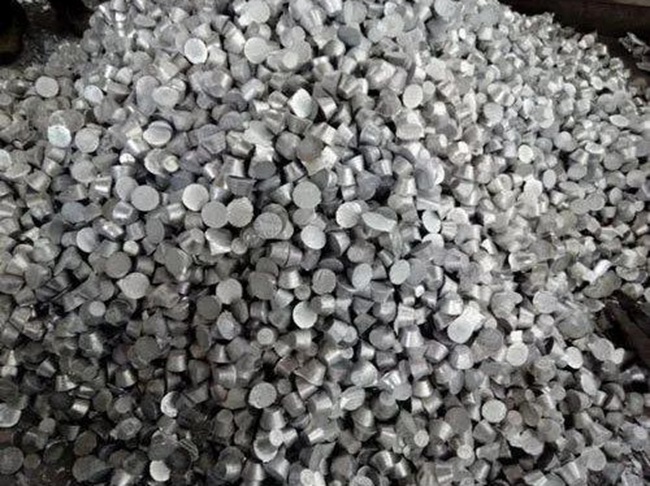
| Appearance | Gray metallic solid |
| Forms | Rod (stick), Coil (spiral/wire), Waffle ingot |
Note: The alloy itself does not have a dedicated CAS number; the constituent elements are used for identification.
2. STANDARD GRADES & COMPOSITIONS
| Grade | Strontium (Sr) % | Aluminum (Al) % | Si max % | Fe max % | Other (each) max % |
|---|---|---|---|---|---|
| AlSr10 | 9.0 – 11.0 | Balance | 0.30 | 0.30 | 0.05 |
| AlSr15 | 14.0 – 16.0 | Balance | 0.30 | 0.30 | 0.05 |
| AlSr20 | 19.0 – 21.0 | Balance | 0.30 | 0.30 | 0.05 |
Typical Specifications:
| Element | AlSr10 (wt%) | AlSr15 (wt%) | AlSr20 (wt%) |
|---|---|---|---|
| Strontium (Sr) | 9.0 – 11.0 | 14.0 – 16.0 | 19.0 – 21.0 |
| Silicon (Si) | ≤ 0.30 | ≤ 0.30 | ≤ 0.30 |
| Iron (Fe) | ≤ 0.30 | ≤ 0.30 | ≤ 0.30 |
| Calcium (Ca) | ≤ 0.10 | ≤ 0.10 | ≤ 0.10 |
| Other (total) | ≤ 0.30 | ≤ 0.30 | ≤ 0.30 |
| Aluminum (Al) | Balance | Balance | Balance |
3. PHYSICAL PROPERTIES
| Property | Value |
|---|---|
| Density (20°C) | ~2.6 – 2.7 g/cm³ (similar to aluminum) |
| Melting Point | ~660 °C (1,220 °F) – aluminum matrix |
| Appearance | Gray, metallic luster |
| Forms | Rod (stick), Coil (spiral/wire), Waffle ingot |
| Thermal Conductivity | Similar to aluminum (~237 W/(m·K)) |
| Electrical Conductivity | Similar to aluminum (good conductor) |
4. CHEMICAL PROPERTIES
| Property | Information |
|---|---|
| Chemical Class | Metal alloy (Al-Sr system) |
| Active Phase | Al₄Sr (Aluminum Strontide) intermetallic |
| Sr Recovery | 70-90% (depends on addition method and temperature) |
| Reactivity | Strontium is highly reactive with oxygen, moisture, and hydrogen |
| Oxidation | Sr oxidizes rapidly in air; store in sealed, dry packaging |
| Reaction with Water | Sr reacts with water to form Sr(OH)₂ and H₂ |
| Fading Effect | Modifying effect fades over time (typically 30-60 minutes in the melt) |
Key Intermetallic Phase:
| Phase | Formula | Role |
|---|---|---|
| Al₄Sr | Aluminum Strontide | Primary modifier; supplies Sr to the melt |
Modification Mechanism:
| Stage | Description |
|---|---|
| 1. Addition | AlSr master alloy is added to molten AlSi alloy (typically 700-750°C) |
| 2. Dissolution | The aluminum matrix dissolves, releasing Sr into the melt |
| 3. Sr Distribution | Sr distributes uniformly in the melt |
| 4. Si Phase Modification | Sr alters the growth mode of eutectic silicon |
| 5. Morphology Change | Silicon changes from acicular (needle-like) to fibrous/spheroidal |
| 6. Result | Improved ductility, strength, and fatigue resistance |
5. MODIFICATION EFFECT ON AlSi ALLOYS
| Property | Unmodified (Acicular Si) | Modified (Fibrous/Spheroidal Si) |
|---|---|---|
| Silicon Morphology | Needle-like (acicular) | Fibrous / Spheroidal |
| Tensile Strength | Lower | Higher (20-40% increase) |
| Elongation (Ductility) | Very low (1-3%) | Higher (5-15% increase) |
| Fatigue Strength | Poor | Good |
| Impact Resistance | Poor | Good |
| Machinability | Poor | Good |
| Pressure Tightness | Poor | Good |
Visual Comparison:
Unmodified (Acicular):     Modified (Fibrous):
     |                         ~
    /|\                       /~~\
   / | \                     /~~~~\
  /  |  \                   /~~~~~~\
     |                         ~
(Needle-like silicon)    (Spheroidal silicon)
6. APPLICATIONS
6.1. Aluminum-Silicon Casting Alloys (Primary Use)
| Application | Alloy Series | Function |
|---|---|---|
| Engine Blocks | AlSi7Mg, AlSi9Cu3, AlSi12Cu | Eutectic silicon modification |
| Cylinder Heads | AlSi7Mg, AlSi10Mg | Improved ductility and fatigue resistance |
| Pistons | AlSi12, AlSi18 | Silicon morphology control |
| Wheels (Rims) | A356, A357 | Enhanced mechanical properties |
| Chassis Components | AlSi10Mg | Better impact resistance |
| Suspension Parts | AlSi7Mg | Improved elongation |
6.2. Automotive Industry
| Application | Alloy Series | Function |
|---|---|---|
| Engine Blocks | AlSi9Cu3, AlSi12Cu | Required for high-performance castings |
| Cylinder Heads | AlSi7Mg | Mandatory for quality castings |
| Intake Manifolds | AlSi10Mg | Improved ductility |
| Water Pumps | AlSi9Cu3 | Better pressure tightness |
| Brake Components | A356 | Enhanced mechanical properties |
6.3. Aerospace Industry
| Application | Alloy Series | Function |
|---|---|---|
| Structural Castings | A356, A357 | High-strength, high-ductility castings |
| Airframe Components | A356 | Fatigue resistance improvement |
6.4. General Casting
| Application | Function |
|---|---|
| Low Pressure Die Casting (LPDC) | Silicon modification for quality castings |
| Gravity Die Casting (Permanent Mold) | Improved mechanical properties |
| Sand Casting | Enhanced ductility and machinability |
| High Pressure Die Casting (HPDC) | Limited use (rapid solidification reduces need) |
7. TYPICAL ADDITION RATES
| Target Sr Level (ppm) | AlSr10 (kg/ton) | AlSr15 (kg/ton) | AlSr20 (kg/ton) |
|---|---|---|---|
| 50 ppm | 0.5 – 0.6 | 0.3 – 0.4 | 0.25 – 0.30 |
| 100 ppm | 1.0 – 1.2 | 0.7 – 0.8 | 0.50 – 0.60 |
| 150 ppm | 1.5 – 1.8 | 1.0 – 1.2 | 0.75 – 0.90 |
| 200 ppm | 2.0 – 2.4 | 1.3 – 1.6 | 1.00 – 1.20 |
| 300 ppm | 3.0 – 3.6 | 2.0 – 2.4 | 1.50 – 1.80 |
Formula:
Addition rate (kg/ton) = (Target Sr ppm × 1000) / (% Sr in master alloy × 10,000)
Simplified: Addition (kg/ton) = Target Sr (ppm) / (% Sr in master alloy × 10)
Example: Target Sr = 150 ppm, Master alloy = AlSr10 (10% Sr)
Addition = 150 / (10 × 10) = 150 / 100 = 1.5 kg/ton
Typical Addition Ranges:
| Alloy Type | Typical Addition | Target Sr (ppm) |
|---|---|---|
| AlSi7Mg (A356) | 1.0 – 2.0 kg/ton | 100 – 200 |
| AlSi9Cu3 | 1.5 – 2.5 kg/ton | 150 – 250 |
| AlSi12Cu | 1.0 – 2.0 kg/ton | 100 – 200 |
| AlSi10Mg | 1.0 – 1.5 kg/ton | 100 – 150 |
8. FADING (LOSS OF MODIFICATION)
| Parameter | Information |
|---|---|
| Fading Mechanism | Sr reacts with oxygen, hydrogen, and other impurities; forms SrO, SrH₂, SrAl₂Si₂ |
| Typical Fading Time | 30 – 60 minutes (depending on melt conditions) |
| Effects of Fading | Loss of modification; silicon reverts to acicular morphology |
| Prevention | Add Sr as late as possible; keep holding times short; use protective cover fluxes |
Fading Rate Estimate:
| Time (minutes) | % Sr Remaining (approximate) |
|---|---|
| 0 | 100% |
| 30 | 60-80% |
| 60 | 40-60% |
| 90 | 20-40% |
| 120 | <20% |
9. ADVANTAGES OF AlSr
| Advantage | Description |
|---|---|
| Improved Ductility | Increases elongation from 1-3% to 5-15% |
| Higher Tensile Strength | 20-40% increase compared to unmodified alloys |
| Better Fatigue Resistance | Essential for dynamic loading applications |
| Enhanced Machinability | Reduced tool wear, better surface finish |
| Improved Pressure Tightness | Critical for hydraulic and pneumatic components |
| Reduced Shrinkage Porosity | More uniform solidification |
| Better Impact Resistance | Increased toughness for safety components |
10. COMPARISON WITH OTHER MODIFIERS
| Property | AlSr (Strontium) | AlNa (Sodium) | AlSb (Antimony) | AlRE (Rare Earth) |
|---|---|---|---|---|
| Modification Type | Eutectic | Eutectic | Coarsening | Eutectic |
| Fading | Moderate (30-60 min) | Rapid (10-20 min) | None | Low |
| Over-modification Risk | Low | Yes | No | Low |
| Hydrogen Pickup | Low | High | Low | Low |
| Toxicity | Low | Moderate (Na) | Low | Low |
| Cost | Moderate | Low | Low | High |
| Preferred Use | Permanent mold, LPDC | HPDC (short cycle) | Sand casting | Specialty |
Selection Guide:
| Casting Process | Recommended Modifier |
|---|---|
| Low Pressure Die Casting (LPDC) | AlSr (best results) |
| Gravity Die Casting (Permanent Mold) | AlSr |
| Sand Casting | AlSr or AlSb |
| High Pressure Die Casting (HPDC) | AlNa (short holding time) |
| Long Holding Times (>2 hours) | AlSb (no fading) |
11. STORAGE & HANDLING
| Parameter | Information |
|---|---|
| Storage Conditions | Cool, dry, well-ventilated area; moisture-sensitive |
| Container Requirements | Vacuum-sealed bags, sealed cartons, wooden crates with desiccant |
| Protect From | Moisture, water, acids, air (oxidation) |
| Shelf Life | 6-12 months (under proper storage); Sr oxidizes over time |
| Reactivity | Sr reacts with water to produce Sr(OH)₂ and H₂ (flammable) |
| Incompatible Materials | Water, acids, oxidizing agents |
| Packaging Options | Vacuum-sealed bags (coils/sticks), wooden crates (waffle ingots) |
Handling Notes:
-
AlSr is moisture-sensitive. Do not open packages until ready to use.
-
Pre-heat the master alloy to 100-150°C before addition to remove moisture.
-
Add Sr as late as possible in the casting process to minimize fading.
12. SAFETY & HEALTH INFORMATION
GHS Classification (for the alloy – bulk solid)
| Hazard Class | Category |
|---|---|
| Not classified as hazardous (for solid bulk form) | – |
Notes:
-
The solid master alloy is not classified as hazardous under normal handling conditions.
-
Strontium is highly reactive with water; avoid contact with moisture.
-
Fine dust (from grinding) may be combustible.
-
Fumes from melting may cause respiratory irritation.
First Aid Measures
| Exposure Route | Action |
|---|---|
| Inhalation (Dust/Fumes) | Remove to fresh air. Seek medical attention if respiratory irritation occurs. |
| Skin Contact | Wash with soap and water. |
| Eye Contact | Rinse with plenty of water for 15 minutes. |
| Ingestion | Unlikely for solid form. Seek medical attention if large pieces swallowed. |
Personal Protective Equipment (PPE) for Handling/Melting
| Equipment | Recommendation |
|---|---|
| Respiratory Protection | Dust mask (when grinding); fume respirator (when melting) |
| Hand Protection | Heat-resistant gloves (for handling hot ingots) |
| Eye Protection | Safety glasses with side shields |
| Body Protection | Heat-resistant apron, protective clothing |
13. ENVIRONMENTAL INFORMATION
| Parameter | Information |
|---|---|
| Biodegradability | Not applicable (inorganic metal alloy) |
| Aquatic Toxicity | Low; aluminum and strontium are naturally occurring elements |
| Recyclability | 100% recyclable |
| Waste Disposal | Recycle as scrap metal. Dispose according to local regulations. |
14. TRANSPORT INFORMATION
| Parameter | Information |
|---|---|
| UN Number | Not regulated (solid metal) |
| Hazard Class | None |
| Packing Group | Not applicable |
| Marine Pollutant | No |
15. OTHER MASTER ALLOYS (For Reference)
| Alloy Type | Composition | Grades | Primary Function |
|---|---|---|---|
| AlSr | Al + Sr | AlSr10, AlSr15, AlSr20 | Eutectic Si modification |
| AlTiB | Al + Ti + B | AlTi5B1, AlTi3B1 | Grain refinement |
| AlTiC | Al + Ti + C | AlTi5C0.15, AlTi3C0.15 | Grain refinement (high-Si alloys) |
| AlB | Al + B | AlB3 | Conductivity improvement |
| AlTi | Al + Ti | AlTi10, AlTi15 | Grain refinement (less effective) |
16. SECTORAL COMPATIBILITY
| Sector | Compatibility | Description |
|---|---|---|
| Automotive | High | Engine blocks, cylinder heads, wheels, chassis |
| Aerospace | High | High-strength AlSi castings (A356, A357) |
| General Casting | High | LPDC, gravity die casting, sand casting |
| Construction | Limited | Not typically required for standard profiles |
| Food Packaging | Not suitable | Not used in food contact applications |
| Electrical/Electronics | Limited | Some specialty applications |
17. OTHER NAMES & SYNONYMS
| Turkish Name | English Name |
|---|---|
| Alüminyum Stronsiyum Alaşımı | Aluminum Strontium Alloy |
| AlSr Master Alaşımı | AlSr Master Alloy |
| Stronsiyum Modifikasyon Alaşımı | Strontium Modification Alloy |
| AlSr10 / AlSr15 / AlSr20 | AlSr10 / AlSr15 / AlSr20 |
| Sr Tane Düzenleyici | Sr Grain Modifier |
| AlSr Çubuk / Tel | AlSr Rod / Wire |
| AlSr Spiral | AlSr Coil |
| AlSr Petek Külçe | AlSr Waffle Ingot |
18. SUMMARY
Aluminum Strontium (AlSr) Master Alloy is a eutectic silicon modifier for aluminum-silicon casting alloys. It transforms acicular (needle-like) silicon into fibrous/spheroidal morphology, significantly improving ductility, strength, and fatigue resistance.
Key Features:
| Feature | Value |
|---|---|
| Appearance | Gray metallic solid |
| Density | ~2.6-2.7 g/cm³ |
| Melting Point | ~660°C |
| Forms | Rod (stick), Coil, Waffle ingot |
| Active Phase | Al₄Sr |
Standard Grades:
| Grade | Sr (%) | Primary Use |
|---|---|---|
| AlSr10 | 9-11 | General modification (most common) |
| AlSr15 | 14-16 | Higher Sr content, smaller addition rates |
| AlSr20 | 19-21 | Highest Sr content, minimal addition |
Main Application Areas:
| Sector | Applications |
|---|---|
| Automotive | Engine blocks, cylinder heads, wheels, suspension |
| Aerospace | A356, A357 structural castings |
| General Casting | LPDC, gravity die casting, sand casting |
Key Advantages:
-
Improved ductility – 5-15% elongation (vs 1-3% unmodified)
-
Higher strength – 20-40% increase in tensile strength
-
Better fatigue resistance – Essential for dynamic applications
-
Enhanced machinability – Reduced tool wear
-
Superior pressure tightness – Critical for hydraulic components
19. IMPORTANT NOTES
-
Fading (Loss of Modification): Strontium modification fades over time (typically 30-60 minutes) due to reaction with oxygen, hydrogen, and other impurities. Add Sr as late as possible in the casting process and minimize holding time.
-
Moisture Sensitivity: Strontium is highly reactive with moisture. AlSr master alloy must be stored in sealed, dry packaging. Pre-heat the master alloy to 100-150°C before addition to remove any surface moisture.
-
Selection of Sr Level: AlSr10 is the most common grade for general applications. AlSr15 and AlSr20 are used when smaller addition volumes are desired (e.g., automated addition systems). Higher Sr grades reduce the amount of master alloy added, minimizing temperature drop.
-
Recovery Rate: Strontium recovery is typically 70-90% depending on addition method, temperature, and melt condition. Proper addition technique (submerged addition, no surface oxidation) improves recovery.
-
Over-Modification: Unlike sodium, strontium does not cause over-modification. Even at higher addition rates, the structure remains modified (no detrimental effects). However, excessive Sr can increase porosity.
-
Comparison with Sodium (Na): Sodium provides stronger modification but fades very rapidly (10-20 minutes). Sodium is suitable only for HPDC with very short cycle times. Strontium is preferred for LPDC, gravity die casting, and sand casting where longer holding times are required.
-
Antimony (Sb) for Long Holding Times: For holding times exceeding 2 hours, antimony-modified alloys (AlSb) are used because Sb does not fade. However, Sb coarsens (rather than modifies) the silicon, providing less improvement in ductility.
-
Effect on Porosity: Strontium increases hydrogen solubility in aluminum, which can increase gas porosity if not properly degassed. Ensure adequate degassing (rotary degassing with argon or nitrogen) when using Sr modification.
-
Compatibility with Grain Refiners: AlSr can be used together with AlTiB or AlTiC grain refiners. No negative interactions. Add grain refiner first, then Sr modifier, to maximize effectiveness.
-
Quality Testing: The effectiveness of Sr modification can be verified by metallographic examination (microstructure) or thermal analysis. Properly modified alloys show a characteristic eutectic arrest temperature of 555-565°C (vs. 575-585°C for unmodified).
Important Disclaimer: This Technical Data Sheet (TDS) is for informational purposes only. For complete safety, handling, storage, and regulatory compliance information, always refer to the official Safety Data Sheet (SDS) provided by the manufacturer/supplier.