We unleash your business potential by maximize the business innovation.
Send EmailNeodymium Phosphate, Neodymium Laser Salt, Nd Phosphate Crystal, 13768-24-0
NEODYMIUM PHOSPHATE (NDPO₄)
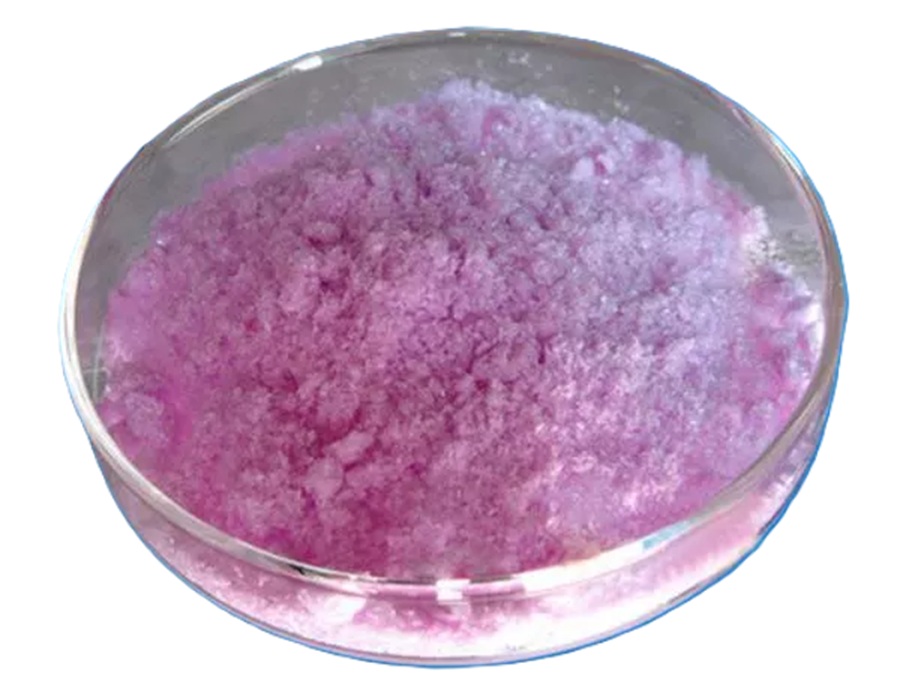
NEODYMIUM PHOSPHATE / ND PHOSPHATE CRYSTAL / PURPLE PHOSPHATE ADDITIVE
1. PRODUCT IDENTIFICATION AND CHEMICAL IDENTITY
| Parameter | Information |
|---|---|
| Product Name | Neodymium Phosphate |
| Chemical Name | Neodymium Phosphate, Neodymium(III) Phosphate |
| Other Names | Neodymium-Doped Laser Salt, Nd Phosphate Crystal, Purple Phosphate Additive, NdPO₄ |
| Chemical Formula | NdPO₄ |
| CAS Number | 13768-24-0 |
| EC Number (EINECS) | None (considered as a mixture) |
| Appearance | Light purple-white crystal or powder |
| Odor | Odorless |
| Physical State (20°C) | Solid (crystal or powder) |
2. CHEMICAL STRUCTURE
2.1. Molecular Structure
Neodymium phosphate is the phosphate salt of the rare earth element neodymium. It has the formula NdPO₄ and exists in a monoclinic crystal structure. It is known for its high refractive index and optical properties suitable for laser transmission. It has excellent thermal stability at high temperatures and is used in optical and ceramic applications.
Structural Features:
                    NEODYMIUM PHOSPHATE [NdPO₄]
                          |
                Nd³⁺ - PO₄³⁻ Ionic Bonds
                          |
        +----------------+----------------+
        |                |                |
    Monoclinic         High            Suitable for
    Crystal           Refractive       Laser
    Structure         Index           Transmission
2.2. Structural Properties
| Parameter | Value |
|---|---|
| Crystal Structure | Monoclinic |
| Chemical Formula | NdPO₄ |
| Molecular Weight | ~239.2 g/mol |
| Density | ~4.5–5.0 g/cm³ |
| Appearance | Light purple-white crystal or powder |
| Melting Point | >1500 °C |
| Refractive Index | High |
3. PHYSICAL AND CHEMICAL PROPERTIES
| Property | Value | Description |
|---|---|---|
| Appearance | Light purple-white crystal or powder | Varies depending on particle size |
| Odor | Odorless | - |
| Chemical Formula | NdPO₄ | - |
| Molecular Weight | ~239.2 g/mol | - |
| Density | ~4.5–5.0 g/cm³ | - |
| Melting Point | >1500 °C | - |
| Solubility in Water (25°C) | Insoluble | - |
| Solubility in Acids | Limited solubility | - |
| Solubility in Alcohol | Insoluble | - |
| Optical Properties | High refractive index | Suitable for laser transmission |
| Thermal Stability | Stable at high temperatures | Stable up to >1500°C |
| Hygroscopicity | Low | - |
4. STABILITY AND REACTIVITY
| Parameter | Information |
|---|---|
| Chemical Stability | Thermally stable at high temperatures; inert under normal conditions. |
| Conditions to Avoid | Strong acids, highly reducing environments. |
| Incompatible Materials | Strong acids, strong reducing agents. |
| Hazardous Decomposition Products | Upon oxidation at high temperatures: neodymium oxide (Nd₂O₃) and phosphorus oxide (P₂O₅). |
| Hazardous Polymerization | Will not occur. |
| Hygroscopicity | Low; does not absorb moisture under normal conditions. |
4.1. Chemical Reactions
-
Thermal Stability: NdPO₄ is stable up to >1500°C; may decompose to oxides at higher temperatures.
-
Reaction with Acids: Shows limited solubility in strong acids.
5. PRODUCTION PROCESS
| Stage | Process | Description |
|---|---|---|
| 1. Raw Material Preparation | Neodymium oxide (Nd₂O₃) and phosphoric acid (H₃PO₄) | High purity materials obtained |
| 2. Reaction | Nd₂O₃ reacted with H₃PO₄ | NdPO₄ precipitate formed |
| 3. Precipitation | Phosphate precipitate obtained | Controlled pH and temperature |
| 4. Filtration | Precipitate separated and washed | Impurities removed |
| 5. Drying | Product dried | Under controlled conditions |
| 6. Sintering (Optional) | Crystal form achieved | High temperature treatment |
| 7. Quality Control | Phase analysis and optical testing | XRD, spectroscopy |
| 8. Packaging | Packaged in moisture-proof containers | - |
5.1. Major Producing Countries and Companies
| Country | Companies |
|---|---|
| China | Various rare earth producers |
| Germany | Treibacher, Alfa Aesar |
| Japan | Advanced ceramic and optical producers |
| USA | Sigma-Aldrich, Alfa Aesar |
6. APPLICATION AREAS
6.1. Laser and Optical Applications
| Application | Function | Details |
|---|---|---|
| Laser Crystal Production | Dopant | Used in Nd:YAG and Nd:Glass systems. |
| Optical Fiber Amplifiers | Signal amplification | Used in fiber optic communication systems. |
| Optical Coatings | Surface treatment | Special optical applications. |
6.2. Defense and Medical
| Application | Function | Details |
|---|---|---|
| Defense Electronics | High-power laser systems | Radar and targeting systems. |
| Medical Laser Devices | Surgery and imaging | Eye and skin surgery. |
6.3. Ceramic and Glass Additive
| Application | Function | Details |
|---|---|---|
| Ceramic Additive | Optical property improvement | Phosphate-based magnetic ceramics. |
| Glass Additive | Refractive index adjustment | Special optical glasses. |
6.4. Nuclear and Environmental Applications
| Application | Function | Details |
|---|---|---|
| Nuclear Waste Immobilization | Phosphate matrix | Safe storage of waste. |
| Ion Exchange Systems | Water treatment | Special filtration applications. |
6.5. Sectoral Suitability Table
| Sector | Suitability | Explanation |
|---|---|---|
| Optics | Suitable | Laser crystal doping, optical fiber |
| Electronics | Suitable | Fiber amplifiers, ceramics |
| Defense | Suitable | Laser systems, radar optics |
| Medical | Suitable | Laser surgery, imaging |
| Nuclear | Suitable | Waste immobilization |
| Food | Not Suitable | Not suitable |
| Textile | Not Suitable | Not suitable |
7. ALTERNATIVE / SUBSTITUTE PRODUCTS
| Alternative | Description | When to Use |
|---|---|---|
| Lanthanum Phosphate (LaPO₄) | Similar optical properties | Alternative rare earth compound |
| Samarium Phosphate (SmPO₄) | Alternative rare earth dopant | Different optical properties |
| Yttrium Phosphate (YPO₄) | Common in laser crystals | More widespread use |
| Neodymium Oxide + Phosphoric Acid | In-situ synthesis alternative | Applications requiring on-site synthesis |
8. SAFETY AND TOXICOLOGY
| Parameter | Value |
|---|---|
| Acute Oral Toxicity (LD50, Rat) | > 2,000 mg/kg (low toxicity) |
| Dermal Toxicity | Low |
| Skin Irritation | Mild irritant |
| Eye Irritation | Mild to moderate irritant |
| Inhalation | Dust inhalation may cause respiratory tract irritation. |
| Carcinogenicity | Not classified as carcinogenic. |
| Mutagenicity | Not mutagenic. |
| Chronic Effects | Long-term data on rare earth and phosphate compounds is limited. |
| Environmental Hazards | Low to moderate aquatic toxicity; phosphate content may cause eutrophication risk. |
8.1. GHS Classification
| Hazard Class | Category | H-Statement |
|---|---|---|
| Skin Irritation | Category 2 | H315: Causes skin irritation. |
| Eye Irritation | Category 2A | H319: Causes serious eye irritation. |
| Specific Target Organ Toxicity | Category 3 | H335: May cause respiratory irritation. |
Signal Word: WARNING
Hazard Pictograms: GHS07 (Exclamation Mark)
9. STORAGE AND SHELF LIFE
| Parameter | Condition |
|---|---|
| Storage Conditions | Store in a cool, dry, and well-ventilated area. |
| Container Requirements | Moisture-proof, tightly closed containers. |
| Temperature | Room temperature (15-25°C). |
| Shelf Life | Unlimited under appropriate conditions (due to stable crystal structure). |
| Stability Note | Stable under normal conditions; keep away from acids. |
10. PACKAGING OPTIONS
| Packaging Type | Quantity | Material |
|---|---|---|
| Plastic Bag | 100 g, 500 g, 1 kg, 5 kg | Moisture-proof, sealed bag |
| Plastic Drum | 10 kg, 25 kg | HDPE drum, moisture-proof |
| Glass Bottle | 10 g, 50 g, 100 g | Amber glass bottle, sealed with airtight cap |
11. TRANSPORT INFORMATION
| Parameter | Information |
|---|---|
| UN Number | Not classified |
| Hazard Class | - |
| Packing Group | - |
| ADR/RID | Not regulated |
| IMDG | Not regulated |
| IATA | Not regulated |
| HS Code | 2846.90.00.00.00 (Rare earth compounds) |
12. REGULATORY STATUS
| Region / Authority | Status |
|---|---|
| European Union (REACH) | Generally not registered; used in special optical applications |
| Turkey (KKDIK) | Compliance required |
| TSCA (USA) | Registered |
| China | Registered; major production and export country |
13. OTHER NAMES AND SYNONYMS
| Name | Description |
|---|---|
| NdPO₄ | Chemical formula |
| Neodymium-Doped Laser Salt | Application description |
| Nd Phosphate Crystal | Commercial name |
| Purple Phosphate Additive | Color description |
| Neodymium Phosphate | English name |
| Neodymium(III) Phosphate | Chemical name |
Database Identifiers:
-
CAS: 13768-24-0
-
HS Code: 2846.90.00.00.00
14. QUICK REFERENCE TABLE
| Property | Value |
|---|---|
| CAS Number | 13768-24-0 |
| Chemical Formula | NdPO₄ |
| Molecular Weight | ~239.2 g/mol |
| Appearance | Light purple-white crystal or powder |
| Density | ~4.5–5.0 g/cm³ |
| Melting Point | >1500 °C |
| Crystal Structure | Monoclinic |
| HS Code | 2846.90.00.00.00 |
15. CRITICAL WARNINGS AND BEST PRACTICES
CRITICAL WARNINGS:
-
High Temperature Stability: NdPO₄ is stable up to >1500°C; suitable for high-temperature optical and ceramic applications.
-
Optical Properties: With its high refractive index and properties suitable for laser transmission, it is a critical dopant in Nd:YAG and Nd:Glass systems.
-
Chemical Resistance: Shows limited solubility in acidic environments; chemically inert.
-
Phosphate Content: Environmental phosphate release may cause eutrophication; waste management should be carefully considered.
-
Powder Hazard: Powder form may cause respiratory tract irritation; appropriate dust control measures must be taken.
BEST PRACTICE RECOMMENDATIONS:
-
Storage:
-
Store in a cool, dry, and well-ventilated area.
-
Use moisture-proof containers.
-
Keep away from acids and reducing agents.
-
Store at room temperature (15-25°C).
-
-
Handling:
-
If in powder form, use in well-ventilated areas.
-
Use a dust mask (N95 or better), protective goggles, and gloves.
-
Avoid dust formation and inhalation.
-
Wash hands thoroughly after handling.
-
Use controlled sintering conditions for laser crystal production.
-
-
Waste Management:
-
Dispose of in accordance with local regulations.
-
Do not discharge into water sources (phosphate eutrophication risk).
-
For large quantities, rare earth recovery should be considered.
-
LEGAL DISCLAIMER
This Technical Data Sheet (TDS) is for informational purposes only and has been prepared based on available technical data. The user is solely responsible for determining the suitability of the product for their specific applications and for complying with all local, national, and international regulations. For complete safety, storage, handling, transport, disposal, and regulatory compliance information, the official Safety Data Sheet (SDS/MSDS) provided by the manufacturer/supplier must be consulted. This document does not substitute professional advice. Neodymium phosphate is a specialty material for optical and laser applications, notable for its high-temperature stability and optical properties; environmental effects due to phosphate content should be carefully considered.