We unleash your business potential by maximize the business innovation.
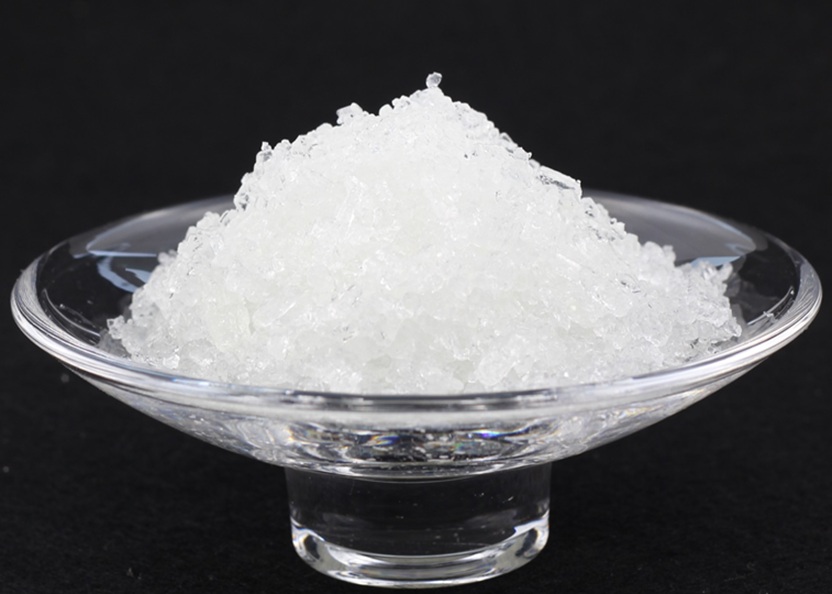
Send EmailCerium Nitrate, Cerium Nitrate Hexahydrate, 10294-41-4
CERIUM NITRATE
1. PRODUCT IDENTIFICATION AND CHEMICAL IDENTITY
| Parameter | Information |
|---|---|
| Product Name | Cerium Nitrate |
| Chemical Name | Cerium(III) Nitrate Hexahydrate |
| Other Names | Cerium Nitrate Hexahydrate, Cerium Salt, Rare Earth Nitrate, White Cerium Crystal, Cam Pigment Additive |
| CAS Number | 10294-41-4 |
| EC Number (EINECS) | 233-653-7 |
| Chemical Formula | Ce(NO₃)₃·6H₂O |
| Molecular Weight | ~434.22 g/mol |
| Appearance | White crystalline powder or granules |
| Odor | Odorless |
| Physical State (20°C) | Solid (crystalline) |
2. CHEMICAL STRUCTURE
2.1. Molecular Structure
Cerium nitrate is the nitrate salt of cerium in the +3 oxidation state. Cerium ions (Ce³⁺) and nitrate ions (NO₃⁻) are present in a 1:3 ratio. The compound contains six moles of water of crystallization (hexahydrate). It is highly soluble in water and exhibits acidic pH in solution. It is hygroscopic and can decompose in humid environments.
Structural Features:
                    CERIUM NITRATE [Ce(NO₃)₃·6H₂O]
                               |
                     Ce³⁺ - NO₃⁻ Ionic Bonds
                               |
             +----------------+----------------+
             |                |                |
         Highly           Hygroscopic       Acidic in
         Soluble          Property          Solution
2.2. Structural Properties
| Parameter | Value |
|---|---|
| Oxidation State | Ce³⁺ (Cerium +3) |
| Crystal System | Monoclinic |
| Molecular Weight | ~434.22 g/mol |
| Water Content | 6 mol H₂O (hexahydrate) |
| Density | ~2.3 g/cm³ |
| Appearance | White crystalline powder or granules |
| pH (1M solution) | Acidic (~3.5-4.5) |
3. PHYSICAL AND CHEMICAL PROPERTIES
| Property | Value | Description |
|---|---|---|
| Appearance | White crystalline powder or granules | - |
| Odor | Odorless | - |
| Chemical Formula | Ce(NO₃)₃·6H₂O | - |
| Molecular Weight | ~434.22 g/mol | - |
| Density | ~2.3 g/cm³ | - |
| Melting Point | ~65 °C (dissolves with water loss) | - |
| Water Solubility | Highly soluble | - |
| Solubility in Alcohol | Soluble | - |
| Solubility in Acetone | Slightly soluble | - |
| pH (1M solution) | Acidic (~3.5-4.5) | - |
| Hygroscopicity | High | Absorbs moisture from air |
| Stability | Stable under normal conditions; decomposes in humid environments | - |
| Oxidizing Properties | Mild oxidizer (nitrate) | - |
4. PURITY GRADES
| Parameter | Technical Grade | Analytical Grade | High Purity Grade |
|---|---|---|---|
| Purity | ≥ 98.0% | ≥ 99.0% | ≥ 99.9% |
| Ce(NO₃)₃·6H₂O Content | ≥ 98.0% | ≥ 99.0% | ≥ 99.9% |
| Other Rare Earths | ≤ 2.0% | ≤ 1.0% | ≤ 0.1% |
| Iron (Fe) | ≤ 50 ppm | ≤ 20 ppm | ≤ 10 ppm |
| Lead (Pb) | ≤ 50 ppm | ≤ 20 ppm | ≤ 10 ppm |
| Chloride (Cl⁻) | ≤ 0.05% | ≤ 0.02% | ≤ 0.01% |
| Sulfate (SO₄²⁻) | ≤ 0.05% | ≤ 0.02% | ≤ 0.01% |
5. STABILITY AND REACTIVITY
| Parameter | Information |
|---|---|
| Chemical Stability | Stable under normal conditions |
| Conditions to Avoid | Moisture, high temperature, strong reducing agents |
| Incompatible Materials | Strong reducing agents, organic materials, strong bases |
| Hazardous Decomposition Products | Cerium oxide (CeO₂), nitrogen oxides (NOₓ) |
| Hazardous Polymerization | Will not occur |
| Hygroscopicity | High |
| Oxidizing Properties | Mild oxidizer (nitrate content) |
5.1. Chemical Reactions
Thermal Decomposition:
4Ce(NO₃)₃·6H₂O → 2Ce₂O₃ + 12NO₂↑ + 3O₂↑ + 24H₂O↑
Reaction with Alkali:
Ce(NO₃)₃ + 3NaOH → Ce(OH)₃↓ + 3NaNO₃
Precipitation with Oxalate:
2Ce(NO₃)₃ + 3Na₂C₂O₄ → Ce₂(C₂O₄)₃↓ + 6NaNO₃
6. APPLICATION AREAS
6.1. Pigment and Ceramics Industry
| Application | Function | Details |
|---|---|---|
| Ceramic Pigments | Color additive | Provides yellow to orange-red tones |
| Glass Coloring | Colorant | Decorative glass coloring |
| Optical Glass | Refractive index adjuster | Adjusts optical properties |
| Glaze Additive | Glaze modifier | Improves glaze properties |
6.2. Laboratory and Research
| Application | Function | Details |
|---|---|---|
| Analytical Reagent | Rare earth analysis | Used in rare earth element analysis |
| Synthesis Precursor | Starting material | Synthesis of other cerium compounds |
| Research | Laboratory chemical | Chemical research and development |
| Standard Preparation | Reference material | Calibration and analysis |
6.3. Catalyst and Chemical Synthesis
| Application | Function | Details |
|---|---|---|
| Catalyst Precursor | Catalyst preparation | Organic synthesis and polymerization reactions |
| Chemical Intermediate | Intermediate | Production of other cerium compounds |
| Oxidation Catalyst | Catalytic conversion | Various oxidation reactions |
6.4. Nanotechnology
| Application | Function | Details |
|---|---|---|
| CeO₂ Nanoparticle Production | Starting material | Synthesis of cerium oxide nanoparticles |
| Nano Coatings | Precursor | Nanostructured coatings |
| Advanced Materials | Precursor | Nanomaterial synthesis |
6.5. Metal Plating and Surface Treatment
| Application | Function | Details |
|---|---|---|
| Electroplating Baths | Additive | Metal plating applications |
| Surface Treatment | Coating material | Specialty coating applications |
6.6. Defense and Optics
| Application | Function | Details |
|---|---|---|
| Laser Optics | Optical component | Precision optics systems |
| Specialty Optics | Optical material | Defense applications |
7. SECTOR SUITABILITY TABLE
| Sector | Suitability | Description |
|---|---|---|
| Glass & Ceramics | ✅ | Widely used as pigment and additive |
| Laboratory & R&D | ✅ | Reagent and analytical material |
| Electronics | ✅ | CeO₂ production and optical additive |
| Cosmetics | ❌ | Not suitable for direct use |
| Food & Pharmaceutical | ❌ | Prohibited due to nitrate content |
| Defense Industry | ⚠️ | Limited use in laser systems |
8. ALTERNATIVE MATERIALS COMPARISON
| Application Area | Alternative Materials | Notes |
|---|---|---|
| Pigment Additive | Cerium Sulfate, Cerium Carbonate | Similar pigment and glass properties |
| Optical Additive | Neodymium Nitrate, Yttrium Nitrate | Different optical properties |
| Coating Applications | Zirconium Nitrate | Similar coating applications |
| Catalyst Precursor | Cerium Chloride, Cerium Acetate | Different solubility and reactivity |
9. SAFETY AND TOXICOLOGY
| Parameter | Value |
|---|---|
| Acute Oral Toxicity (LD50, Rat) | > 2,000 mg/kg (low toxicity) |
| Dermal Toxicity | Low |
| Skin Irritation | Mild irritant |
| Eye Irritation | Mild to severe irritant |
| Inhalation | Dust may cause respiratory irritation |
| Carcinogenicity | Not classified as a carcinogen |
| Mutagenicity | Not mutagenic |
| Chronic Effects | May cause liver effects at high doses |
| Environmental Hazards | Moderate toxicity to aquatic life |
10. GHS CLASSIFICATION
| Hazard Class | Category | H-Statement |
|---|---|---|
| Oxidizing Solid | Category 2 | H272: May intensify fire; oxidizer |
| Skin Irritation | Category 2 | H315: Causes skin irritation |
| Eye Irritation | Category 2 | H319: Causes serious eye irritation |
| Specific Target Organ Toxicity | Category 3 | H335: May cause respiratory irritation |
Signal Word: DANGER
Hazard Pictograms: GHS03 (Flame over circle), GHS07 (Exclamation Mark)
UN Number: 1477 (Nitrates, inorganic, n.o.s.)
11. PRECAUTIONARY STATEMENTS (P-CODES)
| Code | Statement |
|---|---|
| P210 | Keep away from heat/sparks/open flames/hot surfaces. No smoking |
| P220 | Keep/Store away from clothing/.../combustible materials |
| P261 | Avoid breathing dust |
| P264 | Wash hands thoroughly after handling |
| P280 | Wear protective gloves/protective clothing/eye protection/face protection |
| P302+P352 | IF ON SKIN: Wash with plenty of soap and water |
| P304+P340 | IF INHALED: Remove person to fresh air and keep comfortable for breathing |
| P305+P351+P338 | IF IN EYES: Rinse cautiously with water for several minutes. Remove contact lenses if present |
| P337+P313 | If eye irritation persists: Get medical advice/attention |
| P370+P378 | In case of fire: Use appropriate extinguishing media |
| P501 | Dispose of contents/container in accordance with local regulations |
12. FIRST AID MEASURES
| Route of Exposure | Action to Be Taken |
|---|---|
| Inhalation | Move to fresh air. If symptoms persist, seek medical attention |
| Skin Contact | Wash with plenty of soap and water. Remove contaminated clothing |
| Eye Contact | Rinse thoroughly with plenty of water for at least 15 minutes. Remove contact lenses. If irritation persists, seek medical attention |
| Ingestion | Rinse mouth. Drink plenty of water. Do not induce vomiting. Seek medical attention |
13. STORAGE AND SHELF LIFE
| Parameter | Condition |
|---|---|
| Storage Conditions | Store in a cool, dry, well-ventilated area |
| Container Requirements | Sealed, moisture-proof containers |
| Moisture Protection | Protect from moisture; hygroscopic |
| Temperature | Room temperature (15-25°C) |
| Shelf Life | 24 months under proper conditions |
| Stability Note | Hygroscopic; may decompose in humid environments |
14. PACKAGING OPTIONS
| Packaging Type | Quantity | Material |
|---|---|---|
| Plastic Drum | 25 kg | HDPE drum, moisture-proof |
| Fiber Drum | 25 kg, 50 kg | PE-lined, moisture-proof |
| Glass Bottle | 100 g, 500 g | Amber glass |
| Plastic Bag | 1 kg, 5 kg | PE bag, sealed |
| Aluminum Foil Bag | 1 kg, 5 kg | Moisture-proof, light-proof |
15. TRANSPORT INFORMATION
| Parameter | Information |
|---|---|
| UN Number | 1477 (Nitrates, inorganic, n.o.s.) |
| Hazard Class | 5.1 (Oxidizing substances) |
| Packing Group | II / III |
| ADR/RID | Regulated |
| IMDG | Regulated |
| IATA | Regulated |
| HS Code | 2846.90.00.00.19 |
16. REGULATORY STATUS
| Region / Authority | Status |
|---|---|
| European Union (REACH) | Registered |
| Turkey (KKDIK) | Compliance required |
| TSCA (USA) | Registered |
| EINECS | 233-653-7 |
| Food / Cosmetics | Not approved |
17. OTHER NAMES AND SYNONYMS
-
Cerium(III) Nitrate Hexahydrate
-
Cerium Nitrate Hexahydrate
-
Cerium Salt
-
Rare Earth Nitrate
-
White Cerium Crystal
-
Cam Pigment Additive
18. QUICK REFERENCE TABLE
| Property | Value |
|---|---|
| CAS Number | 10294-41-4 |
| EC Number | 233-653-7 |
| HS Code | 2846.90.00.00.19 |
| Chemical Formula | Ce(NO₃)₃·6H₂O |
| Molecular Weight | ~434.22 g/mol |
| Appearance | White crystalline powder or granules |
| Density | ~2.3 g/cm³ |
| Melting Point | ~65 °C (dissolves) |
| pH (1M solution) | ~3.5-4.5 (acidic) |
| UN Number | 1477 |
| Hazard Class | 5.1 |
| GHS Signal Word | DANGER |
19. CRITICAL NOTICES AND BEST PRACTICES
CRITICAL NOTICES:
-
Oxidizer: Cerium nitrate contains nitrate, which can intensify fire. Keep away from combustible materials.
-
Hygroscopic: Absorbs moisture from air. Must be stored in sealed, moisture-proof containers.
-
Nitrate Content: Nitrate compounds require special handling and storage.
-
Skin and Eye Irritation: Causes skin and eye irritation. Use appropriate personal protective equipment.
-
Inhalation Hazard: Dust may cause respiratory irritation. Use in well-ventilated areas.
-
Food/Cosmetics Prohibited: Use in food and cosmetic applications is prohibited due to nitrate content.
-
Thermal Decomposition: Decomposes at high temperatures, releasing toxic nitrogen oxides.
BEST PRACTICE RECOMMENDATIONS:
Storage:
-
Store in a cool, dry, well-ventilated area
-
Use sealed, moisture-proof containers
-
Keep away from combustible materials
-
Store at room temperature (15-25°C)
Handling:
-
Use in well-ventilated areas
-
Use dust mask, protective goggles, and gloves
-
Avoid dust formation
-
Wash hands after handling
Waste Management:
-
Dispose in accordance with local regulations
-
Do not discharge into water bodies
-
Classified as hazardous waste (oxidizer)
LEGAL DISCLAIMER
This Technical Data Sheet (TDS) is for informational purposes only and is prepared based on available technical data. The user is solely responsible for determining the suitability of the product for their specific application and for complying with all local, national, and international regulations. For complete safety, storage, handling, transport, waste, and regulatory compliance information, the official Safety Data Sheet (SDS/MSDS) provided by the manufacturer/supplier must be consulted. This document does not substitute professional advice. Cerium nitrate is an oxidizing material; appropriate precautions must be taken during handling.