We unleash your business potential by maximize the business innovation.
Send EmailFungal Alpha Amylase Enzyme, Alpha Amylase Enzyme, Liquefying Amylase, 9000-90-2, 9000-85-5
FUNGAL ALPHA AMYLASE ENZYME
PRODUCT OVERVIEW
Fungal Alpha Amylase is a hydrolase enzyme produced by fermentation of selected microorganisms such as Aspergillus oryzae, Bacillus subtilis, or Bacillus licheniformis. It randomly hydrolyzes (endo-effect) internal α-1,4-glycosidic bonds in starch molecules, producing dextrins, oligosaccharides, maltose, and glucose. It is ideal for the food industry, operating at moderate temperatures and acidic conditions. It is widely used in baking, brewing, alcohol production, juice processing, animal feed, textile, and detergent industries.
SECTION 1: PRODUCT IDENTIFICATION AND CHEMICAL IDENTITY
| Parameter | Information |
|---|---|
| Product Name | Fungal Alpha Amylase Enzyme |
| Chemical Name | Alpha-1,4-glucan-4-glucanohydrolase |
| Synonyms (Turkish) | Fungal Alfa Amilaz, Alfa-Amilaz, Mantar Amilazı, Alfasol |
| Synonyms (English) | Fungal Alpha Amylase, Alpha-Amylase, 1,4-alpha-D-glucan-glucanohydrolase, Liquefying Amylase |
| EC Number | 3.2.1.1 |
| CAS Number | 9000-90-2 (Fungal source) / 9000-85-5 (Alternative specification) |
| Chemical Class | Enzyme; Hydrolase; Glycosidase |
| Source | Microbial fermentation (Aspergillus oryzae, Bacillus subtilis, Bacillus licheniformis) |
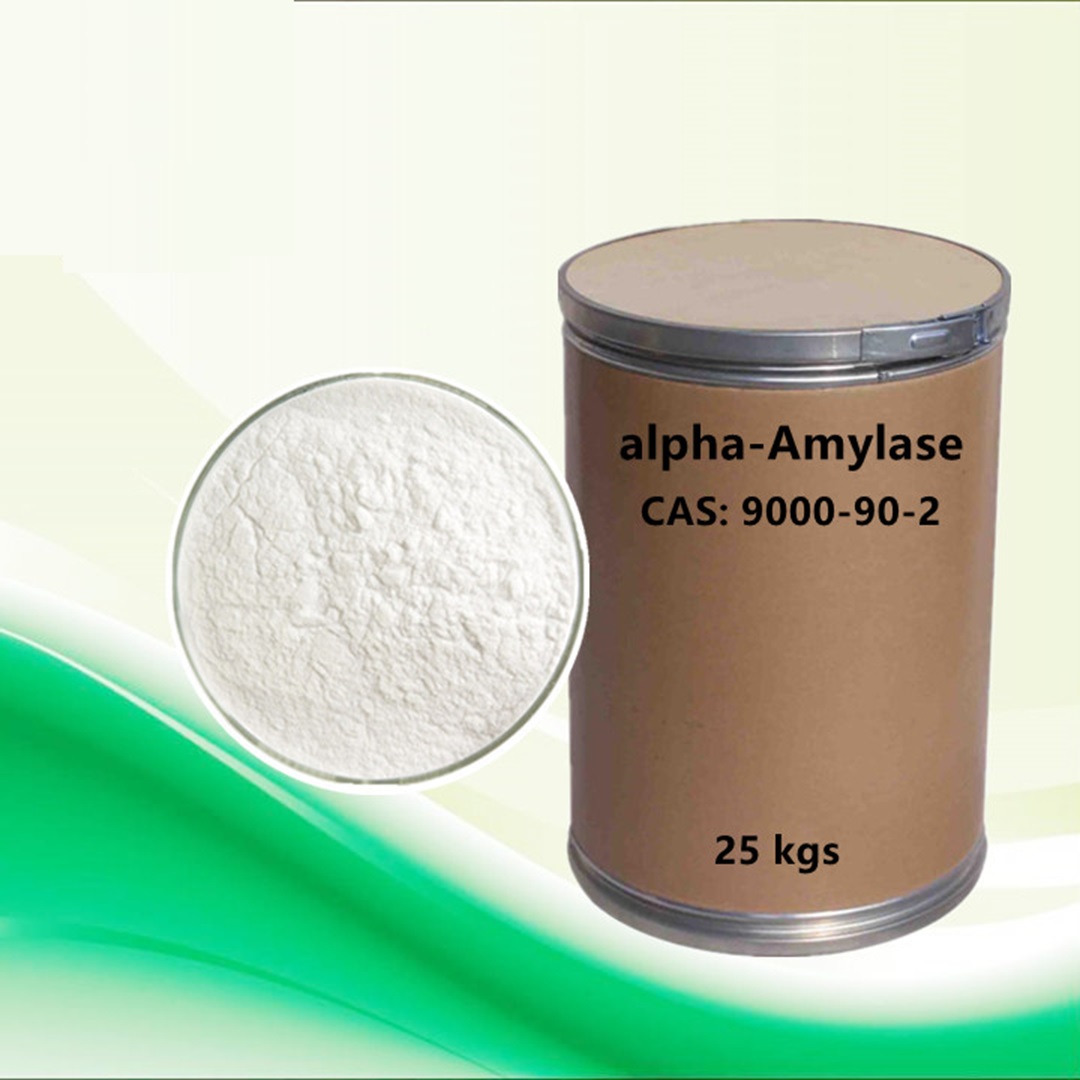
| Appearance | Light brown to off-white powder |
| Odor | Slight characteristic enzyme odor |
| Physical State (20°C) | Solid (powder) |
| Activity | 10,000 – 20,000 U/g (varies by grade) |
SECTION 2: CAS NUMBER CLARIFICATION
| CAS Number | Description |
|---|---|
| 9000-90-2 | Commonly used for fungal alpha amylase (Aspergillus/Bacillus source) |
| 9000-85-5 | Alternative or general alpha amylase specification found in some catalogs |
| 9001-19-8 | Official CAS number for Aspergillus oryzae (fungal) alpha amylase |
Important Note: Different sources may use different CAS numbers. 9000-90-2 is commonly used for fungal alpha amylase, while 9000-85-5 appears as an alternative/general specification in some catalogs. The official CAS number for Aspergillus oryzae derived fungal alpha amylase is 9001-19-8. Always verify the correct CAS number on the supplier's Safety Data Sheet (SDS).
SECTION 3: CHEMICAL STRUCTURE
3.1. Enzyme Classification
| Feature | Description |
|---|---|
| Enzyme Class | Hydrolase |
| Subclass | Glycosidase |
| Systematic Name | 1,4-alpha-D-glucan glucanohydrolase |
| Reaction | Endohydrolysis of 1,4-alpha-D-glycosidic bonds |
| CAZy Family | Glycoside Hydrolase Family 13 (GH13) |
| Structural Fold | (β/α)₈ TIM Barrel |
3.2. Molecular Structure
Fungal Alpha Amylase is a single polypeptide chain protein with a molecular weight of approximately 50,000 – 60,000 Da (varies by source). It belongs to the Glycoside Hydrolase Family 13 (GH13) and adopts a characteristic (β/α)₈ TIM Barrel fold, which is a common structural motif among α-amylases.
Key Structural Features:
| Feature | Description |
|---|---|
| Molecular Weight | ~50,000 – 60,000 Da |
| Amino Acid Count | ~450 – 520 residues (source dependent) |
| Secondary Structure | ~30% α-helix, ~20% β-sheet, ~50% random coil |
| Tertiary Structure | (β/α)₈ TIM barrel (8 parallel β-strands surrounded by 8 α-helices) |
| Active Site | Located at the C-terminal end of the β-barrel; Contains conserved catalytic residues (Asp, Glu) |
| Cofactor | Calcium ion (Ca²⁺) – binds near active site; Essential for structural stability and activity |
| Disulfide Bonds | Varies by source; contributes to structural stability |
| Isoelectric Point (pI) | ~4.0 – 5.0 |
3.3. Domain Architecture
                    FUNGAL ALPHA AMYLASE
                    (GH13 Family - TIM Barrel)
                           |
        +------------------+------------------+
        |                  |                  |
    Domain A         Domain B         Domain C
    (Catalytic)    (Loop/Calcium)   (C-terminal)
    (β/α)₈ TIM        Ca²⁺             β-sheet
    Barrel         Binding           Structure
Domain Description:
| Domain | Location | Function |
|---|---|---|
| Domain A (Catalytic) | Central core (β/α)₈ barrel | Contains catalytic site; Responsible for substrate binding and hydrolysis |
| Domain B | Insertion between β3-α3 loops | Calcium binding site; Contributes to structural stability |
| Domain C | C-terminal region | β-sheet rich region; May be involved in substrate recognition and stability |
3.4. Active Site Architecture
The active site of fungal alpha amylase contains conserved amino acid residues that are essential for catalytic activity:
              CATALYTIC RESIDUES
                    |
        +-----------+-----------+
        |           |           |
      Asp-X-Asp     Glu       Asp
    (Nucleophile) (Acid/Base) (Transition)
| Residue | Function | Location |
|---|---|---|
| Asp (Aspartate) | Nucleophile; Attacks the glycosidic bond | Domain A (β4 strand) |
| Glu (Glutamate) | Acid/Base catalyst; Protonates the leaving group | Domain A (β4 strand) |
| Asp (Aspartate) | Stabilizes the transition state | Domain A (β5 strand) |
3.5. Calcium Binding Site
Calcium ions (Ca²⁺) are essential for the structural stability and catalytic activity of fungal alpha amylase:
              CALCIUM BINDING SITE
                    |
        +-----------+-----------+
        |           |           |
       Asp        Asp          Asp
       (Oxygen)   (Oxygen)     (Oxygen)
                    |
                   Ca²⁺
                    |
       Asp        Asn          His
       (Oxygen)   (Oxygen)     (Oxygen)
| Feature | Description |
|---|---|
| Calcium Ion | Binds near the active site with high affinity |
| Coordination | 7-8 coordination bonds with oxygen atoms from Asp, Asn, His residues |
| Function | Maintains structural integrity; Protects against thermal denaturation; Essential for optimal activity |
| Replacement | Other divalent cations (Mg²⁺, Mn²⁺) can partially substitute but with reduced stability |
3.6. Structural Visualization
Schematic Representation of (β/α)₈ TIM Barrel:
                     TOP VIEW

                       α8
                  ____/____
                 /    α1    \
                /  ________  \
               |  / α2    \  |
               | |  ______  | |
               | | / α3   \ | |
               | | |  β4  | | |
               | | | /β5\ | | |
               | | | |   | | | |
               | | | \β6/ | | |
               | | |  β7  | | |
               | | \ α8  / | |
               | |  β8   | | |
               | | \____/ | | |
               | |  α9   | | |
               |  \ α10 /  | |
                \  α11  /  /
                 \____/ α12
                    |
              Catalytic Site
           (Asp, Glu, Asp residues)
Substrate Binding and Catalysis:
                   SUBSTRATE (STARCH)
                          |
                   α-1,4 Glycosidic Bond
                          |
            -O---[Glucose]---O---[Glucose]---O-
                      |                 |
                   Cleavage Site
                          |
                 CATALYTIC RESIDUES
                          |
          Asp (Nucleophile)  Glu (Acid/Base)
                          |
                 HYDROLYSIS PRODUCTS
                          |
            Oligosaccharides + Maltose + Glucose
3.7. Structural Comparison with Other Amylases
| Feature | Fungal Alpha Amylase | Bacterial Alpha Amylase | Beta Amylase |
|---|---|---|---|
| Molecular Weight | ~50-60 kDa | ~50-70 kDa | ~55-60 kDa |
| Structural Fold | (β/α)₈ TIM Barrel | (β/α)₈ TIM Barrel | (β/α)₈ TIM Barrel |
| CAZy Family | GH13 | GH13 | GH14 |
| Catalytic Mechanism | Retaining | Retaining | Inverting |
| Calcium Requirement | Moderate | High | Low |
| Domain Architecture | A (catalytic) + B (Ca²⁺) + C (C-terminal) | A + B + C | A + B |
| Disulfide Bonds | Few | Many | Few |
| Glycosylation | None | None | None |
3.8. Mechanism of Action (Detailed)
Step 1: Substrate Binding
The starch molecule binds to the active site of the enzyme through hydrogen bonds and hydrophobic interactions. The substrate binds in a deep cleft at the C-terminal end of the TIM barrel.
Step 2: Nucleophilic Attack
The catalytic aspartate residue acts as a nucleophile, attacking the anomeric carbon of the glycosidic bond. This forms a covalent glycosyl-enzyme intermediate.
Step 3: Acid/Base Catalysis
The catalytic glutamate residue acts as an acid/base catalyst. It donates a proton to the glycosidic oxygen (leaving group), facilitating bond cleavage.
Step 4: Transition State Stabilization
A second aspartate residue stabilizes the developing positive charge in the transition state, lowering the activation energy of the reaction.
Step 5: Product Release
The glycosyl-enzyme intermediate is hydrolyzed by water, releasing the product (oligosaccharide). The enzyme returns to its ground state, ready for another catalytic cycle.
                CATALYTIC CYCLE

    Enzyme + Starch ──────────────→ Enzyme-Starch Complex
                   (Substrate Binding)

    Enzyme-Starch Complex ────────→ Glycosyl-Enzyme + Leaving Group
                   (Nucleophilic Attack / Acid Catalysis)

    Glycosyl-Enzyme + Water ─────→ Enzyme + Hydrolysis Product
                   (Hydrolysis / Product Release)
SECTION 4: PHYSICAL AND CHEMICAL PROPERTIES
| Property | Value | Test Method / Note |
|---|---|---|
| Appearance | Light brown to off-white powder | Visual |
| Odor | Slight characteristic enzyme odor | Olfactometric |
| Activity | 10,000 – 20,000 U/g | International Unit (IU) / Colorimetric |
| Optimal pH | 4.5 – 6.5 (source dependent) | pH Activity Profile |
| Optimal Temperature | 50 – 65°C (source dependent) | Thermal Activity Profile |
| pH Stability | 4.0 – 8.0 | pH Stability Profile |
| Thermal Stability | Up to 70°C (short-term) | Thermal Stability Profile |
| Solubility in Water | Soluble | General Method |
| Solubility in Ethanol | Insoluble (precipitates) | General Method |
| Molecular Weight | ~50,000 – 60,000 Da | SDS-PAGE |
| Isoelectric Point (pI) | ~4.0 – 5.0 | Electrophoresis |
| Calcium Requirement | Moderate; Ca²⁺ increases stability | - |
| Heavy Metals | ≤ 10 ppm | AAS / ICP |
| Lead (Pb) | ≤ 2 ppm | AAS / ICP |
| Arsenic (As) | ≤ 2 ppm | AAS / ICP |
| Total Plate Count | ≤ 50,000 CFU/g | Microbiological |
| Salmonella | Negative | Microbiological |
| E. coli | Negative | Microbiological |
| Loss on Drying | ≤ 8.0% | Gravimetric |
SECTION 5: FUNGAL ALPHA AMYLASE vs OTHER AMYLASE TYPES
| Property | Fungal Alpha Amylase | Bacterial Alpha Amylase | Beta Amylase | Glucoamylase |
|---|---|---|---|---|
| Source | Aspergillus oryzae, etc. | Bacillus subtilis, B. licheniformis | Barley, wheat, etc. | Aspergillus niger, Rhizopus |
| Optimal pH | 4.5 – 6.5 | 5.5 – 7.5 | 4.5 – 5.5 | 4.0 – 5.5 |
| Optimal Temperature | 50 – 65°C | 70 – 90°C | 40 – 55°C | 55 – 65°C |
| Mode of Action | Endo (internal) | Endo (internal) | Exo (terminal) | Exo (terminal) |
| Products | Dextrins, maltose, glucose | Dextrins, maltose | Maltose | Glucose |
| Thermal Stability | Moderate | High (thermostable) | Low | Moderate |
| Calcium Sensitivity | Moderate | High | Low | Low |
| Primary Application | Baking, brewing | Starch liquefaction | Brewing, maltose syrup | Glucose syrup |
SECTION 6: MECHANISM OF ACTION
| Feature | Description |
|---|---|
| Enzymatic Reaction | Hydrolyzes α-1,4-glycosidic bonds in starch (amylose and amylopectin); Random endo-type cleavage; Produces dextrins, oligosaccharides, maltose, and glucose. |
| Starch Liquefaction | Reduces viscosity of starch solutions; Breaks down starch chains; Facilitates further enzymatic hydrolysis. |
| Substrate Specificity | Effective on starch, glycogen, and their derivatives; Preferentially cleaves internal bonds; Limited action on terminal bonds. |
| pH Dependence | Most active at pH 4.5-6.5; Activity decreases outside this range; pH stability varies by source. |
| Temperature Dependence | Optimal activity at 50-65°C; Heat sensitive (inactivated at high temperatures); Thermal stability varies by source and formulation. |
| Cofactor Requirement | Calcium ions (Ca²⁺) increase stability and activity; Calcium protects against thermal denaturation. |
SECTION 7: FUNCTIONAL PROPERTIES
| Feature | Description |
|---|---|
| Starch Hydrolysis (Baking) | Breaks down starch in flour; Releases fermentable sugars; Improves crust color and flavor; Increases bread volume and texture. |
| Dough Conditioning | Provides more flexible and extensible dough; Improves gas retention; Creates finer and more uniform crumb structure. |
| Staling Retardation | Modifies starch structure to retard staling; Extends freshness and shelf life; Improves softness retention. |
| Fermentation Support | Regulates yeast tolerance and activity; Provides energy source for yeast; Increases fermentation efficiency. |
| Starch Liquefaction (Brewing) | Converts grain starch to fermentable sugars; Reduces mash viscosity; Improves filtration and yield. |
| Sugar Release | Releases reducing sugars from starch; Improves product sweetness; Enhances flavor development. |
SECTION 8: MAIN APPLICATION AREAS
| Industry / Sector | Function | Typical Use |
|---|---|---|
| Baking Industry | Dough conditioner, texture improver | Bread, rolls, pastry products, biscuits, cakes; Dosage: 2 g per 50 kg flour; Working temperature: ~60°C; Improves volume, softness, and shelf life. |
| Brewing Industry | Starch liquefaction, viscosity reducer | Beer production, mashing stage; Dosage: 0.4 – 0.8 L/ton; Temperature: 65-70°C (pre-fermentation). |
| Alcohol/Ethanol Production | Fermentable sugar production | Distilleries, fuel ethanol; pH range: 5.0-6.0; Dosage: 0.4 – 1.0 L/ton; Converts starch to fermentable sugars. |
| Juice Industry | Clarification, filtration aid | Juice processing; Dosage: 0.02 – 0.1 L/ton; Increases permeability; Reduces turbidity. |
| Food Industry | Sugar production, maltose production | Maltose syrup, high fructose corn syrup, monosodium glutamate production; Starch conversion; First step in syrup production. |
| Animal Feed | Digestion enhancer | Poultry, piglet feed; Increases starch utilization; Optimizes low-quality feeds; Facilitates transition for weaned animals. |
| Textile Industry | Desizing agent | Textile desizing operations; Removes starch-based sizing agents; Fabric preparation. |
| Detergent Industry | Stain remover | Dishwashing detergents ("Termamyl" type); Removes starch-based stains; Dishwasher formulations. |
SECTION 9: EXAMPLE FORMULATIONS
Baking Application (50 kg Flour):
| Ingredient | Amount |
|---|---|
| Fungal Alpha Amylase | 2 g |
| Wheat Flour | 50 kg |
| Water | 30 – 35 L |
| Yeast | 500 – 1,000 g |
| Salt | 500 – 1,000 g |
| Sugar | 1 – 3 kg |
Instructions: Mix enzyme with flour or add during kneading; Ensure even distribution; Process at standard baking temperatures; Enzyme activity is inactivated by heat during baking.
Brewing Application (10 L Mash):
| Ingredient | Amount |
|---|---|
| Fungal Alpha Amylase | 10 – 12 g |
| Malted Barley/Grain | 2 – 3 kg |
| Water | 10 L |
| Temperature | 65 – 70°C |
Instructions: Add enzyme during the mashing stage; Maintain temperature for 1-2 hours; Proceed to filtration and fermentation.
SECTION 10: QUALITY SPECIFICATIONS
| Parameter | Food Grade | Feed Grade | Technical Grade | Test Method |
|---|---|---|---|---|
| Appearance | Light brown powder | Light brown powder | Light brown powder | Visual |
| Activity | 10,000 – 20,000 U/g | 5,000 – 10,000 U/g | 10,000 – 20,000 U/g | Colorimetric |
| Loss on Drying | ≤ 8.0% | ≤ 10.0% | ≤ 8.0% | Gravimetric |
| Total Plate Count | ≤ 50,000 CFU/g | ≤ 100,000 CFU/g | – | Microbiological |
| Salmonella | Negative | Negative | – | Microbiological |
| E. coli | Negative | Negative | – | Microbiological |
| Heavy Metals (as Pb) | ≤ 10 ppm | – | – | AAS / ICP |
| Lead (Pb) | ≤ 2 ppm | – | – | AAS / ICP |
| Arsenic (As) | ≤ 2 ppm | – | – | AAS / ICP |
| Total Protein | Variable | Variable | Variable | Kjeldahl |
SECTION 11: TOXICOLOGICAL PROFILE
| Parameter | Value |
|---|---|
| Acute Oral Toxicity (LD50, Rat) | > 2,000 mg/kg (low toxicity) |
| Acute Dermal Toxicity | Low toxicity; Not an irritant |
| Skin Irritation | Not an irritant (enzyme proteins may cause mild irritation) |
| Eye Irritation | Mild irritant (enzyme proteins may cause mild irritation) |
| Inhalation Toxicity | May cause allergic sensitization (enzyme dust); Respiratory irritation possible |
| Chronic Toxicity | Not toxic at normal usage levels |
| Carcinogenicity | Not classified as a carcinogen |
| Mutagenicity | Not mutagenic |
| Reproductive Toxicity | No reproductive toxicity at normal levels |
| Allergenicity | Enzymes are potential allergens; May cause respiratory sensitization in sensitive individuals; Occupational exposure controls recommended. |
| Acceptable Daily Intake (ADI) | Not determined (enzyme is inactivated during baking/cooking and not present in final food) |
SECTION 12: GHS CLASSIFICATION
GHS Classification (according to CLP and UN GHS):
| Hazard Class | Category | H-Statement |
|---|---|---|
| Not classified as hazardous according to standard CLP criteria | – | – |
Note: Enzyme dust may cause allergic sensitization. Classification may vary depending on formulation.
Signal Word: None (Generally not classified as hazardous)
Hazard Pictograms: None (Some formulations may require GHS07)
NFPA 704 Hazard Classification:
| Health | Flammability | Reactivity | Special |
|---|---|---|---|
| 0-1 | 0-1 | 0 | - |
| (Low health hazard) | (Not flammable) | (Stable) | (None) |
SECTION 13: PRECAUTIONARY STATEMENTS (P-CODES)
| Code | Statement |
|---|---|
| P261 | Avoid breathing dust/fume/gas/mist/vapors/spray. |
| P264 | Wash hands thoroughly after handling. |
| P280 | Wear protective gloves/protective clothing/eye protection/face protection. |
| P302+P352 | IF ON SKIN: Wash with plenty of soap and water. |
| P304+P340 | IF INHALED: Remove person to fresh air and keep comfortable for breathing. |
| P305+P351+P338 | IF IN EYES: Rinse cautiously with water for several minutes. Remove contact lenses if present. |
| P312 | Call a POISON CENTER/doctor if you feel unwell. |
| P332+P313 | If skin irritation occurs: Get medical advice/attention. |
| P337+P313 | If eye irritation persists: Get medical advice/attention. |
| P403+P233 | Store in a well-ventilated place. Keep container tightly closed. |
| P501 | Dispose of contents/container in accordance with local/regional/national/international regulations. |
SECTION 14: FIRST AID MEASURES
| Route of Exposure | Action to Be Taken |
|---|---|
| Inhalation | Move to fresh air immediately. If respiratory irritation develops, seek medical attention. Enzyme dust may cause allergic sensitization. |
| Skin Contact | Wash with plenty of soap and water. Remove contaminated clothing. If irritation persists, seek medical attention. |
| Eye Contact | Rinse immediately with plenty of water for at least 15 minutes. Keep eyelids open. Remove contact lenses if present. If irritation persists, seek medical attention. |
| Ingestion | Rinse mouth. Drink plenty of water. If large amounts are swallowed or discomfort is felt, seek medical attention. |
| Note | Enzymes are proteins; allergic reactions are possible in sensitive individuals. |
SECTION 15: FIRE-FIGHTING MEASURES
| Parameter | Information |
|---|---|
| Fire Hazard | Combustible organic material (enzyme proteins are not highly flammable). |
| Hazards from Fire | Thermal decomposition produces carbon monoxide, carbon dioxide, and nitrogen oxides. |
| Suitable Extinguishing Media | Water spray, CO₂, dry chemical powder, foam. |
| Unsuitable Extinguishing Media | Water jet (may disperse dust) |
| Special Protective Equipment | Self-contained breathing apparatus (SCBA), full protective clothing. |
| Special Precautions | Prevent dust from entering sewers and water courses. Avoid dust cloud formation. Use protective equipment. |
SECTION 16: STORAGE AND SHELF LIFE
| Parameter | Information |
|---|---|
| Storage Conditions | Store in a cool, dry, well-ventilated place; PROTECT FROM LIGHT, HEAT, and MOISTURE; Keep away from direct sunlight and high temperatures. |
| Container Requirements | Keep tightly closed in moisture-proof containers (PE-lined bags, HDPE containers, aluminum-lined bags). |
| Materials to Protect From | Light, heat, moisture, strong oxidizing agents, strong acids, strong bases |
| Shelf Life | 12 – 24 months (in unopened original packaging under proper storage conditions). |
| Stability Note | Enzyme activity decreases over time; Store at recommended temperature (4-25°C recommended); Higher temperatures accelerate activity loss. |
| Special Storage Requirements | Store in a dark, cool, dry place; Avoid exposure to air and moisture; Opened containers must be immediately resealed; Keep away from heat sources. |
SECTION 17: PACKAGING OPTIONS
| Packaging Type | Quantity | Material |
|---|---|---|
| Aluminum Foil Bag | 100 g, 500 g, 1 kg | Aluminum foil laminated bag (moisture and light resistant) |
| Plastic Bag | 1 kg, 5 kg, 10 kg | PE bag (inner-lined, sealed, moisture-proof) |
| PE-Lined Paper Bag | 10 kg, 20 kg, 25 kg | Moisture-proof kraft paper bag |
| Plastic Drum | 10 kg, 20 kg, 25 kg | HDPE drum (moisture-proof) |
| FIBC / Big Bag | 100 kg, 500 kg, 1000 kg | PE-lined, moisture-proof PP woven bag |
SECTION 18: TRANSPORT INFORMATION
| Parameter | Information |
|---|---|
| UN Number | Not regulated (not dangerous) |
| Hazard Class | Not applicable |
| Packing Group | Not applicable |
| ADR/RID | Not regulated |
| IMDG Code | Not regulated (not dangerous) |
| IATA (Air) | Not regulated (not dangerous) |
| Marine Pollutant | No |
| Transport Temperature | Ambient temperature; Protect from moisture and heat. |
SECTION 19: REGULATORY STATUS
| Region / Authority | Status |
|---|---|
| European Union | Enzyme product approved for use in food and feed; EFSA approval required for specific applications; GRAS status for enzyme preparations. |
| USA (FDA) | GRAS for food use; 21 CFR 173.310 (α-Amylase from Bacillus subtilis); Food additive approval for enzyme preparations. |
| Turkey | Enzyme products approved for use in food, feed, and industrial applications; Ministry of Agriculture approval required for food/feed use; KKDIK compliance required. |
| JECFA | Approved for use as an enzyme preparation; Specifications established for food grade enzymes. |
| IARC | Not classified (not carcinogenic) |
| NTP | Not listed |
| OSHA | Regulated as dust (may cause respiratory sensitization) |
| California (Prop 65) | Not listed |
| Halal | Yes (with certification, from halal sources and production) |
| Kosher | Yes (with certification) |
| Vegan | Yes (microbial fermentation, no animal content) |
SECTION 20: OTHER NAMES AND SYNONYMS
| Type | Name |
|---|---|
| Turkish Names | Fungal Alfa Amilaz Enzimi, Alfa-Amilaz, Mantar Amilazı, Alfasol |
| English Names | Fungal Alpha Amylase, Alpha-Amylase, 1,4-alpha-D-glucan-glucanohydrolase, Liquefying Amylase |
| Brand Names | Alfasol, Termamyl (bacterial), Fungamyl, Clarase, Diatase |
| EC Number | 3.2.1.1 |
| CAS Number | 9000-90-2 (Fungal source) / 9000-85-5 (Alternative specification) |
| HS Code | 3507.90 |
| Synonyms | Maltase (archaic), Diastase (archaic), α-Amylase, Fungal Diastase |
SECTION 21: SUMMARY TABLE
| Parameter | Value |
|---|---|
| Product | Fungal Alpha Amylase Enzyme |
| CAS Number | 9000-90-2 (Fungal) / 9000-85-5 (Alternative) |
| EC Number | 3.2.1.1 |
| Source | Aspergillus oryzae / Bacillus subtilis / Bacillus licheniformis |
| Appearance | Light brown to off-white powder |
| Activity | 10,000 – 20,000 U/g |
| Optimal pH | 4.5 – 6.5 |
| Optimal Temperature | 50 – 65°C |
| Primary Function | Starch hydrolysis, viscosity reduction, liquefaction |
| Main Applications | Baking, brewing, alcohol production, juice, animal feed, textile, detergent |
| Shelf Life | 12 – 24 months |
| GHS Signal Word | None (Generally not classified as hazardous) |
| UN Number | Not regulated |
| Special Features | Endo-acting enzyme; Hydrolyzes α-1,4-glycosidic bonds; Heat sensitive; Ca²⁺ increases stability; Potential allergen (respiratory sensitization). |
SECTION 22: CRITICAL NOTICES AND BEST PRACTICES
CRITICAL NOTICES:
Potential Allergen: Enzymes may cause respiratory sensitization and allergic reactions; Avoid inhalation of dust; Use appropriate dust control measures.
Heat Sensitive: Enzyme activity decreases rapidly above optimal temperature; Inactivated during baking/hot processing (>70-80°C); Do not expose to excessive heat.
Storage Conditions: Should be stored in cool and dry conditions; Activity decreases over time with heat and moisture; Protect from moisture and heat.
Activity Standardization: Activity varies by product grade; Always check activity and adjust dosage accordingly.
Calcium Requirement: Calcium ions increase stability; Water quality may affect activity.
Optimum Conditions: pH and temperature should be optimized for each application; Performance depends on substrate and process conditions.
Inactivated During Food Processing: Not present as active enzyme in final products.
Vegan and Halal Certified: (Microbial source).
BEST PRACTICE RECOMMENDATIONS:
Baking Industry: Add enzyme to flour or during kneading; Recommended dosage: 2 g per 50 kg flour; Ensure even distribution; Standard baking temperatures inactivate the enzyme; Improves volume, softness, and shelf life.
Brewing Industry: Add during mashing stage; Dosage: 0.4-0.8 L/ton; Temperature: 65-70°C; Hold for 1-2 hours; Proceed to filtration and fermentation.
Alcohol Production: Use at pH 5.0-6.0; Dosage: 0.4-1.0 L/ton; Converts starch to fermentable sugars; Optimizes ethanol yield.
Juice Processing: Use for clarification; Dosage: 0.02-0.1 L/ton; Increases permeability; Reduces turbidity.
Handling: Use in well-ventilated areas; Avoid dust formation; Use dust mask (N95/FFP2) when handling powder; Use gloves and safety goggles; Prevent cross-contamination.
Personal Protective Equipment: Dust mask (N95/FFP2 or higher), safety goggles, chemical-resistant gloves, protective clothing.
Hygiene: Wash hands thoroughly after handling; Do not eat, drink, or smoke while using; Remove contaminated clothing and wash before reuse.
Storage: Store in tightly closed, moisture-proof, light-proof containers; Store in a cool, dry, well-ventilated place; Protect from light, heat, and moisture; Recommended storage temperature: 4-25°C; Opened containers must be immediately resealed; Shelf life: 12-24 months under proper conditions.
Spill Management: Sweep or vacuum (HEPA) and place in suitable sealed container; Avoid dust formation; Do not allow to enter drains or water courses.
Disposal: Dispose of in accordance with local, regional, and national regulations; Non-hazardous waste; May be incinerated in accordance with regulations.
DETECTION METHODS:
| Method | Description | Advantages | Disadvantages |
|---|---|---|---|
| DNS Method (Dinitrosalicylic acid) | Quantitative measurement of reducing sugar production | Simple, standard method, low cost | Requires colorimetric detection |
| Iodine-Starch Method | Qualitative detection of starch hydrolysis | Rapid screening, simple | Semi-quantitative |
| Colorimetric/Enzymatic | Activity measurement using starch-iodine complex | High sensitivity, reliable | Requires specific reagents |
| HPLC | Analysis of hydrolysis products | Detailed product profile | High cost, requires expertise |
| Electrophoresis (SDS-PAGE) | Molecular weight detection | Protein characterization | Qualitative, limited sensitivity |
FUNGAL ALPHA AMYLASE vs ALTERNATIVES COMPARISON:
| Product | Application | Strengths | Weaknesses | Status |
|---|---|---|---|---|
| Fungal Alpha Amylase | Baking, brewing, food | Moderate heat stability, cost-effective, versatile | Limited temperature stability, potential allergen | Widely approved |
| Bacterial Alpha Amylase | Starch liquefaction, baking | High heat stability, thermostable | Higher cost, more specific applications | Widely approved |
| Beta Amylase | Brewing, maltose production | Specific maltose production | Limited to specific applications | Widely approved |
| Glucoamylase | Glucose syrup, alcohol production | Complete saccharification | Higher cost, lower pH optimum | Widely approved |
| Pullulanase | Starch processing | Debranching activity | Higher cost, specific use | Widely approved |
LEGAL DISCLAIMER
The information provided in this document is based on our current knowledge and experience and is presented in good faith. However, since all conditions of use are beyond our control, it does not constitute a binding property or warranty. This Technical Data Sheet is for informational purposes only. Users are responsible for testing suitability for their own applications and for complying with all local, regional, and national regulations. For complete safety, storage, handling, transport, waste, and regulatory compliance information, please refer to the official Safety Data Sheet (SDS/MSDS) provided by the manufacturer/supplier. Enzyme dust may cause allergic sensitization; appropriate precautions should be taken when handling enzyme products.
CAS Number Verification:
-
9000-90-2 (Fungal source / commonly used)
-
9000-85-5 (Alternative specification)
-
9001-19-8 (Official CAS for Aspergillus oryzae derived fungal alpha amylase)