We unleash your business potential by maximize the business innovation.
Send EmailLanthanum Carbonate, Lanthanum Carbonate Hydrate, Lanthanum Tricarbonate, 54451-24-0
LANTHANUM CARBONATE
1. PRODUCT IDENTIFICATION AND CHEMICAL IDENTITY
| Parameter | Information |
|---|---|
| Product Name | Lanthanum Carbonate |
| Chemical Name | Lanthanum(III) Carbonate, Lanthanum Carbonate Hydrate |
| Other Names | La₂(CO₃)₃, Lanthanum Carbonate Hydrate, Pharmaceutical Grade Lanthanum Carbonate, CKD Phosphate Binder |
| CAS Number | 54451-24-0 |
| EC Number (EINECS) | 259-290-4 |
| Chemical Formula | La₂(CO₃)₃·xH₂O |
| Molecular Weight | ~457.84 g/mol (anhydrous basis) |
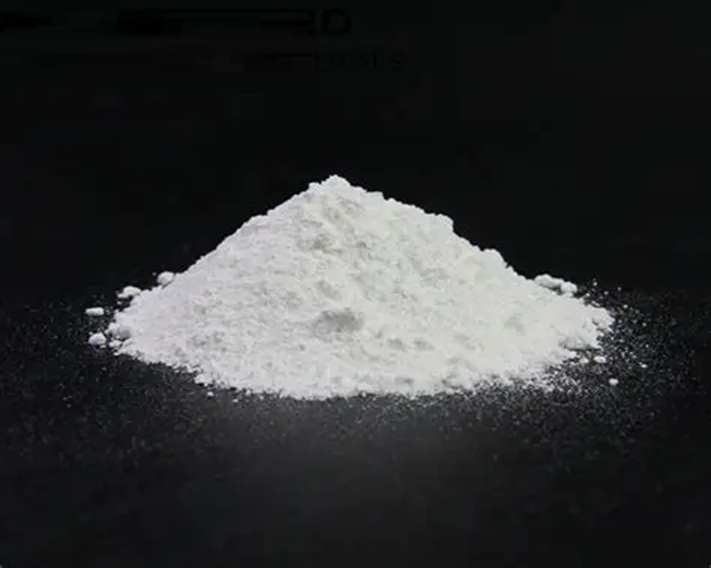
| Appearance | White, odorless, crystalline powder |
| Physical State (20°C) | Solid (powder) |
2. CHEMICAL STRUCTURE
2.1. Molecular Structure
Lanthanum carbonate is the carbonate salt of lanthanum. It consists of lanthanum ions (La³⁺) and carbonate ions (CO₃²⁻) in a 2:3 ratio. The compound typically exists as a hydrate (La₂(CO₃)₃·xH₂O) with varying water content. The structure is characterized by ionic bonding between lanthanum and carbonate ions, with water molecules incorporated into the crystal lattice.
Structural Features:
                    LANTHANUM CARBONATE (La₂(CO₃)₃·xH₂O)
                          |
                La³⁺ - CO₃²⁻ Bağları
                          |
            Kristalimsi / Amorf Yapı
                          |
        +----------------+----------------+
        |                |                |
    İyonik Yapı     Hidrat Suyu      Kararlılık
                    (xH₂O)
2.2. Structural Properties
| Parameter | Value |
|---|---|
| Crystal System | Amorphous to partially crystalline |
| Molecular Weight | ~457.84 g/mol (anhydrous) |
| Water Content | Variable (typically 1-3 moles H₂O) |
| Density | ~4.3 g/cm³ |
| Surface Area | Moderate (pharmaceutical grades often have controlled surface area) |
| Particle Size | Variable (micro to sub-micron) |
3. PHYSICAL AND CHEMICAL PROPERTIES
| Property | Value | Description |
|---|---|---|
| Appearance | White, odorless, crystalline powder | - |
| Chemical Formula | La₂(CO₃)₃·xH₂O | - |
| Molecular Weight | ~457.84 g/mol (anhydrous) | - |
| Density | ~4.3 g/cm³ | - |
| Solubility in Water | Insoluble | - |
| Solubility in Acids | Soluble (with CO₂ evolution) | - |
| pH (suspension) | Slightly basic | - |
| Decomposition Temperature | ~500-600°C (to La₂O₃) | - |
| Water of Hydration | Variable (x = 1-3) | - |
| Stability | Stable under normal conditions | - |
| Hygroscopicity | Low to moderate | - |
| Refractive Index | ~1.78 | - |
4. PURITY GRADES
| Parameter | Industrial Grade | Pharmaceutical Grade | High Purity Grade |
|---|---|---|---|
| Purity | ≥ 99.0% | ≥ 99.5% | ≥ 99.9% |
| La₂(CO₃)₃ Content | ≥ 99.0% | ≥ 99.5% | ≥ 99.9% |
| Heavy Metals (as Pb) | ≤ 50 ppm | ≤ 10 ppm | ≤ 5 ppm |
| Iron (Fe) | ≤ 50 ppm | ≤ 20 ppm | ≤ 10 ppm |
| Calcium (Ca) | ≤ 100 ppm | ≤ 50 ppm | ≤ 20 ppm |
| Sodium (Na) | ≤ 200 ppm | ≤ 100 ppm | ≤ 50 ppm |
| Chloride (Cl⁻) | ≤ 0.1% | ≤ 0.05% | ≤ 0.02% |
| Sulfate (SO₄²⁻) | ≤ 0.2% | ≤ 0.1% | ≤ 0.05% |
| Other Rare Earths | ≤ 1.0% | ≤ 0.5% | ≤ 0.1% |
| Loss on Drying | ≤ 5.0% | ≤ 3.0% | ≤ 2.0% |
| Total Impurities | ≤ 1.0% | ≤ 0.5% | ≤ 0.1% |
5. STABILITY AND REACTIVITY
| Parameter | Information |
|---|---|
| Chemical Stability | Stable under normal conditions |
| Conditions to Avoid | High temperature (>600°C), strong acids |
| Incompatible Materials | Strong acids (evolves CO₂), strong oxidizing agents |
| Hazardous Decomposition Products | Lanthanum oxide (La₂O₃), carbon dioxide (CO₂) |
| Hazardous Polymerization | Will not occur |
| Decomposition | La₂(CO₃)₃ → La₂O₃ + 3CO₂ (at >600°C) |
5.1. Chemical Reactions
Acid Dissolution (with Acid):
La₂(CO₃)₃ + 6HCl → 2LaCl₃ + 3H₂O + 3CO₂↑
La₂(CO₃)₃ + 6HNO₃ → 2La(NO₃)₃ + 3H₂O + 3CO₂↑
Thermal Decomposition:
La₂(CO₃)₃·xH₂O → La₂(CO₃)₃ → La₂O₃ + 3CO₂↑
6. APPLICATION AREAS
6.1. Pharmaceutical / Medical Use (Most Important Application)
| Application | Function | Details |
|---|---|---|
| Phosphate Binder | Phosphate binding | Used in chronic kidney disease (CKD) patients to control serum phosphate levels |
| Hyperphosphatemia Treatment | Phosphate reduction | Reduces phosphate absorption from the gastrointestinal tract |
| Renal Failure Support | Mineral balance | Maintains calcium-phosphate balance |
| Dialysis Patients | Phosphate control | Prevents complications of hyperphosphatemia |
| Calcium-Free Binder | Phosphate binding | Preferred in some patients due to no calcium content |
6.2. Ceramics Industry
| Application | Function | Details |
|---|---|---|
| High Temperature Ceramics | Thermal stability | Improves high temperature resistance |
| Dielectric Components | Dielectric additive | Enhances dielectric properties |
| Electronic Ceramics | Dopant | Improves electrical properties |
| Refractory Materials | Heat resistance | High temperature applications |
| Pigment Precursor | Color additive | Precursor for ceramic pigments |
6.3. Glass Production
| Application | Function | Details |
|---|---|---|
| UV Absorbing Glass | UV protection | Absorbs ultraviolet light |
| Color Stabilization | Color control | Stabilizes glass color |
| Optical Glass | Refractive index | Enhances optical properties |
| Specialty Glass | Additive | Improves glass properties |
6.4. Catalyst Applications
| Application | Function | Details |
|---|---|---|
| Petroleum Refining | Catalyst precursor | FCC catalyst precursor |
| Catalyst Support | Support material | Support for active catalytic components |
| Chemical Synthesis | Precursor | Precursor for various catalysts |
| Environmental Catalysis | DeNOx catalysts | Emission control |
6.5. Other Applications
| Application | Function | Details |
|---|---|---|
| Research Reagent | Laboratory chemical | Chemical research |
| Chemical Intermediate | Precursor | Precursor for other lanthanum compounds |
| Electronics | Thin film precursor | Deposition of lanthanum-containing films |
7. PHARMACEUTICAL MECHANISM OF ACTION
7.1. Phosphate Binding Mechanism
Lanthanum carbonate acts as a phosphate binder in the gastrointestinal tract. It binds dietary phosphate, forming insoluble lanthanum phosphate complexes that are not absorbed and are excreted in the feces.
Binding Reaction:
La₂(CO₃)₃ + 2PO₄³⁻ → 2LaPO₄ + 3CO₃²⁻
7.2. Clinical Benefits
| Benefit | Description |
|---|---|
| Phosphate Reduction | Reduces serum phosphate levels in CKD patients |
| Calcium-Free | Does not contribute to calcium overload |
| No Systemic Absorption | Minimal systemic absorption (<0.001%) |
| Minimal Drug Interactions | Few clinically significant interactions |
| Improved Survival | May improve outcomes in dialysis patients |
8. PHARMACEUTICAL FORMULATIONS
| Formulation Type | Strength | Indication |
|---|---|---|
| Chewable Tablets | 500 mg, 750 mg, 1000 mg | Phosphate binding in CKD |
| Powder for Suspension | Various strengths | Same indication |
| Oral Suspension | Various strengths | Same indication |
9. PRODUCTION PROCESS
9.1. Ore Sources
Lanthanum carbonate is derived from lanthanum-containing ores:
| Ore Type | Lanthanum Content | Main Locations |
|---|---|---|
| Monazite | 10-30% of REE content | Australia, Brazil, India, China |
| Bastnäsite | 20-30% of REE content | China, USA (Mountain Pass), Vietnam |
| Xenotime | 5-10% of REE content | China, Malaysia, Australia |
9.2. Production Process Flow
Ore → Crushing/Grinding → Acid Digestion → Solvent Extraction
         ↓
Lanthanum Concentrate (LaCl₃ or La(NO₃)₃)
         ↓
Carbonation (with Na₂CO₃ or (NH₄)₂CO₃)
         ↓
Precipitation of La₂(CO₃)₃·xH₂O
         ↓
Filtration → Washing → Drying (Low Temperature)
         ↓
Milling → Classification → Packaging
9.3. Process Stages
| Stage | Description |
|---|---|
| 1. Ore Processing | Ore is crushed, ground, and digested with acid |
| 2. Solvent Extraction | Lanthanum is separated from other rare earth elements |
| 3. Purification | Lanthanum is purified as LaCl₃ or La(NO₃)₃ |
| 4. Carbonation | Lanthanum solution is precipitated with sodium carbonate or ammonium carbonate |
| 5. Precipitation | La₂(CO₃)₃·xH₂O is precipitated |
| 6. Filtration and Washing | Precipitate is filtered and washed to remove impurities |
| 7. Drying | Dried at low temperature to control water content |
| 8. Milling and Packaging | Milled to desired particle size and packaged in moisture-proof containers |
10. ALTERNATIVE MATERIALS COMPARISON
| Application Area | Alternative Materials | Notes |
|---|---|---|
| Phosphate Binder | Sevelamer, Calcium Acetate | Lanthanum carbonate is calcium-free, preferred in certain patients |
| Ceramic Additive | Zirconium Carbonate, Alumina | Different thermal expansion coefficients |
| Glass Additive | Cerium Oxide, Titanium Dioxide | Different UV filtering and color properties |
11. SAFETY AND TOXICOLOGY
| Parameter | Value |
|---|---|
| Acute Oral Toxicity (LD50, Rat) | > 2,000 mg/kg (low toxicity) |
| Dermal Toxicity | Low |
| Skin Irritation | Mild irritant |
| Eye Irritation | Mild irritant |
| Inhalation | Dust may cause respiratory irritation |
| Carcinogenicity | Not classified as a carcinogen |
| Mutagenicity | Not mutagenic |
| Reproductive Toxicity | No significant toxicity observed |
| Chronic Effects | May cause gastrointestinal effects at high doses |
| Systemic Absorption | Minimal (<0.001%) |
| Environmental Hazards | Low toxicity to aquatic life |
12. GHS CLASSIFICATION
| Hazard Class | Category | H-Statement |
|---|---|---|
| Skin Irritation | Category 2 | H315: Causes skin irritation |
| Eye Irritation | Category 2 | H319: Causes serious eye irritation |
| Specific Target Organ Toxicity | Category 3 | H335: May cause respiratory irritation |
Signal Word: WARNING
Hazard Pictograms: GHS07 (Exclamation Mark)
13. PRECAUTIONARY STATEMENTS (P-CODES)
| Code | Statement |
|---|---|
| P261 | Avoid breathing dust |
| P264 | Wash hands thoroughly after handling |
| P271 | Use only in well-ventilated areas |
| P280 | Wear protective gloves/eye protection/face protection |
| P302+P352 | IF ON SKIN: Wash with plenty of soap and water |
| P304+P340 | IF INHALED: Remove person to fresh air and keep comfortable for breathing |
| P305+P351+P338 | IF IN EYES: Rinse cautiously with water for several minutes. Remove contact lenses if present |
| P337+P313 | If eye irritation persists: Get medical advice/attention |
| P501 | Dispose of contents/container in accordance with local regulations |
14. FIRST AID MEASURES
| Route of Exposure | Action to Be Taken |
|---|---|
| Inhalation | Move to fresh air. If symptoms persist, seek medical attention |
| Skin Contact | Wash with plenty of soap and water. Remove contaminated clothing |
| Eye Contact | Rinse thoroughly with plenty of water for at least 15 minutes. Remove contact lenses. If irritation persists, seek medical attention |
| Ingestion | Rinse mouth. Drink plenty of water. If large amount is swallowed, seek medical attention |
15. STORAGE AND SHELF LIFE
| Parameter | Condition |
|---|---|
| Storage Conditions | Store in a cool, dry, well-ventilated area |
| Container Requirements | Moisture-proof containers |
| Moisture Protection | Keep away from moisture; store with desiccant |
| Temperature | Room temperature (15-25°C) |
| Shelf Life | 24 months under proper conditions (pharmaceutical grade) |
| Stability Note | Stable under normal conditions; avoid high temperatures |
16. PACKAGING OPTIONS
| Packaging Type | Quantity | Material |
|---|---|---|
| Kraft Bag | 25 kg | PE-lined, moisture-proof |
| Fiber Drum | 25 kg, 50 kg | PE-lined, moisture-proof |
| Plastic Drum | 25 kg, 50 kg | HDPE drum |
| Vacuum Bag | 1 kg, 5 kg, 10 kg | Aluminum foil laminated |
17. TRANSPORT INFORMATION
| Parameter | Information |
|---|---|
| UN Number | Not applicable (not dangerous goods) |
| Hazard Class | Not applicable |
| Packing Group | Not applicable |
| ADR/RID | Not regulated |
| IMDG | Not regulated |
| IATA | Not regulated |
18. REGULATORY STATUS
| Region / Authority | Status |
|---|---|
| USA (FDA) | Approved as phosphate binder (Fosrenol®) |
| European Union (EMA) | Approved for use |
| Turkey | Approved for pharmaceutical use |
| Canada | Approved for use |
| Australia | Approved for use |
| Japan | Approved for use |
19. OTHER NAMES AND SYNONYMS
-
Lanthanum(III) Carbonate
-
La₂(CO₃)₃
-
Lanthanum Carbonate Hydrate
-
Pharmaceutical Grade Lanthanum Carbonate
-
CKD Phosphate Binder
-
Fosrenol (Trademark)
-
Lanthanum Carbonate Octahydrate (in some contexts)
20. QUICK REFERENCE TABLE
| Property | Value |
|---|---|
| CAS Number | 54451-24-0 |
| EC Number | 259-290-4 |
| Chemical Formula | La₂(CO₃)₃·xH₂O |
| Molecular Weight | ~457.84 g/mol (anhydrous) |
| Appearance | White, odorless, crystalline powder |
| Density | ~4.3 g/cm³ |
| Water Solubility | Insoluble |
| Acid Solubility | Soluble (with CO₂ evolution) |
| pH (suspension) | Slightly basic |
| Purity | 99.0-99.9% |
| Pharmaceutical Use | Phosphate binder (Fosrenol®) |
| HS Code | 2836.99 |
| GHS Signal Word | WARNING |
| UN Number | Not applicable |
21. CRITICAL NOTICES AND BEST PRACTICES
CRITICAL NOTICES:
-
Pharmaceutical Grade: Lanthanum carbonate is a critical pharmaceutical ingredient for CKD patients. Strict quality control is required for pharmaceutical applications.
-
Acid Reactivity: Dissolves in acids with CO₂ evolution. Should not be used with acidic solutions.
-
Moisture Sensitivity: While not highly hygroscopic, moisture-proof packaging is recommended to maintain product quality.
-
Thermal Sensitivity: Decomposes above 500-600°C. Should not be heated above this temperature.
-
Purity Requirements: Pharmaceutical grade requires high purity (>99.5%) with strict control of heavy metals and other impurities.
-
Phosphate Binding: Mechanism is pH-dependent; optimal activity at gastric pH.
-
Shelf Life: Pharmaceutical products typically have 24-month shelf life; industrial grades may have longer shelf life.
BEST PRACTICE RECOMMENDATIONS:
Storage:
-
Store in a cool, dry, well-ventilated area
-
Use moisture-proof containers
-
Keep away from acids and CO₂ sources
-
Store at room temperature (15-25°C)
Handling:
-
Use in well-ventilated areas
-
Use dust mask, protective goggles, and gloves
-
Avoid dust formation
-
Wash hands after handling
Pharmaceutical Applications:
-
Strict adherence to pharmacopoeia standards
-
Particle size control for consistent performance
-
Stability testing as per guidelines
-
Compatible excipients selection
Waste Management:
-
Dispose in accordance with local regulations
-
Consider rare earth recovery for large quantities
LEGAL DISCLAIMER
This Technical Data Sheet (TDS) is for informational purposes only and is prepared based on available technical data. The user is solely responsible for determining the suitability of the product for their specific application and for complying with all local, national, and international regulations. For complete safety, storage, handling, transport, waste, and regulatory compliance information, the official Safety Data Sheet (SDS/MSDS) provided by the manufacturer/supplier must be consulted. This document does not substitute professional advice. For pharmaceutical applications, this document does not replace the official drug product information.