We unleash your business potential by maximize the business innovation.
Send EmailDimethylpyrazole Phosphate, 3,4-Dimethylpyrazole Phosphate, Pyrazole-based Nitrification Inhibitor, DMPP, 202842-98-6
DMPP (3,4-DIMETHYLPYRAZOLE PHOSPHATE)
1. PRODUCT DEFINITION AND CHEMICAL IDENTITY
| Parameter | Description |
|---|---|
| Chemical Name | 3,4-Dimethylpyrazole Phosphate |
| Common Abbreviation | DMPP |
| CAS Number | 202842-98-6 |
| Chemical Class | Nitrification Inhibitor |
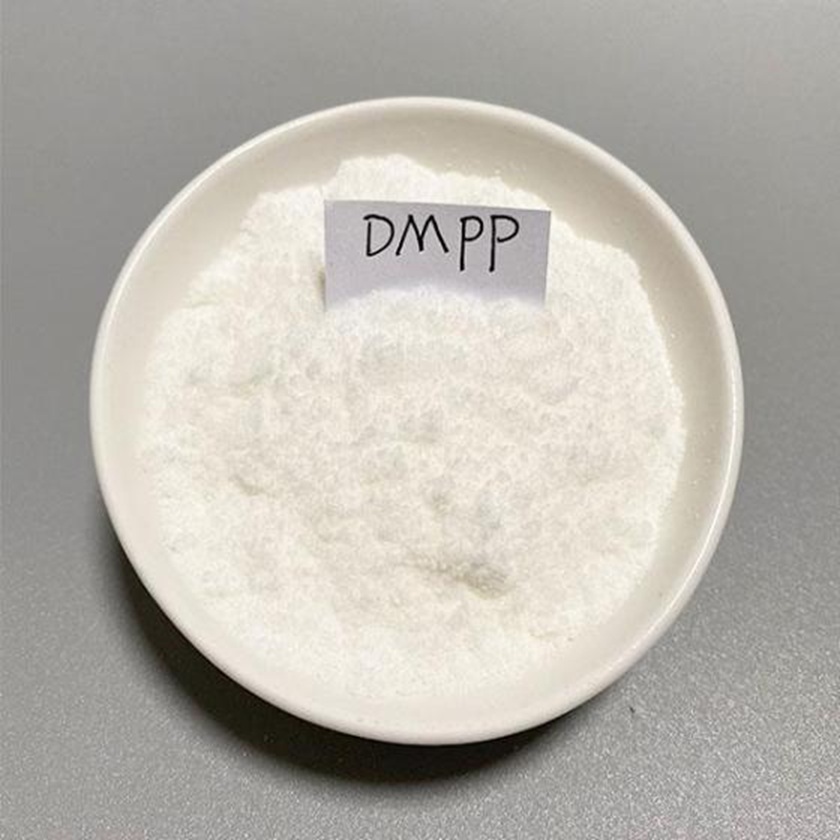
| Appearance | Whitish powder or liquid additive |
| Function | Delays the conversion of ammonium nitrogen to nitrate nitrogen in soil |
Note: DMPP is a specialized nitrification inhibitor used as an additive in nitrogenous fertilizers. It significantly enhances nitrogen use efficiency by stabilizing ammonium in the soil for an extended period (6–10 weeks), thereby reducing nitrogen losses through nitrate leaching and denitrification.
2. PHYSICAL AND CHEMICAL PROPERTIES
| Property | Description |
|---|---|
| Physical form | Whitish powder (solid) or liquid additive |
| Solubility | Formulated for incorporation into granular NPK fertilizers; liquid forms are miscible with water and liquid fertilizers |
| Stability | Stable under normal storage conditions; sensitive to very high temperatures (>30 °C may increase volatilization risk upon application) |
| Mode of Action | Inhibits the activity of Nitrosomonas bacteria, slowing the first step of nitrification |
3. FUNCTIONAL PROPERTIES AND MECHANISM OF ACTION
-
Nitrification Inhibition: DMPP selectively suppresses the activity of Nitrosomonas bacteria in the soil, which are responsible for the first and rate-limiting step of nitrification (the oxidation of ammonium (NH₄⁺) to nitrite (NO₂⁻)). This keeps nitrogen in the stable, plant-available ammonium form for a longer period.
-
Nitrogen Loss Prevention: By slowing the conversion to nitrate (NO₃⁻), DMPP significantly reduces nitrogen losses via nitrate leaching into groundwater and gaseous losses via denitrification (N₂O, N₂).
-
Extended Nitrogen Availability: Provides a controlled and prolonged nitrogen supply to crops over 6–10 weeks, aligning nitrogen availability with the peak demand periods of the plant.
-
Enhanced Yield and Quality: Improves nitrogen use efficiency, leading to better root development, more vigorous vegetative growth (darker green leaves), and ultimately higher crop yields and quality. Controlled trials have reported yield increases of 10–20%.
-
Environmental Benefit: By reducing nitrate leaching and nitrous oxide (a potent greenhouse gas) emissions, DMPP contributes to more sustainable and environmentally friendly agricultural practices.
4. PRODUCTION PROCESS (Summary)
-
Raw Materials: 3,4-Dimethylpyrazole (the core building block) is reacted with a phosphorylating agent (e.g., phosphoric acid) in a suitable polar aprotic solvent (e.g., DMF, DMSO).
-
Reaction: The condensation and phosphatization are carried out under controlled temperature (typically 50–80 °C) and pH conditions in a glass-lined or stainless steel reactor.
-
Purification: The crude product is purified via crystallization, filtration, or solvent extraction to remove impurities.
-
Drying and Packaging: The final product is dried to a whitish powder or formulated as a liquid and packaged accordingly.
5. SECTORAL APPLICATION AND USAGE GUIDE
| Crop Group | Typical Crops | Application Timing | Method |
|---|---|---|---|
| Field Crops | Corn, wheat, sunflower | Pre-planting or at sowing | Granular fertilizer with DMPP applied by broadcasting or banding; incorporate into soil. |
| Vegetables & Fruits | Tomatoes, peppers, vineyards, orchards | At planting or as a side-dressing | Granular or liquid forms applied via drip irrigation systems. |
| Greenhouse Crops | High-value vegetables, ornamentals | Throughout the growing cycle via fertigation | Liquid DMPP dosed into the irrigation water at ppm levels. |
Critical Application Prerequisites:
-
Soil Contact is Mandatory: DMPP must be incorporated into the soil or washed in by rain/irrigation shortly after application. Leaving it on the surface renders it ineffective.
-
Optimal Conditions: Performs best under neutral pH and moderate temperature conditions (<30 °C).
6. DOSAGE GUIDELINES (for Granular NPK Formulations Containing DMPP)
| Typical Product DMPP Content | Application Rate | Target Crops |
|---|---|---|
| 0.5% | 30–50 kg/da | Greenhouse crops, seedlings |
| 0.8% | 25–40 kg/da | Corn, wheat, sunflower |
| 1.0% | 20–30 kg/da | Vegetables, fruits, vineyards |
Liquid Formulation Dosage: Typically 1–2 L/ha, depending on the product formulation. Follow the manufacturer's specific recommendations.
7. ALTERNATIVES AND COMPARISON (Nitrification Inhibitors)
| Inhibitor | CAS No | Duration | Cost | Key Features and Comparison to DMPP |
|---|---|---|---|---|
| DMPP | 202842-98-6 | 6–10 weeks | Medium | Reference product. Excellent crop compatibility, well-established for a wide range of crops. |
| DCD (Dicyandiamide) | 461-58-5 | 4–6 weeks | Low | Most common inhibitor; lower cost but a shorter efficacy duration than DMPP. |
| Nitrapyrin (NPPT) | 1929-82-4 | 6–8 weeks | High | Highly effective but has a high volatility risk, requiring immediate incorporation. DMPP is less volatile. |
| DMPSA | 202842-98-6 | 8–12 weeks | Medium | Similar structure to DMPP; offers a longer duration and is considered very environmentally friendly. |
| NBPT | 94317-64-3 | 1–2 weeks | Low | A urease inhibitor, not a nitrification inhibitor. It prevents volatilization loss from urea, a different mechanism than DMPP. |
8. BENEFITS AND POTENTIAL RISKS
| ✅ Benefits | ❌ Potential Risks / Limitations |
|---|---|
| Reduces nitrogen leaching and gaseous loss | Microbial balance in the soil may be temporarily suppressed |
| Increases crop yield by 10–20% | Ineffective if left on the soil surface (requires incorporation) |
| Environmentally friendly: reduces nitrate pollution and N₂O emissions | Overdosing can negatively impact plant development |
| Provides a more balanced nitrogen nutrition | Efficacy decreases at high temperatures (>30 °C) due to increased volatility |
| Improves fertilizer efficiency and return on investment | Has a limited effective duration (6–10 weeks); may not cover the entire growing season for long-cycle crops |
9. SAFETY, STORAGE, AND REGULATORY INFORMATION
-
GHS Classification: Not classified as a dangerous substance according to CLP. Always refer to the supplier's Safety Data Sheet (SDS) for the specific formulation.
-
Storage: Store in a cool, dry, and well-ventilated area. Keep containers tightly closed. For liquid forms, protect from freezing.
-
Personal Protection: Standard industrial hygiene practices (gloves, safety goggles) are recommended. Avoid breathing dust.
-
Environmental Precautions: Prevent large quantities from directly entering waterways or groundwater. The product is designed to degrade in the soil environment.
-
Transport: Not classified as dangerous goods for transport (UN class not applicable). An MSDS is required for commercial shipment.
-
Packaging:
-
Solid: 25 kg PE bags, 500 kg big bags.
-
Liquid: 1 L bottles, 200 L drums, 1000 L IBCs.
-
10. QUICK REFERENCE TABLE
| Property | Value / Description |
|---|---|
| Product Name | DMPP (3,4-Dimethylpyrazole Phosphate) |
| CAS | 202842-98-6 |
| Function | Nitrification Inhibitor |
| Appearance | Whitish powder or liquid additive |
| Effective Duration | 6–10 weeks |
| Dosage in NPK | Typically 0.5–1.0% by weight of fertilizer |
| Key Benefit | Prevents nitrogen loss, increases crop yield by 10–20% |
| Key Application Note | Must be incorporated into the soil or watered in; do not leave on the surface |