We unleash your business potential by maximize the business innovation.
Send EmailDiatomite, Diatomaceous Earth, Diatom Soil, Amorphous Silicon Dioxide, Kieselguhr, Filter Aid, Fossil Shell Flour, Siliceous Clay, Kizelgur, 61790-53-2, 68855-54-9, 91053-39-3, 60676-86-0, 7631-86-9
DIATOMITE (DIATOMACEOUS EARTH)
Chemical Name: Amorphous Silicon Dioxide
Common Name: Diatomite, Diatomaceous Earth
CAS Numbers:
-
Natural: 61790-53-2
-
Flux-Calcined: 68855-54-9
-
Food Grade: 91053-39-3
-
Silica (General): 60676-86-0
-
Silicon Dioxide: 7631-86-9
1. PRODUCT IDENTIFICATION AND CHEMICAL IDENTITY
| Parameter | Description |
|---|---|
| Chemical Name | Amorphous Silicon Dioxide |
| Common Name | Diatomite, Diatomaceous Earth |
| Other Names | Kieselguhr, Filter Earth, Siliceous Clay, Fossil Shell Flour, Diatom Soil, Kizelgur |
| CAS Number (Natural) | 61790-53-2 |
| CAS Number (Flux-Calcined) | 68855-54-9 |
| CAS Number (Food Grade) | 91053-39-3 |
| CAS Number (Silica, General) | 60676-86-0 |
| CAS Number (Silicon Dioxide) | 7631-86-9 |
| Chemical Formula | SiO₂ (amorphous, primary component) |
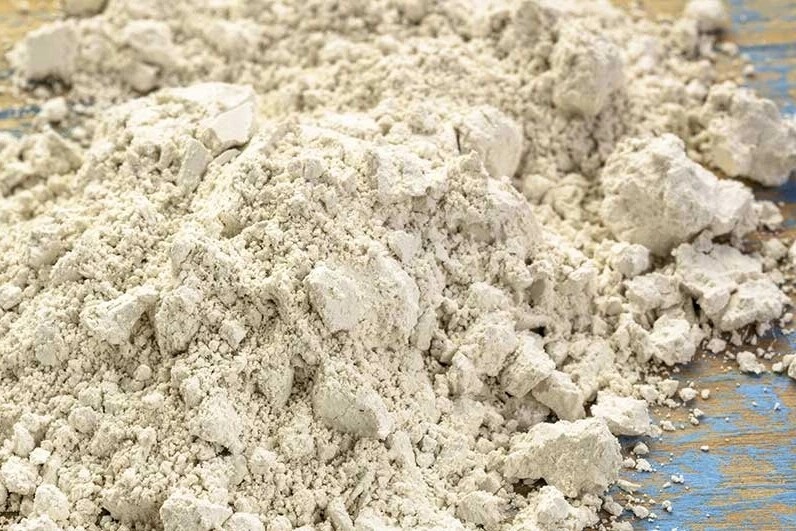
| Appearance | White, beige, or light cream-colored fine powder |
Note: Diatomite is a natural sedimentary rock formed from the siliceous shells of fossilized microscopic aquatic algae (diatoms). Its high porosity, low density, and chemical inertness make it a versatile industrial material. It is available in different forms: natural, calcined, and flux-calcined.
2. CHEMICAL STRUCTURE AND EXPLANATION
Chemical Structure and Composition:
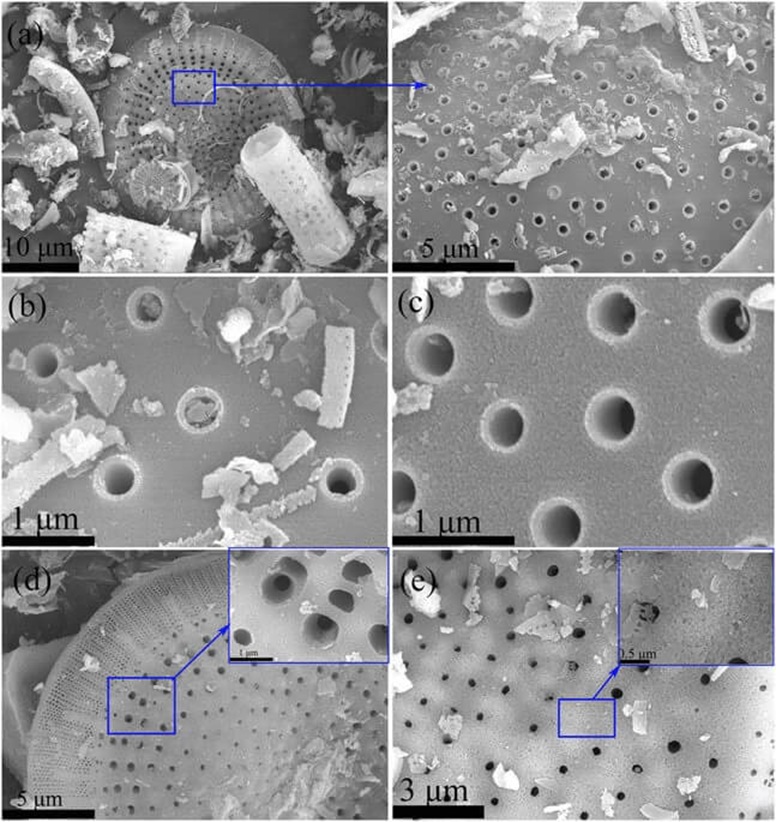
Diatomite consists primarily of amorphous (non-crystalline) silicon dioxide (SiO₂). Its structure is formed by the accumulation of fossilized siliceous (opal) shells of single-celled algae called diatoms. These shells have a microscopic, highly complex, and porous structure.
Molecular Formula Representation:
SiO₂ · nH₂O (opal, hydrated amorphous silica)
While amorphous silica is the main component, natural diatomite also contains small amounts of:
-
Alumina (Al₂O₃)
-
Iron oxide (Fe₂O₃)
-
Calcium oxide (CaO)
-
Magnesium oxide (MgO)
-
Sodium and potassium oxides
-
Organic matter
Calcination removes organic matter and converts a portion of the amorphous silica to cristobalite (crystalline silica).
Simplified Structural Representation:
Diatomite structure can be visualized as a three-dimensional, sponge-like silica network:
        O        O        O
        |        |        |
    ---Si---O---Si---O---Si---
        |        |        |
        O        O        O
        |        |        |
    ---Si---O---Si---O---Si---
(Amorphous silica network; randomly bonded SiO₄ tetrahedra without a regular crystalline structure)
Diatom Frustule Microstructure:
     /     \
    /  O O  \    (O = pores)
   |  O O O  |
    \  O O  /
     \_____/
(Porous structure of a diatom frustule; regularly arranged pores at the nanometer scale)
Typical Composition (Weight %):
| Component | Natural Diatomite | Calcined Diatomite |
|---|---|---|
| SiO₂ (Amorphous) | 80-90% | 85-92% |
| Al₂O₃ | 2-5% | 2-5% |
| Fe₂O₃ | 0.5-2% | 0.5-2% |
| CaO | 0.5-2% | 0.5-2% |
| MgO | 0.5-1% | 0.5-1% |
| Cristobalite | None | 5-30% (from calcination) |
| Organic Matter | 1-5% | None |
3. PHYSICAL AND CHEMICAL PROPERTIES
| Property | Value / Description |
|---|---|
| Physical Form | Fine powder (micronized) or granular |
| Color | White, beige, light cream |
| Melting Point | 1400 – 1600 °C |
| Bulk Density | ~0.2 – 0.4 g/cm³ (natural, varies with calcination) |
| pH (10% Aqueous Suspension) | ~8.0 (slightly alkaline) |
| Porosity | Very high (70 – 85%) |
| Surface Area (BET) | 10 – 40 m²/g (decreases with calcination) |
| Hardness (Mohs) | 1 – 1.5 (natural); 4.5 – 6 (calcined) |
| Solubility in Water | Insoluble |
| Chemical Inertness | Moderate resistance to acids (except HF); lower resistance to alkalis |
| Thermal Conductivity | Low (good thermal insulator) |
| Refractive Index | 1.4 – 1.5 |
| Specific Heat | ~0.2 cal/g°C |
4. FUNCTIONAL PROPERTIES
High Filtration Capacity: Used as a filter aid in the food, beverage, pharmaceutical, and chemical industries for clarification and particle removal. Flux-calcined grades provide the highest flow rates and clarity.
Absorbency and Adsorption: Its highly porous structure allows it to absorb up to 1.5 times its own weight in liquids. Used in cat litter, industrial spill cleanup, and as a carrier.
Lightweight Filler and Insulation: Functions as a filler material in lightweight concrete blocks, thermal and acoustic insulation boards in the construction sector.
Natural Abrasive: Incorporated into cosmetic and personal care products (peeling creams, toothpastes) as a gentle micro-abrasive.
Stabilizer and Anti-caking Agent: Used in the explosives industry to stabilize sensitive components like nitroglycerin and in dynamite production.
Carrier and Flowability Enhancer: Used as a carrier for active ingredients and as an anti-caking agent in agricultural chemicals, paints, and coatings.
Latex Coagulation Regulator: Functions as a surface control and coagulation regulator in latex processes, particularly in balloon manufacturing.
5. OTHER NAMES AND SYNONYMS
| Turkish | English | Other Languages |
|---|---|---|
| Diatomit | Diatomite | Kieselguhr (German) |
| Diatomlu Toprak | Diatomaceous Earth | Terre de diatomée (French) |
| Kizelgur | Kieselguhr | — |
| Filtre Toprağı | Filter Earth | — |
| Silisli Kil | Siliceous Clay | — |
| — | Fossil Shell Flour | — |
6. PRODUCT TYPES AND TYPICAL SPECIFICATIONS
| Product Type | Production Process | Typical Properties / Application Area |
|---|---|---|
| Natural Diatomite | Dried and ground only, not calcined | Natural porosity; agriculture, construction filler, food-grade applications |
| Calcined Diatomite | Heat-treated at 600 – 1000 °C | Higher hardness, lower surface area; general filtration, paint, cosmetics |
| Flux-Calcined Diatomite | Modified with alkali salts (sodium carbonate) and calcined | Highest filtration performance; beverage, pharmaceutical, and chemical filtration |
| Food-Grade Diatomite | Natural or calcined with heavy metal and contaminant control | Pest control, animal feed additive, food processing aid |
| Pharmaceutical Diatomite | Ultra-pure, low metal content, strict quality control | Pharmaceutical and medical filtration |
7. SECTORAL APPLICATIONS AND USAGE RATES
| Sector | Application | Typical Usage Rate / Description |
|---|---|---|
| Filtration | Filter aid in beverage (beer, wine, juice), pharmaceutical, chemical, water treatment sectors | 0.5 – 5 g/L (depending on liquid); flux-calcined types preferred |
| Construction | Lightweight concrete blocks, thermal/sound insulation boards, lightweight aggregate | 5 – 20% of cement weight as filler |
| Latex / Rubber | Coagulant, surface control agent, balloon production | 1 – 5% (based on latex solids) |
| Cosmetics | Peeling creams, toothpastes, face masks | 1 – 10%; as natural abrasive |
| Pet Products | Cat litter (liquid absorption and odor control) | Pure or mixed with bentonite/zeolite |
| Explosives | Nitroglycerin stabilizer, dynamite component | Formulation-dependent; as carrier and stabilizer |
| Agriculture / Pesticides | Carrier powder, anti-caking agent, insect control (food grade) | 1 – 10% (in formulation); food-grade natural diatomite applied as thin layer for insect control |
| Paint / Coating | Matting agent, filler, viscosity modifier | 2 – 10% (based on total formulation weight) |
| Oil Absorbent / Spill Cleanup | Absorption of industrial liquid spills | Applied directly in pure or granular form |
| Paper | Filler, matting agent, opacity enhancer | 5 – 20% (based on paper weight) |
| Plastics | Filler, anti-block agent, matting agent | 2 – 15% (based on polymer weight) |
8. ALTERNATIVES AND COMPARISON
| Application Area | Diatomite's Role | Alternative Materials | Comparison |
|---|---|---|---|
| Filtration | Filter aid | Perlite, cellulose, activated carbon, zeolite | Perlite has lower density; cellulose is bio-based; activated carbon has high adsorption capacity |
| Latex Coagulation | Surface control, coagulation regulator | Talc, calcite (CaCO₃), zeolite | Talc provides lubricity; calcite buffers pH; zeolite is an ion exchanger |
| Filler and Insulation | Lightweight aggregate, porosity | Perlite, vermiculite, pumice, expanded clay (LECA) | All used for thermal and acoustic insulation; perlite and vermiculite are lighter |
| Cosmetics / Abrasive | Micro-abrasive | Silica powder, pumice powder, polyethylene microspheres (banned) | Natural silica and pumice powder are more environmentally friendly |
| Cat Litter | Absorbent, odor control | Bentonite, zeolite, cellulose granules | Bentonite has high clumping ability; zeolite is an ammonia absorber |
9. REGULATORY STATUS, SAFETY, AND STORAGE
GHS Classification (CLP Regulation):
Warning Word: Not classified (for natural diatomite). Note that even non-calcined diatomite may contain crystalline silica and can cause lung damage if inhaled.
Calcined Diatomite: Cristobalite (crystalline silica) can form during calcination; in this case, the hazard statement H372 (Causes damage to organs through prolonged or repeated exposure via inhalation) is added. Inhalation of calcined diatomite dust poses a serious health risk.
Food Additive: Food-grade diatomite is used as a food processing aid and as an anti-caking agent in animal feed (FDA 21 CFR 573.340). It is permitted in foods under E551 (Silicon Dioxide), but diatomite itself does not carry a direct E-number.
Storage:
-
Store in a dry, cool, well-ventilated area in tightly closed packaging.
-
Protect from moisture; moisture can cause caking and microbial growth.
-
After opening, it is recommended to use the product quickly.
Personal Protective Equipment (PPE):
-
Avoid inhaling dust; use an appropriate dust mask (FFP2/FFP3).
-
Use protective goggles and gloves.
-
Ensure adequate ventilation in the work area. Higher levels of protection are required especially for calcined diatomite dust.
Packaging: Typically sold in 25 kg kraft bags, 500 – 1000 kg big bags, or in bulk.
10. FREQUENTLY ASKED QUESTIONS
Q1: What is the difference between natural diatomite and calcined diatomite?
Natural diatomite is only dried and ground, retaining its raw porous structure and amorphous silica form. Calcined diatomite has been heat-treated at 600-1000 °C. This process gives the product higher hardness, but some of the amorphous silica may convert to cristobalite (crystalline silica). Flux-calcined diatomite is treated with an alkali salt (such as soda) and calcined, offering the highest filtration performance.
Q2: Why is inhaling diatomite dust dangerous?
Especially calcined diatomite can contain crystalline silica (cristobalite), which can cause permanent lung damage when inhaled. Natural diatomite itself, being a fine powder, can also mechanically irritate the respiratory tract. Therefore, when working with diatomite dust, always use an appropriate dust mask and ensure the work area is well-ventilated.
Q3: Can diatomite be used in food?
Yes, food-grade diatomite has passed strict purity controls and can be used as a food processing aid (e.g., for beer and wine filtration) and as an anti-caking agent in animal feed. It can also be applied directly for insect control (in grain silos), but only products labeled "food grade" should be used for this purpose.
Q4: What is the difference between diatomite and perlite?
Both are natural, amorphous silica-based materials used as filter aids and lightweight fillers. Diatomite is derived from fossil algae; perlite is expanded volcanic glass. Perlite generally has a lower bulk density and provides higher flow rates, while diatomite offers finer particles and higher clarity.
Q5: How should diatomite be disposed of?
Used diatomite (e.g., filtration cake) should be disposed of in accordance with local regulations. It is generally classified as non-hazardous waste, but depending on the substances it contains (e.g., filtered chemicals), it may fall into the hazardous waste category. Bulk diatomite powder should not be poured into sewers.
11. QUICK REFERENCE TABLE
| Property | Description |
|---|---|
| Product Name | Diatomite (Diatomaceous Earth) |
| Main CAS (Natural) | 61790-53-2 |
| Main Component | Amorphous Silicon Dioxide (SiO₂) |
| Appearance | White – beige fine powder |
| Melting Point | 1400 – 1600 °C |
| Bulk Density | ~0.2 – 0.4 g/cm³ |
| pH | ~8.0 |
| Main Uses | Filtration, filler, absorbent, abrasive, stabilizer |
| Hazard Warning | Inhalation of calcined form dust may cause lung damage (crystalline silica) |
TECHNICAL APPLICATION GUIDE: FILTRATION WITH DIATOMITE AND OTHER FILTER AIDS
This guide explains how diatomite (kieselguhr) and other filter aids (perlite, cellulose, etc.) are applied in industrial liquid filtration, which equipment is used, and the basic operating principles.
SECTION 1: FILTRATION PRINCIPLE AND FILTER TYPES
Diatomite and similar powders are used in filtration as "filter aids." The purpose is to form a permeable, porous "cake" layer on the surface of the primary filter (cloth, screen, membrane) to trap very fine particles and prevent the filter from clogging.
The main industrial filter types that work with filter aids are:
1. Plate and Frame Filter Presses
Operating Principle: Liquid is passed under high pressure through filter cloths sandwiched between a series of plates and frames. Solid particles and filter aid form a "cake" on the cloths.
Advantages: Large filtration area, high cake capacity, easy cake removal.
Typical Applications: High solids content liquids, beverage industry, chemical plants.
2. Rotary Vacuum Filters
Operating Principle: A rotating drum is partially submerged in a liquid bath. Vacuum is applied through the cloth on the drum surface, drawing liquid through and depositing solids on the drum surface. The cake is scraped off as the cycle completes.
Advantages: Continuous operation, suitable for large volumes.
Typical Applications: Mining, wastewater treatment, large-scale chemical production.
3. Horizontal Leaf Filters
Operating Principle: Horizontally arranged filter elements (leaves) are housed in a vertical tank. These leaves, coated with filter aid, form a cake as liquid passes through.
Advantages: Excellent cake stability (low risk of cake drop), dry cake discharge.
Typical Applications: Beer, wine, edible oil filtration.
4. Vertical Leaf Filters
Operating Principle: Vertically positioned filter elements are used inside a tank. Typically, the cake is cleaned by vibration or air pulse after formation.
Advantages: Compact design, suitable for automatic cleaning.
Typical Applications: Chemical and pharmaceutical industries.
5. Candle Filters
Operating Principle: Cylindrical, long "candle"-shaped filter elements are immersed in a tank. Liquid passes from outside to inside, and the cake forms on the outer surface of the element.
Advantages: Very high filtration precision, closed system, easy cleaning.
Typical Applications: Pharmaceutical, fine chemicals, sterile filtration.
SECTION 2: PLACEMENT OF DIATOMITE AND OTHER FILTER AIDS
Filter aids are introduced into the filtration system using two main methods: Pre-coating and Body Feed. The best results are generally achieved by using both together.
| Method | Description | Diatomite Amount (Typical) |
|---|---|---|
| Pre-coating | Before filtration begins, filter aid suspended in a clean liquid is circulated through the system to form a thin (1.5-3 mm), permeable base cake layer on the filter elements (cloth, leaf, candle). This prevents immediate clogging of the primary filter and facilitates cake removal at the end of filtration. | 0.5 – 1.0 kg/m² of filter area. |
| Body Feed | A small amount of filter aid is continuously dosed into the main liquid being filtered. This makes the solid particles in the liquid incompressible, forming a permeable, thick cake. This allows the filter to operate for much longer periods without clogging. | Depends on the amount of suspended solids in the liquid being filtered. Rule of thumb: 0.01 – 0.1% (weight/volume) or 0.5-2 times the weight of solids. |
Step-by-Step Filtration Process:
-
Preparation: A clean mixing tank is filled with a clear liquid (water, solvent, or the filtrate itself). The required amount of diatomite (or perlite/cellulose blend) for pre-coating is slowly added while stirring. A high-speed mixer is used to prevent agglomeration.
-
Pre-coating: This suspension is pumped to the main filter unit and circulated continuously through the filter elements. This process continues until the liquid at the filter outlet is completely clear (usually 5-15 minutes). A protective diatomite cake has now formed on the filter elements.
-
Body Feed Filtration: After pre-coating is complete, the main liquid feed is started. Simultaneously, body feed (diatomite suspension) begins to be dosed into the main liquid line or the filter inlet tank at the predetermined rate.
-
Filtration and Monitoring: While the system is running, the pressure difference and flow rate are continuously monitored. Body feed ensures that the pressure increase is slow and linear. Filtration is stopped when the pressure reaches the system's maximum limit or when the flow rate drops to an unacceptable level.
-
Cake Removal: The filter is opened, and the accumulated cake (diatomite + trapped solids) is removed mechanically (scraping, vibration) or by backwashing.
Comparative Placement of Diatomite and Other Filter Aids:
| Material | Pre-coat Suitability | Body Feed Suitability | Provided Flow Rate | Provided Clarity |
|---|---|---|---|---|
| Diatomite (Flux-Calcined) | Excellent | Very Good | Medium-High | Very High |
| Diatomite (Calcined) | Very Good | Good | High | Medium-High |
| Perlite | Good | Medium | Very High | Medium |
| Cellulose Fiber | Medium (Compressible) | Poor (Compresses) | High | Low-Medium |
| Diatomite + Cellulose Blend | Excellent | Good | High | High |
Diatomite: The most common and versatile filter aid. With different particle size grades (fine, medium, coarse), it can be optimized to provide both high flow rates and excellent clarity. Flux-calcined diatomite, in particular, offers the highest performance.
Perlite: Has a lower bulk density, so the same weight forms a more voluminous cake. Preferred in applications requiring very high flow rates, but the clarity it provides is not as high as diatomite.
Cellulose Fiber: Due to its compressible nature, it is not typically used alone as a body feed. It is usually added to diatomite or perlite to strengthen the cake structure, prevent cracking, and facilitate filter cleaning.
SUMMARY AND PRACTICAL RECOMMENDATIONS
-
Select the Right Material: Choose the appropriate diatomite/perlite grade (particle size) for your application. Fine particle grades are suitable for high clarity, while coarse particle grades are suitable for high flow rates.
-
Do Not Skip Pre-coating: Pre-coating extends the life of the filter elements and ensures easy cake removal at the end of filtration. It is especially critical for plate and frame filter presses.
-
Optimize Body Feed: The body feed rate should be determined by laboratory tests based on the amount and type of solids in the liquid. Insufficient feed causes rapid clogging, while excessive feed leads to unnecessary costs.
-
Consider Blending: By mixing pure diatomite, perlite, and cellulose fibers in appropriate ratios, both economical and high-performance filter aids can be prepared. For example, a blend of diatomite with a small amount of cellulose prevents cake cracking.
-
Pay Attention to Suspension Preparation: For both pre-coating and body feed, diatomite/perlite should be thoroughly mixed with a sufficient amount of liquid to prevent agglomeration. Typically, 10-20% (weight/volume) stock suspensions are prepared.
-
Pressure Monitoring: Continuously monitor the pressure difference during filtration. Sudden pressure increases may indicate insufficient filter aid dosage or damage to the filter cloth.
-
Safety Precautions: Always use an appropriate dust mask (FFP2/FFP3) and ensure good ventilation when working with diatomite dust. Extra care is required especially with calcined diatomite, as it may contain crystalline silica.
Disclaimer: This Technical Data Sheet (TDS) and Application Guide are for informational purposes only. The information provided is based on available data and is believed to be accurate. However, the user is solely responsible for determining the suitability of the product for their specific applications and for complying with all applicable regulations and safety requirements. For complete safety, handling, storage, and regulatory compliance information, always refer to the official Safety Data Sheet (SDS/MSDS) provided by the manufacturer/supplier. Users are responsible for testing the product in their own processes and applications. All local, national, and international regulations must be followed when working with Diatomite.