Tetraethyl Orthosilicate, Tetraethoxy Silane, Ethyl Silicate, Silicon Ethoxide, Silicon Tetraethoxide, TEOS, 78-10-4
TETRAETHYL ORTHOSILICATE (TEOS) – TETRAETHYL ORTHOSILICATE
1. CHEMICAL IDENTITY AND DEFINITION
| Parameter |
Information |
| Chemical Name (IUPAC) |
Tetraethyl Orthosilicate |
| Other Names |
Tetraethoxysilane, Ethyl Silicate, Silicon Tetraethoxide, Silicic Acid Tetraethyl Ester, Silicon Ethoxide, TEOS |
| Chemical Formula |
Si(OC₂H₅)₄ |
| Molecular Weight |
208.33 g/mol |
| CAS Number |
78-10-4 |
| EC Number (EINECS) |
201-083-8 |
| Appearance |
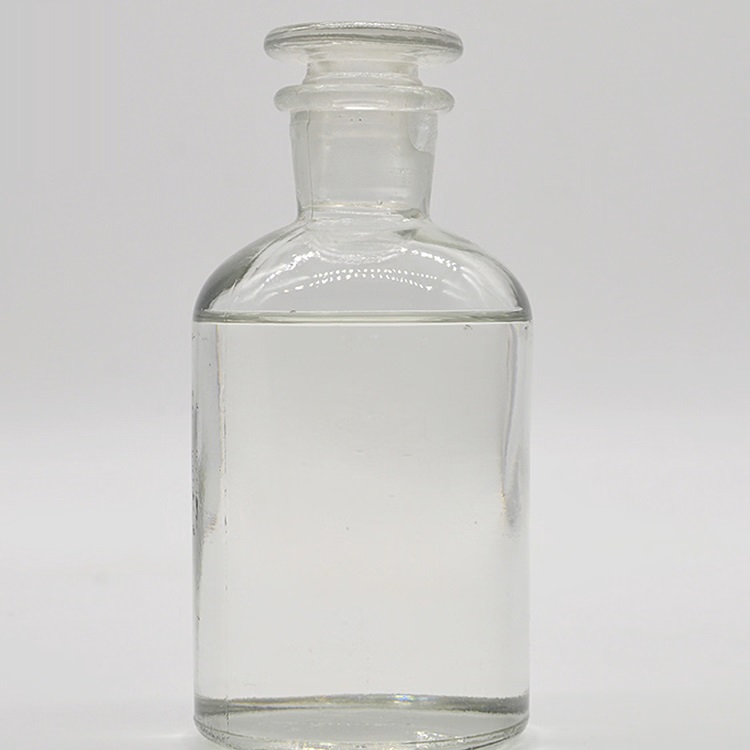
Colorless liquid with pungent odor |
| Odor |
Sharp, characteristic odor |
| Physical State (20°C) |
Liquid |
| Chemical Class |
Organosilicon compound (alkoxide) |
2. WHAT IS TEOS?
Tetraethyl Orthosilicate (TEOS) is an organosilicon compound with the formula Si(OC₂H₅)₄. It is a colorless liquid with a sharp odor, used primarily as a precursor to silicon dioxide (SiO₂). TEOS hydrolyzes in the presence of water to form silica (SiO₂) and ethanol. It is widely used in sol-gel processes, semiconductor manufacturing, coatings, and catalyst synthesis.
3. PHYSICAL PROPERTIES
| Property |
Value |
| Appearance |
Colorless liquid |
| Chemical Formula |
Si(OC₂H₅)₄ |
| Molecular Weight |
208.33 g/mol |
| Density (20°C) |
0.933 g/mL |
| Boiling Point |
168 °C |
| Flash Point |
45 °C |
| Refractive Index |
~1.383 |
| Viscosity (20°C) |
~0.5 cP |
| Solubility in Water |
Reacts (hydrolysis) |
| Solubility in Ethanol |
Soluble |
| Solubility in Isopropanol |
Soluble |
| Vapor Pressure (20°C) |
~0.1 kPa |
| Autoignition Temperature |
~260 °C |
4. CHEMICAL PROPERTIES
| Property |
Information |
| Chemical Formula |
Si(OC₂H₅)₄ |
| CAS Number |
78-10-4 |
| EC Number |
201-083-8 |
| Silica Content (SiO₂) |
~28.8% |
| Ethanol Content |
~71.2% |
| Hydrolysis Reaction |
Si(OC₂H₅)₄ + 4H₂O → Si(OH)₄ + 4C₂H₅OH |
| Condensation Reaction |
Si(OH)₄ → SiO₂ + 2H₂O |
| Reactivity |
Reacts with water (hydrolysis) |
| Stability |
Stable under normal conditions; moisture sensitive |
5. CHEMICAL STRUCTURE
        OC₂H₅
          |
    C₂H₅O — Si — OC₂H₅
          |
        OC₂H₅
Tetrahedral Structure:
              OC₂H₅
              |
    C₂H₅O — Si — OC₂H₅
              |
              OC₂H₅
Hydrolysis and Condensation Reactions:
| Reaction |
Equation |
| Hydrolysis |
Si(OC₂H₅)₄ + 4H₂O → Si(OH)₄ + 4C₂H₅OH |
| Condensation |
Si(OH)₄ → SiO₂ + 2H₂O |
| Overall |
Si(OC₂H₅)₄ + 2H₂O → SiO₂ + 4C₂H₅OH |
6. PRODUCTION
6.1. Chemical Synthesis
| Method |
Reaction |
Description |
| Alcoholysis |
SiCl₄ + 4C₂H₅OH → Si(OC₂H₅)₄ + 4HCl |
Silicon tetrachloride reacts with ethanol |
| Catalyst |
HCl (acid catalyst) |
Speeds up the reaction |
6.2. Leading Manufacturers
| Manufacturer |
Region |
| Evonik |
Germany |
| Sigma-Aldrich |
USA |
| Wacker Chemie |
Germany |
| Momentive |
USA/Global |
6.3. Available Grades
| Grade |
Purity |
Packaging |
Application |
| Technical Grade |
98-99% |
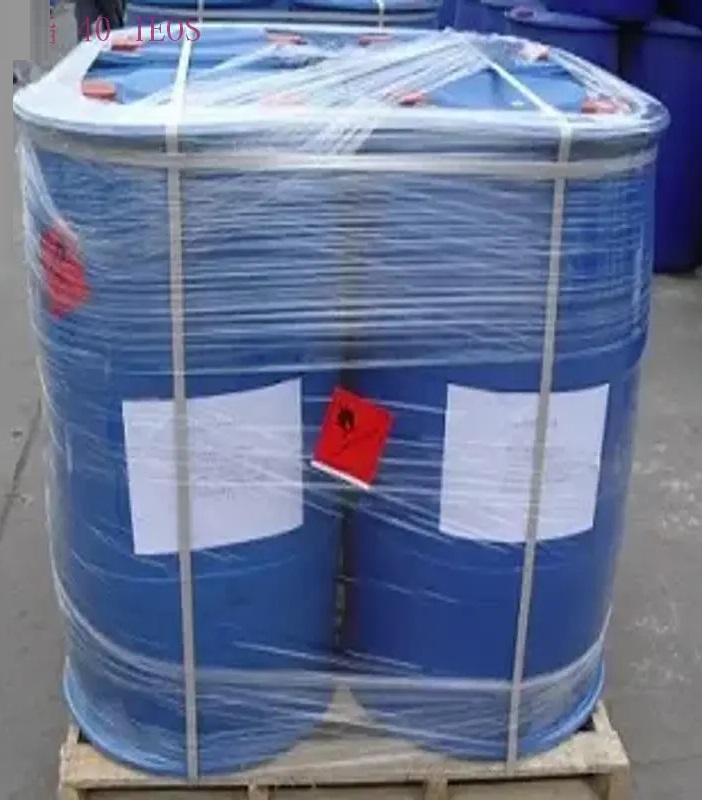
HDPE drums, IBC |
Industrial applications |
| Electronic Grade |
99.99%+ |
Metal-lined IBC |
Semiconductor industry |
| High Purity |
99.999%+ |
Specialty containers |
Research, specialty uses |
7. APPLICATIONS
7.1. Sol-Gel Processes
| Application |
Description |
| Thin Film Coatings |
Anti-reflective and UV barrier coatings |
| Silica Particles |
Monodisperse silica particles (Stöber method) |
| Hydrophobic Surfaces |
Hydrophobic and oleophobic surface treatments |
| Optical Coatings |
Anti-reflective and protective optical coatings |
| Nanocomposites |
Silica-polymer hybrid materials |
7.2. Semiconductor Industry
| Application |
Description |
| SiO₂ Thin Films |
Silicon dioxide insulation layers |
| Dielectric Coatings |
Interlayer dielectrics in microchips |
| CVD Processes |
Chemical Vapor Deposition for SiO₂ |
| MEMS Devices |
Micro-electromechanical systems |
| Spin-on Glass |
Planarization and insulation coatings |
7.3. Stone Consolidation & Restoration
| Application |
Description |
| Historical Restoration |
Strengthening of porous stones |
| Waterproofing |
Water resistance for natural stone |
| Crack Filling |
Microscopic crack filling with SiO₂ |
| Marble/Travertine |
Consolidation of marble and travertine |
| Sandstone |
Strengthening of sandstone structures |
7.4. Zeolite & Catalyst Synthesis
| Application |
Description |
| Zeolite Synthesis |
Silica source for zeolite frameworks |
| Hydrothermal Synthesis |
Zeolite and molecular sieve production |
| Petroleum Catalysts |
Refinery catalyst production |
| Adsorbents |
Adsorbent material production |
7.5. Coatings & Resin Systems
| Application |
Description |
| Crosslinker |
Crosslinking agent in organic silicon resins |
| Textile Coatings |
Carpet and textile surface treatments |
| Wood Protection |
Wood and metal surface protectors |
| Heat-Resistant Paints |
High-temperature paint systems |
| Water Barriers |
Water and oxygen barrier coatings |
7.6. Aerogel Production
| Application |
Description |
| Thermal Insulation |
Ultra-lightweight insulation materials |
| Acoustic Barriers |
Sound insulation applications |
| Space Technology |
Spacecraft insulation |
| Supercapacitors |
Electrode materials for energy storage |
7.7. Other Applications
| Application |
Description |
| Glass Production |
Specialty glass formulations |
| Ceramic Binders |
Ceramic mold production |
| Composite Materials |
Silica-reinforced composites |
| Corrosion Protection |
Passivation coatings on metals |
| Dental Materials |
Dental composites and coatings |
8. TEOS vs ALTERNATIVES
| Alternative |
Description |
Advantages |
Applications |
| TMOS (Tetramethyl Orthosilicate) |
More volatile, faster hydrolysis |
Faster reaction |
Sol-gel, thin films |
| Sodium Silicate |
Aqueous solution, low cost |
Economical |
Foundry binders, waterproofing |
| Ethyl Silicate 40 |
Polymerized TEOS |
Higher solids content |
Ceramic binders, anti-rust coatings |
| Silicic Acid Esters |
Specialty formulations |
Tailored properties |
Zeolite synthesis, optical glass |
Comparison Table:
| Property |
TEOS |
TMOS |
Sodium Silicate |
Ethyl Silicate 40 |
| Formula |
Si(OC₂H₅)₄ |
Si(OCH₃)₄ |
Na₂SiO₃ |
Polymerized TEOS |
| Hydrolysis Rate |
Moderate |
Fast |
Very fast |
Slow |
| Solvent |
Ethanol |
Methanol |
Water |
Ethanol |
| Silica Content |
~28.8% |
~32.5% |
Variable |
~40% |
| Cost |
Moderate |
High |
Low |
Moderate |
| Toxicity |
Low |
High |
Low |
Low |
9. SAFETY AND HEALTH INFORMATION
| Parameter |
Information |
| Hazard |
Flammable liquid |
| Oral LD50 (Rat) |
~5,000 mg/kg |
| Inhalation |
May cause respiratory irritation |
| Skin Contact |
May cause irritation and dryness |
| Eye Contact |
May cause severe irritation |
| Ingestion |
May cause gastrointestinal irritation |
| Carcinogenicity |
Not classified as carcinogenic |
| Mutagenicity |
Negative |
9.1. GHS CLASSIFICATION
| Hazard Category |
Description |
| Flammable Liquids |
Category 3 (H226) |
| Acute Toxicity |
Category 4 (H302) |
| Skin Irritation |
Category 2 (H315) |
| Eye Irritation |
Category 2 (H319) |
| Specific Target Organ Toxicity |
Category 3 (H335) |
9.2. FIRST AID MEASURES
| Route of Exposure |
Action |
| Inhalation |
Remove to fresh air. If breathing difficulty, seek medical attention. |
| Skin Contact |
Wash with plenty of soap and water. Remove contaminated clothing. |
| Eye Contact |
Rinse thoroughly with water for at least 15 minutes. Seek medical attention. |
| Ingestion |
Do NOT induce vomiting. Rinse mouth. Seek medical attention. |
10. STORAGE AND HANDLING
| Parameter |
Information |
| Storage Conditions |
Cool, dry, well-ventilated area |
| Container Requirements |
Tightly closed, original packaging |
| Protect From |
Moisture, water, acids, bases, heat, sparks, flames |
| Shelf Life |
12-24 months (with proper storage) |
| Inert Atmosphere |
Nitrogen blanket recommended |
| Temperature |
15-30°C |
| Special Precautions |
Moisture sensitive; use dry environment |
11. TRANSPORT INFORMATION
| Parameter |
Information |
| UN Number |
1292 |
| Hazard Class |
3 (Flammable Liquid) |
| Packing Group |
III |
| ADR/RID |
3 |
| IMDG Code |
3 |
| IATA (Air) |
3 |
| Marine Pollutant |
No |
12. PACKAGING OPTIONS
| Packaging Type |
Quantity |
Material |
| HDPE Drum |
25-200 kg |
HDPE |
| IBC Container |
800-1000 kg |
Metal-lined IBC |
| Metal Drum |
50-200 kg |
Steel (lined) |
| Glass Bottle |
0.5-2.5 L |
Glass (laboratory) |
13. REGULATORY STATUS
| Region / Authority |
Status |
| European Union (REACH) |
Registered substance |
| USA (EPA TSCA) |
Listed on TSCA inventory |
| Turkey |
Registered substance |
| China |
Listed on inventory |
14. OTHER NAMES AND SYNONYMS
| Type |
Name |
| Turkish Names |
Tetraetil Ortosilikat, Tetraetoksisilan, Etil Silikat, Silikon Tetraetoksit |
| English Names |
Tetraethyl Orthosilicate, Tetraethoxysilane, Ethyl Silicate, Silicon Tetraethoxide |
| Abbreviation |
TEOS |
| CAS Number |
78-10-4 |
15. SUMMARY AND CRITICAL WARNINGS
Product Summary
| Parameter |
Value |
| Product |
Tetraethyl Orthosilicate (TEOS) |
| CAS Number |
78-10-4 |
| Formula |
Si(OC₂H₅)₄ |
| Molecular Weight |
208.33 g/mol |
| Appearance |
Colorless liquid |
| Boiling Point |
168 °C |
| Flash Point |
45 °C |
| Primary Applications |
Sol-gel, semiconductors, coatings, catalysts, aerogels |
CRITICAL WARNINGS
1. Moisture Sensitivity: TEOS hydrolyzes in the presence of water, releasing ethanol and forming silica. Store in airtight containers and protect from moisture.
2. Flammability: Flash point is 45°C. Keep away from heat, sparks, and open flames. Use explosion-proof equipment.
3. Hydrolysis Reaction: TEOS + 4H₂O → Si(OH)₄ + 4C₂H₅OH. This reaction is exothermic and can be vigorous.
4. Silica Formation: Upon complete hydrolysis and condensation, TEOS forms silica (SiO₂), which is useful for coatings and materials.
5. Semiconductor Use: Electronic grade (99.99%+) TEOS is used in CVD processes for SiO₂ thin films.
6. Sol-Gel Processing: Control of hydrolysis rate (pH, temperature, water ratio) is critical for particle size and film quality.
7. Storage: Store under nitrogen blanket to prevent moisture ingress and hydrolysis.
8. Safety: Flammable liquid and vapor. Vapors may form explosive mixtures with air. Use proper ventilation.
**9. Health: May cause skin, eye, and respiratory irritation. Use protective equipment.
**10. Decomposition: Thermal decomposition produces toxic gases including CO and CO₂.
IMPORTANT DISCLAIMER: This Technical Data Sheet (TDS) is for informational purposes only and is prepared based on available technical data. The user is responsible for determining the suitability of the product for their specific application and for complying with all local, national, and international regulations. For complete safety, storage, use, handling, disposal, and regulatory compliance information, refer to the official Safety Data Sheet (SDS/MSDS) provided by the manufacturer/supplier. This document is not a substitute for professional or medical advice.