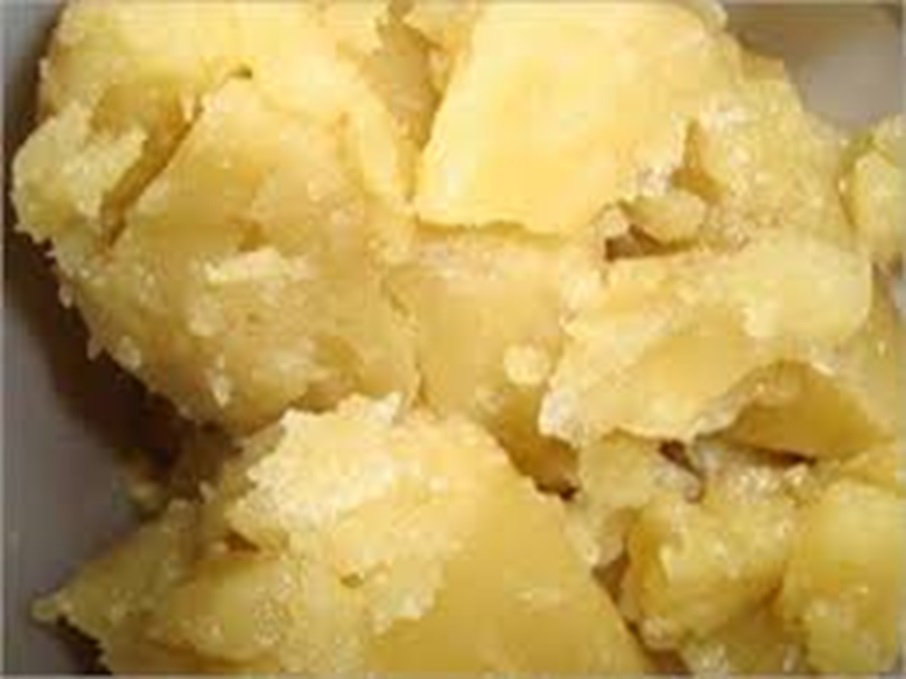
Slack Wax, Crude Wax, Heavy Wax, Dewaxed Residue, Paraffin Slack Wax, 64742-61-6
SLACK WAX (CAS: 64742-61-6)
CAS Number: 64742-61-6
EC Number (EINECS): 265-166-9
Chemical Type: UVCB (Unknown or Variable Composition, Complex Reaction Products or Biological Materials)
Molecular Structure: Complex hydrocarbon mixture (C₂₀⁺ aliphatic hydrocarbons)
SECTION 1: PRODUCT IDENTIFICATION AND CHEMICAL IDENTITY
| Parameter |
Description |
| Chemical Name (IUPAC) |
Petroleum derivative, heavy paraffinic distillate or solvent refined residue |
| Other Names |
Slack Wax, Crude Wax, Heavy Wax, Dewaxed Residue, Paraffin Slack Wax, Base Oil Wax, Spindle Slack Wax, Light Neutral Slack Wax, Bright Stock Slack Wax |
| CAS Number |
64742-61-6 |
| EC Number (EINECS) |
265-166-9 |
| Chemical Class |
UVCB (Unknown or Variable Composition, Complex Reaction Products or Biological Materials) |
| Structure |
C₂₀⁺ straight and branched aliphatic hydrocarbon chains (paraffinic, isoparaffinic, naphthenic) |
| Appearance |
Light brown to dark brown semi-solid |
| Odor |
Characteristic petroleum odor |
| Definition |
Complex hydrocarbon mixture obtained by solvent crystallization (dewaxing) of petroleum fractions or distillation of high-wax content crude oil |
SECTION 2: PHYSICAL AND CHEMICAL PROPERTIES
| Property |
Value / Range |
| Appearance |
Light brown to dark brown semi-solid |
| Melting Point |
45 - 65°C |
| Boiling Point |
> 280°C |
| Flash Point |
> 200°C (Pensky-Martens closed cup) |
| Density (20°C) |
0.89 - 0.91 g/cm³ |
| Autoignition Temperature |
> 300°C |
| Solubility in Water |
Insoluble |
| Solubility in Organic Solvents |
Soluble (benzene, toluene, chloroform, mineral oils) |
| Oil Content |
5% - 30% (varies by product grade) |
| Paraffin Content |
70% - 95% |
| Viscosity (100°C) |
4 - 15 cSt (depends on product grade) |
| Nitrogen Content |
< 0.1% |
| Sulfur Content |
< 0.5% |
| Aromatic Content |
Low - moderate |
| Color (ASTM) |
4 - 8 (depends on product grade) |
SECTION 3: SOLUBILITY PROFILE
| Solvent |
Solubility |
Condition |
| Water |
Insoluble |
- |
| Benzene |
Soluble |
Hot |
| Toluene |
Soluble |
Hot |
| Chloroform |
Soluble |
Hot |
| Mineral Oils |
Soluble |
Hot |
| Aliphatic Hydrocarbons |
Soluble |
Hot |
| Aromatic Hydrocarbons |
Soluble |
Hot |
| Acetone |
Partially soluble |
Hot |
| Alcohol |
Insoluble |
- |
Critical Note: Slack Wax is insoluble in water but miscible with most organic solvents and mineral oils at elevated temperatures. It precipitates from solution upon cooling.
SECTION 4: CHEMICAL PROPERTIES AND REACTIONS
| Property |
Description |
| Chemical Class |
UVCB (Unknown or Variable Composition, Complex) |
| Components |
Straight-chain paraffins (n-paraffins), branched-chain paraffins (isoparaffins), naphthenic hydrocarbons |
| Reactivity |
Low; typical hydrocarbon reactivity |
| Oxidation |
Slow oxidation; surface oxidation upon prolonged exposure to air |
| Thermal Decomposition |
> 300°C releases hydrocarbon vapors, CO₂, and water vapor |
| Halogenation |
Reacts with chlorine to form chlorinated paraffins |
| Sulfochlorination |
Reacts with SO₂/Cl₂ to form sulfochlorinated paraffins |
4.1. Stability
| Parameter |
Information |
| Thermal Stability |
Stable up to 200°C |
| Oxidation Stability |
Moderate; antioxidant additives may be required |
| Hydrolytic Stability |
Does not react with water |
| Incompatibilities |
Strong oxidizers (at high temperature), chlorine (halogenation) |
| Decomposition Products |
CO, CO₂, hydrocarbon vapors |
SECTION 5: COMPOSITION AND CHARACTERIZATION
| Parameter |
Value / Description |
| Main Components |
C₂₀ - C₅₀ aliphatic hydrocarbons |
| n-Paraffin Content |
40% - 70% |
| Isoparaffin Content |
10% - 30% |
| Naphthenic Content |
5% - 20% |
| Aromatic Content |
0% - 10% |
| Olefin Content |
< 1% |
| Oil Content |
5% - 30% |
| Sulfur Content |
< 0.5% |
| Nitrogen Content |
< 0.1% |
| Metal Content |
< 10 ppm |
SECTION 6: PURITY AND QUALITY SPECIFICATIONS
| Parameter |
Typical Value / Range |
| Melting Point |
45 - 65°C |
| Oil Content |
5% - 30% |
| Color (ASTM D1500) |
4 - 8 |
| Ash Content |
< 0.1% |
| Water Content |
< 0.5% |
| Viscosity (100°C) |
4 - 15 cSt |
| Flash Point |
> 200°C |
| Sulfur Content |
< 0.5% |
| Nitrogen Content |
< 0.1% |
| Initial Boiling Point |
> 280°C |
SECTION 7: MAJOR APPLICATIONS AND END-USES
7.1. Plastics and PVC Industry
| Application |
Function |
Suitability |
| PVC Additive |
Paraffin additive, viscosity modifier |
High |
| Mold Release Agent |
Release agent in injection molding |
High |
| Plasticizer |
Secondary plasticizer for PVC and other plastics |
Moderate |
| Slip Agent |
Provides surface slip properties |
High |
7.2. Candle Manufacturing
| Application |
Function |
Suitability |
| Industrial Candles |
Blended with paraffin wax |
High |
| Lighting Candles |
As paraffin substitute or additive |
Moderate |
| Packaging Wax |
Water repellent and protective coating |
High |
7.3. Polishes and Coatings
| Application |
Function |
Suitability |
| Wood Impregnation |
Provides water repellent coating |
High |
| Cardboard Impregnation |
Water repellent and durability enhancer |
High |
| Polishing Waxes |
Surface gloss and protection |
Moderate |
7.4. Lubricants and Greases
| Application |
Function |
Suitability |
| Grease Additive |
Consistency modifier, structurant |
High |
| Lubricant Additive |
Viscosity index improver |
Moderate |
7.5. Rubber Industry
| Application |
Function |
Suitability |
| Rubber Processing Aid |
Processability enhancer |
High |
| Anti-Tack Additive |
Anti-adhesion agent |
Moderate |
7.6. Industrial Applications
| Application |
Function |
Suitability |
| Metalworking Fluids |
Lubricant and corrosion inhibitor |
Moderate |
| Adhesives |
Additive |
Low |
| Inks |
Component |
Low |
SECTION 8: INDUSTRY SUITABILITY MATRIX
| Industry |
Suitability |
Description |
| Plastics / PVC |
High |
Paraffin additive, viscosity modifier, mold release agent |
| Candle Manufacturing |
High |
Blended with paraffin for industrial candles |
| Polishes and Coatings |
High |
Wood and cardboard impregnation, water repellent coating |
| Lubricants / Greases |
Moderate |
Grease consistency modifier, viscosity index improver |
| Rubber Industry |
Moderate |
Processing aid, anti-tack additive |
| Cosmetics |
Not Suitable |
Not cosmetic grade; cannot be used without refining |
| Pharmaceuticals |
Not Suitable |
Not pharmaceutical grade |
| Food |
Not Suitable |
Not approved as food additive |
| Textiles |
Moderate |
Limited use as softener and water repellent |
| Automotive |
Moderate |
Grease and coating applications |
SECTION 9: TURKISH COMMERCIAL AND TECHNICAL NAMES
| Turkish Name |
Description / Usage Note |
| Slack Vaks |
Most common technical name; direct translation |
| Ham Parafin Vaksı |
Emphasizes unrefined paraffin content |
| Spindle Slack Vaks |
Low viscosity variant; typically contains neutral oil |
| Light Neutral Slack Vaks |
Light colored, low oil content variant |
| Bright Stock Slack Vaks |
Bright stock based; high molecular weight fraction |
| Ağır Vaks (Heavy Wax) |
Used for high melting point variants |
| Dewaxing Artığı |
Fraction remaining after solvent dewaxing |
| Baz Yağ Mum Karışımı |
General name for complex base oil and wax mixtures |
| Ham Petrol Vaksı |
Unrefined petroleum-derived wax |
| Parafin Slack Vaksı |
Emphasizes paraffin content |
SECTION 10: DERIVATIVES AND RELATED PRODUCTS
| Product / Derivative |
Description |
| Refined Paraffin Wax |
Purified product obtained by refining Slack Wax |
| Microcrystalline Wax |
High melting point wax obtained by fractionation of Slack Wax |
| Synthetic Paraffin |
Synthetic paraffin produced by Fischer-Tropsch process |
| Chlorinated Paraffin |
Plasticizer obtained by chlorination of Slack Wax |
| Oxidized Paraffin |
Functionalized paraffin through oxidation |
| Calcium Sulfonate Wax |
Slack Wax-based sulfonate salts |
SECTION 11: TOXICOLOGY AND HEALTH EFFECTS
| Parameter |
Value / Description |
| Acute Toxicity (Oral) |
Low toxicity (LD₅₀ > 5,000 mg/kg) |
| Acute Toxicity (Dermal) |
Low toxicity (LD₅₀ > 2,000 mg/kg) |
| Skin Irritation |
Mild irritant |
| Eye Irritation |
Mild irritant |
| Inhalation |
Vapor inhalation at elevated temperatures may cause irritation |
| Aspiration Hazard |
Aspiration risk in liquid form |
| Carcinogenicity |
IARC Group 3 (not classifiable); refined versions have low risk |
| Mutagenicity |
Negative (Ames test) |
| Reproductive Toxicity |
Not classified |
| Target Organs |
Respiratory system, skin |
SECTION 12: ECOTOXICOLOGY AND ENVIRONMENTAL BEHAVIOR
| Parameter |
Value / Description |
| Fish Toxicity (LC50, 96 hours) |
> 1,000 mg/L (low toxicity) |
| Daphnia Toxicity (EC50, 48 hours) |
> 1,000 mg/L |
| Algae Toxicity (EC50, 72 hours) |
> 1,000 mg/L |
| Bioaccumulation Factor (BCF) |
Potential (long-chain hydrocarbons) |
| Biodegradability |
Slow biodegradation; potential for bioaccumulation |
| Soil Mobility |
Low; remains in soil |
| Bioaccumulation Potential |
Moderate - high (long-chain hydrocarbons) |
| Persistence |
High (bioaccumulative) |
| Water Hazard Class (WGK Germany) |
WGK 3 (very hazardous to water) |
| Marine Pollutant |
Yes |
Ecotoxicological Summary: Slack Wax is persistent in the environment and has bioaccumulation potential due to long-chain hydrocarbons. It shows low toxicity to aquatic organisms (LC₅₀ > 1,000 mg/L) but may have long-term environmental effects. Classified as WGK 3 (very hazardous to water).
SECTION 13: SAFETY MEASURES AND PERSONAL PROTECTIVE EQUIPMENT
| Parameter |
Information |
| Respiratory Protection |
Organic vapor cartridge (at elevated temperatures) |
| Gloves |
Chemically resistant (nitrile, neoprene) |
| Eye Protection |
Chemical safety goggles |
| Body Protection |
Chemical-resistant apron |
| Ventilation |
Local exhaust ventilation |
| Engineering Controls |
Closed systems for heating operations |
SECTION 14: STORAGE INFORMATION
| Parameter |
Information |
| Storage Conditions |
Cool, dry, well-ventilated area |
| Temperature |
15 - 25°C (may be kept warm to prevent solidification) |
| Container |
Tightly closed metal drums, IBC tanks |
| Materials to Avoid |
Fire, direct sunlight, strong oxidizers |
| Shelf Life |
24 months (under recommended conditions) |
| Packaging |
200 kg drum, 1000 kg IBC, bulk tanker |
SECTION 15: TRANSPORT INFORMATION
| Parameter |
Information |
| UN Number |
3082 |
| Hazard Class |
9 (Environmentally hazardous) |
| Packing Group |
III |
| Proper Shipping Name |
Environmentally hazardous substance, liquid, n.o.s. (Slack Wax) |
| Marine Pollutant |
Yes |
| ADR/RID |
UN 3082, Class 9, PG III |
| IMDG Code |
UN 3082, Class 9, PG III |
| IATA (Air) |
UN 3082, Class 9, PG III |
| Transport Notes |
Keep away from heat; prevent leakage |
SECTION 16: FIRE-FIGHTING MEASURES
| Parameter |
Information |
| Fire Hazard |
Combustible (flash point > 200°C in molten state) |
| Extinguishing Media |
Water fog, foam, CO₂, dry chemical |
| Special Hazards |
When heated, releases hydrocarbon vapors |
| Decomposition Products |
CO, CO₂, hydrocarbon vapors |
| Protective Equipment |
Self-contained breathing apparatus (SCBA), full protective clothing |
| Explosion Risk |
Vapor/air mixtures potentially explosive |
| Water Use |
Prevent fire-fighting water from entering the environment |
SECTION 17: ACCIDENTAL RELEASE AND CLEANUP
| Parameter |
Information |
| Personal Protection |
Gloves, safety goggles, protective clothing |
| Ventilation |
Increase ventilation |
| Control |
Contain spill; prevent spread |
| Cleanup Methods |
Collect mechanically; absorb with absorbent material |
| Environmental Precautions |
Prevent entry into drains, sewers, and water bodies |
| Waste Disposal |
According to local regulations; approved landfill or incineration |
SECTION 18: FIRST AID MEASURES
| Exposure Route |
Action |
| Inhalation |
Move to fresh air. If breathing difficulty, administer oxygen. Seek medical attention if symptoms persist. |
| Skin Contact |
Remove contaminated clothing. Wash with soap and plenty of water. |
| Eye Contact |
Rinse with plenty of water for at least 15 minutes. Seek medical attention if irritation persists. |
| Ingestion |
Do NOT induce vomiting. Drink plenty of water. Seek medical attention due to aspiration risk. |
SECTION 19: REGULATORY INFORMATION
| Region / Authority |
Status |
| EU REACH (EC 1907/2006) |
Registered (UVCB) |
| Turkey KKDİK |
Registration required |
| USA TSCA |
Listed |
| USA FDA |
Not approved as food additive |
| EU Cosmetics Regulation |
Not cosmetic grade |
| Japan ENCS |
Listed |
| China IECSC |
Listed |
| EINECS |
265-166-9 |
| GHS Classification |
Warning (H304 - Aspiration hazard) |
SECTION 20: SUMMARY AND CRITICAL WARNINGS
Product Summary
| Parameter |
Value |
| Product |
Slack Wax |
| CAS |
64742-61-6 |
| Appearance |
Light brown - semi-solid |
| Melting Point |
45 - 65°C |
| Oil Content |
5% - 30% |
| UN Number |
3082 |
| Hazard Class |
9 (Environmentally hazardous) |
| Key Industries |
Plastics, candles, polishes, lubricants |
CRITICAL WARNINGS
-
UVCB - Variable Composition Product: Slack Wax is an UVCB (Unknown or Variable Composition, Complex Reaction Products or Biological Materials) substance whose composition varies depending on the production process. Composition variations may affect physical properties.
-
Not Suitable for Cosmetics/Pharmaceuticals/Food: Slack Wax is an unrefined product and should not be used in cosmetic, pharmaceutical, or food applications. Refined paraffin wax or microcrystalline wax should be used instead.
-
Environmental Impact: Due to long-chain hydrocarbons, it is persistent in the environment and has bioaccumulation potential. Classified as WGK 3 (very hazardous to water).
-
Transport: Classified as UN 3082 (Environmentally hazardous substance, liquid, n.o.s.). Marine pollutant.
-
Aspiration Hazard: Aspiration hazard in liquid form (H304). Do not induce vomiting if ingested.
-
Working Temperature: Slack Wax may solidify during storage. When melting is required for use, appropriate heating systems should be used.
-
Oxidation: Surface oxidation may occur upon prolonged exposure to air. Antioxidant additives are recommended.
-
Processability: Oil content varies between 5% - 30%, affecting viscosity and processability characteristics. This should be considered in formulation design.
-
Storage: Store in cool and dry areas. For applications requiring temperature maintenance, appropriate heating systems should be used.
-
Shelf Life: 24 months under recommended storage conditions. Properties may change during long-term storage.
IMPORTANT DISCLAIMER: This Technical Data Sheet (TDS) is for informational purposes only and is based on available technical data. The user is solely responsible for determining the product's suitability for their specific application and for complying with all applicable local, national, and international regulations. For complete safety, storage, handling, transportation, disposal, and regulatory compliance information, always refer to the official Safety Data Sheet (SDS/MSDS) provided by the manufacturer/supplier. Users are responsible for testing the product in their own processes and applications. All local, national, and international regulations must be followed when working with Slack Wax.