Microcrystalline Wax, Micro Crystalline Wax, Cera Microcristallina, Micro Wax, Paraffin Microcrystalline, 63231-60-7
MICROCRYSTALLINE WAX (CAS: 63231-60-7)
CAS Number: 63231-60-7
EC Number (EINECS): 265-162-9
INCI Name: Microcrystalline Wax
Chemical Class: Hydrocarbon wax (petroleum-derived)
Molecular Weight: 500 - 800 g/mol
SECTION 1: PRODUCT IDENTIFICATION AND CHEMICAL IDENTITY
| Parameter |
Description |
| Chemical Name |
Microcrystalline Wax |
| Other Names |
Mikrokristalin Vaks, Mikrokristalin Balmumu, Mikro Vaks, Mikro Wax, Micro Wax, Cera Microcristallina, Petroleum Wax, Hydrocarbon Wax |
| CAS Number |
63231-60-7 |
| EC Number (EINECS) |
265-162-9 |
| INCI Name |
Microcrystalline Wax |
| Chemical Class |
Hydrocarbon wax (petroleum-derived) |
| Chemical Structure |
Branched aliphatic chains + naphthenic (cyclic) hydrocarbons; no functional groups (non-reactive) |
| Crystal Structure |
Microcrystalline, irregular (finer crystals than paraffin wax) |
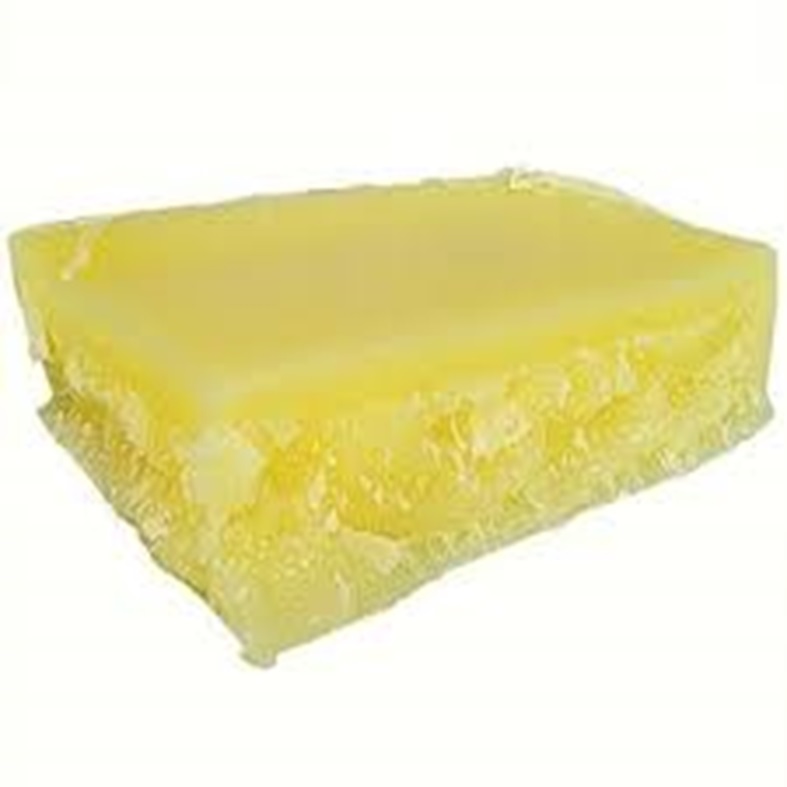
| Appearance |
White to off-white to brownish |
| Odor |
Odorless |
| Taste |
Tasteless |
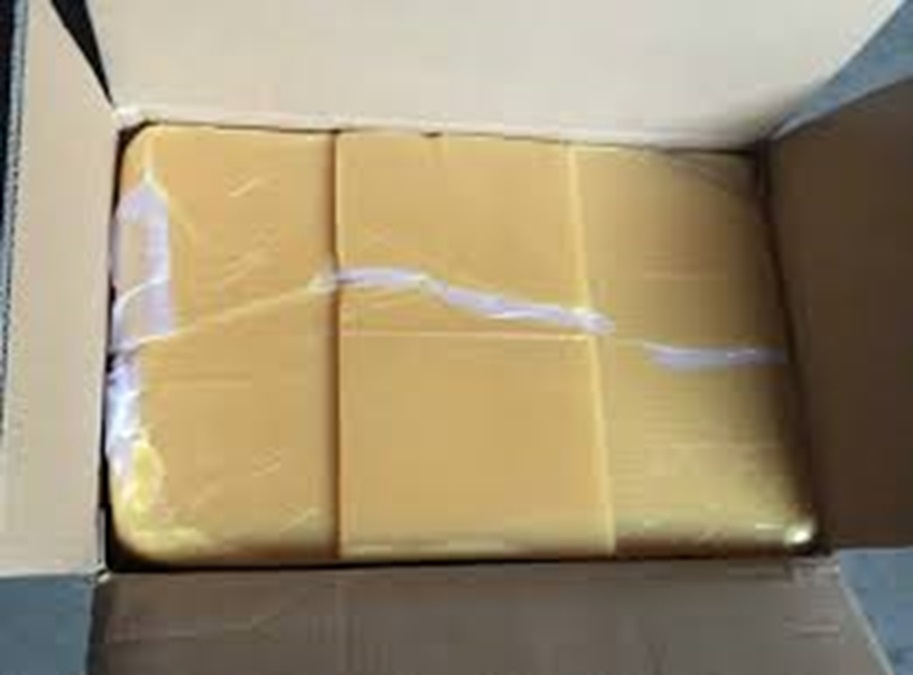
| Available Forms |
Flakes, slabs, pellets, or blocks |
SECTION 2: PHYSICAL AND CHEMICAL PROPERTIES
| Property |
Value / Range |
Description |
| Appearance |
White to off-white to brownish |
Odorless, tasteless |
| Crystal Structure |
Microcrystalline, irregular |
Much finer crystals than paraffin wax |
| Melting Point |
79.4 - 86.7°C (175 - 188°F) |
Higher than paraffin wax |
| Density (25°C) |
0.93 - 0.95 g/cm³ |
Slightly heavier than paraffin |
| Solubility in Water |
Insoluble |
- |
| Solubility in Organic Solvents |
Soluble in benzene, chloroform, ether, hot oils, hot xylene, hot toluene |
Partially soluble at room temperature |
| Viscosity (100°C) |
10 - 30 cps (mPa·s) |
Varies by grade |
| Oil Content |
0.5 - 5.0% |
Lower oil content = harder wax |
| Penetration Hardness (25°C) |
5 - 30 dmm (1/10 mm) |
Softer than paraffin |
| Flash Point |
> 230°C (> 446°F) |
High thermal stability |
| Molecular Weight |
500 - 800 g/mol |
Higher than paraffin (300-500) |
| Refractive Index (80°C) |
1.435 - 1.455 |
- |
| Acid Value |
< 0.1 mg KOH/g |
Neutral |
| Saponification Value |
< 1 mg KOH/g |
Non-reactive |
SECTION 3: SOLUBILITY PROFILE
| Solvent |
Solubility |
Condition |
| Water |
Insoluble |
All temperatures |
| Benzene |
Soluble |
Hot |
| Chloroform |
Soluble |
Hot |
| Ether |
Soluble |
Hot |
| Toluene |
Soluble |
Hot |
| Xylene |
Soluble |
Hot |
| Mineral Oils |
Soluble |
Hot |
| Aliphatic Hydrocarbons |
Partially soluble |
Room temperature |
| Alcohol |
Insoluble |
All temperatures |
| Acetone |
Partially soluble |
Room temperature |
Critical Note: Microcrystalline wax is insoluble in water but soluble in most organic solvents at elevated temperatures. Its branched and cyclic structure provides excellent oil-binding capacity compared to paraffin wax.
SECTION 4: CHEMICAL PROPERTIES AND REACTIONS
| Property |
Description |
| Chemical Class |
Hydrocarbon wax (petroleum-derived) |
| Functional Groups |
None (non-reactive) |
| Crystal Structure |
Microcrystalline, irregular (finer than paraffin) |
| Reactivity |
Very low; chemically inert |
| Oxidation Stability |
High; does not oxidize easily |
| Oil Binding Capacity |
Excellent (binds oils and solvents better than paraffin) |
| Thermal Stability |
High (flash point > 230°C) |
| Acid/Base Resistance |
Resistant to dilute acids and bases |
| Compatibility |
Compatible with most oils, waxes, and polymers |
4.1. Key Features
| Feature |
Description |
| Branched and Cyclic Structure |
Unlike linear paraffin, provides superior properties |
| Fine Crystal Structure |
Binds oils and solvents better than paraffin |
| Non-Reactive |
No functional groups (carboxyl, hydroxyl, etc.) |
| High Thermal Stability |
Does not oxidize easily |
| Excellent Oil-Binding Capacity |
Prevents syneresis (oil separation) |
4.2. Stability
| Parameter |
Information |
| Thermal Stability |
Stable up to 230°C |
| Oxidation Stability |
Very high; does not oxidize easily |
| Hydrolytic Stability |
Does not react with water |
| Microbial Resistance |
Does not support microbial growth |
| Incompatibilities |
Strong oxidizers (peroxides, nitrates) |
| Shelf Life |
5+ years (very stable) |
SECTION 5: COMPARISON WITH OTHER WAXES
| Property |
Microcrystalline Wax |
Paraffin Wax |
Beeswax |
Polyethylene Wax |
Carnauba Wax |
| Source |
Petroleum (refined) |
Petroleum |
Animal (bees) |
Synthetic (ethylene) |
Vegetable (palm) |
| Melting Point |
79-87°C |
46-68°C |
61-65°C |
90-120°C |
81-86°C |
| Crystal Structure |
Microcrystalline (irregular) |
Macrocrystalline (needle-like) |
Amorphous |
Semi-crystalline |
Crystalline |
| Oil Binding Capacity |
Excellent |
Poor |
Medium |
Medium |
Low |
| Flexibility / Adhesion |
High |
Low |
Medium |
Low |
Very low (brittle) |
| Water Vapor Barrier |
Very good |
Good |
Good |
Excellent |
Very good |
| Co-solvent / Gelation |
Yes (forms gels with oils) |
No |
No |
No |
No |
| Vegan Suitability |
Yes |
Yes |
No |
Yes |
Yes |
| Food Contact |
Limited |
Yes (E905) |
Yes (E901) |
Yes (indirect) |
Yes (E903) |
| Cost |
Medium |
Low |
High |
Medium |
Very high |
| Alias Risk in ERP |
Low |
Low |
High |
Low |
Medium |
SECTION 6: GRADES AND VARIANTS
| Grade |
Characteristics |
Typical Applications |
| USP Microcrystalline Wax |
High purity, low oil content (<2%), meets pharmacopoeia standards |
Pharmaceuticals (tablet coating, ointments), high-end cosmetics |
| Industrial Grade |
Medium oil content (2-5%), good oil binding |
Polishes, coatings, adhesives, plastics |
| High Melt Point (HMP) |
Melting point > 85°C, very hard |
Candles (additive), hot melt adhesives |
| Low Melt Point |
Melting point 70-80°C, softer |
Petroleum jellies, cosmetic bases |
| Emulsifiable Microcrystalline Wax |
Modified with surfactants |
Water-based coatings, polishes |
SECTION 7: MAJOR APPLICATIONS AND END-USES
7.1. Pharmaceuticals
| Application |
Function |
Suitability |
| Tablet Coating |
Coating agent, polish, protective barrier |
Yes (USP grade) |
| Controlled Release Matrices |
Modifies release rate of active ingredients |
Yes (USP grade) |
| Ointment Bases |
Consistency modifier, viscosity control |
Yes (USP grade) |
| Viscosity Modifier |
Thickens and stabilizes formulations |
Yes (USP grade) |
7.2. Cosmetics and Personal Care
| Application |
Function |
Suitability |
| Lip Balms |
Texture control, oil binding, structure |
Limited |
| Pomades |
Texture, oil binding, structure |
Limited |
| Emulsions |
Texture control, oil binding |
Limited |
| Petroleum Jellies |
Base component, consistency modifier |
Limited |
7.3. Plastics, PVC, and Rubber
| Application |
Function |
Suitability |
| Lubricant |
External lubricant (prevents metal sticking) |
Yes |
| Anti-Block Agent |
Prevents adhesion between surfaces |
Yes |
| Dispersion Aid |
Improves filler dispersion |
Yes |
| Viscosity Modifier |
Controls melt viscosity |
Yes |
| Crystal Control |
Modifies crystallization behavior |
Yes |
7.4. Coatings and Polishes
| Application |
Function |
Suitability |
| Wood Polishes |
Flexibility, gloss, water barrier |
Yes |
| Leather Polishes |
Flexibility, gloss, water resistance |
Yes |
| Automotive Polishes |
Gloss, water resistance, barrier properties |
Yes |
| Floor Polishes |
Gloss, protection, durability |
Yes |
7.5. Adhesives and Sealants
| Application |
Function |
Suitability |
| Hot Melt Adhesives |
Viscosity reducer, open time control, flexibility |
Yes |
| Pressure-Sensitive Adhesives |
Modifies adhesion properties |
Yes |
7.6. Candles
| Application |
Function |
Suitability |
| Paraffin Modification |
Crystal modifier, reduces sweating, increases opacity, improves gloss |
Limited (as additive, 3-10%) |
7.7. Food Industry
| Application |
Function |
Suitability |
| Direct Food Additive |
Not approved (no E number in EU) |
Not suitable |
| Chewing Gum Base |
Approved (FDA 21 CFR 172.886) |
Limited |
| Food Packaging Coatings |
Water barrier, protective coating |
Yes (indirect contact) |
SECTION 8: INDUSTRY SUITABILITY MATRIX
| Industry |
Suitability |
Explanation |
| Pharmaceuticals |
Yes |
Tablet coating, controlled release matrices, ointment bases, viscosity modifier (USP grade required) |
| Cosmetics |
Limited |
Lip balms, pomades, emulsions (texture control, oil binding). Not for all product types. |
| Plastics / PVC / Rubber |
Yes |
Lubricant, anti-block agent, dispersion aid, viscosity modifier, crystal control |
| Coatings / Polishes |
Yes |
Wood, leather, automotive polishes – improves gloss, water resistance, barrier properties |
| Candles |
Limited |
Modifies paraffin crystal structure, reduces sweating, improves gloss. Not used alone. |
| Adhesives / Sealants |
Yes |
Hot melt adhesives, pressure-sensitive adhesives – controls open time, viscosity |
| Food Industry |
Not suitable |
Not approved as a food additive (indigestible, no E number in EU for direct food use) |
| Chewing Gum |
Not suitable |
No – polyethylene or paraffin wax is preferred |
| Fruit Coating |
Not suitable |
No – beeswax, carnauba, or shellac are used |
SECTION 9: FORMULATION EXAMPLES
9.1. Hot Melt Adhesive (Packaging)
| Component |
Function |
Concentration (% w/w) |
| Microcrystalline Wax |
Viscosity reducer, open time control, flexibility |
15-25% |
| EVA (Ethylene Vinyl Acetate) |
Base polymer |
30-50% |
| Tackifier (Hydrocarbon resin) |
Adhesion |
20-35% |
| Antioxidant |
Thermal stability |
0.5-1.0% |
Process: Melt all components at 150-180°C with mixing. Apply at 160-180°C.
9.2. Wood / Furniture Polish (Paste Wax)
| Component |
Function |
Concentration (% w/w) |
| Microcrystalline Wax |
Flexibility, gloss, water barrier |
10-20% |
| Paraffin Wax |
Hardness, cost reduction |
10-15% |
| Mineral Spirits / White Spirit |
Solvent, spreadability |
50-65% |
| Carnauba Wax (optional) |
High gloss, hardness |
2-5% |
| Fragrance (optional) |
Scent |
0.5-1.0% |
Process: Melt waxes at 90-100°C. Slowly add solvent while stirring. Cool to room temperature (paste). Apply with cloth, buff to shine.
9.3. PVC Extrusion Lubricant
| Component |
Function |
Concentration (phr) |
| Microcrystalline Wax |
External lubricant (prevents metal sticking) |
0.3-0.8 phr |
| PVC Resin |
Base polymer |
100 phr |
| Calcium Carbonate / Stabilizers |
Fillers, stabilizers |
variable |
| Other lubricants (PE wax, paraffin) |
Internal/external balance |
variable |
Role: Reduces friction between PVC melt and metal surfaces, improves surface finish, prevents plate-out.
9.4. Cosmetic Pomade / Lip Balm (Anhydrous Base)
| Component |
Function |
Concentration (% w/w) |
| Microcrystalline Wax (USP grade) |
Texture, oil binding, structure |
5-15% |
| Beeswax |
Film former, natural structuring |
10-20% |
| Mineral Oil / Petrolatum |
Emollient, moisture barrier |
30-50% |
| Lanolin (optional) |
Humectant, emollient |
5-10% |
| Fragrance / Flavor |
Scent, taste |
0.5-2.0% |
Note: Microcrystalline wax is used here to bind oils, prevent syneresis (oil separation), and improve heat stability.
9.5. Candle Additive (Paraffin Modification)
| Component |
Function |
Concentration (% w/w) |
| Paraffin Wax |
Base candle wax |
90-97% |
| Microcrystalline Wax |
Crystal modifier, reduces sweating, increases opacity, improves gloss |
3-10% |
| Fragrance Oil |
Scent |
5-10% (by weight of total) |
Effect: Microcrystalline wax binds fragrance oils, prevents oil migration to the surface ("sweating"), and gives candles a smoother, more opaque appearance.
9.6. Automotive / Leather Polish
| Component |
Function |
Concentration (% w/w) |
| Microcrystalline Wax |
Flexibility, water resistance |
5-15% |
| Carnauba Wax |
High gloss, hardness |
3-8% |
| Silicone Oil (optional) |
Deep gloss, water beading |
1-3% |
| Mineral Spirits |
Solvent, spreadability |
60-75% |
SECTION 10: USP GRADE VS INDUSTRIAL GRADE - CRITICAL DISTINCTION
| Property |
USP Microcrystalline Wax |
Industrial Grade |
| Purity |
> 99.5% |
95-99% |
| Oil Content |
< 2% (typically 0.5-1.5%) |
2-5% |
| Polycyclic Aromatics (PCA) |
< 0.1% (strict limit) |
Not controlled |
| Heavy Metals |
< 10 ppm |
Not controlled |
| Pharmacopoeia Compliance |
Yes (USP, Ph. Eur., JP) |
No |
| Applications |
Pharmaceuticals, high-end cosmetics |
Industrial (polishes, adhesives, plastics) |
| Cost |
Higher |
Lower |
Critical ERP Note: USP grade and industrial grade look similar visually but have significant purity differences. They must be defined as separate line items in ERP systems.
SECTION 11: REGULATORY STATUS
| Regulation |
Scope |
Status |
| FDA 21 CFR 172.886 |
Food additive (chewing gum) |
Approved for chewing gum base |
| FDA 21 CFR 175.105 |
Adhesives (indirect food contact) |
Approved |
| FDA 21 CFR 175.300 |
Coatings (indirect food contact) |
Approved |
| FDA 21 CFR 178.3710 |
Microcrystalline wax (food packaging) |
Approved for paper/paperboard coatings |
| EU Food Contact (10/2011) |
Plastics for food contact |
Approved with restrictions |
| EU Direct Food Additive |
E number |
No E number – not approved as direct food additive |
| USP / NF |
Pharmaceutical grade |
Monograph exists |
| REACH (EU) |
Chemical registration |
Registered (CAS 63231-60-7) |
| COSING (EU Cosmetics) |
Cosmetic ingredient |
Approved (no restrictions) |
| Vegan |
Animal origin |
Suitable (synthetic/petroleum origin) |
Key Regulatory Notes:
-
Direct food additive: Not approved in EU (no E number). Only indirect food contact (packaging, coatings).
-
Chewing gum: FDA allows microcrystalline wax in chewing gum base (21 CFR 172.886).
-
Fruit coating: Not approved – use beeswax, carnauba, or shellac instead.
SECTION 12: TOXICOLOGY AND SAFETY
| Parameter |
Value / Status |
| Acute toxicity (oral) |
Very low (LD₅₀ > 5,000 mg/kg) |
| Skin irritation |
Not classified (non-irritant) |
| Eye irritation |
Not classified (mechanical irritation possible as solid) |
| Inhalation (dust) |
Not hazardous (low dust) |
| Inhalation (fumes, molten) |
May cause respiratory irritation (use ventilation) |
| Carcinogenicity |
Not classified (low PCA content in refined grades) |
| Polycyclic Aromatic Hydrocarbons (PAH) |
Strictly controlled in USP grade (< 0.1%) |
| Skin sensitization |
No |
| Target Organs |
Respiratory system (fumes), skin (molten) |
First Aid Measures:
| Exposure |
Action |
| Skin (solid) |
Wash with soap and water |
| Skin (molten) |
Cool under cold water immediately. Do not peel wax off. |
| Eye contact |
Rinse with plenty of water (15 minutes) |
| Inhalation (fumes) |
Move to fresh air. Seek medical attention if breathing difficulty. |
| Ingestion |
Generally non-toxic. Seek medical advice if large amount swallowed. |
SECTION 13: ECOTOXICOLOGY AND ENVIRONMENTAL BEHAVIOR
| Parameter |
Value / Description |
| Fish Toxicity (LC50, 96 hours) |
> 1,000 mg/L (low toxicity) |
| Daphnia Toxicity (EC50, 48 hours) |
> 1,000 mg/L |
| Algae Toxicity (EC50, 72 hours) |
> 1,000 mg/L |
| Biodegradability |
Not readily biodegradable (petroleum-derived) |
| Bioaccumulation Potential |
Low to moderate |
| Persistence |
High (persistent in environment) |
| Water Hazard Class (WGK Germany) |
WGK 2 (hazardous to water) |
Ecotoxicological Summary: Microcrystalline wax is not readily biodegradable due to its petroleum origin. It persists in the environment. For eco-friendly applications, natural waxes (beeswax, carnauba, candelilla, rice bran wax) should be used.
SECTION 14: STORAGE INFORMATION
| Parameter |
Information |
| Storage Conditions |
Cool, dry area |
| Temperature |
10 - 30°C |
| Humidity |
No special requirement (wax does not absorb moisture) |
| Container |
Cardboard boxes, fiber drums, plastic bags, metal drums |
| Incompatible Materials |
Strong oxidizers (peroxides, nitrates) |
| Shelf Life |
5+ years (very stable; no degradation) |
| Special Notes |
Store away from heat sources and direct sunlight |
SECTION 15: TRANSPORT INFORMATION
| Parameter |
Information |
| UN Number |
Not regulated (not classified as dangerous goods) |
| Hazard Class |
Not applicable |
| Packing Group |
Not applicable |
| Proper Shipping Name |
Microcrystalline Wax |
| ADR/RID |
Not regulated |
| IMDG Code |
Not regulated |
| IATA (Air) |
Not regulated |
| Marine Pollutant |
No |
SECTION 16: FIRE-FIGHTING MEASURES
| Parameter |
Information |
| Fire Hazard |
Combustible (flash point > 230°C) |
| Extinguishing Media |
Water fog, CO₂, dry chemical, foam |
| Special Hazards |
When heated, releases hydrocarbon vapors |
| Decomposition Products |
CO, CO₂, hydrocarbon vapors |
| Protective Equipment |
Self-contained breathing apparatus (SCBA), full protective clothing |
| Explosion Risk |
Vapor/air mixtures potentially explosive |
| Water Use |
Prevent fire-fighting water from entering the environment |
SECTION 17: ACCIDENTAL RELEASE AND CLEANUP
| Parameter |
Information |
| Personal Protection |
Gloves, safety goggles, protective clothing |
| Ventilation |
Increase ventilation |
| Control |
Contain spill; prevent spread |
| Cleanup Methods |
Collect mechanically (solid) or absorb with inert material (liquid) |
| Environmental Precautions |
Prevent entry into drains, sewers, and water bodies |
| Waste Disposal |
According to local regulations; approved landfill or incineration |
SECTION 18: ERP AND ALIAS RISK MANAGEMENT
Common Aliases (Must be mapped to CAS 63231-60-7):
| Alias |
Risk Level |
Notes |
| Micro Wax |
Low |
Standard term |
| Microcrystalline Wax |
Low |
Standard term |
| Micro Crystalline Wax |
Low |
Standard term |
| Petrolatum Wax |
Medium |
Can be confused with petrolatum (CAS 8009-03-8) |
| Hydrocarbon Wax |
Medium |
Very generic; many waxes are hydrocarbons |
| Paraffin Microcrystalline |
Medium |
Can be confused with paraffin (CAS 8002-74-2) |
| Cera Microcristallina |
Low |
INCI Latin name |
| USP Micro Wax |
Low |
Specifies grade |
| Micro Wax 63231-60-7 |
Very Low |
CAS specified |
Critical ERP Recommendations:
-
Always fix CAS number (63231-60-7) to each alias in the system
-
Separate USP grade from industrial grade as distinct line items
-
Do NOT combine with paraffin wax (different CAS, different properties)
-
Do NOT combine with petrolatum (different physical form, different application)
SECTION 19: ADVANTAGES AND DISADVANTAGES
Advantages
| Advantage |
Description |
| High Melting Point |
79-87°C – heat resistant |
| Excellent Oil-Binding Capacity |
Prevents sweating in candles and polishes |
| Superior Adhesion |
To plastics, metals, wood |
| Flexible and Ductile |
Does not crack like paraffin |
| Vegan Suitable |
Not animal-derived |
| Low Alias Risk |
CAS well-defined |
| Very Stable |
Long shelf life (> 5 years) |
| Cost-Effective |
Cheaper than natural waxes |
Disadvantages
| Disadvantage |
Description |
| Not Biodegradable |
Petroleum-derived |
| Not Approved for Direct Food Use |
No E number |
| Can Be Sticky |
If overused in formulations |
| Not Natural |
Synthetic origin may not suit "natural" claims |
| Limited Cosmetic Use |
Only anhydrous systems |
| Not Suitable Alone for Candles |
Too soft and sticky |
SECTION 20: SUMMARY AND CRITICAL WARNINGS
Product Summary
| Parameter |
Value |
| Product |
Microcrystalline Wax |
| CAS |
63231-60-7 |
| Appearance |
White to off-white to brownish |
| Melting Point |
79.4 - 86.7°C |
| Oil Content |
0.5 - 5.0% |
| Flash Point |
> 230°C |
| Key Feature |
Excellent oil-binding capacity |
| Key Industries |
Pharmaceuticals, cosmetics (limited), plastics, polishes, adhesives |
CRITICAL WARNINGS
-
USP vs. Industrial Grade Separation: USP grade and industrial grade have significant purity differences. They must be defined as separate line items in ERP systems. Do not combine or interchange.
-
Not for Direct Food Use: Microcrystalline wax is not approved as a direct food additive in EU (no E number). Only approved for chewing gum base (FDA 21 CFR 172.886) and indirect food contact (packaging).
-
Not Biodegradable: As a petroleum-derived hydrocarbon, microcrystalline wax is not readily biodegradable. For eco-friendly applications, use natural waxes (beeswax, carnauba, candelilla).
-
Alias Risk Management: Common aliases like "Hydrocarbon Wax" or "Petrolatum Wax" are high-risk. Always fix CAS number 63231-60-7 in ERP systems.
-
Candle Use: Microcrystalline wax is used only as an additive (3-10%) in paraffin candles – never alone (too soft and sticky).
-
Cosmetic Use Limitations: Only use USP grade for high-end cosmetics. Industrial grade is not suitable for skin application due to higher oil content and impurities.
-
FDA vs. EU Regulatory Differences: FDA allows microcrystalline wax in chewing gum base and food packaging. EU does not approve direct food additive use (no E number).
-
Excellent Oil Binding: Microcrystalline wax binds oils better than paraffin, making it valuable for polishes, adhesives, and petroleum jellies.
-
Very Stable: Shelf life > 5 years. Does not oxidize easily and does not support microbial growth.
-
Vegan Suitable: Microcrystalline wax is derived from petroleum (mineral origin), not from animals. Suitable for vegan formulations.
IMPORTANT DISCLAIMER: This Technical Data Sheet (TDS) is for informational purposes only and is based on available technical data. The user is solely responsible for determining the product's suitability for their specific application and for complying with all applicable local, national, and international regulations. For complete safety, storage, handling, transportation, disposal, and regulatory compliance information, always refer to the official Safety Data Sheet (SDS/MSDS) provided by the manufacturer/supplier. Users are responsible for testing the product in their own processes and applications. All local, national, and international regulations must be followed when working with Microcrystalline Wax.