We unleash your business potential by maximize the business innovation.
Send EmailRice Bran Wax, Rice Wax, Oryza Sativa Wax, Natural Rice Wax, 8016-60-2
Rice Bran Wax (Rice Wax, Oryza Sativa Wax)
CAS Number: 8016-60-2
INCI Name: Oryza Sativa Bran Wax
Synonyms: Rice Wax, Oryza Sativa Wax, Natural Rice Wax, Rice Bran Wax, Dewaxed Rice Bran Solid, Vegetable Wax (rice-derived)
Source: Byproduct of rice bran oil refining (dewaxing process)
E Number: None (not used as food additive in EU; permitted as coating agent in some countries)
1. CHEMICAL IDENTITY
| Parameter | Information |
|---|---|
| Product Name | Rice Bran Wax |
| INCI Name | Oryza Sativa Bran Wax |
| CAS Number | 8016-60-2 |
| Source | Rice bran oil (byproduct of dewaxing process) |
| Chemical Class | Vegetable Wax, Natural Ester Wax |
| Synonyms | Rice Wax, Oryza Sativa Wax, Natural Rice Wax, Rice Bran Wax, Dewaxed Rice Bran Solid, Vegetable Wax (rice-derived) |
2. PHYSICAL PROPERTIES
| Parameter | Value |
|---|---|
| Physical State | Solid |
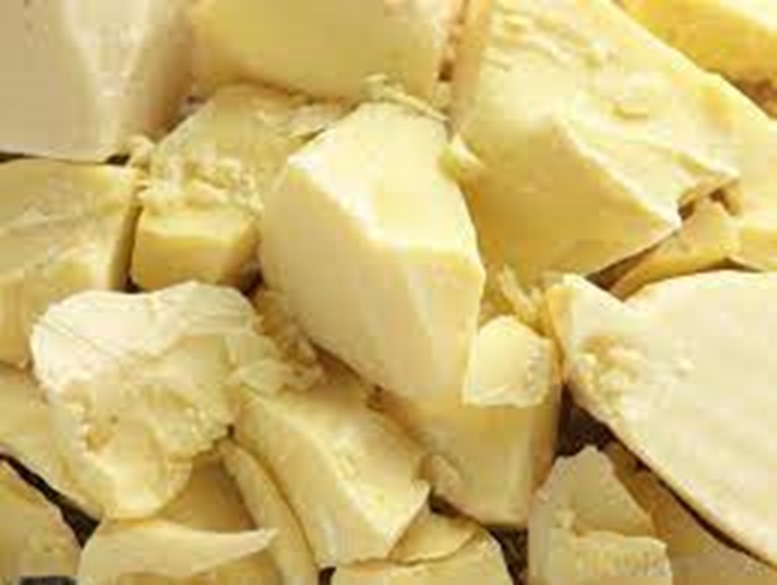
| Color | Off-white to light brown (beige to pale yellow) |
| Appearance | Flakes, pellets, powder, or blocks |
| Odor | Slightly oily, waxy (similar to crayon/pastel) |
| Melting Point | 77 – 86 °C (171-187°F) |
| Density (25°C) | 0.92 – 0.96 g/cm³ |
| Solubility in Water | Insoluble |
| Solubility in Oils | Soluble |
| Solubility in Organic Solvents | Soluble (ethanol, isopropanol, acetone, chloroform, hexane, toluene) |
| Texture | Soft, creamy, non-greasy feel |
| Bleachability | Easily bleachable and deodorizable |
3. THERMAL PROPERTIES
| Parameter | Value |
|---|---|
| Melting Point Range | 77 – 86 °C |
| Solidification Point | 70 – 78 °C |
| Flash Point | >230 °C |
| Specific Heat Capacity | ~2.0 J/g·K (estimated) |
4. CHEMICAL COMPOSITION
| Component | Typical Value (%) |
|---|---|
| Aliphatic Acids (C16-C24) | 50-60% |
| – Palmitic Acid (C16) | 5-15% |
| – Behenic Acid (C22) | 10-20% |
| – Lignoceric Acid (C24) | 5-10% |
| Higher Alcohols (C26-C30) | 40-50% |
| – Ceryl Alcohol (C26) | 15-25% |
| – Melissyl Alcohol (C30) | 10-20% |
| Squalene | 1-3% |
| Phospholipids | Trace |
| Free Fatty Acids | 2.1 – 7.3% |
| Phosphorus | 0.01 – 0.15% |
5. PHYSICOCHEMICAL SPECIFICATIONS
| Parameter | Typical Value | Range |
|---|---|---|
| Saponification Value | 75 – 120 | 75-120 |
| Iodine Value | 11.1 – 17.6 | 11-18 |
| Acid Value | 2 – 10 | 2-10 |
| Free Fatty Acids (as oleic) | 2.1 – 7.3% | 2-8% |
| Unsaponifiable Matter | 45 – 55% | 40-60% |
| Melting Point | 77 – 86 °C | 77-86 |
| Penetrometer Hardness (25°C) | 5 – 15 dmm | — |
| Color (Gardner) | 5 – 10 | — |
6. FATTY ACID PROFILE
| Fatty Acid | Carbon Chain | Typical % |
|---|---|---|
| Palmitic Acid | C16:0 | 5-15% |
| Stearic Acid | C18:0 | 1-3% |
| Arachidic Acid | C20:0 | 1-2% |
| Behenic Acid | C22:0 | 10-20% |
| Lignoceric Acid | C24:0 | 5-10% |
| Cerotic Acid | C26:0 | 2-5% |
7. HIGHER ALCOHOL PROFILE
| Alcohol | Carbon Chain | Typical % |
|---|---|---|
| Ceryl Alcohol | C26:0 | 15-25% |
| Montanyl Alcohol | C28:0 | 10-15% |
| Melissyl Alcohol | C30:0 | 10-20% |
| Other higher alcohols | C32-C36 | 5-10% |
8. PRODUCTION PROCESS
| Step | Description |
|---|---|
| Step 1 – Rice Bran Oil Production | Rice bran is pressed or extracted to obtain crude rice bran oil |
| Step 2 – Dewaxing (Winterization) | Crude oil is cooled to precipitate wax esters |
| Step 3 – Filtration | Wax crystals are filtered out from the oil |
| Step 4 – Purification | Crude wax is refined (bleaching, deodorizing) |
| Step 5 – Formulation | Purified wax is processed into flakes, pellets, or blocks |
Key Point: Approximately 1-3 kg of rice bran wax is produced per 1000 kg of rice bran processed.
9. APPLICATIONS – COSMETICS AND PERSONAL CARE
| Product | Function |
|---|---|
| Lipsticks and Lip Balms | Provides structure, gloss, water repellency; improves stick hardness |
| Creams and Lotions | Thickener, emollient, stabilizer; provides non-greasy creamy texture |
| Hair Care Products | Adds shine, conditioning, hold (wax-based styling products) |
| Makeup (Foundation, Mascara) | Consistency, water resistance, texture improvement |
| Deodorants and Antiperspirants | Solid stick formulations; provides smooth application |
| Sunscreens | Water resistance enhancer |
| Skin Care (Ointments, Balms) | Occlusive agent; protects skin moisture barrier |
Key Cosmetic Benefit: Non-greasy, soft creamy texture; easily absorbed into skin.
10. APPLICATIONS – PHARMACEUTICAL
| Application | Function |
|---|---|
| Ointment Bases | Thickener, consistency agent; improves spreadability |
| Tablet Coatings | Enteric coating, controlled release matrix |
| Suppositories | Hardening agent; consistency control |
| Topical Formulations | Emollient, occlusive agent, stabilizer |
| Controlled Release Systems | Wax matrix for sustained drug release |
11. APPLICATIONS – FOOD INDUSTRY
| Application | Function |
|---|---|
| Fruit Coating | Edible coating for apples, citrus, avocados; reduces moisture loss, improves shine |
| Confectionery Coating | Glazing agent for candies, chocolates, chewing gum |
| Cheese Coating | Protective coating (anti-mold, moisture barrier) |
| Nut Coating | Glazing, moisture protection |
| Release Agent | Food-grade mold release for baking and confectionery |
Regulatory Status: Permitted as food additive (coating agent) in many countries; check local regulations.
12. APPLICATIONS – CANDLE MANUFACTURING
| Application | Function |
|---|---|
| Container Candles | Hardens and stabilizes wax blend; provides smooth surface finish |
| Pillar Candles | Increases hardness and rigidity |
| Wax Blends | Mixed with paraffin, soy wax, or coconut wax for improved properties |
| Benefits | Provides bright, stable burn; good scent throw; clean burning |
13. APPLICATIONS – INDUSTRIAL
| Application | Function |
|---|---|
| Mold Release Agents | Natural release agent for metal, plastic, and rubber molds |
| Polishes (Floor, Shoe, Furniture) | Provides gloss, water resistance, durability |
| Plastic Additives | Slip agent, antiblocking agent, lubricant |
| Paper Coatings | Water resistance, gloss improvement |
| Textile Finishes | Softening, lubricating, water repellency |
| Inks (Printing, Conductive) | Rheology modifier, surface tension control |
| Wood Coatings | Protective coating; enhances natural grain appearance |
14. APPLICATIONS – PACKAGING
| Application | Function |
|---|---|
| Biodegradable Coatings | Water-resistant coating for paper and cardboard (eco-friendly alternative to petroleum wax) |
| Food Packaging | Inner coating for paper cups, food containers |
| Corrugated Board | Moisture barrier |
15. COMPARISON WITH OTHER NATURAL WAXES
| Property | Rice Bran Wax | Carnauba Wax | Candelilla Wax | Beeswax | Soy Wax |
|---|---|---|---|---|---|
| Melting Point (°C) | 77-86 | 80-86 | 67-73 | 62-65 | 45-55 |
| Hardness | Medium-Hard | Very Hard | Medium | Soft | Soft |
| Gloss | Good | Excellent | Good | Moderate | Low |
| Water Resistance | Good | Excellent | Good | Good | Moderate |
| Emulsifiability | Moderate | Low | Moderate | High | Moderate |
| Color | Off-white | Light yellow | Yellow-brown | Yellow | White |
| Source | Rice bran | Carnauba palm | Candelilla shrub | Honey bee | Soybean |
| Cost | Moderate | High | Moderate | High | Low |
| Vegan | Yes | Yes | Yes | No | Yes |
16. COMPATIBILITY WITH OTHER WAXES
| Wax | Compatibility |
|---|---|
| Carnauba Wax | Good (improves hardness and gloss) |
| Beeswax | Good (improves plasticity and spreadability) |
| Paraffin Wax | Good (increases melting point) |
| Soy Wax | Good (natural blends for candles) |
| Microcrystalline Wax | Good (improves flexibility) |
| Polyethylene Wax | Moderate (depends on formulation) |
| Coconut Wax | Good (natural candle blends) |
17. ADVANTAGES AND BENEFITS
| Advantage | Description |
|---|---|
| Natural Origin | Renewable, plant-based (vegan) |
| High Melting Point | 77-86°C – stable at high temperatures |
| Non-Greasy Feel | Provides smooth, creamy texture without oiliness |
| Good Water Resistance | Effective barrier against moisture |
| Bleachable | Can be decolorized for pure white appearance |
| Easily Formulated | Compatible with many waxes, oils, and solvents |
| Biodegradable | Eco-friendly compared to petroleum waxes |
| Gloss Enhancer | Provides excellent shine to surfaces |
| Sustainable | Byproduct of rice bran oil production (circular economy) |
18. COMPARATIVE APPLICATION TABLE
| Product | Rice Bran Wax | Carnauba Wax | Paraffin Wax | Beeswax | Polyethylene Wax |
|---|---|---|---|---|---|
| Plastics | Suitable | Suitable | Suitable | Limited | Very Suitable |
| PVC | Limited | Limited | Suitable | Limited | Suitable |
| Mold Release | Suitable | Suitable | Suitable | Suitable | Suitable |
| Cosmetics | Very Suitable | Very Suitable | Limited | Very Suitable | Limited |
| Candles | Suitable | Suitable | Suitable | Suitable | Limited |
| Detergents | Limited | Limited | Limited | Limited | Limited |
| Packaging | Suitable | Suitable | Suitable | Suitable | Suitable |
| Polishes | Suitable | Very Suitable | Suitable | Suitable | Suitable |
| Food | Suitable | Suitable | Limited (not all) | Suitable | Not suitable |
| Pharmaceuticals | Suitable | Suitable | Limited | Very Suitable | Not suitable |
19. STORAGE AND HANDLING
| Parameter | Requirement |
|---|---|
| Storage Temperature | 15-30°C (cool, dry) |
| Humidity | Low humidity (<60% RH) |
| Container | Sealed bags or boxes (protect from dust, moisture) |
| Light Protection | Protect from direct sunlight |
| Shelf Life | 24-36 months (proper storage) |
| Special Precautions | Avoid high temperatures (prevents clumping/melting). Keep away from strong oxidizers. |
20. SUMMARY AND CRITICAL INFORMATION
Description: Rice Bran Wax (Rice Wax, Oryza Sativa Wax, CAS 8016-60-2) is a natural vegetable wax obtained as a byproduct of rice bran oil refining during the dewaxing (winterization) process. It is an off-white to light brown solid with a melting point of 77-86°C. The wax consists primarily of aliphatic fatty acids (C16-C24 – palmitic, behenic, lignoceric) and higher alcohols (C26-C30 – ceryl, melissyl). It has a saponification value of 75-120, iodine value of 11-18, and free fatty acid content of 2.1-7.3%.
Key Advantages:
-
Natural, renewable, plant-based (vegan)
-
High melting point (77-86°C) – thermally stable
-
Non-greasy, creamy texture (ideal for cosmetics)
-
Good water resistance and gloss
-
Easily bleachable and deodorizable
-
Biodegradable and sustainable (byproduct of rice bran oil)
-
Compatible with many waxes, oils, and organic solvents
Key Limitations/Precautions:
-
Insoluble in water (requires organic solvents or oil-based systems)
-
Moderate cost (higher than paraffin, lower than carnauba)
-
Limited compatibility with some synthetic polymers
-
Slight odor in crude form (removed by bleaching/deodorizing)
Major Applications Summary:
| Sector | Applications |
|---|---|
| Cosmetics | Lipsticks, balms, creams, lotions, hair care, makeup |
| Pharmaceutical | Ointments, tablet coatings, suppositories |
| Food | Fruit coatings, confectionery glazing, cheese coating |
| Candles | Container and pillar candles (blends) |
| Industrial | Mold release, polishes, plastic additives, paper coatings |
Comparison to Other Waxes:
| Feature | Rice Bran Wax | Carnauba Wax | Beeswax |
|---|---|---|---|
| Melting Point | 77-86°C | 80-86°C | 62-65°C |
| Hardness | Medium-hard | Very hard | Soft |
| Cost | Moderate | High | High |
| Vegan | Yes | Yes | No |
Storage: Cool, dry, sealed containers; 24-36 months shelf life.
Conclusion: Rice Bran Wax is a versatile, natural, and sustainable vegetable wax suitable for cosmetics, pharmaceuticals, food coatings, candles, and industrial applications. Its high melting point, non-greasy creamy texture, good water resistance, and gloss-enhancing properties make it an excellent choice for lipsticks, balms, creams, polishes, and mold release agents. As a renewable byproduct of rice bran oil production, it offers an eco-friendly alternative to petroleum-based waxes while providing performance comparable to higher-cost waxes like carnauba.