We unleash your business potential by maximize the business innovation.
Send EmailStainless Steel Abrasive, Inox Grit, Inox Abrasive Media, Stainless Blasting Grain, Metallic Grit, Reusable Stainless Grit, 65997-19-5, 12597-68-1
STAINLESS STEEL GRIT
Product Name: Stainless Steel Grit
Other Names: Stainless Steel Abrasive, INOX Grit, INOX Abrasive Media, Stainless Blasting Grain, Metallic Grit, SS Blasting Granules, Reusable Stainless Grit
CAS Numbers: 65997-19-5 (304 Stainless Steel), 12597-68-1 (316 Stainless Steel)
Material: High-performance stainless steel alloy
Chemical Class: Ferrous metal abrasive (non-ferrous contamination-free)
SECTION 1: PRODUCT IDENTIFICATION AND DEFINITION
| Parameter | Information |
|---|---|
| Product Name | Stainless Steel Grit |
| Other Names | Stainless Steel Abrasive, INOX Grit, INOX Abrasive Media, Stainless Blasting Grain, Metallic Grit (Stainless Steel variant), SS Blasting Granules, Reusable Stainless Grit, Paslanmaz Grit |
| CAS Numbers | 65997-19-5 (304 Stainless Steel) |
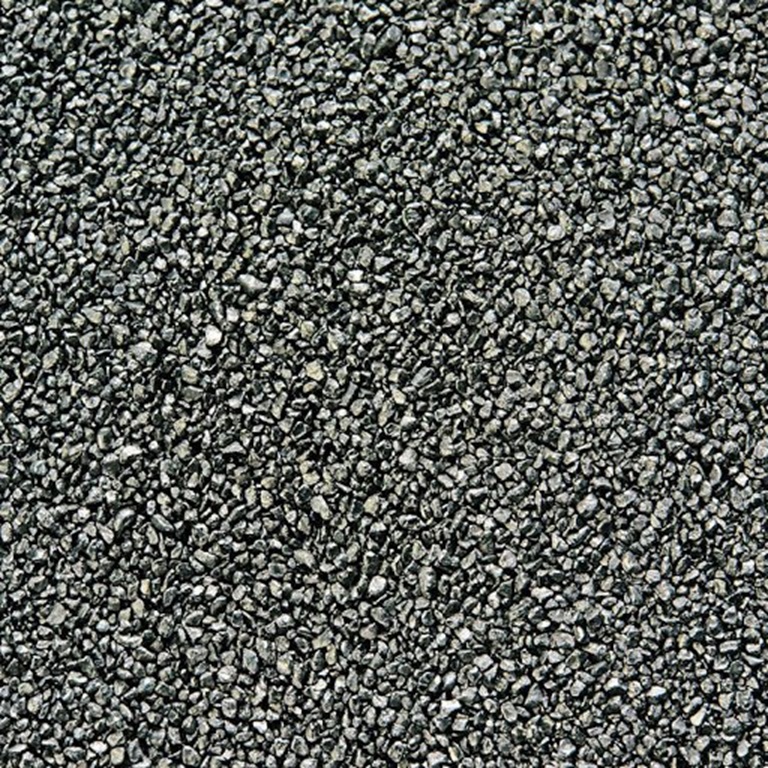
| Material Type | Angular, high-performance stainless steel abrasive |
| Shape | Angular (sharp-edged) |
| Color | Metallic grey |
| Hardness (Before Use) | ~54 HRC (≈ 595 HV) |
| Hardness (After Use) | ~64 HRC (≈ 800 HV) |
| Specific Gravity | 7.8 g/cm³ |
| Bulk Density | 4.5 – 5.0 g/cm³ (depending on grain size) |
| Melting Point | ~1,450 – 1,500 °C |
SECTION 2: CHEMICAL COMPOSITION
| Element | Content (%) |
|---|---|
| Chromium (Cr) | ~28% |
| Silicon (Si) | ~2% |
| Carbon (C) | ~2% |
| Manganese (Mn) | ~1% |
| Iron (Fe) | Balance |
SECTION 3: PHYSICAL PROPERTIES
| Property | Value |
|---|---|
| Shape | Angular (sharp-edged) |
| Color | Metallic grey |
| Specific Gravity | 7.8 g/cm³ |
| Bulk Density | 4.5 – 5.0 g/cm³ |
| Hardness (Before Use) | ~54 HRC (≈ 595 HV) |
| Hardness (After Use) | ~64 HRC (≈ 800 HV) |
| Melting Point | ~1,450 – 1,500 °C |
| Magnetic Properties | Non-magnetic (304/316 grades) |
SECTION 4: SIZE GRADES (SAE STANDARD)
| Grade | Size Range (mm) |
|---|---|
| NO-12 | 1.70 – 2.40 mm |
| NO-14 | 1.40 – 2.00 mm |
| NO-16 | 1.18 – 1.70 mm |
| NO-20 | 0.85 – 1.40 mm |
| NO-25 | 0.70 – 1.20 mm |
| NO-30 | 0.60 – 1.00 mm |
| NO-40 | 0.42 – 0.85 mm |
| NO-50 | 0.30 – 0.60 mm |
| NO-80 | 0.18 – 0.60 mm |
| NO-120 | 0.125 – 0.250 mm |
SECTION 5: APPLICATION AREAS
| Industry | Application |
|---|---|
| Stainless Steel Fabrication | Surface preparation, cleaning, and finishing of stainless steel components |
| Aluminium Processing | Cleaning and surface preparation of aluminium parts without contamination |
| Precision Coatings | Preparation of surfaces for sensitive coatings and linings |
| Automotive | Cleaning and preparation of high-quality parts, stainless steel components |
| Medical Devices | Surface preparation of surgical instruments and medical implants |
| Aerospace | Surface preparation of critical aerospace components |
| Food Industry | Cleaning of food-grade stainless steel equipment |
| Robotics & Automation | Suitable for robotic blasting cabinets and automated systems |
| Dental Technology | Surface preparation of dental prosthetics |
SECTION 6: ADVANTAGES
| Advantage | Description |
|---|---|
| No Ferrous Contamination | Leaves no ferrous residues; maintains surface integrity |
| High Reusability | Can be recycled many times; cost-effective over long-term use |
| Low Dust Generation | Minimal dust formation; maintains good operator visibility |
| Excellent Surface Profile | Provides optimal surface profile for coating adhesion |
| Consistent Hardness | Hardens during use (~54 to ~64 HRC), maintaining cutting efficiency |
| No Iron Oxide Contamination | Prevents rust bloom on stainless steel surfaces |
| Automation Compatible | Fully compatible with robotic blasting cabinets |
| Environmentally Friendly | High recyclability reduces waste and environmental impact |
SECTION 7: COMPARISON WITH OTHER ABRASIVES
| Abrasive | Properties | Suitability |
|---|---|---|
| Garnet | Medium hardness, semi-reusable | General cleaning applications |
| Aluminium Oxide | Aggressive, high dust, non-reusable | Heavy coating and rust removal |
| Carbon Steel Grit | Ferrous contamination risk | Only carbon steel surfaces |
| Stainless Steel Grit | High hardness, reusable, minimal dust | Stainless steel and sensitive metals |
SECTION 8: QUALITY STANDARDS
| Standard | Description |
|---|---|
| SAE J1993 | Standard for stainless steel shot and grit |
| ISO 9001:2015 | Quality management systems |
| VDA | Automotive industry quality standards |
SECTION 9: SAFETY AND HANDLING INFORMATION
| Parameter | Information |
|---|---|
| GHS Classification | Not classified as hazardous (in solid form) |
| Health Hazards | Dust may cause respiratory irritation; use appropriate PPE |
| PPE Required | Safety glasses, dust mask, hearing protection, gloves |
| Storage | Store in dry conditions; protect from moisture |
| Fire Risk | Non-flammable |
| Incompatibilities | Strong acids, oxidizing agents |
SECTION 10: PACKAGING OPTIONS
| Packaging Type | Quantity | Material |
|---|---|---|
| Multi-layer Bag | 25 kg | PE-lined kraft paper |
| Plastic Drum | 25 kg | HDPE |
| Fiber Drum | 50 – 100 kg | HDPE + PE liner |
| Big-Bag | 500 – 1,000 kg | Polypropylene |
| Pallet | 1,000 kg | Shrink-wrapped |
SECTION 11: OTHER NAMES AND SYNONYMS
| Turkish Names | English Names |
|---|---|
| Paslanmaz Grit | Stainless Steel Grit |
| INOX Grit | INOX Grit |
| Paslanmaz Çelik Aşındırıcı | Stainless Steel Abrasive |
| Yeniden Kullanılabilir SS Grit | Reusable Stainless Grit |
| Paslanmaz Kumlama Tanesi | Stainless Blasting Grain |
| Metalik Grit (Paslanmaz) | Metallic Grit (Stainless Steel variant) |
| INOX Aşındırıcı Malzeme | INOX Abrasive Media |
| SS Kumlama Granülü | SS Blasting Granules |
| INOX Grit Malzemesi | INOX Grit Material |
SECTION 12: CAS NUMBER NOTES
| Material | CAS Number |
|---|---|
| 304 Stainless Steel | 65997-19-5 |
| 316 Stainless Steel | 12597-68-1 |
Note: There is no specific CAS number assigned exclusively to stainless steel grit, as it is not a homogeneous chemical compound but an alloyed metal mixture. CAS numbers are generally assigned to pure chemicals with specific formulas.
SECTION 13: SUMMARY AND CRITICAL NOTES
Product Summary
| Parameter | Value |
|---|---|
| Product | Stainless Steel Grit |
| CAS Numbers | 65997-19-5 (304), 12597-68-1 (316) |
| Shape | Angular |
| Hardness (Before Use) | ~54 HRC (≈ 595 HV) |
| Hardness (After Use) | ~64 HRC (≈ 800 HV) |
| Specific Gravity | 7.8 g/cm³ |
| Primary Function | Non-contaminating abrasive blasting media |
| Key Feature | No ferrous contamination, high reusability, minimal dust |
Critical Notes
-
No Ferrous Contamination: Stainless steel grit leaves no ferrous residues on blasted surfaces, making it ideal for stainless steel, aluminum, and other sensitive metal applications where contamination must be avoided.
-
Work Hardening: The grit hardens during use from ~54 HRC to ~64 HRC, maintaining excellent cutting performance throughout its service life.
-
High Reusability: Due to its durability and work hardening properties, stainless steel grit can be recycled many times, providing long-term cost-effectiveness.
-
Low Dust Generation: Produces minimal dust during blasting, maintaining good operator visibility and reducing environmental impact.
-
Automation Compatible: Fully compatible with robotic blasting cabinets and automated surface preparation systems.
-
Applications: Used in stainless steel fabrication, aluminum processing, aerospace, automotive, medical devices, food industry, and precision coating preparation.
-
CAS Numbers: While stainless steel grit does not have its own CAS number, it is associated with 304 (65997-19-5) and 316 (12597-68-1) stainless steel alloys.
-
Comparison: Superior to carbon steel grit (which causes ferrous contamination) and aluminum oxide (which generates high dust and is non-reusable) for stainless steel and sensitive metal applications.
IMPORTANT DECLARATION: This Technical Data Sheet (TDS) is for informational purposes only and has been prepared based on available technical data. The user is responsible for determining the product's suitability for their specific application and for complying with all local, national, and international regulations. For complete safety, storage, use, transport, waste, and regulatory compliance information, refer to the official Safety Data Sheet (SDS/MSDS) provided by the manufacturer/supplier.