We unleash your business potential by maximize the business innovation.
Send EmailHumic Acid, Humate, Humin, 1415-93-6
Humic Acid (Humic Substance – Humin)
CAS Number: 1415-93-6
Chemical Formula: Variable (C₉H₉NO₆ typical elemental composition; polymeric structure)
Molecular Weight: 300 – 10,000 g/mol (polydisperse, polymeric)
EC Number: 215-809-6
Synonyms: Humic Substance, Humate, Leonardite Extract, Humin, Organic Soil Conditioner, Natural Chelator, Humic Matter
1. CHEMICAL IDENTITY
| Parameter | Information |
|---|---|
| Product Name | Humic Acid |
| CAS Number | 1415-93-6 |
| Chemical Formula | Variable; typical elemental composition: C₉H₉NO₆ (approximate) |
| Molecular Weight | 300 – 10,000 g/mol (polydisperse, polymeric structure) |
| EC Number | 215-809-6 |
| Chemical Class | Humic substance, Natural organic polymer, Polycarboxylic acid |
| Synonyms | Humic Substance, Humate, Leonardite Extract, Humin, Organic Soil Conditioner, Natural Chelator, Humic Matter |
2. PHYSICAL PROPERTIES
| Parameter | Value |
|---|---|
| Physical State (20°C) | Solid |
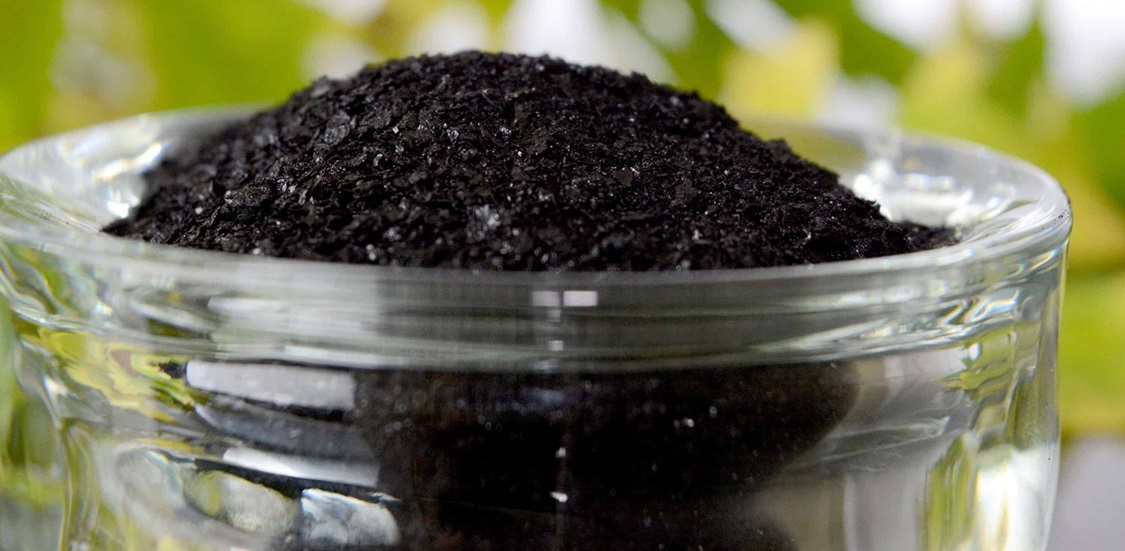
| Color | Black to dark brown |
| Appearance | Amorphous powder, granules, or flakes |
| Odor | Earthy, characteristic |
| Solubility in Water | Insoluble at acidic pH; soluble in alkaline solutions (pH > 8.5) |
| pH (1% solution in water) | 3.5 – 5.5 (acidic character) |
| Bulk Density | 0.5 – 0.8 g/cm³ (varies by form) |
| Particle Size | 50 – 200 mesh (typical for powder); 1-4 mm (granules) |
3. CHEMICAL PROPERTIES
| Parameter | Value |
|---|---|
| Carbon Content (dry basis) | 50 – 60% |
| Organic Matter Content | ≥ 80% (dry basis) |
| Oxygen Content | 30 – 40% |
| Hydrogen Content | 3 – 5% |
| Nitrogen Content | 1 – 3% |
| Sulfur Content | 0.5 – 1.5% |
| Functional Groups | Carboxyl (-COOH), Phenolic (-OH), Ketones (C=O), Quinone, Methoxyl |
| Carboxyl Group Content | 3 – 6 meq/g |
| Phenolic OH Content | 2 – 5 meq/g |
| Total Acidity | 5 – 10 meq/g |
| Cation Exchange Capacity (CEC) | 200 – 400 meq/100g (very high) |
| Ash Content | ≤ 15-20% (depends on purity) |
| Moisture Content | ≤ 15% |
4. ELEMENTAL COMPOSITION (Typical)
| Element | Percentage (dry basis) |
|---|---|
| Carbon (C) | 50 – 60% |
| Oxygen (O) | 30 – 40% |
| Hydrogen (H) | 3 – 5% |
| Nitrogen (N) | 1 – 3% |
| Sulfur (S) | 0.5 – 1.5% |
| Phosphorus (P) | 0.1 – 0.5% |
| Ash (minerals) | 10 – 20% |
5. COMPARISON: HUMIC ACID vs. FULVIC ACID
| Property | Humic Acid | Fulvic Acid |
|---|---|---|
| CAS Number | 1415-93-6 | 479-66-3 |
| Molecular Weight | 300 – 10,000 Da | 300 – 1,500 Da |
| Color | Black to dark brown | Yellow to brown |
| Solubility at pH <2 | Insoluble (precipitates) | Soluble |
| Solubility at pH >7 | Soluble | Soluble |
| Carbon Content | 50-60% | 40-50% |
| Oxygen Content | 30-40% | 40-50% |
| Cation Exchange Capacity | 200-400 meq/100g | 400-600 meq/100g |
| Plant Uptake | Slow (high MW) | Rapid (low MW) |
| Chelating Ability | Strong | Very strong |
| Primary Use | Soil conditioner | Foliar spray, supplements |
6. TYPICAL PRODUCT SPECIFICATIONS (Humic Acid Powder)
| Parameter | Specification | Test Method |
|---|---|---|
| Humic Acid Content (dry basis) | 60-85% (varies by grade) | ISO 5073 / Titration |
| Organic Matter | ≥ 80% | Gravimetric |
| Moisture | ≤ 15% | Karl Fischer / LOD |
| pH (1% solution) | 3.5 – 5.5 | Potentiometric |
| Cation Exchange Capacity | 200-400 meq/100g | Titration |
| Carboxyl Group Content | 3-6 meq/g | Titration |
| Water Solubility (in neutral pH) | ≤ 5% (mostly insoluble) | Gravimetric |
| Solubility in Alkaline (pH>8.5) | ≥ 95% | Gravimetric |
| Ash Content | ≤ 15-20% | Gravimetric (550°C) |
| Heavy Metals (as Pb) | ≤ 50 ppm | AAS/ICP |
| Arsenic (As) | ≤ 10 ppm | AAS |
| Lead (Pb) | ≤ 20 ppm | AAS |
| Cadmium (Cd) | ≤ 2 ppm | AAS |
| Mercury (Hg) | ≤ 1 ppm | AAS |
7. PRODUCTION PROCESS
| Step | Description |
|---|---|
| Raw Materials | Leonardite (oxidized lignite), lignite, peat, compost, vermicompost |
| Extraction | Alkaline extraction (NaOH or KOH) – solubilizes humic acids |
| Filtration | Removes insoluble residue (humin) |
| Acidification | pH adjusted to 1-2 with mineral acid (H₂SO₄, HCl) – humic acid precipitates |
| Filtration/Washing | Precipitated humic acid is filtered and washed to remove salts |
| Drying | Dried at low temperature (<60°C) to preserve activity |
| Milling/Granulation | Ground to powder or granulated to desired particle size |
| Biological Production | Microbial bio-leaching (for organic-certified production) |
Alternative Sources: Compost, vermicompost, peat, lake sediments.
8. FUNCTIONAL PROPERTIES
| Function | Description |
|---|---|
| Soil Conditioner | Improves soil structure, aeration, water retention, and aggregation |
| Chelating Agent | Binds metal ions (Fe³⁺, Cu²⁺, Zn²⁺, Mn²⁺, Ca²⁺, Mg²⁺) into stable complexes |
| Cation Exchanger | High CEC (200-400 meq/100g) – retains and exchanges nutrients |
| pH Buffering | Stabilizes soil pH due to multiple functional groups |
| Plant Growth Stimulant | Stimulates root growth, nutrient uptake, and microbial activity |
| Water Retention Enhancer | Increases water holding capacity of sandy soils |
| Toxin Binder (Animal Feed) | Binds mycotoxins and heavy metals in animal digestive tracts |
| Heavy Metal Immobilizer | Immobilizes heavy metals in contaminated soils |
9. APPLICATIONS – AGRICULTURE (Primary Use – >70% of production)
| Application | Function | Typical Rate |
|---|---|---|
| Soil Application (Granules/Powder) | Soil conditioner; improves structure, CEC, water retention | 10 – 50 kg/ha (100-500 kg/ha for poor soils) |
| Soil Application (Liquid) | Fertigation, drip irrigation | 5 – 20 L/ha (diluted) |
| Foliar Spray | Plant growth stimulation; enhances nutrient uptake | 1 – 3 L/ha (0.1-0.3% solution) |
| Seed Coating | Improves germination, root development | 1 – 2 g/kg seed |
| Hydroponics | Chelates micronutrients; improves nutrient availability | 50 – 200 ppm |
| Fertilizer Additive | Enhances NPK fertilizer efficiency (10-25% reduction possible) | 5-15% of fertilizer blend |
| Compost Accelerator | Speeds up composting process | 1-5 kg/ton compost |
Key Agricultural Benefits:
-
Increases nutrient use efficiency (N,P,K uptake by 15-25%)
-
Improves soil structure and water retention (sandy soils)
-
Stimulates root growth and plant development
-
Enhances stress tolerance (drought, salinity)
-
Reduces fertilizer requirements (10-25% reduction possible)
-
Increases crop yield (10-30% typical improvement)
10. APPLICATIONS – HORTICULTURE AND TURF
| Application | Function | Typical Rate |
|---|---|---|
| Vegetable Crops | Growth stimulation, yield increase | 10-30 kg/ha (soil); 1-3 L/ha (foliar) |
| Fruit Trees | Fruit quality, yield, soil health | 20-50 kg/ha per application |
| Ornamentals (Flowers) | Bloom quality, plant vigor | 10-30 kg/ha |
| Turf and Lawns | Root development, drought tolerance | 10-30 kg/ha per year |
| Greenhouse Crops | Substrate amendment | 5-10% of potting mix volume |
| Nursery Crops | Root development in containers | 2-5 kg/m³ of growing media |
11. APPLICATIONS – ANIMAL FEED (Livestock)
| Application | Function | Typical Rate |
|---|---|---|
| Poultry (Broilers/Layers) | Mycotoxin binder; immune support; growth | 0.5 – 2 kg/ton feed (0.05-0.2%) |
| Swine (Pigs) | Gut health; toxin binding; growth promotion | 1 – 3 kg/ton feed (0.1-0.3%) |
| Cattle (Dairy/Beef) | Mycotoxin binder; immune function; milk quality | 5 – 20 g/head/day (0.1-0.3% of feed) |
| Aquaculture (Fish/Shrimp) | Water quality; immune support; growth | 2 – 5 kg/ha (water application) or 0.1-0.3% of feed |
Key Benefits in Animal Nutrition:
-
Binds mycotoxins (aflatoxin, ochratoxin, zearalenone)
-
Binds heavy metals (Pb, Cd, Hg)
-
Improves gut health and reduces diarrhea
-
Enhances immune function
-
Improves feed conversion ratio (FCR)
-
Reduces ammonia levels in manure
12. APPLICATIONS – AQUACULTURE AND WATER TREATMENT
| Application | Function | Typical Rate |
|---|---|---|
| Pond Water Treatment | pH buffering; ammonia reduction; hydrogen sulfide removal | 2 – 5 kg/ha (every 7-10 days) |
| Shrimp Farming | Improves survival; reduces stress; water quality | 2 – 4 kg/ha per application |
| Fish Farming | Reduces ammonia toxicity; improves gill health | 1 – 3 kg/ha per application |
| Wastewater Treatment | Heavy metal chelation; flocculation | As required |
| Drinking Water | Iron and manganese removal | As required |
13. APPLICATIONS – INDUSTRIAL
| Application | Function |
|---|---|
| Heavy Metal Removal (Soil/Water) | Chelates and immobilizes toxic metals (Pb, Cd, Hg, Cr, Cu) |
| Soil Remediation | Stabilizes contaminated soils; reduces metal bioavailability |
| Drilling Fluids (Oil & Gas) | Fluid loss control; viscosity modifier |
| Concrete Additives | Improves workability; increases strength |
| Paints and Inks | Dispersant; stabilizer |
| Battery Manufacturing | Additive for lead-acid batteries |
| Ceramics | Binder; plasticizer |
14. APPLICATIONS – COSMETICS
| Application | Function | Typical Concentration |
|---|---|---|
| Anti-Aging Creams | Antioxidant; reduces oxidative stress | 0.1 – 1.0% |
| Moisturizers | Humectant; improves skin hydration | 0.1 – 0.5% |
| Skin Barrier Repair | Strengthens skin barrier function | 0.1 – 1.0% |
| Hair Care Products | Scalp health; hair growth stimulation | 0.1 – 0.5% |
15. COMPARISON: HUMIC ACID vs. SODIUM HUMATE vs. POTASSIUM HUMATE
| Property | Humic Acid | Sodium Humate | Potassium Humate |
|---|---|---|---|
| CAS Number | 1415-93-6 | 68131-04-4 | 68514-28-3 |
| Form | Acidic (insoluble in water) | Salt (water-soluble) | Salt (water-soluble) |
| Water Solubility | Low (only at pH>8.5) | High | High |
| pH (1% solution) | 3.5-5.5 | 8-10 | 7-9 |
| Sodium Content | None | High (15-20%) | Low |
| Potassium Content | None | Low | High (8-12%) |
| Primary Use | Soil application | Foliar spray, liquid | Foliar spray, high K |
| Foliar Compatibility | Poor (insoluble) | Good | Excellent |
Recommendation:
-
Humic Acid – for soil application (granules/powder)
-
Potassium Humate – for foliar sprays (soluble, adds potassium)
-
Sodium Humate – for liquid soil application (soluble, lower cost)
16. TYPICAL APPLICATION RATES (Agriculture)
| Crop Type | Soil Application (kg/ha) | Foliar Spray (L/ha) | Frequency |
|---|---|---|---|
| Cereals (Wheat, Corn, Rice) | 10-30 | 1-2 | 1-2 per season |
| Vegetables | 15-40 | 1-3 | 2-3 per season |
| Fruit Trees | 20-50 | 2-4 | 2-3 per year |
| Grapes/Vineyards | 15-30 | 1-2 | 2-3 per season |
| Turf/Lawns | 10-25 kg/ha/year | 1-2 | 2-4 per year |
| Potting Mixes | 5-10% by volume | — | Mix before planting |
Foliar Spray Dilution: 1-3 kg humic acid powder dissolved in 1000 L water (0.1-0.3% solution) – must be dissolved in alkaline water or as potassium humate.
17. ALTERNATIVES TO HUMIC ACID
| Alternative | CAS Number | Notes |
|---|---|---|
| Sodium Humate | 68131-04-4 | Alkaline form; water-soluble; widely used in agriculture |
| Potassium Humate | 68514-28-3 | Higher potassium content; effective for foliar applications |
| Fulvic Acid | 479-66-3 | Low molecular weight; high cell permeability |
| Seaweed Extract | 68917-51-1 | Natural hormones; biostimulant effect |
| Compost Tea | — | Microbe-rich; variable quality |
| Lignosulfonates | 8061-51-6 | Paper industry byproduct; lower chelation capacity |
18. SAFETY AND TOXICOLOGICAL PROFILE
| Parameter | Value |
|---|---|
| Acute oral toxicity (rat, LD₅₀) | >5,000 mg/kg (very low toxicity) |
| Acute dermal toxicity (rabbit, LD₅₀) | >2,000 mg/kg |
| Skin irritation | Non-irritating to mildly irritating |
| Eye irritation | Mildly irritating |
| Skin sensitization | Not a sensitizer |
| Carcinogenicity | Not classified as carcinogenic |
| Mutagenicity | Negative |
| Inhalation (dust) | May cause mild respiratory irritation |
GHS Classification: Not classified as hazardous under normal conditions of use.
Environmental Profile: Naturally occurring, biodegradable, non-toxic to aquatic organisms at recommended use levels.
19. STORAGE AND HANDLING
| Parameter | Requirement |
|---|---|
| Storage Temperature | 5-30°C (cool, dry) |
| Container | Sealed bags (plastic-lined paper bags, woven bags) |
| Humidity | Low humidity (hygroscopic – absorbs moisture) |
| Light Protection | Protect from direct sunlight |
| Shelf Life | 24-36 months (under proper storage) |
| Special Precautions | Avoid dust generation. Keep away from strong oxidizing agents. Protect from moisture (caking). |
20. SUMMARY AND CRITICAL INFORMATION
Description: Humic Acid (CAS 1415-93-6) is a natural organic polymer formed by the decomposition of plant and animal residues in soil, peat, lignite, and leonardite. It is a dark brown to black amorphous powder or granules with a molecular weight ranging from 300 to 10,000 g/mol. Humic acid is insoluble in acidic water (pH <2) but soluble in alkaline solutions (pH >8.5). It contains multiple functional groups (carboxyl, phenolic, ketone, quinone) that confer high cation exchange capacity (200-400 meq/100g), strong chelating ability, and pH buffering.
Key Advantages:
-
Improves soil structure, aeration, and water retention
-
High cation exchange capacity (200-400 meq/100g)
-
Strong chelating agent (binds and transports micronutrients)
-
Increases nutrient use efficiency (15-25% improvement)
-
Stimulates plant growth and root development
-
Binds mycotoxins and heavy metals (animal feed)
-
Natural, biodegradable, non-toxic
-
Reduces fertilizer requirements (10-25% reduction possible)
Key Limitations/Precautions:
-
Insoluble in acidic water (requires alkaline pH or conversion to humate salts for foliar use)
-
Variable quality depends on source and extraction method
-
Hygroscopic (absorbs moisture – requires dry storage)
-
Dust may cause mild respiratory irritation
-
Not a substitute for complete fertilizer (used as supplement)
Major Applications Summary:
| Sector | Primary Uses |
|---|---|
| Agriculture | Soil conditioner, fertilizer additive, foliar spray (as humate), seed coating |
| Animal Feed | Mycotoxin binder, heavy metal binder, immune support |
| Aquaculture | Water treatment, pH buffering, ammonia reduction |
| Industrial | Heavy metal removal, soil remediation, drilling fluids, concrete additives |
| Cosmetics | Anti-aging creams, moisturizers (minor use) |
Typical Application Rates:
| Application | Rate |
|---|---|
| Soil application (granules) | 10 – 50 kg/ha |
| Foliar spray (as potassium humate) | 1 – 3 L/ha (0.1-0.3% solution) |
| Animal feed | 0.5 – 3 kg/ton feed (0.05-0.3%) |
| Aquaculture water | 2 – 5 kg/ha per application |
Comparison to Humates:
| Form | Water Solubility | Best Use |
|---|---|---|
| Humic Acid (acid form) | Low (insoluble in acid pH) | Soil application (granules/powder) |
| Potassium Humate | High (fully soluble) | Foliar spray, liquid fertilizer |
| Sodium Humate | High (fully soluble) | Liquid soil application |
Safety Summary:
-
Very low acute toxicity (LD₅₀ >5,000 mg/kg)
-
Not classified as hazardous
-
Naturally occurring, biodegradable
-
Generally recognized as safe for agricultural and feed use
Storage: Cool, dry, sealed containers; 24-36 months shelf life.
Conclusion: Humic Acid is a cornerstone of soil health and sustainable agriculture. As a natural organic polymer, it improves soil structure, increases cation exchange capacity, chelates micronutrients, and stimulates plant growth. It is also used in animal feed as a mycotoxin binder, in aquaculture for water quality improvement, and in industrial applications for heavy metal removal. When applied at recommended rates (10-50 kg/ha for soil; 1-3 L/ha as foliar spray), humic acid increases nutrient use efficiency (15-25%), reduces fertilizer requirements (10-25%), and improves crop yields (10-30%). For foliar applications, water-soluble forms (potassium humate or sodium humate) are preferred. Humic acid is a natural, biodegradable, and non-toxic soil amendment essential for regenerative and sustainable agriculture.