We unleash your business potential by maximize the business innovation.
Send EmailPotassium Humate, Potassium Humic Acid, Dipotassium Humate, 68514-28-3
Potassium Humate (Potassium Humic Acid)
CAS Number: 68514-28-3
Chemical Formula: C₉H₈K₂O₄ (representative formula for the repeating unit)
Molecular Weight: 258.35 g/mol
EC Number: 271-030-1
Synonyms: Humic Acid Potassium Salt, Dipotassium Humate, Dipotassium bicyclo[2.2.1]hept-5-ene-2,3-dicarboxylate, Potassium Leonardite Extract
1. CHEMICAL IDENTITY
| Parameter | Information |
|---|---|
| Product Name | Potassium Humate |
| IUPAC Name | Dipotassium bicyclo[2.2.1]hept-5-ene-2,3-dicarboxylate (representative) |
| CAS Number | 68514-28-3 |
| Chemical Formula | C₉H₈K₂O₄ (representative; actual composition is polymeric) |
| Molecular Weight | 258.35 g/mol |
| EC Number | 271-030-1 |
| Chemical Class | Humic substance, Potassium salt of humic acid |
| Synonyms | Humic Acid Potassium Salt, Dipotassium Humate, Dipotassium bicyclo[2.2.1]hept-5-ene-2,3-dicarboxylate, Potassium Leonardite Extract |
2. PHYSICAL PROPERTIES
| Parameter | Value |
|---|---|
| Physical State (20°C) | Solid |
| Color | Black to dark brown |
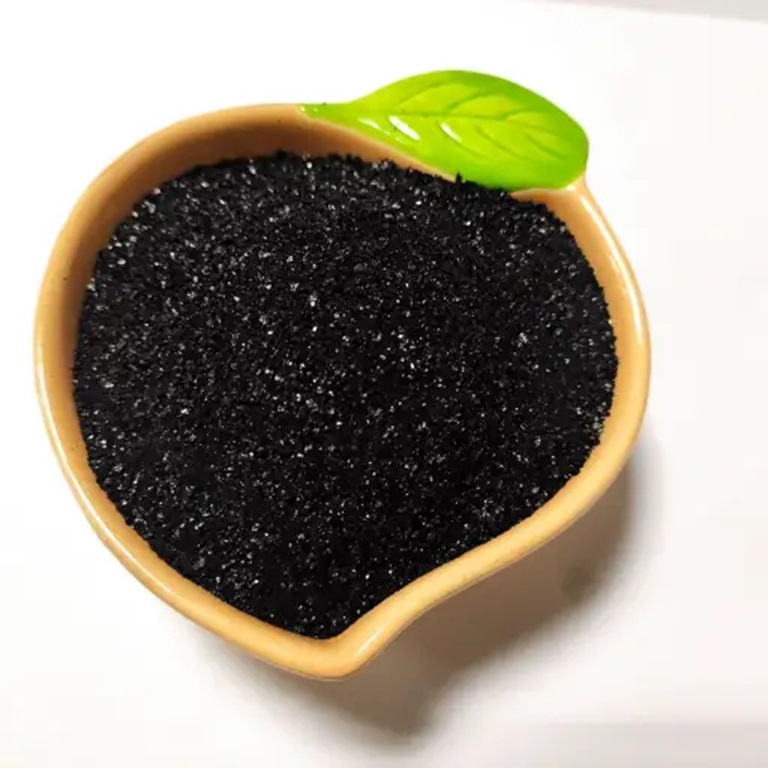
| Appearance | Powder, flakes, or granules |
| Odor | Earthy, characteristic |
| Density | 1.5 g/cm³ (at 20°C) |
| Boiling Point | 640°C |
| Solubility in Water | Fully soluble (279 g/L at 20°C) |
| pH (1% solution) | 9.0 – 10.0 (alkaline) |
| Flammability | Non-flammable |
3. SOLUBILITY PROPERTIES
| Solvent | Solubility |
|---|---|
| Water | Fully soluble (forms dark brown/black solution) |
| Alkaline Solutions | Highly soluble |
| Ethanol | Partially soluble |
| Non-Polar Organic Solvents | Insoluble |
Key Advantage: Potassium humate is fully water-soluble and is preferred over sodium humate for foliar applications because it provides potassium (K₂O) and does not cause sodium accumulation in soil.
4. CHEMICAL PROPERTIES
| Parameter | Information |
|---|---|
| Functional Groups | Carboxyl (-COOK), Phenolic (-OH), Ketones (C=O), Quinone |
| Humic Acid Content (dry basis) | ≥ 60-70% |
| Potassium (K₂O) Content | 8-12% |
| pH (1% solution) | 9.0 – 10.0 (alkaline) |
| Chelating Ability | Strong (binds heavy metals and micronutrients: Fe, Zn, Mn, Cu) |
| Cation Exchange Capacity (CEC) | 200-400 meq/100g |
| Stability | Stable under normal conditions |
5. COMPARISON: POTASSIUM HUMATE vs. SODIUM HUMATE vs. HUMIC ACID
| Property | Potassium Humate | Sodium Humate | Humic Acid |
|---|---|---|---|
| CAS Number | 68514-28-3 | 68131-04-4 | 1415-93-6 |
| Water Solubility | High (fully soluble) | High (fully soluble) | Low (only at pH>8.5) |
| pH (1% solution) | 9.0-10.0 | 9.0-11.0 | 3.5-5.5 |
| Potassium Content (K₂O) | High (8-12%) | None | None |
| Sodium Content | None | High (8-12%) | None |
| Foliar Application | Excellent | Good | Poor |
| Soil Application | Good | Good | Good |
| Salinity Risk | Low | Moderate (sodium accumulation) | None |
| Cost | Moderate | Low | Low |
Key Advantage of Potassium Humate: Fully water-soluble, excellent for foliar sprays, provides valuable potassium (K₂O), and does not cause sodium accumulation in soil (unlike sodium humate).
6. TYPICAL PRODUCT SPECIFICATIONS
| Parameter | Specification | Test Method |
|---|---|---|
| Potassium Humate Content (dry basis) | ≥ 90% | Titration |
| Humic Acid Content | ≥ 60-70% | ISO 5073 |
| Potassium (K₂O) | 8-12% | Flame Photometry |
| Moisture | ≤ 13.5% | Karl Fischer / LOD |
| pH (1% solution) | 9.0 – 10.0 | Potentiometric |
| Water Solubility | ≥ 95% | Gravimetric |
| Ash Content | ≤ 15-20% | Gravimetric (550°C) |
| Particle Size | 50-200 mesh (powder); 1-4 mm (granules) | Sieve analysis |
| Heavy Metals (as Pb) | ≤ 50 ppm | AAS/ICP |
| Arsenic (As) | ≤ 10 ppm | AAS |
| Lead (Pb) | ≤ 20 ppm | AAS |
| Cadmium (Cd) | ≤ 2 ppm | AAS |
7. FUNCTIONAL PROPERTIES
| Function | Description |
|---|---|
| Chelating Agent | Binds metal ions (Fe³⁺, Cu²⁺, Zn²⁺, Mn²⁺) into stable, bioavailable complexes |
| Potassium Source | Provides readily available potassium (K₂O) for plants |
| Soil Conditioner | Improves soil structure, CEC, and water retention |
| pH Buffering | Stabilizes soil and solution pH |
| Plant Growth Stimulant | Enhances root development, nutrient uptake, and stress tolerance |
| Antioxidant | Scavenges free radicals; reduces oxidative stress |
| Salinity Reducer | Reduces soil salinity and sodium accumulation |
8. PRODUCTION PROCESS
| Step | Description |
|---|---|
| Raw Material | Leonardite (highly oxidized lignite), lignite, or peat |
| Alkaline Extraction | Leonardite + Potassium hydroxide (KOH) + Water → Extraction |
| Filtration | Removes insoluble residue (humin) |
| Concentration | Evaporation to concentrate the potassium humate solution |
| Drying | Spray drying or drum drying to obtain powder or granules |
| Milling/Sieving | Grinding to desired particle size |
Simplified Reaction:
Humic Acid (insoluble) + KOH → Potassium Humate (soluble) + H₂O
9. APPLICATIONS – AGRICULTURE (Soil and Foliar)
| Application | Function | Typical Rate |
|---|---|---|
| Soil Application (Granules/Powder) | Soil conditioner; potassium source; stimulates root development | 10 – 30 kg/ha (100-300 kg/ha for poor soils) |
| Foliar Spray | Rapid potassium and humate uptake; enhances stress tolerance; improves yield and quality | 1 – 3 L/ha (0.1-0.3% solution) |
| Fertigation (Drip Irrigation) | Enhances nutrient uptake; improves soil structure | 5 – 20 L/ha (diluted) |
| Seed Coating | Improves germination, early root development | 1 – 2 g/kg seed |
| Hydroponics | Chelates micronutrients; provides potassium | 50 – 200 ppm |
Key Agricultural Benefits:
-
Increases nutrient use efficiency (NPK uptake by 20-30%)
-
Improves soil structure and water retention
-
Stimulates root growth and plant development
-
Enhances stress tolerance (drought, cold, salinity, disease)
-
Improves crop yield and quality (fruit size, color, sugar content)
-
Increases soil cation exchange capacity (CEC)
-
Reduces soil salinity
-
Reduces chemical fertilizer requirements (20-30% reduction possible)
10. APPLICATIONS – NPK FERTILIZER COMBINATIONS
| Application | Function | Typical Rate |
|---|---|---|
| Soil Application with NPK | Increases fertilizer efficiency; reduces nutrient leaching | 5-15% of fertilizer blend |
| Foliar Spray with NPK | Enhances nutrient uptake; reduces leaf burn | 1-3 L/ha + NPK |
Benefits:
-
Increases NPK fertilizer efficiency by 20-30%
-
Reduces nutrient leaching (environmental protection)
-
Increases crop yield by 10-20% compared to NPK alone
11. APPLICATIONS – ORGANIC FARMING
| Certification | Compatibility | Notes |
|---|---|---|
| GOTS (Global Organic Textile Standard) | Suitable | Permitted in organic farming |
| REACH | Suitable | Complies with EU chemical regulations |
| EC 834/2007 (EU Organic) | Suitable | Permitted as organic farming input |
| USDA Organic | Suitable (approved formulations) | Varies by manufacturer |
Benefits in Organic Farming:
-
No synthetic chemicals
-
Improves soil health
-
Increases plant resistance
-
Reduces chemical fertilizer requirements
12. APPLICATIONS – STRESS TOLERANCE
| Stress Type | Mechanism | Result |
|---|---|---|
| Drought | Increases water holding capacity; improves stomatal conductance | Enhanced drought tolerance; reduced wilting |
| Cold / Frost | Increases cell membrane stability; enhances antioxidant activity | Reduced frost damage; improved overwintering |
| Salinity | Reduces sodium uptake; increases potassium uptake; improves osmolyte accumulation | Enhanced salinity tolerance; reduced leaf burn |
| Disease | Induces systemic resistance; enhances pathogen defense | Reduced disease severity |
13. APPLICATIONS – SOIL REMEDIATION
| Soil Problem | Potassium Humate Effect |
|---|---|
| Low Organic Matter | Increases organic matter content; improves microbial activity |
| Low CEC | Increases CEC to 200-400 meq/100g; improves nutrient retention |
| Compaction | Improves soil aggregation; increases aeration and water infiltration |
| Salinity | Reduces sodium accumulation; mitigates salt stress |
| Sandy Soils | Increases water and nutrient holding capacity |
| Heavy Metal Contamination | Chelates and immobilizes heavy metals (Pb, Cd, Hg) |
14. APPLICATIONS – HYDROPONICS AND GREENHOUSE
| Application | Function | Typical Concentration |
|---|---|---|
| Nutrient Solution Additive | Chelates micronutrients; provides potassium; buffers pH | 50 – 200 ppm |
| Root Zone Enhancement | Stimulates root development; enhances nutrient uptake | 50 – 100 ppm |
| Foliar Spray (Greenhouse) | Rapid nutrient uptake; stress tolerance | 1 – 3 L/ha (0.1-0.3% solution) |
Hydroponic Benefits:
-
Stabilizes nutrient solution
-
Prevents precipitation of iron and other micronutrients
-
Provides pH buffering
-
Improves root health and nutrient uptake
15. TYPICAL APPLICATION RATES (Summary Table)
| Application Type | Dose / Concentration | Frequency |
|---|---|---|
| Soil application (granules) | 10 – 30 kg/ha | 1-2 times per season |
| Soil application (liquid) | 5 – 20 L/ha | 2-4 times per season |
| Foliar spray | 1 – 3 L/ha (0.1-0.3% solution) | 2-4 times per season |
| Seed coating | 1 – 2 g/kg seed | Once at planting |
| Fertigation | 5 – 20 L/ha (diluted) | Weekly or bi-weekly |
| Hydroponics | 50 – 200 ppm | With nutrient change |
16. CROP-SPECIFIC APPLICATION RATES
| Crop Type | Soil Application (kg/ha) | Foliar Spray (L/ha) | Application Timing |
|---|---|---|---|
| Cereals (Wheat, Corn, Rice) | 10-25 | 1-2 | Pre-plant, vegetative growth |
| Vegetables | 15-30 | 1-3 | Pre-plant, throughout growth |
| Fruit Trees | 20-40 | 2-4 | Bud break, fruit set, color development |
| Grapes/Vineyards | 15-30 | 2-3 | Pre-budbreak, flowering, fruit set |
| Oilseeds (Sunflower, Canola) | 10-25 | 1-2 | Pre-plant, rosette stage |
| Potatoes | 15-30 | 2-3 | Pre-plant, tuber formation |
| Cotton | 15-30 | 2-3 | Pre-plant, flowering |
17. ALTERNATIVES TO POTASSIUM HUMATE
| Alternative | CAS Number | Notes |
|---|---|---|
| Sodium Humate | 68131-04-4 | Lower potassium content; lower cost; less suitable for foliar |
| Fulvic Acid | 479-66-3 | Low molecular weight; high bioavailability; excellent for foliar |
| Humic Acid | 1415-93-6 | Non-potassium form; water insoluble; soil application only |
| Seaweed Extract | 68917-51-1 | Biostimulant; contains natural hormones |
| Potassium Sulfate | 7778-80-5 | Potassium only; no chelation or humate benefits |
18. SAFETY AND TOXICOLOGICAL PROFILE
| Parameter | Value |
|---|---|
| Acute oral toxicity (rat, LD₅₀) | >5,000 mg/kg (very low toxicity) |
| Acute dermal toxicity (rabbit, LD₅₀) | >2,000 mg/kg |
| Skin irritation | Non-irritating to mildly irritating |
| Eye irritation | Mildly irritating (powder) |
| Skin sensitization | Not a sensitizer |
| Carcinogenicity | Not classified as carcinogenic |
| Mutagenicity | Negative |
| Inhalation (dust) | May cause mild respiratory irritation |
GHS Classification: Not classified as hazardous under normal conditions of use.
PPE Requirements:
-
Dust mask (N95) (for dusty operations)
-
Safety glasses
-
Gloves (optional)
19. STORAGE AND HANDLING
| Parameter | Requirement |
|---|---|
| Storage Temperature | 5-30°C (cool, dry) |
| Container | Sealed bags (plastic-lined paper bags, woven bags) |
| Humidity | Low humidity (hygroscopic – absorbs moisture) |
| Light Protection | Protect from direct sunlight |
| Shelf Life | 24-36 months (under proper storage) |
| Special Precautions | Avoid dust generation. Keep away from strong oxidizing agents. Protect from moisture (caking). |
20. SUMMARY AND CRITICAL INFORMATION
Description: Potassium Humate (CAS 68514-28-3) is the potassium salt of humic acid, produced by alkaline extraction of leonardite (highly oxidized lignite), lignite, or peat with potassium hydroxide (KOH). It is a black to dark brown powder, flakes, or granules that is fully water-soluble (279 g/L at 20°C). Potassium humate is preferred over sodium humate for foliar applications because it provides valuable potassium (K₂O 8-12%) and does not cause sodium accumulation in soil. It has high cation exchange capacity (200-400 meq/100g), strong chelating ability, and excellent water solubility.
Key Advantages:
-
Fully water-soluble (ideal for foliar sprays)
-
Provides valuable potassium (K₂O 8-12%) – contributes to plant nutrition
-
No sodium accumulation in soil (unlike sodium humate)
-
Strong chelating agent (binds and transports micronutrients)
-
High cation exchange capacity (200-400 meq/100g)
-
Improves soil structure, water retention, and aeration
-
Enhances stress tolerance (drought, cold, salinity, disease)
-
Improves crop yield and quality
-
Reduces chemical fertilizer requirements (20-30% reduction possible)
-
Suitable for organic farming certifications (GOTS, REACH)
Key Limitations/Precautions:
-
Alkaline pH (9.0-10.0) – may require pH adjustment for sensitive crops
-
Hygroscopic (absorbs moisture – requires dry storage)
-
Higher cost than sodium humate (but potassium value added)
-
Quality varies by source (leonardite quality)
Major Applications Summary:
| Sector | Primary Uses |
|---|---|
| Agriculture (Conventional) | Soil conditioner, foliar spray, fertigation, NPK enhancer |
| Organic Farming | GOTS/REACH certified; non-synthetic potassium and humate source |
| Hydroponics | Nutrient solution additive, micronutrient chelator, pH buffer |
| Soil Remediation | Reduces salinity, increases CEC, binds heavy metals |
Comparison to Other Humate Forms:
| Form | Water Solubility | Potassium | Sodium | Best for Foliar | Cost |
|---|---|---|---|---|---|
| Potassium Humate | High | High (8-12%) | None | Yes | Moderate |
| Sodium Humate | High | None | High | Good | Low |
| Humic Acid | Low | None | None | No | Low |
Typical Application Rates:
| Application | Rate |
|---|---|
| Soil application (granules) | 10 – 30 kg/ha |
| Foliar spray | 1 – 3 L/ha (0.1-0.3% solution) |
| Fertigation | 5 – 20 L/ha |
| Hydroponics | 50 – 200 ppm |
| Seed coating | 1 – 2 g/kg seed |
Safety Summary:
-
Very low acute toxicity (LD₅₀ >5,000 mg/kg)
-
Not classified as hazardous under normal use
-
PPE: Dust mask (N95) (for dusty operations), safety glasses
-
Storage: Cool, dry, sealed containers; 24-36 months shelf life
Conclusion: Potassium Humate is the preferred water-soluble humate form for foliar applications and high-value crop production. It is fully water-soluble, provides valuable potassium (K₂O 8-12%), and does not cause sodium accumulation in soil (unlike sodium humate). It is widely used in organic farming (GOTS, REACH compliant) and conventional agriculture. It is effective in foliar sprays, soil application, fertigation, and hydroponic systems. It improves soil structure, increases nutrient use efficiency, enhances stress tolerance, and improves crop yield. While more expensive than sodium humate, its potassium content and superior foliar application properties make it the preferred choice for high-value crop production, organic farming, and salinity-sensitive regions.