We unleash your business potential by maximize the business innovation.
Send EmailKonjac Gum, Konjac Glucomannan, Konjac Flour, Konyaku, Konnyaku, KGM, E425, 37220-17-0
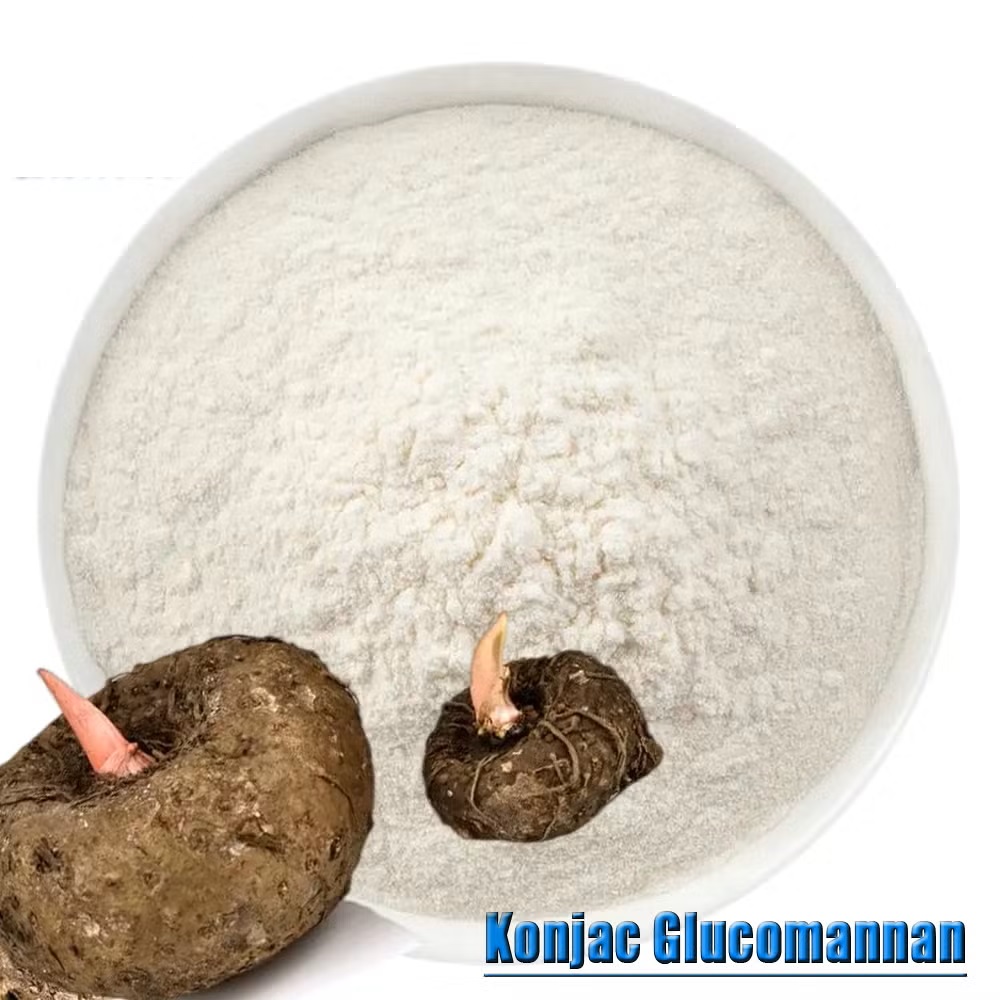
Konjac Gum (Konjac Glucomannan – E425)
CAS Number: 37220-17-0
E Number: E425
Chemical Name: Konjac Glucomannan
Synonyms: Konjac Gum, Konjac Glucomannan, Konjac Flour, Konyaku, Konnyaku, Amorphophallus konjac root extract
Source: Tuber (root) of Amorphophallus konjac plant (native to East Asia)
1. CHEMICAL IDENTITY
| Parameter | Information |
|---|---|
| Product Name | Konjac Gum (Konjac Glucomannan) |
| CAS Number | 37220-17-0 |
| E Number | E425 |
| Chemical Name | Konjac Glucomannan |
| Chemical Class | Polysaccharide, Dietary fiber, Hydrocolloid, Thickener, Gelling agent |
| Source | Tuber (root) of Amorphophallus konjac plant |
| Synonyms | Konjac Gum, Konjac Glucomannan, Konjac Flour, Konyaku, Konnyaku, Amorphophallus konjac root extract |
2. PHYSICAL PROPERTIES
| Parameter | Value |
|---|---|
| Physical State (20°C) | Solid |
| Color | White to off-white, cream, light tan |
| Appearance | Fine, free-flowing powder |
| Odor | Slight, characteristic (mild, earthy) |
| Taste | Bland, tasteless |
| Solubility | Soluble in cold water (forms viscous solution) |
| Viscosity (1% solution, 25°C) | 20,000 – 30,000 cP (very high) |
| Particle Size | 100-200 mesh (typical) |
| pH (1% solution) | 5.0 – 7.0 (neutral to slightly acidic) |
| Bulk Density | 0.4 – 0.6 g/cm³ |
3. THERMAL PROPERTIES
| Parameter | Value |
|---|---|
| Water Binding Capacity | Up to 200 times its own weight |
| Gelation Temperature | 70 – 90°C (requires alkaline conditions for firm gel) |
| Gel Strength | 700 – 1,200 g/cm² (with coagulant) |
| Thermal Stability | Stable under normal processing conditions |
| Gelation pH | Alkaline (pH > 10) for firm thermoirreversible gels |
4. SOLUBILITY PROPERTIES
| Solvent | Solubility |
|---|---|
| Cold Water | Soluble (forms viscous solution) |
| Hot Water | Soluble (higher solubility) |
| Ethanol | Insoluble (precipitates) |
| Oils | Insoluble |
| Organic Solvents | Insoluble |
Note: Konjac gum swells rapidly in cold water, achieving up to 200 times its original volume. It forms a highly viscous solution at low concentrations (1% solution provides 20,000-30,000 cP viscosity).
5. CHEMICAL COMPOSITION
| Component | Percentage |
|---|---|
| Glucomannan (polysaccharide) | 80-95% |
| Moisture | 5-12% |
| Ash | 2-5% |
| Protein | 1-3% |
| Starch | 1-5% |
| Fat | <1% |
Polysaccharide Structure:
-
Backbone: β-1,4-linked D-mannose and D-glucose
-
Molar ratio (mannose:glucose): 1.6:1 to 1.8:1
-
Degree of acetylation: ~5-10% (acetyl groups at C-6 positions)
-
Molecular weight: 500,000 – 2,000,000 Da
Key Feature: The acetyl groups along the chain provide solubility in cold water. Deacetylation (by alkaline treatment) allows the formation of strong, thermoirreversible gels.
6. TYPICAL PRODUCT SPECIFICATIONS
| Parameter | Specification | Test Method |
|---|---|---|
| Viscosity (1% solution, 25°C) | ≥ 20,000 cP (20,000-30,000 cP) | Brookfield |
| Moisture | ≤ 12% | Karl Fischer / LOD |
| Ash | ≤ 5% | Gravimetric (550°C) |
| Protein | ≤ 3% | Kjeldahl (N x 6.25) |
| Starch | ≤ 5% | Enzymatic |
| pH (1% solution) | 5.0 – 7.0 | Potentiometric |
| Heavy Metals (as Pb) | ≤ 10 ppm | AAS/ICP |
| Arsenic (As) | ≤ 2 ppm | AAS |
| Lead (Pb) | ≤ 5 ppm | AAS |
| Cadmium (Cd) | ≤ 1 ppm | AAS |
| Mercury (Hg) | ≤ 1 ppm | AAS |
| Total Plate Count | ≤ 5,000 cfu/g | Plate Count |
| Yeast and Mold | ≤ 100 cfu/g | Plate Count |
| E. coli | Negative | PCR/Culture |
| Salmonella | Negative | PCR/Culture |
| Particle Size | 100% through 80 mesh | Sieve analysis |
7. PRODUCTION PROCESS
| Step | Description |
|---|---|
| Raw Material | Konjac tubers (corms) of Amorphophallus konjac |
| Cleaning | Tubers are washed, peeled, and sliced |
| Extraction | Konjac flour is extracted by milling the dried tuber |
| Purification | Alcohol washing removes impurities (starch, proteins, bitter compounds) |
| Drying | Purified gum is dried (spray drying or drum drying) |
| Milling | Dried gum is milled to desired particle size |
| Screening | Graded to specific mesh size (100-200 mesh typical) |
| Quality Testing | Viscosity, purity, microbial tests |
8. FUNCTIONAL PROPERTIES
| Function | Description |
|---|---|
| Thickener | Very high viscosity at low concentrations; 1% solution provides 20,000-30,000 cP |
| Gelling Agent | Forms strong thermoirreversible gels when treated with alkali (calcium hydroxide, potassium carbonate) at 70-90°C |
| Water Binder | Binds up to 200 times its own weight in water |
| Stabilizer | Stabilizes emulsions and suspensions; prevents syneresis |
| Film Former | Forms transparent, edible films |
| Fat Mimetic | Provides creamy texture in low-fat products |
| Synergistic Gelation | Forms stronger gels when combined with carrageenan, xanthan gum, or agar |
| Prebiotic | Fermented by beneficial gut bacteria (Bifidobacteria, Lactobacilli) |
9. KONJAC GELATION MECHANISM
| Condition | Result | Temperature Effect |
|---|---|---|
| Neutral pH (no alkali) | Thick solution (no gel) | Thermoreversible |
| Alkaline pH (with Ca(OH)₂, K₂CO₃) | Firm, thermoirreversible gel | Requires heat (70-90°C) |
| With Carrageenan (Kappa) | Synergistic gel (stronger than either alone) | Thermoreversible |
| With Xanthan Gum | Synergistic gel (elastic, cohesive) | Thermoreversible |
Gelation Mechanism (Alkaline):
-
Alkaline pH deacetylates the glucomannan molecule
-
Deacetylated chains align and form hydrogen bonds
-
Heat (70-90°C) promotes chain alignment and crosslinking
-
Result: Strong, thermoirreversible gel (Konjac jelly, Shirataki noodles)
10. APPLICATIONS – FOOD INDUSTRY (E425)
| Application | Function | Typical Use Level |
|---|---|---|
| Konjac Jelly (Tofu-style) | Gelling agent; firm, thermoirreversible gel | 1-3% |
| Shirataki Noodles | Gelling agent; low-calorie, zero-carb pasta alternative | 2-4% |
| Vegan Gelatin Alternative | Gelling agent (replaces animal gelatin) | 0.5-2% |
| Jams and Jellies | Thickener, gelling agent | 0.2-0.8% |
| Dairy Products (Yogurt, Ice Cream) | Stabilizer, thickener, fat mimetic | 0.1-0.5% |
| Sauces and Gravies | Thickener (cold or hot water soluble) | 0.1-0.5% |
| Bakery (Gluten-Free Bread, Cakes) | Texture improver, moisture retention | 0.5-2% |
| Meat Products (Sausages, Meatballs) | Binder, water retention, fat replacement | 0.2-1% |
| Beverages | Thickener, stabilizer (for fiber-fortified drinks) | 0.1-0.3% |
| Frozen Foods | Freeze-thaw stabilizer | 0.1-0.5% |
11. APPLICATIONS – VEGAN AND PLANT-BASED PRODUCTS
| Application | Role |
|---|---|
| Vegan Jelly Candies | Replaces gelatin (E425 + carrageenan or gellan gum) |
| Vegan Meat Alternatives | Texture enhancer, binder, moisture retention |
| Vegan Cheese | Texture improver, melt and stretch properties |
| Gluten-Free Baking | Structure builder, moisture retention |
12. APPLICATIONS – HEALTH AND NUTRITION (Dietary Supplements)
| Application | Function | Typical Dose |
|---|---|---|
| Weight Management Supplements | Promotes satiety (expands in stomach, delays gastric emptying) | 1-3 g before meals with 8-12 oz water |
| Dietary Fiber Supplements | Soluble fiber source; supports digestive health | 1-5 g/day |
| Prebiotic Supplements | Supports beneficial gut bacteria | 1-5 g/day |
| Cholesterol Management | May help lower LDL cholesterol | 3-5 g/day (with water) |
| Blood Sugar Management | May slow carbohydrate absorption | 1-3 g before meals |
Important Usage Warning: Konjac glucomannan must be taken with at least 8 ounces (240 mL) of water. Without adequate water, it can swell in the esophagus and cause choking or esophageal blockage.
13. APPLICATIONS – COSMETICS AND PERSONAL CARE
| Application | Function | Typical Concentration |
|---|---|---|
| Face Masks (Sheet Masks) | Film former, moisturizer, skin smoothing | 0.1-0.5% |
| Facial Creams and Lotions | Thickener, moisturizer, skin conditioning | 0.1-0.5% |
| Hair Conditioners | Thickener, detangling, shine | 0.1-0.5% |
| Shampoos | Viscosity builder | 0.1-0.3% |
| Shower Gels | Thickener, foam stabilizer | 0.1-0.3% |
| Toothpaste | Binder, thickener | 0.2-0.5% |
INCI Name: Konjac Glucomannan or Amorphophallus Konjac Root Extract
14. APPLICATIONS – OTHER INDUSTRIES
| Industry | Application |
|---|---|
| Pharmaceutical | Excipient in tablet binders; controlled-release matrix; capsule shell material |
| Biodegradable Packaging | Edible films, water-soluble packaging |
| Textile Printing | Thickener for printing pastes |
| Paper Industry | Surface sizing, coating binder |
| Oil Drilling | Viscosity modifier for drilling fluids |
| Agriculture | Soil conditioner; seed coating |
15. SYNERGISTIC BLENDS WITH OTHER HYDROCOLLOIDS
| Hydrocolloid | Synergistic Effect | Ratio (Konjac : Other) | Application |
|---|---|---|---|
| Kappa Carrageenan | Elastic, thermoreversible gel (stronger than either alone) | 1:1 to 2:1 | Vegan jelly, desserts |
| Xanthan Gum | Pseudoplastic, synergistic viscosity | 1:1 to 3:1 | Sauces, dressings |
| Agar | Thermoresistant gel; higher melting point | 1:1 | High-temperature gels |
| Starch | Increased viscosity, improved texture | 1:5 to 1:10 | Soups, gravies |
| Locust Bean Gum (LBG) | Enhanced gel strength (with carrageenan) | 1:1 (with carrageenan) | Dairy products |
Special Note: The combination of konjac glucomannan with kappa carrageenan (1:1 ratio) produces an elastic, thermoreversible gel that is stronger than either hydrocolloid alone.
16. COMPARISON WITH OTHER HYDROCOLLOIDS
| Property | Konjac Gum | Xanthan Gum | Guar Gum | Carrageenan | Agar |
|---|---|---|---|---|---|
| Water Binding | Very high (200x) | High (50x) | High (40x) | High | Moderate |
| Viscosity (1%) | 20,000-30,000 cP | 1,200-1,600 cP | 3,000-5,000 cP | 50-500 cP | 500-1,000 cP |
| Cold Water Soluble | Yes | Yes | Yes | Yes (kappa/hot) | No (hot only) |
| Gel Type | Thermoirreversible (alkaline) | Pseudoplastic (no gel) | No gel | Thermoreversible | Thermoreversible |
| Gel Strength | Strong (with alkali) | — | — | Medium | Strong |
| Synergy | With carrageenan, xanthan | With konjac | No | With konjac, LBG | No |
| Calorie Content | Very low | Very low | Very low | Very low | Very low |
17. SAFETY AND TOXICOLOGICAL PROFILE
| Parameter | Value |
|---|---|
| Acute oral toxicity (rat, LD₅₀) | >5,000 mg/kg (very low toxicity) |
| Skin irritation | Non-irritating |
| Eye irritation | Non-irritating to mildly irritating |
| Skin sensitization | Not a sensitizer |
| Carcinogenicity | Not classified as carcinogenic |
| Genotoxicity | Negative |
| GRAS Status | Generally Recognized as Safe (FDA) |
| EFSA Status | Approved as food additive E425 |
GHS Classification: Not classified as hazardous under normal conditions of use.
Side Effects (at high doses >10-15 g/day):
-
Bloating
-
Gas (flatulence)
-
Mild gastrointestinal discomfort
Critical Safety Warning: Konjac gum powder must be taken with adequate water (at least 240 mL/8 oz per 1-3 g). Without sufficient water, it can swell in the esophagus, causing choking or esophageal obstruction. Never take konjac supplements in dry powder form without water.
18. REGULATORY STATUS
| Region/Agency | Status |
|---|---|
| FDA (USA) | GRAS (Generally Recognized as Safe) for use as a food additive |
| EU | Approved as food additive E425 |
| EFSA | Evaluated and considered safe at intended use levels |
| Türkiye (TGK) | Approved as food additive E425 |
| CODEX Alimentarius | Listed as food additive |
| JECFA | Evaluated; ADI not specified |
FDA GRAS Notice: Konjac glucomannan has GRAS status for use as a thickener and gelling agent in food products.
19. STORAGE AND HANDLING
| Parameter | Requirement |
|---|---|
| Storage Temperature | 15-30°C (room temperature, cool, dry) |
| Container | Tightly sealed (plastic-lined bags, HDPE drums) |
| Humidity | Low humidity (hygroscopic – absorbs moisture) |
| Light Protection | Protect from direct sunlight |
| Shelf Life | 24 months under proper storage |
| Special Precautions | Hygroscopic – keep container tightly closed. Avoid dust generation. |
20. SUMMARY AND CRITICAL INFORMATION
Description: Konjac Gum (Konjac Glucomannan, E425, CAS 37220-17-0) is a natural, water-soluble polysaccharide extracted from the tuber (root) of the Amorphophallus konjac plant. It is a high-molecular-weight dietary fiber composed of β-1,4-linked D-mannose and D-glucose. Konjac gum has an exceptional water-binding capacity (up to 200 times its own weight) and forms very high-viscosity solutions at low concentrations (1% solution yields 20,000-30,000 cP). When treated with alkaline reagents (calcium hydroxide, potassium carbonate) and heated to 70-90°C, it forms strong, thermoirreversible gels (Konjac jelly, Shirataki noodles). Konjac gum also exhibits synergistic gelling properties with carrageenan, xanthan gum, and agar.
Key Advantages:
-
Exceptionally high water-binding capacity (200x its own weight)
-
Very high viscosity at low concentrations (20,000-30,000 cP at 1%)
-
Forms strong, thermoirreversible gels under alkaline conditions (unique among hydrocolloids)
-
Synergistic gelling with carrageenan, xanthan, and agar
-
Natural, plant-based, vegan, gluten-free
-
Prebiotic dietary fiber (supports gut health)
-
Zero calories – suitable for weight management
-
FDA GRAS and EU E425 approved
Key Limitations/Precautions:
-
Critical Safety Warning: Must be taken with adequate water (at least 240 mL per dose) – risk of esophageal blockage/choking
-
High doses may cause bloating, gas, or gastrointestinal discomfort
-
Hygroscopic – requires dry storage in sealed containers
-
Strong gelation requires alkaline conditions (pH > 10) and heating (70-90°C)
-
Can be gritty if not fully hydrated (requires proper dispersion techniques)
Major Applications Summary:
| Sector | Primary Uses |
|---|---|
| Food (E425) | Thickener, gelling agent, stabilizer, fat mimetic (jelly, Shirataki noodles, vegan gelatin, dairy, sauces, bakery, meat products) |
| Health & Nutrition | Dietary fiber supplements, weight management, prebiotic, cholesterol management |
| Cosmetics | Thickener, moisturizer, film former (face masks, creams, hair products) |
| Other | Biodegradable packaging, pharmaceutical excipient, textile printing, oil drilling |
Comparison to Other Hydrocolloids:
| Property | Konjac Gum | Xanthan Gum | Carrageenan |
|---|---|---|---|
| Water Binding | Very high (200x) | High (50x) | High |
| Viscosity (1%) | 20,000-30,000 cP | 1,200-1,600 cP | 50-500 cP |
| Gel Type | Thermoirreversible (alkaline) | Pseudoplastic (no gel) | Thermoreversible |
| Synergy | With carrageenan, xanthan | With konjac | With konjac, LBG |
Synergistic Blends:
| Blend | Ratio (Konjac:Other) | Application |
|---|---|---|
| Konjac + Kappa Carrageenan | 1:1 | Elastic, thermoreversible gels |
| Konjac + Xanthan Gum | 1:1 to 3:1 | Pseudoplastic, synergistic viscosity |
Safety Summary:
-
Very low acute toxicity (LD₅₀ >5,000 mg/kg)
-
GRAS and E425 approved
-
Generally safe at recommended doses (1-5 g/day)
-
Critical: Must be taken with adequate water to prevent choking
-
High doses may cause bloating/gas
Storage: Cool, dry, tightly sealed containers; 24 months shelf life.
Conclusion: Konjac Gum (Konjac Glucomannan) is a unique, high-performance natural hydrocolloid with exceptional water-binding capacity and very high viscosity at low concentrations. Its ability to form strong, thermoirreversible gels under alkaline conditions (used for Konjac jelly and Shirataki noodles) sets it apart from other polysaccharides. It also exhibits synergistic gelling properties with carrageenan, xanthan gum, and agar. As a soluble dietary fiber, it supports weight management, digestive health, and blood sugar and cholesterol management. However, due to its high swelling capacity, konjac supplements must be taken with adequate water to prevent esophageal obstruction. Approved as E425 in the EU and GRAS in the USA, konjac gum is a versatile, natural, and sustainable hydrocolloid for food, health, cosmetic, and industrial applications.