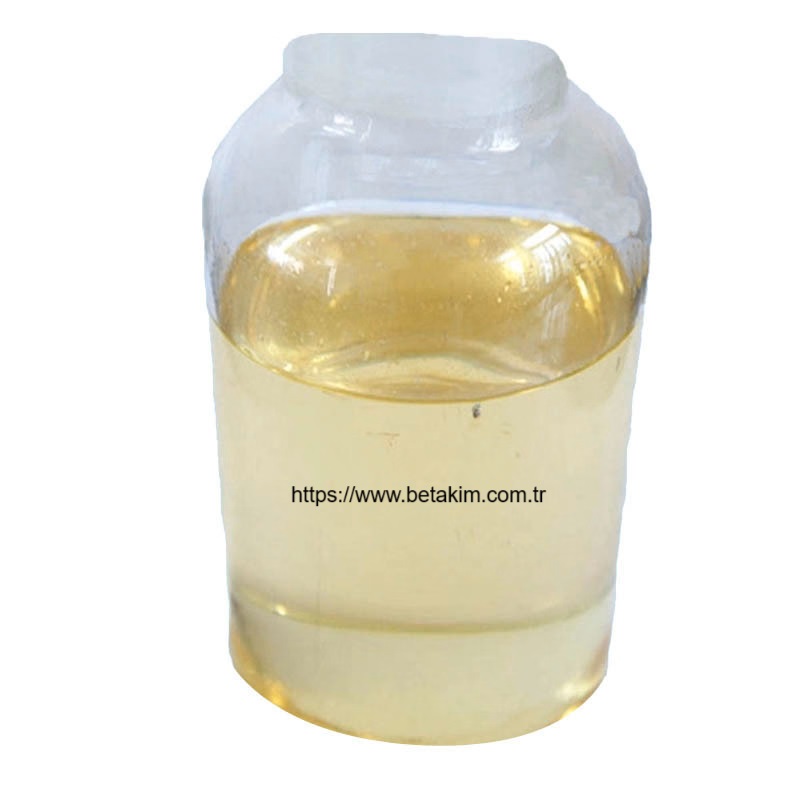
Cocamidopropyl Betaine, Coco Amido Betaine, Coconut Oil Amidopropyl Betaine, CAPB, CAB-35, CAB-45, 61789-40-0
COCAMIDOPROPYL BETAINE (COCAMIDOPROPYL BETAINE / CAPB)
PRODUCT IDENTIFICATION INFORMATION
| Parameter |
Information |
| Product Name |
Cocamidopropyl Betaine / Cocamidopropyl Betaine |
| Other Technical Names |
CAPB, CAB, Coco Amido Betaine, Coconut Oil Amidopropyl Betaine |
| CAS Number |
61789-40-0 |
| EC Number |
263-058-8 |
| Molecular Formula |
C₁₉H₃₈N₂O₃ (representative) |
| Molecular Weight |
342.52 g/mol |
| Chemical Class |
Amphoteric Surfactant |
| GTIP / HS Code |
3402.11.00 |
| Appearance |
Clear, colorless to light yellow liquid |
CHEMICAL STRUCTURE
    Cocamidopropyl Betaine (CAPB)

    Coconut Oil Fatty Acid Derivative
    Amphoteric Surfactant

         O              CH₃
         ||              |
    R - C - NH - CH₂ - CH₂ - CH₂ - N⁺ - CH₂ - COO⁻
                       |             |
                      CH₃           CH₃

    R = Coconut Oil Alkyl Chain (C8-C18)

    Exhibits Both Anionic and Cationic Properties
    Effective in Wide pH Range
    Mild and High Foaming
Chemical Class: Amphoteric Surfactant
Ionic Character: Amphoteric (anionic or cationic depending on pH)
Origin: Coconut oil derivative
Appearance: Clear, colorless to light yellow liquid
SECTION 1: CHEMICAL IDENTITY AND DEFINITION
| Parameter |
Information |
| Product Name |
Cocamidopropyl Betaine / Cocamidopropyl Betaine |
| Other Technical Names (English) |
Cocamidopropyl Betaine, CAPB, Coco Amido Betaine, Coconut Oil Amidopropyl Betaine |
| Other Technical Names (Turkish) |
Kokamidopropil Betain, CAPB, CAB, Hindistan Cevizi Yağı Amidopropil Betain |
| Other Technical Names (German) |
Kokamidopropylbetain, CAPB |
| Other Technical Names (French) |
Bétaïne de Cocamidopropyle, CAPB |
| Other Technical Names (Spanish) |
Betaína de Cocamidopropilo, CAPB |
| CAS Number |
61789-40-0 |
| EC Number |
263-058-8 |
| Molecular Formula |
C₁₉H₃₈N₂O₃ (representative) |
| Molecular Weight |
342.52 g/mol |
| Chemical Class |
Amphoteric Surfactant |
| GTIP / HS Code |
3402.11.00 |
| Appearance |
Clear, colorless to light yellow, free-flowing liquid |
| Odor |
Neutral, odorless or slight characteristic odor |
| Color |
Colorless to light yellow |
| Physical State |
Liquid |
| Ionic Character |
Amphoteric (varies with pH) |
SECTION 2: PHYSICAL AND CHEMICAL PROPERTIES
| Property |
Value |
Test Method / Note |
| Appearance (25°C) |
Clear, colorless to light yellow, free-flowing liquid |
Visual |
| Odor |
Neutral, odorless or slight characteristic |
- |
| Density (25°C) |
~1.05 – 1.057 g/cm³ |
- |
| Boiling Point |
~100°C |
As aqueous solution |
| Freezing Point |
~ -10°C |
- |
| pH (10% solution) |
4.0 – 7.0 |
Depends on grade |
| Water Solubility |
Completely miscible in all proportions |
- |
| Cloud Point (1% in water) |
-3°C |
- |
| Flash Point |
>94°C |
- |
| Viscosity (25°C) |
Low to medium |
Depends on concentration |
SECTION 3: TYPICAL TECHNICAL SPECIFICATIONS
| Parameter |
CAB-35 (CAPB-35) |
CAB-45 (CAPB-45) |
| Active Matter Content (%) |
28.0 – 32.0 |
38.0 – 42.0 |
| Solid Content (%) |
33.0 – 37.0 |
43.0 – 47.0 |
| pH (1% solution) |
4.0 – 7.0 |
5.0 – 7.0 |
| Sodium Chloride (NaCl, %) |
≤ 6.0 |
≤ 7.0 |
| Free Amine (%) |
≤ 0.5 |
≤ 0.5 |
| Color (Hazen) |
≤ 100 |
≤ 100 |
| Density (g/mL, 25°C) |
~1.05 |
~1.05 |
| Cloud Point (1% aqueous) |
-3°C |
-3°C |
| Freezing Point |
-10°C |
-10°C |
SECTION 4: FUNCTIONAL PROPERTIES AND MECHANISM OF ACTION
| Property |
Explanation |
| Amphoteric Surfactant |
Exhibits anionic or cationic properties depending on pH. Effective over a wide pH range. |
| Mild and High Foaming |
Extremely mild and produces rich, dense, creamy foam. Essential for "no-tear" baby shampoos and sensitive skin products. |
| Foam Booster and Stabilizer |
In combination with anionic surfactants (such as SLES or LABSA), significantly increases both foam quantity and stability. |
| Viscosity Builder |
When used with anionic surfactants in the presence of salt (NaCl), dramatically increases formulation viscosity. |
| Skin and Hair Care Agent |
Leaves skin feeling soft and smooth, reduces static charge on hair, improving wet and dry combability. |
| Wide pH Stability |
Effectively maintains surfactant properties in both mildly acidic and mildly alkaline formulations. |
| Biodegradability |
Biodegradable and environmentally friendly. |
SECTION 5: ANTIMICROBIAL ACTIVITY
| Microorganism |
Effect |
| Staphylococcus aureus |
Effective |
| Streptococcus pyogenes |
Effective |
| Bacillus subtilis |
Effective |
| Candida albicans |
Effective |
| Pityrosporum ovale |
Effective |
SECTION 6: OTHER NAMES AND SYNONYMS
| Category |
Names |
| Common Names |
Cocamidopropyl Betaine, CAPB, Coco Amido Betaine (CAB), Coconut Oil Amidopropyl Betaine |
| Trade Names |
Tego Betain, Dehyton PK, Empigen BB, Mackam CB-35, Mirataine BET-C 30 |
| Chemical Synonyms |
N-(Coco alkyl) amidopropyl betaine, Cocoamidopropyldimethylglycine |
SECTION 7: INDUSTRY APPLICATIONS
7.1 Personal Care and Cosmetics
| Application |
Function |
Typical Usage Rate |
| Baby Shampoos |
Mild cleansing, foam booster |
2 – 15% |
| Shower Gels |
Mild cleansing, viscosity builder |
2 – 15% |
| Facial Cleansers |
Mild cleansing, skin care |
2 – 15% |
| Hand Soaps |
Cleansing, foam booster |
2 – 15% |
| Makeup Removers |
Mild cleansing |
2 – 15% |
7.2 Household Cleaning
| Application |
Function |
Typical Usage Rate |
| Dishwashing Liquids |
Foam booster, grease remover |
2 – 10% |
| Laundry Detergents |
Foam booster, softener |
2 – 10% |
| Hard Surface Cleaners |
Cleaning, foam booster |
2 – 10% |
7.3 Industrial and Institutional
| Application |
Function |
Typical Usage Rate |
| Metalworking Fluids |
Surfactant |
1 – 5% |
| Agricultural Chemicals |
Auxiliary surfactant |
1 – 5% |
| Textile Processing |
Auxiliary surfactant |
1 – 5% |
SECTION 8: EXAMPLE FORMULATIONS
8.1 Economical Antibacterial Hand Soap
| Ingredient |
Ratio (%) |
| CAPB-35 |
3.0 |
| SLES-70 |
3.5 |
| CDEA-85 |
1.0 |
| PCMX |
0.2 |
| Water |
q.s. |
| Salt |
To adjust pH 7-8 |
| Citric Acid |
To adjust pH 7-8 |
8.2 Grease-Cutting Dishwashing Detergent
| Ingredient |
Ratio (%) |
| LABSA-96 |
7.0 |
| SLES-70 |
8.0 |
| CAPB-35 |
3.0 |
| Caustic Soda |
1.0 |
| Water |
q.s. |
| Salt |
Sufficient |
| Citric Acid |
Sufficient |
8.3 Concentrated Laundry Detergent
| Ingredient |
Ratio (%) |
| SLES-70 |
14.0 |
| CAPB-35 |
10.0 |
| LABSA-96 |
3.0 |
| OP-10 |
4.0 |
| AEO-9 |
4.0 |
| Water |
q.s. |
| Salt |
Sufficient |
| Citric Acid |
Sufficient |
SECTION 9: ADVANTAGES AND DISADVANTAGES
| Advantages |
Disadvantages |
| Extremely mild, low irritation potential; ideal for sensitive skin and baby products |
If used excessively without optimizing anionic ratio, can reduce foam volume in very soft water |
| Excellent foam booster; produces rich, creamy and stable foam |
High concentration product (CAPB-45) is viscous and may require slight heating for easy handling |
| Effective viscosity builder in anionic surfactant systems, especially with salt |
- |
| Wide compatibility with anionic, cationic and nonionic surfactants |
- |
| Biodegradable and environmentally friendly |
- |
SECTION 10: SAFETY, STORAGE AND REGULATORY INFORMATION
10.1 GHS Classification
| Parameter |
Information |
| GHS Classification |
Not classified as hazardous substance or mixture |
| Eye Irritation |
Not irritating at use concentrations |
| Skin Irritation |
Not irritating at use concentrations |
10.2 Safety Profile
| Parameter |
Information |
| Cosmetic Safety |
Cosmetic Ingredient Review (CIR) panel has confirmed safety for use in cosmetics and personal care products |
| Eye Safety |
Not a significant eye irritant; suitable for "no-tear" formulations |
| Skin Sensitivity |
Extremely mild, low irritation potential |
10.3 Storage
| Parameter |
Information |
| Storage Temperature |
5–30°C |
| Storage Conditions |
Cool, dry and well-ventilated area; in tightly closed containers |
| Container Material |
Polyethylene (PE), polypropylene (PP) or HDPE containers; avoid non-stainless steel tanks |
| Freezing |
May be affected by freeze-thaw cycles; if frozen, should be gently heated and stirred until homogeneous |
| Shelf Life |
12–24 months under proper storage conditions |
10.4 Regulatory Compliance
| Regulation |
Status |
| REACH |
Registered |
| Cosmetics Regulation (EC) 1223/2009 |
Compliant |
| CIR (Cosmetic Ingredient Review) |
Approved |
SECTION 11: CRITICAL WARNINGS AND BEST PRACTICES
CRITICAL WARNINGS:
-
pH Sensitivity: As an amphoteric surfactant, ionic character changes depending on pH. Formulation pH should be maintained between 4-7.
-
Viscosity Development: Salt (NaCl) can increase viscosity; however, excessive salt may negatively affect formulation stability.
-
Freezing Warning: Freeze-thaw cycles may affect product appearance; frozen product should be gently heated to homogenize.
-
Anionic Ratio: Optimization with anionic surfactants is important; excessive CAPB may reduce foam volume in soft water.
-
Hygroscopic Property: Should be stored in closed containers due to hygroscopic nature.
BEST PRACTICE RECOMMENDATIONS:
6. Formulation Design:
Use CAPB with anionic surfactants (SLES, LABSA) to benefit from foam and viscosity synergy. Add salt to increase viscosity.
7. pH Adjustment:
Use citric acid or sodium hydroxide to maintain formulation pH between 4-7.
8. Sensitive Skin Products:
Use as primary surfactant in baby shampoos, shower gels and facial cleansers.
9. Industrial Applications:
Use as auxiliary surfactant in metalworking fluids, agricultural chemicals and textile processing.
10. Storage:
Store in cool, dry and well-ventilated areas; use PE, PP or HDPE containers.
11. Use:
Use in well-ventilated areas; avoid contact with eyes; rinse with plenty of water upon contact.
12. Personal Protective Equipment:
No special PPE required, but protective gloves and goggles are recommended for prolonged use.
13. Hygiene:
Wash hands after use; do not eat, drink or smoke while using.
14. Spill Response:
Rinse spills with water or collect with inert absorbent material; do not allow to enter drains or waterways.
15. Disposal:
Dispose in accordance with local, regional and national regulations; biodegradable and environmentally friendly.
INDUSTRY SUITABILITY TABLE:
| Industry / Application |
Suitability |
Explanation |
| Personal Care |
Suitable |
Baby shampoos, shower gels, facial cleansers |
| Cosmetics |
Suitable |
Mild and low-irritation formulations |
| Household Cleaning |
Suitable |
Dishwashing detergents, laundry detergents |
| Industrial |
Suitable |
Metalworking, agricultural chemicals, textile |
| Food |
Suitable |
Not used as food additive |
| Pharmaceutical |
Limited |
Limited use as excipient |
RECOMMENDED STORAGE CONDITIONS:
| Parameter |
Requirement |
| Storage Temperature |
5-30°C |
| Humidity |
<60% relative humidity |
| Container |
PE, PP or HDPE containers |
| Location |
Cool, dry, well-ventilated area |
LEGAL DISCLAIMER:
The information provided in this document is based on our current knowledge and experience and is provided in good faith; however, since all conditions of use are beyond our control, it does not constitute a binding specification or warranty. This Technical Data Sheet is for informational purposes only. Users are responsible for testing suitability for their own applications. For complete safety, storage, use, handling, disposal and regulatory compliance information, reference should be made to the official Safety Data Sheet (SDS/MSDS) provided by the manufacturer/supplier.