We unleash your business potential by maximize the business innovation.
Send EmailCocamidopropyl Betaine, CAPB, CAB-35, CAB-45, 61789-40-0
COCAMIDOPROPYL BETAINE (CAPB)
1. PRODUCT DEFINITION AND CHEMICAL IDENTITY
| Parameter | Description |
|---|---|
| Chemical Name (IUPAC) | 1-Propanaminium, 3-amino-N-(carboxymethyl)-N,N-dimethyl-, N-coco acyl derivatives, inner salt |
| Common Name | Cocamidopropyl Betaine (CAPB) |
| Common Abbreviations | CAPB, CAB |
| CAS Number | 61789-40-0 |
| EC Number | 263-058-8 |
| Molecular Formula | C₁₉H₃₈N₂O₃ (representative) |
| Molecular Weight | 342.52 g/mol |
| Chemical Class | Amphoteric Surfactant |
| HS Code / Tariff Code | 3402.11.00 |
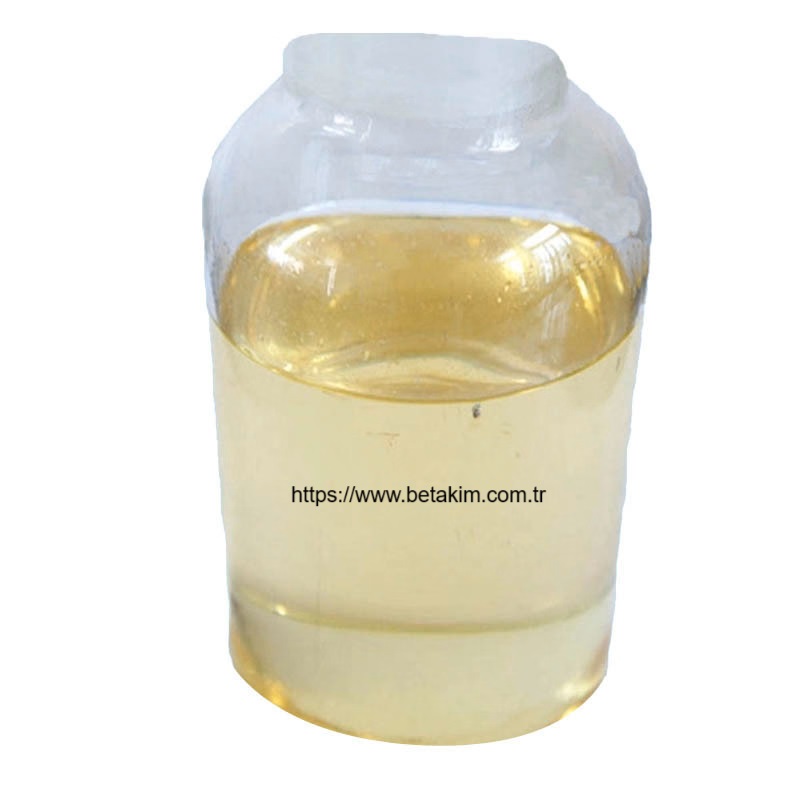
| Appearance | Clear, colourless to pale yellow liquid |
Note: Cocamidopropyl Betaine is a high-foaming, mild amphoteric surfactant derived from coconut oil. It exhibits both anionic and cationic properties, making it effective over a wide pH range. Due to its exceptional mildness, excellent foam boosting, and viscosity-building properties, it is a primary ingredient in baby shampoos, shower gels, facial cleansers, and other sensitive skin personal care products.
2. PHYSICAL AND CHEMICAL PROPERTIES (Typical for 30-35% Active Grade)
| Property | Value / Description |
|---|---|
| Appearance (25 °C) | Clear, colourless to pale yellow, free-flowing liquid |
| Odour | Neutral, odourless or faint characteristic odour |
| Density (25 °C) | ~1.05 – 1.057 g/cm³ |
| Boiling point | ~100 °C (as an aqueous solution) |
| Freezing point | ~ -10 °C |
| pH (10% solution) | 4.0 – 7.0 (grade dependent) |
| Solubility in water | Completely miscible in all proportions |
| Cloud point (1% in water) | -3 °C |
| Flash point (1% in water) | >94 °C |
3. TYPICAL TECHNICAL SPECIFICATIONS (by Common Grade)
| Parameter | CAB-35 (CAPB-35) | CAB-45 (CAPB-45) |
|---|---|---|
| Active Matter Content (%) | 28.0 – 32.0 | 38.0 – 42.0 |
| Solid Content (%) | 33.0 – 37.0 | 43.0 – 47.0 |
| pH (1% solution) | 4.0 – 7.0 | 5.0 – 7.0 |
| Sodium Chloride (NaCl, %) | ≤ 6.0 | ≤ 7.0 |
| Free Amine (%) | ≤ 0.5 | ≤ 0.5 |
| Colour (Hazen) | ≤ 100 | ≤ 100 |
| Density (g/mL, 25 °C) | ~1.05 | ~1.05 |
| Cloud Point (1% aq.) | -3 °C | -3 °C |
| Freezing Point | -10 °C | -10 °C |
4. FUNCTIONAL PROPERTIES AND MODE OF ACTION
-
Mild, High-Foaming Primary or Secondary Surfactant: As an amphoteric surfactant, it is exceptionally mild and generates a rich, dense, and creamy foam. It is a key ingredient for "tear-free" baby shampoos and products for sensitive skin.
-
Foam Booster and Stabilizer: In combination with anionic surfactants (like SLES or LABSA), it significantly enhances both the quantity and the stability of the foam. It adds a creamy, luxurious texture that is difficult to achieve with anionic surfactants alone.
-
Viscosity Builder: When used with anionic surfactants in the presence of salt (NaCl), CAPB dramatically increases the viscosity of the formulation, helping to create the desired gel-like consistency for shampoos and body washes. It also helps to mitigate the viscosity reduction caused by high fragrance or oil loads.
-
Skin and Hair Conditioner: It leaves the skin feeling soft and smooth and helps to reduce the static charge on hair, improving wet and dry combability.
-
Broad pH Stability: It maintains its surfactant properties effectively in both mildly acidic and alkaline formulations.
5. ANTIMICROBIAL EFFICACY
CAPB has been shown to exhibit antimicrobial activity against the following common microorganisms:
| Microorganism | Effect |
|---|---|
| Staphylococcus aureus | Effective |
| Streptococcus pyogenes | Effective |
| Bacillus subtilis | Effective |
| Candida albicans | Effective |
| Pityrosporum ovale | Effective |
6. ALTERNATIVE NAMES AND SYNONYMS
| Category | Names |
|---|---|
| Common Names | Cocamidopropyl Betaine, CAPB, Coco Amido Betaine (CAB), Coconut Oil Amidopropyl Betaine |
| Trade Names | Tego Betain, Dehyton PK, Empigen BB, Mackam CB-35, Mirataine BET-C 30 |
| Chemical Synonyms | N-(Coco alkyl) amidopropyl betaine, Cocoamidopropyldimethylglycine |
7. SECTORAL APPLICATIONS, SUITABILITY, AND EXAMPLE FORMULATIONS
| Sector / Product | Function | Typical Usage Rate |
|---|---|---|
| Personal Care & Cosmetics | Baby shampoos, shower gels, facial cleansers, hand soaps, makeup removers | 2 – 15% |
| Household Cleaning | Dishwashing liquids, laundry detergents, hard surface cleaners | 2 – 10% |
| Industrial & Institutional | Metalworking fluids, agrochemical adjuvants, textile processing auxiliaries | 1 – 5% |
Example Formulations (as provided):
-
Economical Antibacterial Hand Soap: CAPB-35 (3.0%), SLES-70 (3.5%), CDEA-85 (1.0%), PCMX (0.2%), and q.s. water, salt, and citric acid to pH 7-8.
-
Degreasing Dishwashing Liquid: LABSA-96 (7.0%), SLES-70 (8.0%), CAPB-35 (3.0%), Caustic Soda (1.0%), and q.s. water, salt, and citric acid.
-
Concentrated Laundry Detergent: SLES-70 (14.0%), CAPB-35 (10.0%), LABSA-96 (3.0%), OP-10 (4.0%), AEO-9 (4.0%), and q.s. water, salt, and citric acid.
8. ADVANTAGES AND DISADVANTAGES
| Advantages | Disadvantages |
|---|---|
| Extremely mild, low irritation potential; ideal for sensitive skin and baby products | Can reduce foam volume in very soft water if used in excess without optimizing the anionic ratio |
| Excellent foam booster; creates rich, creamy, and stable lather | The high concentration product (CAPB-45) is viscous and may require gentle warming for easy handling |
| Effective viscosity builder, especially with salt in anionic surfactant systems | |
| Broad compatibility with anionic, cationic, and nonionic surfactants | |
| Biodegradable and environmentally friendly |
9. SAFETY, STORAGE, AND REGULATORY INFORMATION
-
GHS Classification: Not classified as a hazardous substance or mixture. It is a non-irritant at use concentrations.
-
Safety Profile: Extremely mild. The Cosmetic Ingredient Review (CIR) panel has confirmed its safety for use in cosmetic and personal care products. It is not a significant eye irritant, making it suitable for "tear-free" formulations.
-
Storage:
-
Store in a cool (5–30 °C), dry, and well-ventilated area in tightly sealed containers.
-
Use polyethylene (PE), polypropylene (PP), or HDPE containers. Avoid non-stainless steel tanks.
-
-
Freezing: The product may be affected by freeze-thaw cycles. If it freezes, it should be gently warmed and stirred to return to a homogeneous liquid; its performance will not be affected.
-
Shelf Life: 12–24 months under proper storage conditions.
10. QUICK REFERENCE TABLE
| Property | Value / Description |
|---|---|
| Common Name | CAPB (Cocamidopropyl Betaine) |
| CAS | 61789-40-0 |
| Class | Amphoteric Surfactant |
| Appearance | Clear, colourless to pale yellow liquid |
| Active Matter (CAB-35) | ~30% |
| Active Matter (CAB-45) | ~40% |
| Main Functions | Foam booster, viscosity builder, mild cleanser |
| Key Benefit | Ultra-mild, high-foaming, and compatible with all surfactants |