We unleash your business potential by maximize the business innovation.
Send EmailEpoxy Resin, Epoxide Resin, Thermoset Resin, DGEBA Resin, EP, 25068-38-6, 1675-54-3
Epoxy Resin (Epoxide Resin – DGEBA)
CAS Number: Varies by grade (e.g., DGEBA: 25068-38-6; 1675-54-3)
Chemical Formula: (C₁₈H₂₂O₃)ₙ (DGEBA based)
Molecular Weight: Variable (DGEBA monomer: ~340 g/mol; typical epoxy resins: 350–10,000+ g/mol)
Synonyms: Epoxide Resin, DGEBA Resin, Bisphenol-A Epoxy Resin, Thermoset Resin, EP, Diglycidyl Ether of Bisphenol A, Polyepoxide
1. CHEMICAL IDENTITY
| Parameter | Information |
|---|---|
| Product Name | Epoxy Resin |
| Chemical Class | Thermosetting Polymer, Oligomer |
| Functional Group | Epoxide (Oxirane) groups |
| CAS Numbers | 25068-38-6 (DGEBA polymer); 1675-54-3 (DGEBA monomer); 24969-06-0 (Novolac epoxy) |
| Synonyms | Epoxide Resin, DGEBA Resin, Bisphenol-A Epoxy Resin, Thermoset Resin, EP, Diglycidyl Ether of Bisphenol A, Polyepoxide |
| Common Trade Names | Araldite, Epon, DER, Epikote, Epofix, Rütapox |
2. PHYSICAL PROPERTIES (Typical – Liquid DGEBA Grade)
| Parameter | Value |
|---|---|
| Physical State (25°C) | Viscous liquid to solid (depending on molecular weight) |
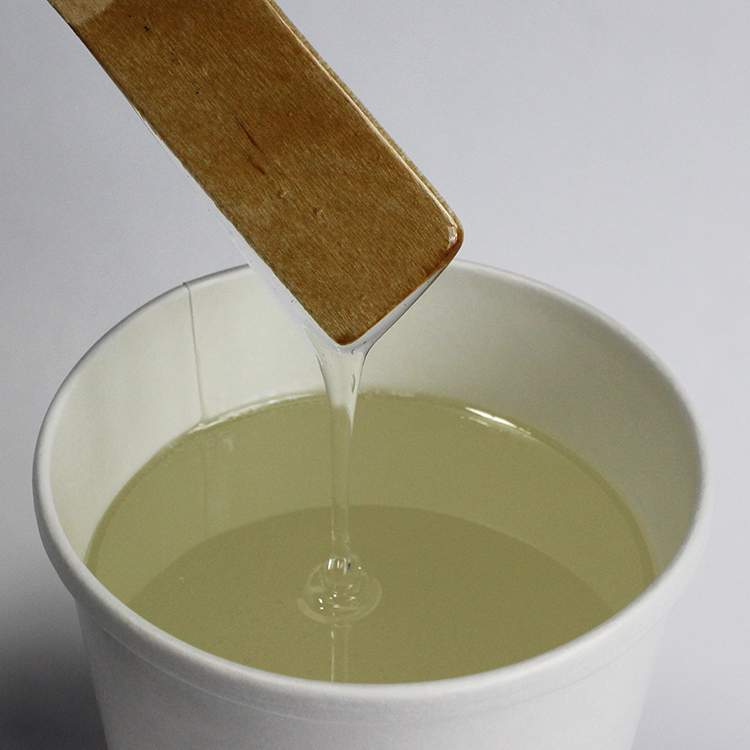
| Color | Colorless to pale yellow |
| Appearance | Clear, transparent to slightly hazy |
| Odor | Mild, characteristic |
| Melting Point (solid grades) | 64 – 76 °C |
| Boiling Point (before polymerization) | ~150 – 200 °C (decomposes before boiling) |
| Density (25°C) | 1.15 – 1.20 g/cm³ |
| Viscosity (25°C) | 1,000 – 15,000 mPa·s (varies by grade) |
| Refractive Index (n₂₀/D) | ~1.55 |
| Flash Point | ~150 °C (>300 °F) (closed cup) |
| Dielectric Constant | 3.6 – 4.2 (at 25°C, 1 kHz) |
| Volume Resistivity | 10¹⁵ – 10¹⁶ Ω·cm |
| Dielectric Strength | 15 – 20 kV/mm |
3. THERMODYNAMIC PROPERTIES
| Parameter | Value |
|---|---|
| Glass Transition Temperature (Tg, cured) | 50 – 200 °C (depends on hardener and cure cycle) |
| Heat Deflection Temperature (HDT) | 40 – 150 °C |
| Thermal Conductivity (cured) | 0.15 – 0.25 W/m·K |
| Coefficient of Thermal Expansion (CTE) | 45 – 65 ppm/°C |
| Autoignition Temperature | >300 °C |
4. SOLUBILITY PROPERTIES (Uncured Resin)
| Solvent | Solubility |
|---|---|
| Acetone | Soluble |
| Methyl Ethyl Ketone (MEK) | Soluble |
| Ethyl Acetate | Soluble |
| Toluene | Soluble |
| Xylene | Soluble |
| Alcohols (Methanol, Ethanol) | Limited solubility |
| Water | Insoluble |
5. CHEMICAL STRUCTURE
| Parameter | DGEBA (Diglycidyl Ether of Bisphenol A) |
|---|---|
| Repeat Unit | -O-C₆H₄-C(CH₃)₂-C₆H₄-O-CH₂-CH(OH)-CH₂- |
| Epoxide Equivalent Weight (EEW) | 170 – 200 g/eq (liquid); 450 – 5,000+ g/eq (solid) |
| Hydroxyl Content | Increases with molecular weight |
| Functionality (typical) | 2 (difunctional) |
Chemical Structure Note: The epoxide (oxirane) ring is the reactive site. Crosslinking occurs when the epoxide ring opens and reacts with hardeners (amines, anhydrides, phenols).
6. PRODUCTION PROCESS
| Step | Description |
|---|---|
| Raw Materials | Epichlorohydrin + Bisphenol A |
| Reaction | Epichlorohydrin reacts with Bisphenol A in the presence of sodium hydroxide (NaOH) |
| Product | DGEBA (Diglycidyl Ether of Bisphenol A) |
| Molecular Weight Control | Excess epichlorohydrin yields low MW resins; higher Bisphenol A ratio yields higher MW resins |
| Modification | Reactive diluents, plasticizers, or other monomers may be added |
| Alternative Types | Bisphenol F epoxy, Novolac epoxy, Aliphatic epoxy, Cycloaliphatic epoxy |
Reaction Equation (simplified):
n Bisphenol A + (n+1) Epichlorohydrin + 2n NaOH → DGEBA + 2n NaCl + n H₂O
7. CURING (CROSSLINKING) REACTIONS
| Curing Agent Type | Reaction | Cure Temperature | Properties |
|---|---|---|---|
| Amines (Aliphatic, Cycloaliphatic, Aromatic) | Epoxide + primary amine → secondary alcohol + secondary amine | 25 – 150°C | High toughness, good adhesion |
| Anhydrides (e.g., MHHPA, HHPA) | Epoxide + anhydride → polyester linkage (with catalyst) | 80 – 200°C | High Tg, good electrical properties |
| Phenolic Hardeners | Epoxide + phenol → ether linkage | 150 – 250°C | High chemical resistance |
| Thiols (Mercaptans) | Epoxide + thiol → thioether | 25 – 80°C | Fast cure, low temperature |
| Photoinitiators (UV Cure) | Cationic or radical polymerization | UV light exposure | Rapid cure, room temperature |
8. CURE CYCLE AND PROCESSING
| Parameter | Typical Range |
|---|---|
| Pot Life (at 25°C) | 10 minutes to several hours (depends on hardener) |
| Cure Temperature | Room temperature to 150°C (heat cure improves properties) |
| Cure Time | 24 hours (RT) to 2-4 hours (heat cure) |
| Post-Cure (optional) | 80 – 120°C for 1-4 hours (improves Tg and chemical resistance) |
| Mixing Ratio (Resin:Hardener) | 1:1 to 4:1 (by weight or volume, depends on system) |
9. MECHANICAL PROPERTIES (Cured, Typical)
| Parameter | Value |
|---|---|
| Tensile Strength | 40 – 90 MPa |
| Flexural Strength | 80 – 140 MPa |
| Compressive Strength | 80 – 120 MPa |
| Tensile Modulus | 2.0 – 4.0 GPa |
| Elongation at Break | 2 – 10% (brittle to flexible depending on formulation) |
| Impact Strength (Izod) | 10 – 50 J/m |
| Shore Hardness (D) | 70 – 90 |
10. APPLICATIONS – ADHESIVES
| Substrate | Application |
|---|---|
| Metals (Steel, Aluminum, Copper) | Structural bonding; high strength adhesive |
| Glass | Optical bonding; glazing |
| Wood | Furniture; construction |
| Plastics (ABS, PVC, Polycarbonate) | With proper surface treatment |
| Composites | Repair and assembly |
| Ceramics | Industrial bonding |
Typical Properties (Cured Epoxy Adhesive):
-
Lap shear strength (aluminum): 10 – 30 MPa
-
Excellent gap-filling capability
-
Low shrinkage upon curing (0.1 – 0.5%)
11. APPLICATIONS – COATINGS
| Application | Description |
|---|---|
| Floor Coatings | Industrial floors, garage floors, anti-slip coatings; application rate: 2 – 5 kg/m² per layer |
| Marine Coatings | Ship decks, tanks, anti-corrosion coatings |
| Tank Linings | Chemical storage tanks, pipelines |
| Anti-corrosion Coatings | Steel structures, bridges, offshore platforms |
| Powder Coatings | Electrical insulation, appliance finishes |
12. APPLICATIONS – COMPOSITES
| Reinforcement | Application |
|---|---|
| Carbon Fiber | Aerospace components, high-performance sporting goods |
| Fiberglass (Glass Fiber) | Boat hulls, wind turbine blades, automotive parts |
| Aramid (Kevlar) | Ballistic protection, lightweight structures |
| Natural Fibers | Eco-friendly composites |
Composite Properties:
-
Very high strength-to-weight ratio
-
Excellent fatigue resistance
-
Good chemical resistance
13. APPLICATIONS – ELECTRICAL AND ELECTRONICS
| Application | Function |
|---|---|
| PCB (Printed Circuit Boards) | FR-4 laminates (glass-reinforced epoxy) |
| Potting and Encapsulation | Protect electronic components from moisture, vibration, chemicals |
| Insulators | High voltage insulation, bushings |
| Semiconductor Packaging | Chip encapsulation |
| LED Encapsulation | Transparent, UV-resistant formulations |
| Conductive Adhesives | Filled with silver or other conductive fillers |
14. APPLICATIONS – ART, CRAFT, AND CASTING
| Application | Description |
|---|---|
| Jewelry Making | Clear, high-gloss casting |
| Tabletops and Countertops | Deep pour epoxy; self-leveling |
| Decorative Objects | Coasters, trays, art pieces |
| Embedments | Encapsulating flowers, coins, photographs |
| Floors (Decorative) | Metallic epoxy, flake systems |
Typical Casting Depth: 1 mm to 5 cm (depends on formulation; deep pour grades available)
15. APPLICATIONS – CONSTRUCTION AND INFRASTRUCTURE
| Application | Description |
|---|---|
| Concrete Repair | Crack injection; spall repair; structural bonding |
| Anchor Bolts | Epoxy anchoring systems for heavy loads |
| Rebar Bonding | Epoxy-coated rebar for corrosion protection |
| Bridge Deck Overlays | Wearing surfaces for bridges |
| Tunnel Linings | Waterproofing and structural repair |
16. COMPARISON WITH OTHER RESINS
| Property | Epoxy Resin | Polyester Resin | Polyurethane Resin | Phenolic Resin |
|---|---|---|---|---|
| Adhesion | Excellent | Good | Very Good | Moderate |
| Chemical Resistance | Excellent | Good | Good | Excellent |
| Heat Resistance (HDT) | 40-150°C | 50-100°C | 60-120°C | 150-250°C |
| Shrinkage | Very Low (0.1-0.5%) | High (5-10%) | Low (1-2%) | Low |
| Tensile Strength | 40-90 MPa | 30-70 MPa | 20-60 MPa | 40-70 MPa |
| UV Resistance | Poor (must be topcoated) | Moderate | Good | Good |
| Cost | Moderate to High | Low | Moderate | Moderate |
| Cure Temperature | RT to 150°C | RT to 80°C | RT to 100°C | 150-250°C |
17. SAFETY AND TOXICOLOGICAL PROFILE (Uncured Resin)
| Parameter | Value |
|---|---|
| Acute oral toxicity (rat, LD₅₀) | >5,000 mg/kg (low toxicity) |
| Acute dermal toxicity (rabbit, LD₅₀) | >2,000 mg/kg |
| Skin irritation | May cause irritation; sensitizer (contact dermatitis) |
| Eye irritation | May cause serious eye irritation |
| Skin sensitization | Dermal sensitizer (can cause allergic reactions after repeated exposure) |
| Carcinogenicity | Not classified as carcinogenic by IARC (cured resin is inert) |
| Mutagenicity | Negative in standard tests |
GHS Classification (Uncured Resin – typical):
| Hazard Class | Description |
|---|---|
| H315 | Causes skin irritation |
| H317 | May cause an allergic skin reaction |
| H319 | Causes serious eye irritation |
| H335 | May cause respiratory irritation |
| H411 | Toxic to aquatic life with long-lasting effects |
Important Note: Cured epoxy resin is inert, non-toxic, and safe for handling. All hazards relate to the uncured (liquid) state.
18. PERSONAL PROTECTIVE EQUIPMENT (PPE) – Uncured Handling
| Protection Type | Requirement |
|---|---|
| Respiratory Protection | Organic vapor respirator when spraying or heating; good ventilation recommended |
| Hand Protection | Nitrile gloves (not latex; epoxy penetrates latex) |
| Eye Protection | Chemical splash goggles + face shield (for pouring/mixing) |
| Skin Protection | Long sleeves, impermeable apron, barrier cream |
| Engineering Controls | Local exhaust ventilation in work areas |
| Hygiene Measures | Wash hands thoroughly after handling. Do not eat, drink, or smoke in work area. Use barrier cream before handling. |
19. STORAGE AND HANDLING
| Parameter | Requirement |
|---|---|
| Storage Temperature | 15-30°C (cool, dry) |
| Container Material | Original airtight container (metal or plastic) |
| Incompatible Materials | Strong oxidizing agents, strong acids, strong bases, amines (premature curing) |
| Protection | Keep away from UV light (sunlight), moisture, heat sources |
| Ventilation | Store in well-ventilated area |
| Shelf Life (unopened) | 12-36 months (depends on grade and storage conditions) |
| Special Precautions | Do not freeze. Prevent contamination with hardeners or moisture. |
Shelf Life Extension: Store at 5-10°C for extended shelf life; allow to warm to room temperature before opening to prevent moisture condensation.
20. SUMMARY AND CRITICAL INFORMATION
Description: Epoxy resin is a thermosetting polymer containing reactive epoxide (oxirane) groups. The most common type is DGEBA (Diglycidyl Ether of Bisphenol A), produced from epichlorohydrin and bisphenol A. It is available as a colorless to pale yellow viscous liquid or solid, which cures (crosslinks) when mixed with a hardener (amine, anhydride, phenol, etc.) to form a rigid, strong, chemically resistant, and adhesive thermoset material.
Key Advantages:
-
Excellent adhesion to metals, glass, ceramics, wood, and many plastics
-
Very low shrinkage upon curing (0.1-0.5%)
-
High mechanical strength (tensile 40-90 MPa, flexural 80-140 MPa)
-
Outstanding chemical and corrosion resistance
-
High electrical insulation properties
-
Good heat resistance (HDT 40-150°C depending on hardener)
-
Versatile processing (RT to 150°C cure; UV cure available)
-
No volatile organic compounds (VOCs) in 100% solids systems
Key Limitations/Considerations:
-
Uncured resin is a skin sensitizer (can cause allergic contact dermatitis with repeated exposure)
-
UV degradation – will yellow and chalk upon prolonged sun exposure (requires UV-stable topcoat for outdoor use)
-
Higher cost than polyester resins
-
Requires accurate mixing ratios (unlike polyesters)
-
Brittle in unmodified formulations (can be modified with flexibilizers)
-
Exothermic reaction – large masses can overheat during curing
Major Applications Summary:
| Sector | Applications |
|---|---|
| Adhesives | Structural bonding (metal, glass, wood, composites) |
| Coatings | Flooring, marine, anti-corrosion, powder coatings |
| Composites | Carbon fiber, fiberglass, aramid (aerospace, marine, automotive) |
| Electronics | PCB laminates (FR-4), potting, encapsulation, insulation |
| Art & Casting | Jewelry, tabletops, decorative objects, embedments |
| Construction | Concrete repair, anchor bolts, bridge overlays |
Typical Formulation Ratios:
| Application | Resin : Hardener (by weight) |
|---|---|
| Adhesive systems | 1:1 to 4:1 |
| Floor coatings | 2 – 5 kg/m² per layer |
| Casting (clear) | 100% resin + 1-5% pigment/filler (plus hardener) |
Safety Summary (Uncured Resin):
-
Moderate health hazard (skin/eye irritant; dermal sensitizer)
-
PPE required: Nitrile gloves, safety goggles, protective clothing, ventilation
-
First aid: Wash skin/eyes immediately with plenty of water for 15 minutes
-
Cured resin is inert and non-hazardous
Conclusion: Epoxy resin is a versatile, high-performance thermosetting polymer essential to modern manufacturing and construction. Its superior adhesion, low shrinkage, chemical resistance, and mechanical strength make it ideal for adhesives, coatings, composites, electronics, and many other demanding applications. While the uncured resin requires careful handling to prevent sensitization and irritation, the cured material is inert, durable, and safe for end-use applications.