We unleash your business potential by maximize the business innovation.
Send EmailMagnesium Pyruvate, Magnesiumpyruvate, Magnesium 2-Oxopropanoate, 81686-75-1
Magnesium Pyruvate (Magnesium 2-Oxopropanoate)
CAS Number: 81686-75-1
Chemical Formula: C₆H₆MgO₆
Molecular Weight: 198.41 g/mol
Synonyms: Magnesium 2-Oxopropanoate, Pyruvic Acid Magnesium Salt, Magnesium bis(2-oxopropanoate), Propanoic acid, 2-oxo-, magnesium salt (2:1), Magnesiumpyruvate, MAGNESIUM (2+) DIPYRUVATE
1. CHEMICAL IDENTITY
| Parameter | Information |
|---|---|
| Product Name | Magnesium Pyruvate |
| IUPAC Name | Magnesium bis(2-oxopropanoate) |
| CAS Number | 81686-75-1 |
| Chemical Formula | C₆H₆MgO₆ |
| Molecular Weight | 198.41 g/mol |
| Chemical Class | Organic magnesium salt, Pyruvate salt |
| Synonyms | Magnesium 2-Oxopropanoate, Pyruvic Acid Magnesium Salt, Magnesium bis(2-oxopropanoate), Propanoic acid, 2-oxo-, magnesium salt (2:1), Magnesiumpyruvate, MAGNESIUM (2+) DIPYRUVATE |
2. PHYSICAL PROPERTIES
| Parameter | Value |
|---|---|
| Physical State (20°C) | Solid |
| Color | White to off-white (cream) |
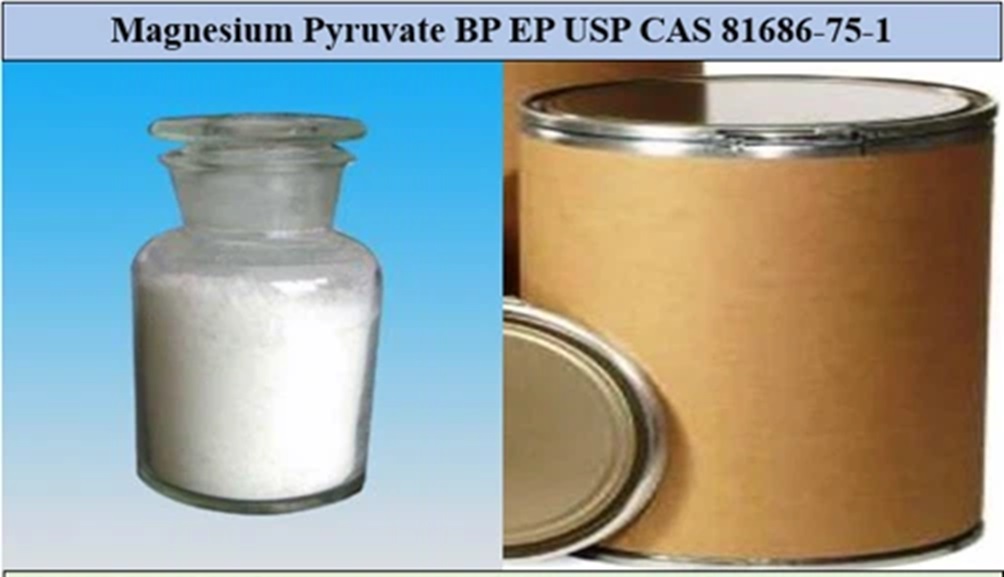
| Appearance | Crystalline powder |
| Odor | Characteristic |
| Melting Point | >200 °C (decomposes) |
| Boiling Point | ~165 °C (at 760 mmHg) |
| Solubility in Water | Soluble |
| Solubility in Ethanol | Limited solubility |
| pH (1% solution) | 6.5 – 7.5 (neutral) |
| Stability | Stable under normal conditions; store in dry, cool, inert atmosphere (nitrogen) |
3. SOLUBILITY PROPERTIES
| Solvent | Solubility |
|---|---|
| Water | Soluble |
| Ethanol | Limited solubility |
| Methanol | Slightly soluble |
| Acetone | Insoluble |
| Organic Solvents | Poorly soluble |
4. CHEMICAL PROPERTIES
| Parameter | Information |
|---|---|
| Magnesium Content | ~12.2% (theoretical; ~12% in product) |
| Pyruvate Content | ~87.8% (theoretical; ~85-88% in product) |
| pH (1% solution) | 6.5 – 7.5 (neutral) |
| Stability | Stable under normal conditions |
| Hydrolysis | Slowly hydrolyzes in strong acidic or basic conditions |
| Reduction | Pyruvate can be reduced to lactate (lactic acid) |
| Oxidative Decarboxylation | Pyruvate converts to Acetyl-CoA → enters TCA cycle |
5. TYPICAL PRODUCT SPECIFICATIONS
| Parameter | Specification | Test Method |
|---|---|---|
| Assay (Magnesium Pyruvate, dried basis) | ≥ 98.0% | HPLC / Titration |
| Magnesium Content | 11.5 – 12.5% | Titration / AAS |
| Pyruvate Content | 85-88% (as is) | HPLC |
| Moisture | ≤ 5.0% | Karl Fischer |
| pH (1% solution, 25°C) | 6.5 – 7.5 | Potentiometric |
| Heavy Metals (as Pb) | ≤ 10 ppm | AAS/ICP |
| Arsenic (As) | ≤ 1.5 ppm | AAS |
| Lead (Pb) | ≤ 1.5 ppm | AAS |
| Cadmium (Cd) | ≤ 1.0 ppm | AAS |
| Mercury (Hg) | ≤ 0.1 ppm | AAS |
| Chloride (Cl) | ≤ 0.05% | Titration |
| Sulfate (SO₄) | ≤ 0.05% | Gravimetric |
| Loss on Drying | ≤ 5.0% | Gravimetric |
| Residue on Ignition | (as MgO) | Gravimetric |
| Particle Size | 100% through 40 mesh | Sieve analysis |
| Appearance | White to off-white crystalline powder | Visual |
6. PRODUCTION PROCESS
| Step | Description |
|---|---|
| Raw Materials | Pyruvic Acid + Magnesium Oxide or Magnesium Carbonate or Magnesium Hydroxide |
| Reaction Type | Acid-base neutralization / Salt formation |
| Reaction | 2 CH₃COCOOH + MgO → (CH₃COCOO)₂Mg + H₂O |
| Alternative | Pyruvic acid from microbial fermentation (natural source) |
| Purification | Crystallization, filtration |
| Drying | Vacuum drying under controlled conditions |
| Milling | Milled to desired particle size |
Simplified Reaction:
2 Pyruvic Acid + Magnesium Oxide → Magnesium Pyruvate + Water
7. MECHANISM OF ACTION
| Component | Mechanism | Effect |
|---|---|---|
| Pyruvate (2 molecules) | Enters TCA cycle (Krebs cycle) → ATP production (cellular energy) | Enhanced energy metabolism; reduced fatigue |
| Pyruvate (Antioxidant) | Neutralizes reactive oxygen species (ROS) | Reduced oxidative stress |
| Pyruvate (Lactate Buffer) | Pyruvate + NADH ↔ Lactate + NAD⁺ | Buffers lactate accumulation; reduces muscle acidosis |
| Magnesium (Mg²⁺) | Cofactor for over 300 enzymes (ATP synthesis, glycolysis, protein synthesis) | Supports energy production; muscle function; nerve transmission |
| Magnesium (Electrolyte) | Maintains membrane potential; regulates muscle contraction | Reduces muscle cramps; supports heart rhythm |
Key Point: Magnesium pyruvate provides both the energy-supporting benefits of pyruvate and the essential mineral magnesium in a single, neutral-pH salt.
8. FUNCTIONAL PROPERTIES
| Function | Description |
|---|---|
| Energy Metabolism | Pyruvate enters TCA cycle (Krebs cycle) → ATP production (cellular energy) |
| Lactate Buffering | Pyruvate + NADH ↔ Lactate + NAD⁺; reduces muscle acidosis during intense exercise |
| Antioxidant | Pyruvate neutralizes free radicals (reactive oxygen species, peroxides) |
| Magnesium Supplement | Provides bioavailable magnesium (cofactor for >300 enzymes) |
| pH Buffer | Neutral pH (6.5-7.5) – suitable for oral formulations; buffers gastric acid |
| Reducing Muscle Cramps | Magnesium helps prevent muscle cramps and spasms |
| Neuroprotection | Pyruvate and magnesium support brain energy metabolism; NMDA receptor modulation |
9. APPLICATIONS – SPORTS NUTRITION
| Application | Function | Typical Dose |
|---|---|---|
| Pre-Workout Supplements | Energy support (pyruvate); reduces lactate accumulation; magnesium for muscle function | 500 – 2,000 mg |
| Post-Workout Recovery | Replenishes magnesium; supports ATP regeneration; reduces oxidative stress | 500 – 2,000 mg |
| Endurance Supplements | Buffers lactate; delays fatigue; supports aerobic energy production | 500 – 2,000 mg |
| Muscle Cramp Prevention | Magnesium prevents cramps; pyruvate supports energy | 400 – 1,000 mg (as Mg) |
| Electrolyte Replacement | Magnesium source for electrolyte blends | 200 – 400 mg (as Mg) |
Synergistic Combinations:
-
Magnesium Pyruvate + Creatine – Enhanced ATP regeneration
-
Magnesium Pyruvate + B-Vitamins – Co-factors for energy metabolism
-
Magnesium Pyruvate + Electrolytes (Na, K, Ca) – Complete electrolyte blend
10. APPLICATIONS – PHARMACEUTICAL AND NEUROLOGICAL
| Application | Function | Status |
|---|---|---|
| Migraine Prevention | Magnesium reduces migraine frequency; pyruvate supports brain energy | Clinical use |
| NMDA Receptor Modulation | Magnesium blocks NMDA receptors (excitotoxicity); neuroprotection | Research |
| Neuroprotection (Stroke/TBI) | Pyruvate antioxidant + magnesium neuroprotection | Research stage |
| Fibromyalgia | Magnesium supports muscle function; pyruvate for energy | Limited use |
| Chronic Fatigue Syndrome | Pyruvate + magnesium for cellular energy | Limited use |
| Gastric Acid Neutralizer | Magnesium pyruvate buffers stomach acid (pH neutral salt) | Formulation use |
Note: Magnesium pyruvate is a neutral pH salt (6.5-7.5), making it suitable for oral formulations without gastric irritation (unlike magnesium oxide, which is alkaline).
11. APPLICATIONS – DIETARY SUPPLEMENTS
| Application | Function | Typical Daily Dose |
|---|---|---|
| Magnesium Supplement | Provides bioavailable magnesium (12%) | 300 – 800 mg (as magnesium pyruvate) |
| Energy Support | Pyruvate for ATP production; magnesium as cofactor | 500 – 2,000 mg |
| Stress and Anxiety | Magnesium supports nervous system; reduces stress | 300 – 600 mg (as magnesium pyruvate) |
| Sleep Support | Magnesium promotes relaxation and sleep quality | 300 – 500 mg (evening) |
| Cardiovascular Health | Magnesium supports heart rhythm; reduces blood pressure | 400 – 800 mg (as magnesium pyruvate) |
| Bone Health | Magnesium supports bone density (with calcium, vitamin D) | 300 – 600 mg (as magnesium pyruvate) |
12. APPLICATIONS – FOOD TECHNOLOGY (Natural Antioxidant)
| Application | Function | Typical Use Level |
|---|---|---|
| Meat Products | Color stabilization; prevents oxidation (natural alternative to TBHQ) | 0.05 – 0.2% |
| Bakery Products | Shelf-life extension; prevents rancidity | 0.05 – 0.1% |
| Edible Oils | Antioxidant; prevents oxidative rancidity | 0.02 – 0.1% |
| Functional Foods | Fortification with magnesium + pyruvate | As required |
Key Advantage: Natural antioxidant alternative to synthetic TBHQ (tert-butylhydroquinone).
13. COMPARISON: MAGNESIUM PYRUVATE vs. OTHER MAGNESIUM FORMS
| Property | Magnesium Pyruvate | Magnesium Citrate | Magnesium Glycinate | Magnesium Oxide | Magnesium Malate |
|---|---|---|---|---|---|
| Magnesium Content | ~12% | ~16% | ~14% | ~60% | ~15% |
| Bioavailability | High | High | Very High | Very Low | High |
| Solubility | Good | Good | Good | Poor | Good |
| pH (1% solution) | 6.5-7.5 (neutral) | Acidic (~3.5) | Neutral (~6.5) | Alkaline (~10) | Acidic (~4) |
| Gastric Tolerance | Excellent | Good | Excellent | Poor (laxative) | Good |
| Additional Benefits | Pyruvate (energy, antioxidant) | Citrate (metabolism) | Glycine (calming) | None (cheap) | Malate (energy) |
| Cost | Higher | Moderate | Higher | Low | Moderate |
Key Advantage: Magnesium pyruvate provides a neutral pH salt (excellent gastric tolerance) plus the energy and antioxidant benefits of pyruvate.
14. COMPARISON: MAGNESIUM PYRUVATE vs. CALCIUM PYRUVATE
| Property | Magnesium Pyruvate | Calcium Pyruvate |
|---|---|---|
| Primary Use | Magnesium supplementation + energy | Weight management, energy |
| Metal Content | Mg ~12% | Ca ~20-25% |
| pH (1% solution) | 6.5-7.5 (neutral) | 7.0-8.0 (slightly basic) |
| Additional Benefits | Mg (enzyme cofactor, >300 enzymes) | Ca (bone health) |
| Best For | Athletes, magnesium deficiency | Weight loss, endurance |
15. RECOMMENDED DOSAGE
| User Type | Daily Dose (Magnesium Pyruvate) | Elemental Magnesium | Timing |
|---|---|---|---|
| General Health (Mg supplement) | 300 – 600 mg | 36 – 72 mg | Any time |
| Athlete (Sports performance) | 500 – 1,500 mg | 60 – 180 mg | Pre/post-workout |
| Migraine Prevention | 500 – 1,000 mg | 60 – 120 mg | Daily |
| Muscle Cramp Prevention | 400 – 800 mg | 48 – 96 mg | Daily or before exercise |
| Cardiovascular Health | 400 – 800 mg | 48 – 96 mg | Daily |
Elemental Magnesium Calculation:
Magnesium Pyruvate (198.41 g/mol) contains ~12.2% elemental magnesium.
-
500 mg Magnesium Pyruvate = ~61 mg elemental Mg
-
1,000 mg Magnesium Pyruvate = ~122 mg elemental Mg
-
2,000 mg Magnesium Pyruvate = ~244 mg elemental Mg
16. COMPARISON WITH OTHER PYRUVATE FORMS
| Property | Magnesium Pyruvate | Sodium Pyruvate | Calcium Pyruvate |
|---|---|---|---|
| Pyruvate Content | 85-88% | 85-90% | 75-80% |
| Metal Content | Mg ~12% | Na ~20% | Ca ~20-25% |
| pH (1% solution) | 6.5-7.5 (neutral) | 7.0-8.0 (basic) | 7.0-8.0 (basic) |
| Primary Use | Mg supplementation + energy | Cell culture, research | Weight management |
| Gastric Tolerance | Excellent | Good | Good |
| Sodium Concern | None | Yes (may increase blood pressure) | None |
Key Advantage: Magnesium pyruvate does not contribute sodium (unlike sodium pyruvate), making it suitable for low-sodium diets.
17. SAFETY AND TOXICOLOGICAL PROFILE
| Parameter | Value |
|---|---|
| Acute oral toxicity (rat, LD₅₀) | >2,000 mg/kg (estimated) |
| Acute dermal toxicity (rabbit) | >2,000 mg/kg |
| Skin irritation | Non-irritating to mildly irritating |
| Eye irritation | Mildly irritating (powder) |
| Skin sensitization | Not a sensitizer |
| Carcinogenicity | Not classified as carcinogenic |
| Mutagenicity | Negative |
GHS Classification: Not classified as hazardous under normal conditions of use.
Potential Side Effects (at high doses >3,000 mg/day):
-
Mild gastrointestinal discomfort
-
Diarrhea (osmotic effect – typical of magnesium supplements)
-
Nausea
Contraindications:
-
Kidney disease (consult physician before magnesium supplementation)
-
Severe hypotension (low blood pressure) – caution with pyruvate
-
Magnesium supplementation contraindications (heart block, myasthenia gravis)
18. STORAGE AND HANDLING
| Parameter | Requirement |
|---|---|
| Storage Temperature | 2-8 °C (refrigerated preferred) or 15-25°C (cool, dry) |
| Container | Tightly sealed (hygroscopic) |
| Atmosphere | Inert atmosphere (nitrogen) for long-term storage |
| Humidity | Low humidity (hygroscopic) |
| Light Protection | Protect from direct sunlight |
| Incompatible Materials | Strong oxidizing agents, strong acids, strong bases |
| Shelf Life | 24 months (under proper storage) |
| Special Precautions | Store in cool, dry, inert atmosphere (nitrogen). Keep container tightly closed. |
19. REGULATORY STATUS
| Region/Agency | Status |
|---|---|
| FDA (USA) | GRAS (Generally Recognized as Safe) status for certain applications |
| EU | Not specifically listed as E number; considered a food supplement ingredient |
| Türkiye (TGK) | Permitted as a food supplement ingredient |
| Sports (WADA) | Not prohibited (safe for athletes) |
20. SUMMARY AND CRITICAL INFORMATION
Description: Magnesium Pyruvate (Magnesium bis(2-oxopropanoate), CAS 81686-75-1) is the magnesium salt of pyruvic acid, formed by neutralization of pyruvic acid with magnesium oxide, magnesium carbonate, or magnesium hydroxide. It is a white to off-white crystalline powder with a neutral pH (6.5-7.5 in 1% solution). Magnesium pyruvate contains approximately 12% elemental magnesium and 85-88% pyruvate. It is water-soluble and stable under proper storage conditions (dry, cool, inert atmosphere).
Key Advantages:
-
Provides both magnesium (~12%) and pyruvate (~85-88%) in a single compound
-
Neutral pH (6.5-7.5) – excellent gastric tolerance (no acidity like citrate or malate)
-
Good water solubility
-
Magnesium supports >300 enzymatic reactions (ATP synthesis, protein synthesis, nerve function)
-
Pyruvate supports energy metabolism (TCA cycle) and provides antioxidant activity
-
Natural antioxidant alternative to synthetic TBHQ in food applications
-
Does not contribute sodium (unlike sodium pyruvate)
Key Limitations/Considerations:
-
Lower magnesium content than magnesium oxide (~12% vs. 60%)
-
Hygroscopic – requires dry storage, inert atmosphere (nitrogen)
-
Higher cost than magnesium oxide or magnesium citrate
-
Refrigerated storage (2-8°C) recommended for long-term stability
-
Limited research compared to magnesium citrate or glycinate
Major Applications Summary:
| Sector | Primary Uses |
|---|---|
| Sports Nutrition | Pre-workout energy, lactate buffering, muscle cramp prevention, post-workout recovery |
| Dietary Supplements | Magnesium supplementation, energy support, stress/anxiety, sleep support, cardiovascular health |
| Pharmaceutical (Neurological) | Migraine prevention, neuroprotection, NMDA receptor modulation (research) |
| Food Technology | Natural antioxidant (alternative to TBHQ), color stabilization in meat products, shelf-life extension |
| Industrial | Biodegradable polymers, NOx removal, battery electrolytes |
Comparison to Other Magnesium Forms:
| Property | Magnesium Pyruvate | Magnesium Citrate | Magnesium Glycinate | Magnesium Oxide |
|---|---|---|---|---|
| Mg Content | ~12% | ~16% | ~14% | ~60% |
| Bioavailability | High | High | Very High | Very Low |
| pH (1% solution) | 6.5-7.5 (neutral) | Acidic (~3.5) | Neutral (~6.5) | Alkaline (~10) |
| Gastric Tolerance | Excellent | Good | Excellent | Poor |
| Additional Benefits | Pyruvate (energy, antioxidant) | Citrate (metabolism) | Glycine (calming) | None |
Comparison to Other Pyruvate Forms:
| Property | Magnesium Pyruvate | Sodium Pyruvate | Calcium Pyruvate |
|---|---|---|---|
| Metal Content | Mg ~12% | Na ~20% | Ca ~20-25% |
| pH (1% solution) | 6.5-7.5 (neutral) | 7.0-8.0 (basic) | 7.0-8.0 (basic) |
| Sodium Concern | None | Yes (may increase BP) | None |
Typical Dosage:
| Application | Daily Dose (Magnesium Pyruvate) | Elemental Magnesium |
|---|---|---|
| General health | 300 – 600 mg | 36 – 72 mg |
| Sports performance | 500 – 1,500 mg | 60 – 180 mg |
| Migraine prevention | 500 – 1,000 mg | 60 – 120 mg |
Safety Summary:
-
Low acute toxicity
-
Generally safe at recommended doses
-
Neutral pH – excellent gastric tolerance
-
Not prohibited in sports (WADA compliant)
-
Contraindicated in kidney disease (consult physician)
Storage: Refrigerated (2-8°C), airtight, inert atmosphere (nitrogen), dry; 24 months shelf life.
Conclusion: Magnesium Pyruvate is a unique, dual-action supplement that combines the essential mineral magnesium (cofactor for >300 enzymes) with pyruvate (key intermediate in cellular energy metabolism and antioxidant). Its neutral pH (6.5-7.5) provides excellent gastric tolerance compared to acidic magnesium salts (citrate, malate). It is suitable for sports nutrition (energy, lactate buffering, muscle cramps), dietary supplements (magnesium deficiency, stress, cardiovascular health), neurological applications (migraine prevention, neuroprotection), and food technology (natural antioxidant). While it has lower magnesium content than magnesium oxide and higher cost than other forms, its high bioavailability, neutral pH, and dual benefits (magnesium + pyruvate) make it a valuable ingredient for premium nutritional supplements.