We unleash your business potential by maximize the business innovation.
Send EmailTrichloroisocyanuric Acid, Symclosene, Chloreal, TCICA, TCCA, 87-90-1
TECHNICAL DATA SHEET (TDS) – TCCA (TRICHLOROISOCYANURIC ACID)
1. PRODUCT DEFINITION AND CHEMICAL IDENTITY
| Parameter | Description |
|---|---|
| Chemical Name (IUPAC) | 1,3,5-Trichloro-1,3,5-triazinane-2,4,6-trione |
| Common Name | Trichloroisocyanuric Acid (TCCA) |
| Other Names | Symclosene, Trichloro-s-triazinetrione, Isocyanuric acid trichloro derivative, Chloreal, TCICA |
| CAS Number | 87-90-1 |
| EC Number | 201-782-8 |
| Molecular Formula | C₃Cl₃N₃O₃ |
| Molecular Weight | 232.41 g/mol |
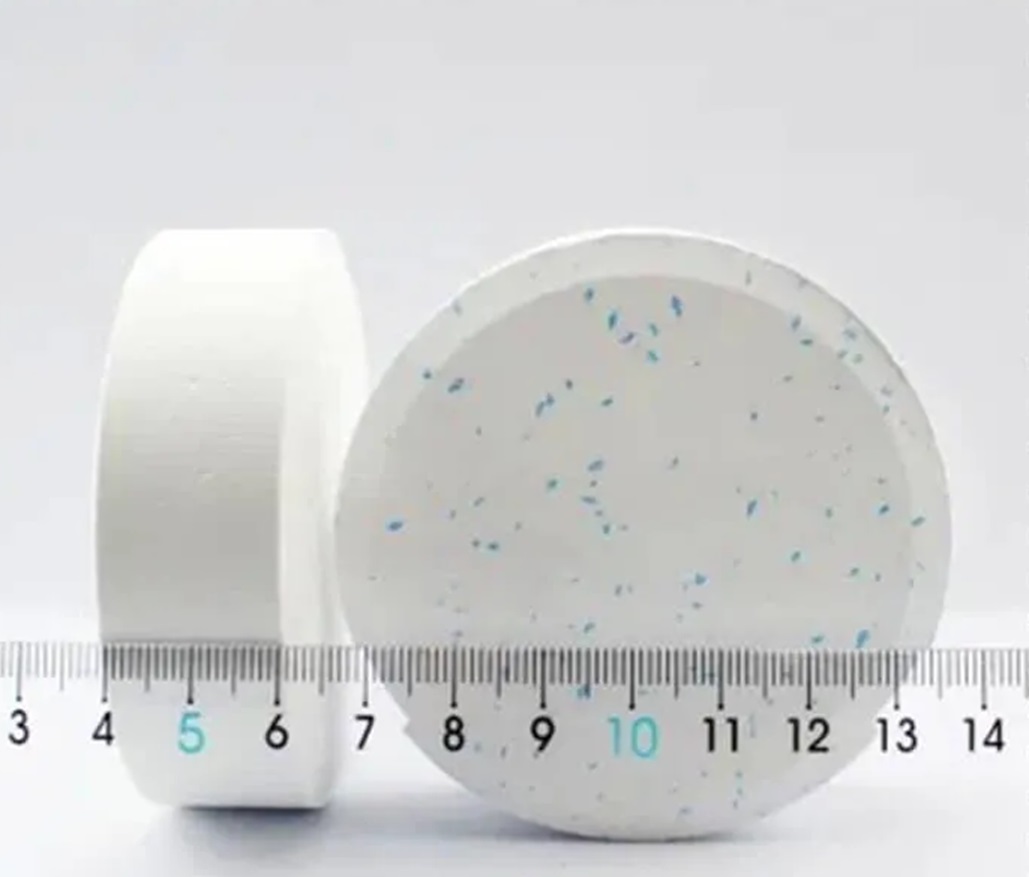
| Appearance | White crystalline powder, granules, or tablets |
| Odour | Strong, characteristic chlorine odour |
2. PHYSICAL AND CHEMICAL PROPERTIES
| Property | Value / Description |
|---|---|
| Physical form | White crystalline powder, granules, or tablets |
| Melting point | 249 – 251 °C (decomposes) |
| Density | 2.07 g/cm³ (bulk density: ~850 kg/m³) |
| Vapour pressure (20–25 °C) | 0.001 – 0.002 Pa |
| pH (1% aqueous solution) | 2.0 – 2.7 (acidic) |
| Solubility in water (25 °C) | 1.2 g/100 mL (slightly soluble) |
| Flash point | 121 °C |
| Partition coefficient (LogP, 25 °C) | -1.31 to -0.94 |
| Available Chlorine Content | ~90% (by weight) |
| Stability | Stable under dry conditions; decomposes upon contact with moisture or heat; hygroscopic |
| Reactivity | Strong oxidizer; incompatible with reducing agents, acids, ammonia, and combustible materials |
| Hazard Class | UN 2468 – Class 5.1 (Oxidizing substance) |
3. REACTION MECHANISM AND MODE OF ACTION
TCCA is a slow-release chlorinating agent. Upon contact with water, it undergoes hydrolysis to release hypochlorous acid (HOCl) , the active biocidal species, and cyanuric acid, which acts as a stabilizer against UV degradation:
C₃Cl₃N₃O₃ + 3 H₂O → 3 HOCl + C₃H₃N₃O₃ (Cyanuric Acid)
-
Disinfection: Hypochlorous acid (HOCl) is a powerful, broad-spectrum oxidizing biocide. It denatures proteins, disrupts cell membranes, and inactivates enzymes, effectively destroying bacteria, viruses, fungi, and algae.
-
UV Stabilization: The co-released cyanuric acid forms a weak, reversible bond with free chlorine, protecting it from rapid photodegradation by sunlight. This makes TCCA highly effective and long-lasting in outdoor applications like swimming pools.
-
Slow Release: Due to its limited solubility (1.2 g/100 mL), TCCA dissolves and releases chlorine gradually over an extended period, providing sustained disinfection without the need for constant re-dosing. This is a key advantage over fast-dissolving chlorine sources.
4. ALTERNATIVE NAMES AND SYNONYMS
-
Trichloroisocyanuric Acid (TCCA)
-
Symclosene (USAN/INN)
-
Trichloro-s-triazinetrione
-
1,3,5-Trichloro-1,3,5-triazinane-2,4,6-trione
-
Isocyanuric acid, trichloro- derivative
-
Trichlorocyanuric acid
-
TCICA
-
Chloreal
-
Fi-Clor 91
-
ACL 85 / ACL 90 Plus
-
Neochlor 90
-
NSC-405124
5. PRODUCTION PROCESS (Summary)
The industrial production of TCCA involves the controlled chlorination of cyanuric acid:
-
Raw Material Preparation: Cyanuric acid (typically derived from urea) is prepared as the primary feedstock.
-
Chlorination: Cyanuric acid is reacted with chlorine gas in a controlled, multi-stage counter-current reactor. The reaction is carried out under strictly controlled temperature and pressure conditions. Modern processes use titanium alloy reactors for efficient chlorine distribution and achieve a chlorine consumption of <0.97 tons per ton of TCCA.
-
Crystallization and Drying: The resulting product is crystallized, filtered, and dried to obtain the pure white crystalline TCCA.
-
Forming: The dried product is optionally compacted into tablets or granules, depending on the intended application.
6. SECTORAL APPLICATIONS AND USAGE RATES
| Sector | Application | Typical Usage Rate / Notes |
|---|---|---|
| Swimming Pools and Spas | Primary disinfectant, routine and sustained chlorination, algae control | Target 1–3 ppm free chlorine residual; tablets are placed in skimmers, floaters, or automatic feeders for slow release |
| Drinking Water Treatment | Emergency and rural drinking water disinfection | 1–5 ppm; tablet form ensures portability and practical, controlled dosing |
| Industrial Water Systems | Cooling towers, boilers, recirculating systems; biofilm and algae prevention | 0.5–5 ppm continuous dose; effective against organic foulants, improving system efficiency |
| Surface and Equipment Disinfection | Healthcare facilities, laboratories, food processing areas | 0.5–1% solution (5000–10000 ppm); applied by spraying or wiping with a contact time of 10–30 minutes |
| Laundry and Textile Disinfection | Hotels, hospitals, industrial laundries | Provides disinfection and bleaching action; controlled dosage is critical to prevent fabric damage |
| Agriculture and Livestock | Greenhouse irrigation system disinfection, barn/poultry house water sanitation | 0.5–5 ppm for water; disease prevention, improved yield |
| Food Industry | Surface disinfection of fruits and vegetables | 50–200 ppm solution; post-treatment rinsing is mandatory to remove residues |
| Organic Synthesis | Chlorinating agent in selective organic reactions | Stoichiometric use as a stable, portable, and controlled chlorine source for aromatic chlorinations |
7. MANDATORY / IRREPLACEABLE APPLICATIONS FOR TCCA
TCCA is particularly critical in scenarios where slow, sustained, and long-lasting chlorination is required:
-
Long-Term Swimming Pool Sanitation: The combination of slow dissolution and UV protection (via cyanuric acid) makes TCCA tablets the standard for continuous, low-maintenance pool chlorination, providing a steady chlorine residual for days.
-
Rural and Emergency Drinking Water Disinfection: Its high available chlorine content (~90%) in a compact, stable tablet form makes it the most weight- and space-efficient option for disinfecting large volumes of water in remote or disaster-stricken areas.
-
Long-Term Water Storage: For water that needs to be stored for extended periods without the risk of recontamination, TCCA's slow release provides enduring protection.
8. ALTERNATIVES AND COMPARISON
| Alternative | Available Chlorine | Form | Key Difference and Comparison with TCCA |
|---|---|---|---|
| TCCA | ~90% | Solid (tablet/granule/powder) | Reference product. Slow-dissolving, sustained release, UV-stable. Ideal for long-term, low-maintenance chlorination. |
| SDIC (NaDCC) | 55–60% | Solid (tablet/granule/powder) | Fast-dissolving, ideal for shock chlorination. Provides UV protection but with a lower chlorine density per gram. |
| Calcium Hypochlorite (Ca(ClO)₂) | 65–70% | Solid (powder/granule) | Dissolves faster than TCCA, but leaves insoluble calcium residue (turbidity) and offers no UV protection. Chlorine is rapidly lost in sunlight. |
| Sodium Hypochlorite (NaOCl, Bleach) | 10–15% | Liquid | Cheap but bulky, degrades quickly (short shelf life), and provides no UV protection. TCCA is far more stable, concentrated, and portable. |
9. REGULATORY STATUS, SAFETY, AND STORAGE
-
GHS Classification (CLP Regulation):
-
Signal Word: Danger
-
Hazard Statements: H272 (May intensify fire; oxidizer), H302 (Harmful if swallowed), H319 (Causes serious eye irritation), H335 (May cause respiratory irritation), H410 (Very toxic to aquatic life with long lasting effects).
-
Precautionary Statements: P210, P220, P261, P264, P273, P280, P301+P312, P305+P351+P338.
-
-
Transport: UN 2468, Class 5.1 (Oxidizing substance), Packing Group II.
-
Storage:
-
Store in a cool (<30 °C), dry, and well-ventilated area, away from direct sunlight.
-
Keep the packaging tightly sealed. TCCA is hygroscopic; contact with moisture will cause decomposition, chlorine gas release, and loss of activity.
-
Strictly segregate from all combustible materials, reducing agents, strong acids, ammonia, amines, and nitrogen-containing compounds. Contact with these materials can cause violent reactions, fire, or explosion.
-
-
Personal Protective Equipment (PPE): Wear chemical-resistant gloves, safety goggles/face shield, and protective clothing. Use a respirator with an acid gas/inorganic vapour cartridge if ventilation is inadequate. Avoid breathing dust or vapour.
-
Packaging: Typically 1–50 kg plastic buckets or fibre drums with inner PE liners.
10. FREQUENTLY ASKED QUESTIONS
Q1: What is the main difference between TCCA and SDIC?
TCCA has a higher available chlorine content (~90% vs. ~60%) and dissolves more slowly, making it ideal for long-term, sustained chlorination (e.g., pool tablets). SDIC dissolves faster and is preferred for shock chlorination where a rapid chlorine boost is needed.
Q2: Why does TCCA not need a "stabilizer" added separately?
TCCA releases cyanuric acid as part of its normal chemical reaction with water. Cyanuric acid is the chlorine stabilizer. This built-in mechanism makes TCCA inherently UV-resistant.
Q3: Can TCCA tablets be used in drinking water?
Yes, TCCA is used for emergency and rural drinking water disinfection. The tablets must be properly dissolved according to strict dosage guidelines. The final free chlorine concentration in treated water must meet the limits set by local health authorities (typically 0.5-1.0 ppm at the point of use).
Q4: Is TCCA safe for colored fabrics?
It should be used with caution. The high oxidizing power of the released HOCl makes it an effective bleach. It can decolorize or damage colored fabrics. It is best suited for white textiles or industrial bleaching processes where fabric compatibility is pre-tested.
Q5: What materials are compatible with TCCA?
TCCA is corrosive to most metals, especially in the presence of moisture. Only highly resistant materials like titanium, Hastelloy C, PTFE (Teflon), and certain plastics (PVC, PE, PP) are suitable for handling and storing dry TCCA or its concentrated solutions.
11. QUICK REFERENCE TABLE
| Property | Value |
|---|---|
| CAS | 87-90-1 |
| Formula | C₃Cl₃N₃O₃ |
| Molecular Weight | 232.41 g/mol |
| Appearance | White crystalline powder / granules / tablets |
| Available Chlorine | ~90% |
| pH (1% solution) | 2.0 – 2.7 |
| Solubility | 1.2 g/100 mL (25 °C) |
| Main Uses | Slow-release chlorination, pool disinfection, industrial water treatment |
| Hazard Class | UN 2468 – Class 5.1 (Oxidizing substance) |