We unleash your business potential by maximize the business innovation.
Send EmailBoron Nitride, Hexagonal Boron Nitride (h-BN), Cubic Boron Nitride (c-BN), Wurtzite Boron Nitride (w-BN), Boron Mononitride, 10043-11-5
BORON NITRIDE (BN)
PRODUCT IDENTIFICATION INFORMATION
| Parameter | Information |
|---|---|
| Product Name | Boron Nitride |
| Chemical Name (IUPAC) | Boron Nitride |
| CAS Number | 10043-11-5 |
| EC Number (EINECS) | 233-136-6 |
| Molecular Formula | BN |
| Molecular Weight | 24.82 g/mol |
CHEMICAL STRUCTURE
    Hexagonal Boron Nitride (h-BN) Structure

        N           N           N
       / \         / \         / \
      B   B       B   B       B   B
       \ /         \ /         \ /
        N           N           N
       / \         / \         / \
      B   B       B   B       B   B
       \ /         \ /         \ /
        N           N           N

    Hexagonal layered structure (similar to graphite)
    "White Graphite"
Molecular Formula: BN
SMILES: B#N
InChI: InChI=1S/BN/c1-2
Crystal Systems: Hexagonal (h-BN), Cubic (c-BN), Wurtzite (w-BN)
SECTION 1: CHEMICAL IDENTITY AND DEFINITION
| Parameter | Information |
|---|---|
| Product Name | Boron Nitride |
| Chemical Name (IUPAC) | Boron Nitride |
| Synonyms (English) | Boron Nitride, Elbor, Borazon, Hexagonal Boron Nitride (h-BN), Cubic Boron Nitride (c-BN), Wurtzite Boron Nitride (w-BN), Boron Mononitride, BN Powder, Boron Nitride Ceramic |
| CAS Number | 10043-11-5 |
| EC Number (EINECS) | 233-136-6 |
| Molecular Formula | BN |
| Molecular Weight | 24.82 g/mol |
| Chemical Class | Inorganic compound; non-oxide ceramic; III-V compound |
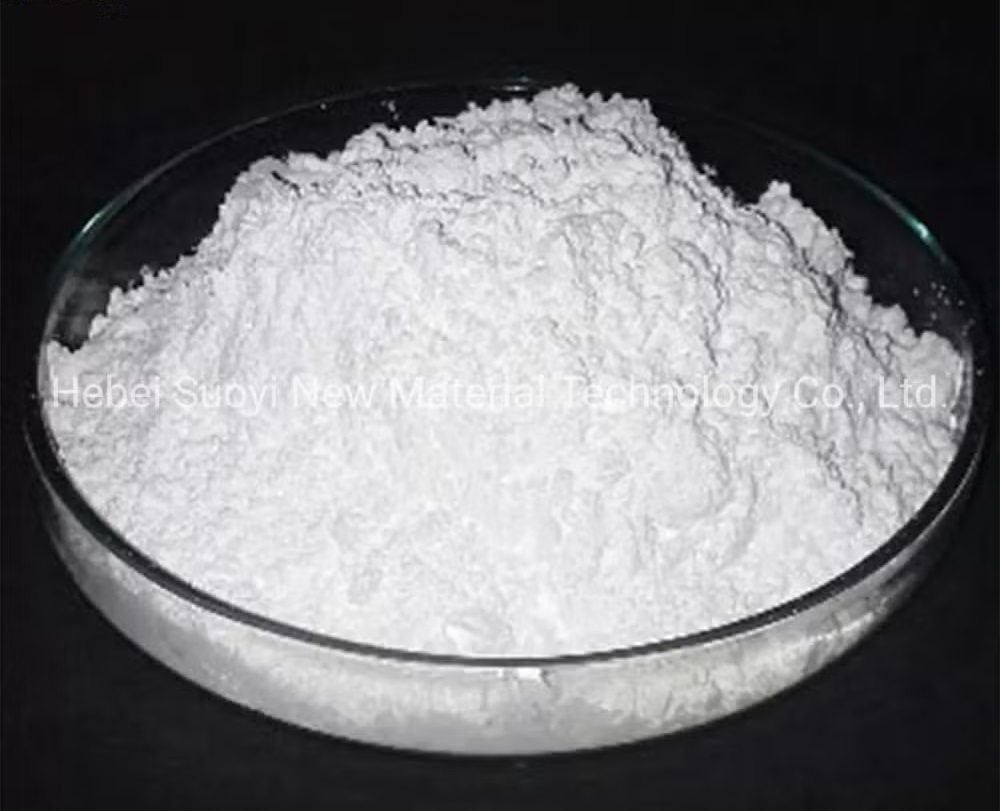
| Physical State (20°C) | Solid powder / crystalline |
| Odor | Odorless |
| Color | White to off-white (h-BN); Colorless to black, amber or dark brown (c-BN); Colorless (w-BN) |
| Taste | Tasteless |
SECTION 2: PHYSICAL AND CHEMICAL PROPERTIES
| Property | Hexagonal (h-BN) | Cubic (c-BN) | Wurtzite (w-BN) | Test Method / Note |
|---|---|---|---|---|
| Appearance | White to off-white powder/flakes | Colorless to black/amber/dark brown crystals | Colorless crystals | Visual |
| Odor | Odorless | Odorless | Odorless | Olfactometric |
| Molecular Weight | 24.82 g/mol | 24.82 g/mol | 24.82 g/mol | Calculated |
| Density (g/cm³) | 2.10 - 2.29 | 3.48 - 3.49 | 3.30 | ASTM D4052 |
| Melting Point | ~2973°C (sublimes at 3000°C in inert atmosphere) | ~3000°C (decomposes) | ~3000°C (decomposes) | DSC |
| Sublimation Temperature | 3000°C (inert atmosphere) | - | - | - |
| Hardness (Mohs) | 1-2 (soft, lubricious) | 9.5 (second hardest after diamond) | 9.0 (similar to c-BN) | Mohs Scale |
| Hardness (Vickers) | ~30 GPa | ~45-50 GPa (second hardest after diamond) | ~44 GPa | Vickers |
| Thermal Conductivity (W/m·K) | 33 - 300 (in-plane); 2 (through-plane) | 130 - 200 | ~200 | ASTM E1530 |
| Electrical Resistivity (Ω·cm) | 10¹³ - 10¹⁷ (insulator) | 10² - 10¹⁰ (semiconductor) | Semiconductor | - |
| Band Gap (eV) | ~5.97 (direct) | ~6.36 (indirect) | - | - |
| Crystal System | Hexagonal (layered) | Cubic (sphalerite/zinc blende) | Hexagonal (wurtzite) | XRD |
| Coefficient of Thermal Expansion | 1.0 - 4.0 × 10⁻⁶ /°C | 1.2 × 10⁻⁶ /°C | - | TMA |
| Chemical Stability | Chemically inert, oxidation resistant up to 900°C (air), 1400°C (inert atmosphere) | Chemically stable, oxidation resistant up to 1300°C (air) | Chemically stable | - |
SECTION 3: CHEMICAL PROPERTIES AND REACTIVITY
| Parameter | Information |
|---|---|
| Chemical Character | III-V compound semiconductor; non-oxide ceramic; exists in multiple polymorphic forms |
| Stability | Thermally and chemically stable up to high temperatures; h-BN oxidizes at ~900°C in air; c-BN oxidizes at ~1300°C in air; Stable in inert atmospheres up to 1400°C (h-BN) and 1500°C (c-BN) |
| Reactivity | Reacts with strong oxidizing agents; Reacts with molten alkali hydroxides; Reacts with fluorine and chlorine at high temperatures; Inert to most acids and molten metals |
| Incompatible Materials | Strong oxidizing agents, fluorine, chlorine, molten alkali hydroxides, boron oxide |
| Polymerization | Will not polymerize |
| Decomposition Products (Heating) | Boron oxide (B₂O₃), Nitrogen (N₂) |
| Hazardous Reactions | May react with strong oxidizing agents; Can be oxidized in air at high temperatures |
| Polymorphic Transitions | Hexagonal (h-BN) → Cubic (c-BN) at high pressure and high temperature (catalyst-assisted); Hexagonal (h-BN) → Wurtzite (w-BN) at high pressure and high temperature |
| Chemical Inertness | Resistant to most acids, alkalis, and molten metals; Does not wet most molten metals (non-wetting) |
| Hydrolysis | Slowly hydrolyzes in moist air at high temperatures; Hydrolyzes in water at high temperatures (>1000°C) |
SECTION 4: COMPARISON OF BORON NITRIDE POLYMORPHS
| Property | Hexagonal (h-BN) | Cubic (c-BN) | Wurtzite (w-BN) |
|---|---|---|---|
| Crystal Structure | Hexagonal layered (graphite-like) | Cubic zinc blende (diamond-like) | Hexagonal wurtzite |
| Color | White to off-white | Colorless to black/amber/dark brown | Colorless |
| Density (g/cm³) | 2.10 - 2.29 | 3.48 - 3.49 | 3.30 |
| Hardness (Mohs) | 1-2 | 9.5 | 9.0 |
| Thermal Conductivity | High (in-plane) | High | High |
| Electrical Properties | Insulator | Semiconductor | Semiconductor |
| Primary Application | Lubricant, coatings, electronics | Abrasives, cutting tools | High-pressure applications |
| Synthetic Method | Chemical vapor deposition, borax-urea reaction | High-pressure high-temperature (HPHT), CVD | Shock compression, high-pressure |
| Stability | Atmospheric pressure, high temperature | High pressure | High pressure |
SECTION 5: PRODUCTION METHODS
Method 1: Borax - Urea / Borax - Ammonium Chloride Reaction (Industrial h-BN)
-
Reaction (Borax-Urea): Na₂B₄O₇ + 2(NH₂)₂CO → 4BN + Na₂O + 2CO₂ + 2H₂O
-
Reaction (Borax-NH₄Cl): Na₂B₄O₇ + 2NH₄Cl → 4BN + 2NaCl + 2H₂O
-
Description: Borax reacts with urea or ammonium chloride at high temperatures (800-1000°C) in a nitrogen atmosphere; Produces hexagonal boron nitride; Most common industrial production method for h-BN
Method 2: Boric Oxide - Ammonia / Boron - Ammonia Reaction
-
Reaction (B₂O₃ with NH₃): B₂O₃ + 2NH₃ → 2BN + 3H₂O
-
Reaction (Boron with NH₃): 2B + 2NH₃ → 2BN + 3H₂
-
Description: Boric oxide or elemental boron reacts with ammonia at high temperatures (1200-1500°C) in a nitrogen atmosphere; Produces high-purity hexagonal boron nitride
Method 3: High-Pressure High-Temperature (HPHT) Synthesis (c-BN)
-
Process: h-BN + catalyst → c-BN (under high pressure and high temperature)
-
Conditions: 4-7 GPa (pressure), 1300-1700°C (temperature)
-
Catalysts: Alkali metals, alkaline earth metals, nitrides, Li₃N, Ca₃N₂, Mg₃N₂
-
Description: Hexagonal BN is converted to cubic BN under high pressure and high temperature with a catalyst; Produces single crystals or polycrystalline c-BN
Method 4: Chemical Vapor Deposition (CVD) - Thin Films
-
Precursors: Boron trichloride (BCl₃) + Ammonia (NH₃)
-
Description: Gas phase reaction to deposit thin BN films on substrates; Used for electronics and coating applications
Method 5: Shock Compression (w-BN)
-
Description: Explosive shock compression at high pressures (>13 GPa) and high temperatures; Converts h-BN to w-BN; Used for specialized high-pressure applications
SECTION 6: FUNCTIONAL PROPERTIES AND MECHANISM OF ACTION
| Property | Description |
|---|---|
| Lubrication (h-BN) | Layered structure allows easy interlayer sliding; Acts as dry lubricant at high temperatures (up to 900°C in air); Chemically inert, does not oxidize easily; Provides excellent boundary lubrication |
| Abrasive / Cutting (c-BN) | Second hardest material after diamond; Excellent thermal and chemical stability; Does not react with ferrous metals at high temperatures; Superior to diamond in machining ferrous alloys |
| Electrical Insulation (h-BN) | Wide band gap semiconductor/insulator; Excellent dielectric properties; High breakdown voltage; Used as gate dielectric in nanoelectronics |
| Thermal Management | High thermal conductivity (h-BN in-plane); Excellent heat dissipation; Thermally stable at high temperatures; Used as heat spreader and thermal interface material |
| Chemical Inertness | Resistant to most chemicals, acids, alkalis, molten metals; Non-wetting to molten metals; Protective coatings for crucibles and casting molds |
| Coating Applications | Thin film deposition (CVD, PVD); Provides electrical insulation, thermal stability, corrosion resistance; Used as barrier layers in semiconductor devices |
| Neutron Absorption | Boron has high neutron absorption cross-section; Used in nuclear applications (control rods, shielding) |
SECTION 7: MAIN APPLICATION AREAS
| Industry / Application | Function | Typical Use | Preferred Form |
|---|---|---|---|
| Lubricants & Anti-Seize | Dry lubricant, release agent | High-temperature machinery (steel, glass); Mold release for metal casting; Anti-seize compounds | h-BN |
| Cutting Tools & Abrasives | Superabrasive, cutting inserts | Metalworking (ferrous alloys); Machining of hardened steels; Grinding wheels, honing stones | c-BN |
| Electronics & Semiconductors | Electrical insulator, thermal conductor, dielectric | 2D materials (graphene encapsulation); Gate dielectrics; Heat spreaders in electronics; Substrates for nanoelectronics | h-BN (thin films) |
| Ceramics & Metal Casting | Protective coating, release agent | Crucible coatings; Ceramic molds; Metal casting applications (aluminum, copper, steel); Non-wetting coatings | h-BN |
| Aerospace & Defense | High-temperature coatings, ceramic composites | Thermal protection systems; Radomes; High-temperature seals and gaskets | h-BN |
| Nuclear Industry | Neutron absorber, moderator | Control rods; Neutron shielding; Nuclear reactor applications | h-BN / BN composites |
| Coatings & Thin Films | Barrier layer, insulation, protection | Corrosion-resistant coatings; Anti-reflective coatings; Semiconductor device fabrication | h-BN (CVD/PVD) |
| Cosmetics & Personal Care | Filler, lubricant | Face powders, makeup; Cosmetic fillers (skin-smoothness) | h-BN (micronized) |
| Additive Manufacturing | 3D printing material | Ceramic 3D printing; Composite printing; Specialized additive manufacturing | h-BN powder |
| Thermal Management | Heat spreader, thermal interface material | Cooling of electronic devices; LED heat dissipation; Automotive electronics | h-BN / c-BN composites |
SECTION 8: QUALITY SPECIFICATIONS (TECHNICAL GRADE - h-BN POWDER)
| Parameter | Specification | Test Method |
|---|---|---|
| Appearance | White to off-white powder/flakes | Visual |
| Assay (BN) | ≥ 98.0% - 99.5% | Elemental Analysis / ICP |
| Boron Content | ≥ 43.0% - 44.0% | Titrimetric / Gravimetric |
| Nitrogen Content | ≥ 55.0% - 56.0% | Kjeldahl / Elemental Analysis |
| Loss on Ignition | ≤ 0.5% - 1.0% | Gravimetric (1000°C) |
| Water Insoluble Matter | ≤ 0.5% | Gravimetric |
| Iron (Fe) | ≤ 0.01% - 0.05% | AAS / ICP |
| Calcium (Ca) | ≤ 0.01% - 0.05% | AAS / ICP |
| Magnesium (Mg) | ≤ 0.01% - 0.05% | AAS / ICP |
| Silicon (Si) | ≤ 0.01% - 0.05% | AAS / ICP |
| Aluminum (Al) | ≤ 0.01% - 0.05% | AAS / ICP |
| Boron Oxide (B₂O₃) | ≤ 1.0% - 2.0% | Titrimetric / ICP |
| Moisture Content | ≤ 0.5% | Karl Fischer / Gravimetric |
| Particle Size (D50) | 1-50 µm (as per requirement) | Laser Diffraction / Sieve |
| Specific Surface Area (BET) | 5-30 m²/g | BET Analysis |
c-BN Quality Specifications
| Parameter | Specification | Test Method |
|---|---|---|
| Appearance | Colorless to black/amber/dark brown crystals | Visual |
| Crystal Size | 0.1 - 2.0 mm (as per requirement) | Microscopy / Sieve |
| Density | ≥ 3.48 g/cm³ | Pycnometer |
| Hardness (Vickers) | ≥ 45 GPa | Vickers Indentation |
| Thermal Stability | Stable up to 1300°C in air | TGA |
| Impurities (total) | ≤ 0.1% - 0.5% | AAS / ICP |
| Magnetism | Low magnetic content | Magnetic separator |
SECTION 9: TOXICOLOGICAL PROFILE
| Parameter | Value |
|---|---|
| Acute Oral Toxicity (LD50, Rat) | > 2000 mg/kg (low toxicity for h-BN) |
| Acute Dermal Toxicity | Non-irritant (low toxicity) |
| Acute Inhalation Toxicity | Low toxicity; May cause mechanical irritation due to dust particles |
| Skin Irritation | Non-irritant; May cause mechanical irritation |
| Eye Irritation | Non-irritant; May cause mechanical irritation |
| Respiratory Irritation | May cause mechanical irritation due to dust; Inhalation of fine particles should be avoided |
| Chronic Toxicity | Low toxicity; BN is considered chemically and biologically inert; No known chronic toxicity |
| Carcinogenicity | Not classified as carcinogenic; IARC Group 3 (Not classifiable as to carcinogenicity to humans) |
| Mutagenicity | Not classified as mutagenic |
| Reproductive Toxicity | Not classified as reproductive toxicant |
| Target Organs | Respiratory system (dust irritation), skin (mechanical irritation) |
| Occupational Exposure Limit (8h TWA) | Not established (as BN) (recommended: 10 mg/m³ (inhalable dust)) |
| Short-Term Exposure Limit (STEL) | Not established |
| Special Toxicity Note | Boron nitride is considered a relatively non-toxic material; Hazards are primarily due to dust (mechanical irritation); Fine particles may irritate respiratory tract; No significant systemic toxicity known |
SECTION 10: GHS CLASSIFICATION AND LABELING
GHS Classification (Compliant with CLP and UN GHS):
| Hazard Class | Category | H-Statement |
|---|---|---|
| Not classified as hazardous (h-BN) | - | - |
| Eye Irritation | Category 2 | H319 (optional) |
| STOT - SE (Single Exposure) | Category 3 | H335 (optional) |
Note: Boron nitride is generally considered non-hazardous. However, the following hazard statements are often included based on dust irritation potential:
Signal Word: WARNING (optional, based on dust irritation)
Hazard Pictograms: GHS07 (optional)
Hazard Statements (H-Codes) - if classified:
| Code | Statement |
|---|---|
| H319 | Causes serious eye irritation |
| H335 | May cause respiratory irritation |
Note: In many regions, Boron Nitride is not classified as hazardous under GHS, but fine dust should still be handled with care.
NFPA 704 Hazard Classification:
| Health | Flammability | Reactivity | Special |
|---|---|---|---|
| 0 | 0 | 0 | - |
| (Minimal health hazard) | (Will not burn) | (Stable) | (None) |
SECTION 11: PRECAUTIONARY STATEMENTS (P-CODES)
| Code | Statement |
|---|---|
| P261 | Avoid breathing dust/fume/gas/mist/vapors/spray |
| P264 | Wash hands thoroughly after handling |
| P271 | Use only outdoors or in a well-ventilated area |
| P280 | Wear protective gloves/protective clothing/eye protection/face protection |
| P302+P352 | IF ON SKIN: Wash with plenty of soap and water |
| P304+P340 | IF INHALED: Remove person to fresh air and keep comfortable for breathing |
| P305+P351+P338 | IF IN EYES: Rinse cautiously with water for several minutes. Remove contact lenses if present and continue rinsing |
| P312 | Call a POISON CENTER/doctor if you feel unwell |
| P332+P313 | If skin irritation occurs: Get medical advice/attention |
| P337+P313 | If eye irritation persists: Get medical advice/attention |
| P362+P364 | Take off contaminated clothing and wash it before reuse |
| P403+P233 | Store in a well-ventilated place. Keep container tightly closed |
| P501 | Dispose of contents/container in accordance with local/regional/national/international regulations |
SECTION 12: FIRST AID MEASURES
| Exposure Route | Action to Take |
|---|---|
| Inhalation | Move to fresh air immediately. Rest in a position comfortable for breathing. If symptoms persist, get medical attention. |
| Skin Contact | Wash with plenty of soap and water. Remove contaminated clothing. If skin irritation occurs, get medical advice/attention. |
| Eye Contact | Rinse immediately with plenty of water for at least 15 minutes. Keep eyelids open. Remove contact lenses if present. Continue rinsing. If eye irritation persists, get medical advice/attention. |
| Ingestion | Rinse mouth with water. Do NOT induce vomiting. Drink plenty of water. Get medical attention if symptoms occur. |
SECTION 13: FIREFIGHTING MEASURES
| Parameter | Information |
|---|---|
| Fire Hazard | Non-combustible. Does not burn. |
| Hazards During Fire | No toxic gases are generated during fire. May form boron oxide (B₂O₃) at very high temperatures in oxygen atmosphere. |
| Suitable Extinguishers | Use appropriate extinguishing media for surrounding fire. Water fog, CO₂, dry chemical powder, foam. |
| Unsuitable Extinguishers | None. |
| Special Protective Equipment | Self-contained breathing apparatus (SCBA), full protective clothing (for surrounding fire). |
| Special Precautions | Avoid dust generation. Prevent dust from entering sewers and waterways. |
SECTION 14: STORAGE AND SHELF LIFE
| Parameter | Information |
|---|---|
| Storage Conditions | Store in a cool, dry, well-ventilated area; Keep away from moisture and incompatible substances |
| Container Requirements | Tightly closed, properly labeled containers; Use moisture-proof containers |
| Materials to Protect From | Strong oxidizing agents, fluorine, chlorine, molten alkali hydroxides, moisture |
| Shelf Life | 36 months (in unopened original packaging, under proper storage conditions) |
| Stability Note | Stable under normal conditions; Inert and non-reactive; Protect from moisture |
| Special Storage Requirements | Store away from strong oxidizing agents; Keep containers closed to prevent contamination |
SECTION 15: PACKAGING OPTIONS
| Packaging Type | Quantity | Material |
|---|---|---|
| Plastic Bag | 1 kg, 5 kg, 10 kg, 25 kg | PE bag with inner liner |
| Plastic Drum | 25 kg, 50 kg, 100 kg | HDPE / Polypropylene |
| Fiber Drum | 25 kg, 50 kg | PE-lined fiberboard |
| Metal Drum | 50 kg, 100 kg | Corrosion-resistant lined steel |
| IBC Container | 500 kg, 1000 kg | HDPE with corrosion-resistant coating |
SECTION 16: TRANSPORT INFORMATION
| Parameter | Information |
|---|---|
| UN Number | Not regulated (non-hazardous) |
| Hazard Class | Not applicable |
| Packing Group | Not applicable |
| ADR/RID | Not regulated |
| IMDG Code | Not regulated (not a dangerous good) |
| IATA (Air) | Not regulated |
| Marine Pollutant | No |
| Transport Temperature | Ambient temperature; Protect from moisture |
SECTION 17: REGULATORY STATUS
| Region / Authority | Status |
|---|---|
| European Union | REACH registered; Not classified as hazardous under CLP |
| USA (TSCA) | Listed |
| USA (EPA) | Not regulated as hazardous substance |
| Turkey | Industrial chemical; Subject to KKDIK regulation; Not classified as hazardous under GHS |
| IARC | Group 3 (Not classifiable as to carcinogenicity to humans) |
| NTP | Not listed |
| OSHA | Not regulated as toxic or carcinogenic substance |
| California (Prop 65) | Not listed |
| EU Restrictions | Not restricted under REACH Annex XVII |
| FDA | Approved for certain applications (cosmetics, as color additive) |
SECTION 18: OTHER NAMES AND SYNONYMS
| Type | Name |
|---|---|
| Turkish Names | Bor Nitrür, Hegzagonal Bor Nitrür (h-BN), Kübik Bor Nitrür (c-BN), Vurtzit Bor Nitrür (w-BN), Bor Mononitrür |
| English Names | Boron Nitride, Hexagonal Boron Nitride (h-BN), Cubic Boron Nitride (c-BN), Wurtzite Boron Nitride (w-BN), Boron Mononitride, BN Powder, Elbor, Borazon, Boron Nitride Ceramic |
| Trade Names | Borazon (c-BN), Elbor (c-BN), White Graphite (h-BN), Boron Mononitride |
| Chemical Names | Boron Nitride |
| CAS Number | 10043-11-5 |
| EC Number | 233-136-6 |
| Molecular Formula | BN |
SECTION 19: SUMMARY TABLE
| Parameter | Value |
|---|---|
| Product | Boron Nitride (BN) |
| CAS Number | 10043-11-5 |
| Molecular Formula | BN |
| Molecular Weight | 24.82 g/mol |
| Appearance | White to off-white powder (h-BN); Colorless to black/amber crystals (c-BN) |
| Density (h-BN) | 2.10 - 2.29 g/cm³ |
| Density (c-BN) | 3.48 - 3.49 g/cm³ |
| Melting Point (h-BN) | ~2973°C (sublimes at 3000°C) |
| Hardness (h-BN) | Mohs 1-2 |
| Hardness (c-BN) | Mohs 9.5 |
| Primary Function | Lubricant, abrasive, insulator, thermal conductor |
| Main Applications | Lubricants, cutting tools, electronics, ceramics, aerospace, nuclear |
| Shelf Life | 36 months |
| GHS Signal Word | No signal word required (non-hazardous) |
| UN Number | Not regulated |
| Carcinogenicity | IARC Group 3 - Not classifiable |
| Summary of Forms | h-BN (lubricant, coatings); c-BN (abrasive, cutting); w-BN (specialized high-pressure) |
SECTION 20: CRITICAL WARNINGS AND BEST PRACTICES
CRITICAL WARNINGS:
-
Non-hazardous material but fine dust may cause mechanical irritation to eyes and respiratory tract. Use appropriate dust control measures.
-
Non-combustible. Does not burn. Stable at high temperatures.
-
Avoid inhalation of fine dust. Use dust extraction systems in handling areas.
-
h-BN oxidizes at ~900°C in air (forms boron oxide, B₂O₃). Use inert atmosphere above 900°C for high-temperature applications.
-
c-BN oxidizes at ~1300°C in air. More thermally stable than h-BN in air.
-
Reacts with strong oxidizing agents, fluorine, chlorine at high temperatures.
-
Reacts with molten alkali hydroxides. Avoid contact with strong alkalis at high temperatures.
-
Chemically inert to most acids, alkalis, and molten metals.
-
Non-wetting to most molten metals. Excellent for metal casting applications.
-
Careful attention must be paid to the form: h-BN vs c-BN vs w-BN have different properties and applications. Incorrect selection will lead to failure.
BEST PRACTICE RECOMMENDATIONS:
-
Lubricant Applications (h-BN): Use as high-temperature dry lubricant (up to 900°C in air); More stable than graphite in oxidizing atmospheres; Excellent for high-temperature machinery, metal casting molds; Use in anti-seize compounds; Suitable for vacuum and inert atmosphere applications.
-
Cutting Tool Applications (c-BN): Use as superabrasive for ferrous metal machining; Preferred over diamond for machining hardened steels, cast irons, superalloys; Does not react with iron at high temperatures; Use in grinding wheels, cutting inserts, honing stones, grinding tools for high-strength alloys.
-
Electronics Applications (h-BN): Use as electrical insulator and thermal conductor; 2D layer dielectric for graphene encapsulation; Gate dielectric in nanoelectronics; Excellent heat dissipation; Use as substrate for 2D materials (graphene, MoS₂).
-
Ceramics and Metal Casting (h-BN): Use as protective coating for crucibles, molds; Prevents metal adhesion; Excellent release agent; Non-wetting to molten metals; Use in ceramic composite fabrication.
-
Handling: Use in well-ventilated areas; Use dust extraction systems; Wear protective gloves, safety goggles, and respiratory protection when handling powder; Avoid dust generation.
-
Personal Protective Equipment: Safety goggles, protective clothing (dust-resistant), NIOSH-approved dust mask/respirator, protective gloves (nitrile, neoprene).
-
Hygiene: Wash hands thoroughly after handling; Do not eat, drink, or smoke when using; Remove contaminated clothing and wash before reuse.
-
Storage: Store in tightly closed, properly labeled containers in dry conditions; Keep away from strong oxidizing agents and moisture; Moisture-proof containers recommended.
-
Spill Response: Avoid dust generation; Use dust extraction systems; Vacuum or wet-sweep; Place in closed containers for disposal; Do not use dry sweeping methods that generate dust.
-
Disposal: Dispose of in accordance with local, regional, and national regulations; BN is considered non-hazardous waste; Recycle where possible; Do not discharge into sewers or water sources.
FORM-SPECIFIC RECOMMENDATIONS:
Hexagonal Boron Nitride (h-BN):
-
Best for lubrication, coatings, electrical insulation, thermal management
-
Preferred over graphite in oxidizing atmospheres (graphite oxidizes)
-
Preferred over graphite for electrical insulation (graphite is conductive)
-
Use in ceramics, metal casting, cosmetics, electronics
Cubic Boron Nitride (c-BN):
-
Best for abrasives and cutting tools (ferrous metal machining)
-
Preferred over diamond for machining steel and iron (diamond reacts with iron at high temperatures)
-
Second hardest material after diamond
-
Use in cutting inserts, grinding wheels, industrial abrasives
Wurtzite Boron Nitride (w-BN):
-
Specialized high-pressure applications
-
Hardness comparable to c-BN
-
Use in specific abrasive and high-performance applications
LEGAL DISCLAIMER:
The information provided in this document is based on our current knowledge and experience and is presented in good faith. However, as all conditions of use are beyond our control, this document does not constitute a binding specification or warranty. This Technical Data Sheet is for informational purposes only. Users are responsible for testing suitability for their own applications. For complete safety, storage, handling, transportation, waste, and regulatory compliance information, please refer to the official Safety Data Sheet (SDS/MSDS) provided by the manufacturer/supplier.