We unleash your business potential by maximize the business innovation.
Send EmailMuconic Acid, Butadiene Dicarboxylic Acid, Hexadienedioic Acid, 505-70-4
MUCONIC ACID (CAS: 505-70-4)
CAS Number: 505-70-4
EC Number (EINECS): 208-017-7
Molecular Formula: C₆H₆O₄
Molecular Weight: 142.11 g/mol
Chemical Class: Dicarboxylic acid (unsaturated)
SECTION 1: PRODUCT IDENTIFICATION AND CHEMICAL IDENTITY
| Parameter | Description |
|---|---|
| Chemical Name (IUPAC) | (2E,4E)-Hexa-2,4-dienedioic acid (trans,trans-isomer) |
| Other Names | Muconic Acid, 2,4-Hexadienedioic acid, Butadiene Dicarboxylic Acid, Hexadienedioic Acid, 1,3-Butadiene-1,4-dicarboxylic acid, trans,trans-Muconic acid |
| CAS Number | 505-70-4 |
| EC Number (EINECS) | 208-017-7 |
| Molecular Formula | C₆H₆O₄ |
| Molecular Weight | 142.11 g/mol |
| Chemical Class | Dicarboxylic acid (unsaturated, conjugated diene) |
| Structure | HOOC-CH=CH-CH=CH-COOH (linear dicarboxylic acid with conjugated double bonds) |
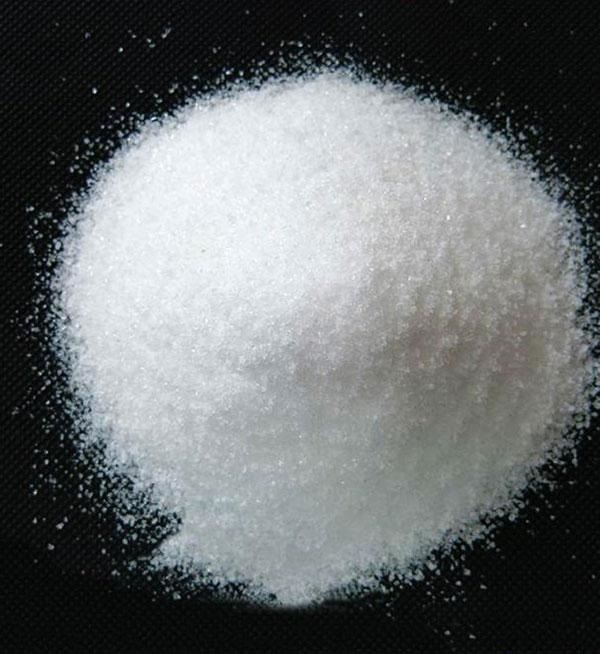
| Appearance | White crystalline powder |
| Odor | Odorless |
SECTION 2: PHYSICAL AND CHEMICAL PROPERTIES
Muconic acid exists in three different stereoisomeric forms: cis,cis-, cis,trans-, and trans,trans-. The following table compares the key physical properties of these three isomers:
| Property | cis,cis-Isomer | cis,trans-Isomer | trans,trans-Isomer |
|---|---|---|---|
| Melting Point | 194-195°C | 190-191°C | 301°C |
| Water Solubility (15°C) | ~0.2 g/L (low) | 5.2 g/L (higher) | < 0.1 g/L (very low) |
| pKa | 3.57 | 2.9 | 3.4 |
| Stability | Lactonizes under acidic conditions | Isomerizes under acidic conditions | Thermodynamically most stable isomer |
2.1. General Physical Properties
| Property | Value / Range |
|---|---|
| Molecular Weight | 142.11 g/mol |
| Density | ~1.4 g/cm³ |
| Boiling Point | 320-345°C |
| Flash Point | ~177°C |
| Water Solubility (15°C) | 0.2 mg/mL (cis,cis-isomer) |
| LogP | -0.20 (estimated) |
| Vapor Pressure (25°C) | 5.93 x 10⁻⁷ mmHg |
| Refractive Index | 1.549 |
SECTION 3: ISOMERS AND IDENTIFICATION
Muconic acid exists in three stereoisomeric forms based on the geometry of the double bonds. These isomers have significantly different physical and chemical properties.
3.1. cis,cis-Muconic Acid (ccMA)
-
Definition: Isomer with both double bonds in cis configuration
-
CAS Number: 505-70-4
-
Melting Point: 194-195°C
-
Source: Primary product of biological fermentation
-
Use: Precursor for adipic acid production; critical monomer for nylon-6,6 production
3.2. cis,trans-Muconic Acid (ctMA)
-
Definition: Isomer with one double bond in cis and one in trans configuration
-
Melting Point: 190-191°C
-
Water Solubility: 5.2 g/L (5× higher than ccMA)
-
Source: Spontaneous isomerization of ccMA under acidic conditions
3.3. trans,trans-Muconic Acid (ttMA)
-
Definition: Isomer with both double bonds in trans configuration; thermodynamically most stable isomer
-
CAS Number: 3588-17-8
-
Melting Point: 301°C
-
Water Solubility: < 0.1 g/L (very low)
-
Special Property: Only isomer that undergoes Diels-Alder cycloaddition reactions
-
Use: Bio-based terephthalic acid (for PET) and adipic acid production
SECTION 4: CHEMICAL PROPERTIES AND REACTIONS
| Property | Description |
|---|---|
| Chemical Class | Dicarboxylic acid (unsaturated, conjugated diene) |
| Functional Groups | Two carboxyl groups (-COOH), conjugated double bonds |
| Reactivity | High; versatile platform chemical |
| Hydrogenation | Adipic acid formation (100% selectivity, Pt/C catalyst) |
| Diels-Alder Reaction | Terephthalic acid production (ttMA isomer only) |
| Polycondensation | Polyester and polyamide formation |
| Polymerization | Addition polymerization via double bonds |
| Thermal Decomposition | > 300°C releases CO, CO₂ |
| pKa | 3.4-3.57 (varies by isomer) |
4.1. Key Chemical Transformations
| Reaction Type | Description |
|---|---|
| Hydrogenation | Muconic acid → Adipic acid (Pt/C catalyst, 70°C, 4 bar H₂) |
| Diels-Alder | ttMA + Ethylene → Terephthalic acid (PET monomer) |
| Polycondensation | Muconic acid + Diol → Unsaturated polyesters |
| Polycondensation | Muconic acid + Diamine → Polyamides |
| Isomerization | ccMA → ttMA (Ru-zeolite catalyst) |
| Lactonization | ccMA → Muconolactone (under acidic conditions) |
SECTION 5: MAJOR APPLICATIONS AND END-USES
5.1. Polymer and Plastic Production (Most Important Application)
| Application | Function | Suitability |
|---|---|---|
| Nylon-6,6 Production | Hydrogenation to adipic acid → nylon monomer | High |
| PET Production | Conversion to terephthalic acid (PET) | High |
| Polyurethane | Polyester polyol precursor | High |
| Bioplastics | Direct polymerization or as monomer | High |
| Polyamide Resins | Via polymerization | High |
5.2. Bio-based Chemicals
| Application | Function | Suitability |
|---|---|---|
| Adipic Acid | Nylon-6,6, polyurethane, plasticizers | High |
| Terephthalic Acid | PET, polyester resins | High |
| Trimellitic Acid | Trimellitic anhydride production | High |
5.3. Biochemistry and Metabolomics
| Application | Function | Suitability |
|---|---|---|
| Benzene Exposure Biomarker | Urinary benzene metabolite | High |
| Aromatic Compound Degradation | Study of bacterial catabolic pathways | High |
| Metabolic Engineering | Microbial cell factory design | High |
5.4. Other Applications
| Application | Function | Suitability |
|---|---|---|
| Food Additives | Research stage | Research |
| Pharmaceutical Chemicals | As intermediate | Moderate |
| Agricultural Chemicals | As intermediate | Moderate |
SECTION 6: INDUSTRY SUITABILITY MATRIX
| Industry | Suitability | Explanation |
|---|---|---|
| Polymers / Plastics | High | Nylon-6,6, PET, polyurethane, bioplastics precursor |
| Chemical Synthesis | High | Adipic acid, terephthalic acid, trimellitic acid production |
| Biotechnology | High | Microbial fermentation, metabolic engineering |
| Pharmaceuticals | Moderate | Potential as pharmaceutical intermediate |
| Agriculture | Moderate | Potential as pesticide intermediate |
| Food | Limited | Not approved as food additive |
| Cosmetics | Not suitable | No cosmetic use |
SECTION 7: OTHER NAMES AND IDENTIFIERS
| Type | Name / Description |
|---|---|
| IUPAC Name | (2E,4E)-Hexa-2,4-dienedioic acid (ttMA) |
| Commercial Names | Muconic Acid |
| Synonyms | 2,4-Hexadienedioic acid, Butadiene Dicarboxylic Acid, Hexadienedioic Acid, 1,3-Butadiene-1,4-dicarboxylic acid |
| Isomer Names | cis,cis-Muconic acid, cis,trans-Muconic acid, trans,trans-Muconic acid |
| CAS Number (Main) | 505-70-4 (cis,cis-isomer) |
| CAS Number (ttMA) | 3588-17-8 (trans,trans-isomer) |
| EC Number | 208-017-7 |
| RTECS Number | MM2235070 |
| HS Code | 2917190090 |
SECTION 8: PRODUCTION METHODS
8.1. Biotechnological Production (Preferred Method)
| Parameter | Description |
|---|---|
| Method | Microbial fermentation (E. coli, C. glutamicum, P. putida, S. cerevisiae) |
| Feedstocks | Glucose, lignin derivatives, industrial by-streams |
| Metabolic Pathway | Shikimate pathway, β-ketoadipate pathway |
| Product | cis,cis-Muconic acid (primary) |
| Highest Titer (C. glutamicum) | 88.2 g/L |
| Highest Titer (P. putida) | 47.2 g/L |
| Yield | 0.30 mol/mol glucose (C. glutamicum) |
| Advantages | Renewable feedstocks, environmentally friendly, high purity |
8.2. Chemical Synthesis
| Method | Description |
|---|---|
| Phenol Oxidation | Oxidation with peracetic acid |
| Adipic Acid Derivative | Treatment of ethyl 1,4-dibromoadipate with alcoholic KOH |
| Acetylene Carbonylation | Carbonylation of acetylene |
| Disadvantages | Petroleum-based feedstocks, heavy metal catalysts, environmental pollution |
SECTION 9: TOXICOLOGY AND HEALTH EFFECTS
| Parameter | Value / Description |
|---|---|
| GHS Classification | Warning |
| Hazard Statements | R36/37/38 (Irritating to eyes, respiratory system, and skin) |
| Precautionary Statements | S26 (In case of eye contact, rinse with plenty of water), S37/39 (Use suitable gloves and eye protection) |
| WGK (Germany) | 3 (very hazardous to water) |
| Target Organs | Eyes, skin, respiratory system |
| Metabolism | Human benzene metabolite (urinary biomarker) |
SECTION 10: ECOTOXICOLOGY AND ENVIRONMENTAL BEHAVIOR
| Parameter | Value / Description |
|---|---|
| Biodegradability | Readily biodegradable (BIOWIN estimate) |
| Bioaccumulation Potential | Low (LogP = -0.20) |
| Water Solubility | Low-moderate (varies by isomer) |
| Soil Mobility | High (Koc = 21.48) |
| Water Hazard Class (WGK Germany) | WGK 3 (very hazardous to water) |
SECTION 11: SAFETY AND STORAGE
| Parameter | Information |
|---|---|
| Storage Conditions | Cool, dry, well-ventilated area |
| Temperature | Room temperature (15 - 30°C) |
| Container | Tightly closed, inert containers |
| Materials to Avoid | Strong oxidizers, high heat |
| Shelf Life | 24 months (under recommended conditions) |
| Packaging | 250 mg, 1 g, 5 g (research); industrial drums |
SECTION 12: TRANSPORT INFORMATION
| Parameter | Information |
|---|---|
| UN Number | Not regulated (not classified as dangerous goods) |
| Hazard Class | Not applicable |
| Packing Group | Not applicable |
| Proper Shipping Name | Muconic Acid |
| ADR/RID | Not regulated |
| IMDG Code | Not regulated |
| IATA (Air) | Not regulated |
| Marine Pollutant | No |
SECTION 13: FIRE-FIGHTING MEASURES
| Parameter | Information |
|---|---|
| Fire Hazard | Combustible dust |
| Extinguishing Media | Water fog, CO₂, dry chemical, foam |
| Special Hazards | When heated, releases CO, CO₂ |
| Decomposition Products | CO, CO₂ |
| Protective Equipment | Self-contained breathing apparatus (SCBA), full protective clothing |
SECTION 14: ACCIDENTAL RELEASE AND CLEANUP
| Parameter | Information |
|---|---|
| Personal Protection | Gloves, safety goggles, dust mask |
| Ventilation | Increase ventilation |
| Cleanup Methods | Sweep while preventing dust formation; collect in sealed containers |
| Environmental Precautions | Prevent entry into drains |
| Waste Disposal | According to local regulations; incineration |
SECTION 15: FIRST AID MEASURES
| Exposure Route | Action |
|---|---|
| Inhalation | Move to fresh air. If breathing difficulty, administer oxygen. Seek medical attention if symptoms persist. |
| Skin Contact | Remove contaminated clothing. Wash with soap and plenty of water. |
| Eye Contact | Rinse with plenty of water for at least 15 minutes. Seek medical attention if irritation persists. |
| Ingestion | Do NOT induce vomiting. Drink plenty of water. Seek medical attention. |
SECTION 16: REGULATORY INFORMATION
| Region / Authority | Status |
|---|---|
| EU REACH | Registered (component-based) |
| Turkey KKDİK | Registration required |
| USA TSCA | Listed |
| EINECS | 208-017-7 |
| RTECS | MM2235070 |
| WGK (Germany) | 3 (very hazardous to water) |
SECTION 17: SUMMARY AND CRITICAL WARNINGS
Product Summary
| Parameter | Value |
|---|---|
| Product | Muconic Acid |
| CAS | 505-70-4 (cis,cis); 3588-17-8 (trans,trans) |
| Appearance | White crystalline powder |
| Molecular Weight | 142.11 g/mol |
| Melting Point | Varies by isomer (194-301°C) |
| Water Solubility | Varies by isomer (0.1-5.2 g/L) |
| Key Industries | Polymers, chemicals, biotechnology |
CRITICAL WARNINGS
-
Sustainable Polymer Platform: Muconic acid is a "bio-privileged" molecule that can be produced from renewable sources (lignocellulosic biomass), enabling bio-based production of important polymers such as nylon-6,6, PET, and polyurethane.
-
Green Route to Nylon-6,6 and PET: Muconic acid can be hydrogenated to adipic acid (100% selectivity) for nylon-6,6 monomer or converted via Diels-Alder reaction to terephthalic acid for PET monomer. These routes provide up to 80% reduction in greenhouse gas emissions compared to conventional petrochemical production.
-
Isomer Selection is Critical: The three isomers of muconic acid (cis,cis-, cis,trans-, trans,trans-) have significantly different physical properties and reactivity profiles. For example, Diels-Alder reactions are effectively carried out only with the trans,trans-isomer. Isomer purity is critical for product selection and process design.
-
Advances in Bio-production: cis,cis-Muconic acid can be produced at 88.2 g/L titer from glucose using Corynebacterium glutamicum, demonstrating the industrial viability of biological production.
-
Alternative to Conventional Adipic Acid: Muconic acid route eliminates N₂O emissions compared to conventional cyclohexane/nitric acid oxidation process for adipic acid production.
-
Storage: Store in cool, dry, well-ventilated areas. Keep away from strong oxidizers.
-
Benzene Exposure Biomarker: trans,trans-Muconic acid is used as a urinary biomarker for benzene exposure in humans.
-
Solubility Challenges: Low water solubility of cis,cis- and trans,trans-isomers (<0.2 g/L) causes isolation and purification challenges. The 5× higher solubility of cis,trans-isomer may affect processing efficiency.
-
Catalytic Transformations: Single-atom Ru-zeolite catalyst enables highly selective (95%) isomerization of ccMA to ttMA, enabling PET production via Diels-Alder route.
-
Future Perspective: Muconic acid is recognized as a critical platform chemical for the bio-based economy, with ongoing research focused on sustainable polymer production.
IMPORTANT DISCLAIMER: This Technical Data Sheet (TDS) is for informational purposes only and is based on available technical data. The user is solely responsible for determining the product's suitability for their specific application and for complying with all applicable local, national, and international regulations. For complete safety, storage, handling, transportation, disposal, and regulatory compliance information, always refer to the official Safety Data Sheet (SDS/MSDS) provided by the manufacturer/supplier. Users are responsible for testing the product in their own processes and applications. All local, national, and international regulations must be followed when working with Muconic Acid.