We unleash your business potential by maximize the business innovation.
Send EmailDodecyl Alcohol, Lauryl Alcohol, Dodecanol, 112-53-8
Dodecyl Alcohol (Lauryl Alcohol, CAS: 112-53-8)
1. Product Identity
| Property | Details |
|---|---|
| Product Name | Dodecyl Alcohol / Lauryl Alcohol |
| CAS Number | 112-53-8 |
| Molecular Formula | C₁₂H₂₆O |
| Molecular Weight | 186.34 g/mol |
| Chemical Name | n-Dodecanol, 1-Dodecanol |
| Common Names | Lauryl alcohol, n-Dodecyl alcohol, Alcohol C-12, Dodecan-1-ol |
| Trade Names | Epal 12, Adol 12, Nacol 12-96 |
2. Physical and Chemical Properties
| Property | Value |
|---|---|
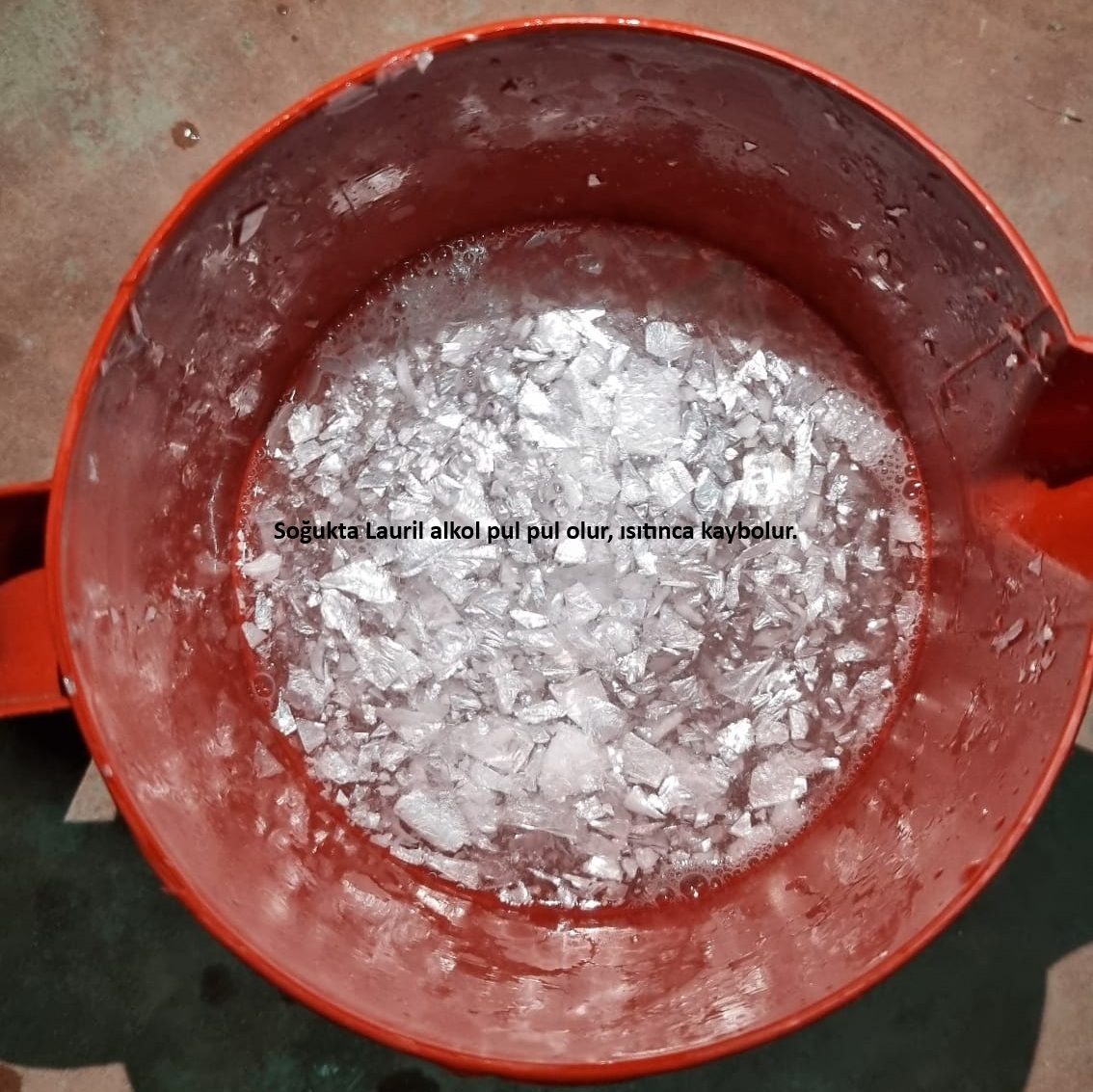
| Appearance | Colorless to pale yellow, oily liquid (solidifies below 24°C) |
| Odor Profile | Mild, fatty, waxy odor |
| Density (20°C) | 0.8309 g/mL |
| Melting Point | 24 °C |
| Boiling Point | 259 °C |
| Flash Point | 127 °C |
| Refractive Index (nᵈ) | 1.442 |
| Solubility | Very slightly soluble in water; soluble in ethanol and diethyl ether |
| Volatility | Low vapor pressure; limited odor emission in processes and formulations |
| Stability | Stable under normal conditions; may react with strong oxidizing agents |
3. Production and Quality
Production Processes
| Process Type | Description |
|---|---|
| Natural Source-Based | Hydrogenation of lauric acid derived from coconut oil and palm kernel oil |
| Synthetic Process | Ziegler process (polymerization of ethylene to long-chain alkyls, followed by oxidation and reduction steps) |
Typical Quality Parameters
| Parameter | Specification |
|---|---|
| Purity (GC) | ≥ 98–99% |
| Acid Value | Low (minimal free acid) |
| Water Content (Karl Fischer) | ≤ 0.1–0.2% |
| Color (APHA/Hazen) | Low color number, preferred for cosmetic grades |
| Odor | Neutral to mild; suitable for perfumery and personal care |
Supply Forms
-
Bulk liquid (IBC, drums)
-
Near-solid packaging (requires heating jackets during shipment in cold weather)
Certifications
-
Cosmetic grades: IFRA/Allergen compliance declarations
-
Industrial grades: COA, TDS, SDS
-
Limited food use: Compliance declarations as applicable
4. Synonyms and Other Names
Common Names
-
Lauryl alcohol
-
n-Dodecanol
-
n-Dodecyl alcohol
-
Alcohol C-12
-
Dodecan-1-ol
Trade Names / Brands
-
Epal 12
-
Adol 12
-
Nacol 12-96
5. Applications and Functions
5.1. Detergents and Surfactant Systems
| Function | Description |
|---|---|
| Precursor | As a long-chain fatty alcohol, it is the precursor for sulfate/sulfonate derivatives such as SLS/SLES |
| Performance | Positive effect on grease removal, foam formation, and foam stability |
| Formulation Role | Co-surfactant, foam modulator, viscosity regulator |
5.2. Cosmetics and Personal Care
| Function | Description |
|---|---|
| Emulsifier/Co-emulsifier | Balances water-oil phases, improves texture |
| Moisturizer and Emollient | Helps reduce transepidermal water loss |
| Rheology Modifier | Thickens creams and lotions; adjusts hardness in balms and sticks |
| Fragrance Matrix | Mild waxy profile serves as a fragrance carrier and odor blender |
5.3. Pharmaceutical (Topical Focus)
| Function | Description |
|---|---|
| Excipient | Emollient/carrier in ointments, creams, and lotions |
| Emulsion Agent | Supports distribution of active ingredients and extends shelf life |
| Taste/Odor Masking | Limited; oral use requires regulatory compliance |
5.4. Lubricants and Industrial Applications
| Function | Description |
|---|---|
| Friction Reducer | Added to base oils to provide a film-forming fatty phase |
| Corrosion Inhibitor Systems | Passive protection additive in coatings and metalworking fluids |
| Polymer Processes | Wetting agent/carrier in emulsion polymerization; stability support |
5.5. Perfume and Fragrance Industry
| Function | Description |
|---|---|
| Precursor Compound | Raw material for dodecanal synthesis (fatty alcohol to aldehyde conversion) |
| Fragrance Carrier | Improves solubility and diffusion of essential oils |
5.6. Food Industry (Limited)
| Function | Description |
|---|---|
| Carrier/Emulsion Agent | Used in some aroma systems; no E-number, local regulatory compliance required |
6. Industry Suitability Tables
Lauryl Alcohol (Dodecanol) – Industry Suitability Overview
| Industry | Application Area | Suitability | Notes |
|---|---|---|---|
| Cosmetics | Moisturizer, emulsion stabilizer, viscosity enhancer, hair shine | High | Considered safe, low irritation risk at low concentrations |
| Detergents | Surfactant, foaming, cleaning power, SLS derivatives | High | Common in household cleaning products, provides foam control |
| Pharmaceutical | Excipient, carrier solvent, formulation stabilizer | Medium | Controlled use required, subject to pharmaceutical regulations |
| Food | Flavor and taste modifier, limited additive | Limited | Permitted as food additive but limited scope; no E-number |
| Polymer/Plastic | Monomer production, industrial chemical applications | High | Used in polymer synthesis, critical in industrial-scale production |
| Agriculture | Emulsion agent, adjuvant in pesticide formulations | Medium | Environmental effects must be considered; biodegradability is an advantage |
Lauryl Alcohol (Dodecanol) – Cosmetics Industry Suitability Table
| Application Area | Function | Suitability | Notes |
|---|---|---|---|
| Moisturizer | Prevents moisture loss by forming a barrier on skin | High | Common in dry skin products |
| Emulsion Stabilizer | Balances water and oil phases, ensures homogeneous texture in creams | High | Critical role in creams, lotions, and makeup bases |
| Viscosity Enhancer | Provides consistency, controls flow | High | Preferred in lotion, cream, and gel formulations |
| Hair Care Products | Provides shine and softness, supports foaming effect | High | Common in shampoo and conditioner formulations |
| Fragrance/Fragrance Carrier | Contributes to formulation with mild floral scent | Medium | Generally auxiliary component, not primary fragrance ingredient |
| Skin Safety | Safe at low concentrations, may cause irritation at high doses | Controlled | Must be used at concentrations compliant with cosmetic regulations |
| Sustainability | Biodegradable, environmentally friendly | High | Derived from natural sources, aligns with sustainable cosmetic trends |
Lauryl Alcohol (Dodecanol) – Detergent Industry Suitability Table
| Application Area | Function | Suitability | Notes |
|---|---|---|---|
| Surfactant | Dissolves dirt and grease, provides cleaning power | High | Critical role in household cleaning products |
| Foaming Effect | Creates foam in shampoos, soaps, and liquid detergents | High | Enhances perception of cleanliness for consumers |
| Sodium Lauryl Sulfate (SLS) | Most commonly used surfactant derived from lauryl alcohol | High | Standard ingredient in shampoos, dish detergents, and soaps |
| Foam Control | Adjusts foam density, optimizes product performance | Medium | Used for foam balancing in industrial cleaning products |
| Grease Removal Power | Dissolves oily dirt, enhances cleaning efficacy | High | Prominent in kitchen and industrial cleaning products |
| Environmental Compliance | Biodegradable, environmentally friendly | High | Preferred in sustainable detergent formulations |
| Skin Safety | Safe at low concentrations, may cause irritation at high doses | Controlled | Dermatological testing recommended for household cleaning products |
Lauryl Alcohol (Dodecanol) – Pharmaceutical Industry Suitability Table
| Application Area | Function | Suitability | Notes |
|---|---|---|---|
| Excipient | Carrier in tablet and capsule formulations, solubility enhancer | High | Increases stability in drug formulations |
| Solvent/Carrier | Enhances solubility of active ingredients, ensures homogeneous distribution | Medium | Controlled use required, subject to pharmaceutical regulations |
| Emulsion Agent | Balances water/oil phases in pharmaceuticals, ensures homogeneous structure | High | Preferred in oral and topical formulations |
| Topical Products | Moisturizer and thickener in ointment and cream formulations | High | Strengthens skin barrier, functions as drug carrier |
| Flavor/Fragrance Modifier | Aids in masking taste and odor in pharmaceuticals | Limited | Generally supporting role, not primary component |
| Safety | Safe at low concentrations, may cause irritation at high doses | Controlled | Must be used at concentrations compliant with GMP and pharmaceutical regulations |
| Sustainability | Biodegradable, environmentally friendly | High | Aligns with green pharmaceutical production trends |
Lauryl Alcohol (Dodecanol) – Food Industry Suitability Table
| Application Area | Function | Suitability | Notes |
|---|---|---|---|
| Flavor Modifier | Aids in masking taste and odor | Limited | Generally supporting role, not primary flavor component |
| Taste Masking | Reduces undesirable tastes, provides balance in formulation | Medium | Limited use as food additive |
| Solvent/Carrier | Enhances solubility of flavors and essential oils | Medium | Controlled use required, subject to food regulations |
| Emulsion Agent | Balances oil-water phases, ensures homogeneous structure | High | Preferred in some beverage and flavor formulations |
| Food Additive | Auxiliary agent in specific formulations | Limited | No E-number, limited permission depending on regulations |
| Sustainability | Biodegradable, environmentally friendly | High | Derived from natural sources, aligns with green food trends |
| Safety | Safe at low concentrations, may cause irritation at high doses | Controlled | Must be used at concentrations compliant with food regulations |
Lauryl Alcohol (Dodecanol) – Polymer/Plastic Industry Suitability Table
| Application Area | Function | Suitability | Notes |
|---|---|---|---|
| Monomer Production | Used as starting component in polymer synthesis | High | Critical role in polyethylene and polypropylene derivatives |
| Plastic Additive | Enhances flexibility and durability | High | Provides performance optimization in plastic formulations |
| Emulsion Agent | Balances water/oil phases in polymerization processes | Medium | Controlled use required, depends on process conditions |
| Solvent/Carrier | Enhances solubility of some components in polymer production | Medium | Preferred in industrial-scale production |
| Stabilizer | Increases thermal and chemical stability of polymers | High | Advantageous especially in high-temperature processes |
| Sustainability | Biodegradable, environmentally friendly | High | Aligns with green plastic and eco-friendly polymer production trends |
Lauryl Alcohol (Dodecanol) – Agriculture Industry Suitability Table
| Application Area | Function | Suitability | Notes |
|---|---|---|---|
| Emulsion Agent | Balances water/oil phases in pesticide and herbicide formulations | High | Provides homogeneous mixing, increases product efficacy |
| Wetting/Spreading Agent | Facilitates droplet spreading on plant surfaces | High | Ensures better coverage on leaf surfaces |
| Carrier Solvent | Enhances solubility of active ingredients, ensures homogeneous distribution | Medium | Controlled use required, subject to agrochemical regulations |
| Stabilizer | Increases shelf life and efficacy of formulations | High | Critical role especially in liquid pesticides |
| Environmental Compliance | Biodegradable, environmentally friendly | High | Advantageous for sustainable agricultural practices |
| Safety | Safe at low concentrations, may affect plants and soil at high doses | Controlled | Must be used at concentrations compliant with agricultural regulations |
7. Safety, Environment, and Storage
Safety
| Parameter | Details |
|---|---|
| Exposure | May cause eye/skin irritation at high concentrations |
| First Aid | Eye contact: Rinse with plenty of water; Skin contact: Wash with water and mild soap |
| Fire and Explosion | Flash point 127 °C; classified as flammable liquid; use foam/dry chemical extinguishers |
Environmental Impact
| Parameter | Details |
|---|---|
| Biodegradability | Biodegradable due to natural origin and structure; generally not classified as hazardous to aquatic life |
| Spill Control | Contain with soil/sorbent; avoid direct discharge into sewers |
Storage and Handling
| Parameter | Details |
|---|---|
| Conditions | Store in cool, dry, well-ventilated area in tightly closed containers |
| Compatibility | Keep away from strong oxidizing agents; compatible with stainless steel/aluminum; risk of swelling in some elastomers |
| Thermal Management | Viscosity increases/solidifies below 24°C; heating-jacketed IBC/drums ensure pumpability |
| Packaging | 180–200 L drums, 1000 L IBC, bulk; minimize moisture and light exposure |
8. Summary
Dodecyl Alcohol (Lauryl Alcohol, CAS: 112-53-8) is a long-chain fatty alcohol with the molecular formula C₁₂H₂₆O. It is a colorless to pale yellow oily liquid with a mild, waxy odor. It melts at 24°C, boils at 259°C, and is slightly soluble in water but soluble in ethanol and ether.
Key Advantages:
-
Biodegradable and environmentally friendly
-
Stable under normal conditions
-
Improves texture and performance in formulations
-
Versatile across multiple industries
Main Application Areas:
-
Cosmetics and Personal Care: Emollient, emulsifier, viscosity enhancer, hair shine agent
-
Detergents: Surfactant, foam booster, SLS precursor
-
Pharmaceuticals: Topical excipient, emulsion stabilizer
-
Industrial: Lubricant, corrosion inhibitor, polymer processing
-
Fragrance: Precursor for dodecanal synthesis, fragrance carrier
Production: Derived from natural sources (coconut oil, palm kernel oil) via hydrogenation of lauric acid, or synthetically via the Ziegler process.
Quality: Available in ≥99% purity with low color and water content; certified with IFRA, SDS, COA as required.
Safety: May be irritating at high concentrations; requires appropriate PPE, controlled storage, and fire safety measures.