We unleash your business potential by maximize the business innovation.
Send EmailSilica Gel, Silicon Dioxide Gel, Silicic Acid Gel, Silanedione, Silica Dimethyl Silylate, 112926-00-8, 7631-86-9
SILICA GEL (SiO₂·xH₂O)
1. Chemical Identity and Material Classification
-
Chemical Name: Silica Gel, Silicon Dioxide Gel, Silicic Acid Gel
-
Synonyms: Silanedione, Silica Dimethyl Silylate (modified), Kieselsäureanhydrid, Dried Silicon Dioxide, Sorbead, Dessicant Silica Gel
-
CAS Number: 112926-00-8 (silica gel); 7631-86-9 (amorphous silica)
-
Molecular Formula: SiO₂·xH₂O (hydrated amorphous silica)
-
Molecular Weight: 60.08 g/mol (anhydrous basis)
-
EC Number: 231-545-4
2. Physical Properties
2.1 General Physical Properties
| Property | Value |
|---|---|
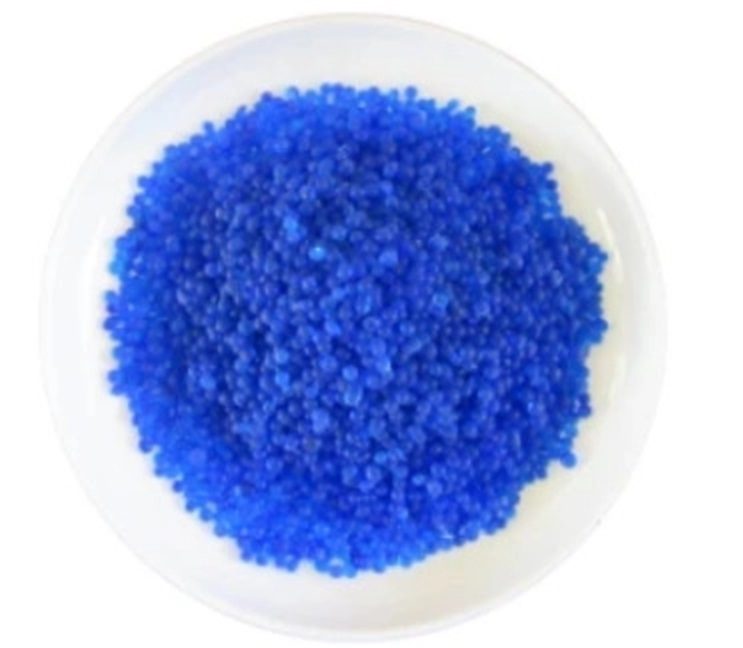
| Appearance | White, translucent, or blue (with indicator) beads, granules, or powder |
| Form | Amorphous (non-crystalline) – not crystalline quartz |
| Density (bulk, typical) | 0.45–0.85 g/cm³ (depending on pore structure) |
| True density | 2.1–2.2 g/cm³ (skeletal density) |
| Particle size range | 0.2–8 mm (beads/granules); 1–10 μm (powder) |
| Hardness (Mohs) | 5–6 (abrasive) |
| Melting point | >1600°C (decomposes) |
| Boiling point | 2230°C |
| Refractive index | 1.45 (typical for amorphous silica) |
| Specific surface area (BET) | 300–800 m²/g (typical); up to 1000 m²/g for high-performance grades |
2.2 Pore Characteristics
| Parameter | Value |
|---|---|
| Pore volume (total) | 0.35–0.65 cm³/g |
| Pore diameter range | 2–30 nm (mesoporous); 20–150 Å typical |
| Average pore size | 2.5–10 nm (25–100 Å) – depending on grade |
| Water adsorption capacity (at 40% RH, 25°C) | 20–35% by weight |
| Water adsorption capacity (at 80% RH, 25°C) | 35–50% by weight |
2.3 Types of Silica Gel
| Type | Pore Size | Indicator | Applications |
|---|---|---|---|
| Type A (narrow pore) | 2.5–3.5 nm (25–35 Å) | None | General drying, compressed air |
| Type B (wide pore) | 4.5–7.0 nm (45–70 Å) | None | Chromatography, catalyst support |
| Type C (blue gel) | 2.5–3.5 nm | Cobalt chloride (blue → pink when saturated) | Visual moisture indication (less common now) |
| Type D (orange gel) | 2.5–3.5 nm | Iron/manganese salts (orange → green/colorless) | Non-toxic indicator (replacing cobalt) |
2.4 Indicator Colors (Saturation Indication)
| Indicator Type | Dry (Active) | Saturated (Exhausted) | Regenerated |
|---|---|---|---|
| Cobalt chloride (blue gel) | Dark blue | Pink | Returns to blue |
| Iron/manganese (orange gel) | Orange | Green to colorless | Returns to orange |
| Methyl violet | Green | Yellow/orange | Not for regeneration |
3. Chemical Properties
3.1 Chemical Composition (Typical)
| Component | Content (%) |
|---|---|
| SiO₂ (silicon dioxide) | 99.0–99.8% |
| Al₂O₃ (alumina) | 0.05–0.5% |
| Fe₂O₃ (iron oxide) | 0.01–0.1% |
| Na₂O (sodium oxide) | 0.1–0.5% |
| CaO (calcium oxide) | 0.01–0.1% |
| Loss on ignition (LOI) | 3–7% (water content) |
| pH (aqueous extract, 10% slurry) | 4.0–7.0 (depends on washing) |
3.2 Surface Chemistry
| Parameter | Value |
|---|---|
| Silanol groups (Si–OH) | ~2–5 groups/nm² |
| Surface hydrophilicity | Very high (polar, water-loving) |
| Surface charge (pH 7) | Negative (zeta potential ~ -25 to -40 mV) |
| Point of zero charge (PZC) | pH 2–3 |
3.3 Chemical Stability
| Parameter | Behavior |
|---|---|
| Acid resistance | Stable in most acids (except HF, strong phosphoric) |
| Alkali resistance | Degrades in strong alkalis (pH >10) – soluble as silicate |
| Organic solvents | Stable, inert |
| Water | Stable (does not dissolve; adsorbs water) |
| Hydrofluoric acid (HF) | Dissolves rapidly (forms SiF₄ or H₂SiF₆) |
4. Adsorption Mechanism
4.1 Physical Adsorption (Physisorption)
-
Driving force: Van der Waals forces between water molecules and silica surface
-
Heat of adsorption: 30–80 kJ/mol (exothermic)
-
Reversible: Water can be desorbed by heating (regeneration)
4.2 Capillary Condensation
-
Mechanism: Water vapor condenses in micropores and mesopores below bulk saturation pressure
-
Enhanced capacity: Up to 50% of pore volume filled with condensed water
4.3 Hydrogen Bonding
-
Mechanism: Water molecules form hydrogen bonds with surface silanol (Si–OH) groups
-
Selectivity: Strong affinity for water over non-polar molecules (hydrocarbons)
4.4 Water Adsorption Isotherm (Type B Silica Gel, 25°C)
| Relative Humidity (%) | Water Adsorption (% by weight) |
|---|---|
| 10% | 2–5% |
| 20% | 5–10% |
| 40% | 15–25% |
| 60% | 25–35% |
| 80% | 35–45% |
| 95% | 40–50% |
5. Production Methods
5.1 Precipitation Process (Industrial Standard)
-
Reaction: Na₂SiO₃ (sodium silicate) + H₂SO₄ → SiO₂·xH₂O + Na₂SO₄
-
Process:
-
Sodium silicate solution is acidified with sulfuric acid
-
Hydrated silica gel precipitates as hydrogel
-
Washing to remove sodium sulfate
-
Aging to control pore structure
-
Drying (100–200°C) → xerogel
-
Crushing, screening, and classification
-
-
Yield: 85–95%
-
Washing requirement: Extensive to remove salts (residual conductivity affects performance)
5.2 Sol-Gel Process (High Purity Grades)
-
Precursors: Tetraethyl orthosilicate (TEOS), tetramethyl orthosilicate (TMOS)
-
Process: Hydrolysis and condensation → alcogel → supercritical drying (aerogel) or ambient drying (xerogel)
-
Purity: >99.9% SiO₂
-
Applications: High-performance chromatography, electronics
5.3 Regeneration (Thermal)
-
Conditions: 120–250°C (for 2–6 hours)
-
Mechanism: Desorption of adsorbed water
-
Cycle life: 100–500 cycles (depending on temperature and purity)
-
Airflow: Recommended for uniform heating
6. Quality Specifications
6.1 Industrial Desiccant Grade (Beads/Granules)
| Parameter | Specification |
|---|---|
| SiO₂ content (anhydrous) | ≥ 99.0% |
| Moisture content (as supplied) | ≤ 3–5% |
| Water adsorption capacity (40% RH, 25°C) | ≥ 25% by weight |
| Water adsorption capacity (80% RH, 25°C) | ≥ 35% by weight |
| Particle size distribution | As specified (e.g., 1–3 mm, 2–5 mm, 3–6 mm) |
| Attrition loss | ≤ 2–5% |
| Bulk density | 0.65–0.85 g/cm³ |
| pH (10% extract) | 4.0–7.0 |
| Loss on ignition (1000°C) | 3–7% |
6.2 Chromatography Grade (Powder)
| Parameter | Specification |
|---|---|
| Purity (SiO₂) | ≥ 99.9% |
| Specific surface area (BET) | 400–600 m²/g |
| Pore volume | 0.6–0.8 cm³/g |
| Average pore diameter | 6–10 nm (60–100 Å) |
| Particle size (D50) | 5–40 μm (as specified) |
| Iron (Fe) | ≤ 50 ppm |
| Heavy metals (as Pb) | ≤ 10 ppm |
| pH (10% suspension) | 5.5–7.0 |
6.3 Blue/Orange Indicator Gel
| Parameter | Specification |
|---|---|
| Indicator content (CoCl₂ or iron/manganese salts) | 0.5–2.0% |
| Color (dry/active) | Blue (Co) or orange (Fe/Mn) |
| Color change (saturated) | Pink (Co) or green (Fe/Mn) |
| Toxicity | Cobalt-based: toxic (limited use); iron/manganese: non-toxic |
7. Industrial Applications – Desiccant and Drying
7.1 General Drying Applications
| Application | Description | Typical Consumption |
|---|---|---|
| Compressed air drying | Removal of water vapor from compressed air systems | 5–10 kg per 1000 Nm³ air |
| Gas drying | Drying of natural gas, landfill gas, refrigerant gases | 2–10 kg/m³ gas |
| Liquid drying | Drying of organic solvents (alcohols, ketones, hydrocarbons) | 5–20% by weight (batch) |
| Transformer oil | Removal of moisture from insulating oils | Desiccant breathers |
| Electronics packaging | Protection of sensitive components during storage/transport | 0.5–5 g per package |
7.2 Compressed Air Drying Parameters
| Parameter | Value |
|---|---|
| Inlet air temperature | 10–50°C (optimal 20–35°C) |
| Pressure range | 2–10 bar (typical) |
| Dew point achievable | -40°C to -60°C (with regeneration) |
| Line velocity | 0.1–0.3 m/s (through desiccant bed) |
| Regeneration temperature | 120–250°C (heat regenerated) |
| Pressure swing adsorption (PSA) | 2–10 minute cycles (no heat, depressurization) |
7.3 Packaging Desiccants
| Package Size | Typical Adsorption Capacity (at 40% RH, 25°C) | Applications |
|---|---|---|
| 0.5 g unit | 0.1–0.15 g water | Small electronics, watches |
| 1 g unit | 0.2–0.3 g water | Cameras, medical devices |
| 5 g unit | 1.0–1.5 g water | Shoes, bags, small boxes |
| 10 g unit | 2.0–3.0 g water | Pharmaceutical bottles |
| 50 g unit | 10–15 g water | Large equipment containers |
| 500 g unit | 100–150 g water | Sea freight containers |
8. Industrial Applications – Chromatography
8.1 Column Chromatography Parameters
| Parameter | Value |
|---|---|
| Stationary phase | Silica gel (normal phase) |
| Particle size | 40–63 μm (230–400 mesh) for flash chromatography |
| Pore size | 60 Å (6 nm) typical |
| Loading capacity | 1–5% (sample weight to silica weight) |
| Elution solvents | Hexane, ethyl acetate, dichloromethane, methanol mixtures |
8.2 Thin Layer Chromatography (TLC)
| Parameter | Value |
|---|---|
| Plate coating thickness | 0.2–0.25 mm |
| Particle size | 5–20 μm |
| Binder (optional) | Gypsum (CaSO₄·0.5H₂O) – 5–15% |
| Activation temperature | 110–120°C for 30 minutes |
9. Industrial Applications – Water Treatment and Filtration
9.1 Silica Gel in Water Treatment
| Application | Description |
|---|---|
| Filter media | Depth filtration of particulates |
| Heavy metal adsorption | Limited (activated carbon or zeolites more effective) |
| Coagulant aid | Rare; silica gel not standard |
| Water polishing | Removes residual turbidity |
10. Industrial Applications – Catalyst Support
| Parameter | Value |
|---|---|
| Function | High surface area support for metal catalysts (Pd, Pt, Ni, Cu, V) |
| Typical metal loading | 0.5–10% by weight |
| Applications | Hydrogenation, oxidation, hydrodesulfurization, polymerization |
| Advantages | Inert, high thermal stability, tailorable pore structure |
11. Silica Gel vs. Other Desiccants
| Property | Silica Gel | Molecular Sieve (Zeolite 4A) | Activated Alumina | Calcium Oxide (Lime) |
|---|---|---|---|---|
| Chemical formula | SiO₂·xH₂O | Na₁₂Al₁₂Si₁₂O₄₈·27H₂O | Al₂O₃ | CaO |
| Pore size | 2–30 nm (variable) | 0.4 nm (fixed) | 2–10 nm | None |
| Specific surface area (m²/g) | 300–800 | 500–800 | 200–400 | 10–30 |
| Water capacity (40% RH, 25°C) | 20–25% | 20–25% | 15–20% | 30–40% (chemisorption) |
| Water capacity (80% RH, 25°C) | 35–50% | 25–30% | 20–25% | 30–40% |
| Regeneration temperature | 120–200°C | 200–350°C | 150–300°C | 500°C+ (not practical) |
| Adsorption mechanism | Physisorption | Physisorption + pore sieving | Physisorption + chemisorption | Chemisorption (irreversible) |
| Reversibility | Reversible | Reversible | Reversible | Irreversible |
| pH of extract | Neutral–acidic (4–7) | Alkaline (9–11) | Neutral | Very alkaline (12+) |
| Relative cost | Low | Moderate–High | Low | Very low |
| Corrosivity | Non-corrosive | Mildly corrosive (alkaline) | Non-corrosive | Highly corrosive (alkaline) |
12. Regeneration Procedures
12.1 Thermal Regeneration (Most Common)
| Parameter | Value |
|---|---|
| Temperature range | 120–200°C (for water removal) |
| Time | 2–6 hours (depending on bed depth and temperature) |
| Atmosphere | Air, nitrogen, or vacuum (air is adequate for most) |
| Maximum temperature (avoid) | >250°C (pore collapse, loss of surface area) |
12.2 Microwave Regeneration (Rapid)
| Parameter | Value |
|---|---|
| Power | 600–1500 W |
| Time | 5–30 minutes |
| Advantages | Fast, energy efficient |
| Limitations | Requires specialized equipment, not uniform heating for large beds |
12.3 Pressure Swing Regeneration (PSA)
| Parameter | Value |
|---|---|
| Pressure reduction | 1 atm (depressurization) |
| Time | 2–10 minutes per cycle |
| Application | Compressed air dryers (heatless type) |
13. Safety and Toxicology
13.1 Acute Toxicity
| Parameter | Value |
|---|---|
| Oral LD₅₀ (rat) | >5,000 mg/kg (very low toxicity – nuisance dust) |
| Dermal LD₅₀ (rabbit) | >2,000 mg/kg |
| Inhalation LC₅₀ (rat, dust) | >5 mg/L (low toxicity) |
| Skin irritation | Non-irritant (dust may cause mechanical abrasion) |
| Eye irritation | Mild irritant (abrasive dust) |
| Skin sensitization | Non-sensitizer |
| Mutagenicity | Negative |
| Carcinogenicity | Not classified (amorphous silica is not crystalline quartz; not classified as carcinogen by IARC) |
13.2 Special Hazard – Crystalline Silica (Quartz)
-
Warning: Silica gel is amorphous (non-crystalline), not crystalline quartz. Amorphous silica has low toxicity and is not classified as a carcinogen.
-
Crystalline silica hazard: If silica gel is heated above 1000°C, it may convert to crystalline cristobalite (respirable hazard). Avoid extreme heating.
13.3 Indicator Gel Hazards
| Indicator | Hazard | Status |
|---|---|---|
| Cobalt chloride (blue gel) | Toxic (cobalt is suspected carcinogen, toxic to aquatic life) | Restricted in EU (REACH); not allowed in consumer products |
| Iron/manganese salts (orange gel) | Non-toxic | Widely used as replacement for cobalt-based indicators |
| Methyl violet | Toxic (may be carcinogenic) | Limited use |
13.4 Occupational Exposure Limits (for amorphous silica)
| Authority | Limit | Type |
|---|---|---|
| OSHA PEL (respirable dust) | 20 mppcf (million particles per cubic foot) or 80 mg/m³ / %SiO₂ | TWA |
| ACGIH TLV (inhalable) | 10 mg/m³ | TWA |
| NIOSH REL (respirable) | 6 mg/m³ | TWA |
| EU (amorphous silica) | 4 mg/m³ (inhalable), 2 mg/m³ (respirable) | TWA |
14. Safety Precautions and Personal Protective Equipment (PPE)
-
Hazards:
-
Low acute toxicity (nuisance dust)
-
Dust may cause mechanical irritation to eyes and respiratory tract
-
Abrasive to skin with repeated exposure
-
Indicator gels (cobalt chloride) are toxic – avoid handling, wear gloves
-
-
PPE (recommended):
-
Dust mask (FFP1 or N95) – for powder/granule handling
-
Safety glasses with side shields (EN 166)
-
Protective gloves (nitrile – optional for non-indicator gel; required for indicator gel)
-
Protective clothing (dust protection)
-
-
Engineering controls:
-
Local exhaust ventilation (LEV) for powder handling
-
Dust collection systems
-
Eyewash stations
-
-
First aid:
-
Inhalation: Move to fresh air
-
Skin contact: Wash with soap and water (mild abrasive – rinse thoroughly)
-
Eye contact: Rinse with water for 15 minutes
-
Ingestion: Rinse mouth; drink water (low hazard for non-indicator gel; seek medical attention for indicator gel)
-
15. Environmental Fate and Disposal
| Parameter | Value |
|---|---|
| Biodegradation | Not applicable (inorganic) |
| Aquatic ecotoxicity (fish, LC₅₀, 96 hours) | >1,000 mg/L (very low toxicity for amorphous silica) |
| Environmental persistence | Stable (does not degrade; remains as particulate) |
| Mobility in soil | Low (particulate, settles) |
| Indicator gel hazard (cobalt chloride) | Toxic to aquatic life (H410) – dispose as hazardous waste |
| Disposal method (non-indicator) | Landfill (non-hazardous waste) – material is inert |
| Disposal method (cobalt indicator) | Hazardous waste (due to cobalt content) |
16. Storage and Shelf Life
-
Storage conditions:
-
Cool, dry, well-ventilated area (10–30°C)
-
Keep tightly sealed in original packaging (hygroscopic)
-
Protect from moisture (prevents premature saturation)
-
Store away from strong acids and alkalis
-
-
Shelf life (unopened, sealed container):
-
Standard silica gel: 24–36 months (if kept dry)
-
Indicator gel: 24 months (cobalt indicator may fade over time)
-
-
Shelf life (opened container):
-
1–6 months (depending on ambient humidity; can be regenerated)
-
-
Degradation indicators:
-
Indicator color change (saturation)
-
Weight gain (moisture absorption)
-
Caking (moisture causes clumping)
-
17. Transport Information
| Regulation | Classification |
|---|---|
| UN Number | Not regulated (non-hazardous for silica gel without indicator) |
| ADR/RID | Not classified as dangerous goods |
| IMDG | Not regulated |
| IATA | Not regulated |
| Proper shipping name | Silica gel (non-hazardous) |
| Indicator gel (cobalt chloride) | May be regulated as environmentally hazardous (UN 3077) in some jurisdictions |
18. Synonyms and Common Names
-
English: Silica gel, Silicic acid gel, Dried silicon dioxide, Sorbead, Dessicant silica gel, Silanedione, Kieselsäureanhydrid
-
Common names: Desiccant beads, Moisture absorber, Drying agent, Humidity control pack, Molecular sieve (incorrect – distinct material)
-
Trade names: Sorbead®, Grade 40, Grade 60, Davisil® (chromatography), SG-1, Indicating silica gel (blue/orange)
-
French: Gel de silice
-
German: Kieselgel
-
Spanish: Gel de sílice
-
Turkish: Silika jel, Kurutucu boncuklar, Nem alıcı silika jel
19. Why Choose Silica Gel? (Technical Summary)
| Advantage | Description |
|---|---|
| High water adsorption capacity | Up to 40–50% of its own weight at high humidity |
| Low regeneration temperature | 120–200°C (compared to 200–350°C for molecular sieves) |
| Non-corrosive | Neutral pH (4–7) – safe for sensitive electronics, metals |
| Broad relative humidity range | Effective from 10–95% RH |
| Reusable | Can be regenerated 100–500 times (cost-effective) |
| Non-toxic (non-indicator grades) | Safe for food contact (FDA approved for certain food packaging) |
| Chemically inert | Does not react with most chemicals (except HF, strong alkalis) |
| Transparent (translucent) | Indicator types available for visual saturation monitoring |
| Low dusting (bead/granule forms) | Clean handling (compared to powder desiccants) |
| Widely available | Low cost, manufactured globally |
| Limitation note: | Cobalt chloride indicator gels are toxic and restricted in many countries (EU REACH). Use non-toxic orange (iron/manganese) indicator. Not effective for polar solvent drying (molecular sieves better for low polarity solvents). Prone to attrition (dusting) under mechanical vibration. pH can be acidic (4–6) – may affect sensitive materials. |
20. Sectoral Suitability Summary Table
| Sector | Application | Typical Dosage/Size | Alternatives |
|---|---|---|---|
| Electronics | Moisture protection during storage/transport (desiccant bags) | 0.5–10 g per package | Molecular sieve, clay desiccant |
| Pharmaceutical | Desiccant in bottles (tablets, capsules), stability testing | 1–5 g (packets/capsules) | Molecular sieve, calcium oxide |
| Compressed Air | Air drying (heatless/heat reactivated dryers) | 5–10 kg per 1000 Nm³ air | Activated alumina, molecular sieve |
| Gas Processing | Natural gas drying, landfill gas drying | 2–10 kg/m³ gas | Triethylene glycol (TEG), molecular sieve |
| Chemical Industry | Solvent drying (alcohols, ketones, hydrocarbons) | 5–20% by weight | Molecular sieve (for low polarity solvents) |
| Chromatography | Stationary phase (column, TLC) | 5–200 μm particle size | Alumina, bonded silica (C18, etc.) |
| Catalysis | Catalyst support (metal impregnation) | High surface area (300–800 m²/g) | Alumina, titania, zeolites |
| Packaging | Desiccant pouches (food, footwear, leather goods, instruments) | 0.5–500 g units | Clay desiccant, molecular sieve |
| Automotive | Desiccant in AC systems, headlights, air brake dryers | 50–500 g units | Molecular sieve, activated alumina |
| Laboratory | Desiccators, drying of solvents, chromatography | Variable | Molecular sieve, calcium chloride, Drierite® |
| Food Packaging | Moisture control in dried foods, spices, supplements | 1–10 g packets (FDA approved) | Clay desiccant (silica gel is preferred) |
| Textile/Footwear | Desiccant in shoe boxes, garment bags | 5–50 g units | Clay desiccant |
This TDS is prepared in compliance with ISO 11014-1 format and is intended for packaging engineers, pharmaceutical technologists, compressed air system operators, chemical engineers, laboratory technicians, and procurement professionals. Certificates of Analysis (CoA), Safety Data Sheets (SDS), adsorption isotherm data, and sample validation reports are available upon request.