We unleash your business potential by maximize the business innovation.
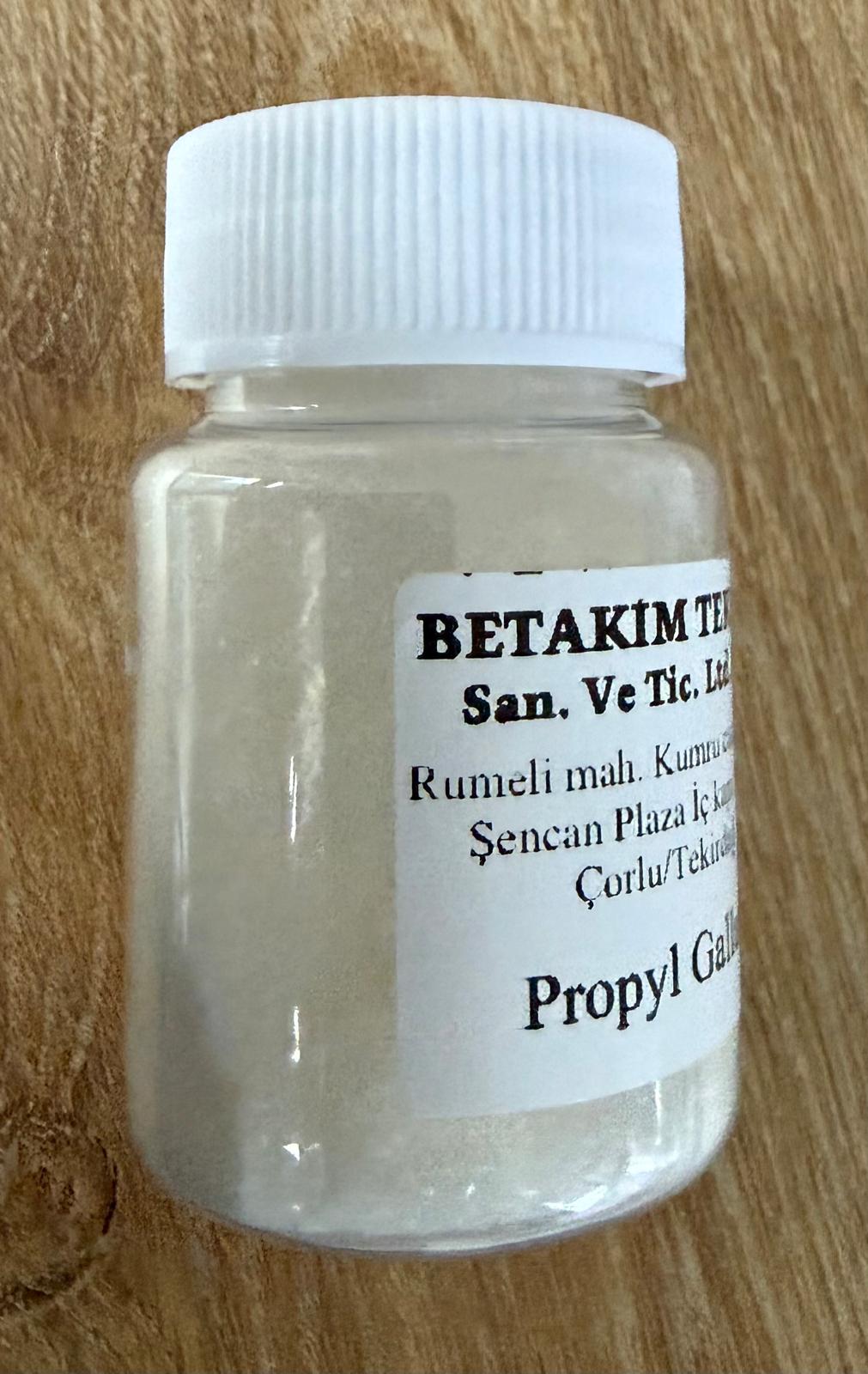
Send EmailE310, Propyl Gallate, Propyl Ttrihydroxybenzoate, Gallic Acid Propyl Ester, 121-79-9
🔎 Propyl Gallate (E310) – Sectoral Suitability and Properties
🌍 Key Highlights
-
Food sector: Limited use in Turkey, stricter regulations in Europe. Certified products are required.
-
Cosmetics & Pharmaceuticals: European/US-origin products are preferred due to certification advantages.
-
Industrial use: Broad and flexible applications; cost-effective Chinese/Indian products are often chosen.
-
Animal feed: Requires regulatory approval in Turkey. Alternatives like BHA, BHT, and tocopherols are more common.
⚗️ Chemical Properties
-
CAS No: 121-79-9
-
Chemical Formula: C₁₀H₁₂O₅
-
Names: Propyl Gallate / Propyl Gallic Acid
-
E Number: E310
-
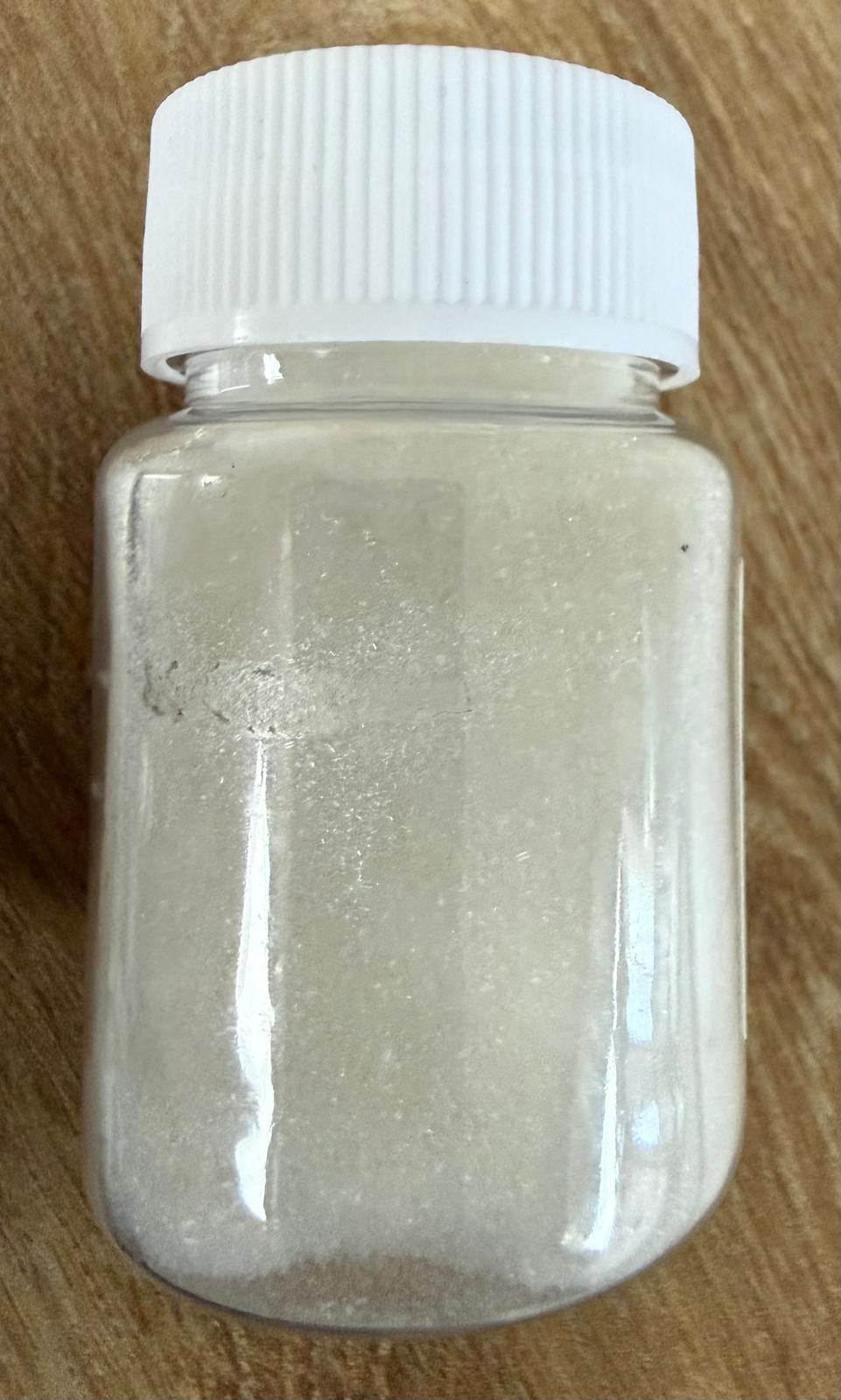
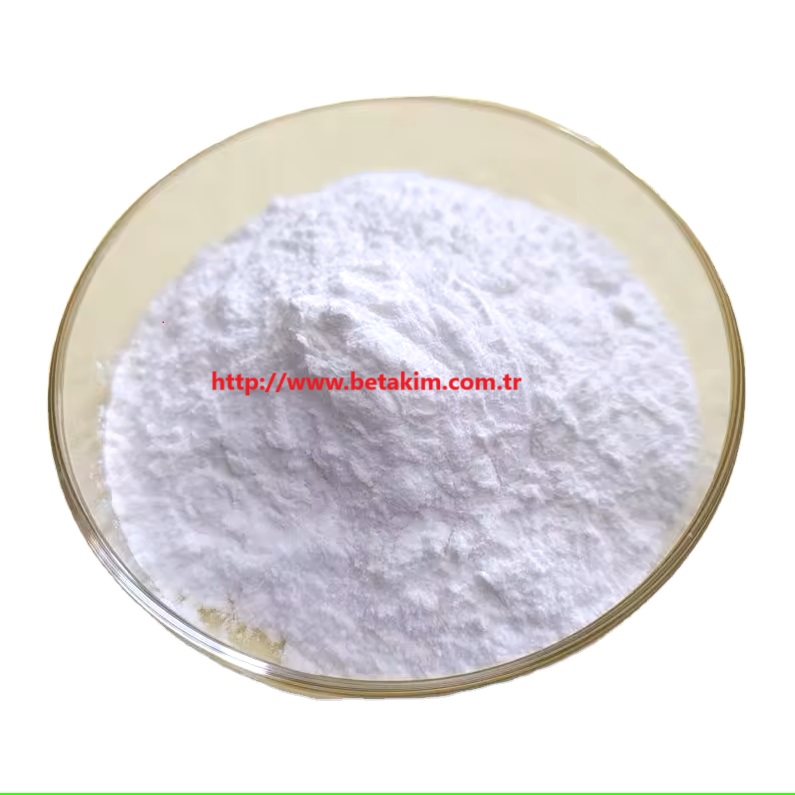
Appearance: White crystalline powder
-
Melting Point: ~150°C
-
Solubility: Slightly soluble in water, soluble in organic solvents
🏭 Applications
-
Food Industry: Antioxidant added to fats and processed foods to prevent rancidity.
-
Cosmetics: Neutralizes free radicals, used in skin-care formulations as a stabilizer.
-
Pharmaceuticals: Added to formulations to stabilize active ingredients.
-
Industrial Uses: Improves stability in adhesives, biodiesel, lubricants, and polymers.
-
Animal Feed: Used as an antioxidant additive, subject to regulatory approval.
🌱 Source & Function
-
Source: Synthesized from gallic acid (derived from plant tannins) and propanol.
-
Function: Strong antioxidant; prevents rancidity and degradation in fatty products.
📊 Usage Limits
-
Food: Maximum 200 mg/kg in fatty foods.
-
Acceptable Daily Intake (ADI): 1.4 mg/kg body weight.
-
Cosmetics/Pharmaceuticals: Typically 0.01–0.1%.
-
Industrial: Flexible, usually 0.1–0.5% depending on formulation.
⚠️ Side Effects & Restrictions
-
Metabolism: Breaks down into propanol and gallic acid in the intestine.
-
Potential Side Effects: Eczema, digestive issues, hyperactivity, allergic reactions, liver damage, hormonal imbalance.
-
Restrictions: Should be avoided in sensitive groups (pregnant, breastfeeding).
-
Vegetarian Suitability: Acceptable for all dietary groups, including vegetarians.
🎯 Potential Benefits
-
Neutralizes free radicals, reducing oxidative stress.
-
Extends shelf life of foods by slowing oxidation.
-
Strengthens skin’s antioxidant defense, offering anti-aging effects.
-
Used in hair-care products to reduce hair loss and improve scalp health.
📊 Propil Gallat (E310) – Sectoral Suitability & Usage Levels
| Sector | Suitability | Typical Usage Level | Regulatory Notes |
|---|---|---|---|
| Food | ⚠️ Limited | Max. 200 mg/kg in fatty foods | ADI: 1.4 mg/kg body weight. Requires approval by Turkish Ministry of Agriculture. Stricter limits in EU. |
| Pharmaceuticals | ✅ Suitable | 0.01–0.1% in formulations | GMP/DMF certified suppliers preferred. FDA/EMA compliant. |
| Cosmetics | ✅ Suitable | 0.01–0.1% in creams, lotions, makeup | EU Cosmetics Regulation & IFRA guidelines apply. |
| Animal Feed | ⚠️ Limited | 50–100 mg/kg feed | Allowed in some countries, but requires Turkish regulatory check. |
| Industrial (adhesives, biodiesel, lubricants, polymers) | ✅ Suitable | 0.1–0.5% depending on formulation | Flexible use, certification less critical. |
| Beverages (non-fatty) | ❌ Not suitable | – | Ineffective in non-fat matrices, not permitted. |
🔎 Key Points
-
Food sector: Limited and strictly regulated; certified European-origin products are safer for compliance.
-
Cosmetics & Pharma: Low concentrations (0.01–0.1%) are effective; certification is critical.
-
Industrial: Broadest and most flexible use; Chinese/Indian suppliers often chosen for cost advantage.
-
Animal feed: Requires regulatory approval in Turkey; alternatives like BHA, BHT, tocopherols are more common.
📊 Comparison of Antioxidants – Propyl Gallate vs Alternatives
| Product | Chemical Name / E Code | Applications | Strengths | Weaknesses | Regulatory Status (Turkey/EU) |
|---|---|---|---|---|---|
| Propyl Gallate (E310) | Propyl 3,4,5-trihydroxybenzoate | Food (fatty products), cosmetics, pharmaceuticals, industrial | Strong antioxidant in fat systems, versatile use | Side effects (eczema, digestive issues), limited food use | Restricted in Turkey, stricter in EU |
| BHA (E320) | Butylated Hydroxyanisole | Food, cosmetics | Low cost, widely used, effective antioxidant | Health concerns (possible carcinogenicity), banned in some countries | Allowed in Turkey, restricted in EU |
| BHT (E321) | Butylated Hydroxytoluene | Food, cosmetics, animal feed | Very cheap, high stability | Toxicity concerns, banned in some markets | Allowed in Turkey, restricted in EU |
| Tocopherols (E306–E309) | Vitamin E derivatives | Food, cosmetics, pharmaceuticals | Natural, consumer-friendly, safe | More expensive, lower stability | Widely accepted in Turkey/EU |
| Ascorbic Acid (E300) | Vitamin C | Food (aqueous phase), cosmetics | Natural, safe, consumer-friendly | Ineffective in fat systems, weaker antioxidant | Widely accepted in Turkey/EU |
| Gallic Acid & Derivatives | Natural phenolic compounds | Food, cosmetics | Plant-derived, antioxidant properties | Less stable, weaker effect | Accepted but limited use |
🔎 Key Insights
-
Propyl Gallate → Best for fatty systems; positioned as an alternative to BHA/BHT.
-
BHA/BHT → Cheap but increasingly avoided due to health concerns.
-
Tocopherols (Vitamin E) → Premium, natural option; strong consumer acceptance.
-
Ascorbic Acid (Vitamin C) → Effective in water-based systems, not suitable for fats.
-
Gallic Acid → Natural but less stable; often used as a supportive antioxidant.
🎯 Why Choose Propyl Gallate?
-
Provides strong antioxidant protection in fat-rich products.
-
Offers a cost-effective alternative to natural antioxidants like tocopherols.
-
Can replace BHA/BHT in markets where these are restricted or less accepted.
-
Useful across multiple sectors: food, cosmetics, pharmaceuticals, and industrial.