We unleash your business potential by maximize the business innovation.
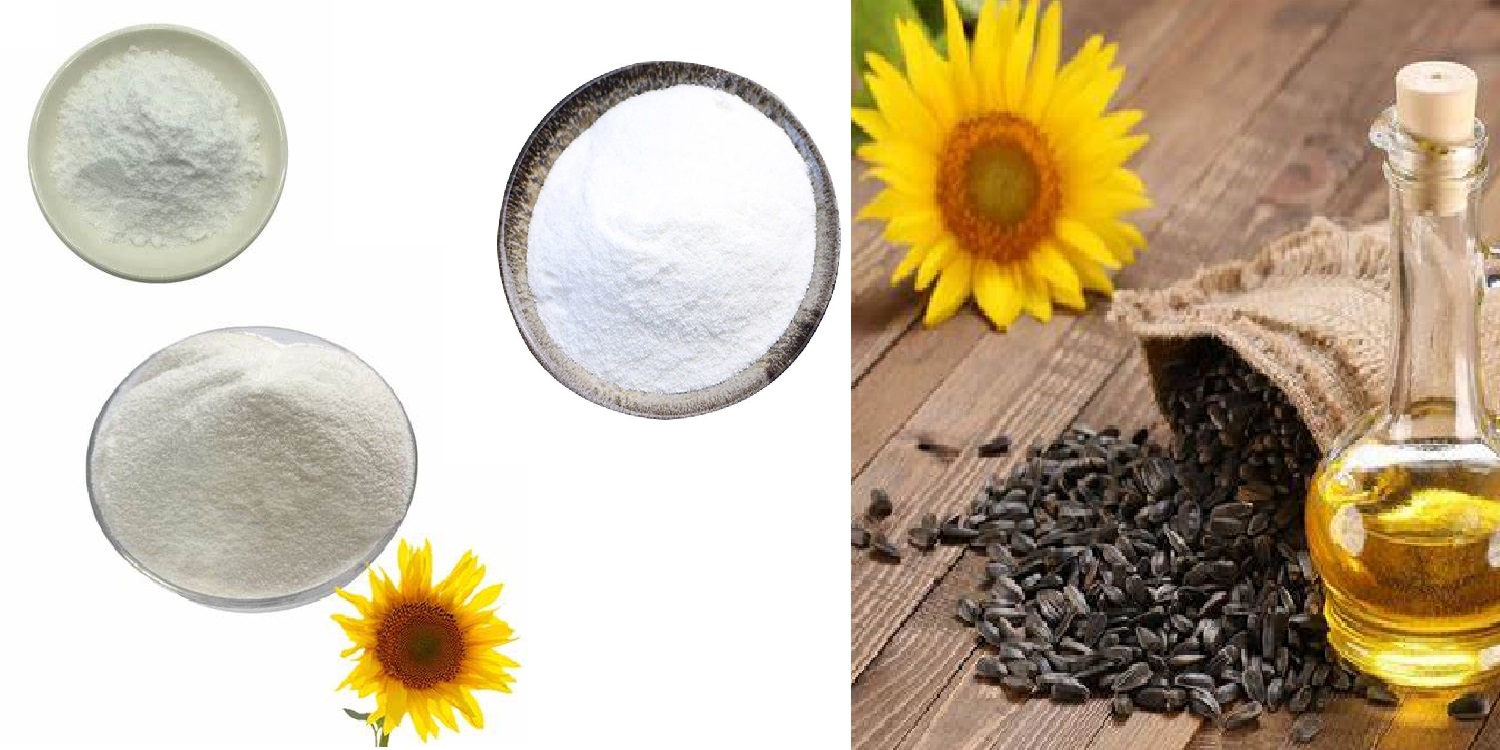
Send EmailSunflower Oil Powder, Helianthus Annuus Seed Oil Powder, Spray-dried Sunflower oil, Encapsulated Sunflower oil, 8001-21-6
Sunflower Oil Powder – 🌻
Definition & Composition
-
Chemical Name: Helianthus Annuus Seed Oil
-
CAS Number: 8001-21-6
-
Form: Stabilized sunflower oil in powdered form
-
Category: Functional oil powder used in food, pharmaceutical, and agricultural industries
Production Technology
-
Microencapsulation: Sunflower oil is encapsulated with carriers (e.g., maltodextrin) to convert it into powder.
-
Benefit: Protects against oxidation, extends shelf life.
-
Logistics: Easier to transport and store compared to liquid oil.
Applications
-
Food Industry: Infant formula, functional foods, sports nutrition, instant soups, sauces.
-
Pharmaceuticals: Used in capsule formulations as a fatty acid source.
-
Agriculture: Added to animal feed as an energy and essential fatty acid supplement.
Functional Properties
-
Nutritional Value: Rich in linoleic acid (omega-6) and oleic acid.
-
Stability: Powder form is more resistant to degradation than liquid oil.
-
Solubility: Easily disperses in water, ensuring homogeneous mixtures.
Advantages
-
Longer shelf life
-
Easy handling and storage
-
Controlled addition of oil in formulations
-
Protection against oxidation
Sectoral Uses of Sunflower Oil Powder 🌻
Here’s a detailed breakdown of how Sunflower Oil Powder is applied across different industries:
1. Food Industry
-
Infant Formula: Provides essential fatty acids (linoleic and oleic acid) in a stable, powdered form.
-
Functional Foods: Used in protein shakes, sports nutrition, and dietary supplements for controlled fat inclusion.
-
Instant Products: Enhances flavor and texture in soups, sauces, bakery mixes, and ready-to-eat meals.
-
Dairy Alternatives: Improves creaminess in powdered milk substitutes and vegan formulations.
2. Pharmaceutical Industry
-
Capsules & Tablets: Acts as a carrier of fatty acids in solid dosage forms.
-
Nutraceuticals: Incorporated into omega-6 enriched supplements.
-
Stability Agent: Powder form prevents rancidity compared to liquid oils, ensuring longer shelf life of formulations.
3. Agriculture & Animal Nutrition
-
Animal Feed: Supplies energy and essential fatty acids in a stable, easy-to-handle format.
-
Pet Food: Improves palatability and nutritional profile of dry pet food.
-
Aquaculture: Used in fish feed formulations where controlled fat release is required.
4. Cosmetics & Personal Care
-
Powdered Formulations: Added to dry cosmetic blends (face masks, powders) for moisturizing properties.
-
Skin Care Products: Provides emollient benefits without the handling issues of liquid oils.
5. Industrial Applications
-
Food Processing Aids: Used in spray-dried products to stabilize fat content.
-
Powder Blends: Facilitates uniform mixing in large-scale production lines.
Oil Powders – Alternatives and Reasons for Preference
| Criteria | Sunflower Oil Powder | Canola Oil Powder | Coconut Oil Powder | Soybean Oil Powder | Palm Oil Powder |
|---|---|---|---|---|---|
| Nutritional Profile | Rich in linoleic (omega-6) and oleic acid | High oleic acid, low saturated fat | Rich in MCTs (medium-chain triglycerides) | Combination of protein + oil | High in saturated fat |
| Flavor Profile | Neutral, non-dominant | Neutral, mild | Aromatic, tropical | Neutral, sometimes beany | Neutral |
| Stability / Shelf Life | Protected via microencapsulation | Needs oxidation protection | Stable due to MCTs | Economical, widely available | Very high stability |
| Cost | Moderate – more expensive than palm | Moderate – more expensive than palm | High | Low – economical | Very low – cheapest option |
| Reasons for Preference | Safe for infant formula and medical foods | Healthy fat profile, suitable for diet products | Popular in sports nutrition and functional foods | Cost-effective for large-scale production | Economic production, long shelf life |
| Disadvantages | More expensive than palm, requires good encapsulation | Sensitive to oxidation | Expensive, not suitable for all formulations | Allergen risk, limited in infant formula | Health concerns due to saturated fat |
| Sectoral Suitability | Infant formula, functional foods, pharmaceuticals | Functional foods, diet products, infant formula | Sports nutrition, functional foods | Animal feed, economical food production | Ready-to-eat foods, milk powder, mass production |
Summary:
-
Infant Formula: Sunflower and Canola oil powders → safe, regulatory compliant, healthy fat profile.
-
Functional Foods: Coconut oil powder → MCT advantage; Canola oil powder → low saturated fat.
-
Economic Production: Palm oil powder → cheapest, longest shelf life.
-
Feed & Agriculture: Soybean oil powder → protein + oil contribution.
Oil Powders – Alternative Names & Synonyms
Here are the commonly used alternative names for each oil powder in international trade, ERP documentation, and supplier catalogs:
-
Sunflower Oil Powder
-
Helianthus annuus seed oil powder
-
Spray-dried sunflower oil
-
Encapsulated sunflower oil
-
-
Canola Oil Powder
-
Rapeseed oil powder (European usage)
-
High-oleic canola oil powder
-
Encapsulated rapeseed oil
-
-
Coconut Oil Powder
-
Cocos nucifera oil powder
-
MCT oil powder (when marketed for medium-chain triglycerides)
-
Spray-dried coconut oil
-
-
Soybean Oil Powder
-
Glycine max oil powder
-
Soy oil powder
-
Encapsulated soybean oil
-
-
Palm Oil Powder
-
Elaeis guineensis oil powder
-
Spray-dried palm oil
-
Encapsulated palm fat
-