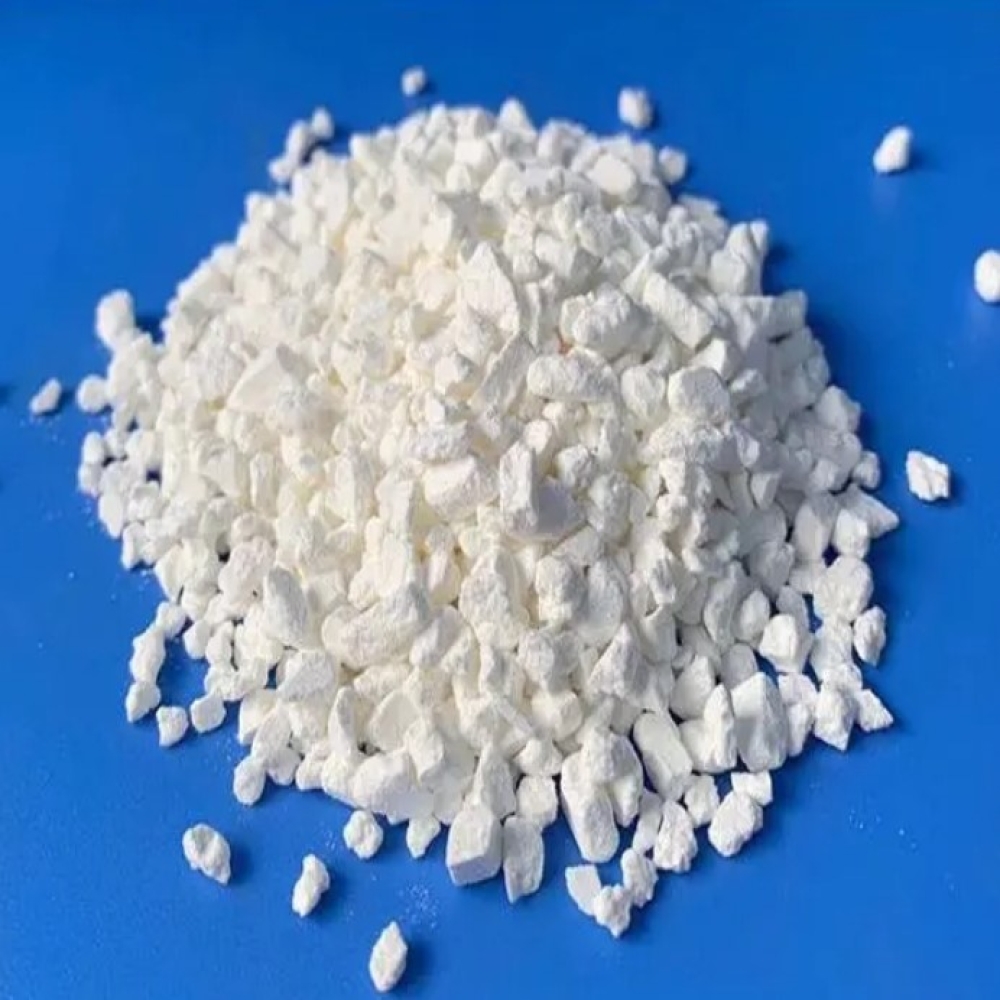
Tolyltriazole, Methylbenzotriazole, Methyl Benzo Triazole, TTA, 29385-43-1
TOLYTRIAZOLE – TOLYTRIAZOLE (TTA)
1. CHEMICAL IDENTITY AND DEFINITION
| Parameter |
Information |
| Chemical Name |
Tolyltriazole |
| Other Names |
Methylbenzotriazole, Methyl Benzo Triazole, 5-Methyl-1H-benzotriazole, 4-Methyl-1H-benzotriazole, TTA |
| Chemical Formula |
C₇H₇N₃ |
| Molecular Weight |
133.15 g/mol |
| CAS Number |
29385-43-1 |
| EC Number (EINECS) |
249-596-4 |
| Appearance |
White to light brown granules or powder |
| Odor |
Characteristic mild odor |
| Physical State (20°C) |
Solid (granules / powder) |
| Chemical Class |
Heterocyclic compound (triazole derivative) |
2. WHAT IS TOLYTRIAZOLE (TTA)?
Tolyltriazole (TTA) is a versatile chemical compound primarily used as a corrosion inhibitor for metals. It is a methyl-substituted benzotriazole derivative that forms a durable electrochemical barrier on metal surfaces, effectively preventing corrosion. It exhibits excellent thermal stability, oxidative stability, and UV resistance, making it suitable for a wide range of industrial applications including metalworking fluids, automotive coolants, and household products.
3. PHYSICAL PROPERTIES
| Property |
Value |
| Appearance |
White to light brown granules or powder |
| Chemical Formula |
C₇H₇N₃ |
| Molecular Weight |
133.15 g/mol |
| Density |
1.24 g/cm³ |
| Melting Point Range |
76 – 87 °C |
| Flash Point |
> 150 °C |
| Solubility in Water |
Slightly soluble (~2 g/L at 20°C) |
| Solubility in Chloroform |
Slightly soluble |
| Solubility in Methanol |
Slightly soluble |
| Solubility in Acetone |
Soluble |
| Solubility in Ethanol |
Soluble |
| Bulk Density |
~0.5 – 0.7 g/cm³ |
| Color |
White to light brown |
4. CHEMICAL PROPERTIES
| Property |
Information |
| Chemical Formula |
C₇H₇N₃ |
| Molecular Weight |
133.15 g/mol |
| CAS Number |
29385-43-1 |
| EC Number |
249-596-4 |
| Isomers |
4-Methylbenzotriazole, 5-Methylbenzotriazole |
| pKa |
~8.5 |
| Stability |
Excellent thermal and oxidative stability |
| UV Resistance |
Resistant to UV light degradation |
| Corrosion Inhibition |
Forms durable electrochemical barrier on metal surfaces |
| Reactivity |
Low; stable under normal conditions |
| pH (1% solution) |
~6.0 – 7.5 (neutral) |
5. ISOMER COMPOSITION
| Isomer |
Structure |
Percentage (Typical) |
| 4-Methylbenzotriazole |
Methyl group at position 4 |
~50% |
| 5-Methylbenzotriazole |
Methyl group at position 5 |
~50% |
| 6-Methylbenzotriazole |
Methyl group at position 6 |
Trace |
Typical Isomer Distribution:
6. CORROSION INHIBITION MECHANISM
| Step |
Description |
| 1 |
TTA molecules are added to the solution/fluid |
| 2 |
TTA molecules adsorb onto the metal surface |
| 3 |
Chemisorption occurs via nitrogen atoms (triazole ring) |
| 4 |
Formation of a protective monolayer on the metal |
| 5 |
Electrochemical barrier prevents electron transfer |
| 6 |
Prevents oxidation and corrosion reactions |
| 7 |
Protects against pitting and general corrosion |
| 8 |
Stable film formation provides long-term protection |
7. APPLICATIONS
7.1. Corrosion Inhibitor (Primary Application)
| Application |
Description |
| Copper Protection |
Prevents corrosion of copper and copper alloys |
| Silver Protection |
Protects silver surfaces from tarnishing |
| Zinc Protection |
Prevents zinc corrosion |
| Brass Protection |
Protects brass alloys |
| Aluminum Protection |
Suitable for aluminum alloys |
| Steel Protection |
Provides protection for various steel grades |
7.2. Industrial Metalworking Fluids
| Application |
Description |
| Cutting Fluids |
Additive in cutting and drilling fluids |
| Grinding Fluids |
Corrosion protection in grinding operations |
| Hydraulic Fluids |
Corrosion inhibitor in hydraulic systems |
| Metalworking Fluids |
General metalworking fluid additive |
| Lubricants |
Anti-corrosion additive in industrial lubricants |
7.3. Automotive Industry
| Application |
Description |
| Antifreeze / Coolants |
Corrosion inhibitor in engine coolants |
| Brake Fluids |
Protective additive in brake fluid formulations |
| Engine Oils |
Corrosion protection in automotive oils |
| Transmission Fluids |
Component protection in transmission systems |
7.4. Household Products
| Application |
Description |
| Dishwasher Tablets |
Silverware protection in automatic dishwashers |
| Metal Cleaners |
Corrosion protection in metal cleaning products |
| Silver Polishes |
Tarnish prevention in silver care products |
| Rinse Aids |
Metal protection in rinse aid formulations |
7.5. Anti-Rust Oils and Coatings
| Application |
Description |
| Anti-Rust Oils |
Rust prevention in metal protection oils |
| Corrosion Preventive Coatings |
Protective coatings for metal surfaces |
| Temporary Coatings |
Temporary corrosion protection during storage/transport |
| VCI Papers |
Vapor corrosion inhibitor in packaging materials |
7.6. Other Applications
| Application |
Description |
| Electronics |
Corrosion protection for electronic components |
| Plating Industry |
Additive in electroplating baths |
| Water Treatment |
Corrosion inhibitor in cooling water systems |
| Printing Inks |
Additive in some ink formulations |
| Pharmaceuticals |
Intermediate in pharmaceutical synthesis |
| Photographic Chemicals |
Component in some photographic formulations |
8. ADVANTAGES OF TOLYTRIAZOLE
| Advantage |
Description |
| Excellent Corrosion Protection |
Forms durable electrochemical barrier on metal surfaces |
| Thermal Stability |
Stable at high temperatures |
| Oxidative Stability |
Resistant to oxidation |
| UV Resistance |
Does not degrade under UV light |
| Broad Metal Compatibility |
Protects copper, silver, zinc, brass, aluminum, steel |
| Low Toxicity |
Relatively low toxicity profile |
| Versatile Application |
Usable across multiple industries |
| Effective at Low Concentrations |
Provides protection at low concentrations |
| Long-term Protection |
Provides durable and lasting corrosion protection |
| Compatible with Other Additives |
Can be used with other formulation components |
9. RECOMMENDED CONCENTRATIONS
| Application |
Recommended Concentration |
| Engine Coolants |
0.1 – 0.5% |
| Metalworking Fluids |
0.05 – 0.3% |
| Anti-Rust Oils |
0.1 – 0.5% |
| Dishwasher Tablets |
0.5 – 2.0% |
| Cutting Fluids |
0.05 – 0.2% |
| Cooling Water Systems |
0.005 – 0.02% |
| Hydraulic Fluids |
0.1 – 0.3% |
10. COMPARISON WITH BENZOTRIAZOLE (BTA)
| Property |
Benzotriazole (BTA) |
Tolyltriazole (TTA) |
| Formula |
C₆H₅N₃ |
C₇H₇N₃ |
| Molecular Weight |
119.12 g/mol |
133.15 g/mol |
| Melting Point |
98-100°C |
76-87°C |
| Solubility in Water |
~20 g/L |
~2 g/L |
| Hydrophobicity |
Lower |
Higher |
| Corrosion Protection |
Good |
Excellent |
| Thermal Stability |
Good |
Better |
| Cost |
Lower |
Higher |
| Preferred Application |
General use |
High-temperature and demanding applications |
11. SAFETY AND HEALTH INFORMATION
| Parameter |
Information |
| Oral LD50 (Rat) |
~1,000 – 2,000 mg/kg |
| Dermal LD50 (Rabbit) |
> 5,000 mg/kg |
| Skin Irritation |
May cause mild irritation |
| Eye Irritation |
May cause irritation |
| Sensitization |
Not a known sensitizer |
| Carcinogenicity |
Not classified as carcinogenic |
| Mutagenicity |
Not classified as mutagenic |
| Reproductive Toxicity |
No evidence of adverse effects |
| Aquatic Toxicity |
Moderate toxicity to aquatic life |
11.1. GHS CLASSIFICATION
| Hazard Category |
Classification |
| Acute Toxicity |
Category 4 (H302) |
| Eye Irritation |
Category 2 (H319) |
| Skin Irritation |
Category 2 (H315) |
| Aquatic Toxicity |
Category 3 (H402) |
11.2. FIRST AID MEASURES
| Route of Exposure |
Action |
| Inhalation |
Remove to fresh air. If respiratory irritation, seek medical attention. |
| Skin Contact |
Wash with plenty of soap and water. Remove contaminated clothing. |
| Eye Contact |
Rinse thoroughly with water for at least 15 minutes. Seek medical attention. |
| Ingestion |
Rinse mouth. Do NOT induce vomiting. Seek medical attention. |
12. STORAGE AND HANDLING
| Parameter |
Information |
| Storage Conditions |
Cool, dry, well-ventilated area |
| Container Requirements |
Tightly closed, original packaging |
| Protect From |
Moisture, strong oxidizing agents, strong acids |
| Shelf Life |
24-36 months (in unopened original packaging) |
| Temperature |
15-30°C |
| Handling Precautions |
Avoid dust formation; use protective equipment |
13. TRANSPORT INFORMATION
| Parameter |
Information |
| UN Number |
Not regulated (not a hazardous material) |
| Hazard Class |
Not applicable |
| Packing Group |
Not applicable |
| ADR/RID |
Not regulated |
| IMDG Code |
Not regulated |
| IATA (Air) |
Not regulated |
| Marine Pollutant |
No |
14. PACKAGING OPTIONS
| Packaging Type |
Quantity |
Material |
| Kraft Bag |
25 kg |
Kraft + PE liner |
| Plastic Drum |
25-50 kg |
HDPE |
| Fiber Drum |
25-50 kg |
Fiberboard |
| Plastic Bag |
5-25 kg |
HDPE/LDPE |
| Aluminum Foil Bag |
1-5 kg |
Laminated aluminum |
15. REGULATORY STATUS
| Region / Authority |
Status |
| European Union (REACH) |
Registered substance |
| USA (EPA TSCA) |
Listed on TSCA inventory |
| USA (FDA) |
Approved for food contact (limited) |
| China |
Listed on inventory |
| Japan (CSCL) |
Listed on CSCL inventory |
16. OTHER NAMES AND SYNONYMS
| Type |
Name |
| Turkish Names |
Tolil Triazol, Metilbenzotriazol, Metil Benzotriazol |
| English Names |
Tolyltriazole, Methylbenzotriazole, Methyl Benzo Triazole |
| Abbreviation |
TTA |
| Isomer Names |
4-Methyl-1H-benzotriazole, 5-Methyl-1H-benzotriazole |
| CAS Number |
29385-43-1 |
17. SUMMARY AND CRITICAL WARNINGS
Product Summary
| Parameter |
Value |
| Product |
Tolyltriazole (TTA) |
| CAS Number |
29385-43-1 |
| Formula |
C₇H₇N₃ |
| Appearance |
White to light brown granules/powder |
| Melting Point |
76-87°C |
| Density |
1.24 g/cm³ |
| Primary Application |
Corrosion inhibitor for metals |
CRITICAL WARNINGS
1. Corrosion Inhibitor: TTA is primarily used as a corrosion inhibitor for copper, silver, zinc, and other metals. Forms a durable electrochemical barrier on metal surfaces.
2. Isomer Composition: Contains a mixture of 4-methylbenzotriazole and 5-methylbenzotriazole (approximately 50:50). Isomer ratio may vary between manufacturers.
3. High-Temperature Stability: Offers better thermal stability than benzotriazole (BTA), making it suitable for high-temperature applications such as engine coolants.
4. Solubility: Slightly soluble in water (~2 g/L) but soluble in organic solvents (ethanol, acetone, chloroform).
5. UV Resistance: Resistant to UV light degradation, making it suitable for outdoor applications and UV-exposed systems.
**6. Low Toxicity: Relatively low toxicity profile but should be handled with care. Harmful if swallowed.
7. Storage: Store in a dry, cool place. Protect from moisture and strong oxidizing agents.
**8. Metal Protection: Effective at very low concentrations (0.05-0.5% depending on application).
**9. Automotive Coolants: Widely used in automotive antifreeze and engine coolant formulations.
**10. Household Products: Used in dishwasher tablets for silverware protection.
**11. TTA vs BTA: TTA offers better performance in demanding applications due to higher hydrophobicity and thermal stability.
**12. Food Contact: Limited approval for food contact applications. Check regional regulations before use in food contact materials.
IMPORTANT DISCLAIMER: This Technical Data Sheet (TDS) is for informational purposes only and is prepared based on available technical data. The user is responsible for determining the suitability of the product for their specific application and for complying with all local, national, and international regulations. For complete safety, storage, use, handling, disposal, and regulatory compliance information, refer to the official Safety Data Sheet (SDS/MSDS) provided by the manufacturer/supplier. This document is not a substitute for professional or medical advice.