We unleash your business potential by maximize the business innovation.
Send EmailMixed Tartaric and Acetic Acid Esters, Mono and Diglyceride Mixed Tartrate and Acetate Ester, E472f, 68002-18-6
E472f – MIXED TARTARIC AND ACETIC ACID ESTERS OF MONO- AND DIGLYCERIDES OF FATTY ACIDS
CAS Number: 68002-18-6
EC Number (EINECS): Not registered
Molecular Formula: Variable
Molecular Weight: ~400-800 g/mol
E Number: E472f
1. IDENTIFICATION INFORMATION
| Parameter | Information |
|---|---|
| Chemical Name | Mixed Tartaric and Acetic Acid Esters of Mono- and Diglycerides of Fatty Acids |
| Other Names (English) | Mixed Tartaric and Acetic Acid Esters, Mono- and Diglyceride Mixed Tartrate and Acetate Esters, Mixed Acid Esters of Mono- and Diglycerides |
| Chemical Class | Non-ionic, amphiphilic emulsifier |
| CAS Number | 68002-18-6 |
| EC Number (EINECS) | Not registered (polymeric mixture) |
| E Number | E472f |
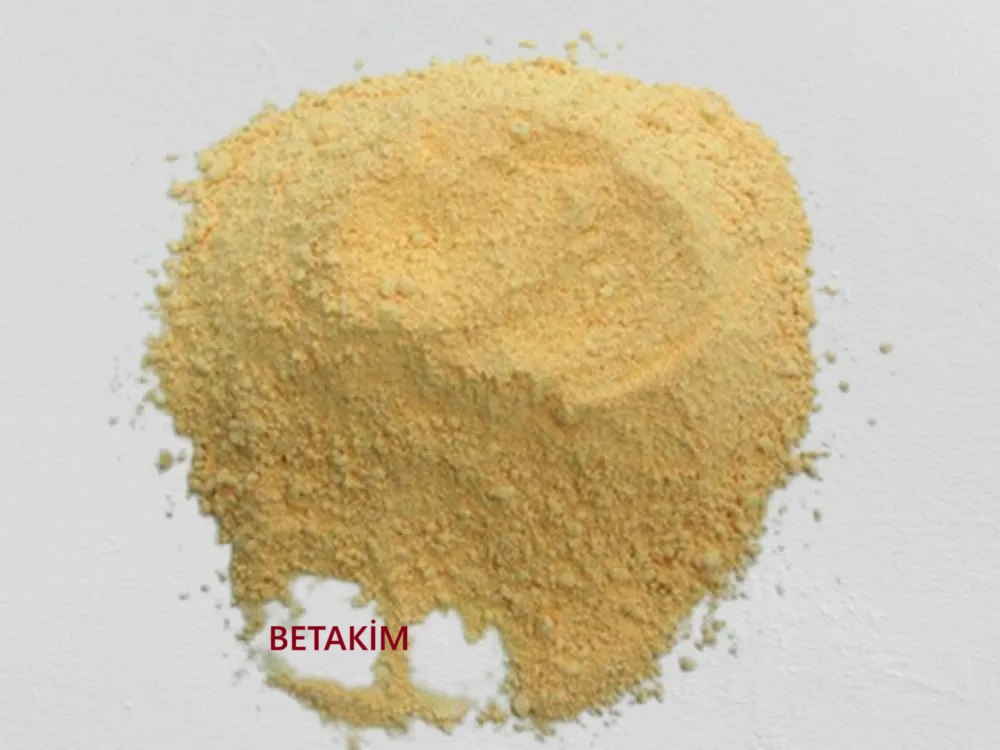
| Appearance | White to off-white, waxy solid, beads or fine powder |
| Odor | Slightly acidic, characteristic |
| Physical State (20°C) | Solid (waxy) |
| Raw Material Source | Vegetable or animal fatty acids (variable) |
2. PHYSICAL PROPERTIES
| Property | Value |
|---|---|
| Physical State (20°C) | Solid (waxy) |
| Appearance | White to off-white, waxy solid, beads or fine powder |
| Odor | Slightly acidic, characteristic |
| Melting Point | 45 – 60 °C |
| Density (60°C) | ~0.95 – 1.05 g/cm³ |
| Solubility in Cold Water | Dispersible (opaque emulsion) |
| Solubility in Hot Water (>50°C) | Partially soluble / dispersible |
| Solubility in Vegetable Oils | Soluble (hot) |
| Solubility in Ethanol (96%) | Soluble (hot, >40°C) |
| Solubility in Acetone | Soluble (hot) |
| Solubility in Chloroform | Soluble |
| HLB Value | ~8 – 12 |
| pH (1:10 dispersion) | 3.5 – 5.5 |
3. CHEMICAL PROPERTIES
| Property | Information |
|---|---|
| Chemical Class | Mono/diglyceride ester (non-ionic, amphiphilic) |
| Functional Groups | Ester (-COOR), hydroxyl (-OH), carboxyl (-COOH) |
| Chemical Structure | Glycerol + Fatty Acids + Tartaric Acid + Acetic Acid |
| Stability | Stable under normal storage conditions; protect from light and moisture |
| Hygroscopicity | High (moisture-absorbing) |
| Incompatible Materials | Strong oxidizing agents, strong acids, strong bases |
Chemical Structure (Schematic):
CH₂-O-CO-R (Fatty Acid)
CH-O-CO-R (Fatty Acid) or -OH
CH₂-O-CO-CHOH-CHOH-COOH (Tartaric Acid) and -O-CO-CH₃ (Acetic Acid)
4. TECHNOLOGICAL MECHANISM OF ACTION
4.1. Emulsion Stabilization Mechanism
| Parameter | Description |
|---|---|
| Interfacial Activity | Amphiphilic structure (hydrophobic fatty acid chains + hydrophilic tartaric/acetic acid groups) |
| Emulsion Type | Stabilizes oil-in-water (O/W) emulsions |
| HLB Value | ~8-12 (hydrophilic character dominant) |
| Mechanism | Adsorbs at oil-water interface, reduces interfacial tension; forms steric barrier preventing coalescence |
4.2. Gluten Interaction Mechanism
| Parameter | Description |
|---|---|
| Interaction Type | Hydrogen bonds, ionic interactions, hydrophobic interactions |
| Target Molecules | Gluten proteins (gliadin and glutenin) |
| Effect | Strengthens gluten network structure and elasticity |
| Result | Increased gas retention capacity; higher volume; finer and more uniform crumb structure |
4.3. Starch Retrogradation Retardation Mechanism
| Parameter | Description |
|---|---|
| Interaction Type | Adsorption on starch granule surface |
| Effect | Prevents recrystallization of amylose and amylopectin chains (retrogradation) |
| Result | Delayed staling; extended product shelf life |
4.4. Fat Crystallization Control Mechanism
| Parameter | Description |
|---|---|
| Interaction Type | Adsorption on triglyceride crystal growth surfaces |
| Effect | Promotes stabilization in β' form; prevents transition to undesirable β form |
| Result | Smooth texture, homogeneous crystallization, improved spreadability |
5. FOOD APPLICATIONS AND DOSAGE
| Application | Function | Recommended Dosage | Suitability |
|---|---|---|---|
| Bread (Toast, Sandwich) | Volume increase, gluten strengthening, softness | 0.2-0.5% of flour weight | High |
| Cakes and Sponges | Fine crumb, even rising, texture firmness | 0.3-0.8% of flour weight | High |
| Tortillas, Lavash, Yufka | Flexibility, tear resistance, foldability | 0.2-0.4% of flour weight | High |
| Margarine | Emulsion stabilization, smooth spreadability | 0.5-1.5% of total fat | High |
| Sauces (Mayonnaise, Ketchup) | Viscosity control, separation prevention | 0.1-0.3% of total product | High |
| Ice Cream | Ice crystal growth limitation, mouthfeel | 0.05-0.15% of mix | High |
| Chocolate Coatings | Fluidity, gloss improvement | 0.1-0.2% of total product | Medium |
| Confectionery | Crystallization control, texture improvement | 0.2-0.5% of total product | Medium |
6. NON-FOOD APPLICATIONS
| Application | Function | Suitability |
|---|---|---|
| Cosmetics | Co-emulsifier in O/W creams and lotions | Medium |
| Pharmaceuticals (Topical) | Viscosity enhancer in creams and ointments | Medium |
| Agricultural Chemicals | Co-emulsifier in emulsifiable concentrate (EC) formulations | Medium |
| Bioplastics | Internal lubricant in starch-based bioplastics | Low |
7. COMPARISON WITH OTHER EMULSIFIERS
| Property | E472f | E472e (DATEM) | E471 | E477 (PGME) |
|---|---|---|---|---|
| HLB Value | ~8-12 | ~8-12 | ~3-6 | ~2-4 |
| Emulsion Type | O/W | O/W | W/O | W/O |
| Gluten Interaction | Strong | Very Strong | Weak | None |
| Water Dispersibility | Dispersible | Dispersible | Non-dispersible | Non-dispersible |
| Acidic Medium Activity | High | Medium | Low | Low |
| Temperature Resistance | >180°C | >200°C | >200°C | >200°C |
| Foam Stabilization | Good | Good | Medium | Excellent |
| Staling Retardation | Good | Medium | Weak | Weak |
| Primary Use | Bread, tortilla, sauces | Industrial bread | Margarine, bread | Cakes, creams |
8. QUALITY SPECIFICATIONS (FOOD GRADE)
| Parameter | Specification (E472f) |
|---|---|
| Appearance | White to off-white, waxy solid, beads or powder |
| Identification (IR) | Positive (ester and acid peaks) |
| Acid Value (mg KOH/g) | ≤ 6.0 |
| Saponification Value (mg KOH/g) | 320 – 360 |
| Total Tartaric Acid (molar) | ≥ 15.0% |
| Total Acetic Acid (molar) | ≥ 10.0% |
| Iodine Value | Variable (depends on fatty acid source) |
| Hydroxyl Value | 20 – 80 mg KOH/g |
| Free Glycerol | ≤ 1.0% |
| Water Content | ≤ 2.0% |
| Ash Content | ≤ 0.5% |
| Melting Point | 45 – 60 °C |
| pH (1:10 dispersion) | 3.5 – 5.5 |
| Heavy Metals (as Pb) | ≤ 10 ppm |
| Residual Solvents | Meets ICH Q3C requirements |
9. MICROBIOLOGICAL SPECIFICATIONS
| Parameter | Specification |
|---|---|
| Total Aerobic Mesophilic Bacteria | ≤ 1,000 CFU/g |
| Yeast and Mold | ≤ 100 CFU/g |
| Salmonella spp. | Negative in 25g |
| Escherichia coli | Negative in 10g |
| Enterobacteriaceae | ≤ 10 CFU/g |
| Staphylococcus aureus | Negative in 1g |
| Bacillus cereus | ≤ 100 CFU/g |
| Coliform Bacteria | ≤ 10 CFU/g |
10. MANUFACTURING PROCESS
| Stage | Process | Conditions |
|---|---|---|
| 1 | Glycerol + Fatty Acids → Mono/Diglycerides (E471) | 200-250°C, inert atmosphere (N₂), alkaline catalyst |
| 2 | Mono/Diglycerides + Tartaric Acid + Acetic Anhydride → E472f | 100-150°C, vacuum, acid catalyst (p-TSA) |
| 3 | Neutralization | pH neutralization with alkaline solution |
| 4 | Washing | Washing with hot water (removal of excess acid and catalyst) |
| 5 | Drying | Vacuum drying (water content ≤ 2.0%) |
| 6 | Purification | Molecular distillation (to increase monoester ratio, optional) |
| 7 | Cooling and Forming | Cooling + Forming into beads/powder/flakes |
11. STORAGE AND SHELF LIFE
| Parameter | Information |
|---|---|
| Storage Conditions | Cool (15-25°C), dry, well-ventilated area |
| Container Requirements | Tightly closed, original packaging (hygroscopic) |
| Protect From | Moisture (hygroscopic), direct sunlight (UV degradation), strong oxidizing agents |
| Shelf Life | 24 months (unopened original packaging, recommended conditions) |
| Stability Note | Color change (yellowing) may occur; protect from light and moisture |
12. PACKAGING OPTIONS
| Packaging Type | Quantity |
|---|---|
| Kraft paper bag with PE inner liner | 25 kg |
| Plastic pail (powder/beads) | 20 kg |
| Big-Bag (bulk bag) | 500 – 1,000 kg |
| IBC Tank (molten, hot-fill) | 1,000 kg |
| Isotank (molten, hot-fill) | 20 – 25 tons |
13. SAFETY AND HEALTH INFORMATION
GHS Classification (Bulk Powder)
| Hazard Class | Category |
|---|---|
| Acute Toxicity (Oral) | Category 4 (H302) |
| Skin Irritation | Category 2 (H315) |
| Eye Irritation | Category 2A (H319) |
Hazard Statements (H-Codes)
| Code | Statement |
|---|---|
| H302 | Harmful if swallowed |
| H315 | Causes skin irritation |
| H319 | Causes serious eye irritation |
Precautionary Statements (P-Codes)
| Code | Statement |
|---|---|
| P261 | Avoid breathing dust |
| P280 | Wear protective gloves/eye protection |
| P301+P312 | IF SWALLOWED: Call a POISON CENTER/doctor if you feel unwell |
| P302+P352 | IF ON SKIN: Wash with plenty of soap and water |
| P305+P351+P338 | IF IN EYES: Rinse cautiously with water for several minutes; remove contact lenses if present and easy to do; continue rinsing |
Adverse Effects (Industrial Exposure)
| Type | Effects |
|---|---|
| Inhalation | Respiratory tract irritation from dust |
| Skin Contact | Mild irritation (dermatitis with repeated exposure) |
| Eye Contact | Mechanical irritation, redness |
| Ingestion | Low toxicity; large amounts may cause gastrointestinal discomfort |
First Aid Measures
| Exposure Route | Action |
|---|---|
| Inhalation | Move to fresh air. If respiratory irritation persists, seek medical attention. |
| Skin Contact | Wash with plenty of soap and water. Remove contaminated clothing. |
| Eye Contact | Rinse immediately with plenty of water for at least 15 minutes. Seek medical attention. |
| Ingestion | Rinse mouth. Do not induce vomiting. Seek medical attention. |
14. CRITICAL COMPLIANCE DECLARATIONS
| Criterion | Description |
|---|---|
| Halal/Kosher Suitability | Depends on raw material source (vegetable/animal). Certification must be requested from supplier. |
| GMO Status | GMO-Free certification possible (depends on raw material source). |
| Nanoparticle Content | Does not contain (compliant with EU 1169/2011). |
| Allergen Warning | Does not contain gluten. However, if used in wheat-based products, must be labeled accordingly. |
| Vegan/Vegetarian | Depends on raw material source (suitable if vegetable-based). |
| Acetic Acid Source | May be synthetic or fermentation-derived (natural). |
15. REGULATORY STATUS
| Region / Authority | Status |
|---|---|
| European Union | Approved as food additive E472f (Regulation (EC) No 1333/2008) |
| USA (FDA) | GRAS (21 CFR 184.1101) |
| JECFA (FAO/WHO) | Approved; ADI: 0-25 mg/kg body weight |
| Türkiye (Ministry of Agriculture) | Approved in Turkish Food Codex Food Additives Regulation |
| EU REACH | Generally exempt or limited registration obligation (food additive) |
| Türkiye KKDİK | Registration requirement must be evaluated; compliance declaration must be requested from supplier |
| WGK (Germany) | 1 (slight hazard to water) |
16. TRANSPORT INFORMATION
| Parameter | Information |
|---|---|
| UN Number | Not regulated (not dangerous goods) |
| Hazard Class | Not applicable |
| Packing Group | Not applicable |
| ADR/RID | Not regulated |
| IMDG Code | Not regulated |
| IATA (Air) | Not regulated |
| Marine Pollutant | No |
| Transport Temperature (Solid) | Ambient temperature |
| Transport Temperature (Molten) | 60-70°C (hot-fill) |
17. FIRE-FIGHTING MEASURES
| Parameter | Information |
|---|---|
| Fire Hazard | Combustible solid (waxy nature) |
| Suitable Extinguishing Media | Water spray (mist), CO₂, dry chemical powder, alcohol-resistant foam |
| Specific Hazards | When heated, emits acetic acid vapors, CO, CO₂ |
| Decomposition Products | CO, CO₂, acetic acid vapors, tartaric acid derivatives |
| Protective Equipment | Self-contained breathing apparatus (SCBA), full protective clothing |
| Explosion Risk | Low dust explosion risk; avoid dust accumulation in air |
18. ACCIDENTAL SPILLAGE AND CLEANUP
| Parameter | Information |
|---|---|
| Personal Protection | Nitrile gloves, protective goggles, dust mask (N95) |
| Cleaning Methods | Collect mechanically (sweep or spatula) |
| Important Warning | DO NOT WASH WITH WATER (may enter drainage, creates wastewater load) |
| Environmental Precautions | Prevent entry into drains, soil, and surface waters |
| Waste Disposal | According to local regulations; incineration or landfilling at licensed facilities |
19. ENVIRONMENTAL INFORMATION
| Parameter | Information |
|---|---|
| Biodegradability | Readily biodegradable (ester bonds hydrolyze) |
| Aquatic Toxicity | Low to moderate toxicity |
| Bioaccumulation | Not expected (low log P) |
| Waste Disposal | Dispose according to local regulations (food additive waste) |
20. OTHER NAMES AND SYNONYMS
| Type | Name |
|---|---|
| English Names | Mixed Tartaric and Acetic Acid Esters, Mono- and Diglyceride Mixed Tartrate and Acetate Esters, Mixed Acid Esters of Mono- and Diglycerides |
| E Number | E472f |
| CAS Number | 68002-18-6 |
| EC Number (EINECS) | Not registered |
| HLB Value | ~8-12 |
Trade Names (Partial List):
-
Grindsted® DATEM (similar products, different acid profile)
-
Palsgaard® 3000 series (E472f containing products)
-
ADM® E472f (generic)
-
Various generic suppliers
21. E472F VS E477 – SELECTION GUIDE
| Criterion | Prefer E472f | Prefer E477 (PGME) |
|---|---|---|
| Product Type | Bread, toast, tortilla, lavash, yeast-leavened doughs | Cakes, sponges, whipped cream, pastry shortenings |
| Primary Issue | Low volume, weak gluten, staling | Collapsed cake, unstable cream, insufficient foam |
| Emulsion Need | O/W (oil-in-water) | W/O (water-in-oil) |
| HLB Value | ~8-12 | ~2-4 |
| pH Sensitivity | Suitable for acidic products (sauces, ketchup) | Suitable for neutral products |
| Temperature Resistance | Medium (>180°C) | High (>200°C) |
| Water Dispersibility | Dispersible | Non-dispersible |
| Gluten Interaction | Strong | None |
22. SUMMARY AND CRITICAL WARNINGS
Product Summary
| Parameter | Value |
|---|---|
| Product | Mixed Tartaric and Acetic Acid Esters of Mono- and Diglycerides (E472f) |
| CAS | 68002-18-6 |
| Appearance | White to off-white, waxy solid, beads or powder |
| Melting Point | 45-60 °C |
| HLB Value | ~8-12 |
| Primary Sector | Food (bakery, dairy, sauces) |
Key Properties
| Property | Description |
|---|---|
| Emulsifier Type | Non-ionic, amphiphilic (O/W) |
| HLB Value | ~8-12 (hydrophilic) |
| Primary Effect | Gluten strengthening, volume increase, staling retardation |
| Secondary Effect | Emulsion stabilization, fat crystallization control |
| Acidic Character | pH 3.5-5.5 (due to tartaric acid content) |
Critical Warnings
| No | Warning |
|---|---|
| 1 | HLB ~8-12, ideal for O/W emulsions and gluten strengthening. Works via different mechanism than E477. |
| 2 | Do not confuse with E477 (PGME): E472f is for bread, tortilla, and yeast-leavened doughs; E477 is for cakes, creams, and pastry shortenings. |
| 3 | Dosage exceeding (>1.0%) weakens dough and makes it sticky. Strictly adhere to recommended dosages (Section 5). |
| 4 | Due to tartaric acid content, provides synergy in acidic products (sauces, ketchup) and exhibits antimicrobial side effects. |
| 5 | For Halal/Kosher certification, request raw material source (vegetable/animal) and certificate from supplier. |
| 6 | Hygroscopic (moisture-absorbing). After opening, store in airtight containers in dry environments. |
| 7 | Thermal degradation begins above 180°C; acetic acid may volatilize. For high-temperature processes (>200°C), consider DATEM (E472e) or PGME (E477) alternatives. |
| 8 | Protect from direct sunlight to prevent color change (yellowing). |
| 9 | Approved in EU (E472f), USA (GRAS), JECFA (ADI: 0-25 mg/kg). Approved in Turkish Food Codex. |
| 10 | GMO-Free certification possible. Does not contain gluten; however, must be labeled if used in wheat-based products. |
IMPORTANT DECLARATION: This Technical Data Sheet (TDS) is for informational purposes only and has been prepared based on available technical data. The user is responsible for determining the product's suitability for their specific application and for complying with all local, national, and international regulations. The source of fatty acids (vegetable or animal) affects Halal and Kosher certification! For complete safety, storage, use, transport, waste, and regulatory compliance information, refer to the official Safety Data Sheet (SDS/MSDS) provided by the manufacturer/supplier. The user is responsible for testing the product in their own processes and applications.