We unleash your business potential by maximize the business innovation.
Send EmailSilver Nitrate, Silver Mono Nitrate, Lunar Caustic, Argentum Nitrate, 7761-88-8
SILVER NITRATE (AgNO₃)
Silver Mono Nitrate / Lunar Caustic / Argentum Nitrate
CAS Number: 7761-88-8
EC Number: 231-853-9
1. IDENTIFICATION
| Property | Information |
|---|---|
| Chemical Name | Silver Nitrate |
| Synonyms | Silver(I) nitrate, Nitric acid silver(I) salt, Lunar caustic, Argentum nitrate, Silver mono nitrate |
| Chemical Formula | AgNO₃ |
| Molecular Weight | 169.87 g/mol |
| CAS Number | 7761-88-8 |
| EC Number (EINECS) | 231-853-9 |
| HS Code | 2843.29 |
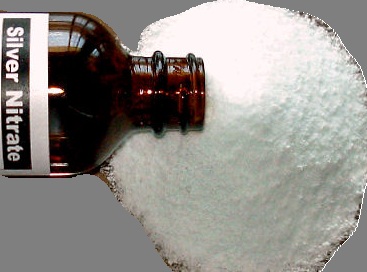
| Appearance | Colorless, transparent crystalline solid |
| Odor | Odorless |
2. PHYSICAL PROPERTIES
| Property | Value |
|---|---|
| Physical State (20°C) | Solid (crystalline) |
| Appearance | Colorless to white, transparent crystals |
| Crystal Form | Rhombohedral or orthorhombic |
| Density (20°C) | 4.35 g/cm³ |
| Melting Point | 212 °C (decomposes in light) |
| Boiling Point | 444 °C (decomposes) |
| Solubility in Water (25°C) | Very high – 122 g/100 mL |
| Solubility in Other Solvents | Soluble in ethanol (slightly), acetone (sparingly) |
| Hygroscopicity | Slightly hygroscopic |
| Vapor Pressure | Negligible |
| Refractive Index | 1.744 |
3. CHEMICAL PROPERTIES
| Property | Value |
|---|---|
| Molecular Formula | AgNO₃ |
| Molecular Weight | 169.87 g/mol |
| Silver (Ag) Content | 63.5% (by weight) |
| Oxidizing Properties | Strong oxidizer |
| Light Sensitivity | Photosensitive – decomposes in light, turning dark gray/black |
| Stability | Stable under proper storage (cool, dark, dry conditions) |
| Incompatible Materials | Organic materials, reducing agents, alkalis, chlorides, phosphates, sulfides, acetylene, ammonia |
Decomposition Reaction (Light/Heat):
text
2 AgNO₃ + Light/Heat → 2 Ag↓ + 2 NO₂↑ + O₂↑
(Silver metal deposits; darkens the material)
4. REACTIVITY & STABILITY
| Parameter | Information |
|---|---|
| Oxidizer Class | Strong oxidizer (UN 1493, Class 5.1) |
| Light Sensitivity | Photosensitive – decomposes to metallic silver (darkening) |
| Heat Stability | Decomposes above 212°C, releasing toxic nitrogen oxides |
| Incompatible Materials | Organic compounds (cellulose, paper, wood) – can cause fire; Reducing agents (hydrazine, hydroxylamine) – violent reaction; Alkalis – forms silver oxide; Chlorides, bromides, iodides – forms insoluble silver halides; Ammonia – forms explosive silver nitride (Ag₃N) |
| Hazardous Decomposition Products | Nitrogen oxides (NO, NO₂), oxygen, silver metal |
5. APPLICATIONS
5.1. Analytical Chemistry (Primary Use)
| Application | Function |
|---|---|
| Halide Determination (Mohr Method) | Precipitation of silver halides (AgCl, AgBr, AgI) for quantitative analysis of chlorides, bromides, iodides |
| Titration Standard | Primary standard for argentometric titrations |
| Laboratory Reagent | General analytical reagent |
5.2. Electronics & Conductive Materials
| Application | Function |
|---|---|
| Conductive Inks & Pastes | Used in printed electronics, membrane switches, RFID antennas |
| Silver Plating | Electrolytic silver deposition on metals |
| Photovoltaic Cells | Silver paste for solar cell contacts |
| Electrical Contacts | Silver coating for improved conductivity |
5.3. Metal Surface Treatment
| Application | Function |
|---|---|
| Silver Plating | Electroplating bath component |
| Mirror Production | Silvering process for mirrors (historical) |
| Metal Etching | Etchant for certain metals |
5.4. Photography (Historical – Declining)
| Application | Function |
|---|---|
| Photographic Film | Component in light-sensitive emulsions (now largely replaced by digital) |
| Printing Papers | Silver halide-based photographic paper |
5.5. Medical Applications (Limited – Declining)
| Application | Function | Current Status |
|---|---|---|
| Antiseptic | Topical antimicrobial (Silver nitrate sticks – "lunar caustic") | Limited use; largely replaced by silver sulfadiazine, antibiotics |
| Cauterization | Removal of warts, granulation tissue, minor bleeding | Still used in some clinical settings |
| Newborn Eye Prophylaxis (Crede's method) | Prevention of ophthalmia neonatorum (gonococcal eye infection) | Largely replaced by antibiotics; still used in some countries |
5.6. Ceramics & Glass
| Application | Function |
|---|---|
| Specialty Glass Production | Component for yellow stain (stain glass) |
| Ceramic Pigments | Produces yellow to orange colors in glazes |
| Porcelain Stains | Decorative element in high-end ceramics |
5.7. Catalysis & Synthesis
| Application | Function |
|---|---|
| Catalyst Preparation | Precursor for silver-based catalysts |
| Organic Synthesis | Reagent for various reactions |
| Research | Material science, nanoparticle synthesis |
6. SECTORAL COMPATIBILITY
| Sector / Application | Compatibility | Explanation |
|---|---|---|
| Textile | Limited | Special printing/dyeing applications; restricted due to toxicity |
| Food | Not suitable | Banned as food additive or contact material |
| Cosmetics | Not suitable | Restricted under CLP/REACH; banned in cosmetic formulations |
| Metal / Surface Treatment | Suitable | Silver plating, metallization processes |
| Ceramics / Glass | Suitable | Specialty pigments, glass production |
| Laboratory / Research | Suitable | Common reagent for halide determination, synthesis |
| Electronics | Suitable | Conductive inks, pastes, coatings |
| Medical | Limited | Antiseptic/cauterization – limited use; largely replaced |
| Construction Chemicals | Not suitable | No applications |
| Pharmaceutical (excipient) | Very limited | Not a standard excipient; only specific topical applications |
7. QUALITY SPECIFICATIONS (Analytical Grade – Typical)
| Parameter | Specification |
|---|---|
| Purity (AgNO₃) | ≥ 99.0% (analytical grade) |
| Silver Content | 63.5% ± 0.3% |
| Insoluble Matter | ≤ 0.005% |
| Chloride (Cl) | ≤ 0.0005% |
| Sulfate (SO₄) | ≤ 0.002% |
| Iron (Fe) | ≤ 0.0002% |
| Copper (Cu) | ≤ 0.0005% |
| Lead (Pb) | ≤ 0.0002% |
| Nitrate (as HNO₃) | ≤ 0.001% |
| pH (5% solution) | 5.0 – 7.0 |
8. STORAGE & HANDLING
| Parameter | Information |
|---|---|
| Storage Conditions | Cool, dark, dry, well-ventilated area |
| Container Requirements | Amber glass or opaque containers (light-protected) with airtight seals; use HDPE or PP for larger quantities |
| Protect From | Light (UV), heat, organic materials, reducing agents, moisture |
| Shelf Life | 24-36 months (when stored properly in original, unopened amber glass containers) |
| Incompatible Materials | Organic compounds, reducing agents, alkalis, halides, acetylene, ammonia |
| Packaging Options | 25 g, 100 g, 500 g, 1 kg, 5 kg (amber glass bottles); 25 kg drums (with liner) |
Storage Note: Even minimal light exposure over time will cause darkening due to silver metal formation. This does not necessarily indicate complete degradation but may reduce purity.
9. SAFETY & HEALTH INFORMATION
GHS Classification (CLP)
| Hazard Class | Category |
|---|---|
| Oxidizing Solids | Category 2 (H272) |
| Acute Toxicity (Oral) | Category 4 (H302) |
| Skin Corrosion/Irritation | Category 1 (H314) |
| Serious Eye Damage | Category 1 (H318) |
| Acute Aquatic Toxicity | Category 1 (H400) |
| Chronic Aquatic Toxicity | Category 1 (H410) |
Hazard Statements (H-Codes)
| Code | Statement |
|---|---|
| H272 | May intensify fire; oxidizer |
| H302 | Harmful if swallowed |
| H314 | Causes severe skin burns and eye damage |
| H318 | Causes serious eye damage |
| H400 | Very toxic to aquatic life |
| H410 | Very toxic to aquatic life with long-lasting effects |
Precautionary Statements (P-Codes)
| Code | Statement |
|---|---|
| P210 | Keep away from heat, hot surfaces, sparks, open flames |
| P220 | Keep away from combustible materials |
| P260 | Do not breathe dust |
| P280 | Wear protective gloves, protective clothing, eye protection, face protection |
| P301+P330+P331 | IF SWALLOWED: Rinse mouth. Do NOT induce vomiting. |
| P302+P352 | IF ON SKIN: Wash with plenty of water |
| P305+P351+P338 | IF IN EYES: Rinse cautiously with water for several minutes |
| P501 | Dispose of contents/container in accordance with local regulations |
Toxicological Information
| Parameter | Value |
|---|---|
| Oral LD50 (rat) | 1,173 mg/kg (estimated) |
| Dermal LD50 (rabbit) | > 2,000 mg/kg |
| Inhalation LC50 (rat) | Not applicable (solid) |
| Skin Irritation | Corrosive – causes severe burns |
| Eye Irritation | Causes serious damage |
| Chronic Effects | Argyria (blue-gray skin discoloration) from chronic exposure |
NFPA 704
| Health (Blue) | Fire (Red) | Reactivity (Yellow) | Special (White) |
|---|---|---|---|
| 3 | 0 | 1 | OX (Oxidizer) |
Personal Protective Equipment (PPE)
| Equipment | Recommendation |
|---|---|
| Respiratory Protection | Dust mask (N95 or higher) when handling powder |
| Hand Protection | Chemical-resistant gloves (nitrile, neoprene, latex) |
| Eye Protection | Chemical safety goggles + face shield |
| Body Protection | Lab coat, chemical-resistant apron |
First Aid Measures
| Exposure Route | Action |
|---|---|
| Inhalation | Remove to fresh air. Seek medical attention if respiratory irritation occurs. |
| Skin Contact | Rinse with plenty of water for at least 15 minutes. Remove contaminated clothing. Seek medical attention. |
| Eye Contact | Rinse immediately with plenty of water for at least 15 minutes. Seek immediate medical attention. |
| Ingestion | Do NOT induce vomiting. Rinse mouth. Drink milk or water. Seek immediate medical attention. |
10. ENVIRONMENTAL INFORMATION
| Parameter | Information |
|---|---|
| Aquatic Toxicity | Very toxic to aquatic organisms (fish, algae, invertebrates) |
| Persistence | Silver ions persist in the environment |
| Bioaccumulation | May bioaccumulate in aquatic organisms |
| Ecotoxicological Effects | Toxic to algae, crustaceans, fish at low ppm levels |
| Waste Disposal | Dispose as hazardous waste according to local regulations. Silver can be recovered from waste solutions. |
11. TRANSPORT INFORMATION
| Parameter | Information |
|---|---|
| UN Number | 1493 |
| Hazard Class | 5.1 (Oxidizing substance) |
| Packing Group | II |
| Proper Shipping Name | SILVER NITRATE |
| ADR/RID Class | 5.1 (Code O2) |
| IMDG Class | 5.1 |
| IATA (Air) Class | 5.1 |
| Marine Pollutant | Yes |
| EMS (Emergency Schedule) | F-A, S-Q |
12. REGULATORY INFORMATION
| Region | Status |
|---|---|
| EU | REACH registered; listed on Annex XVII (restrictions apply) |
| Turkey (KKDIK) | Mandatory compliance; requires registration |
| USA (TSCA) | Listed |
| Canada (DSL) | Listed |
| Australia (AICS) | Listed |
| Japan (ENCS) | Listed |
| Korea (KECL) | Listed |
| Cosmetics Regulation (EC 1223/2009) | Restricted – not permitted in cosmetic products |
| Food Regulations | Not permitted as food additive |
13. SYNONYMS & OTHER NAMES
| Name | Description |
|---|---|
| Silver Nitrate | Standard name |
| Silver(I) nitrate | Systematic name |
| Lunar caustic | Historical name (from Latin "luna" – moon; refers to silver) |
| Argentum nitrate | Latin/chemical name |
| Nitric acid silver(I) salt | Systematic salt name |
| Silver mono nitrate | Minor synonym |
| AgNO₃ | Chemical formula |
Database Identifiers:
-
CAS: 7761-88-8
-
EC: 231-853-9
-
MDL: MFCD00003414
-
RTECS: VW4725000
-
PubChem CID: 24454
-
ChemSpider: 22878
-
UNII: 95IT3W8JZE
14. HANDLING HAZARD SUMMARY
| Hazard | Description |
|---|---|
| Stains Skin & Clothing | Silver nitrate causes dark brown/black stains on skin (reduced to metallic silver). Stains are permanent on skin (wear off as skin sheds). |
| Corrosive | Causes severe burns to skin and eyes |
| Oxidizer | Can cause or intensify fire; keep away from combustibles |
| Light Sensitivity | Decomposes in light – store in amber glass |
| Toxic to Aquatic Life | Very toxic with long-lasting effects |
| Explosive Compounds | Do not mix with ammonia – forms explosive silver nitride (Ag₃N) |
15. SUMMARY
Silver Nitrate (AgNO₃, CAS 7761-88-8) is a colorless, transparent crystalline solid with strong oxidizing properties. It is photosensitive (darkens in light), highly soluble in water, and corrosive to skin and eyes.
Key Features:
| Feature | Description |
|---|---|
| Appearance | Colorless/white transparent crystals |
| Density | 4.35 g/cm³ |
| Melting Point | 212 °C (decomposes) |
| Water Solubility | Very high (122 g/100 mL at 25°C) |
| Silver Content | 63.5% by weight |
| Oxidizing Class | UN 1493, Class 5.1, PG II |
Main Application Areas:
| Sector | Applications |
|---|---|
| Analytical Chemistry | Halide determination (Chloride, Bromide, Iodide), titration standard |
| Electronics | Conductive inks, pastes, silver plating |
| Metal Surface Treatment | Electroplating, mirror production |
| Ceramics & Glass | Specialty pigments, yellow stain |
| Medical | Antiseptic, cauterization (limited use) |
| Research | Catalyst precursor, nanoparticle synthesis |
Key Safety Points:
-
CORROSIVE – Causes severe skin/eye burns
-
OXIDIZER – Keep away from combustible materials
-
LIGHT SENSITIVE – Store in amber/opaque containers
-
TOXIC TO AQUATIC LIFE – Do not release to environment
-
STAINING – Leaves dark stains on skin and clothing
16. IMPORTANT NOTES
-
Light Sensitivity: Silver nitrate decomposes upon exposure to light, turning dark gray/black due to metallic silver formation. Always store in amber glass or completely opaque containers.
-
Staining: Contact with skin causes dark brown/black stains that are not immediately removable. These stains are not harmful but are cosmetic; they fade as the skin naturally sheds.
-
Oxidizer Properties: Silver nitrate is a strong oxidizer. It can cause or intensify fire. Store away from organic materials (paper, wood, cloth, oils) and reducing agents.
-
Explosive Hazard with Ammonia: Never mix silver nitrate with ammonia – forms explosive silver nitride (Ag₃N), which is shock-sensitive and highly dangerous.
-
Toxicity: Silver nitrate is harmful if swallowed and causes severe burns. Chronic exposure can lead to argyria (permanent blue-gray skin discoloration).
-
Environmental Hazard: Silver ions are very toxic to aquatic life. Silver waste solutions should be treated for silver recovery rather than disposed of directly. Many jurisdictions require silver recovery from photographic and plating waste.
-
Regulatory Status: Silver nitrate is NOT permitted in food, cosmetics, or food contact materials. Its use in medical applications is increasingly restricted.
-
Halide Determination: In analytical chemistry, silver nitrate remains the gold standard for quantitative determination of chlorides, bromides, and iodides via precipitation titration (Mohr method, Volhard method, Fajans method).
-
Silver Recovery: Due to silver's value and environmental toxicity, spent silver nitrate solutions should be processed for silver recovery via electrolysis or chemical precipitation.
-
MSDS Required: A Material Safety Data Sheet (SDS) must be provided with all shipments and be available in the workplace.
Important Disclaimer: This Technical Data Sheet (TDS) is for informational purposes only. For complete safety, handling, storage, and regulatory compliance information, always refer to the official Safety Data Sheet (SDS) provided by the manufacturer/supplier.