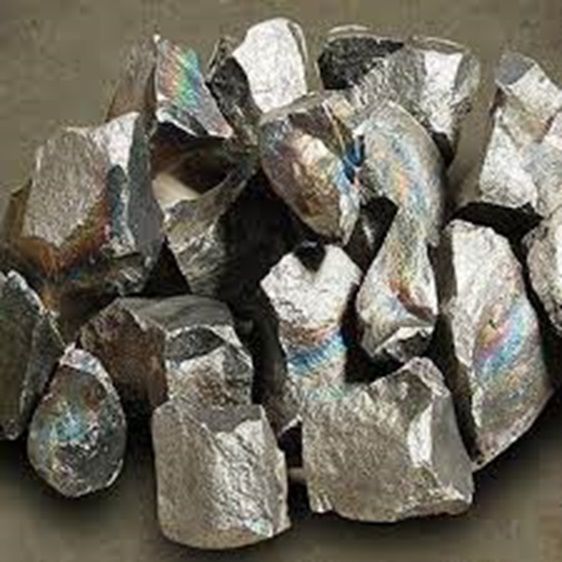
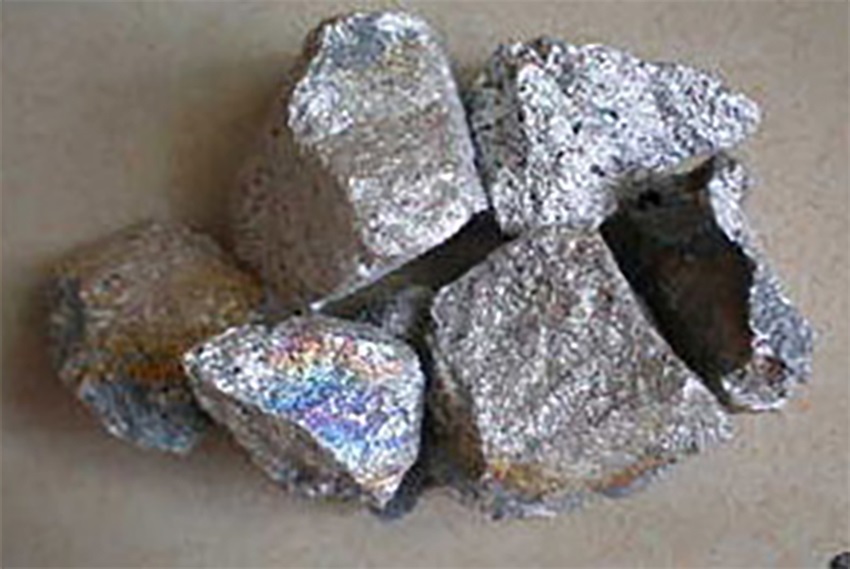
Ferro Molybdenum, Iron Molybdenum Alloy, Molybdenum-Iron Composite, Ferro-Moly, Molten Steel Booster, 12382-30-8
FERRO MOLYBDENUM – FERRO MOLYBDENUM
1. CHEMICAL IDENTITY AND DEFINITION
| Parameter |
Information |
| Chemical Name |
Ferro Molybdenum |
| Other Names |
Iron Molybdenum Alloy, Ferro-Moly, Ferro-Moli, Molybdenum-Iron Composite, FeMo, Molten Steel Booster |
| Alloy Type |
Iron-molybdenum alloy |
| Chemical Symbol |
FeMo |
| CAS Number |
12382-30-8 |
| Appearance |
Gray metallic solid (lumps / powder) |
| Odor |
Odorless |
| Physical State (20°C) |
Solid (lumps, granules, or powder) |
| Alloy Class |
Ferroalloy |
2. WHAT IS FERRO MOLYBDENUM?
Ferro Molybdenum (FeMo) is an alloy composed of molybdenum and iron, typically containing 60-75% molybdenum. It is used primarily as a molybdenum source in the production of steel and other alloys. Ferro molybdenum is added to molten steel during steelmaking to enhance its mechanical properties, including hardness, strength, corrosion resistance, and heat resistance.
3. CHEMICAL COMPOSITION
| Element |
Symbol |
Percentage (%) |
CAS Number |
| Molybdenum |
Mo |
60 – 75 |
7439-98-7 |
| Iron |
Fe |
Balance (~25-40%) |
7439-89-6 |
| Silicon |
Si |
≤ 1.5 |
7440-21-3 |
| Carbon |
C |
≤ 0.10 |
7440-44-0 |
| Sulfur |
S |
≤ 0.05 |
7704-34-9 |
| Phosphorus |
P |
≤ 0.05 |
7723-14-0 |
| Copper |
Cu |
≤ 0.50 |
7440-50-8 |
| Tin |
Sn |
≤ 0.10 |
7440-31-5 |
| Antimony |
Sb |
≤ 0.05 |
7440-36-0 |
4. PHYSICAL PROPERTIES
| Property |
Value |
| Appearance |
Gray metallic solid |
| Density |
~9.0 g/cm³ |
| Melting Point Range |
1,800 – 1,900 °C |
| Bulk Density (Lumps) |
~6.5 – 7.0 g/cm³ |
| Bulk Density (Powder) |
~4.5 – 5.5 g/cm³ |
| Hardness |
High (improves steel hardness) |
| Color |
Dark gray to silver-gray |
| Magnetic Properties |
Slightly magnetic |
| Thermal Conductivity |
~30 W/m·K |
5. CHEMICAL PROPERTIES
| Property |
Information |
| Chemical Composition |
FeMo (Molybdenum + Iron) |
| CAS Number |
12382-30-8 |
| Molybdenum Content |
60 – 75% |
| Iron Content |
25 – 40% |
| Impurities |
Si, C, S, P, Cu, Sn, Sb |
| Oxidation Resistance |
Good (forms protective oxide layer) |
| Corrosion Resistance |
Excellent (improves steel corrosion resistance) |
| Reactivity |
Low; stable under normal conditions |
6. STANDARD GRADES (ASTM/EN)
| Grade |
Mo (%) |
Si (%) |
C (%) |
S (%) |
P (%) |
Application |
| FeMo70 |
65-75 |
≤1.5 |
≤0.10 |
≤0.05 |
≤0.05 |
High-quality steels |
| FeMo65 |
60-70 |
≤1.5 |
≤0.10 |
≤0.05 |
≤0.05 |
Standard quality |
| FeMo60 |
55-65 |
≤1.5 |
≤0.10 |
≤0.05 |
≤0.05 |
General use |
7. PRODUCTION PROCESS
| Step |
Description |
| 1. Mining |
Molybdenum ore extraction (molybdenite - MoS₂) |
| 2. Roasting |
MoS₂ + O₂ → MoO₃ + SO₂ (calcination) |
| 3. Reduction |
MoO₃ + Fe → FeMo (aluminothermic or silicon reduction) |
| 4. Refining |
Purification to remove impurities |
| 5. Crushing |
Crushing to appropriate lump/powder size |
| 6. Sieving |
Size classification |
| 7. Packaging |
Packing in steel drums or big bags |
8. APPLICATIONS
8.1. Stainless Steel Production
| Application |
Description |
| Stainless Steel |
Increases hardness and corrosion resistance |
| Austenitic Stainless |
316/316L grades (Mo enhances pitting resistance) |
| Duplex Stainless |
Improves strength and corrosion resistance |
| Ferritic Stainless |
Enhances high-temperature oxidation resistance |
| Superalloys |
High-performance stainless alloys |
8.2. Alloy Steels
| Application |
Description |
| High-Strength Low-Alloy (HSLA) Steel |
Enhanced mechanical properties |
| Tool Steels |
Improved hardness and wear resistance |
| Heat-Resistant Steels |
Excellent performance at elevated temperatures |
| Quenched and Tempered Steels |
Increased hardenability |
| Construction Steels |
Higher strength and durability |
| Pressure Vessel Steels |
Improved creep resistance |
8.3. Chemical Industry
| Application |
Description |
| Catalyst Production |
Hydrodesulfurization (HDS) catalysts |
| Hydroprocessing Catalysts |
Refinery applications |
| Chemical Reactors |
Corrosion-resistant equipment |
| Piping Systems |
High-temperature and corrosive environments |
8.4. Aerospace and Defense
| Application |
Description |
| Aircraft Components |
High-temperature engine parts |
| Turbine Blades |
Heat-resistant superalloys |
| Military Equipment |
Armor plate and structural components |
| Missile Components |
High-strength and heat-resistant materials |
| Rocket Engine Parts |
Extreme temperature applications |
8.5. Energy and Electrical
| Application |
Description |
| Power Generation |
Boiler tubes and turbine components |
| Oil and Gas |
Downhole equipment and drilling tools |
| Electrical Contacts |
High-temperature electrical components |
| Nuclear Industry |
Reactor structural materials |
| Renewable Energy |
Wind turbine components |
8.6. Other Applications
| Application |
Description |
| Automotive |
Engine components and exhaust systems |
| Construction |
Reinforcing bars and structural steel |
| Shipbuilding |
Marine-grade steels |
| Mining Equipment |
Wear-resistant components |
| Welding Consumables |
Welding rod and wire production |
9. ADVANTAGES OF FERRO MOLYBDENUM
| Advantage |
Description |
| High Hardness |
Significantly improves mechanical properties of steel |
| Corrosion Resistance |
Excellent protection against corrosive environments |
| Heat Resistance |
Maintains strength at elevated temperatures |
| Increased Hardenability |
Enables deeper hardening during heat treatment |
| Pitting Resistance |
Enhances resistance to pitting in chloride environments |
| Creep Resistance |
Improves high-temperature creep resistance |
| Weldability |
Compatible with standard welding processes |
| Cost-Effective |
Economical method of adding molybdenum to steel |
| Recyclable |
100% recyclable with high scrap value |
| Versatility |
Wide range of steel and alloy applications |
10. TYPICAL PHYSICAL FORMS
| Form |
Description |
Typical Size |
| Lumps |
Irregular chunks |
10 – 100 mm |
| Granules |
Small particles |
1 – 10 mm |
| Powder |
Fine powder |
< 1 mm |
| Briquettes |
Compressed form |
Various |
| Custom Sizes |
Customer specification |
Various |
11. ADDITION EFFECTS IN STEEL
| Property |
Effect of Molybdenum |
| Tensile Strength |
Increases significantly |
| Yield Strength |
Increases significantly |
| Hardness |
Increases |
| Ductility |
Slight decrease |
| Toughness |
Improves |
| Corrosion Resistance |
Greatly improves |
| Pitting Resistance |
Excellent improvement |
| Heat Resistance |
Improves significantly |
| Creep Resistance |
Improves at high temperatures |
| Weldability |
Generally favorable |
| Hardenability |
Significantly improves |
12. RECOMMENDED ADDITION RATES
| Steel Type |
Mo Addition (%) |
FeMo Required (kg/ton) |
| Stainless Steel 316 |
2.0 – 3.0 |
30 – 45 |
| HSLA Steel |
0.15 – 0.30 |
2 – 5 |
| Tool Steel |
4.0 – 8.0 |
60 – 120 |
| Heat-Resistant Steel |
0.50 – 2.0 |
8 – 30 |
| Construction Steel |
0.10 – 0.20 |
1.5 – 3 |
13. SAFETY AND HEALTH INFORMATION
| Parameter |
Information |
| Hazard |
Not hazardous in solid form |
| Dust |
Inhalation of dust may cause respiratory irritation |
| Fumes |
Welding or melting fumes may contain toxic molybdenum compounds |
| Skin Contact |
May cause mechanical irritation |
| Eye Contact |
May cause mechanical irritation |
| Carcinogenicity |
Not classified as carcinogenic |
| Mutagenicity |
Not classified as mutagenic |
| Reproductive Toxicity |
No evidence of adverse effects |
13.1. FIRST AID MEASURES
| Route of Exposure |
Action |
| Inhalation |
Remove to fresh air. If respiratory irritation, seek medical attention. |
| Skin Contact |
Wash with soap and water. Remove contaminated clothing. |
| Eye Contact |
Rinse thoroughly with water for 15 minutes. Seek medical attention. |
| Ingestion |
Rinse mouth. Seek medical attention if necessary. |
14. STORAGE AND HANDLING
| Parameter |
Information |
| Storage Conditions |
Cool, dry, well-ventilated area |
| Container Requirements |
Clean, dry container (steel drum or big bag) |
| Protect From |
Moisture, acids, strong oxidizing agents |
| Shelf Life |
Unlimited (with proper storage) |
| Handling Precautions |
Use dust suppression measures; avoid dust generation |
| Welding Safety |
Use fume extraction; proper ventilation required |
15. TRANSPORT INFORMATION
| Parameter |
Information |
| UN Number |
Not regulated (not a hazardous material) |
| Hazard Class |
Not applicable |
| Packing Group |
Not applicable |
| ADR/RID |
Not regulated |
| IMDG Code |
Not regulated |
| IATA (Air) |
Not regulated |
| Marine Pollutant |
No |
16. PACKAGING OPTIONS
| Packaging Type |
Quantity |
Material |
| Steel Drum |
100 – 250 kg |
Steel |
| Big Bag (FIBC) |
500 – 1,000 kg |
Polypropylene |
| Steel Box |
500 – 1,000 kg |
Steel |
| Plastic Lined Bag |
25 – 50 kg |
PP/PE |
| Custom Packaging |
Customer requirements |
Various |
17. REGULATORY STATUS
| Region / Authority |
Status |
| European Union (REACH) |
Registered substance |
| USA (EPA TSCA) |
Listed on TSCA inventory |
| China |
Listed on inventory |
| Japan (CSCL) |
Listed on CSCL inventory |
| ISO 9001 |
Certified production |
18. OTHER NAMES AND SYNONYMS
| Type |
Name |
| Turkish Names |
Ferro Molibden, Demir Molibden Alaşımı, Ferro-Moli, Yüksek Kaliteli FeMo Alaşımı |
| English Names |
Ferro Molybdenum, Iron Molybdenum Alloy, Molybdenum-Iron Composite, Ferro-Moly |
| Chemical Names |
Ferromolybdenum Alloy, Ferro-Molybdenum |
| Common Names |
Steel Hardener, Stainless Steel Additive, Alloy Metal, Heat-Resistant Alloy, Corrosion-Resistant Metal |
| CAS Number |
12382-30-8 |
19. SUMMARY AND CRITICAL WARNINGS
Product Summary
| Parameter |
Value |
| Product |
Ferro Molybdenum (FeMo) |
| CAS Number |
12382-30-8 |
| Molybdenum Content |
60 – 75% |
| Iron Content |
25 – 40% |
| Appearance |
Gray metallic solid (lumps/powder) |
| Density |
~9.0 g/cm³ |
| Melting Point |
1,800 – 1,900 °C |
| Primary Application |
Steelmaking and alloy production |
CRITICAL WARNINGS
1. Molybdenum Content: Ferro molybdenum typically contains 60-75% molybdenum. The exact composition should be verified before use for precise alloying calculations.
2. Steel Hardening: FeMo significantly increases the hardness, strength, and heat resistance of steel. Ideal for producing stainless steel, tool steel, and high-strength low-alloy (HSLA) steel.
3. Corrosion Resistance: Molybdenum enhances steel's resistance to pitting and crevice corrosion, especially in chloride environments (marine, chemical processing).
4. Heat Resistance: Steels containing molybdenum maintain mechanical properties at elevated temperatures. Essential for high-temperature applications (turbines, boilers, furnaces).
5. Addition Timing: FeMo should be added to molten steel during the later stages of steelmaking (ladle metallurgy). Proper addition ensures optimal distribution and recovery.
6. Recovery Rate: Molybdenum recovery in steelmaking is typically 90-98% when FeMo is properly added. Consider recovery rate in alloy calculations.
7. Dust Hazard: FeMo dust can cause respiratory irritation. Use dust suppression measures during handling, crushing, and screening operations.
8. Welding Fumes: Welding or melting FeMo-containing materials may produce toxic molybdenum compound fumes. Use proper fume extraction and ventilation.
9. Storage: Store in a dry environment to prevent moisture absorption and potential caking. Protect from acids and oxidizing agents.
10. Quality Control: Verify chemical composition (Mo, Si, C, S, P) for each batch. Impurities can affect steel quality.
11. Recycling: Ferro molybdenum and molybdenum-containing scrap are 100% recyclable with high commercial value.
12. Critical Raw Material: Molybdenum is listed as a critical raw material by the EU and other regions. Supply chain considerations are important.
IMPORTANT DISCLAIMER: This Technical Data Sheet (TDS) is for informational purposes only and is prepared based on available technical data. The user is responsible for determining the suitability of the product for their specific application and for complying with all local, national, and international regulations. For complete safety, storage, use, handling, disposal, and regulatory compliance information, refer to the official Safety Data Sheet (SDS/MSDS) provided by the manufacturer/supplier. This document is not a substitute for professional or medical advice.