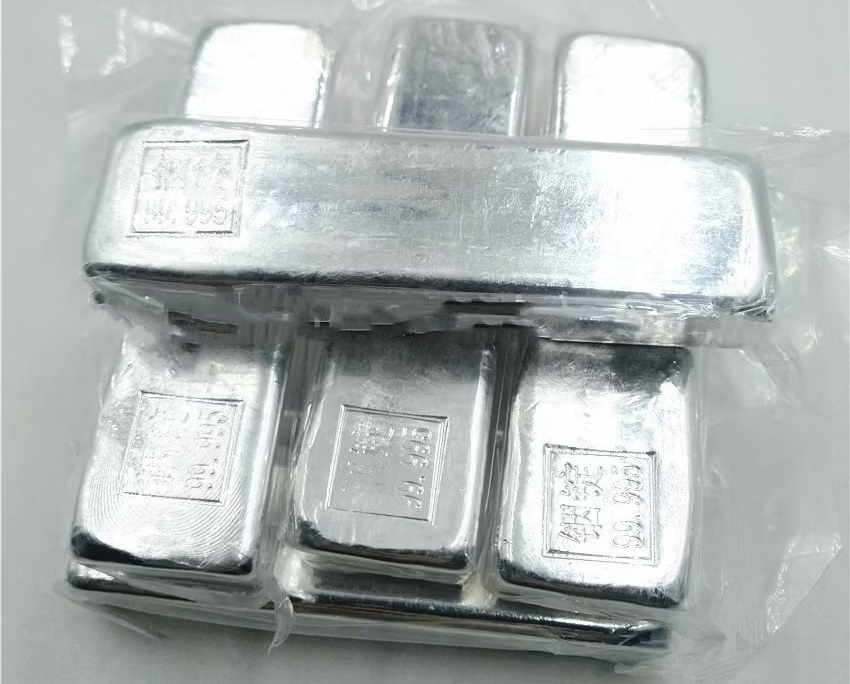
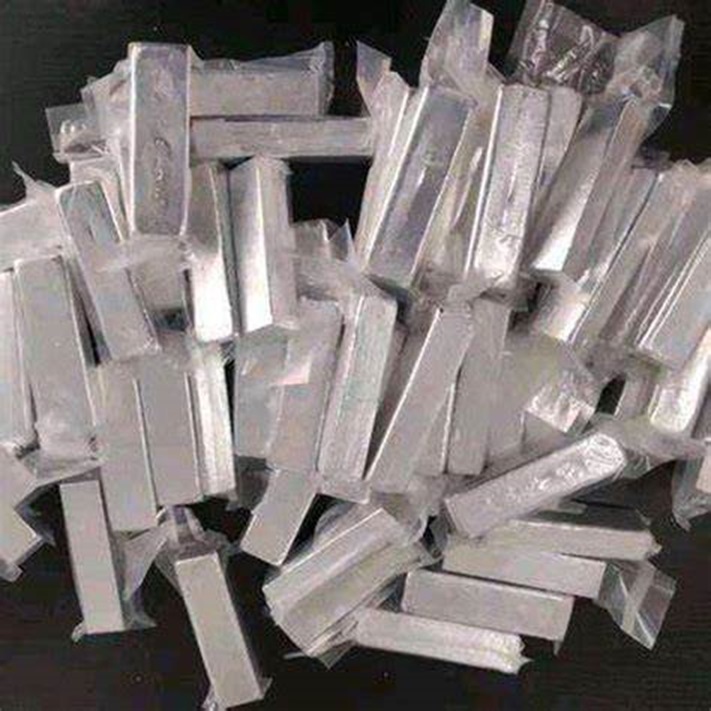
Indium Ingot, Indium Metal, Pure Indium, Indium Block, Indium Bar, Refined Indium, 7440-74-6
INDIUM INGOT – INDIUM INGOT
1. CHEMICAL IDENTITY AND DEFINITION
| Parameter |
Information |
| Chemical Name |
Indium |
| Other Names |
Pure Indium Metal, Refined Indium, High-Purity Indium, Indium Block, Indium Bar, Soft Metal, Indium Rod, Low Melting Point Metal, Silver-like Metal |
| Chemical Symbol |
In |
| CAS Number |
7440-74-6 |
| EC Number (EINECS) |
231-180-0 |
| Purity |
99.995% – 99.999% |
| Appearance |
Silver-white, bright metallic |
| Odor |
Odorless |
| Physical State (20°C) |
Solid (ingot / block / bar) |
| Metal Class |
Poor metal / Post-transition metal |
2. WHAT IS AN INDIUM INGOT?
An indium ingot is a high-purity metal form with exceptional properties. It is typically produced at purities ranging from 99.995% to 99.999%. Indium is a soft, malleable, and easily workable metal at room temperature. It is known for its low melting point, excellent adhesion properties, and good thermal/electrical conductivity. Common applications include electronics, soldering, and photovoltaics.
3. PHYSICAL PROPERTIES
| Property |
Value |
| Appearance |
Silver-white, bright metallic |
| Purity |
99.995% – 99.999% |
| Density (20°C) |
7.31 g/cm³ |
| Melting Point |
156.61 °C |
| Boiling Point |
2,080 °C |
| Molar Mass |
114.82 g/mol |
| Color |
Silver-white |
| Hardness (Mohs) |
1.2 (very soft) |
| Hardness (Brinell) |
~8.8 HB |
| Fluidity |
High (low viscosity melt) |
4. CHEMICAL PROPERTIES
| Property |
Information |
| Chemical Symbol |
In |
| Atomic Number |
49 |
| Atomic Weight |
114.818 g/mol |
| CAS Number |
7440-74-6 |
| EC Number |
231-180-0 |
| Periodic Table Group |
Group 13 (Poor Metal / Post-transition Metal) |
| Period |
Period 5 |
| Electron Configuration |
[Kr] 4d¹⁰ 5s² 5p¹ |
| Valence |
+1, +2, +3 (primarily +3) |
| Stability |
Stable in air, forms thin oxide layer |
| Corrosion Resistance |
Good (protective oxide layer on surface) |
| Reactivity |
Soluble in acids; resistant to alkalis |
5. ELECTRICAL AND THERMAL PROPERTIES
| Property |
Value |
| Electrical Conductivity |
11.6 × 10⁶ S/m |
| Electrical Resistivity (20°C) |
8.37 × 10⁻⁸ Ω·m |
| Thermal Conductivity |
81.8 W/m·K |
| Coefficient of Thermal Expansion |
32.1 × 10⁻⁶ /K |
| Specific Heat (20°C) |
233 J/kg·K |
| Latent Heat of Fusion |
28.6 kJ/kg |
| Latent Heat of Vaporization |
2,310 kJ/kg |
| Superconducting Transition Temperature |
3.41 K (-269.74 °C) |
6. MECHANICAL PROPERTIES
| Property |
Value |
| Hardness (Mohs) |
1.2 (softer than lead) |
| Hardness (Brinell) |
~8.8 HB |
| Tensile Strength |
~15 – 30 MPa |
| Yield Strength |
~5 – 15 MPa |
| Modulus of Elasticity |
~11 GPa |
| Poisson's Ratio |
~0.45 |
| Elongation (%) |
~30 – 40% |
| Ductility |
Very high (can be rolled into thin foil) |
| Malleability |
Excellent |
7. PURITY GRADES
| Grade |
Purity (%) |
Description |
| 5N |
99.999% |
Five nines (highest purity - semiconductor grade) |
| 4N5 |
99.995% |
Four nines five (high purity - commercial) |
| 4N |
99.99% |
Four nines (standard) |
| 3N5 |
99.95% |
Three nines five (industrial grade) |
8. APPLICATIONS
8.1. Electronics
| Application |
Description |
| Semiconductors |
As Indium Tin Oxide (ITO) in transparent conductive coatings |
| Solders |
Low melting point solder alloys (Pb-In, Sn-In, Ag-In) |
| Thin Film Coatings |
Transparent electrodes in OLED and LCD displays |
| Thermal Management |
Thermal interface materials (TIM) |
| Connectors |
High-reliability electrical connectors |
| PCB Plating |
Plating on printed circuit boards |
8.2. Photovoltaics (Solar Energy)
| Application |
Description |
| Thin-Film Solar Panels |
Layers that enhance light-to-electricity conversion |
| CIGS Solar Cells |
Copper-Indium-Gallium-Diselenide solar cells |
| ITO Coatings |
Transparent conductive oxide layers |
| Barium Indium Oxide |
Next-generation photovoltaic materials |
8.3. Cryogenic Sealing
| Application |
Description |
| Vacuum Seals |
Reliable seals that maintain flexibility at very low temperatures |
| Cryogenic Systems |
Sealing in liquid helium and liquid nitrogen systems |
| Space Applications |
Cryogenic sealing in satellites and spacecraft |
| Superconducting Systems |
Sealing in superconducting magnets |
8.4. Soldering and Alloys
| Application |
Description |
| Low-Temperature Soldering |
Soldering of sensitive electronic components |
| Step Soldering |
Staged soldering with different melting points |
| Special Alloys |
Alloys with silver, tin, lead, and other metals |
| Fuses |
Low melting point safety fuses |
8.5. Advanced Cooling Technology
| Application |
Description |
| Thermal Interface Materials |
Thermal management of electronic devices |
| Heat Sinks |
High-performance heat sink surfaces |
| Thermal Pads |
CPU and GPU cooling applications |
| Thermal Paste |
High-performance thermal conductive pastes |
8.6. Other Applications
| Application |
Description |
| Bearing Alloys |
Low-friction bearings |
| Dentistry |
Dental alloys and fillings |
| Glass Industry |
Special glass formulations |
| Nuclear Industry |
Neutron absorbing materials |
| Research Laboratories |
High-purity research material |
9. ADVANTAGES OF INDIUM
| Advantage |
Description |
| High Purity |
99.995%+ purity ensures reliable results in sensitive applications |
| Low Melting Point |
156.61°C ideal for soldering and coating processes |
| Versatility |
Wide range of applications from electronics to photovoltaics |
| Corrosion Resistance |
Protective oxide layer provides durability and longevity |
| Excellent Adhesion |
Adheres exceptionally well to glass, quartz, and other surfaces |
| Low-Temperature Flexibility |
Retains flexibility at cryogenic temperatures |
| High Ductility |
Can be rolled into very thin foil and drawn into wire |
| Thermal Conductivity |
Good thermal conductivity suitable for cooling applications |
| Recyclability |
100% recyclable |
10. STANDARD INGOT SIZES
| Parameter |
Typical Value |
| Weight |
0.5 – 5 kg (standard) |
| Dimensions |
Variable (manufacturer dependent) |
| Shape |
Rectangular or trapezoidal cross-section |
| Surface |
Bright, oxide-free |
| Packaging |
Vacuum bag + cardboard box |
11. INGOT TYPES
| Type |
Description |
| Standard Ingot |
0.5 – 5 kg, rectangular form |
| Mini Ingot |
100 – 500 g, small laboratory use |
| Custom Cast |
Customer-specific specifications |
| Plate |
Thin cast plates |
| Rod / Bar |
Cylindrical or rectangular rods |
12. INGOT PRODUCTION PROCESS
| Step |
Description |
| 1. Refining |
Purification by electrolytic or vacuum refining |
| 2. Melting |
Melting at 160-200°C in inert atmosphere |
| 3. Casting |
Pouring into pre-heated molds |
| 4. Cooling |
Controlled cooling |
| 5. Inspection |
Purity and surface quality inspection |
| 6. Packaging |
Vacuum packaging |
13. SAFETY AND HEALTH INFORMATION
| Parameter |
Information |
| Hazard |
Not hazardous in solid metal form |
| Dust and Fumes |
Inhalation of indium dust and fumes may be harmful |
| Molten State |
Causes severe burns |
| Carcinogenicity |
Not classified as carcinogenic |
| Mutagenicity |
Not classified as mutagenic |
| Reproductive Toxicity |
No evidence of adverse effects |
| Pulmonary Toxicity |
Indium compounds may cause lung damage |
13.1. FIRST AID MEASURES
| Route of Exposure |
Action |
| Inhalation |
Remove to fresh air. If breathing difficulty, give oxygen. Seek medical attention. |
| Skin Contact |
Wash with plenty of soap and water. |
| Eye Contact |
Rinse thoroughly with water for at least 15 minutes. Seek medical attention. |
| Ingestion |
Rinse mouth. Drink plenty of water. Seek medical attention. |
14. STORAGE AND HANDLING
| Parameter |
Information |
| Storage Conditions |
Cool, dry, well-ventilated area |
| Container Requirements |
Original packaging, vacuum-sealed or under inert gas |
| Protect From |
Moisture, acids, strong oxidizing agents |
| Shelf Life |
Unlimited (with proper storage) |
| Oxidation |
Forms thin protective oxide layer in air |
| Handling Precautions |
Use clean gloves, avoid contamination |
15. TRANSPORT INFORMATION
| Parameter |
Information |
| UN Number |
Not regulated (not a hazardous material) |
| Hazard Class |
Not applicable |
| Packing Group |
Not applicable |
| ADR/RID |
Not regulated |
| IMDG Code |
Not regulated |
| IATA (Air) |
Not regulated |
| Marine Pollutant |
No |
16. PACKAGING OPTIONS
| Packaging Type |
Quantity |
Material |
| Vacuum Bag |
0.5 – 5 kg |
PE / Aluminum laminate |
| Vacuum Bag + Cardboard Box |
0.5 – 5 kg |
PE/Aluminum + Cardboard |
| Plastic Bucket |
5 – 25 kg |
HDPE |
| Wooden Crate |
20 – 50 kg |
Wood |
| Steel Drum |
50 – 100 kg |
Steel |
17. REGULATORY STATUS
| Region / Authority |
Status |
| European Union (REACH) |
Registered substance |
| USA (EPA TSCA) |
Listed on TSCA inventory |
| China |
Listed on inventory |
| Japan (CSCL) |
Listed on CSCL inventory |
| ISO |
Complies with quality standards |
18. OTHER NAMES AND SYNONYMS
| Type |
Name |
| Turkish Names |
İndium Külçe, Saf İndium Metal, Rafine İndium, Yüksek Saflıkta İndium, İndium Blok, İndium Bar |
| English Names |
Indium Ingot, Indium Metal, Pure Indium, Indium Block, Indium Bar, Refined Indium |
| Common Names |
Soft Metal, Indium Rod, Low Melting Point Metal, Silver-like Metal |
| CAS Number |
7440-74-6 |
| EC Number |
231-180-0 |
19. SUMMARY AND CRITICAL WARNINGS
Product Summary
| Parameter |
Value |
| Product |
Indium Ingot |
| CAS Number |
7440-74-6 |
| Purity |
99.995% – 99.999% |
| Appearance |
Silver-white, bright metallic |
| Density |
7.31 g/cm³ |
| Melting Point |
156.61 °C |
| Boiling Point |
2,080 °C |
| Hardness (Mohs) |
1.2 |
| Primary Applications |
Electronics, soldering, photovoltaics, cryogenic sealing |
CRITICAL WARNINGS
1. Low Melting Point: Indium melts at 156.61°C. This makes it ideal for low-temperature soldering but requires protection from excessive temperatures during storage.
2. Softness: Indium is extremely soft (Mohs 1.2). Handle with care; it can be easily scratched and deformed.
3. High Purity: For sensitive electronics and semiconductor applications, 99.995%+ purity is essential. Contamination can significantly affect performance.
4. Oxide Layer: Indium forms a thin protective oxide layer on its surface. This layer is protective, but cleaning may be required before soldering.
5. Cryogenic Applications: Indium maintains flexibility at cryogenic temperatures, providing reliable sealing. Critical for superconducting and space applications.
6. ITO Coatings: Indium Tin Oxide (ITO) is widely used as a transparent conductive coating in the electronics industry (LCD, OLED, touch screens).
7. Safety: Solid indium is non-toxic. However, indium compounds and dust can cause lung damage. Respiratory protection should be used in operations generating dust.
8. Recycling: Indium is 100% recyclable with high scrap value. Industrial waste should be recovered.
9. Storage: Store in dry, cool environment under vacuum or inert gas to prevent oxidation and contamination.
10. Soldering: Low melting point makes it ideal for soldering sensitive electronic components. An important component in lead-free solder alloys.
11. Thermal Management: High thermal conductivity and softness make indium excellent for thermal interface materials (TIM).
12. Critical Raw Material: Indium is listed as a critical raw material by the EU and US. Supply chain considerations are important.
IMPORTANT DISCLAIMER: This Technical Data Sheet (TDS) is for informational purposes only and is prepared based on available technical data. The user is responsible for determining the suitability of the product for their specific application and for complying with all local, national, and international regulations. For complete safety, storage, use, handling, disposal, and regulatory compliance information, refer to the official Safety Data Sheet (SDS/MSDS) provided by the manufacturer/supplier. This document is not a substitute for professional or medical advice.