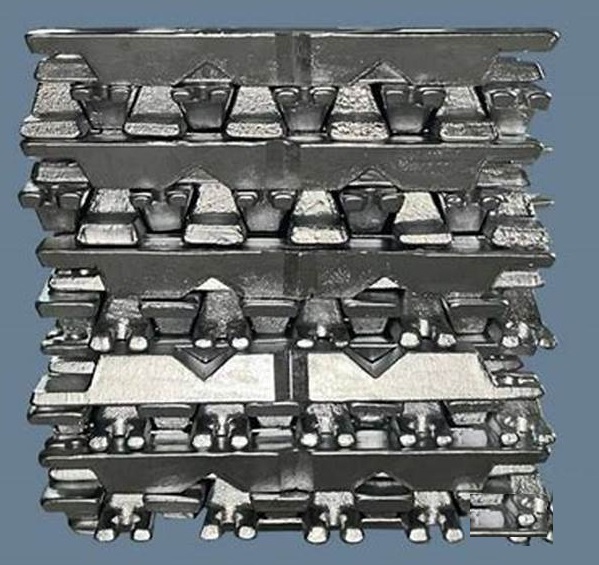
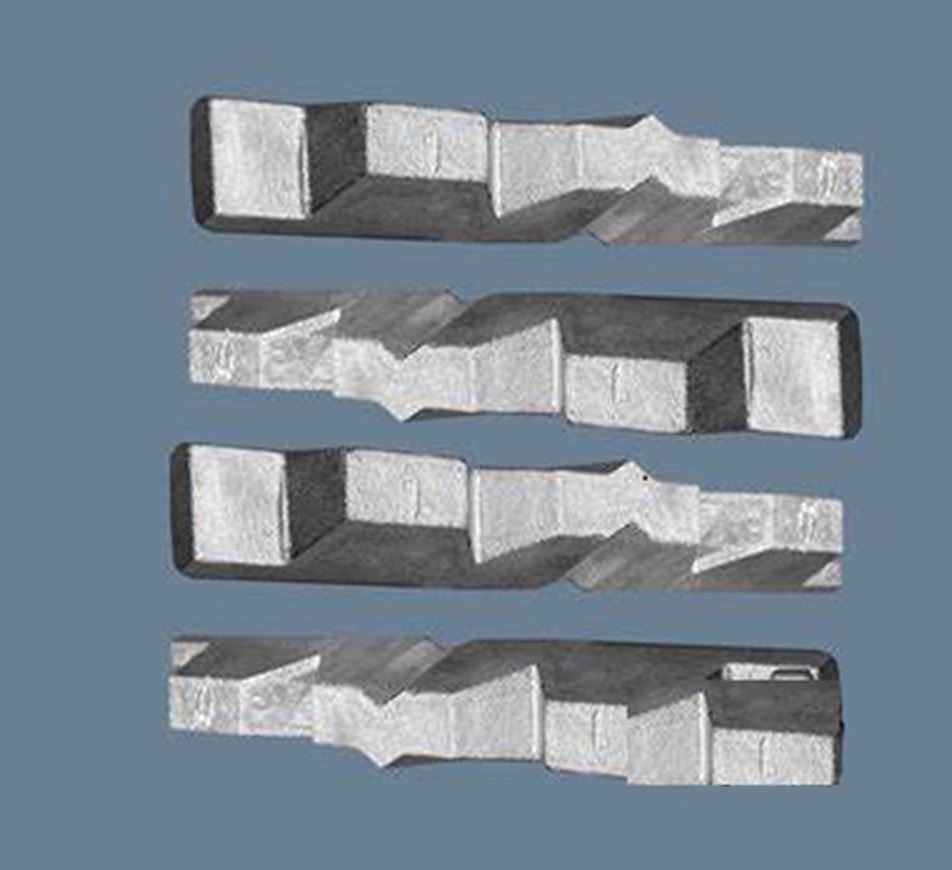
Zamak 2, Kirksite, Alloy 2, White Metal, Casting Metal, Zinc Alloy, 7440-66-6, 7429-90-5, 7440-50-8, 7439-95-4
ZAMAK 2 – ZAMAK 2
1. CHEMICAL IDENTITY AND DEFINITION
| Parameter |
Information |
| Alloy Name |
Zamak 2 |
| Other Names |
Kirksite, Alloy 2, ZnAl4Cu3, AC43A, ZL0430, White Metal, Casting Metal, Zinc Alloy |
| Alloy Type |
Zinc-based casting alloy (high copper content) |
| Standards |
ASTM B240, EN 1774, ISO 301 |
| Appearance |
Silver-white, bright metallic |
| Odor |
Metallic (characteristic) |
| Physical State (20°C) |
Solid (metal) |
2. CHEMICAL COMPOSITION
| Element |
Symbol |
Percentage (%) |
CAS Number |
| Zinc (Base Metal) |
Zn |
Balance (~91-93%) |
7440-66-6 |
| Aluminum |
Al |
3.9 – 4.3 |
7429-90-5 |
| Copper |
Cu |
2.7 – 3.3 |
7440-50-8 |
| Magnesium |
Mg |
0.025 – 0.05 |
7439-95-4 |
| Iron |
Fe |
≤ 0.02 |
7439-89-6 |
| Lead |
Pb |
≤ 0.003 |
7439-92-1 |
| Tin |
Sn |
≤ 0.001 |
7440-31-5 |
| Cadmium |
Cd |
≤ 0.001 |
7440-43-9 |
3. PHYSICAL PROPERTIES
| Property |
Value |
| Appearance |
Silver-white, bright metallic |
| Density (20°C) |
~6.6 g/cm³ |
| Melting Point (Range) |
379 – 390 °C |
| Melting Point (Average) |
~384 °C |
| Thermal Conductivity |
~105 W/mK |
| Electrical Resistivity |
~6.3 μΩ-cm |
| Coefficient of Thermal Expansion |
~27.4 μm/m°C |
| Specific Heat (20°C) |
~419 J/kg·K |
4. MECHANICAL PROPERTIES
| Property |
Value |
| Tensile Strength |
~359 MPa |
| Yield Strength |
~283 MPa |
| Hardness (Brinell) |
~100 HB |
| Elongation (%) |
~7% |
| Impact Resistance (Charpy) |
~30-40 J |
| Modulus of Elasticity |
~96 GPa |
| Shear Modulus |
~36 GPa |
| Poisson's Ratio |
~0.25 |
| Creep Resistance |
Higher than Zamak 3 |
5. THERMAL PROPERTIES
| Property |
Value |
| Melting Temperature Range |
379 – 390 °C |
| Casting Temperature |
410 – 440 °C |
| Thermal Conductivity |
~105 W/mK |
| Coefficient of Thermal Expansion |
~27.4 μm/m°C |
| Specific Heat Capacity |
~419 J/kg·K |
| Latent Heat of Fusion |
~113 kJ/kg |
6. ELECTRICAL PROPERTIES
| Property |
Value |
| Electrical Resistivity |
~6.3 μΩ-cm |
| Electrical Conductivity |
~25% IACS |
| Temperature Coefficient |
~0.0038 /°C |
7. ZAMAK 2 STRUCTURE AND COMPONENTS
| Component |
Role |
Description |
| Zinc (Zn) |
Base metal |
Main component of the alloy, forms matrix |
| Aluminum (Al) |
Alloying element |
Increases strength, improves castability |
| Copper (Cu) |
Strengthening element |
Significantly increases strength and hardness; provides better creep resistance |
| Magnesium (Mg) |
Alloying element |
Improves corrosion resistance, refines grain structure |
8. ADVANTAGES OF ZAMAK 2
| Advantage |
Description |
| High Strength and Hardness |
Highest strength among Zamak alloys; superior to Zamak 3 and 5 |
| Excellent Castability |
Enables production of complex and detailed shapes |
| Dimensional Stability |
Provides long-term stability and precise tolerances |
| Creep Resistance |
Better creep resistance at elevated temperatures |
| Plating Performance |
High performance in plating, painting, and chromating processes |
| Economic Efficiency |
Energy savings due to low melting point |
| Recyclability |
100% recyclable, environmentally friendly |
| Excellent Surface Quality |
Smooth surface, requires minimal finishing |
| Good Wear Resistance |
High resistance to wear and abrasion |
9. DISADVANTAGES OF ZAMAK 2
| Disadvantage |
Description |
| Dimensional Stability |
Lower aging stability compared to Zamak 3; may show slight dimensional changes over time |
| Hot Shortness |
More susceptible to hot tearing during casting |
| Corrosion |
Slightly less corrosion resistant than Zamak 3 |
| Density |
Slightly higher density due to copper content |
10. COMPARISON WITH OTHER ZAMAK ALLOYS
| Property |
Zamak 2 |
Zamak 3 |
Zamak 5 |
Zamak 7 |
| Zn (%) |
~91-93 |
~96 |
~95 |
~96 |
| Al (%) |
3.9-4.3 |
3.8-4.2 |
3.9-4.3 |
3.8-4.2 |
| Cu (%) |
2.7-3.3 |
≤0.03 |
0.7-1.1 |
≤0.03 |
| Mg (%) |
0.025-0.05 |
0.035-0.06 |
0.035-0.06 |
0.005-0.02 |
| Tensile Strength (MPa) |
~359 |
~280 |
~328 |
~280 |
| Yield Strength (MPa) |
~283 |
~220 |
~250 |
~210 |
| Hardness (HB) |
~100 |
~90 |
~95 |
~85 |
| Elongation (%) |
~7 |
~12 |
~8 |
~12 |
| Creep Resistance |
High |
Low |
Medium |
Low |
| Dimensional Stability |
Lower |
High |
Medium |
Very High |
| Application |
Highest strength |
General purpose |
High strength |
Thin-walled |
11. APPLICATIONS
11.1. Automotive Industry
| Application |
Description |
| Durable Components |
High-stress mechanical components |
| Brackets |
Heavy-duty mounting brackets and fastening elements |
| Housings |
Electronic control unit housings requiring high strength |
| Gear Boxes |
Small gearbox housings |
| Engine Components |
Certain engine accessories and components |
| Door Handles |
Automotive door handle mechanisms |
11.2. Electronics and Electrical
| Application |
Description |
| Device Housings |
High-strength electronic device enclosures |
| Connectors |
Heavy-duty electrical and electronic connectors |
| Switchgear Components |
High-strength switch and socket components |
| Relay Bases |
Relay and contactor bases |
| Potentiometer Housings |
Potentiometer and resistor housings |
11.3. Industrial Applications
| Application |
Description |
| Machine Parts |
High-strength and wear-resistant machine components |
| Pump Bodies |
Pump and valve bodies requiring high strength |
| Gears |
Small gears and pinions |
| Bearing Housings |
Bearing housings and supports |
| Hydraulic Components |
Hydraulic system components |
| Tool Components |
Hand tool and power tool parts |
11.4. Consumer Products
| Application |
Description |
| Abrasion-Resistant Products |
Decorative and functional products with high wear resistance |
| Locks |
Heavy-duty lock mechanisms |
| Hardware |
Industrial and heavy-duty hardware |
| Furniture Components |
Load-bearing furniture fittings |
| Slide Mechanisms |
Drawer and sliding mechanism components |
11.5. Defense and Aerospace
| Application |
Description |
| Ordnance Parts |
Parts requiring high strength and reliability |
| Aviation Components |
Certain non-critical aviation components |
12. CASTING METHODS
| Method |
Description |
| Die Casting (Most Common) |
High-pressure injection, ideal for mass production |
| Centrifugal Casting |
Casting using rotating molds |
| Permanent Mold Casting |
Gravity casting in metal molds |
| Sand Casting |
Sand casting for larger parts |
13. SURFACE FINISHING PROCESSES
| Process |
Description |
| Plating |
Nickel, chromium, copper plating |
| Electroplating |
Electrochemical plating processes |
| Painting |
Powder coating, liquid painting applications |
| Chromating |
Yellow, green, black chromate coating |
| Phosphating |
Corrosion resistance enhancement |
| Polishing |
Achieving bright surface finish |
14. WHY ZAMAK 2 IS PREFERRED
| Reason |
Description |
| High Strength |
Highest mechanical strength among all Zamak alloys |
| Superior Hardness |
Maximum hardness for zinc alloys |
| Excellent Castability |
Complex designs and thin walls achievable |
| Dimensional Stability |
Maintains precision over time |
| Good Plating Capability |
Successful in plating and coating processes |
| Creep Resistance |
Better performance under load at elevated temperatures |
| Cost-Effective |
Lower cost than other high-strength alloys |
15. KIRKSITE (ZAMAK 2) SPECIAL NOTES
| Parameter |
Information |
| Historical Name |
Kirksite |
| Origin |
Named after the Kirksite foundry where it was developed |
| Patented |
Originally used for aerospace tooling |
| Modern Use |
Still referred to as Kirksite in some industries, particularly for tooling applications |
16. SAFETY AND HEALTH INFORMATION
| Parameter |
Information |
| Hazard |
Not hazardous in solid metal form |
| Dust and Fumes |
Inhalation may be harmful (ZnO and CuO fumes) |
| Molten State |
Causes severe burns |
| During Casting |
Proper ventilation required (Cu fumes) |
| Carcinogenicity |
Not classified as carcinogenic |
| Copper Content |
Copper dust/fumes may cause respiratory irritation |
17. STORAGE AND HANDLING
| Parameter |
Information |
| Storage Conditions |
Dry, clean, well-ventilated area |
| Protect From |
Moisture, acids, alkalis, saline environments |
| Shelf Life |
Unlimited (with proper storage) |
| Molten State |
Used at 410-440°C casting temperature |
| Hot Shortness |
Avoid sudden temperature changes during casting |
18. RECYCLING INFORMATION
| Parameter |
Information |
| Recyclability |
100% recyclable |
| Scrap Value |
High commercial value (copper content adds value) |
| Energy Savings |
70% energy savings compared to primary production |
| Environmental Impact |
Low environmental footprint |
| Recycling Process |
Remelted and refined for reuse |
19. STANDARDS AND SPECIFICATIONS
| Standard |
Description |
| ASTM B240 |
Zinc alloy casting ingot specification |
| EN 1774 |
Zinc and zinc alloys - Alloys for casting |
| ISO 301 |
Zinc alloy ingot specification |
| DIN 1743 |
Zinc casting alloys |
20. OTHER NAMES AND SYNONYMS
| Type |
Name |
| Technical Names |
Zamak 2, Alloy 2, ZnAl4Cu3, AC43A, ZL0430 |
| Historical/Trade Names |
Kirksite, White Metal, Casting Metal |
| Common Names |
Zinc Alloy, Durable Metal |
| ASTM Grade |
AC43A |
| EN Designation |
EN ZnAl4Cu3 |
21. SUMMARY AND CRITICAL WARNINGS
Product Summary
| Parameter |
Value |
| Alloy |
Zamak 2 (Kirksite / Alloy 2) |
| Base Metal |
Zinc (~91-93%) |
| Alloying Elements |
Al (3.9-4.3%), Cu (2.7-3.3%), Mg (0.025-0.05%) |
| Melting Point |
379-390°C |
| Density |
~6.6 g/cm³ |
| Primary Application |
High-strength die casting parts |
CRITICAL WARNINGS
1. High Copper Content: Zamak 2 contains 2.7-3.3% copper, giving it the highest strength among Zamak alloys. This also increases hardness and creep resistance.
2. Dimensional Stability: Lower aging stability compared to Zamak 3 due to copper content. Slight dimensional changes may occur over time (approximately 0.005-0.008 mm/100 mm).
3. Creep Resistance: Best creep resistance among Zamak alloys. Suitable for applications where parts are under continuous load at elevated temperatures.
4. Hot Shortness: More susceptible to hot tearing during casting. Requires careful control of casting parameters.
5. Melting Point: 379-390°C melting range. Casting temperature should be 410-440°C.
6. Mechanical Properties: Highest tensile strength (~359 MPa) and hardness (~100 HB) among zinc casting alloys.
7. Applications: Preferred for high-stress, wear-resistant parts where superior strength is required.
**8. Plating: Excellent plating characteristics. Copper content provides enhanced surface finish.
**9. Corrosion: Slightly less corrosion resistant than Zamak 3; recommend surface treatment for corrosive environments.
**10. Kirksite: Still referred to as Kirksite in some industries, particularly for tooling and aerospace applications.
**11. Recycling: 100% recyclable. Copper content adds value to recycled material.
**12. Standards: Complies with ASTM B240, EN 1774, and ISO 301 standards.
IMPORTANT DISCLAIMER: This Technical Data Sheet (TDS) is for informational purposes only and is prepared based on available technical data. The user is responsible for determining the suitability of the product for their specific application and for complying with all local, national, and international regulations. For complete safety, storage, use, handling, disposal, and regulatory compliance information, refer to the official Safety Data Sheet (SDS/MSDS) provided by the manufacturer/supplier. This document is not a substitute for professional or medical advice.