We unleash your business potential by maximize the business innovation.
Send EmailSodium Carboxymethyl Cellulose, Carboxymethyl Cellulose, Carmellose Sodium, CMC, E466, 9000-11-7
SODIUM CARBOXYMETHYL CELLULOSE (Na‑CMC)
1. PRODUCT DEFINITION AND CHEMICAL IDENTITY
| Parameter | Description |
|---|---|
| Chemical Name | Sodium Carboxymethyl Cellulose |
| Common Names | CMC, Na‑CMC, Carboxymethyl Cellulose |
| Pharmaceutical Name (Ph.Eur.) | Carmellose Sodium |
| Food Additive Code | E466 |
| CAS Numbers | 9004‑32‑4 (food, pharmaceutical, cosmetic pure Na‑CMC) / 9000‑11‑7 (general/technical CMC, sometimes wider polymer distribution) |
| EC No | 618‑378‑6 (polymeric) |
| Molecular Structure | Cellulose backbone with ether-linked –OCH₂COONa groups; anionic polymer. |
| General Repeating Unit | [C₆H₇O₂(OH)₂(OCH₂COONa)]ₙ (the number of –OH groups depends on the degree of substitution) |
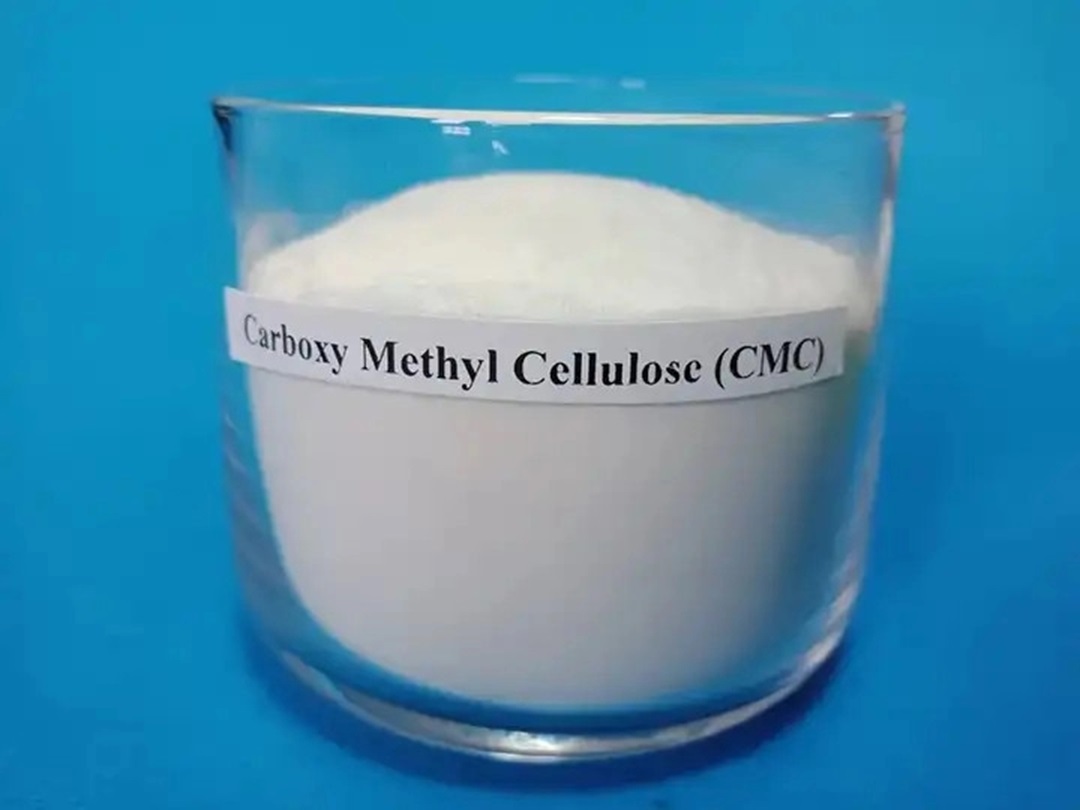
| Appearance | White to cream-colored, slightly hygroscopic powder or granules |
| Purity (Standard Grades) | ≥99.5% (dried basis); conforming to FCC, USP, EP, and food codex specifications |
2. PHYSICAL AND CHEMICAL PROPERTIES
-
Physical appearance: White or slightly greyish, odorless powder/granules.
-
Bulk density: 0.4 – 0.8 g/cm³ (depending on viscosity grade).
-
pH (1% solution, 25 °C): 6.5 – 8.0 (slightly alkaline due to its sodium salt nature).
-
Solubility:
-
Readily soluble in both cold and hot water, forming viscous, clear solutions.
-
Insoluble in ethanol, acetone, toluene, and other organic solvents.
-
Precipitates when ethanol is added to an aqueous solution (non-solvent effect).
-
-
Viscosity (typical range): From low (<100 mPa·s, 1% sol.) to ultra-high (>5000 mPa·s) grades; measured by Brookfield viscometer under standard conditions.
-
Degree of Substitution (DS): Usually 0.6 – 1.2. Higher DS improves solubility and resistance to acid/alkali but may alter biocompatibility.
-
Stability: Stable in dry powder form. Darkens and decomposes above 200 °C. Aqueous solutions must be protected from microbial growth (preservative required, otherwise viscosity drops within 1‑2 days).
-
Compatibility: Viscosity loss or precipitation can occur with cationic surfactants, highly acidic media (pH <2), and high electrolyte concentrations. Protect from excessive moisture due to hygroscopic nature.
3. CAS NUMBER DIFFERENCE: 9004‑32‑4 vs. 9000‑11‑7
-
9004‑32‑4: Defines high-purity sodium carboxymethyl cellulose with tighter specifications. This CAS number is referenced in food additive (E466), pharmaceutical aid (carmellose sodium), and cosmetic ingredient contexts. Although viscosity grades vary among manufacturers, the heavy metal and impurity limits comply with pharmacopoeias and food codes.
-
9000‑11‑7: Represents a more generic description of CMC; may be used for technical grades, lower purity, or non-cross-linked CMC products. In some supply chains, both CAS numbers are treated synonymously for the same material. However, 9004‑32‑4 should be specified for food and pharmaceutical applications.
Important Note: Croscarmellose Sodium (cross-linked CMC) is not 9000‑11‑7. It has its own CAS number, 74811‑65‑7. This product, used as a superdisintegrant in pharmaceutical tablets, should not be confused with linear Na‑CMC.
4. OTHER NAMES AND SYNONYMS
-
Carboxymethyl Cellulose
-
Sodium Carboxymethyl Cellulose
-
CMC, Na‑CMC
-
Carmellose Sodium (Ph.Eur.)
-
Cellulose Gum (USP/NF, food codex)
-
E466 (European food additive number)
-
Glycolic Acid Cellulose Ether (historical name)
-
Cellulose Glycolic Acid (refers to the free acid form)
5. INDUSTRIAL APPLICATIONS, USAGE RATES, AND EXAMPLE FORMULATIONS
5.1. Pharmaceutical Industry
-
Purpose: Binder, disintegrant, and controlled-release agent in tablets and capsules; thickener in suspensions and syrups; binder in toothpaste.
-
Usage Rate: Binder in tablets: 1–5%; thickener in liquid formulations: 0.5–2%. For disintegrant properties, the cross-linked form (croscarmellose sodium) is used.
-
Example Formulation – Oral Suspension (paracetamol):
-
0.8% Na‑CMC (medium viscosity) – thickener and stabilizer
-
2.4% paracetamol
-
10% sorbitol (70% solution)
-
0.1% sodium benzoate
-
Purified water to 100 mL.
Pre-swell CMC in part of warm water, cool, then disperse the active ingredient.
-
5.2. Food Industry (E466)
-
Purpose: Thickener, stabilizer, water binder in ice cream, sauces, puddings, baked goods, and beverages; gluten replacer in gluten-free products.
-
Usage Rate: Ice cream: 0.1–0.3%; sauces: 0.2–1.0%; powdered drink mixes: 0.5–2.0%.
-
Example Formulation – Light Salad Dressing:
-
1.0% Na‑CMC (high viscosity)
-
3% vinegar, 2% sugar, 1% salt
-
20% vegetable oil
-
0.05% xanthan gum (synergistic effect)
-
Water to 100%. First mix CMC with water, then add remaining ingredients and homogenize.
-
5.3. Cosmetics and Personal Care
-
Purpose: Viscosity modifier and stabilizer in shampoos, shower gels, lotions, creams; binder and humectant in toothpaste.
-
Usage Rate: Cream/lotion: 0.2–0.5%; shampoo: 0.3–0.8%; toothpaste: 0.5–1.5%.
-
Example Formulation – Toothpaste Gel:
-
1.2% Na‑CMC (medium viscosity)
-
20% sorbitol (70%)
-
10% hydrated silica (abrasive)
-
1.5% sodium lauryl sulfate
-
Preservative, sweetener, water.
Hydrate CMC in sorbitol/water mixture, add powders, and mix under vacuum.
-
5.4. Textile, Paper, Paint, and Adhesives
-
Textile: Sizing agent and printing paste thickener, 1–3% solution.
-
Paper: Surface sizing and coating binder together with starch, 0.2–1.0%.
-
Paints: Thickener and stabilizer for water-based paints, 0.5–2.0%.
-
Coal briquettes & welding electrodes: Binder, 2–5% dry CMC powder.
5.5. Aircraft De-icing Fluids and Firefighting
-
Na‑CMC (often a high molecular weight or cross-linked grade) serves as a thickener at 0.2–0.5% in runway de-icers to enhance holdover time on surfaces.
6. ALTERNATIVES AND COMPARISON
| Alternative | CAS No. | Advantage/Difference vs. Na‑CMC |
|---|---|---|
| Croscarmellose Sodium | 74811‑65‑7 | Water-insoluble; only swells. Far superior tablet disintegrant, does not build viscosity. |
| Methylcellulose (E461) | 9004‑67‑5 | Non‑ionic, thermoreversible gelation (insoluble in hot water, soluble in cold). Used in emulsions and vegan egg white substitutes. |
| Hydroxypropyl Methylcellulose (HPMC, E464) | 9004‑65‑3 | Better organic solvent compatibility, film-forming properties. Non‑ionic, more salt-tolerant. |
| Hydroxyethyl Cellulose (HEC) | 9004‑62‑0 | Non‑ionic, widely used in latex paints. High salt and alcohol tolerance. |
| Xanthan Gum | 11138‑66‑2 | High viscosity at low concentration; synergistic with CMC. However, more expensive. |
| Guar Gum | 9000‑30‑0 | Natural origin, rapid cold-water hydration; perceived as “clean label” in food, sometimes replacing CMC. |
7. FREQUENTLY ASKED QUESTIONS (Specific to Na‑CMC)
Q1. Are CAS 9004‑32‑4 and 9000‑11‑7 the same product?
Both represent carboxymethyl cellulose; however, 9004‑32‑4 generally denotes the high-purity sodium salt intended for food/pharma use. 9000‑11‑7 is a broader descriptor that can also cover technical grades. For pharmaceutical or food purposes, always specify 9004‑32‑4.
Q2. What is the difference between Na‑CMC and Croscarmellose Sodium?
Na‑CMC dissolves in water to form a viscous solution. Croscarmellose sodium is internally cross-linked and does not dissolve; it swells many times its weight by absorbing water. It is designed to rapidly disintegrate tablets and is not used as a thickener.
Q3. Is E461 (Methylcellulose) the same as E466 (CMC)?
No. E461 is methylcellulose, a non‑ionic cellulose ether. E466 is sodium carboxymethyl cellulose, an anionic polymer. Their structures, solubility behaviors, and applications differ significantly. The name “Carmellose” belongs to CMC, not methylcellulose.
Q4. How should a Na‑CMC solution be prepared?
To prevent lumps, slowly sprinkle the powder into vigorously stirred water. Alternatively, first disperse the powder in a humectant like glycerol or sorbitol to form a slurry, then add to water. Full hydration may require several hours.
Q5. What is the shelf life of CMC?
Under appropriate conditions (cool, dry, sealed containers), shelf life is at least 24 months. Protect from moisture after opening.
Q6. In what pH range is Na‑CMC stable?
It exhibits optimal viscosity and stability between pH 5 and 9. Below pH 3, viscosity decreases and the free acid form may precipitate. Above pH 10, oxidative degradation accelerates.