We unleash your business potential by maximize the business innovation.
Send EmailPhosphorized Copper Anode, Cu-P Anode (Copper-Phosphorus Anode), Electrolytic Copper Anode, 7723-14-0., 7440-50-8
PHOSPHORIZED COPPER ANODE (Cu-P ANODE)
1. Chemical Identity and Material Classification
-
Product Name: Phosphorized Copper Anode, Cu-P Anode (Copper-Phosphorus Anode), Electrolytic Copper Anode
-
Material Type: Copper-Phosphorus alloy
-
CAS Numbers:
-
Copper (Cu): 7440-50-8
-
Phosphorus (P): 7723-14-0
-
-
UN Number (if applicable): Not regulated as hazardous in solid form
2. Chemical Composition (Typical, wt%)
| Element | Content (%) |
|---|---|
| Copper (Cu) | ≥99.90 |
| Phosphorus (P) | 0.040 – 0.065 |
| Oxygen (O) | ≤0.01 |
| Lead (Pb) | ≤0.005 |
| Iron (Fe) | ≤0.003 |
| Sulfur (S) | ≤0.002 |
| Other impurities (total) | ≤0.03 |
3. Physical Properties
| Property | Value |
|---|---|
| Color | Reddish-brown (characteristic of copper) |
| Density (20°C) | 8.96 g/cm³ |
| Melting point | 1083°C (1981°F) |
| Electrical conductivity (IACS) | 85–95% (slightly lower than pure copper) |
| Thermal conductivity (20°C) | 385 W/(m·K) |
| Hardness (Brinell) | 50–70 HB (after annealing) |
| Grain size | Typically 25–100 μm (controlled by thermomechanical processing) |
4. Mechanical Properties
| Property | Value |
|---|---|
| Tensile strength (annealed) | 220–250 MPa |
| Yield strength (0.2% offset) | 60–80 MPa |
| Elongation at break | 45–55% (annealed) |
| Modulus of elasticity | 115–120 GPa |
| Machinability rating | 20% (compared to free-cutting brass) |
5. Microstructural Characteristics
-
Matrix: α-copper solid solution (FCC crystal structure)
-
Phosphorus distribution: Homogeneously dissolved in copper matrix; no visible Cu₃P intermetallic precipitates at P <0.1%
-
Oxygen control: Phosphorus acts as a deoxidizer → oxygen content reduced to <0.01%
-
Grain orientation: Equiaxed grains after recrystallization annealing
6. Electrochemical Properties (Key for Electroplating)
| Parameter | Value / Behavior |
|---|---|
| Standard electrode potential (Cu²⁺/Cu) | +0.337 V (vs. SHE) |
| Anode polarization behavior | Low and stable over time |
| Anode dissolution efficiency | 98–100% (no passive layer formation) |
| Sludge formation rate | <1% (vs. 5–10% for oxygen-free copper) |
| Operating current density range | 1–8 A/dm² (typical), up to 10 A/dm² (optimized) |
| Anode potential vs. saturated calomel electrode (SCE) | 0.20–0.35 V (at 4 A/dm², 60°C, copper sulfate bath) |
7. Production Methods
7.1 Continuous Casting and Rolling (Industrial Standard)
-
Process: Fire-refined copper + phosphorus master alloy → melting (1150–1200°C) → continuous casting → hot rolling → cold drawing/rolling
-
Phosphorus addition: As Cu-15%P master alloy or red phosphorus under inert atmosphere
-
Quality control: Online spectrometer analysis, ultrasonic flaw detection
7.2 Extrusion and Drawing (for Specific Shapes)
-
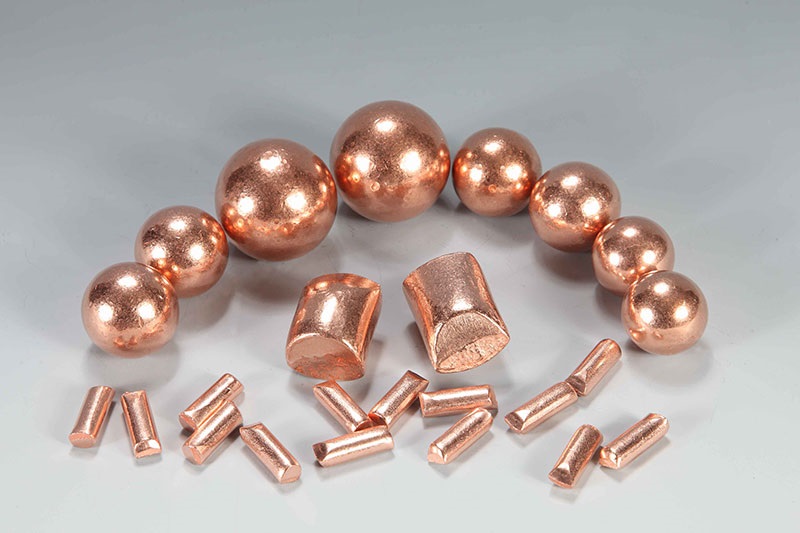
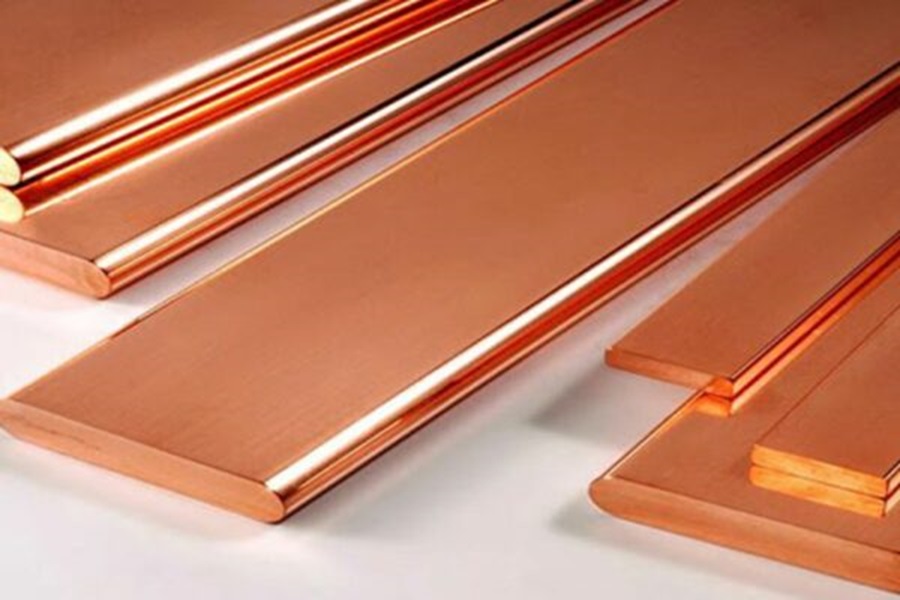
Shapes produced: Round rods (diameter 20–100 mm), oval rods, rectangular bars, hollow anodes
-
Surface finish: Machined or polished to 1.6–3.2 μm Ra
7.3 Electrolytic Refining (High-Purity Copper Precursor)
-
Feedstock: Electrolytic copper cathode (≥99.99% Cu)
-
Process: Remelted with controlled phosphorus addition in vacuum or inert atmosphere
8. Anode Dissolution Mechanism (Phosphorus Effect)
-
Without phosphorus: Oxygen-containing copper → formation of Cu₂O particles → incomplete dissolution, sludge accumulation, rough deposits
-
With phosphorus:
-
Phosphorus reacts with oxygen → forms P₂O₅ (volatile at melting stage) → oxygen-free microstructure
-
During electrolysis: Thin, conductive black film (copper phosphide) forms on anode surface → promotes uniform dissolution
-
Prevents formation of insoluble copper oxides
-
-
Reaction: 2Cu₃(PO₄)₂ + 12H⁺ + 12e⁻ → 6Cu²⁺ + 2PH₃ + 4H₂O (simplified)
9. Application Area – Electroplating Industry
9.1 Acid Copper Plating (Watts-type bath)
| Parameter | Typical Range |
|---|---|
| Bath composition | CuSO₄·5H₂O: 200–250 g/L, H₂SO₄: 50–70 g/L |
| Chloride (Cl⁻) | 50–100 ppm |
| Temperature | 50–65°C |
| Cathode current density | 2–8 A/dm² |
| Anode:cathode ratio | 1:1 to 2:1 |
| Agitation | Air or mechanical |
9.2 PCB (Printed Circuit Board) Manufacturing
-
Application: Through-hole plating, panel plating
-
Current density: 1–3 A/dm²
-
Required anode purity: ≥99.9% Cu with 0.04–0.06% P
-
Advantage: Minimized sludge reduces defect rates (voids, nodules)
9.3 Automotive and Decorative Plating
-
Substrates: Steel, zinc die-cast, aluminum
-
Typical layer sequence: Copper → nickel → chromium
-
Anode life: 12–24 months (continuous operation)
10. Comparison with Other Copper Anode Types
| Property | Phosphorized Cu (Cu-P) | Oxygen-Free Copper (OFHC) | Electrolytic Tough Pitch (ETP) |
|---|---|---|---|
| P content | 0.04–0.06% | <0.001% | <0.002% |
| O content | <0.01% | <0.001% | 0.02–0.05% |
| Sludge formation | Very low (≤1%) | Low (2–5%) | High (5–10%) |
| Anode polarization | Stable | Slightly increasing | Unstable, passivation risk |
| Deposit quality | Excellent | Good | Poor (rough, nodular) |
| Cost | Medium | High | Low |
11. Product Forms and Dimensions (Typical)
| Shape | Diameter / Cross-section | Length | Tolerance |
|---|---|---|---|
| Round rod | 20–100 mm | 300–1000 mm | ±0.5 mm (diameter) |
| Oval rod | 30×60 mm to 50×80 mm | 300–1000 mm | ±0.8 mm |
| Rectangular bar | 20–50 mm thickness | 300–1000 mm | ±0.5 mm |
| Hollow anode | ID 10–50 mm, OD 50–100 mm | 300–800 mm | ±1.0 mm |
| Custom shapes | Upon request | Upon request | As specified |
12. Quality Control and Testing Methods
| Test | Method | Acceptance Criteria |
|---|---|---|
| Chemical composition | ICP-OES, LECO (for O) | Per section 2 |
| Hardness | Brinell (HB 10/500) | 50–70 HB |
| Electrical conductivity | Eddy current or 4-point probe | ≥85% IACS |
| Grain size | ASTM E112 (intercept method) | 25–100 μm |
| Surface roughness | Profilometer (Ra) | ≤3.2 μm (machined) |
| Ultrasonic inspection | ASTM E114 | No internal voids or cracks |
13. Operating Recommendations for Electroplating Baths
-
Pre-cleaning: Degrease in alkaline solution, rinse with deionized water
-
Anode bags: Use polypropylene (PP) bags (75–150 μm mesh) to capture any trace sludge
-
Anode spacing: 50–150 mm from cathode
-
Bath agitation: Maintain uniform Cu²⁺ concentration; avoid stagnation
-
Phosphorus maintenance: No replenishment needed; anode composition is fixed
-
Anode efficiency correction: Use 98–100% in Faraday’s law calculations
14. Safety and Handling
-
Hazards: No acute toxicity in solid form; fine dust may cause mechanical irritation
-
Fire risk: Non-flammable in bulk form; fine copper powder may be combustible
-
Reactivity: Avoid strong acids (especially nitric acid) – rapid dissolution with NOₓ evolution
-
Personal protective equipment (PPE):
-
Gloves (nitrile or neoprene)
-
Safety glasses with side shields
-
Dust mask (if cutting/grinding)
-
Steel-toed boots (heavy handling)
-
15. Environmental and Disposal Information
-
Ecotoxicity: Copper is toxic to aquatic organisms at low concentrations (LC₅₀ <1 mg/L for some species)
-
Recycling: 100% recyclable; return scrap to copper refineries
-
Waste classification (EU): 12 01 09 (non-hazardous metal waste, if clean)
-
Disposal method: Send to authorized metal recycling facility; do not landfill without treatment
16. Storage and Shelf Life
-
Storage conditions: Dry, well-ventilated area; avoid contact with acids, moisture, and corrosive atmospheres
-
Shelf life: Indefinite (no chemical degradation; surface tarnishing does not affect performance)
-
Tarnish prevention: Store in original packaging or apply thin oil film for long-term storage
17. Transport Information
| Regulation | Classification |
|---|---|
| ADR/RID | Not classified as dangerous goods (solid metal) |
| IMDG | Not regulated |
| IATA | Not regulated |
| Proper shipping name | Copper anodes, solid |
| Packing group | Not applicable |
18. Synonyms and Common Names
-
Phosphorized copper anode
-
Cu-P anode (Copper-Phosphorus anode)
-
Electrolytic copper anode (with phosphorus)
-
Copper plating anode
-
Phosphorus-containing copper anode
-
Bakır-fosfor anot (Turkish)
-
Anode en cuivre phosphorisé (French)
-
Phosphorierte Kupferanode (German)
19. Certifications and Standards Compliance
| Standard | Compliance |
|---|---|
| ASTM B170 | Grade 4 (phosphorized copper) |
| ISO 9001 | Manufacturing process |
| RoHS (2011/65/EU) | Compliant (no restricted substances) |
| REACH | Registered |
| Conflict minerals | Due diligence according to OECD guidance |
20. Why Choose Phosphorized Copper Anodes? (Technical Summary)
-
Superior deposit quality: Fine-grained, ductile, and smooth copper deposits
-
Minimal anode sludge: Reduces bath contamination and maintenance downtime
-
Stable electrochemical behavior: No passivation, consistent dissolution over anode lifetime
-
High purity (≥99.9%): Meets requirements for semiconductor and PCB applications
-
Cost-effective: Longer service life compared to standard copper anodes
-
Proven in industry: Decades of successful use in automotive, electronics, decorative plating
This TDS is prepared in accordance with ISO 11014-1 format and is intended for electroplating engineers, production managers, quality control laboratories, and procurement specialists. Certificates of Analysis (CoA), Safety Data Sheets (SDS), and sample validation reports are available upon request.