We unleash your business potential by maximize the business innovation.
Send EmailPhosphorized Copper Anode, Copper-Phosphorus Anode, Electrolytic Copper Anode, 7723-14-0, 7440-50-8
PHOSPHORIZED COPPER ANODE (Cu-P ANODE)
PRODUCT IDENTIFICATION INFORMATION
| Parameter | Information |
|---|---|
| Product Name | Phosphorized Copper Anode |
| Synonyms | Cu-P Anode, Copper-Phosphorus Anode, Electrolytic Copper Anode |
| Material Type | Copper-Phosphorus Alloy |
| CAS Numbers | 7440-50-8 (Copper); 7723-14-0 (Phosphorus) |
| UN Number | Not classified as dangerous goods (solid) |
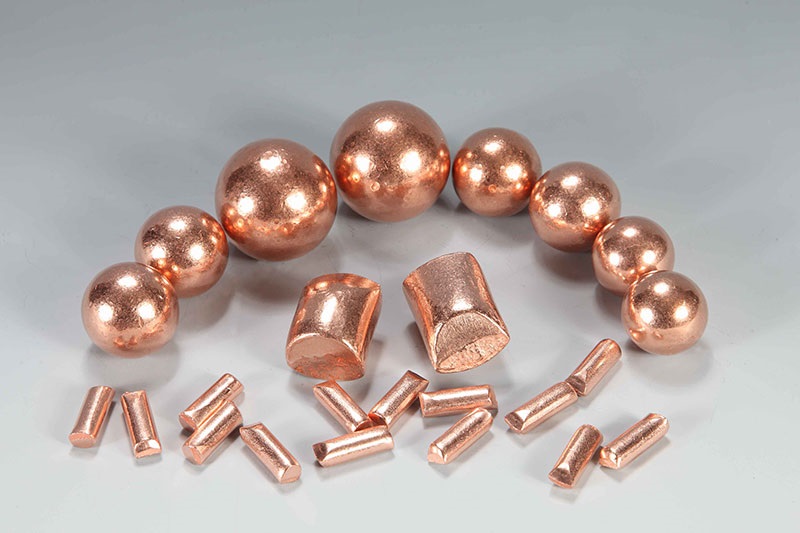
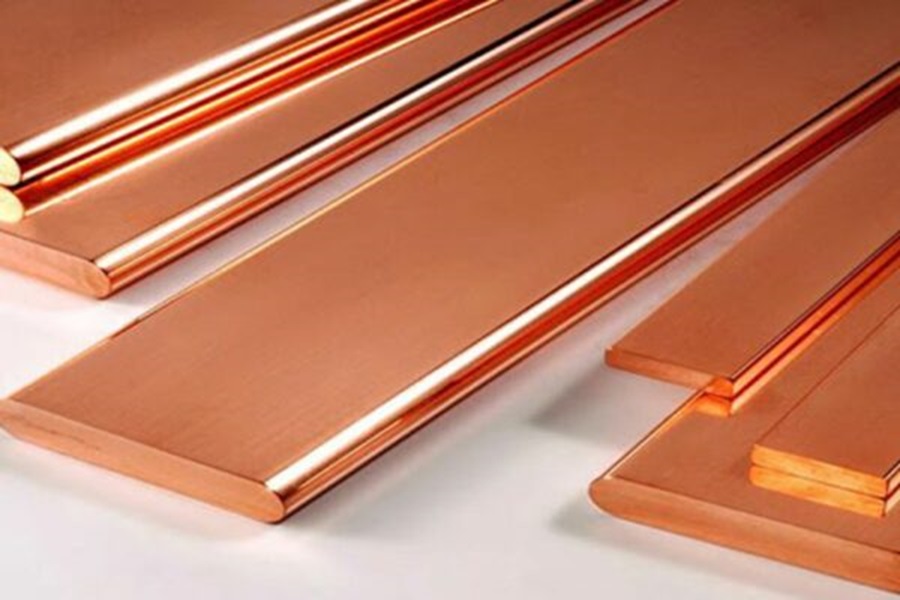
| Appearance | Reddish-brown metallic |
CHEMICAL STRUCTURE
    Phosphorized Copper Anode (Cu-P)

    α-Copper Matrix (FCC Crystal Structure)
    with Homogeneous Phosphorus Distribution

         Cu  Cu  Cu  Cu
           \  |  /  |
            Cu Cu Cu Cu
           /  |  \  |
         Cu  Cu  Cu  Cu

    Face-Centered Cubic (FCC) Crystal Structure
    Phosphorus: Homogeneously dissolved in matrix
    No Cu₃P precipitates below 0.1% P
Matrix: α-Copper solid solution (FCC crystal structure)
Phosphorus Distribution: Homogeneously dissolved in copper matrix
Oxygen Control: Phosphorus acts as deoxidizer → Oxygen content reduced to <0.01%
SECTION 1: CHEMICAL COMPOSITION (TYPICAL, WEIGHT %)
| Element | Content (%) | Function |
|---|---|---|
| Copper (Cu) | ≥ 99.90 | Base metal |
| Phosphorus (P) | 0.040 - 0.065 | Deoxidizer, grain refiner |
| Oxygen (O) | ≤ 0.01 | Controlled (removed by P) |
| Lead (Pb) | ≤ 0.005 | Impurity |
| Iron (Fe) | ≤ 0.003 | Impurity |
| Sulfur (S) | ≤ 0.002 | Impurity |
| Other Impurities (Total) | ≤ 0.03 | Total impurities |
SECTION 2: PHYSICAL PROPERTIES
| Property | Value | Test Method / Note |
|---|---|---|
| Appearance | Reddish-brown metallic | Visual |
| Color | Reddish-brown (characteristic of copper) | Visual |
| Density (20°C) | 8.96 g/cm³ | ASTM D792 |
| Melting Point | 1,083°C | DSC |
| Electrical Conductivity (IACS) | 85-95% (slightly lower than pure Cu) | ASTM E1004 |
| Thermal Conductivity (20°C) | 385 W/(m·K) | - |
| Hardness (Brinell) | 50-70 HB (after annealing) | ASTM E10 |
| Grain Size | 25-100 µm (controlled by thermomechanical process) | ASTM E112 |
| Coefficient of Thermal Expansion | 16.5 × 10⁻⁶ /°C | - |
| Specific Heat (25°C) | 0.385 J/g·K | - |
SECTION 3: MECHANICAL PROPERTIES
| Property | Value | Test Method / Note |
|---|---|---|
| Tensile Strength (Annealed) | 220-250 MPa | ASTM E8 |
| Yield Strength (0.2% Offset) | 60-80 MPa | ASTM E8 |
| Elongation at Break | 45-55% (annealed) | ASTM E8 |
| Modulus of Elasticity | 115-120 GPa | ASTM E8 |
| Machinability Rating | ~20% (compared to free-cutting brass) | - |
| Hardness (Annealed) | 50-70 HB | ASTM E10 |
SECTION 4: MICROSTRUCTURAL CHARACTERISTICS
| Parameter | Description |
|---|---|
| Matrix | α-Copper solid solution (FCC crystal structure) |
| Phosphorus Distribution | Homogeneously dissolved in copper matrix |
| Intermetallic Phases | No Cu₃P precipitates below 0.1% P |
| Oxygen Content | <0.01% (controlled by phosphorus deoxidation) |
| Grain Orientation | Equiaxed grains after recrystallization annealing |
| Grain Size | 25-100 µm (controlled by thermomechanical processing) |
| Porosity | None (fully dense) |
SECTION 5: ELECTROCHEMICAL PROPERTIES (CRITICAL FOR ELECTROPLATING)
| Parameter | Value / Behavior | Note |
|---|---|---|
| Standard Electrode Potential (Cu²⁺/Cu) | +0.337 V (vs. SHE) | - |
| Anode Polarization Behavior | Low and stable over time | - |
| Anode Dissolution Efficiency | 98-100% (no passivation layer formation) | - |
| Sludge Formation Rate | <1% (compared to 5-10% for oxygen-containing Cu) | - |
| Operating Current Density Range | 1-8 A/dm² (typical); up to 10 A/dm² (optimized) | - |
| Anode Potential (vs. SCE) | 0.20-0.35 V (at 4 A/dm², 60°C, copper sulfate bath) | - |
| Passivation Resistance | Excellent (no passivation layer) | - |
SECTION 6: PRODUCTION METHODS
Method 1: Continuous Casting and Rolling (Industrial Standard)
-
Process: Fire-refined copper + phosphorus master alloy → Melting (1150-1200°C) → Continuous casting → Hot rolling → Cold drawing/rolling
-
Phosphorus Addition: Cu-15%P master alloy or red phosphorus under inert atmosphere
-
Quality Control: Online spectrometer analysis, ultrasonic flaw detection
Method 2: Extrusion and Drawing (For Special Shapes)
-
Shapes Produced: Round rods (diameter 20-100 mm), oval rods, rectangular rods, hollow anodes
-
Surface Finish: Turned or polished (1.6-3.2 µm Ra)
Method 3: Electrolytic Refining (High-Purity Copper Precursor)
-
Feedstock: Electrolytic copper cathode (≥99.99% Cu)
-
Process: Remelting with controlled phosphorus addition under vacuum or inert atmosphere
SECTION 7: ANODE DISSOLUTION MECHANISM (PHOSPHORUS EFFECT)
Without Phosphorus (Oxygen-Containing Copper):
-
Cu₂O particles form → Incomplete dissolution → Sludge accumulation → Rough deposits
With Phosphorus (Phosphorized Copper):
-
Phosphorus reacts with oxygen → Forms P₂O₅ (volatilizes during melting) → Oxygen-free microstructure
-
During electrolysis: Thin, conductive black film (copper phosphide) forms on anode surface → Promotes homogeneous dissolution
-
Prevents formation of insoluble copper oxides
SECTION 8: MAIN APPLICATION AREAS
8.1 Acidic Copper Plating (Watts-Type Bath)
| Parameter | Typical Range |
|---|---|
| Bath Composition | CuSO₄·5H₂O: 200-250 g/L, H₂SO₄: 50-70 g/L |
| Chloride (Cl⁻) | 50-100 ppm |
| Temperature | 50-65°C |
| Cathode Current Density | 2-8 A/dm² |
| Anode:Cathode Ratio | 1:1 to 2:1 |
| Agitation | Air or mechanical |
8.2 PCB (Printed Circuit Board) Production
-
Application: Through-hole plating, panel plating
-
Current Density: 1-3 A/dm²
-
Required Anode Purity: ≥99.9% Cu and 0.04-0.06% P
-
Advantage: Minimum sludge, reduces defects (voids, nodules)
8.3 Automotive and Decorative Plating
-
Substrate Materials: Steel, zinc die-cast, aluminum
-
Typical Layer Sequence: Copper → Nickel → Chrome
-
Anode Service Life: 12-24 months (continuous operation)
SECTION 9: COMPARISON WITH OTHER COPPER ANODE TYPES
| Property | Phosphorized Copper (Cu-P) | Oxygen-Free Copper (OFHC) | Electrolytic Tough Pitch (ETP) |
|---|---|---|---|
| P Content | 0.04-0.06% | <0.001% | <0.002% |
| O Content | <0.01% | <0.001% | 0.02-0.05% |
| Sludge Formation | Very low (≤1%) | Low (2-5%) | High (5-10%) |
| Anode Polarization | Stable | Slightly increasing | Unstable, passivation risk |
| Coating Quality | Excellent | Good | Poor (rough, nodular) |
| Cost | Moderate | High | Low |
SECTION 10: PRODUCT FORMS AND DIMENSIONS (TYPICAL)
| Shape | Diameter / Cross-section | Length | Tolerance |
|---|---|---|---|
| Round Rod | 20-100 mm | 300-1000 mm | ±0.5 mm (diameter) |
| Oval Rod | 30×60 mm to 50×80 mm | 300-1000 mm | ±0.8 mm |
| Rectangular Rod | 20-50 mm thickness | 300-1000 mm | ±0.5 mm |
| Hollow Anode | ID 10-50 mm, OD 50-100 mm | 300-800 mm | ±1.0 mm |
| Custom Shapes | As per request | As per request | As specified |
SECTION 11: QUALITY CONTROL AND TEST METHODS
| Test | Method | Acceptance Criteria |
|---|---|---|
| Chemical Composition | ICP-OES, LECO (for O) | As per Section 1 |
| Hardness | Brinell (HB 10/500) | 50-70 HB |
| Electrical Conductivity | Eddy current or 4-probe | ≥85% IACS |
| Grain Size | ASTM E112 (intercept method) | 25-100 µm |
| Surface Roughness | Profilometer (Ra) | ≤3.2 µm (turned) |
| Ultrasonic Inspection | ASTM E114 | No internal voids or cracks |
| Density | Archimedes method | ≥8.94 g/cm³ |
SECTION 12: OPERATING RECOMMENDATIONS FOR ELECTROPLATING BATHS
-
Pre-cleaning: Alkaline degreasing, rinse with deionized water
-
Anode Bags: Polypropylene (PP) bags (75-150 µm pore size) – to trap trace sludge
-
Anode Distance: 50-150 mm from cathode
-
Bath Agitation: Maintain homogeneous Cu²⁺ concentration; avoid stagnation
-
Phosphorus Replenishment: Not required; anode composition is fixed
-
Anode Efficiency Correction: Use 98-100% for Faraday's law calculations
SECTION 13: QUALITY SPECIFICATIONS (TECHNICAL GRADE)
| Parameter | Specification | Test Method |
|---|---|---|
| Appearance | Reddish-brown metallic | Visual |
| Purity (Cu) | ≥ 99.90% | AAS / ICP |
| Phosphorus (P) | 0.040 - 0.065% | AAS / ICP |
| Oxygen (O) | ≤ 0.01% | LECO / Inert Gas Fusion |
| Lead (Pb) | ≤ 0.005% | AAS / ICP |
| Iron (Fe) | ≤ 0.003% | AAS / ICP |
| Sulfur (S) | ≤ 0.002% | Combustion / ICP |
| Total Impurities | ≤ 0.03% | AAS / ICP |
| Density | 8.96 g/cm³ | ASTM D792 |
| Electrical Conductivity | ≥ 85% IACS | ASTM E1004 |
SECTION 14: TOXICOLOGICAL PROFILE
| Parameter | Value |
|---|---|
| Acute Oral Toxicity | Low toxicity (solid metallic form) |
| Acute Inhalation Toxicity | Mechanical irritation due to dust |
| Skin Irritation | Non-irritant |
| Eye Irritation | Non-irritant |
| Chronic Toxicity | Copper compounds may cause chronic toxicity; Metallic copper is less toxic |
| Carcinogenicity | Not classified as carcinogenic |
| Mutagenicity | Not classified as mutagenic |
| Target Organs | Respiratory system (dust irritation) |
| Special Toxicity Note | Metallic copper is considered relatively non-toxic; Copper dust may cause respiratory irritation; Avoid inhalation of dust and fumes during processing |
SECTION 15: GHS CLASSIFICATION AND LABELING
GHS Classification (Compliant with CLP and UN GHS):
| Hazard Class | Category | H-Statement |
|---|---|---|
| Generally not classified as hazardous | - | - |
| STOT - SE (Single Exposure) | Category 3 | H335 (optional) |
Note: Phosphorized copper anode is generally considered non-hazardous in solid form. However, dust may cause mechanical irritation.
Signal Word: No signal word required (non-hazardous) or WARNING (optional)
Hazard Pictograms: GHS07 (optional)
Hazard Statements (H-Codes) - if classified:
| Code | Statement |
|---|---|
| H335 | May cause respiratory irritation |
SECTION 16: PRECAUTIONARY STATEMENTS (P-CODES)
| Code | Statement |
|---|---|
| P261 | Avoid breathing dust/fume/gas/mist/vapors/spray |
| P264 | Wash hands thoroughly after handling |
| P271 | Use only outdoors or in a well-ventilated area |
| P280 | Wear protective gloves/protective clothing/eye protection/face protection |
| P304+P340 | IF INHALED: Remove person to fresh air and keep comfortable for breathing |
| P312 | Call a POISON CENTER/doctor if you feel unwell |
| P362+P364 | Take off contaminated clothing and wash it before reuse |
| P403+P233 | Store in a well-ventilated place. Keep container tightly closed |
| P501 | Dispose of contents/container in accordance with local/regional/national/international regulations |
SECTION 17: FIRST AID MEASURES
| Exposure Route | Action to Take |
|---|---|
| Inhalation | Move to fresh air immediately. Rest in a position comfortable for breathing. If symptoms persist, get medical attention. |
| Skin Contact | Wash with plenty of soap and water. Remove contaminated clothing. If skin irritation occurs, get medical advice/attention. |
| Eye Contact | Rinse immediately with plenty of water for at least 15 minutes. Keep eyelids open. Remove contact lenses if present. Continue rinsing. If eye irritation persists, get medical advice/attention. |
| Ingestion | Rinse mouth with water. Do NOT induce vomiting. Drink plenty of water. Get medical attention if symptoms occur. |
SECTION 18: FIREFIGHTING MEASURES
| Parameter | Information |
|---|---|
| Fire Hazard | Non-combustible (bulk). Powder form may be combustible. |
| Hazards During Fire | High temperatures may produce copper oxide fumes; May react with strong acids |
| Suitable Extinguishers | Dry chemical powder, CO₂, sand |
| Unsuitable Extinguishers | Water (with powder form) |
| Special Protective Equipment | Self-contained breathing apparatus (SCBA), full protective clothing |
| Special Precautions | Prevent dust from entering sewers and waterways; Avoid contact with strong acids |
SECTION 19: STORAGE AND SHELF LIFE
| Parameter | Information |
|---|---|
| Storage Conditions | Store in a cool, dry, well-ventilated area; Keep away from acids, moisture, and corrosive atmospheres |
| Container Requirements | Original packaging, dry containers; Protect from corrosion |
| Materials to Protect From | Strong acids (especially nitric acid), moisture, corrosive atmospheres |
| Shelf Life | Unlimited (no chemical degradation; surface tarnishing does not affect performance) |
| Tarnishing Prevention | Store in original packaging or apply thin oil layer for long-term storage |
| Stability Note | Stable under normal conditions; Surface tarnishing does not affect performance |
SECTION 20: CRITICAL WARNINGS AND BEST PRACTICES
CRITICAL WARNINGS:
-
Non-hazardous material in solid form but dust may cause respiratory irritation. Use appropriate dust control measures.
-
Non-combustible (bulk). Does not burn. Stable at high temperatures.
-
Powder form may be combustible. Avoid dust generation.
-
Avoid contact with strong acids (especially nitric acid) – rapid dissolution with NOₓ evolution.
-
Anode sludge is minimal but anode bags are recommended for trace sludge capture.
-
Phosphorus content is critical: 0.040-0.065% P provides optimal deoxidation and dissolution behavior.
-
Incompatibilities: Keep away from strong acids, oxidizing agents, and halogens.
-
Hygiene Requirement: Wash hands thoroughly after handling.
BEST PRACTICE RECOMMENDATIONS:
-
Electroplating Application: Use in acidic copper plating baths (Watts-type); Maintain bath composition (CuSO₄·5H₂O: 200-250 g/L, H₂SO₄: 50-70 g/L); Operating temperature 50-65°C; Current density 2-8 A/dm²; Use anode bags (PP, 75-150 µm) for trace sludge capture.
-
PCB Production: Use for through-hole plating and panel plating; Current density 1-3 A/dm²; Minimum sludge ensures defect-free plating.
-
Automotive and Decorative Plating: Use for steel, zinc die-cast, and aluminum substrates; Typical layer sequence: Copper → Nickel → Chrome; Anode service life 12-24 months.
-
Pre-cleaning: Alkaline degreasing followed by deionized water rinse.
-
Anode Distance: Maintain 50-150 mm from cathode.
-
Bath Agitation: Maintain homogeneous Cu²⁺ concentration; avoid stagnation.
-
Phosphorus Replenishment: Not required; anode composition is fixed.
-
Anode Efficiency Correction: Use 98-100% for Faraday's law calculations.
-
Handling: Use in well-ventilated areas; Avoid dust generation; Wear protective gloves, safety goggles, and appropriate respiratory protection.
-
Personal Protective Equipment: Protective gloves (nitrile, neoprene), safety goggles, protective clothing, NIOSH-approved dust mask (if dust).
-
Hygiene: Wash hands thoroughly after handling; Do not eat, drink, or smoke when using.
-
Storage: Store in cool, dry, well-ventilated area; Protect from acids and moisture; Store in original packaging.
-
Spill Response: Avoid dust generation; Vacuum or sweep; Place in closed containers; Do not allow to enter drains or waterways.
-
Disposal: Dispose of in accordance with local, regional, and national regulations; Copper is 100% recyclable; Send to authorized metal recycling facilities.
SPECIAL NOTE ON ANODE DISSOLUTION MECHANISM:
Phosphorus Effect on Dissolution:
-
Without Phosphorus: Oxygen-containing copper → Cu₂O particles form → Incomplete dissolution → Sludge accumulation → Rough deposits
-
With Phosphorus: Phosphorus reacts with oxygen → P₂O₅ forms (volatilizes during melting) → Oxygen-free microstructure → Thin conductive black film (copper phosphide) forms → Promotes homogeneous dissolution → Prevents insoluble copper oxide formation
Benefits:
-
Minimum sludge (≤1%)
-
Stable anode polarization
-
Excellent coating quality
-
Reduced maintenance
SPECIAL NOTE ON PHOSPHORUS CONTENT:
-
Optimal Range: 0.040-0.065% P
-
Below 0.040%: Incomplete deoxidation → Increased sludge → Poor coating quality
-
Above 0.065%: Excessive phosphorus → Increased anode polarization → Potential embrittlement
-
Control: Regular chemical analysis; Spectrometer monitoring during production
LEGAL DISCLAIMER:
The information provided in this document is based on our current knowledge and experience and is presented in good faith. However, as all conditions of use are beyond our control, this document does not constitute a binding specification or warranty. This Technical Data Sheet is for informational purposes only. Users are responsible for testing suitability for their own applications. For complete safety, storage, handling, transportation, waste, and regulatory compliance information, please refer to the official Safety Data Sheet (SDS/MSDS) provided by the manufacturer/supplier.