We unleash your business potential by maximize the business innovation.
Send EmailAluminum Titanium Boron, AlTiB Master Alloy, Aluminum-Titanium-Boron Alloy, Grain Refiner, AlTiB, 7429-90-5, 7440-32-6, 7440-42-8
ALUMINUM TITANIUM BORON (AlTiB) MASTER ALLOY
Aluminum-Titanium-Boron Alloy / Grain Refiner
CAS Numbers: 7429-90-5 (Al), 7440-32-6 (Ti), 7440-42-8 (B)
1. IDENTIFICATION
| Property | Information |
|---|---|
| Product Name | Aluminum Titanium Boron Master Alloy (AlTiB) |
| Synonyms | AlTiB master alloy, Aluminum-Titanium-Boron alloy, Grain refiner, AlTiB5B1, AlTi3B1 |
| Composition | Aluminum (Al) + Titanium (Ti) + Boron (B) |
| CAS Numbers | 7429-90-5 (Aluminum) 7440-32-6 (Titanium) 7440-42-8 (Boron) |
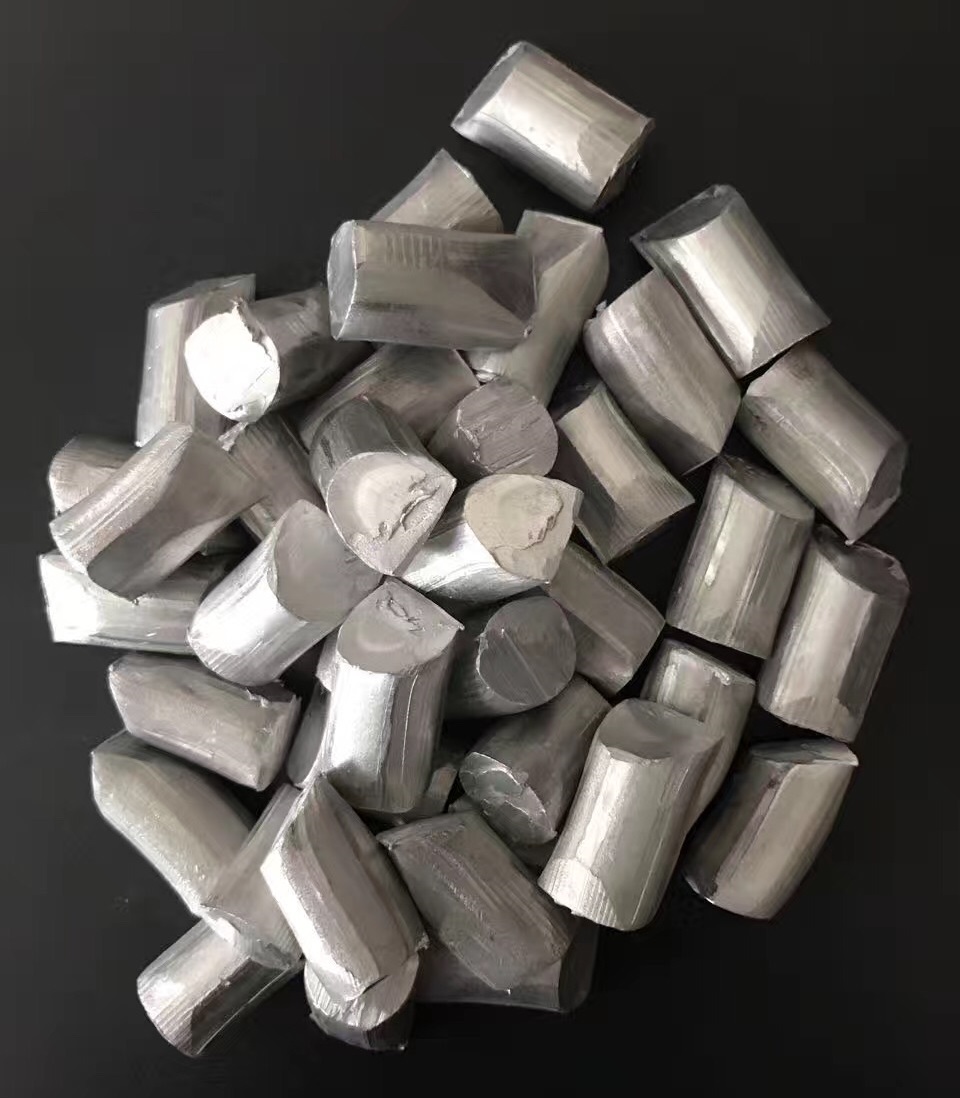
| Appearance | Gray metallic solid |
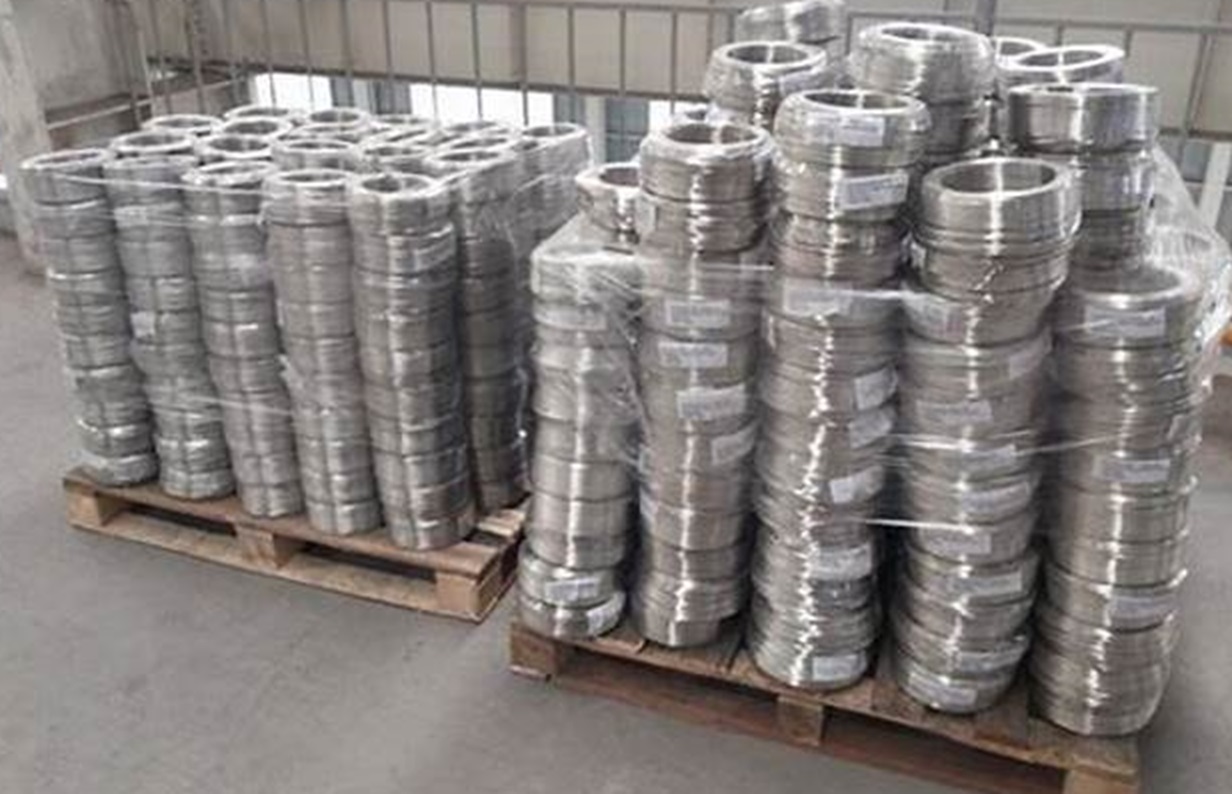
| Forms | Rod (bar), Coil (spiral), Waffle ingot, Button, Wire |
Note: The alloy itself does not have a dedicated CAS number; the constituent elements are used for identification.
2. STANDARD GRADES & COMPOSITIONS
| Grade | Titanium (Ti) % | Boron (B) % | Si max % | Fe max % | V max % | Aluminum (Al) % |
|---|---|---|---|---|---|---|
| AlTi5B1 | 4.5 – 5.5 | 0.8 – 1.2 | 0.20 | 0.30 | 0.20 | Balance |
| AlTi3B1 | 2.5 – 3.5 | 0.8 – 1.2 | 0.20 | 0.30 | 0.20 | Balance |
| AlTi5B0.6 | 4.5 – 5.5 | 0.5 – 0.7 | 0.20 | 0.30 | 0.20 | Balance |
| AlTi5B0.2 | 4.5 – 5.5 | 0.1 – 0.3 | 0.20 | 0.30 | 0.20 | Balance |
Key Ratios:
-
AlTi5B1: Ti:B ratio = 5:1 (most common for general grain refinement)
-
AlTi3B1: Ti:B ratio = 3:1 (for specific applications)
3. PHYSICAL PROPERTIES
| Property | Value |
|---|---|
| Density (20°C) | ~2.7 g/cm³ (similar to pure aluminum) |
| Melting Point | ~660 °C (1,220 °F) – similar to aluminum |
| Appearance | Gray, metallic luster |
| Form | Solid (rod, coil, waffle ingot, wire) |
| Thermal Conductivity | Similar to aluminum (~237 W/(m·K)) |
| Electrical Conductivity | Similar to aluminum (good conductor) |
4. CHEMICAL PROPERTIES
| Property | Information |
|---|---|
| Chemical Class | Metal alloy (Al-Ti-B system) |
| Ti:B Ratio | 5:1 or 3:1 (depending on grade) |
| Intermetallic Phases | TiAl₃ (titanium aluminide), TiB₂ (titanium diboride) |
| Reactivity | Reacts with oxygen at high temperatures (oxidation) |
| Solubility in Aluminum | Ti and B dissolve and form intermetallic phases |
| Corrosion Resistance | Does not affect the corrosion resistance of the final aluminum alloy |
| Stability | Stable under normal storage conditions |
Intermetallic Phases in AlTiB:
| Phase | Formula | Role |
|---|---|---|
| TiAl₃ | Titanium trialuminide | Nucleation site for α-Al grains |
| TiB₂ | Titanium diboride | Heterogeneous nucleation substrate |
5. GRAIN REFINEMENT MECHANISM
| Stage | Description |
|---|---|
| 1. Addition | AlTiB master alloy is added to molten aluminum (typically 660-750°C) |
| 2. Dissolution | The master alloy dissolves, releasing Ti and B |
| 3. Phase Formation | TiAl₃ (titanium aluminide) and TiB₂ (titanium diboride) particles form |
| 4. Nucleation | TiB₂ particles act as heterogeneous nucleation sites for α-Al grains |
| 5. Grain Growth Restriction | Dissolved Ti creates a growth-restricting zone around nucleated grains |
| 6. Refined Structure | Result: Fine, equiaxed grain structure instead of coarse columnar grains |
Benefits of Grain Refinement:
| Property | Coarse Grain | Fine Grain |
|---|---|---|
| Strength | Lower | Higher |
| Ductility | Lower | Higher |
| Fatigue Resistance | Lower | Higher |
| Machinability | Poor | Good |
| Surface Finish | Poor | Good |
| Hot Tearing Resistance | Poor | Good |
| Pressure Tightness | Poor | Good |
6. APPLICATIONS
6.1. Aluminum Production (Primary Use – ~80%)
| Application | Function |
|---|---|
| Direct Chill (DC) Casting | Grain refinement of rolling ingots (slabs) and extrusion billets |
| Continuous Casting | Grain refinement of strip and rod |
| Recycled Aluminum | Restores grain structure in recycled alloys |
6.2. Automotive Industry
| Application | Function |
|---|---|
| Engine Blocks & Cylinder Heads | Improved mechanical properties, pressure tightness |
| Wheels (Rims) | Higher strength, fatigue resistance |
| Chassis Components | Better ductility and impact resistance |
| Heat Exchangers | Improved formability and thermal conductivity |
6.3. Aerospace Industry
| Application | Function |
|---|---|
| High-Strength Aluminum Alloys | Grain refinement for 2xxx, 6xxx, 7xxx series alloys |
| Aircraft Skins & Structures | Improved fatigue life and damage tolerance |
| Cast Components | Better mechanical properties and reliability |
6.4. Construction & Architecture
| Application | Function |
|---|---|
| Aluminum Profiles (Extrusions) | Uniform grain structure, improved surface finish |
| Structural Sections | Better mechanical properties |
| Curtain Walls & Facades | Consistent quality |
6.5. Electrical & Electronics
| Application | Function |
|---|---|
| Conductor Alloys | Grain refinement of electrical grade aluminum |
| Heat Sinks | Improved thermal conductivity |
| Electronic Enclosures | Better surface finish and formability |
6.6. Packaging Industry
| Application | Function |
|---|---|
| Aluminum Foil | Fine grain for better rolling characteristics |
| Can Stock (Beverage Cans) | Improved formability and strength |
| Lid Stock | Consistent properties |
6.7. Other Applications
| Application | Function |
|---|---|
| Additive Manufacturing (3D Printing) | Fine aluminum powder production |
| Welding Wires | Filler alloy grain refinement |
| Foundry Alloys | Cast aluminum components |
7. COMPARISON: AlTi5B1 vs AlTi3B1
| Property | AlTi5B1 | AlTi3B1 |
|---|---|---|
| Titanium Content | 4.5 – 5.5% | 2.5 – 3.5% |
| Boron Content | 0.8 – 1.2% | 0.8 – 1.2% |
| Ti:B Ratio | ~5:1 | ~3:1 |
| Nucleation Density | Higher (more TiB₂ particles) | Lower |
| Grain Refining Efficiency | Superior for most alloys | Adequate for less demanding applications |
| Cost | Higher | Lower |
| Recommended Use | High-performance alloys, critical castings | General applications, low-cost requirements |
Selection Guide:
| Alloy Type | Recommended Grade |
|---|---|
| 6xxx series (extrusion) | AlTi5B1 |
| 3xxx series (can stock) | AlTi5B1 |
| 1xxx series (pure Al) | AlTi3B1 or AlTi5B1 |
| Recycled alloys | AlTi5B1 |
| High-strength alloys (2xxx, 7xxx) | AlTi5B1 |
8. TYPICAL ADDITION RATES
| Application | Typical Addition Rate (wt%) | Notes |
|---|---|---|
| DC Casting (Billets/Slabs) | 0.5 – 2.0 kg/ton | 1-2 kg/ton typical |
| Continuous Casting (Strip) | 1.0 – 3.0 kg/ton | Higher for thin strip |
| Foundry (Castings) | 0.5 – 1.5 kg/ton | Depends on section thickness |
| Recycled Aluminum | 1.0 – 2.5 kg/ton | Compensates for grain structure degradation |
| Fine Wire Applications | 0.5 – 1.0 kg/ton | Minimal addition |
Target Titanium Level in Melt: 0.005 – 0.015% Ti (50-150 ppm)
Formula:
Addition rate (kg/ton) = (Target Ti% - Initial Ti%) × 1000 / Ti% in master alloy
Example: Target Ti = 0.01%, Initial Ti = 0%, Master alloy Ti = 5%
Addition = (0.01 - 0) × 1000 / 5 = 2 kg/ton
9. AVAILABLE FORMS
| Form | Dimensions | Application |
|---|---|---|
| Rod (Bar) | Ø9.5 mm, Ø12.5 mm, Ø15 mm | Continuous addition to molten metal stream |
| Coil (Spiral) | Various diameters, continuous length | Automated feeding systems |
| Waffle Ingot | 5-10 kg pieces | Manual addition to furnaces |
| Button (Pig) | 0.5-1 kg pieces | Small batch addition |
| Wire | Ø3-6 mm | Continuous wire feeding |
| Granule | 1-6 mm | Automated dispensing |
10. COMPARISON WITH OTHER MASTER ALLOYS
| Master Alloy | Composition | Primary Function | Advantage |
|---|---|---|---|
| AlTiB (5B1) | Al + 5% Ti + 1% B | Grain refinement | Most effective, most common |
| AlTiB (3B1) | Al + 3% Ti + 1% B | Grain refinement | Lower cost |
| AlTiC | Al + Ti + C | Grain refinement | Better for high-Si alloys |
| AlTi (10) | Al + 10% Ti | Grain refinement (less effective) | Lower cost, but less efficient |
| AlSr (10) | Al + 10% Sr | Modification of eutectic Si | For Al-Si alloys (hypoeutectic) |
| AlB (3) | Al + 3% B | Conductivity improvement | For electrical grade aluminum |
AlTiB vs AlTiC:
| Property | AlTiB | AlTiC |
|---|---|---|
| Grain Refining Efficiency | Excellent | Good |
| Performance in High-Si Alloys | Moderate (Si reduces TiB₂ stability) | Excellent (more stable) |
| Fading Resistance | Moderate | Good |
| Cost | Lower | Higher |
| Primary Application | Most Al alloys | High-Si alloys (e.g., engine blocks) |
11. STORAGE & HANDLING
| Parameter | Information |
|---|---|
| Storage Conditions | Cool, dry, well-ventilated area |
| Container Requirements | Original packaging (cartons, drums) or clean, dry metal containers |
| Protect From | Moisture, water, corrosive environments |
| Shelf Life | Indefinite (when stored properly in dry conditions) |
| Reactivity | Stable; no hazardous reactions under normal conditions |
| Incompatible Materials | Strong acids, strong bases, oxidizing agents |
| Packaging Options | Cartons (rod/coil), steel drums (waffle/button), plastic-lined drums (granules) |
12. SAFETY & HEALTH INFORMATION
GHS Classification (for the alloy – bulk solid)
| Hazard Class | Category |
|---|---|
| Not classified as hazardous (for solid bulk form) | – |
Notes:
-
The solid master alloy is not classified as hazardous under normal handling conditions.
-
Fine dust (from grinding or machining) may be combustible.
-
Fumes from melting may cause metal fume fever (inhalation of Al, Ti, B oxides).
First Aid Measures
| Exposure Route | Action |
|---|---|
| Inhalation (Dust/Fumes) | Remove to fresh air. Seek medical attention if respiratory irritation occurs. |
| Skin Contact | Wash with soap and water. |
| Eye Contact | Rinse with plenty of water for 15 minutes. |
| Ingestion | Unlikely to occur for solid form. Seek medical attention if large pieces swallowed. |
Personal Protective Equipment (PPE) for Handling/Melting
| Equipment | Recommendation |
|---|---|
| Respiratory Protection | Dust mask (when grinding); fume respirator (when melting) |
| Hand Protection | Heat-resistant gloves (for handling hot ingots) |
| Eye Protection | Safety glasses with side shields |
| Body Protection | Heat-resistant apron, protective clothing |
13. ENVIRONMENTAL INFORMATION
| Parameter | Information |
|---|---|
| Biodegradability | Not applicable (inorganic metal alloy) |
| Aquatic Toxicity | Low; aluminum, titanium, boron are naturally occurring elements |
| Recyclability | 100% recyclable |
| Waste Disposal | Recycle as scrap metal. Dispose according to local regulations. |
14. TRANSPORT INFORMATION
| Parameter | Information |
|---|---|
| UN Number | Not regulated (solid metal) |
| Hazard Class | None |
| Packing Group | Not applicable |
| Marine Pollutant | No |
15. OTHER MASTER ALLOYS (For Reference)
| Alloy Type | Composition | Grades | Primary Function |
|---|---|---|---|
| AlTiC | Al + Ti + C | AlTi5C0.15, AlTi3C0.15 | Grain refinement (high-Si alloys) |
| AlTi | Al + Ti | AlTi10, AlTi15 | Grain refinement (lower efficiency) |
| AlSr | Al + Sr | AlSr10, AlSr15, AlSr20 | Modification of eutectic Si in Al-Si alloys |
| AlSi | Al + Si | AlSi20, AlSi30, AlSi50 | Hardening, foundry alloys |
| AlCu | Al + Cu | AlCu50 | Hardening, precipitation strengthening |
| AlMn | Al + Mn | AlMn10, AlMn20, AlMn30 | Corrosion resistance, dispersoid formation |
| AlV | Al + V | AlV5, AlV10 | Grain refinement, mechanical properties |
| Al Wire | Al (≥99.5%) | Ø9.5 mm, Ø12.5 mm | Deoxidation, alloying |
16. ADVANTAGES OF USING AlTiB
| Advantage | Description |
|---|---|
| Improved Mechanical Properties | Higher strength, ductility, and fatigue resistance |
| Better Surface Quality | Reduced surface defects in extrusions and rolled products |
| Reduced Hot Tearing | Minimizes cracking during solidification |
| Improved Pressure Tightness | Fine grain structure reduces porosity in castings |
| Enhanced Machinability | Uniform microstructure improves machining |
| Higher Productivity | Faster casting speeds, reduced scrap rates |
| Recycling Efficiency | Restores grain structure in recycled aluminum |
| Cost-Effective | Small addition (1-2 kg/ton) provides significant benefits |
17. SUMMARY
Aluminum Titanium Boron (AlTiB) Master Alloy is a grain refiner for aluminum and aluminum alloys. It contains titanium (Ti) and boron (B) in aluminum (Al) matrix, typically with Ti:B ratios of 5:1 or 3:1.
Key Features:
| Feature | Value |
|---|---|
| Appearance | Gray metallic solid |
| Density | ~2.7 g/cm³ |
| Melting Point | ~660°C |
| Forms | Rod, coil, waffle ingot, wire, granule |
Standard Grades:
| Grade | Ti (%) | B (%) | Primary Use |
|---|---|---|---|
| AlTi5B1 | 4.5-5.5 | 0.8-1.2 | General grain refinement (most common) |
| AlTi3B1 | 2.5-3.5 | 0.8-1.2 | Lower cost, less demanding applications |
Main Application Areas:
| Sector | Applications |
|---|---|
| Aluminum Production | DC casting, continuous casting, recycled aluminum |
| Automotive | Engine blocks, wheels, chassis, heat exchangers |
| Aerospace | High-strength alloys (2xxx, 6xxx, 7xxx) |
| Construction | Extruded profiles, structural sections |
| Electrical | Conductor alloys, heat sinks |
| Packaging | Foil, can stock, lid stock |
18. IMPORTANT NOTES
-
Grain Refinement Mechanism: AlTiB works by forming TiB₂ (titanium diboride) particles which act as nucleation sites for α-Al grains during solidification. The dissolved Ti creates a growth-restricting zone, ensuring a fine, equiaxed grain structure.
-
Ti:B Ratio Importance: The 5:1 ratio (AlTi5B1) is optimal for most aluminum alloys. Excess Ti (beyond the TiB₂ stoichiometry) is required for the growth-restricting effect. Too little Ti reduces efficiency; too much Ti increases cost without additional benefit.
-
Fading (Over time): TiB₂ particles can settle or agglomerate over time in molten aluminum, reducing grain refining efficiency ("fading"). For long holding times, higher addition rates or re-addition may be required.
-
Poisoning (Si effect): In high-silicon alloys (>7% Si), silicon can react with TiB₂ particles, reducing their effectiveness ("poisoning"). For high-Si alloys (e.g., Al-Si engine blocks), AlTiC master alloy is recommended instead of AlTiB.
-
Addition Temperature: The recommended addition temperature is 700-750°C. Addition at lower temperatures may result in incomplete dissolution; addition at higher temperatures increases oxidation and hydrogen pickup.
-
Addition Method: For best results, add the master alloy to the molten metal stream during casting (continuous addition) or stir thoroughly into the melt before casting (batch addition). Avoid adding to dross or oxidized surfaces.
-
Compatibility with Other Master Alloys: AlTiB can be used together with other master alloys (AlSr for Si modification, AlB for conductivity, AlCu/AlMn for alloying). No negative interactions between AlTiB and most other master alloys.
-
Forms Selection:
-
Rod/Wire: For continuous addition using wire feeders
-
Coil (Spiral): For automated feeding systems
-
Waffle/Button: For manual addition to furnaces
-
Granule: For automated dispensing systems
-
-
Storage: Keep in dry conditions to prevent oxidation and moisture absorption. Aluminum master alloys can develop aluminum hydroxide (white powder) on the surface if stored in humid conditions.
-
Recycling: AlTiB master alloys are fully recyclable. Scrap material can be returned to the manufacturer or recycled as aluminum scrap (with appropriate segregation to avoid contamination of other alloy families).
Important Disclaimer: This Technical Data Sheet (TDS) is for informational purposes only. For complete safety, handling, storage, and regulatory compliance information, always refer to the official Safety Data Sheet (SDS) provided by the manufacturer/supplier.