We unleash your business potential by maximize the business innovation.
Send EmailLead Ingot, Lead Block, Lead Slab, Pure Lead, 7439-92-1
LEAD INGOT (PURE LEAD)
PRODUCT IDENTIFICATION INFORMATION
| Parameter | Information |
|---|---|
| Product Name | Lead Ingot |
| Chemical Symbol | Pb |
| Synonyms (English) | Lead Ingot, Lead Block, Lead Slab, Pure Lead |
| Synonyms (Turkish) | Kurşun Külçe, Kurşun Blok, Kurşun Levha, Saf Kurşun |
| CAS Number | 7439-92-1 |
| EC Number (EINECS) | 231-100-4 |
| Atomic Number | 82 |
| Atomic Weight | 207.20 g/mol |
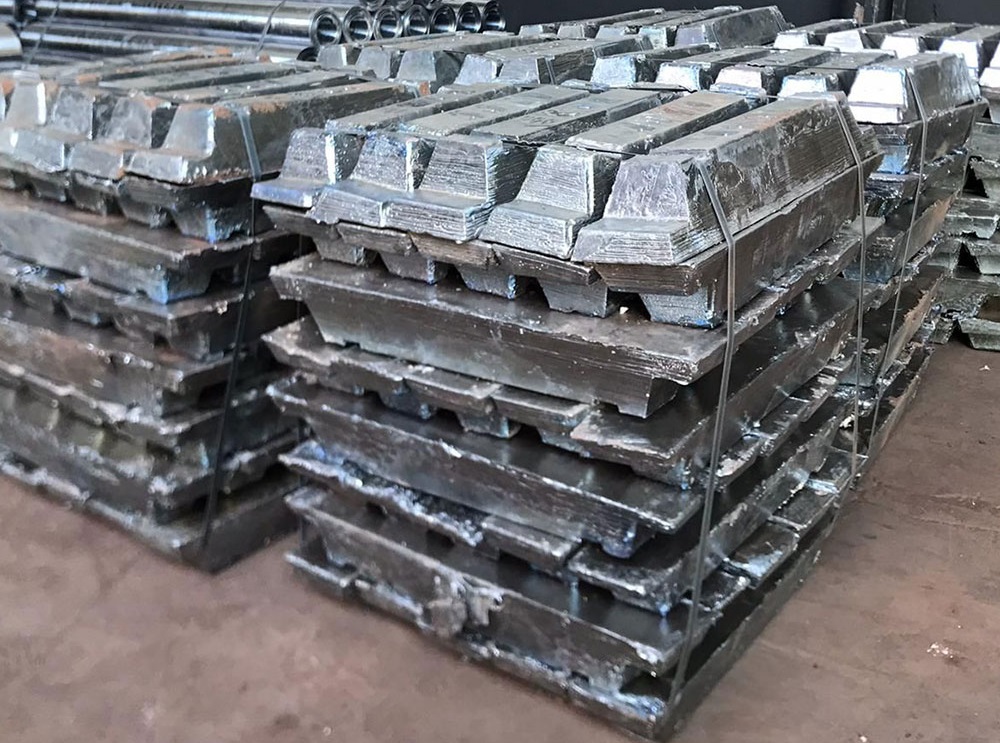
| Appearance | Bluish-gray metallic ingot/block |
CHEMICAL STRUCTURE
    Lead Ingot (Pb)

    Metallic Lattice Structure

         Pb  Pb  Pb  Pb
           \  |  /  |
            Pb Pb Pb Pb
           /  |  \  |
         Pb  Pb  Pb  Pb

    Face-Centered Cubic (FCC) Crystal Structure
Molecular Formula: Pb (Elemental)
Crystal Structure: Face-Centered Cubic (FCC)
Electron Configuration: [Xe] 4f¹⁴ 5d¹⁰ 6s² 6p²
Oxidation States: +2, +4 (primary)
Synonyms: Lead Ingot, Lead Block, Lead Slab, Pure Lead
SECTION 1: CHEMICAL IDENTITY AND DEFINITION
| Parameter | Information |
|---|---|
| Product Name | Lead Ingot |
| Chemical Symbol | Pb |
| Synonyms (English) | Lead Ingot, Lead Block, Lead Slab, Pure Lead |
| Synonyms (Turkish) | Kurşun Külçe, Kurşun Blok, Kurşun Levha, Saf Kurşun |
| CAS Number | 7439-92-1 |
| EC Number (EINECS) | 231-100-4 |
| Atomic Number | 82 |
| Atomic Weight | 207.20 g/mol |
| Chemical Class | Post-transition metal; heavy metal; elemental metal |
| Crystal Structure | Face-Centered Cubic (FCC) |
| Electron Configuration | [Xe] 4f¹⁴ 5d¹⁰ 6s² 6p² |
| Oxidation States | +2, +4 (primary) |
| Magnetic Properties | Non-magnetic |
| Appearance | Bluish-gray metallic ingot/block |
| Odor | Odorless |
| Color | Bluish-gray |
| Luster | Metallic luster, dulls upon oxidation |
SECTION 2: PHYSICAL AND CHEMICAL PROPERTIES
| Property | Value | Test Method / Note |
|---|---|---|
| Appearance | Bluish-gray metallic ingot/block | Visual |
| Atomic Weight | 207.20 g/mol | Calculated |
| Density (20°C) | 11.34 g/cm³ | ASTM D792 |
| Melting Point | 327.5°C | DSC |
| Boiling Point | 1,749°C | - |
| Electrical Conductivity | 4.8 × 10⁶ S/m (moderate) | ASTM E1004 |
| Thermal Conductivity | 35.3 W/m·K | - |
| Specific Heat (25°C) | 0.129 J/g·K | - |
| Electrical Resistivity | 2.08 × 10⁻⁷ Ω·m | - |
| Hardness (Brinell) | ~5 HB (very soft) | ASTM E10 |
| Tensile Strength | ~10-15 MPa (low) | ASTM E8 |
| Elongation | ~30-50% (high ductility) | ASTM E8 |
| Magnetic Properties | Non-magnetic | - |
| Oxidation States | +2, +4 | - |
| Corrosion Resistance | Excellent (forms protective layer) | - |
| Standard Electrode Potential | -0.126 V (Pb²⁺/Pb) | - |
| Coefficient of Thermal Expansion | 29.0 × 10⁻⁶ /°C | - |
| Toxicity | Highly toxic | - |
SECTION 3: CHEMICAL PROPERTIES AND REACTIVITY
| Parameter | Information |
|---|---|
| Chemical Character | Post-transition metal; very soft; highly ductile; excellent corrosion resistance; non-magnetic; toxic |
| Stability | Stable under normal conditions; Forms protective oxide/carbonate layer on surface; Resistant to corrosion |
| Reactivity | Reacts with strong acids to form lead salts; Resistant to most acids due to protective layer; Reacts with strong bases |
| Incompatible Materials | Strong oxidizing agents, strong acids (nitric acid), strong bases, halogens, nitrates |
| Corrosion Resistance | Excellent; Forms protective oxide/carbonate layer; Resistant to sulfuric acid (used in lead-acid batteries) |
| Acid Reaction | Pb + 2HNO₃ → Pb(NO₃)₂ + H₂ (with nitric acid); Pb + H₂SO₄ → PbSO₄ + H₂ (forms protective layer) |
| Alkali Reaction | Reacts with strong bases to form plumbites |
| Oxidation | Forms protective oxide layer (PbO) and carbonate layer on surface; Prevents further corrosion |
| Alloy Formation | Easily forms alloys with tin (solder), antimony, calcium, arsenic |
| Toxicity | Highly toxic; Bioaccumulates in body; Affects nervous system, kidneys, and blood |
SECTION 4: COMPARISON OF LEAD AND RELATED METALS
| Property | Lead (Pb) | Tin (Sn) | Zinc (Zn) | Copper (Cu) |
|---|---|---|---|---|
| CAS Number | 7439-92-1 | 7440-31-5 | 7440-66-6 | 7440-50-8 |
| Symbol | Pb | Sn | Zn | Cu |
| Atomic Number | 82 | 50 | 30 | 29 |
| Density (g/cm³) | 11.34 | 7.28 | 7.14 | 8.96 |
| Melting Point (°C) | 327.5 | 231.9 | 419.5 | 1,085 |
| Hardness | Very soft | Very soft | Moderate | Hard |
| Toxicity | Highly toxic | Low toxicity | Low toxicity | Low toxicity |
| Primary Use | Batteries, shielding | Solder, plating | Galvanizing | Wiring, plumbing |
SECTION 5: PRODUCTION METHODS
Method 1: Smelting and Refining (Most Common Method)
-
Process: Lead ore (Galena - PbS) → Roasting → Smelting → Refining → Pure Lead
-
Description: Lead ore is roasted to remove sulfur; Smelted with coke to produce crude lead; Refined by electrolysis or thermal refining; Most common industrial production method
Method 2: Electrolytic Refining
-
Process: Crude lead → Electrolysis → Pure lead
-
Reaction: Pb²⁺ + 2e⁻ → Pb (deposition at cathode)
-
Description: Crude lead is used as anode; Pure lead is deposited on cathode through electrolysis; Produces high-purity lead (99.99%+)
Method 3: Thermal Refining (Fire Refining)
-
Process: Crude lead → Heating → Fluxing → Slag removal → Pure lead
-
Description: Crude lead is heated and treated with fluxes to remove impurities; Produces commercial-grade lead
Method 4: Casting and Forming
-
Process: Pure lead → Melting → Casting → Ingot
-
Description: Pure lead is melted and cast into ingot molds; Produced in standard sizes and weights
SECTION 6: FUNCTIONAL PROPERTIES AND MECHANISM OF ACTION
| Property | Description |
|---|---|
| Battery Electrode | Used in lead-acid batteries (automotive and industrial); Acts as anode and cathode; Rechargeable; High surge current capability; Reliable and low cost |
| Radiation Shielding | Used for protection against X-rays and gamma radiation; High density (11.34 g/cm³) provides excellent radiation attenuation; Used in medical, nuclear, and industrial applications |
| Cable Sheathing | Used as protective sheath for electrical cables; Provides corrosion resistance; Protects cables from moisture and mechanical damage |
| Ammunition | Used in bullet and shot production; High density for ballistic performance; Easy to cast and form |
| Weight and Ballast | Used as high-density weights for diving, ship ballast, and counterweights; High density provides compact weight |
| Chemical Resistance | Excellent resistance to sulfuric acid; Used in chemical processing equipment; Protective layer formation |
| Alloy Component | Forms alloys with tin (solder), antimony (hard lead), calcium (battery grids) |
SECTION 7: MAIN APPLICATION AREAS
| Industry / Application | Function | Typical Use |
|---|---|---|
| Battery Industry | Electrode | Lead-acid batteries (automotive, industrial, UPS); Starter batteries; Deep-cycle batteries |
| Radiation Shielding | Shield | Medical X-ray rooms; Nuclear facilities; Radiography; Radiation protection equipment |
| Cable Industry | Sheathing | Electrical cable protection; Underground cables; Submarine cables |
| Military / Ammunition | Projectile | Bullets; Shot; Military ammunition; Sporting ammunition |
| Marine / Construction | Ballast | Ship ballast; Diving weights; Counterweights; Vibration damping |
| Chemical Industry | Corrosion resistance | Chemical processing equipment; Sulfuric acid handling; Protective linings |
| Alloy Production | Alloy component | Solder (tin-lead); Hard lead (antimony-lead); Battery grids (calcium-lead) |
| Construction | Sound insulation | Soundproofing materials; Acoustic insulation; Vibration damping |
SECTION 8: QUALITY SPECIFICATIONS (PURE LEAD INGOT)
| Parameter | Specification | Test Method |
|---|---|---|
| Appearance | Bluish-gray metallic ingot/block | Visual |
| Purity (Pb) | ≥ 99.0% - 99.99% | AAS / ICP |
| Antimony (Sb) | ≤ 0.001% - 0.5% | AAS / ICP |
| Tin (Sn) | ≤ 0.001% - 0.05% | AAS / ICP |
| Arsenic (As) | ≤ 0.001% - 0.02% | AAS / ICP |
| Bismuth (Bi) | ≤ 0.001% - 0.02% | AAS / ICP |
| Copper (Cu) | ≤ 0.001% - 0.01% | AAS / ICP |
| Zinc (Zn) | ≤ 0.001% - 0.01% | AAS / ICP |
| Iron (Fe) | ≤ 0.001% - 0.01% | AAS / ICP |
| Silver (Ag) | ≤ 0.001% - 0.01% | AAS / ICP |
| Nickel (Ni) | ≤ 0.001% - 0.01% | AAS / ICP |
| Ingot Weight | 25-50 kg (standard) | Weighing |
| Dimensions | As per customer requirement | Measurement |
SECTION 9: TOXICOLOGICAL PROFILE
| Parameter | Value |
|---|---|
| Acute Oral Toxicity | High toxicity |
| Acute Inhalation Toxicity | Toxic; Dust/fume inhalation causes lead poisoning |
| Skin Irritation | Metallic form may cause irritation |
| Eye Irritation | Metallic form may cause irritation |
| Chronic Toxicity | Highly toxic; Accumulates in body; Affects nervous system, kidneys, blood, and reproductive system |
| Carcinogenicity | IARC Group 2A (Probably carcinogenic to humans); NTP: Known human carcinogen |
| Mutagenicity | Suspected of causing genetic defects (H341) |
| Reproductive Toxicity | May damage fertility or the unborn child (H360Df) |
| Target Organs | Nervous system, kidneys, blood, bones, reproductive system |
| Occupational Exposure Limit (8h TWA) | 0.05 mg/m³ (OSHA PEL); 0.05 mg/m³ (ACGIH TLV) |
| Special Toxicity Note | LEAD IS HIGHLY TOXIC. Chronic exposure causes lead poisoning (plumbism). Symptoms: abdominal pain, headache, fatigue, memory loss, anemia, kidney damage, neurological damage. Children are especially sensitive. Bioaccumulates in bones and teeth. |
SECTION 10: GHS CLASSIFICATION AND LABELING
GHS Classification (Compliant with CLP and UN GHS):
| Hazard Class | Category | H-Statement |
|---|---|---|
| Reproductive Toxicity | Category 1A | H360Df |
| Carcinogenicity | Category 2 | H351 |
| Acute Toxicity (Oral) | Category 4 | H302 |
| Acute Toxicity (Inhalation) | Category 4 | H332 |
| STOT - RE (Repeated Exposure) | Category 1 | H372 |
| Aquatic Toxicity | Category 2 | H411 |
Signal Word: DANGER
Hazard Pictograms: GHS08 (Health Hazard), GHS07 (Exclamation Mark), GHS09 (Environment)
Hazard Statements (H-Codes):
| Code | Statement |
|---|---|
| H302 | Harmful if swallowed |
| H332 | Harmful if inhaled |
| H351 | Suspected of causing cancer |
| H360Df | May damage the unborn child and fertility |
| H372 | Causes damage to organs through prolonged or repeated exposure |
| H411 | Toxic to aquatic life with long lasting effects |
NFPA 704 Hazard Classification:
| Health | Flammability | Reactivity | Special |
|---|---|---|---|
| 3 | 0 | 0 | - |
| (Severe health hazard) | (Will not burn) | (Stable) | (None) |
SECTION 11: PRECAUTIONARY STATEMENTS (P-CODES)
| Code | Statement |
|---|---|
| P201 | Obtain special instructions before use |
| P202 | Do not handle until all safety precautions have been read and understood |
| P260 | Do not breathe dust/fume/gas/mist/vapors/spray |
| P261 | Avoid breathing dust/fume/gas/mist/vapors/spray |
| P264 | Wash hands thoroughly after handling |
| P270 | Do not eat, drink or smoke when using this product |
| P271 | Use only outdoors or in a well-ventilated area |
| P273 | Avoid release to the environment |
| P280 | Wear protective gloves/protective clothing/eye protection/face protection/respiratory protection |
| P301+P312 | IF SWALLOWED: Call a POISON CENTER/doctor if you feel unwell |
| P304+P340 | IF INHALED: Remove person to fresh air and keep comfortable for breathing |
| P308+P313 | IF exposed or concerned: Get medical advice/attention |
| P330 | Rinse mouth |
| P362+P364 | Take off contaminated clothing and wash it before reuse |
| P403+P233 | Store in a well-ventilated place. Keep container tightly closed |
| P405 | Store locked up |
| P501 | Dispose of contents/container in accordance with local/regional/national/international regulations |
SECTION 12: FIRST AID MEASURES
| Exposure Route | Action to Take |
|---|---|
| Inhalation | Move to fresh air immediately. Rest in a position comfortable for breathing. If breathing is difficult, give oxygen. If symptoms occur, call a POISON CENTER/doctor immediately. |
| Skin Contact | Remove contaminated clothing immediately. Rinse skin with plenty of water for at least 15-20 minutes. Wash with soap and water. If skin irritation occurs, get medical advice/attention. |
| Eye Contact | Rinse immediately with plenty of water for at least 15 minutes. Keep eyelids open. Remove contact lenses if present. Continue rinsing. Get immediate medical attention. |
| Ingestion | Rinse mouth with water. Do NOT induce vomiting. Drink plenty of water. Immediately call a POISON CENTER/doctor. Never give anything by mouth to an unconscious person. |
SECTION 13: FIREFIGHTING MEASURES
| Parameter | Information |
|---|---|
| Fire Hazard | Non-combustible. High temperatures release toxic lead oxide fumes. |
| Hazards During Fire | Thermal decomposition produces toxic lead oxide fumes |
| Suitable Extinguishers | Use appropriate extinguishing media for surrounding fire. Dry chemical powder, CO₂, sand |
| Unsuitable Extinguishers | Water (with powder form) |
| Special Protective Equipment | Self-contained breathing apparatus (SCBA), full protective clothing |
| Special Precautions | Prevent dust from entering sewers and waterways; Do not inhale fumes |
SECTION 14: STORAGE AND SHELF LIFE
| Parameter | Information |
|---|---|
| Storage Conditions | Store in a cool, dry, well-ventilated area; Keep away from moisture and incompatible substances; Store separately from food and feed |
| Container Requirements | Original packaging, dry containers; Protect from corrosion |
| Materials to Protect From | Strong oxidizing agents, strong acids, strong bases, halogens |
| Shelf Life | Unlimited (under proper storage conditions) |
| Stability Note | Stable under normal conditions; Forms protective oxide/carbonate layer on surface; Protect from moisture |
| Special Storage Requirements | Store separately from food and feed; Store locked up; Regular monitoring for lead contamination |
SECTION 15: PACKAGING OPTIONS
| Packaging Type | Quantity | Material |
|---|---|---|
| Wooden Crate | 50-200 kg | Wooden crate (lined) |
| Steel Crate | 50-200 kg | Steel crate |
| Steel Drum | 100-500 kg | Corrosion-resistant lined steel |
| Pallet | 500-1000 kg | Steel pallet |
| Bulk | Custom quantities | Container |
SECTION 16: TRANSPORT INFORMATION
| Parameter | Information |
|---|---|
| UN Number | UN 3077 (Environmentally hazardous substance, solid, n.o.s.) |
| Hazard Class | 9 (Miscellaneous Dangerous Goods) |
| Packing Group | III |
| ADR/RID | UN 3077, Environmentally hazardous substance, solid, n.o.s., 9, PG III |
| IMDG Code | UN 3077, Environmentally hazardous substance, solid, n.o.s., 9, PG III, Marine Pollutant: Yes |
| IATA (Air) | UN 3077, Environmentally hazardous substance, solid, n.o.s., 9, PG III |
| Marine Pollutant | Yes |
| Transport Temperature | Ambient temperature; Protect from moisture |
SECTION 17: REGULATORY STATUS
| Region / Authority | Status |
|---|---|
| European Union | REACH registered; Classified as reproductive toxicant and carcinogen |
| USA (TSCA) | Listed |
| USA (EPA) | Regulated as hazardous substance; Lead and Lead Compounds |
| Turkey | Industrial raw material; Subject to KKDIK regulation; Classified as toxic |
| IARC | Group 2A (Probably carcinogenic to humans) |
| NTP | Known human carcinogen |
| OSHA | Regulated (highly toxic substance) |
| California (Prop 65) | Listed as carcinogen and reproductive toxicant |
| EU Restrictions | Restricted under REACH Annex XVII |
| RoHS | Restricted in electronic equipment |
SECTION 18: OTHER NAMES AND SYNONYMS
| Type | Name |
|---|---|
| Turkish Names | Kurşun Külçe, Kurşun Blok, Kurşun Levha, Saf Kurşun |
| English Names | Lead Ingot, Lead Block, Lead Slab, Pure Lead |
| Chemical Names | Lead; Elemental Lead; Lead Metal |
| CAS Number | 7439-92-1 |
| EC Number | 231-100-4 |
| Atomic Number | 82 |
| Atomic Symbol | Pb |
SECTION 19: SUMMARY TABLE
| Parameter | Value |
|---|---|
| Product | Lead Ingot (Pure Lead) |
| CAS Number | 7439-92-1 |
| Atomic Number | 82 |
| Atomic Weight | 207.20 g/mol |
| Appearance | Bluish-gray metallic ingot/block |
| Density | 11.34 g/cm³ |
| Melting Point | 327.5°C |
| Boiling Point | 1,749°C |
| Hardness | Very soft (~5 HB) |
| Electrical Conductivity | 4.8 × 10⁶ S/m |
| Magnetic Properties | Non-magnetic |
| Primary Function | Battery electrode, radiation shielding |
| Main Applications | Lead-acid batteries, radiation shielding, cable sheathing, ammunition, ballast |
| Shelf Life | Unlimited |
| GHS Signal Word | DANGER |
| UN Number | UN 3077 |
| Toxicity | Highly toxic; IARC Group 2A; NTP Known carcinogen |
| Special Feature | High density; Excellent corrosion resistance; Soft and ductile; Toxic |
SECTION 20: CRITICAL WARNINGS AND BEST PRACTICES
CRITICAL WARNINGS:
-
HIGHLY TOXIC. Lead is a toxic metal that accumulates in the body. Causes serious health effects.
-
Suspected of causing cancer (H351). IARC Group 2A; NTP Known human carcinogen.
-
May damage fertility or the unborn child (H360Df). Reproductive toxicant.
-
Causes damage to organs through prolonged or repeated exposure (H372). Affects nervous system, kidneys, blood.
-
Harmful if swallowed or inhaled (H302/H332). Avoid ingestion and inhalation.
-
Toxic to aquatic life with long lasting effects (H411). Prevent environmental release.
-
Non-combustible but decomposes at high temperatures releasing toxic lead oxide fumes.
-
Forms protective oxide layer but avoid contact with acids.
-
Incompatibilities: Keep away from strong oxidizing agents, strong acids, and strong bases.
-
Hygiene Requirement: Contaminated clothing should not be allowed out of the workplace. Separate work clothing required.
-
Children and pregnant women are especially sensitive to lead exposure.
BEST PRACTICE RECOMMENDATIONS:
-
Battery Production: Use in lead-acid battery manufacturing; Automotive and industrial batteries; Maintain strict purity specifications; Lead is essential for battery grids and active materials.
-
Radiation Shielding: Use for protection against X-rays and gamma radiation; Medical and nuclear applications; High density (11.34 g/cm³) provides effective shielding; Handle with care; Follow radiation safety protocols.
-
Cable Sheathing: Use for underground and submarine cables; Provides corrosion protection and mechanical protection.
-
Alloy Production: Use in solder (tin-lead); Hard lead (antimony-lead); Battery grids (calcium-lead); Handle with appropriate PPE.
-
Handling: Use ONLY in well-ventilated areas or under fume hoods; Avoid dust generation; Wear appropriate respiratory protection; Do not eat, drink, or smoke in work areas.
-
Personal Protective Equipment: Wear impermeable gloves (nitrile, neoprene), chemical safety goggles, full-face shield, protective clothing, and NIOSH-approved lead fume/dust respirator.
-
Hygiene: Wash hands thoroughly after handling; Do not eat, drink, or smoke when using; Do not take contaminated working clothes home; Shower at the end of the work shift; Regular blood lead monitoring for workers.
-
Storage: Store in tightly closed, properly labeled containers in dry conditions; Store separately from food and feed; Store locked up; Regular monitoring for lead contamination.
-
Spill Response: Avoid raising dust; Wear full PPE; Vacuum or wet-sweep; Place in properly labeled closed containers; Do not allow to enter drains or waterways.
-
Disposal: Dispose of in accordance with local, regional, and national regulations; Lead is regulated as hazardous waste; Do not discharge into sewers or water sources.
SPECIAL NOTE ON LEAD TOXICITY (PLUMBISM):
Lead poisoning (plumbism) is a serious health concern:
-
Symptoms: Abdominal pain, headache, fatigue, memory loss, anemia, kidney damage, neurological damage
-
Children: Developmental delays, learning difficulties, behavioral problems
-
Pregnant Women: Miscarriage, premature birth, developmental problems in fetus
-
Bioaccumulation: Accumulates in bones and teeth (half-life 20-30 years)
-
Blood Lead Level (BLL): OSHA requires medical removal at BLL ≥ 50 µg/dL; CDC recommends intervention at BLL ≥ 5 µg/dL
-
Prevention: Regular blood lead monitoring; Proper PPE; Hygiene practices; Engineering controls; Substitution where possible
SPECIAL NOTE ON LEAD-ACID BATTERIES:
Lead is essential for lead-acid battery technology:
-
Anode: Lead (Pb) → Lead sulfate (PbSO₄) during discharge
-
Cathode: Lead dioxide (PbO₂) → Lead sulfate (PbSO₄) during discharge
-
Electrolyte: Sulfuric acid (H₂SO₄)
-
Applications: Automotive starter batteries; Industrial batteries; UPS batteries; Renewable energy storage
-
Recycling: Lead-acid batteries are highly recyclable (>99% recycling rate)
LEGAL DISCLAIMER:
The information provided in this document is based on our current knowledge and experience and is presented in good faith. However, as all conditions of use are beyond our control, this document does not constitute a binding specification or warranty. This Technical Data Sheet is for informational purposes only. Users are responsible for testing suitability for their own applications. For complete safety, storage, handling, transportation, waste, and regulatory compliance information, please refer to the official Safety Data Sheet (SDS/MSDS) provided by the manufacturer/supplier.