We unleash your business potential by maximize the business innovation.
Send EmailSodium Acetate, Sodium Ethanoate, Vinegar Salt, E262, 127-09-3, 6131-90-4
SODIUM ACETATE (E262)
PRODUCT IDENTIFICATION INFORMATION
| Parameter | Information |
|---|---|
| Product Name | Sodium Acetate |
| Chemical Name | Sodium Acetate |
| Synonyms (Turkish) | Sodyum Asetat, Sirke Tuzu, Asetik Asit Sodyum Tuzu |
| Synonyms (English) | Sodium Acetate, Acetic Acid Sodium Salt, Sodium Ethanoate |
| E Number | E262 |
| CAS Number | 127-09-3 |
| EC Number (EINECS) | 204-823-8 |
| Molecular Formula | C₂H₃NaO₂ |
| Molecular Weight | 82.03 g/mol |
| Appearance | White crystalline powder or granules |
| Odor | Slight acetic acid odor (vinegar-like) |
| Taste | Slightly salty, sourish |
CHEMICAL STRUCTURE
Sodium Acetate
CH₃—COO⁻ Na⁺
Molecular Formula: C₂H₃NaO₂
SMILES: CC(=O)[O-].[Na+]
InChI: InChI=1S/C2H4O2.Na/c1-2(3)4;/h1H3,(H,3,4);/q;+1/p-1
InChIKey: VMHLLURERBWHNL-UHFFFAOYSA-M
Structure: Sodium salt of acetic acid; Ionic compound; Readily soluble in water; Weakly basic character.
SECTION 1: CHEMICAL IDENTITY AND DESCRIPTION
| Parameter | Information |
|---|---|
| Product Name | Sodium Acetate |
| Chemical Name | Sodium Acetate |
| Synonyms (Turkish) | Sodyum Asetat, Sirke Tuzu, Asetik Asit Sodyum Tuzu |
| Synonyms (English) | Sodium Acetate, Acetic Acid Sodium Salt, Sodium Ethanoate |
| E Number | E262 |
| CAS Number | 127-09-3 |
| EC Number (EINECS) | 204-823-8 |
| Molecular Formula | C₂H₃NaO₂ |
| Molecular Weight | 82.03 g/mol |
| Chemical Class | Organic salt; Acetate salt; Weak base |
| Physical State (20°C) | Solid (crystalline powder or granules) |
| Odor | Slight acetic acid odor (vinegar-like) |
| Color | White |
| Taste | Slightly salty, sourish |
SECTION 2: PHYSICAL AND CHEMICAL PROPERTIES
| Property | Anhydrous | Trihydrate | Test Method / Note |
|---|---|---|---|
| Appearance | White crystalline powder/granules | White crystalline powder/granules | Visual |
| Molecular Weight | 82.03 g/mol | 136.08 g/mol | Calculated |
| Density (20°C) | 1.528 g/cm³ | 1.45 g/cm³ | ASTM D4052 |
| Melting Point | 324°C (decomposes) | 58°C (loses water) | DSC |
| pH (5% Solution, 20°C) | 7.5 – 9.0 (slightly alkaline) | 7.5 – 9.0 (slightly alkaline) | pH Meter |
| Solubility in Water (20°C) | 119 g/100 mL | 76 g/100 mL | General Method |
| Solubility in Water (Hot) | 170 g/100 mL (100°C) | 170 g/100 mL (100°C) | General Method |
| Solubility in Ethanol | Slightly soluble | Slightly soluble | General Method |
| Hygroscopicity | Moderate | Low | – |
| Stability | Stable under normal conditions | Stable under normal conditions | – |
| Heat of Solution | Exothermic | Endothermic | – |
| Vapor Pressure | Negligible | Negligible | – |
| Heavy Metals (as Pb) | ≤ 10 ppm | ≤ 10 ppm | AAS / ICP |
| Arsenic (As) | ≤ 2 ppm | ≤ 2 ppm | AAS / ICP |
| Chloride (Cl) | ≤ 0.01% | ≤ 0.01% | Titrimetric |
| Sulfate (SO₄) | ≤ 0.01% | ≤ 0.01% | Turbidimetric |
| Iron (Fe) | ≤ 0.001% | ≤ 0.001% | AAS / ICP |
SECTION 3: SODIUM ACETATE FORMS
| Form | Formula | CAS Number | Appearance | Use |
|---|---|---|---|---|
| Anhydrous | CH₃COONa | 127-09-3 | White crystalline powder | Food, pharmaceutical, laboratory |
| Trihydrate | CH₃COONa·3H₂O | 6131-90-4 | White crystalline powder | Heat packs, laboratory |
| Aqueous Solution | CH₃COONa (aq) | – | Colorless liquid | Industrial applications |
SECTION 4: CHEMICAL PROPERTIES AND REACTIVITY
| Parameter | Information |
|---|---|
| Chemical Character | Organic salt; Weak base (conjugate base); Buffering capacity; Hygroscopic |
| Stability | Stable under normal conditions; Decomposes at 324°C; Hygroscopic |
| Reactivity | Reacts with acids to form acetic acid; Reacts with strong oxidizing agents; Used in esterification reactions |
| Incompatible Materials | Strong acids (acetic acid formation), strong oxidizing agents, strong bases |
| Polymerization | Does not polymerize |
| Decomposition Products (Heating) | Sodium carbonate (Na₂CO₃), acetone, methane |
| Acid Reaction | CH₃COONa + HCl → CH₃COOH + NaCl |
| Hydrolysis | CH₃COONa + H₂O → CH₃COOH + NaOH (weakly alkaline) |
| Esterification | CH₃COONa + ROH → CH₃COOR + NaOH |
| Buffering | Effective buffer in pH 3.8 – 5.8 range (acetate buffer) |
| Thermal Decomposition | 2CH₃COONa → Na₂CO₃ + CH₃COCH₃ (acetone) |
| Complex Formation | Can form acetate complexes with metals |
SECTION 5: PRODUCTION METHODS
Method 1: Acetic Acid Neutralization
Reaction: CH₃COOH + NaOH → CH₃COONa + H₂O
Description: Acetic acid (vinegar acid) is neutralized with sodium hydroxide (NaOH); Sodium acetate solution is formed; Product is obtained by evaporation and crystallization. Most common industrial method.
Method 2: Sodium Carbonate Neutralization
Reaction: 2CH₃COOH + Na₂CO₃ → 2CH₃COONa + H₂O + CO₂↑
Description: Acetic acid is neutralized with sodium carbonate (Na₂CO₃); Carbon dioxide gas is released; Sodium acetate solution is evaporated and crystallized.
Method 3: Sodium Bicarbonate Neutralization
Reaction: CH₃COOH + NaHCO₃ → CH₃COONa + H₂O + CO₂↑
Description: Acetic acid is neutralized with sodium bicarbonate; CO₂ gas is released; Product is obtained by crystallization.
Method 4: Fermentation Route
Process: Sugar → Acetic acid (fermentation) → Neutralization → Sodium acetate
Description: Acetic acid is produced through natural fermentation; Acetic acid is neutralized to obtain sodium acetate.
SECTION 6: FUNCTIONAL PROPERTIES AND MECHANISM OF ACTION
| Property | Description |
|---|---|
| Acidity Regulator (Food) | Controls pH in food products; Buffers acidity; Enhances preservative effectiveness; Food additive E262 |
| Buffer Solution | Effective buffer in pH 3.8-5.8 range; Laboratory applications; Biochemical studies; pH stabilization |
| Preservative | Inhibits microbial growth in food products; Effective in acidic environments; Extends shelf life |
| Heat Storage (Phase Change Material) | Sodium acetate trihydrate melts at 58°C; Absorbs heat when melting, releases heat when solidifying; Used in heat packs and heating pads; Reusable |
| Electrolyte Support (Medicine) | Electrolyte source in intravenous solutions; Used in acidosis treatment; Fluid electrolyte balance |
| Flavor Enhancer | Provides slightly salty and sourish taste; Flavor enhancer in food products; Salt substitute (low-sodium products) |
| Crystallization Control | Controls sugar crystallization; Used in confectionery and desserts |
| Corrosion Inhibitor | Prevents corrosion on metal surfaces; Used in industrial applications |
| Photo Resist (Textile) | Neutralization in textile printing; Used in aniline dyes |
| Tanning (Leather) | Tanning aid in leather processing |
SECTION 7: MAIN APPLICATION AREAS
| Industry / Application | Function | Typical Use |
|---|---|---|
| Food Industry (E262) | Acidity regulator, preservative, flavor enhancer | Soups, sauces, salad dressings; Canned products; Delicatessen products; Snacks; Salt substitute |
| Medical / Pharmaceutical | Electrolyte source, buffer | Intravenous solutions; Dialysis solutions; Acidosis treatment; Drug formulations |
| Heat Storage / Heating Products | Phase change material | Heating pads (Heat Packs); Hot packs; Car seat heaters; Frozen pipe thawers; Baby bottle warmers |
| Laboratory | Buffer solution | Chemical analyses; Biochemistry; pH control; Acetate buffer |
| Textile Industry | Neutralization, photo resist | Aniline dyes; Printing processes; Dyeing auxiliaries |
| Leather Industry | Tanning aid | Leather processing; Tanning processes |
| Petroleum Industry | Drilling mud additive | Drilling fluids; Viscosity control |
| Rubber Industry | Additive | Synthetic rubber production |
| Chemical Industry | Intermediate, catalyst | Organic synthesis; Dye, pigment, pharmaceutical intermediates; Cinnamic acid production |
| Water Treatment | pH adjustment, buffer | Wastewater treatment; pH control |
| Cosmetics | Buffer, pH regulator | Skin care products; Hair care products |
SECTION 8: SAMPLE FORMULATIONS
Sodium Acetate Buffer Solution (0.1 M, pH 5.0):
| Component | Amount |
|---|---|
| Sodium Acetate (Anhydrous) | 8.2 g |
| Acetic Acid (100%) | 2.9 mL |
| Water (Distilled) | To 1 L |
Instructions: Dissolve sodium acetate in water; Add acetic acid; Check pH (5.0); Adjust with acid or base if necessary.
Heating Pad (Hot Pack):
| Component | Amount |
|---|---|
| Sodium Acetate Trihydrate | 100 g |
| Water | 10 – 15 mL |
| Temperature Activator (Metal Disc) | 1 piece |
Instructions: Dissolve sodium acetate trihydrate in water; Fill the pack; Add the metal disc; To use, press the disc (triggers crystallization, releases heat); Reuse by heating in water bath (70°C) to re-liquefy.
Food Preservative Solution (E262):
| Component | Amount |
|---|---|
| Sodium Acetate | 1 – 3 g |
| Water | 100 mL |
| pH Adjustment | 4.5 – 5.5 |
SECTION 9: USAGE INSTRUCTIONS
General Dosing Guide:
| Application | Dosage | Form |
|---|---|---|
| Food Preservative | 0.1 – 0.5% | Powder (dissolved) |
| Buffer Solution | 0.01 – 1.0 M | Powder (dissolved) |
| Heating Pad | ~100 g | Trihydrate crystals |
| Intravenous Solution | 0.1 – 0.5 M | Sterile solution |
| Leather Tanning | 1 – 5% | Powder (dissolved) |
| Petroleum Drilling | 1 – 10% | Powder (dissolved) |
Instructions:
-
Dissolution: Sodium acetate dissolves readily in water; Hot water accelerates dissolution.
-
Heating: Trihydrate form melts when heated (58°C); Crystallization is exothermic (releases heat).
-
pH: Effective as buffer solution in pH 3.8-5.8 range.
-
Hygroscopic: Anhydrous form absorbs moisture; Store in tightly closed containers.
SECTION 10: QUALITY SPECIFICATIONS
| Parameter | Food Grade (E262) | Pharmaceutical Grade | Technical Grade | Test Method |
|---|---|---|---|---|
| Appearance | White crystalline powder/granules | White crystalline powder/granules | White crystalline powder/granules | Visual |
| Assay (CH₃COONa) | ≥ 99.0% | ≥ 99.5% | ≥ 98.0% | Titrimetric |
| pH (5% Solution) | 7.5 – 9.0 | 7.5 – 9.0 | 7.5 – 9.0 | pH Meter |
| Moisture (Anhydrous) | ≤ 1.0% | ≤ 0.5% | ≤ 2.0% | Gravimetric |
| Heavy Metals (as Pb) | ≤ 10 ppm | ≤ 5 ppm | ≤ 20 ppm | AAS / ICP |
| Arsenic (As) | ≤ 2 ppm | ≤ 1 ppm | ≤ 5 ppm | AAS / ICP |
| Lead (Pb) | ≤ 2 ppm | ≤ 1 ppm | ≤ 5 ppm | AAS / ICP |
| Chloride (Cl) | ≤ 0.01% | ≤ 0.005% | ≤ 0.05% | Titrimetric |
| Sulfate (SO₄) | ≤ 0.01% | ≤ 0.005% | ≤ 0.05% | Turbidimetric |
| Iron (Fe) | ≤ 0.001% | ≤ 0.0005% | ≤ 0.01% | AAS / ICP |
| Insoluble Matter | ≤ 0.05% | ≤ 0.02% | ≤ 0.1% | Gravimetric |
| Particle Size | Customer requirement | Customer requirement | Customer requirement | Sieve / Laser |
SECTION 11: TOXICOLOGICAL PROFILE
| Parameter | Value |
|---|---|
| Acute Oral Toxicity (LD50, Rat) | ~ 3,530 mg/kg (moderate toxicity) |
| Acute Dermal Toxicity | Mild irritation |
| Acute Inhalation Toxicity | Respiratory irritation (dust) |
| Skin Irritation | Mildly irritating |
| Eye Irritation | Irritating |
| Chronic Toxicity | Non-toxic; FDA GRAS status; Food additive E262 |
| Carcinogenicity | Not classified as carcinogenic |
| Mutagenicity | Not mutagenic |
| Reproductive Toxicity | No reproductive toxicity |
| Target Organs | Eyes, skin, respiratory system |
| Occupational Exposure Limit (8h TWA) | Not established |
| Special Toxicity Note | Food additive E262 approved; FDA GRAS status; EFSA approved; High doses may cause gastrointestinal irritation; Sodium intake should be monitored (sodium content) |
SECTION 12: GHS CLASSIFICATION AND LABELING
GHS Classification (in accordance with CLP and UN GHS):
| Hazard Class | Category | H-Statement |
|---|---|---|
| Not classified as hazardous | – | – |
SIGNAL WORD: NONE (not classified as hazardous)
Hazard Pictograms: NONE
Hazard Statements (H-Codes): Not classified as hazardous under GHS regulations.
NFPA 704 Hazard Classification:
| Health | Flammability | Reactivity | Special |
|---|---|---|---|
| 1 | 1 | 0 | - |
| (Slight health hazard – dust) | (Combustible – dust may form explosive mixture) | (Stable) | (None) |
SECTION 13: PRECAUTIONARY STATEMENTS (P-CODES)
| Code | Statement |
|---|---|
| P261 | Avoid breathing dust/fume/gas/mist/vapors/spray |
| P264 | Wash hands thoroughly after handling |
| P271 | Use only outdoors or in a well-ventilated area |
| P280 | Wear protective gloves/protective clothing/eye protection/face protection |
| P302+P352 | IF ON SKIN: Wash with plenty of soap and water |
| P304+P340 | IF INHALED: Remove person to fresh air and keep comfortable for breathing |
| P305+P351+P338 | IF IN EYES: Rinse cautiously with water for several minutes. Remove contact lenses if present and continue rinsing |
| P312 | Call a POISON CENTER/doctor if you feel unwell |
| P332+P313 | If skin irritation occurs: Get medical advice/attention |
| P337+P313 | If eye irritation persists: Get medical advice/attention |
| P362+P364 | Take off contaminated clothing and wash it before reuse |
| P403+P233 | Store in a well-ventilated place. Keep container tightly closed |
| P501 | Dispose of contents/container in accordance with local/regional/national/international regulations |
SECTION 14: FIRST AID MEASURES
| Exposure Route | Action to Take |
|---|---|
| Inhalation | Remove to fresh air immediately. If respiratory irritation develops (dust inhalation), seek medical attention. |
| Skin Contact | Remove contaminated clothing. Wash with plenty of soap and water. If irritation persists, get medical attention. |
| Eye Contact | Rinse immediately with plenty of water for at least 15 minutes. Keep eyelids open. Remove contact lenses if present. If irritation persists, seek medical attention. |
| Ingestion | Rinse mouth. Do NOT induce vomiting. Drink plenty of water. Seek medical attention if large quantities are ingested. |
SECTION 15: FIREFIGHTING MEASURES
| Parameter | Information |
|---|---|
| Fire Hazard | Combustible organic material. Dust cloud may form explosive mixture with air (if finely dispersed). |
| Hazards Arising from Fire | Thermal decomposition produces sodium oxide fumes, carbon monoxide, carbon dioxide. |
| Suitable Extinguishing Media | Water spray, CO₂, dry chemical powder, foam. |
| Unsuitable Extinguishing Media | Water jet (may spread dust) |
| Special Protective Equipment | Self-contained breathing apparatus (SCBA), full protective clothing. |
| Special Precautions | Prevent dust from entering sewers and waterways. |
SECTION 16: STORAGE AND SHELF LIFE
| Parameter | Anhydrous | Trihydrate |
|---|---|---|
| Storage Conditions | Store in a cool, dry, well-ventilated area; PROTECT FROM MOISTURE; +5 to +30°C | Store in a cool, dry, well-ventilated area; +5 to +30°C |
| Container Requirements | Tightly closed, moisture-proof containers | Tightly closed, moisture-proof containers |
| Materials to Protect From | Moisture, high humidity, strong acids, strong oxidizing agents | Moisture, high temperature (loses crystal water) |
| Shelf Life | 24 – 36 months | 24 – 36 months |
| Stability Note | Hygroscopic – absorbs moisture | Loses crystal water at ~58°C |
| Special Storage Requirements | Store in a dry, well-ventilated warehouse; Opened containers must be resealed immediately | Store in a dry, well-ventilated warehouse |
SECTION 17: PACKAGING OPTIONS
| Packaging Type | Quantity | Material |
|---|---|---|
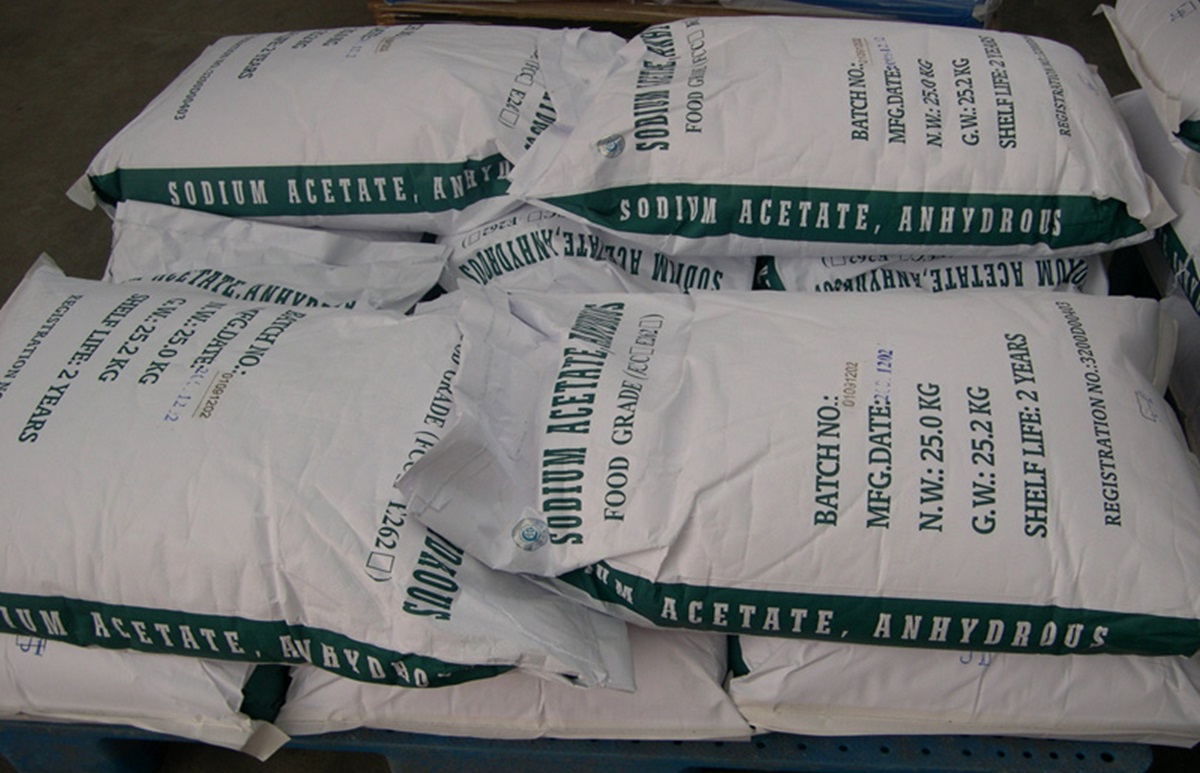
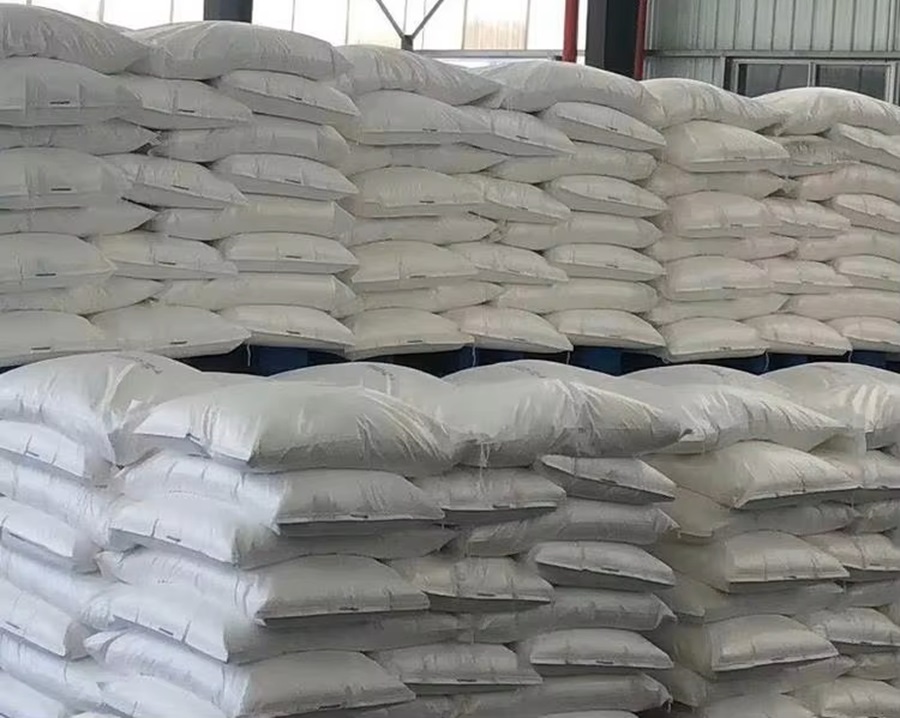
| Multi-layer Paper Bag | 10 kg, 20 kg, 25 kg | PE-lined kraft paper bag (moisture-proof) |
| Plastic Bag | 5 kg, 10 kg, 25 kg | PE bag (inner-lined, sealed, moisture-proof) |
| Fiber Drum | 20 kg, 25 kg | PE-lined fiberboard drum |
| Plastic Drum | 25 kg, 50 kg | HDPE / Polypropylene (moisture-proof) |
| FIBC / Big Bag | 500 kg, 1000 kg | PE-lined, moisture-resistant PP woven bag |
SECTION 18: TRANSPORT INFORMATION
| Parameter | Information |
|---|---|
| UN Number | Not regulated (non-hazardous) |
| Hazard Class | Not applicable |
| Packing Group | Not applicable |
| ADR/RID | Not regulated |
| IMDG Code | Not regulated (non-hazardous) |
| IATA (Air) | Not regulated (non-hazardous) |
| Marine Pollutant | No |
| Transport Temperature | Ambient temperature; Protect from moisture. |
SECTION 19: REGULATORY STATUS
| Region / Authority | Status |
|---|---|
| European Union | Food additive E262 approved by EFSA; Not classified as hazardous |
| USA (TSCA) | Listed (TSCA Inventory) |
| USA (FDA) | GRAS (Generally Recognized as Safe) – 21 CFR 184.1721; Food additive E262 |
| Turkey | Food additive E262; Subject to KKDIK regulation |
| IARC | Not classified (non-toxic, non-carcinogenic) |
| NTP | Not listed |
| OSHA | Not regulated as toxic or carcinogenic substance |
| California (Prop 65) | Not listed |
| Halal | Yes |
| Kosher | Yes |
| Vegan | Yes |
SECTION 20: OTHER NAMES AND SYNONYMS
| Type | Name |
|---|---|
| Turkish Names | Sodyum Asetat, Sirke Tuzu, Asetik Asit Sodyum Tuzu |
| English Names | Sodium Acetate, Acetic Acid Sodium Salt, Sodium Ethanoate |
| Chemical Names | Sodium ethanoate; Acetic acid sodium salt |
| CAS Number | 127-09-3 (Anhydrous), 6131-90-4 (Trihydrate) |
| E Number | E262 |
| Molecular Formula | C₂H₃NaO₂ |
| HS Code | 2915.29 |
| Synonyms | Sodium acetate powder, Vinegar salt, Sodium acetate anhydrous, E262 |
SECTION 21: SUMMARY TABLE
| Parameter | Anhydrous | Trihydrate |
|---|---|---|
| Product | Sodium Acetate (Anhydrous) | Sodium Acetate Trihydrate |
| CAS Number | 127-09-3 | 6131-90-4 |
| Molecular Formula | C₂H₃NaO₂ | C₂H₃NaO₂·3H₂O |
| Molecular Weight | 82.03 g/mol | 136.08 g/mol |
| Appearance | White crystalline powder | White crystalline powder |
| Density | 1.528 g/cm³ | 1.45 g/cm³ |
| Melting Point | 324°C (decomposes) | 58°C (loses water) |
| pH (5% Solution) | 7.5 – 9.0 | 7.5 – 9.0 |
| Primary Function | Food (E262), buffer, preservative | Heat storage, heating pads |
| Shelf Life | 24 – 36 months | 24 – 36 months |
| GHS Signal Word | NONE | NONE |
| UN Number | Not regulated | Not regulated |
| Special Properties | Hygroscopic; Food additive E262 | Melts at 58°C; Heat storage; FDA GRAS |
SECTION 22: CRITICAL WARNINGS AND BEST PRACTICES
CRITICAL WARNINGS:
-
Not classified as hazardous under GHS. Non-toxic, non-carcinogenic. FDA GRAS status.
-
Food additive E262 – Approved by EFSA, FDA, and WHO JECFA.
-
Hygroscopic (anhydrous form) – absorbs moisture from air. Store in tightly closed, moisture-proof containers.
-
Dust may cause mechanical irritation to eyes, skin, and respiratory system. Use appropriate dust control measures.
-
Combustible (organic material). Keep away from open flames and high heat. Dust cloud may form explosive mixture.
-
Trihydrate form melts at 58°C – ideal for heat storage applications.
-
Sodium content should be monitored – important for those with hypertension or sodium restriction.
-
High doses may cause gastrointestinal irritation.
-
Safe for use – widely used in food, pharmaceutical, and industrial applications.
BEST PRACTICE RECOMMENDATIONS:
Food Industry (E262): Use as acidity regulator and preservative; Dosage 0.1-0.5%; Effective at pH 4.5-5.5; Soups, sauces, canned products, delicatessen products; Can be used as salt substitute.
Heating Pads (Hot Packs): Use as heat storage material; Sodium acetate trihydrate (melts at 58°C); Crystallization is exothermic (releases heat); Reusable; Activated by metal disc; Reuse by heating to 70°C.
Laboratory (Buffer Solution): Effective buffer in pH 3.8-5.8 range; Biochemistry and analytical chemistry; Prepare 0.01-1.0 M concentration; Adjust pH with acetic acid.
Pharmaceutical (Intravenous Solution): Use as electrolyte source; Acidosis treatment; Dialysis solutions; Sterile and pyrogen-free solution; Pharmaceutical grade quality required.
Textile and Leather: Use as neutralization and tanning aid; Photo resist in aniline dyes; Leather tanning; Dosage 1-5%.
Handling: Use in well-ventilated areas; Avoid dust formation; Use dust masks (N95/FFP2) when handling powder; Use gloves and safety goggles.
Personal Protective Equipment: Dust mask (N95/FFP2 or higher), safety goggles, chemical-resistant gloves (nitrile, neoprene). Not required for solution handling.
Hygiene: Wash hands thoroughly after handling; Do not eat, drink, or smoke while using.
Storage (Anhydrous): Store in tightly closed, moisture-proof containers; Store in a cool, dry, well-ventilated area (+5 to +30°C); Protect from moisture and acids; Opened containers must be resealed immediately; Shelf life: 24-36 months under proper conditions.
Storage (Trihydrate): Store in tightly closed containers; Store in a cool, dry area; May lose crystal water above 58°C; Protect from excessive heat.
Spill Management: Sweep or vacuum (HEPA) and place in suitable sealed container; Avoid dust formation; Do not allow entry into drains or waterways.
Disposal: Dispose of in accordance with local, regional, and national regulations; Non-hazardous waste; Biodegradable; Can be disposed of in compliance with regulations.
SPECIAL NOTE ON HEATING PACK (HOT PACK) MECHANISM:
Sodium acetate trihydrate has unique properties as a phase change material:
-
Melting: Melts at 58°C (absorbs heat)
-
Crystallization: When activated by a metal disc, it crystallizes; Releases heat during crystallization (heats up to ~60°C)
-
Use: Heating pads, hand warmers, car seat heaters, baby bottle warmers
-
Reuse: Re-liquefy by heating to 70°C; Reusable
-
Advantage: Not a chemical reaction (physical phase change); Safe; Non-toxic; Reusable
LEGAL DISCLAIMER:
The information provided in this document is based on our current knowledge and experience and is presented in good faith. However, as all conditions of use are beyond our control, it does not constitute a binding specification or warranty. This Technical Data Sheet is for informational purposes only. Users are responsible for testing the suitability for their own applications. For complete safety, storage, use, handling, waste, and regulatory compliance information, please refer to the official Safety Data Sheet (SDS/MSDS) provided by the manufacturer/supplier.