We unleash your business potential by maximize the business innovation.
Send EmailCoffee Cream, Coffee Whitener, Coffee Lightener, Coffee Enhancer, Coffee Crema
COFFEE CREAMER (COFFEE CREMA)
PRODUCT IDENTIFICATION INFORMATION
| Parameter | Information |
|---|---|
| Product Name | Coffee Creamer |
| Definition | Additive used to enhance flavor, creaminess, and texture in coffee beverages / Natural emulsion layer forming on the surface of coffee |
| Synonyms (Turkish) | Kahve Kreması, Kahve Beyazlatıcısı, Kahve Açıcısı |
| Synonyms (English) | Coffee Creamer, Coffee Whitener, Coffee Lightener, Coffee Enhancer, Coffee Crema |
| Form | Powder, Liquid (commercial creamers); Natural emulsion (crema) |
| Color | White to cream (commercial); Light brown to golden yellow (crema) |
| Odor | Characteristic creamy / Coffee aromatic |
SECTION 1: COFFEE CREAMER (COMMERCIAL PRODUCT) - CHEMICAL IDENTITY AND DESCRIPTION
| Parameter | Information |
|---|---|
| Product Name | Coffee Creamer (Powder / Liquid) |
| Chemical Class | Food additive; Emulsifier; Oil-based blend |
| Main Components | Vegetable oil (coconut, palm), sugar (glucose syrup), milk protein (caseinate), emulsifiers, stabilizers, anti-caking agents |
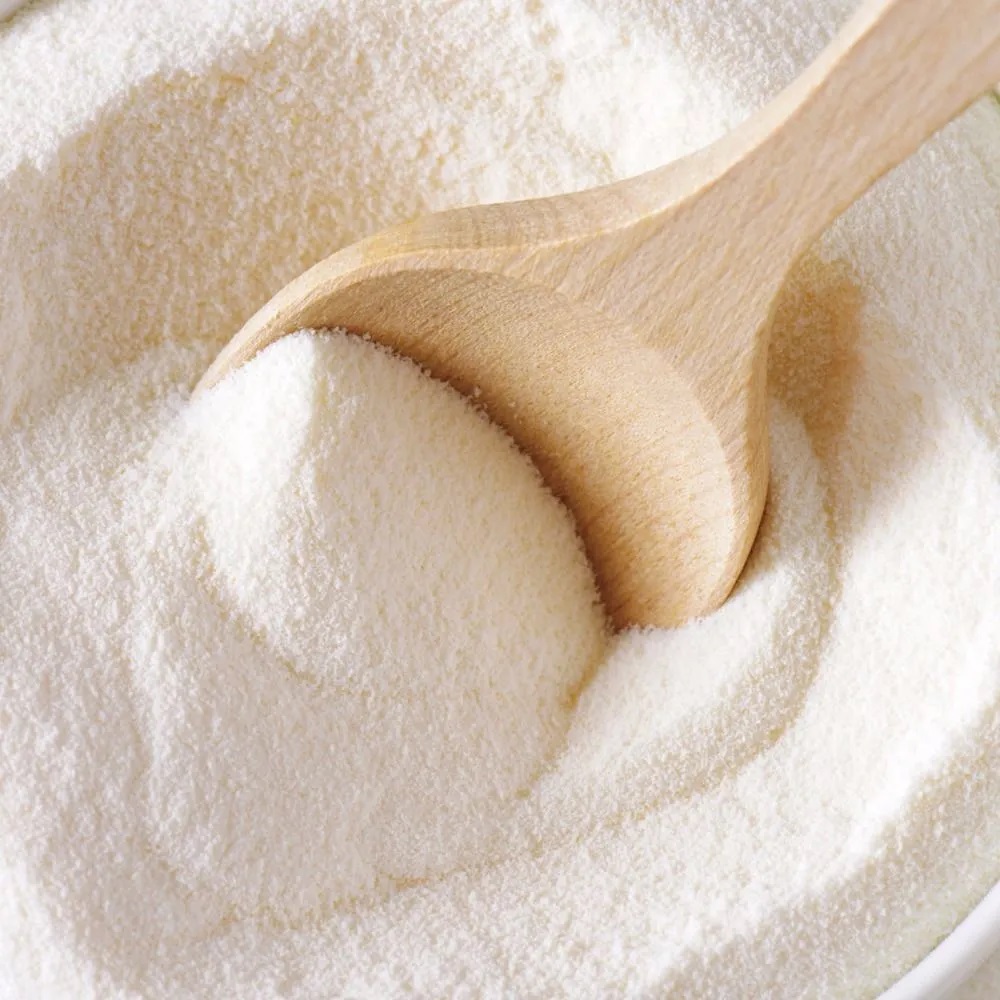
| Appearance | White to light cream colored, free-flowing powder / Liquid emulsion |
| Odor | Characteristic, neutral or vanilla flavored |
| Taste | Creamy, sweet, neutral |
SECTION 2: COFFEE CREAMER (COMMERCIAL) - PHYSICAL AND CHEMICAL PROPERTIES
| Property | Powder Creamers | Liquid Creamers | Test Method / Note |
|---|---|---|---|
| Appearance | White to light cream powder | White, liquid emulsion | Visual |
| Fat Content | 30 – 50% | 10 – 20% | – |
| Moisture | ≤ 3% | – | Gravimetric |
| pH (10% Solution) | 6.0 – 7.5 | 6.0 – 7.5 | pH Meter |
| Solubility in Water | High (dispersible) | High (miscible) | General Method |
| Shelf Life | 12 – 24 months | 6 – 12 months (cold chain) | – |
| Particle Size | 10 – 50 μm | – | Laser Diffraction |
| Anti-caking Agents | Silicon Dioxide (E551), Calcium Phosphate | – | – |
| Emulsifiers | Mono- and Diglycerides (E471), Lecithin (E322) | Mono- and Diglycerides (E471) | – |
| Stabilizers | Caseinate, Polyphosphates | Caseinate, Carrageenan (E407) | – |
SECTION 3: COFFEE CREAMER (COMMERCIAL) - TYPICAL COMPOSITION
| Component | Powder Creamers (%) | Liquid Creamers (%) | Function |
|---|---|---|---|
| Vegetable Oil (Coconut/Palm) | 30 – 50 | 10 – 20 | Creamy texture, mouthfeel |
| Sugar / Glucose Syrup | 30 – 50 | 5 – 15 | Sweetness, bulk |
| Sodium Caseinate (Milk Protein) | 2 – 5 | 1 – 3 | Emulsion stabilization, whitening |
| Emulsifiers (E471, E322) | 1 – 3 | 0.5 – 2 | Oil-water emulsion stabilization |
| Stabilizers (E450, E407) | 0.5 – 1 | 0.2 – 0.5 | Consistency, stability |
| Anti-caking Agent (E551) | 0.5 – 1 | – | Flowability, anti-clumping |
| Flavor (Vanilla) | 0.1 – 0.5 | 0.1 – 0.5 | Flavor enhancement |
SECTION 4: COFFEE CREAMER (COMMERCIAL) - APPLICATION AREAS
| Industry / Application | Function | Typical Use |
|---|---|---|
| Coffee and Hot Beverages | Whitening, sweetening, texture | Hot coffee, tea, hot chocolate |
| Cold Coffee Beverages | Creaminess, flavor | Cold brew coffee, iced coffee, frappe |
| Instant Coffee Mixes | Ready-to-drink component | 3-in-1 coffee mixes |
| Desserts and Pastry | Flavor, texture, color | Pastry creams, sauces, ice cream |
| Industrial Food Production | Additive | Frozen desserts, creamy products, confectionery |
SECTION 5: COFFEE CREAMER (COMMERCIAL) - ALTERNATIVES
| Alternative | Advantages | Disadvantages |
|---|---|---|
| Whole Milk | Natural, calcium source | Milk allergen, contains lactose, limited shelf life |
| Cream | Rich, natural flavor | High fat, short shelf life |
| Almond Milk | Vegan, low calorie | Low creaminess, allergen |
| Soy Milk | Vegan, protein source | Soy allergen, taste difference |
| Oat Milk | Vegan, sustainable | Low protein, thinner texture |
| Coconut Milk | Vegan, tropical flavor | Distinct taste, high fat |
| Powdered Milk | Long shelf life, transport convenience | Milk allergen, contains lactose |
| Plant-based Creamer Powders | Vegan, sustainable | Taste difference, higher cost |
SECTION 6: COFFEE CREMA (NATURAL FOAM) - CHEMICAL IDENTITY AND DESCRIPTION
| Parameter | Information |
|---|---|
| Product Name | Coffee Crema |
| Chemical Class | Natural emulsion; Colloidal structure |
| Formation | Emulsion of oils and gases at high pressure and temperature during espresso preparation |
| Appearance | Light brown to golden yellow, foamy layer |
| Odor | Intense coffee aroma |
| Taste | Rich, intense, slightly bitter |
SECTION 7: COFFEE CREMA - PHYSICAL AND CHEMICAL PROPERTIES
| Property | Description |
|---|---|
| Formation Mechanism | Emulsion of carbon dioxide (CO₂) and coffee oils under pressure |
| Color | Light brown (dark) to golden yellow (light) – depending on roast degree |
| Texture | Dense, creamy, thin layer |
| Thickness | ~2 – 10 mm (in fresh espresso) |
| Temperature | ~65 – 90°C (brewing temperature) |
| Stability | Disperses within minutes (unstable structure) |
| Chemical Composition | Coffee oils, CO₂, melanoidins, proteins, polysaccharides |
| pH | ~5.0 – 5.5 (same as coffee) |
| Aroma | Carries the most intense coffee aroma compounds |
| Taste | Sweetish, slightly bitter, intense coffee notes |
SECTION 8: COFFEE CREMA - FORMATION MECHANISM
| Stage | Description |
|---|---|
| 1. Roasting | During roasting, CO₂ and other gases form inside coffee beans; Pressure increases within the bean |
| 2. Grinding | When beans are ground, surface area increases; CO₂ release accelerates |
| 3. Brewing (Espresso) | Hot water (92-96°C) passes through ground coffee at high pressure (9 bar); Oils (cafestol) and dissolved solids emulsify; CO₂ gas is released with water; Emulsion forms – crema layer on coffee surface |
| 4. Serving | Crema forms a thin layer 2-10 mm thick on the coffee surface; Stability lasts approximately 1-2 minutes; Carries aroma and flavor compounds |
SECTION 9: COFFEE CREMA - QUALITY INDICATORS
| Parameter | Good Quality Crema | Poor Quality Crema |
|---|---|---|
| Color | Golden yellow, light brown | Whitish, very light or very dark |
| Texture | Dense, creamy, smooth | Thin, watery, weak |
| Thickness | ~3 – 6 mm | <2 mm |
| Stability | 1 – 2 minutes | Disperses quickly |
| Texture | Velvety, fine bubbles | Large bubbles, spongy |
| Taste | Rich, intense, aromatic | Bitter, thin, bland |
SECTION 10: COFFEE CREMA - FACTORS AFFECTING QUALITY
| Factor | Effect | Recommendation |
|---|---|---|
| Coffee Bean Freshness | Freshly roasted beans contain more CO₂ → better crema | Use within 1-2 weeks of roasting |
| Roast Level | Medium roast gives ideal crema | Avoid very dark or very light roasts |
| Grind Size | Fine grind provides better crema | Fine grind suitable for espresso machine |
| Pressure | 9 bar is ideal | Brew at 9 bar pressure |
| Water Temperature | 92-96°C | Maintain consistent temperature |
| Water Quality | Medium hardness water | Avoid very soft or very hard water |
| Tamping | Evenly tamped coffee | Even pressure, uniform distribution |
SECTION 11: COFFEE CREAMER (ALL TYPES) - SAFETY AND HEALTH INFORMATION
| Topic | Commercial Creamer | Natural Crema |
|---|---|---|
| Allergen | May contain milk protein (caseinate); May contain soy (lecithin) | Contains no allergens (coffee only) |
| Lactose | May contain lactose (caseinate) | Lactose-free |
| Trans Fat | May contain partially hydrogenated oils (health risk) | Natural coffee oils |
| Calories | High (fat and sugar) | Low (coffee only) |
| Additives | Emulsifiers, stabilizers, anti-caking agents | None |
| Vegan | No (milk protein) | Yes |
| Gluten-free | Yes | Yes |
| Shelf Life | Long (12-24 months) | Very short (minutes) |
SECTION 12: COMMERCIAL COFFEE CREAMER - SAMPLE FORMULATION (POWDER)
| Component | Ratio |
|---|---|
| Vegetable Oil (Coconut/Palm) | 35 – 45% |
| Glucose Syrup Powder | 30 – 40% |
| Sodium Caseinate | 3 – 5% |
| Mono- and Diglycerides (E471) | 1 – 3% |
| Lecithin (E322) | 0.5 – 1% |
| Polyphosphates (E450) | 0.5 – 1% |
| Silicon Dioxide (E551) | 0.3 – 0.5% |
| Flavor (Vanilla) | 0.1 – 0.3% |
SECTION 13: SUMMARY TABLE
| Property | Commercial Coffee Creamer (Powder/Liquid) | Coffee Crema (Natural) |
|---|---|---|
| Source | Industrial production | Natural formation (espresso) |
| Type | Additive / ingredient | Natural characteristic of coffee |
| Function | Whitening, sweetening, creamifying | Aroma, flavor, appearance |
| Components | Oil, sugar, protein, emulsifiers | Coffee oils, CO₂, melanoidins |
| Allergen | Milk, soy (may contain) | None |
| Vegan | No (milk protein) | Yes |
| Shelf Life | 12 – 24 months (powder) / 6 – 12 months (liquid) | ~1 – 2 minutes |
| Calories | High | Low |
| Additives | Yes (E471, E322, E450, E551) | None |
| Application | Hot/cold coffee, desserts | Espresso / fresh coffee |
LEGAL DISCLAIMER:
The information provided in this document is based on our current knowledge and experience and is presented in good faith. However, as all conditions of use are beyond our control, it does not constitute a binding specification or warranty. This Technical Data Sheet is for informational purposes only. Users are responsible for testing the suitability for their own applications. For complete safety, storage, use, handling, waste, and regulatory compliance information, please refer to the official Safety Data Sheet (SDS/MSDS) provided by the manufacturer/supplier.