We unleash your business potential by maximize the business innovation.
Send EmailHydrofluoric Acid, Fluorhydric Acid, Hydrogen Fluoride, Fluoric Acid, 7664-39-3
HYDROFLUORIC ACID
Hydrofluoric Acid / Fluorhydric Acid / Hydrogen Fluoride / Fluoric Acid
CAS Number: 7664-39-3
EC Number: 231-634-8
1. PRODUCT IDENTIFICATION AND CHEMICAL IDENTITY
| Parameter | Description |
|---|---|
| Chemical Name | Hydrofluoric Acid |
| Other Names | Hydrogen Fluoride, Fluorhydric Acid, Hydrogen Fluorite, Hypofluoric Acid, Anhydrous Hydrogen Fluoride, Fluoride Hydrogen |
| CAS Number | 7664-39-3 |
| EC Number (EINECS) | 231-634-8 |
| Molecular Formula | HF |
| Molecular Weight | 20.01 g/mol |
| Chemical Class | Inorganic acid (Hydrohalogenic acid) |
| Appearance | Colorless gas, fuming liquid, or aqueous solution |
| Odor | Sharp, pungent, characteristic irritating odor |
Hydrofluoric acid is the aqueous solution of hydrogen fluoride (HF). Hydrogen fluoride is a simple diatomic molecule (H-F). Due to the high electronegativity of fluorine, hydrogen easily dissociates, forming hydrofluoric acid. Pure hydrogen fluoride (HF) exists as a colorless gas at room temperature (25°C) with a density of 1.15 g/L, or as a colorless liquid below 20°C with a density of 0.99 g/L. Hydrofluoric acid can exist as a colorless gas, fuming liquid, or aqueous solution. It is commercially available in various concentrations (10%, 20%, 40%, 48%, 60%, 70%, 99+%). Hydrofluoric acid is a fluorine-containing chemical compound that is used in a wide range of industrial applications including glass etching, metal cleaning, petrochemical processing, semiconductor manufacturing, and refrigerant production. Unlike other acids, despite being a weak acid, it is extremely toxic and corrosive. The fluoride ion (F⁻) binds to calcium and magnesium ions in the body, causing cell death and tissue necrosis.
2. PHYSICAL AND CHEMICAL PROPERTIES
| Property | Value |
|---|---|
| Molecular Formula | HF |
| Molecular Weight | 20.01 g/mol |
| Physical State (25°C) | Gas (pure HF) or liquid (aqueous solution) |
| Appearance | Colorless gas or fuming colorless liquid |
| Odor | Sharp, pungent, characteristic irritating odor |
| Density (HF gas, 25°C) | 1.15 g/L |
| Density (HF liquid, 20°C) | 0.99 g/L |
| Density (48% HF, 20°C) | 1.15 g/cm³ |
| Density (70% HF, 20°C) | 1.25 g/cm³ |
| Density (99.9% HF, 20°C) | 0.96 g/cm³ |
| Melting Point (Pure HF) | -83.6 °C |
| Boiling Point (Pure HF) | 19.5 °C |
| Boiling Point (48% HF) | 111 °C |
| Boiling Point (70% HF) | 120 °C |
| Vapor Pressure (Pure HF, 25°C) | 1.05 atm |
| pH (1 M solution) | ~1.0 |
| pKa (25°C) | 3.17 (weak acid) |
| Dielectric Constant (Pure HF, 0°C) | 84 |
| Viscosity (Pure HF, 0°C) | 0.28 cP |
| Surface Tension (Pure HF, 0°C) | 8.2 dyne/cm |
| Water Solubility | Completely miscible |
| Azeotropic Point | ~38.3°C (36.8% HF) |
| Electrical Conductivity (Pure HF) | 1.2 × 10⁻⁶ S/cm (self-ionizes) |
The physical properties of hydrofluoric acid vary significantly depending on the hydrogen fluoride concentration. Pure hydrogen fluoride is a colorless gas at room temperature and boils at 19.5°C. When dissolved in water, hydrofluoric acid is formed and the physical properties of the solution change with concentration. Commercial 48% hydrofluoric acid has a density of approximately 1.15 g/cm³, a boiling point of 111°C, and a melting point of -35°C. Unlike other hydrohalogenic acids (HCl, HBr, HI), hydrofluoric acid is a weak acid (pKa = 3.17), meaning it partially ionizes in water. However, despite being a weak acid, it is extremely corrosive and toxic. This is due to the partial ionization of hydrogen fluoride in water and its strong hydrogen bonding.
3. CHEMICAL PROPERTIES AND REACTIONS
Hydrofluoric acid, despite being a weak acid, is one of the few acids that reacts with glass and silicate-containing materials. This property makes it indispensable for glass etching and silicon cleaning.
Acidic Properties:
Hydrofluoric acid is a weak acid and partially ionizes in aqueous solution:
HF + H₂O ⇌ H₃O⁺ + F⁻ (pKa = 3.17)
At high concentrations, dimers and polymers form due to hydrogen bonding:
2 HF ⇌ H₂F₂ (anionic complex)
Acid-Base Reactions:
Hydrofluoric acid reacts with bases to form fluoride salts:
HF + NaOH → NaF + H₂O (Sodium fluoride)
2 HF + Ca(OH)₂ → CaF₂ + 2 H₂O (Calcium fluoride)
Reaction with Glass and Silicates:
Hydrofluoric acid reacts with glass (silica - SiO₂) to form silicon tetrafluoride and water:
SiO₂ + 4 HF → SiF₄ + 2 H₂O
SiF₄ + 2 HF → H₂SiF₆ (Hexafluorosilicic acid)
Due to this reaction, hydrofluoric acid cannot be stored in glass containers and must be stored in polyethylene, polytetrafluoroethylene (PTFE/Teflon), or lead containers.
Reaction with Metal Oxides:
Hydrofluoric acid reacts with metal oxides to form metal fluorides:
Fe₂O₃ + 6 HF → 2 FeF₃ + 3 H₂O
Al₂O₃ + 6 HF → 2 AlF₃ + 3 H₂O
Corrosive Properties:
Hydrofluoric acid corrodes most metals. It can form a protective fluoride layer on iron and steel, but this layer is unstable depending on the acid concentration and temperature. Aluminum, magnesium, zinc, lead, and stainless steel are corroded by hydrofluoric acid.
High Temperature Reactions:
At high temperatures, hydrogen fluoride reacts with metals to form metal fluorides and hydrogen gas:
Fe + 2 HF → FeF₂ + H₂ (at high temperature)
Redox Reactions:
Reacts with strong oxidizing agents (e.g., chlorine, bromine, iodine) to form elemental fluorine or fluorine compounds.
4. DIFFERENT CONCENTRATIONS OF HYDROFLUORIC ACID
Hydrofluoric acid is commercially available in different concentrations for various industrial applications. Each concentration has its own physical properties, applications, and safety risks.
| Concentration | Density (20°C) | Boiling Point | Melting Point | Applications |
|---|---|---|---|---|
| 10% HF | ~1.04 g/cm³ | ~102°C | -10°C | Laboratory, cleaning, mild etching |
| 20% HF | ~1.08 g/cm³ | ~105°C | -18°C | Metal cleaning, rust removal |
| 40% HF | ~1.13 g/cm³ | ~108°C | -28°C | Glass etching, sandstone acidizing |
| 48% HF | ~1.15 g/cm³ | 111°C | -35°C | Common commercial concentration, glass etching, metal processing |
| 60% HF | ~1.20 g/cm³ | 115°C | -40°C | Special industrial applications |
| 70% HF | ~1.25 g/cm³ | 120°C | -45°C | Semiconductor manufacturing, cleaning, oil and gas |
| 99+% HF (Anhydrous) | ~0.96 g/cm³ | 19.5°C | -83.6°C | Reagent, organofluorine synthesis, refrigerant production |
5. PRODUCTION METHODS
Hydrofluoric acid is produced industrially by the reaction of fluorite mineral (calcium fluoride - CaF₂) with sulfuric acid. This process accounts for the vast majority of hydrofluoric acid production worldwide.
| Method | Raw Materials | Process Description |
|---|---|---|
| Fluorite-Sulfuric Acid Method | Calcium Fluoride (CaF₂ - Fluorite), Sulfuric Acid (H₂SO₄) | Most common method. Fluorite mineral is reacted with concentrated sulfuric acid at 200-300°C. The resulting hydrogen fluoride gas is condensed and purified. Dilution with water yields hydrofluoric acid. |
| Natural Phosphate Sources | Phosphate rocks (apatite) | Fluoride content in phosphate rocks releases hydrofluoric acid as a byproduct during phosphoric acid production. This method is less common. |
Detailed Production Process (Fluorite-Sulfuric Acid Method):
-
Raw Material Preparation: Fluorite mineral (CaF₂) is ground and dried. Concentrated sulfuric acid (93-98% H₂SO₄) is prepared.
-
Reaction: Fluorite and sulfuric acid are reacted in a rotary furnace or fluidized bed reactor at 200-300°C:
CaF₂ + H₂SO₄ → 2 HF + CaSO₄
-
Gas Collection: The generated hydrogen fluoride gas (HF) is removed from the reactor and passed through dust collectors to remove solid particles.
-
Condensation and Purification: HF gas is cooled and condensed to liquid phase. Liquid HF is purified by distillation. Impurities (e.g., H₂SiF₆, H₂SO₄) are removed.
-
Dilution: Purified liquid HF is diluted with deionized water to achieve the desired concentration (10%, 20%, 40%, 48%, 60%, 70%). The dilution process is highly exothermic (releases heat) and must be performed under controlled conditions.
-
Storage: Hydrofluoric acid is stored in containers made of fluoride-resistant materials (polyethylene, PTFE, lead) or specially lined steel tanks. Glass containers are strictly prohibited.
6. APPLICATIONS AND INDUSTRIAL USES
Hydrofluoric acid is an indispensable compound in industrial chemistry with a wide range of applications.
6.1. Glass and Ceramics Industry
| Application | Description |
|---|---|
| Glass Etching | Used to create patterns, writing, and decoration by etching glass surfaces. |
| Glass Polishing | Used together with sulfuric acid for polishing and smoothing glass surfaces. |
| LCD and Monitor Glass Production | Used for etching and thinning glass used in LCD televisions, computer monitors, and mobile phone screens. |
| Optical Glass Processing | Used for precision processing of optical glass such as lenses and prisms. |
| Ceramic Glaze Cleaning | Used to remove glaze residues from ceramic product surfaces. |
Reacts with SiO₂ (silica) on glass to dissolve the glass surface. This property is used for etching, thinning, or shaping glass. In glass etching, hydrofluoric acid reacts with silica on the glass surface to form silicon tetrafluoride (SiF₄) and water, thereby etching the glass. Widely used in processing glass surfaces for laser printers, medical devices, and decorative products.
6.2. Metallurgy and Metal Processing
| Application | Description |
|---|---|
| Rust Removal | Used to remove rust and oxide layers from metals such as stainless steel, titanium, and aluminum. |
| Weld Scale Removal | Used together with nitric acid to remove weld scales formed on stainless steel surfaces after argon welding and gas-shielded welding. |
| Metal Surface Cleaning | Used for cleaning metals before plating, painting, or other surface treatments. |
| Electrolytic Polishing | Used as an electrolyte in electrolytic polishing of aluminum and other metals. |
| Stainless Steel Pickling | Used in acid baths together with nitric acid (60-70% HF + HNO₃) during stainless steel sheet and pipe production. |
Cleans oxide layers and rust from metals such as stainless steel and titanium. Heat discoloration (weld scales) formed after welding is removed with hydrofluoric acid. This process increases the corrosion resistance of the metal surface and provides an aesthetic appearance.
6.3. Petrochemical and Energy
| Application | Description |
|---|---|
| Alkylation Catalyst | Used as a catalyst in the production of high-octane gasoline. |
| Well Acidizing | Used to dissolve sandstone formations and increase permeability in oil and natural gas wells. |
| Hydrocarbon Processing | Used as a catalyst in the conversion of alkenes to alkanes. |
| Fuel Additives | Used to increase octane number in high-octane fuel production. |
Hydrofluoric acid is used as a catalyst for alkylation in petroleum refining. This process combines low molecular weight olefins (propene, butene) with isobutane to produce high-octane alkylate. It is also used together with hydrochloric acid in well acidizing applications to dissolve sandstone formations in oil and natural gas wells.
6.4. Semiconductor and Electronics Industry
| Application | Description |
|---|---|
| Silicon Wafer Cleaning | Used to remove organic and inorganic contaminants from silicon wafer surfaces in semiconductor manufacturing. |
| SiO₂ Etching | Used to etch silicon dioxide (SiO₂) layers on silicon wafers. |
| Glass Cover Cleaning | Used for smoothing glass covers for mobile phones and laptops. |
| Quartz and Glass Etching | Used for precision etching of quartz and glass surfaces. |
Hydrofluoric acid is used for cleaning silicon wafers and etching silicon dioxide (SiO₂) layers in semiconductor manufacturing. Silicon wafers are exposed to organic and inorganic contaminants during various processes. Hydrofluoric acid is used to remove these contaminants and clean the wafer surface. It is also used for precision etching of SiO₂ layers.
6.5. Refrigerants and Fluorocarbon Production
| Application | Description |
|---|---|
| Fluorocarbon Production | Used as a raw material in the production of refrigerants such as chlorofluorocarbons (CFCs), hydrofluorocarbons (HFCs), and hydrochlorofluorocarbons (HCFCs). |
| Teflon (PTFE) Production | Used as a raw material in the production of polytetrafluoroethylene (PTFE/Teflon). |
| Fluoropolymer Production | Used in the production of various fluoropolymers (FEP, PFA, PVDF). |
Hydrofluoric acid is the primary raw material in the production of refrigerants (CFC, HFC, HCFC) and fluoropolymers (PTFE/Teflon). Fluorocarbons are used as refrigerants, air conditioning fluids, and aerosol propellants. Teflon is a fluoropolymer known for its non-stick surface properties, chemical resistance, and high temperature resistance.
6.6. Nuclear Energy
| Application | Description |
|---|---|
| Uranium Purification | Used in the production of uranium (IV) fluoride (UF₄) and uranium hexafluoride (UF₆). |
| Nuclear Fuel Production | Used in uranium purification processes for nuclear fuel production. |
Hydrofluoric acid is used for uranium purification and enrichment in nuclear fuel production. Uranium oxide (U₂O₃) is reacted with hydrofluoric acid to produce uranium (IV) fluoride (UF₄). UF₄ is then converted to uranium hexafluoride (UF₆). UF₆ is the fundamental compound for the uranium enrichment process.
6.7. Other Applications
| Application | Description |
|---|---|
| Detergent Production | Used as a catalyst in the production of alkyl benzene sulfonates, which are surfactants in anionic detergents. |
| Fluoride Salt Production | Used in the production of fluoride salts such as calcium fluoride, sodium fluoride, and ammonium fluoride. |
| Organofluorine Synthesis | Used in the synthesis of fluorine-containing organic compounds (pharmaceuticals, pesticides, dyes). |
| Glass Coating | Used in the application of fluoride-based coatings to glass surfaces. |
| Underground Mining | Used in acidizing rocks for fragmentation in mines. |
7. HEALTH EFFECTS AND TOXICOLOGY
Hydrofluoric acid is one of the most dangerous inorganic acids. Despite being a weak acid, it poses serious health risks due to its extremely high toxicity and corrosivity. The fluoride ion (F⁻), when it enters the body, binds to calcium and magnesium ions, causing cell death and tissue necrosis.
7.1. Toxicological Data
| Parameter | Value |
|---|---|
| Oral LD50 (Rat) | ~100-200 mg/kg (highly toxic) |
| Dermal LD50 (Rabbit) | ~10-50 mg/kg (highly toxic) |
| Inhalation LC50 (Rat, 1 hour) | ~1,000-2,000 ppm (highly toxic) |
| Skin Corrosion | Corrosive, deep tissue damage |
| Eye Damage | May cause permanent blindness |
| Carcinogenicity | IARC: Not classified |
| ACGIH TLV-TWA | 3 ppm (2.5 mg/m³) (as HF) |
| ACGIH TLV-STEL | 6 ppm (5 mg/m³) (as HF) |
| OSHA PEL-TWA | 3 ppm (2.5 mg/m³) |
| NIOSH IDLH | 30 ppm (HF) |
7.2. Mechanism of Toxicity
The toxicity mechanism of hydrofluoric acid is unique and multifaceted:
-
Tissue Necrosis (Corrosive Effect): HF causes severe chemical burns upon contact with tissues. H⁺ ions disrupt cell membranes and denature proteins, causing necrosis (tissue death).
-
Fluoride Ion (F⁻) Toxicity: As a weak acid, HF partially ionizes, releasing free F⁻ ions. The fluoride ion has a high affinity for calcium (Ca²⁺) and magnesium (Mg²⁺) ions in the body. These ions play critical roles in intracellular and extracellular fluids.
-
Calcium Binding: F⁻ combines with calcium ions to form insoluble calcium fluoride (CaF₂). This causes a dangerous drop in blood calcium levels (hypocalcemia). Hypocalcemia can lead to cardiac arrhythmias, muscle spasms, neurological disorders, and death.
-
Magnesium Binding: Similarly, F⁻ binds magnesium ions, causing magnesium deficiency (hypomagnesemia). Hypomagnesemia can cause muscle weakness, tremors, convulsions, and cardiac rhythm disturbances.
-
Intracellular Acidification: HF is a small, non-polar molecule that easily crosses cell membranes. Once inside the cell, it lowers intracellular pH, causing acidification. This inhibits cellular enzymes, disrupts cellular respiration, and leads to cell death.
7.3. Health Effects
Acute Exposure:
| Route | Effects |
|---|---|
| Inhalation | Severe respiratory tract irritation, coughing, shortness of breath, chest pain, pulmonary edema (lung fluid), pneumonia; sudden death at high concentrations |
| Skin Contact | Burns starting painlessly or with mild pain; deep tissue damage, necrosis, ulceration; severe pain develops within hours; regional lymph node swelling; systemic toxicity |
| Eye Contact | Severe burning, corneal ulceration, permanent blindness, perforation of the eyeball |
| Ingestion | Severe burns to mouth, throat, and gastrointestinal tract, bleeding, vomiting, diarrhea, shock, death |
Chronic Exposure:
-
Fluorosis: Long-term low-dose fluoride exposure can cause skeletal fluorosis (joint pain, bone deformities, fragility) due to fluoride accumulation in bones.
-
Dental Fluorosis: Excessive fluoride intake during tooth development causes mottling and discoloration of tooth enamel.
-
Respiratory System: Chronic respiratory exposure can cause chronic bronchitis, asthma, and pulmonary fibrosis.
-
Skin: Repeated skin contact can cause dermatitis and chronic ulcerations.
7.4. Recognition of Hydrofluoric Acid Exposure
One of the most dangerous aspects of hydrofluoric acid burns is that pain is often delayed. After skin contact, pain may be mild or absent for several hours. This can cause the victim to underestimate the exposure and delay treatment. Later, as the fluoride ion penetrates deeper into the tissue, severe pain begins. Effects:
-
Concentrations of 10% and below: Burns and pain are generally mild.
-
Concentrations of 20-50%: Pain begins within 3-4 hours, causing severe pain and deep tissue damage.
-
Concentrations of 50% and above: Immediate severe pain, deep tissue necrosis, bone erosion, and high risk of systemic toxicity.
8. FIRST AID FOR HYDROFLUORIC ACID BURNS
Hydrofluoric acid burns are life-threatening emergencies requiring immediate medical intervention. The following steps can be life-saving:
| Step | Action |
|---|---|
| 1. Remove Contaminated Clothing | Immediately remove all clothing, shoes, and jewelry exposed to the chemical. |
| 2. Flush with Plenty of Water | Rinse the affected area with copious amounts of cool or lukewarm water for at least 20 minutes. Water pressure should not be high (high-pressure water can drive the acid deeper into the skin). |
| 3. Apply Calcium Gluconate Gel | Apply special hydrofluoric acid burn gel (2.5% calcium gluconate gel) to the skin surface. This binds fluoride ions and prevents further penetration into tissue. |
| 4. Call for Medical Help | Immediately call 112 or the nearest healthcare facility. Hydrofluoric acid exposures require specialized treatment in a hospital setting. |
| 5. Regional Calcium Injection | In a hospital setting, subcutaneous or intradermal calcium gluconate or calcium chloride injections may be administered. |
| 6. Systemic Treatment | For patients developing hypocalcemia, intravenous (IV) calcium gluconate or calcium chloride may be administered. |
| 7. Pain Management | Appropriate analgesics (pain relievers) may be administered for severe pain. |
| 8. For Eye Exposure | Rinse the eye with plenty of water or 0.9% saline solution for at least 30 minutes. Ocular anesthesia (eye drops) may be required. |
IMPORTANT WARNING: Home treatment should never be attempted for hydrofluoric acid exposures. Calcium gluconate gel application can be performed as first aid, but all cases require emergency medical intervention. Even if there is no pain or the exposure seems minor, medical evaluation is mandatory due to the delayed effects of the fluoride ion.
9. SAFETY INFORMATION (GHS CLASSIFICATION)
| Hazard Class | Category |
|---|---|
| Acute Toxicity - Oral | Category 2 (H300) |
| Acute Toxicity - Dermal | Category 1 (H310) |
| Acute Toxicity - Inhalation | Category 2 (H330) |
| Skin Corrosion/Irritation | Category 1A (H314) |
| Serious Eye Damage | Category 1 (H318) |
| Specific Target Organ Toxicity - Single Exposure | Category 3 (H335) |
| Specific Target Organ Toxicity - Repeated Exposure | Category 1 (H372) |
Signal Word: DANGER
Hazard Statements (H-Codes):
| Code | Statement |
|---|---|
| H300 | Fatal if swallowed |
| H310 | Fatal in contact with skin |
| H330 | Fatal if inhaled |
| H314 | Causes severe skin burns and eye damage |
| H318 | Causes serious eye damage |
| H335 | May cause respiratory irritation |
| H372 | Causes damage to organs through prolonged or repeated exposure |
Precautionary Statements (P-Codes):
| Code | Statement |
|---|---|
| P260 | Do not breathe dust, fumes, gas, vapor, or spray |
| P262 | Do not get in eyes, on skin, or on clothing |
| P280 | Wear protective gloves, protective clothing, eye/face protection |
| P301+P310 | IF SWALLOWED: Immediately call a POISON CENTER or doctor |
| P302+P352 | IF ON SKIN: Wash with plenty of water |
| P304+P340 | IF INHALED: Remove person to fresh air and keep comfortable for breathing |
| P305+P351+P338 | IF IN EYES: Rinse cautiously with water for several minutes. Remove contact lenses if present and easy to do. Continue rinsing |
| P310 | Immediately call a POISON CENTER or doctor |
| P363 | Wash contaminated clothing before reuse |
| P403+P233 | Store in a well-ventilated place. Keep container tightly closed |
| P405 | Store locked up |
| P501 | Dispose of contents/container in accordance with local/regional/national/international regulations |
10. FIRST AID MEASURES
| Exposure Route | Action |
|---|---|
| Inhalation | Move person to fresh air immediately. If breathing is difficult, give oxygen. If breathing has stopped, perform artificial respiration (using a device, not mouth-to-mouth). Seek immediate medical attention. |
| Skin Contact | Remove contaminated clothing immediately. Rinse the affected area with plenty of water for at least 20 minutes. Apply special hydrofluoric acid burn gel (calcium gluconate gel). Seek immediate medical attention. |
| Eye Contact | Rinse immediately with plenty of water for at least 30 minutes. Remove contact lenses if present. Keep eyelids open. Seek immediate medical attention. |
| Ingestion | Do NOT induce vomiting. Rinse mouth with water. Drink plenty of milk or water (as a calcium source). Seek immediate medical attention. |
| Note to Physicians | Administer IV calcium gluconate for hypocalcemia treatment. Calcium chloride may be used. Monitor blood calcium levels. Perform ECG monitoring. Apply calcium gluconate gel locally. |
11. FIREFIGHTING MEASURES
| Parameter | Information |
|---|---|
| Fire Hazard | Not flammable itself, but may react with strong oxidizers to cause fire. |
| Extinguishing Media | Dry chemical powder, CO₂, alcohol-resistant foam, water fog (from a distance only). |
| Special Hazards | When heated, releases toxic and corrosive hydrogen fluoride (HF) gas. Risk of container explosion. |
| Protective Equipment | Self-contained breathing apparatus (SCBA), full protective clothing, chemical-resistant full body protection. |
| Firefighting Instructions | Cool containers with water spray from a safe distance. Do not inhale fire gases. |
12. ACCIDENTAL RELEASE MEASURES
| Parameter | Information |
|---|---|
| Personal Protection | Wear appropriate PPE (chemical-resistant gloves, goggles, protective clothing, full-face respirator) |
| Ventilation | Increase ventilation; evacuate area if necessary |
| Neutralization | Neutralize spilled acid with calcium hydroxide (Ca(OH)₂) or calcium carbonate (CaCO₃). |
| Containment | Stop source if safe; dike or absorb to prevent spread |
| Absorption Materials | Inert absorbent materials (sand, vermiculite, commercial absorbents) |
| Large Spills | Contact emergency services; chemical spill response team required |
| Environmental Precautions | Prevent entry into drains, sewers, and water bodies |
| Waste Disposal | Dispose of according to local regulations; chemical treatment or specialized disposal facilities |
13. STORAGE AND HANDLING
| Parameter | Information |
|---|---|
| Storage Conditions | Cool, dry, well-ventilated area; protect from direct sunlight |
| Container Materials | Polyethylene (PE), polypropylene (PP), polytetrafluoroethylene (PTFE/Teflon), fluorinated polymers, lead (Pb) |
| Materials to Avoid | Glass, ceramics, quartz, silica-containing materials; most metals (aluminum, steel, copper, brass) |
| Temperature | Storage temperature: below 25°C (do not overheat; releases volatile HF gas) |
| Shelf Life | 12-24 months in tightly closed containers under proper conditions |
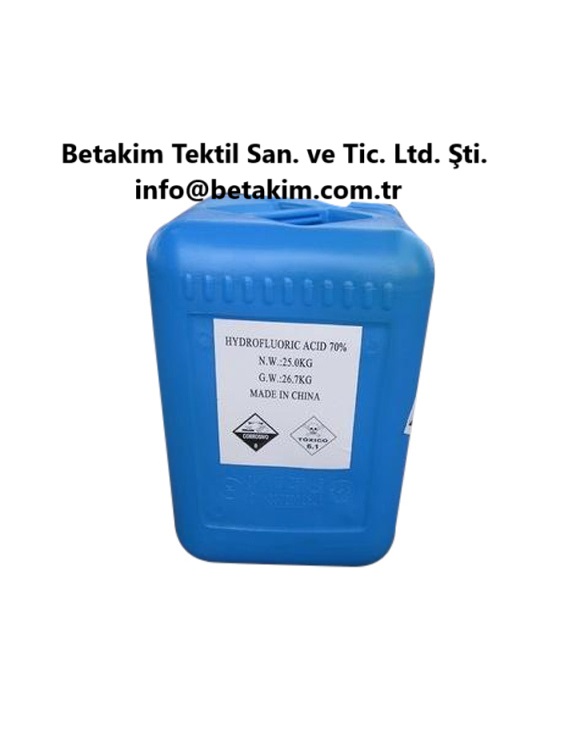
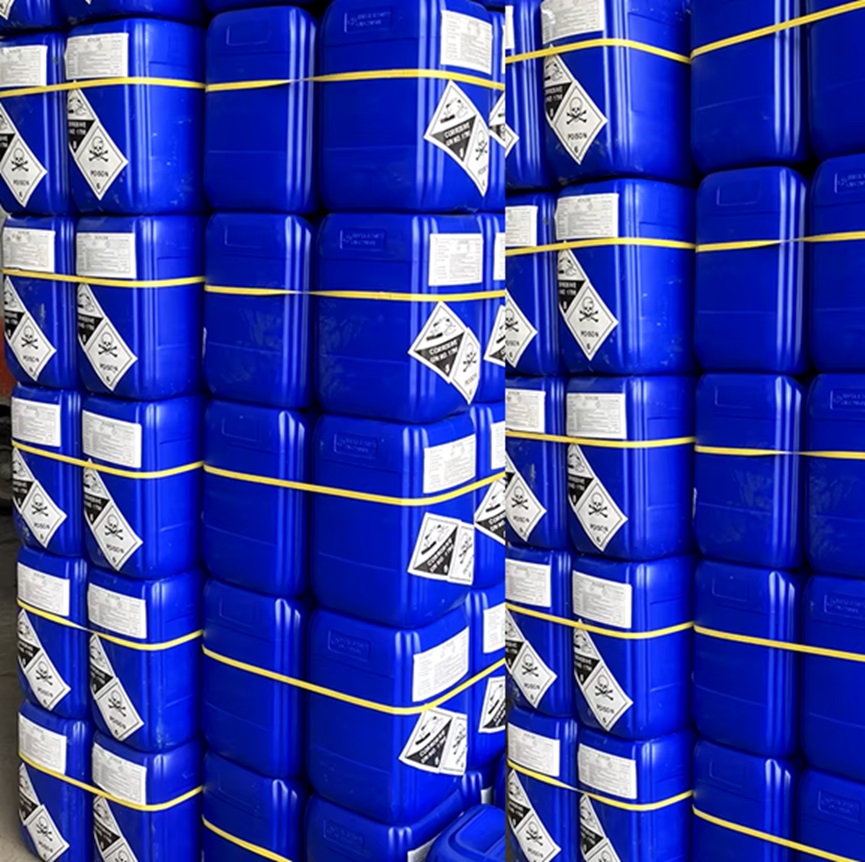
| Packaging | 20-35 kg blue or white polyethylene drums, 235 kg large drums, IBC tanks, tankers |
Hydrofluoric acid reacts with glass, ceramics, quartz, and all silica-containing materials. Therefore, it can never be stored in glass containers. Suitable container materials:
-
Polyethylene (PE): Low-density polyethylene (LDPE) and high-density polyethylene (HDPE) are suitable for HF concentrations up to 70%.
-
Polytetrafluoroethylene (PTFE/Teflon): Resistant to all concentrations and temperatures.
-
Fluorinated Polymers: FEP, PFA, PVDF and other fluorinated polymers show excellent resistance to HF.
-
Lead (Pb): Suitable for dry HF gas; should not be used with aqueous HF.
Storage Rules:
-
Do Not Use Glass Containers: HF reacts with glass. All containers, valves, and fittings must be made of polymer or special alloys.
-
Store Separately: Store away from bases, oxidizers, metals, and organic materials.
-
Ventilation: Storage areas must be well-ventilated and equipped with gas detectors.
-
Temperature Control: Hydrofluoric acid releases HF gas that boils at 19.5°C. Excessive temperature can increase container pressure. Storage area temperature should be maintained below 25°C.
-
Secondary Containment: Provide secondary containment (trays, dikes) for spills.
-
Labeling: Containers must be labeled with standard labels indicating contents, concentration, and hazards.
14. TRANSPORT INFORMATION
| Parameter | Information |
|---|---|
| UN Number | 1790 |
| Hazard Class | 8 (Corrosive) |
| Subsidiary Hazard | 6.1 (Toxic) |
| Packing Group | II (for preparations) or III (for dilute solutions) |
| Proper Shipping Name | Hydrofluoric Acid (solution) or Hydrogen Fluoride (anhydrous) |
| Marine Pollutant | Yes (highly toxic) |
| ADR/RID Class | 8 |
| IATA-DGR | Class 8, Packing Group II or III |
| IMDG Code | Class 8, Packing Group II or III |
Hydrofluoric acid is classified as a dangerous good with UN number 1790. Hazard class is 8 (Corrosive) and subsidiary hazard class is 6.1 (Toxic). The packing group is II or III depending on concentration. During transport, containers must be robust, leak-proof, and made of suitable material (polymer). Acids should be transported separately from bases, oxidizers, and organic materials. Transport vehicles should be equipped with emergency response equipment.
15. REGULATORY INFORMATION
| Region | Status |
|---|---|
| EU | REACH registered; Substance of Very High Concern (SVHC) candidate list |
| Turkey (KKDİK) | Mandatory compliance; requires registration; among substances requiring special permit |
| USA (TSCA) | Listed; EPA toxic chemicals list |
| Canada (DSL) | Listed |
| Australia (AICS) | Listed |
| Japan (ENCS) | Listed |
| Korea (KECL) | Listed |
| China (IECSC) | Listed |
Regulatory Status:
| Status | Information |
|---|---|
| IARC Classification | Not classified |
| OSHA (USA) | Specially regulated (29 CFR 1910.119) |
| EPA (USA) | Under Toxic Substances Control Act (TSCA) |
| EU REACH | Registered; SVHC candidate list |
| Turkey KKDİK | Registration required; KKDİK Annex-4 and Annex-5 lists |
| HS Code | 28111100 |
| UN Number | 1790 |
| Hazard Class | 8 (Corrosive) + 6.1 (Toxic) |
| Packing Group | II/III |
| RTECS | MW7875000 |
| WGK Germany | 3 (very high hazard to water) |
| TSCA | Yes |
| EINECS | 231-634-8 |
16. OTHER NAMES AND DATABASE IDENTIFIERS
| Category | Names / Identifiers |
|---|---|
| Common Names | Hydrofluoric Acid, Hydrogen Fluoride, Fluorhydric Acid |
| Synonyms | Fluoric Acid, Hydrogen Fluorite, Hypofluoric Acid, Anhydrous Hydrogen Fluoride, Fluoride Hydrogen, Hydroloride |
| Trade Names | Hydrofluoric Acid Technical Grade, 70% Hydrofluoric Acid, 48% Hydrofluoric Acid |
| Chemical Name | Hydrogen Fluoride (HF) |
Database Identifiers:
| Database | Identifier |
|---|---|
| CAS | 7664-39-3 |
| EC (EINECS) | 231-634-8 |
| MDL | MFCD00011346 |
| PubChem CID | 14917 |
| RTECS | MW7875000 |
| UN | 1790 |
| HS Code | 28111100 |
| Merck | 14, 4693 |
| Beilstein | 3544510 |
17. ENVIRONMENTAL INFORMATION
| Parameter | Information |
|---|---|
| Aquatic Toxicity | Highly toxic to aquatic organisms; long-lasting effects |
| Biodegradability | Not biodegradable (inorganic acid) |
| Bioaccumulation | Low potential |
| Mobility in Soil | High (water-soluble) |
| Environmental Fate | Acidifies soil and water pH; forms fluoride salts with calcium and magnesium |
| Waste Disposal | According to local regulations; neutralization (with lime) and treatment; chemical waste disposal |
Hydrofluoric acid is extremely dangerous to the environment. It is highly toxic to aquatic organisms and acidifies soil and water by lowering pH. The fluoride ion combines with calcium and magnesium to form insoluble salts. This disrupts the calcium and magnesium balance in aquatic ecosystems, threatening aquatic life. Waste hydrofluoric acid must be treated through neutralization and treatment processes before disposal. Release into the environment is strictly prohibited.
18. TOXICOLOGICAL INFORMATION (DETAILED)
| Parameter | Value |
|---|---|
| Oral LD50 (Rat) | ~100-200 mg/kg (highly toxic) |
| Dermal LD50 (Rabbit) | ~10-50 mg/kg (highly toxic) |
| Inhalation LC50 (Rat, 1 hour) | ~1,000-2,000 ppm (highly toxic) |
| Skin Corrosion | Corrosive, deep tissue damage |
| Eye Damage | May cause permanent blindness |
| Mutagenicity | Negative (Ames test) |
| Carcinogenicity | IARC: Not classified |
| Reproductive Toxicity | May damage reproductive system at high doses |
| ACGIH TLV-TWA | 3 ppm (2.5 mg/m³) (as HF) |
| ACGIH TLV-STEL | 6 ppm (5 mg/m³) (as HF) |
| OSHA PEL-TWA | 3 ppm (2.5 mg/m³) |
| NIOSH REL-TWA | 3 ppm (2.5 mg/m³) |
| NIOSH IDLH | 30 ppm (HF) |
| DFG (Germany) MAK | 2 ppm (1.6 mg/m³) |
19. WORKPLACE SAFETY MEASURES
| Measure | Description |
|---|---|
| Engineering Controls | Closed systems, local exhaust ventilation, gas detectors (HF detection), emergency showers and eyewash stations |
| Personal Protective Equipment (PPE) | Chemical-resistant full body protective suit, chemical-resistant gloves (nitrile, neoprene, butyl, PVC, neoprene/butyl blend), full-face respirator (acid gas cartridge or supplied air), safety goggles, chemical-resistant boots |
| Training | Regular training on hydrofluoric acid use, storage, spill management, and first aid |
| Emergency Plan | Emergency plan and drills for spills, fires, and exposures |
| Medical Surveillance | Regular health screenings for workers handling hydrofluoric acid (blood calcium levels, fluoride levels, pulmonary function tests) |
20. SUMMARY AND CRITICAL WARNINGS
SUMMARY:
Hydrofluoric acid (HF, CAS 7664-39-3) is the aqueous solution of hydrogen fluoride. Its molecular formula is HF and molecular weight is 20.01 g/mol. It can exist as a colorless gas, fuming liquid, or aqueous solution. The boiling point (pure HF) is 19.5°C and pKa is 3.17 (weak acid). It is one of the few acids that reacts with glass and silicates. It is produced by the reaction of fluorite mineral (CaF₂) with sulfuric acid. Major applications include glass etching, metal cleaning, petroleum refining (alkylation catalyst), semiconductor manufacturing, refrigerant production, uranium purification, fluorocarbon and fluoropolymer production, detergent production, and well acidizing. It is extremely toxic and corrosive. It causes severe burns to skin, eyes, and respiratory tract. The fluoride ion binds to calcium and magnesium in the body, causing hypocalcemia, hypomagnesemia, and death. Classified as UN 1790 (Class 8 - Corrosive + Class 6.1 - Toxic). Reacts with glass, ceramics, and silica-containing materials; must be stored in polymer containers (PE, PTFE). Requires special first aid (calcium gluconate gel). Highly toxic to the environment.
Key Properties:
| Property | Value |
|---|---|
| Chemical Formula | HF |
| Molecular Weight | 20.01 g/mol |
| CAS Number | 7664-39-3 |
| Appearance | Colorless gas, fuming liquid, or solution |
| Odor | Sharp, pungent, irritating |
| pKa (25°C) | 3.17 |
| Boiling Point (Pure HF) | 19.5°C |
| Boiling Point (48% HF) | 111°C |
| Density (48% HF, 20°C) | 1.15 g/cm³ |
| Density (70% HF, 20°C) | 1.25 g/cm³ |
| Primary Use | Glass etching, metal cleaning, refrigerant production |
Major Application Areas:
| Industry | Applications |
|---|---|
| Glass and Ceramics | Glass etching, polishing, LCD and monitor glass production |
| Metallurgy and Metal Processing | Rust removal, weld scale removal, pickling, stainless steel processing |
| Petrochemical and Energy | Alkylation catalyst, well acidizing, hydrocarbon processing |
| Semiconductor | Silicon wafer cleaning, SiO₂ etching |
| Refrigerants | Fluorocarbon (CFC, HFC, HCFC), PTFE (Teflon) production |
| Nuclear Energy | Uranium purification, UF₄ and UF₆ production |
| Other | Detergent production, organofluorine synthesis, fluoride salts |
Toxicological Summary:
| Parameter | Value |
|---|---|
| ACGIH TLV-TWA | 3 ppm (2.5 mg/m³) |
| Oral LD50 (Rat) | ~100-200 mg/kg (highly toxic) |
| Dermal LD50 (Rabbit) | ~10-50 mg/kg (highly toxic) |
| IARC Classification | Not classified |
| Primary Health Effect | Skin burns, respiratory damage, hypocalcemia, organ damage |
Key Safety Points:
-
HIGHLY TOXIC: Fatal if swallowed, inhaled, or in contact with skin
-
CORROSIVE: Causes severe skin burns and eye damage
-
PERMANENT DAMAGE: Eye contact may cause permanent blindness
-
DELAYED EFFECTS: Skin burns may start painlessly; become severe hours later
-
SYSTEMIC TOXICITY: Fluoride ion binds calcium, causing hypocalcemia and death
-
REACTS WITH GLASS: Reacts with glass, ceramics, and silica; CANNOT be stored in glass containers
-
STORAGE: Store in polyethylene, PTFE, or fluorinated polymer containers
-
PPE REQUIRED: Full body protection, chemical-resistant gloves, full-face respirator MANDATORY
CRITICAL WARNINGS:
Life-Threatening: Hydrofluoric acid is one of the most dangerous chemicals used in industry. Unlike other acids, skin contact may start painlessly, and as the fluoride ion penetrates deeper into tissue, severe pain and tissue necrosis develop hours later. The fluoride ion binds calcium and magnesium in the body, causing hypocalcemia, hypomagnesemia, cardiac arrhythmias, and death. Immediate medical attention after exposure is life-saving.
Special First Aid: Standard acid burn treatment is not sufficient for hydrofluoric acid exposures. Calcium gluconate gel must be used to bind fluoride ions. Subcutaneous calcium gluconate injection and systemic calcium treatment may be required. All exposures must be considered serious and immediate medical attention must be sought.
Reaction with Glass: Hydrofluoric acid reacts with glass, ceramics, and silica-containing materials, dissolving them. Therefore, glass containers, glass valves, and glass fittings can NEVER be used. Polyethylene, PTFE, or fluorinated polymer containers must be used.
Hidden Danger: Hydrofluoric acid vapors are colorless and have a sharp odor. Even at low concentrations, they can cause serious damage to the respiratory tract. Pulmonary edema (fluid accumulation in the lungs) may develop hours after exposure and can be fatal.
Environmental Impact: Hydrofluoric acid is highly toxic to aquatic ecosystems. It lowers the pH of soil and water, and the fluoride ion combines with calcium, threatening the lives of organisms. Release into the environment is strictly prohibited. Waste must be treated through neutralization and treatment processes before disposal.
Regulatory Compliance: Hydrofluoric acid is among the substances requiring special permit and registration under Turkey's KKDİK. It is on the EU REACH Substance of Very High Concern (SVHC) candidate list. Its use, storage, and transport are subject to strict legal regulations.
Important Disclaimer: This Technical Data Sheet (TDS) is for informational purposes only. The information provided is based on available data and is believed to be accurate. However, the user is solely responsible for determining the suitability of the product for their specific application and for complying with all applicable regulations and safety requirements. For complete safety, handling, storage, and regulatory compliance information, always refer to the official Safety Data Sheet (SDS/MSDS) provided by the manufacturer/supplier. Users are responsible for testing the product in their own processes and applications. All local, national, and international regulations must be followed when working with hydrofluoric acid. This substance is life-threatening; NEVER use without expert training.