We unleash your business potential by maximize the business innovation.
Send EmailRiboflavin, Vitamin B2, Lactoflavin, Yellow Food Dye, E101, 83-88-5
Riboflavin (E101) – Yellow Food Dye (Vitamin B2)
| Property | Detail |
|---|---|
| Common Names | Riboflavin, Vitamin B2, Lactoflavin |
| Food Code | E101 |
| Subtypes | E101(i): Riboflavin; E101(ii): Riboflavin-5-Sodium Phosphate (formerly E106) |
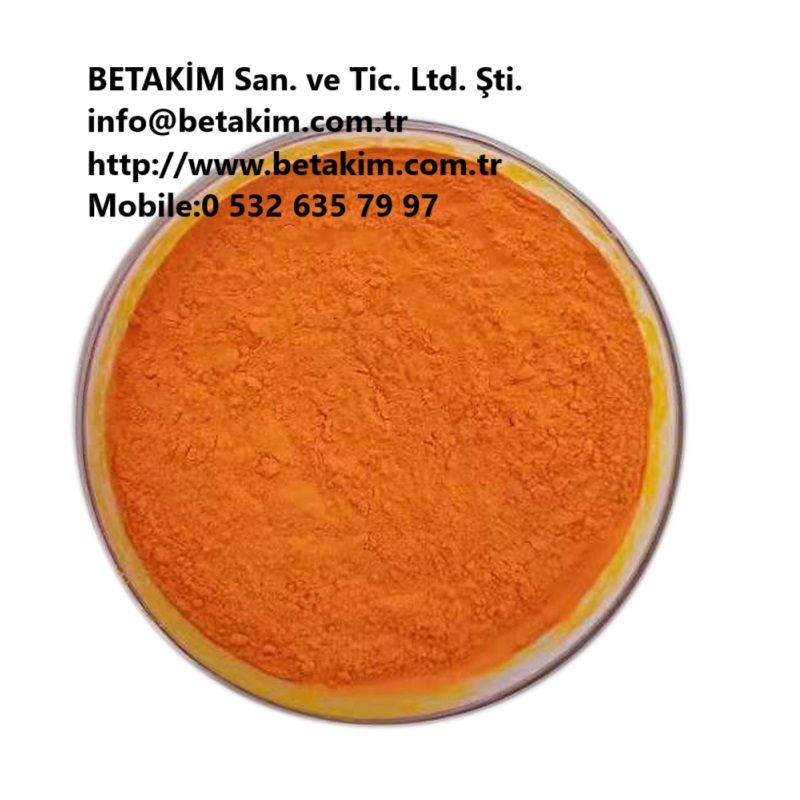
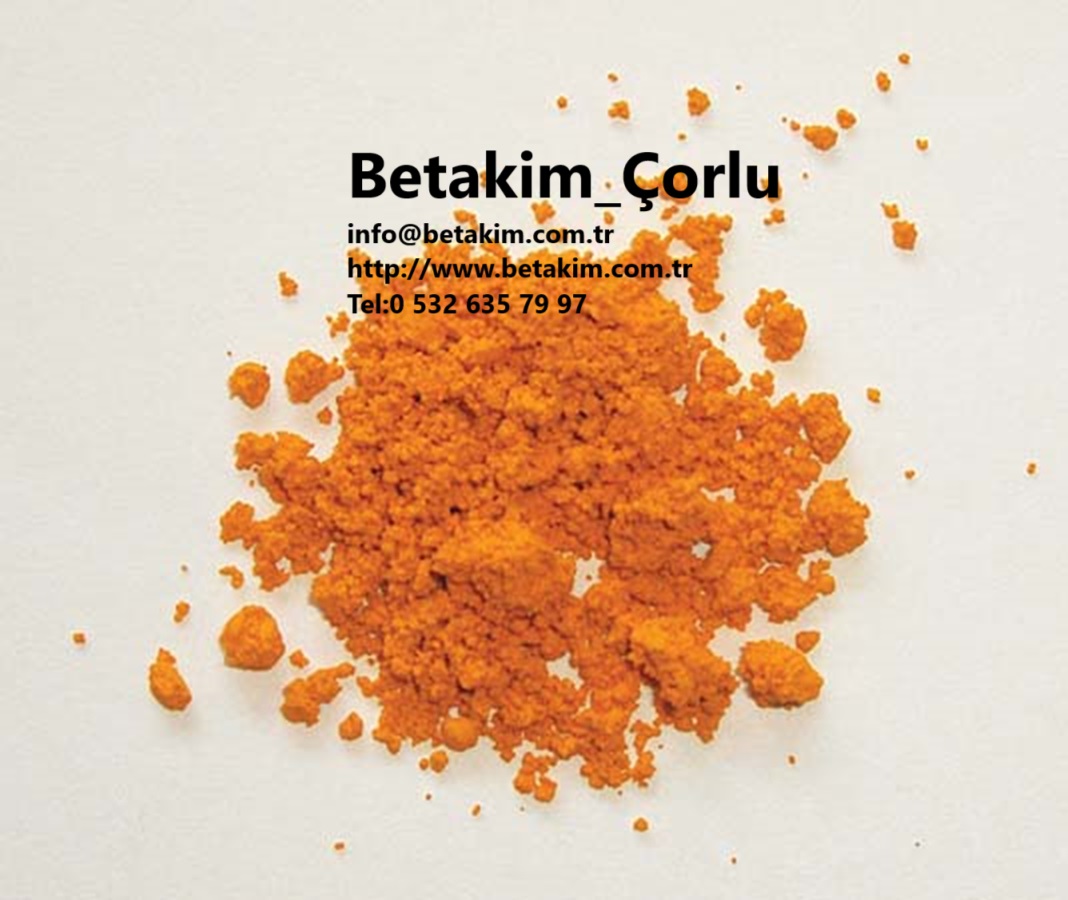
| Color Shade | Yellow to orange-yellow |
| CAS Number | 83-88-5 |
| EC Number | 201-507-1 |
| Molecular Formula | C₁₇H₂₀N₄O₆ |
| Molecular Weight | 376.4 g/mol |
| Chemical Class | Vitamin (B2), flavin |
| Solubility | Slightly soluble in water |
| Source | Natural (milk, eggs, liver, vegetables) or commercially produced from yeast |
What is Riboflavin (E101)?
Riboflavin (E101) is a yellow food colorant that is also known as Vitamin B2. It is a biomolecule that serves as a coenzyme for many biological processes. E101 is one of the most important vitamins and is used both as a nutrient and as a natural yellow colorant in foods.
Note: Riboflavin is a natural vitamin that provides a yellow to orange-yellow color. It is also known as Lactoflavin.
Subtypes:
| Code | Name | Description |
|---|---|---|
| E101(i) | Riboflavin | Pure riboflavin |
| E101(ii) | Riboflavin-5-Sodium Phosphate | Water-soluble form (formerly known as E106) |
Source
| Source Type | Details |
|---|---|
| Natural Sources | Milk, eggs, liver, vegetables, cheese, yogurt, almonds, spinach, mushrooms |
| Commercial Production | Produced from yeast (fermentation) |
| Synthetic Production | Produced synthetically as well |
| Production Method | Fermentation using genetically modified or non-GMO microorganisms (typically Ashbya gossypii, Candida famata, or Bacillus subtilis) |
Note: Although naturally found in milk, commercial riboflavin is typically produced from yeast, not derived from milk.
Functions and Properties
| Property | Description |
|---|---|
| Color | Yellow to orange-yellow |
| Solubility | Slightly soluble in water (E101i); E101(ii) is more water-soluble |
| Function | Yellow food colorant + Vitamin B2 (nutrient) |
| Heat Stability | Sensitive to light (especially UV), relatively heat-stable |
| Light Sensitivity | Degrades in light (must be stored in dark containers) |
| pH Stability | Stable in acidic to neutral pH |
Key Characteristics:
-
Natural yellow colorant (not synthetic)
-
Also functions as a Vitamin B2 supplement
-
Slightly water-soluble (E101i); improved solubility in E101(ii)
-
Light-sensitive (degrades in UV light)
-
No known side effects at concentrations used in foods
Applications and Usage Areas
Riboflavin (E101) is used across multiple industries:
1. Food Industry
| Product Category | Examples |
|---|---|
| Dairy Products | Yogurt, cheese, milk-based desserts, ice cream |
| Cereals & Grains | Breakfast cereals, baby cereals, rice products |
| Beverages | Fruit juices, energy drinks, soft drinks, vitamin-enriched waters |
| Confectionery | Candies, gummies, chocolate (as colorant) |
| Bakery | Cakes, cookies, pastries, bread |
| Sauces & Condiments | Mustard, mayonnaise, salad dressings |
| Baby Foods | Infant formulas, baby purees |
| Processed Foods | Pasta, noodles, soup powders |
2. Pharmaceutical Industry
| Application | Examples |
|---|---|
| Vitamin Supplements | Multivitamin tablets, B-complex vitamins, riboflavin capsules |
| Fortified Foods | Foods enriched with Vitamin B2 |
| Liquid Formulations | Vitamin syrups, oral solutions |
3. Animal Feed
| Application | Examples |
|---|---|
| Poultry Feed | For egg yolk color enhancement |
| Livestock Feed | Nutritional supplement for cattle, pigs |
4. Other Applications
| Application | Examples |
|---|---|
| Cosmetics | Skin care products, creams |
| Medical Research | Cell culture media, research applications |
Safety and Regulatory Status
| Question | Answer |
|---|---|
| Is it safe? | Yes, riboflavin is a vitamin and is considered very safe. |
| ADI (Acceptable Daily Intake) | 0.5 mg/kg body weight/day (as a supplement; higher as a nutrient) |
| Side Effects | No known side effects at concentrations used in foods. High doses may cause harmless yellow discoloration of urine (yellow urine). |
| Toxicity | Very low toxicity; excess is excreted in urine. |
| Natural vs. Synthetic | Both natural (from yeast) and synthetic forms exist; both are chemically identical. |
Regulatory Status:
| Region | Status | Notes |
|---|---|---|
| European Union | Permitted | No restrictions; considered safe |
| Turkey | Permitted | Compliant with EU regulations |
| United States (FDA) | Permitted | GRAS (Generally Recognized as Safe) status |
| Japan | Permitted | |
| Worldwide | Permitted | Accepted globally as both a nutrient and colorant |
Health Benefits (As a Vitamin)
| Benefit | Description |
|---|---|
| Energy Production | Helps convert carbohydrates into energy (ATP) |
| Cell Growth | Supports normal cell growth and function |
| Red Blood Cell Production | Contributes to normal red blood cell formation |
| Nervous System | Supports normal nervous system function |
| Skin Health | Maintains healthy skin and mucous membranes |
| Eye Health | Supports normal vision |
| Antioxidant | Helps protect cells from oxidative stress |
Physical and Chemical Properties
| Property | E101(i) (Riboflavin) | E101(ii) (Riboflavin-5-Sodium Phosphate) |
|---|---|---|
| Appearance | Yellow to orange-yellow powder | Yellow to orange-yellow powder/crystals |
| Solubility | Slightly soluble in water (~0.06 g/L) | More water-soluble |
| Light Stability | Very sensitive (degrades in light) | More stable than riboflavin |
| Heat Stability | Relatively stable | Stable |
| Melting Point | 280-290°C (decomposes) | Decomposes |
| Storage | Dark containers, away from light | Dark containers |
Riboflavin vs. Other Yellow Food Colorants
| Feature | E101 (Riboflavin) | E100 (Curcumin) | E102 (Tartrazine) | E110 (Sunset Yellow) |
|---|---|---|---|---|
| Source | Natural (vitamin) | Natural (turmeric) | Synthetic (azo) | Synthetic (azo) |
| Color Shade | Yellow to orange-yellow | Bright yellow | Lemon yellow | Orange-yellow |
| Health Benefit | Yes (Vitamin B2) | Yes (antioxidant) | No | No |
| EU Warning Label | No | No | Yes | Yes |
| Halal | Yes | Yes | Yes | Yes |
| Vegan | Yes | Yes | Yes | Yes |
| Allergy Risk | Very low | Low | Moderate | Moderate |
| Cost | Moderate | Low | Low | Low |
| Light Stability | Low (must protect from light) | Moderate | Good | Good |
Compatibility with Dietary Restrictions
| Group | Status | Explanation |
|---|---|---|
| Halal | ✅ Permitted | Produced from yeast (halal) or synthetically |
| Kosher | ✅ Permitted | Kosher-certified versions available |
| Vegan | ✅ Permitted | Produced from yeast (non-animal source) |
| Vegetarian | ✅ Permitted | Not derived from animals |
| Allergens | ✅ No common allergens | Does not contain milk, eggs, nuts, gluten (check specific production) |
Note: Although riboflavin is naturally found in milk, commercially produced riboflavin is not derived from milk. It is produced from yeast fermentation, making it suitable for vegans and those with milk allergies.
Storage and Handling
| Requirement | Recommendation |
|---|---|
| Light Protection | Store in dark containers (amber glass, opaque packaging) |
| Temperature | Store in a cool, dry place |
| Humidity | Protect from moisture |
| Shelf Life | Typically 24-36 months when stored properly |
| Degradation Signs | Color fading indicates degradation |
Summary
| Question | Answer |
|---|---|
| What is E101? | Riboflavin, also known as Vitamin B2, a natural yellow food colorant. |
| Is it natural or synthetic? | Both exist. Commercially produced from yeast fermentation (natural source). |
| What color does it produce? | Yellow to orange-yellow. |
| Is it safe? | Yes, very safe. It is an essential vitamin with no known side effects at food concentrations. |
| What is the ADI? | 0.5 mg/kg body weight/day (as a supplement; higher as a nutrient). |
| What products contain it? | Dairy products, cereals, beverages, baby foods, vitamin supplements. |
| Is it halal/vegan? | Yes (produced from yeast, not animal-derived). |
| What is the difference between E101(i) and E101(ii)? | E101(ii) is a more water-soluble form (Riboflavin-5-Sodium Phosphate). |
| How should it be stored? | In dark containers, protected from light (light-sensitive). |
| How is it listed on labels? | E101, Riboflavin, Vitamin B2, Lactoflavin. |
Key Takeaway
Riboflavin (E101) is a natural yellow food colorant that is also Vitamin B2, an essential nutrient for human health. Unlike synthetic yellow dyes (E102, E104, E110), it carries no hyperactivity warning label, has no known side effects at food concentrations, and is safe for all dietary groups (halal, kosher, vegan, vegetarian). It is produced from yeast fermentation, not derived from milk or animal products.
Advantages:
-
Natural colorant + Vitamin B2 (dual function)
-
No warning label required
-
No allergic reactions at normal concentrations
-
Suitable for all dietary groups
Disadvantages:
-
Light-sensitive (requires dark packaging)
-
Slightly lower color intensity compared to synthetic dyes
-
Higher cost than synthetic alternatives
Best Used For: Products where "natural color" and "vitamin enrichment" are desired, especially in dairy, cereals, beverages, and baby foods. Must be packaged in light-protective containers (amber glass, opaque materials).