We unleash your business potential by maximize the business innovation.
Send EmailChocolate Brown, Chocolate Brown HT, Dark Brown HT, Chocolate HT, Lake Chocolate Brown, E155, 4553-89-3
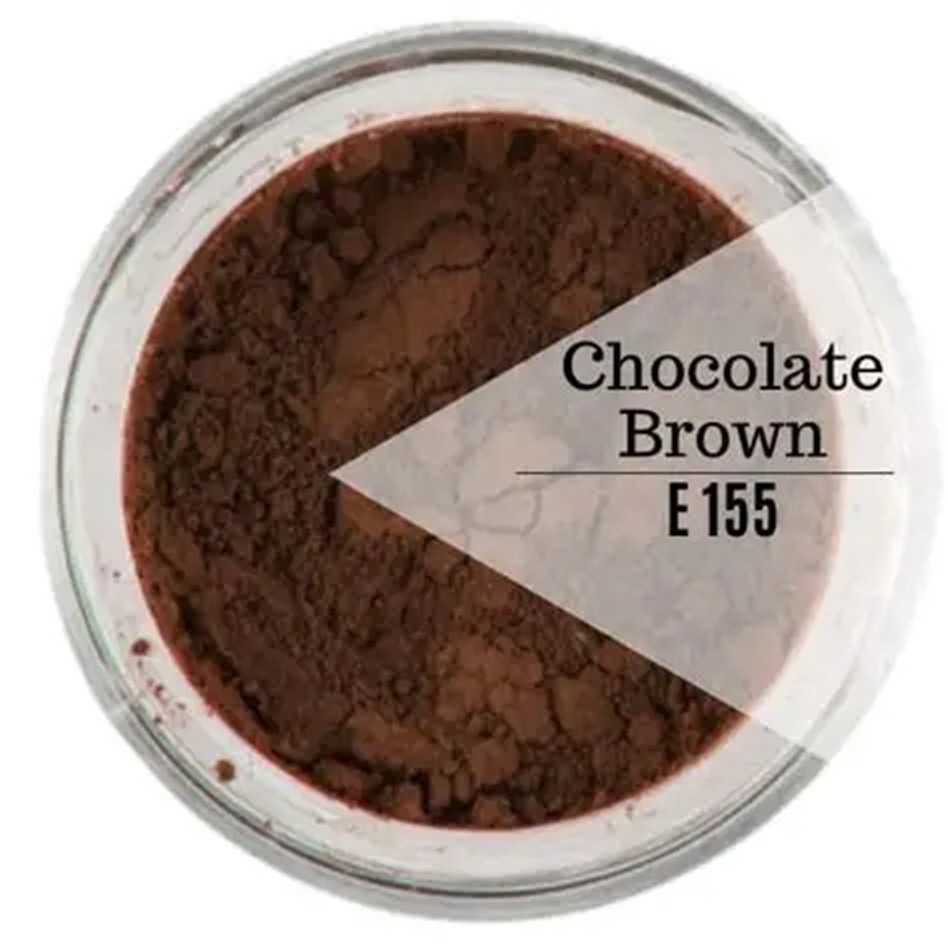
Chocolate Brown (E155) – Brown Food Dye
| Property | Detail |
|---|---|
| Common Names | Chocolate Brown, Chocolate Brown HT, Dark Brown HT, Chocolate HT, Lake Chocolate Brown |
| Food Code | E155 |
| Color Shade | Dark brown |
| CAS Number | 4553-89-3 |
| EC / List Number | 224-924-0 |
| Chemical Formula | C₂₇H₁₈N₄Na₂O₉S₂ (typical; varies by form) |
| Chemical Class | Synthetic azo dye |
| Form | Powder or liquid |
| Solubility | Oil-soluble (lake form) / Water-soluble (other forms) |
Note: The lake form (Lake Chocolate Brown) is oil-soluble and dispersible in fats and oils, making it suitable for fat-based food products.
What is Chocolate Brown (E155)?
Chocolate Brown (E155) is a synthetic brown pigment belonging to the azo dye class. It is used to produce dark brown, chocolate-like colors in various products. The lake form (Lake Chocolate Brown) is specifically designed to be oil-soluble, providing homogeneous and stable coloring in fat-based systems.
Key Characteristics:
-
Synthetic azo dye
-
Produces dark brown (chocolate) shades
-
Available in powder and liquid forms
-
Lake form is oil-soluble (dispersible in oils and fats)
-
Neutral aroma (does not affect taste)
-
Stable against alkalis
-
Long shelf life
Applications and Usage Areas
Chocolate Brown (E155) is used across multiple industries:
1. Food Industry
| Product Category | Examples |
|---|---|
| Chocolate Products | Chocolate coatings, chocolate decorations, chocolate-flavored products |
| Biscuits & Cookies | Chocolate-flavored biscuits, sandwich cookies, dark-colored baked goods |
| Cakes & Bakery | Brown cakes, brownies, cake icings, fondant decorations |
| Confectionery | Candies, caramels, toffees, fudge, chewing gum |
| Beverages | Cola drinks, coffee-flavored beverages, malted drinks, chocolate milk |
| Ice Cream | Chocolate ice cream, brown-colored frozen desserts |
| Desserts | Puddings, custards, dessert sauces (caramel, chocolate) |
2. Cosmetic Industry
| Product Category | Examples |
|---|---|
| Makeup Products | Foundations, bronzers, blushes, eyeshadows, lipsticks |
| Hair Care | Hair dyes (brown shades), shampoos, conditioners |
| Nail Products | Nail polishes (brown shades) |
| Sun Care | Sunscreens, tanning products |
3. Paint Industry
| Application | Examples |
|---|---|
| Furniture | Wood stains, furniture paints (cocoa and coffee tones) |
| Automotive | Brown automotive paints (specialty colors) |
| Decorative Paints | Interior and exterior brown paints |
4. Medical / Laboratory Applications
| Application | Examples |
|---|---|
| Histology | Cell staining in histology and pathology laboratories |
| Microscopy | Contrast dyes for microscopic examination |
5. Textile & Fashion Industry
| Application | Examples |
|---|---|
| Fabric Dyeing | Brown shades for cotton, wool, and synthetic fabrics |
| Printing | Textile printing inks for brown patterns |
6. Packaging Industry
| Application | Examples |
|---|---|
| Luxury Packaging | Brown pigments for luxury and prestige perception |
| Printed Packaging | Brown inks for cardboard and paper packaging |
7. Agriculture (Limited)
| Application | Examples |
|---|---|
| Fertilizers | Color additives in fertilizers |
| Pesticides | Colorants in agricultural chemicals |
Environmental Note: Use in agriculture carries environmental and health risks; natural alternatives are preferred where possible.
Physical and Chemical Properties
| Property | Lake Form (Oil-Based) | Water-Soluble Form |
|---|---|---|
| Solubility | Soluble in oils/fats; insoluble in water | Soluble in water |
| Color | Dark brown | Dark brown |
| Appearance | Powder or liquid | Powder |
| Stability | Stable against alkalis | Stable |
| Aroma | Neutral | Neutral |
| Shelf Life | Long | Long |
General Properties:
-
Oil-Based: Dissolves in oil to provide homogeneous and permanent color (lake form)
-
Water-Soluble: Used especially in laboratory applications (other forms)
-
Durable: Stable against alkalis, provides long shelf life
-
Aroma: Neutral, no effect on taste
Safety and Regulatory Status
| Region | Status | Notes |
|---|---|---|
| European Union | Permitted | Specific maximum limits apply; warning label may be required (contains azo dye) |
| Turkey | Permitted | Compliant with EU regulations |
| United States (FDA) | Not permitted | E155 is not approved for use as a food colorant in the USA |
| Japan | Permitted | With certain restrictions |
| Australia & New Zealand | Permitted | Only in specific food categories |
| Canada | Not permitted | Not approved as a food additive |
Important Note: Chocolate Brown (E155) is not approved for food use in the United States.
Potential Health Risks and Concerns
| Risk | Description |
|---|---|
| Allergic Reactions | As a synthetic azo dye, Chocolate Brown may cause allergic reactions in sensitive individuals, especially those with aspirin sensitivity or asthma. Symptoms may include skin rashes, itching, hives (urticaria), and respiratory issues. |
| Hyperactivity and Attention | Some research suggests that certain synthetic azo dyes (including E155) may contribute to hyperactivity and attention deficit disorder (ADHD)-like behavioral problems in children. In the EU, foods containing E155 may require a warning label. |
| Carcinogenicity Concerns | Some concerns have been raised regarding certain azo dyes. Environmental and health concerns exist, especially regarding agricultural use. |
| Environmental Impact | Use in agriculture may cause environmental pollution concerns. |
| ADI (Acceptable Daily Intake) | 0-5 mg/kg body weight/day (EFSA - tentative) |
EU Warning Label (if applicable): "May have an adverse effect on activity and attention in children."
Safety Precautions
| Precautions | Recommendation |
|---|---|
| Dosage | Must be used within specified limits; avoid excessive consumption |
| Storage | Store in a cool, dry, dark place (away from light) |
| Certifications | ISO 9001, FSSC 22000 (quality and food safety certifications) |
Natural Alternatives to Chocolate Brown (E155)
| Alternative | Source | E Number | Notes |
|---|---|---|---|
| Caramel Color | Caramelized sugar | E150a-d | Natural, wide range of brown shades |
| Carob Powder | Carob fruit | — | Natural brown, adds flavor |
| Cocoa Powder | Cocoa beans | — | Natural brown, adds chocolate flavor |
| Plant-Based Pigments | Various plants | — | Organic, eco-friendly |
| Beetroot Red + Turmeric | Beetroot + Turmeric | E162 + E100 | Can be blended to make brown |
Recommendation: For health and environmental reasons, natural and organic colorants are safer alternatives where possible.
Other Names
| Name | Description |
|---|---|
| Dark Brown HT | Alternative name |
| Chocolate Brown HT | Alternative name |
| Chocolate HT | Short form |
| Lake Chocolate Brown | Oil-soluble lake form |
| Brown HT | Common abbreviation |
Sector Suitability Table
| Sector | Application Area | Suitability | Notes |
|---|---|---|---|
| Food (EU, Turkey, Japan) | Chocolate products, biscuits, cakes, beverages | ✅ Permitted | Specific limits apply |
| Food (USA) | Any food | ❌ Not permitted | Banned for food use |
| Cosmetics | Makeup, hair dyes, nail products | ✅ Permitted | |
| Paint Industry | Furniture, automotive, decorative paints | ✅ Permitted | |
| Medical/Laboratory | Histology, pathology staining | ✅ Permitted | Laboratory use only |
| Textile | Fabric dyeing, printing | ✅ Permitted | |
| Packaging | Luxury packaging, printed materials | ✅ Permitted | |
| Agriculture | Fertilizers, pesticides | ⚠️ Limited | Environmental concerns |
Summary
| Question | Answer |
|---|---|
| What is E155? | Chocolate Brown, a synthetic brown azo dye. |
| What color does it produce? | Dark brown (chocolate shade). |
| What is the lake form? | An oil-soluble form that disperses in oils and fats, used in fat-based products. |
| Is it natural? | No, it is a synthetic dye. |
| Is it safe? | Considered safe by EFSA within ADI limits (0-5 mg/kg). May cause allergic reactions and hyperactivity in sensitive individuals. |
| Is it banned in the USA? | Yes, E155 is not approved for food use in the United States. |
| What products contain it? | Chocolate products, biscuits, cakes, beverages, cosmetics, paints, textile dyes. |
| Are there natural alternatives? | Yes: caramel color (E150a-d), carob powder, cocoa powder, plant-based pigments. |
| How is it listed on labels? | E155, Chocolate Brown, Chocolate Brown HT, Dark Brown HT, Brown HT. |
Key Takeaway
Chocolate Brown (E155) is a synthetic brown azo dye used to produce dark brown, chocolate-like colors in food, cosmetics, paints, textiles, and other industries. The lake form is oil-soluble and ideal for fat-based products. However, it is not approved for food use in the United States. While permitted in the EU and many other countries, it carries potential health risks including allergic reactions (especially in aspirin-sensitive individuals) and possible links to hyperactivity in children (warning label required in the EU).
Recommendations:
-
Use within specified dosage limits
-
Store in cool, dry, dark conditions
-
Prefer natural alternatives (caramel color, carob, cocoa) where possible
-
Sensitive individuals (asthma, aspirin allergy, children with ADHD) should avoid products containing E155