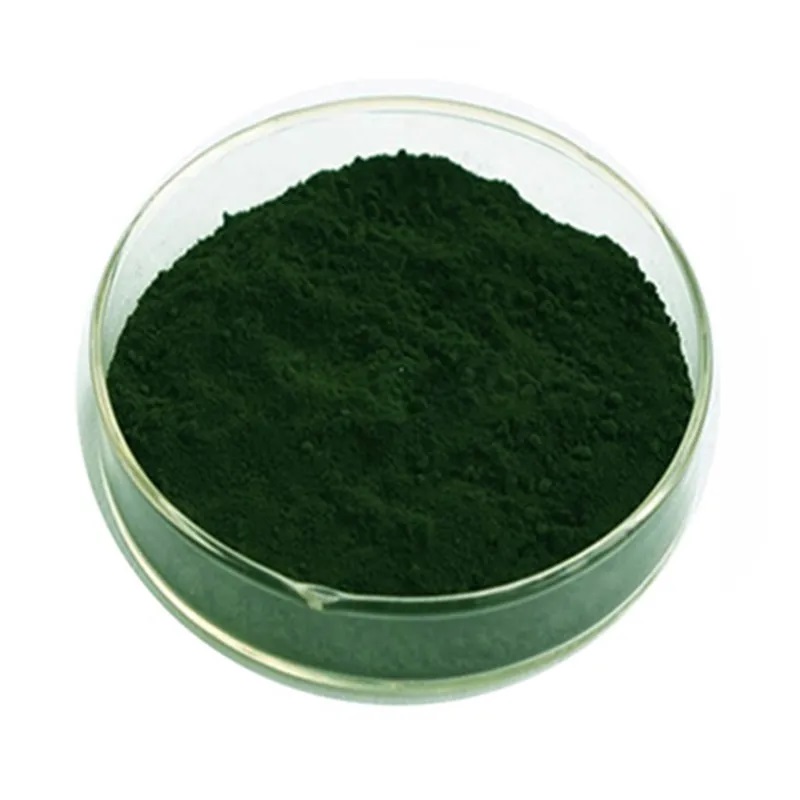
Pea Green, Pea Green Food Dye, E102, E133, 3844-45-9
Pea Green – Green Food Dye (E102 + E133)
| Property |
Detail |
| Color Name |
Pea Green, Bezelye Yeşili |
| Color Shade |
Bright green |
| CAS Number |
3844-45-9 |
| EINECS Number |
223-339-8 |
| Physical Form |
Powder |
| Color |
Green |
| Solubility |
Water-soluble |
| Composition |
Mixture of E133 (Brilliant Blue) + E102 (Tartrazine) |
What is Pea Green?
Pea Green (Bezelye Yeşili) is a synthetic green food colorant in powder form. It is not a single dye but rather a mixture of two synthetic food colorants:
| Component |
E Number |
Color Contribution |
| Brilliant Blue |
E133 |
Blue component |
| Tartrazine |
E102 |
Yellow component |
When combined, these two water-soluble dyes produce a bright pea green shade.
Note: The CAS number 3844-45-9 typically refers to Brilliant Blue (E133) , which is one component of this mixture.
Functions and Properties
| Property |
Description |
| Color |
Bright green |
| Solubility |
Water-soluble |
| Form |
Powder |
| Composition |
E133 + E102 mixture |
| Regulatory Status |
Permitted in foods according to food codex regulations |
Key Characteristics:
-
Water-soluble green powder
-
Can be used in any food product permitted by the food codex
-
Versatile and suitable for detailed formulations
-
Strong and detailed structure for various applications
Applications and Usage Areas
Pea Green is used across multiple industries:
1. Food Industry
| Product Category |
Examples |
| Ice Cream |
Ice cream, sorbets, frozen desserts |
| Beverages |
Iced drinks, liquid beverages, soft drinks, energy drinks |
| Confectionery |
Candies, gummies, chewing gum, jellies |
| Bakery & Pastry |
Cakes, pastries, icings, decorations, cookie fillings |
| Desserts |
Puddings, jellies, gelatin desserts |
| Processed Foods |
Canned vegetables, sauces, dressings |
2. Pharmaceutical Industry
| Application |
Examples |
| Tablets |
Coated tablets, colored tablets |
| Capsules |
Hard and soft gelatin capsules |
| Liquids |
Syrups, oral solutions |
3. Cosmetic Industry
| Product Category |
Examples |
| Makeup |
Eyeshadows, eyeliners, lipsticks |
| Hair Care |
Shampoos, conditioners, hair gels |
| Body Care |
Soaps, shower gels, lotions |
4. Cleaning Products
| Application |
Examples |
| Detergents |
Laundry detergents, dishwashing liquids |
| Household Cleaners |
All-purpose cleaners, toilet cleaners |
5. Other Industrial Applications
| Application |
Examples |
| Colored Stones |
Decorative stones, aquarium gravel, craft stones |
| Play Dough |
Colored play dough and modeling clay for children |
| Arts & Crafts |
Paints, inks, coloring materials |
Component Dyes: E133 and E102
E133 – Brilliant Blue
| Property |
Detail |
| Name |
Brilliant Blue FCF |
| Color |
Bright blue |
| CAS Number |
3844-45-9 |
| Solubility |
Water-soluble |
| ADI |
0-6 mg/kg body weight/day |
E102 – Tartrazine
| Property |
Detail |
| Name |
Tartrazine |
| Color |
Lemon yellow |
| CAS Number |
1934-21-0 |
| Solubility |
Water-soluble |
| ADI |
0-7.5 mg/kg body weight/day |
Mixture Ratio
| Component |
Typical Ratio (Approximate) |
| E133 (Brilliant Blue) |
Small amount (for blue tone) |
| E102 (Tartrazine) |
Larger amount (for yellow tone) |
Note: The exact ratio varies depending on the desired green shade. More yellow produces a yellowish-green (pea green); more blue produces a bluish-green (mint green).
Potential Health Risks and Concerns
Since Pea Green is a mixture of E133 and E102, it carries the combined risk profile of both synthetic dyes:
| Risk |
Description |
| Allergic Reactions |
Both E102 (Tartrazine) and E133 may cause allergic reactions in sensitive individuals, especially those with aspirin sensitivity or asthma. Symptoms may include skin rashes, itching, hives (urticaria), and respiratory issues. |
| Hyperactivity and Attention |
Both E102 and E133 are included in the Southampton Study (2007), which identified a potential link between certain synthetic colors and hyperactivity in children. In the EU, foods containing E102 or E133 (including Pea Green) must carry a warning label. |
| Tartrazine Sensitivity |
Tartrazine (E102) is known to cause urticaria (hives) and asthma symptoms in sensitive individuals. People with aspirin intolerance are particularly at risk. |
| Acceptable Daily Intake (ADI) |
Combined intake must not exceed individual ADI limits for each component. |
EU Warning Label: "May have an adverse effect on activity and attention in children."
Legal Status and Labeling
| Region |
Status |
Note |
| European Union |
Permitted |
Warning label required (contains E102 and E133) |
| Turkey |
Permitted |
Compliant with EU regulations; warning label required |
| United States (FDA) |
Permitted |
E133 (FD&C Blue No. 1) and E102 (FD&C Yellow No. 5) are both permitted |
| Japan |
Permitted |
|
| Norway |
Restricted |
Some restrictions may apply |
EU Warning Label: "May have an adverse effect on activity and attention in children."
Natural Alternatives to Pea Green
| Alternative |
Source |
E Number |
Notes |
| Chlorophyll |
Green plants |
E140 |
Natural green, water-insoluble (oil-soluble) |
| Chlorophyllin |
Green plants (modified) |
E141 |
Water-soluble natural green |
| Spirulina |
Blue-green algae |
— |
Natural blue-green; can be mixed with yellow (e.g., turmeric) to make green |
| Matcha |
Green tea powder |
— |
Natural green, provides flavor as well |
| Spinach Powder |
Spinach |
— |
Natural green, less intense |
Physical and Chemical Properties of the Mixture
| Property |
Value |
| Appearance |
Green powder |
| Solubility |
Soluble in water |
| Color in Solution |
Bright green |
| pH Stability |
Stable in neutral to slightly acidic conditions (due to components) |
| Heat Stability |
Good (both components are heat-stable) |
| Light Fastness |
Good (E133 has high light fastness; E102 has moderate light fastness) |
Sector Suitability Table
| Sector |
Application Area |
Suitability |
Notes |
| Food |
Ice cream, beverages, confectionery, bakery |
✅ Widespread |
Warning label required in EU |
| Pharmaceuticals |
Tablets, capsules, syrups |
✅ Widespread |
|
| Cosmetics |
Makeup, hair care, body care |
✅ Widespread |
|
| Cleaning Products |
Detergents, household cleaners |
✅ Widespread |
|
| Industrial |
Colored stones, play dough, arts & crafts |
✅ Widespread |
No food labeling requirements for non-food products |
Summary
| Question |
Answer |
| What is Pea Green? |
A synthetic green food colorant made by mixing E133 (Brilliant Blue) and E102 (Tartrazine). |
| Is it a single dye? |
No, it is a mixture of two synthetic dyes. |
| What is the CAS number? |
3844-45-9 (for E133, the blue component). |
| What color does it produce? |
Bright pea green (yellowish-green). |
| Is it water-soluble? |
Yes. |
| What products contain it? |
Ice cream, beverages, candies, baked goods, pharmaceuticals, cosmetics, detergents, play dough, colored stones. |
| Are there health concerns? |
Yes – potential for allergic reactions and hyperactivity in children. Requires warning label in the EU. |
| Are there natural alternatives? |
Yes: chlorophyll (E140), chlorophyllin (E141), spirulina, matcha. |
Key Takeaway
Pea Green is a synthetic green food colorant produced by mixing E133 (Brilliant Blue) and E102 (Tartrazine) . It is water-soluble, produces a bright pea green shade, and is used in food, pharmaceuticals, cosmetics, cleaning products, play dough, and colored stones. Because it contains E102 (Tartrazine), it may cause allergic reactions in sensitive individuals (especially those with aspirin sensitivity or asthma) and is associated with hyperactivity in children. In the EU, products containing Pea Green must carry a warning label: "May have an adverse effect on activity and attention in children."