We unleash your business potential by maximize the business innovation.
Send EmailErythrosine, Erythrosine B, Erythrosis, Pink Food Dye, Food Red 3, E127, 16423-68-0
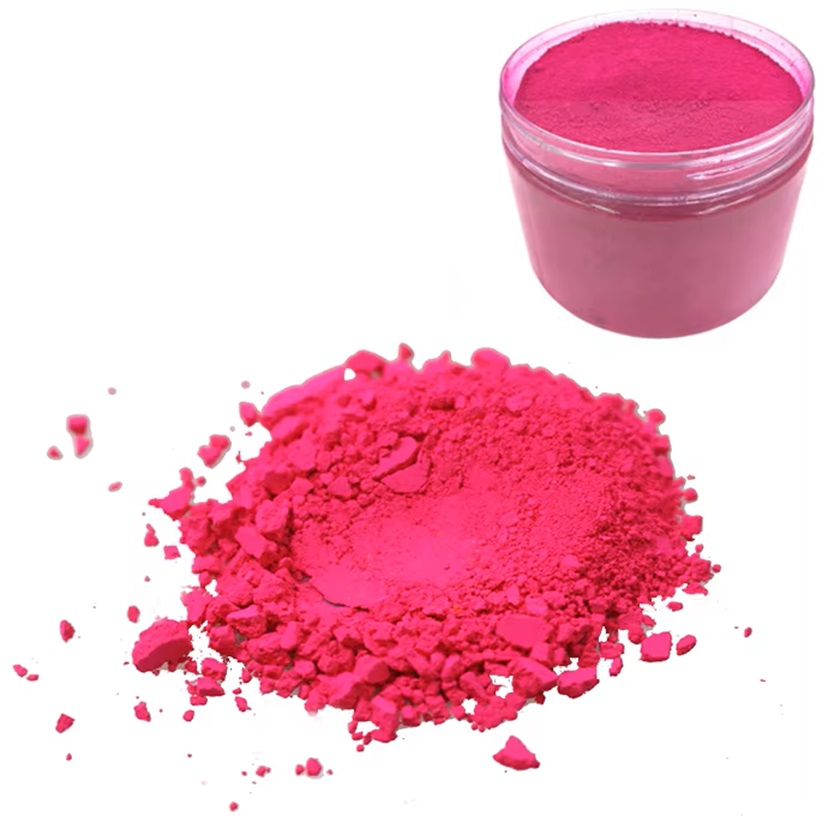
Erythrosine (E127) – Pink Food Dye
| Property | Detail |
|---|---|
| Common Names | Erythrosine, Erythrosine B, FD&C Red No. 3, Red No. 3 |
| Food Code | E127 |
| Color Shade | Cherry pink to red |
| CAS Number | 16423-68-0 |
| EINECS Number | 240-474-8 |
| Chemical Formula | C₂₀H₆I₄Na₂O₅ |
| Molar Mass | 879.86 g/mol |
| Chemical Class | Fluorone derivative, organoiodine compound, xanthene dye |
| Other Names | Disodium 2-(2,4,5,7-tetraiodo-3-oxo-6-oxoxanthen-9-yl)benzoate, C.I. 45430 |
What is Erythrosine (E127)?
Erythrosine (E127) is a synthetic cherry pink food colorant belonging to the xanthene dye class. It is an organoiodine compound, meaning it contains iodine atoms in its molecular structure. It is known as FD&C Red No. 3 in the United States.
Key Characteristics:
-
Synthetic pink to red colorant
-
Contains iodine (organoiodine compound)
-
Water-soluble
-
Produces bright, stable cherry pink shades
-
Also known as Red No. 3 or FD&C Red No. 3
Physical and Chemical Properties
| Property | Value |
|---|---|
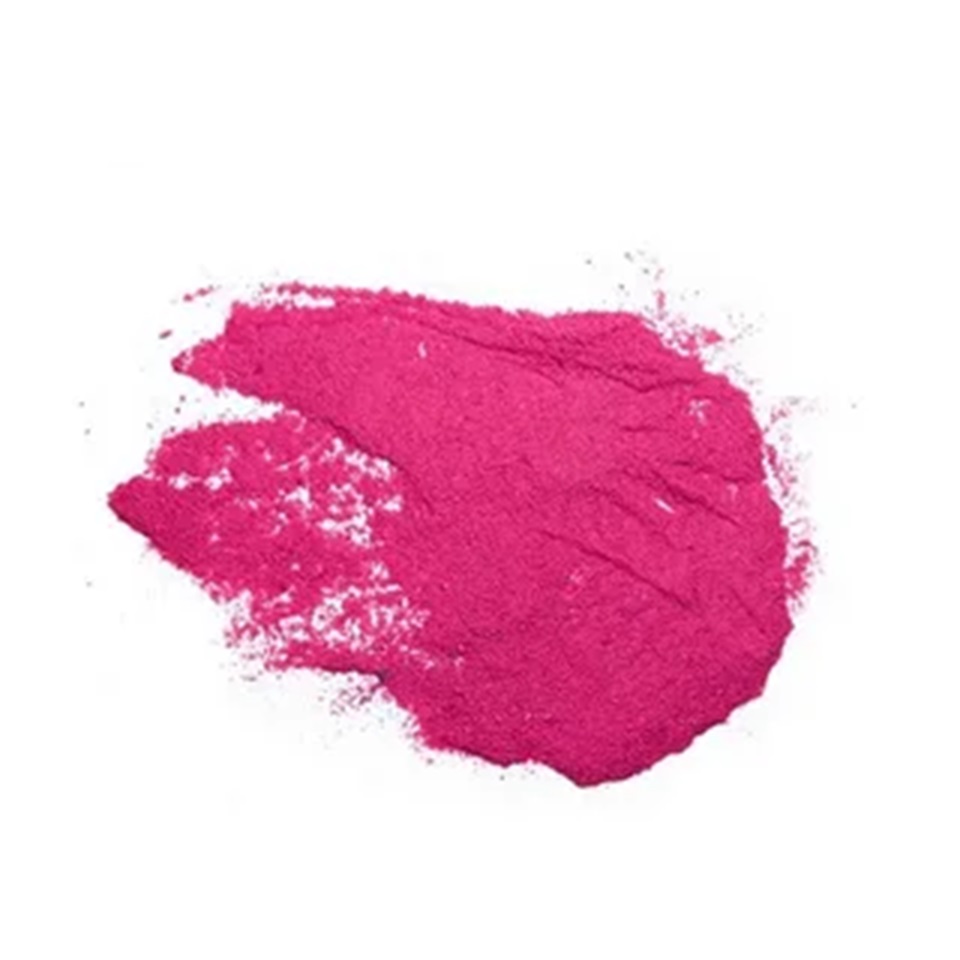
| Appearance | Cherry pink to red powder or granules |
| Melting Point | 142-144 °C (288-291 °F; 415-417 K) |
| Solubility | Soluble in water (50 g/L at 25°C), soluble in ethanol |
| pH Stability | Stable between pH 3-8 |
| Absorption Maximum | 524-530 nm |
| Color Change | Precipitates below pH 3.5; stable above pH 8 |
| Light Stability | Moderate to good |
Applications and Usage Areas
1. Food Industry
Erythrosine (E127) is used as a synthetic cherry pink food colorant in:
| Product Category | Examples |
|---|---|
| Maraschino Cherries | Cocktail cherries, candied cherries |
| Canned Fruits | Canned cherries, fruit cocktails |
| Confectionery | Candies, gumdrops, jelly beans |
| Bakery | Cake decorating gels, icings, creams |
| Snacks | Colored peanut shells |
| Frozen Desserts | Ice cream, popsicles, sorbets |
2. Other Industrial Applications
| Application | Examples |
|---|---|
| Dentistry | Plaque detection tablets (leaves red residue on teeth to identify plaque areas) |
| Printing Inks | Red and cherry pink ink production |
| Textiles | Wool and silk dyeing (limited use) |
| Cosmetics | Lipsticks, blushes (varies by country) |
| Biological Staining | Contrast dye in histological preparations |
Regulatory Status (Updated 2024-2025)
1. Turkey
According to the Turkish Food Codex Regulation on Colorants:
| Restriction | Detail |
|---|---|
| Permitted Use | Only in cocktail cherries and canned cherries |
| Maximum Limit | 200 mg/kg |
| Other Foods | Use is prohibited in other food products |
2. United States (FDA)
| Status | Detail |
|---|---|
| Cosmetics & Topical Drugs | Banned (FDA 2024 update) |
| Foods | Currently permitted, but phased ban expected in 2025-2026 |
| California | Banned from 2027 under California Food Safety Act (AB 418, passed 2023) |
3. European Union
| Restriction | Detail |
|---|---|
| Permitted Use | Limited to cocktail cherries and canned cherries |
| ADI (EFSA 2024) | 0-0.1 mg/kg body weight/day (revised) |
4. Other Countries (2025 Update)
| Country | Status |
|---|---|
| Australia & New Zealand | Only permitted in preserved cherries |
| Japan | Permitted (labeling required) |
| China | Limited use permitted |
| Canada | Permitted in cocktail cherries and glacé cherries |
| Norway | Completely banned |
| Switzerland | Only permitted in cherry products |
Health Evaluations (Updated 2024-2025)
Toxicological Profile
| Risk | Description |
|---|---|
| Thyroid Effects | The iodine in erythrosine releases free iodine when metabolized. Animal studies (rats) have shown thyroid hyperplasia and follicular cell adenomas at high doses. Human epidemiological studies are limited, but caution is recommended for individuals with thyroid sensitivity. |
| Neurobehavioral Effects | The Southampton Study (2007) identified a potential link between synthetic colors (including erythrosine) and hyperactivity in children. EFSA's 2024 report stated it may be linked to attention deficits in some children. |
| Carcinogenicity | NTP studies showed thyroid tumors in rats. IARC classification: Group 3 (not classifiable as carcinogenic to humans). FDA banned it in topical drugs and cosmetics in 1990 but continued in foods. |
| Photosensitivity | Rare cases of phototoxicity and photoallergic reactions have been reported. |
ADI (Acceptable Daily Intake) Values
| Organization | ADI Value | Year |
|---|---|---|
| JECFA (FAO/WHO) | 0-0.1 mg/kg | 2018 (confirmed 2024) |
| EFSA | 0-0.1 mg/kg | 2024 revision |
| FDA | Not specified (no GRAS status) | — |
Example: For a 70 kg adult, the maximum daily intake is 7 mg.
Alternatives to Erythrosine
| Alternative | Source | E Number | Notes |
|---|---|---|---|
| Beetroot Red | Beetroot | E162 | Natural, stability issues |
| Anthocyanins | Grape skin, black carrot | E163 | pH sensitive |
| Carmine | Cochineal insect | E120 | Natural, not vegetarian/vegan |
| Lycopene | Tomato | E160d | Fat-soluble |
| Paprika Extract | Red pepper | E160c | Orange-red shade |
| Allura Red AC | Synthetic | E129 | More stable, different safety profile |
Retailer Policies (2025 Update)
| Retailer | Policy |
|---|---|
| ASDA (UK) | Not using in own-brand products since 2007 |
| Tesco (UK) | Discontinued use in own-brand products (2023-2024) |
| Sainsbury's (UK) | Discontinued use in own-brand products (2023-2024) |
| Waitrose (UK) | Discontinued use in own-brand products (2023-2024) |
| Whole Foods (US) | Products do not contain Red No. 3 |
| Trader Joe's (US) | Products do not contain Red No. 3 |
| Turkey | Imported product label inspections increased; local production limited to cherry products only |
Laboratory Analysis Methods
| Method | Application |
|---|---|
| HPLC-DAD | High-performance liquid chromatography |
| LC-MS/MS | Trace amount determination in foods |
| UV-VIS Spectrophotometry | Quantitative analysis at 524-530 nm |
| Urine Analysis | Metabolism studies after consumption |
Summary and Evaluation
Erythrosine (E127) in light of current scientific data and regulations:
Advantages
| Advantage | Description |
|---|---|
| Effective at low concentrations | Low dosage required for desired color |
| Bright, stable cherry pink shade | Unique color difficult to replicate |
| Kosher certified options available | Some formulations are kosher |
Risks and Restrictions
| Risk | Description |
|---|---|
| Thyroid effects | Potential impact on thyroid function |
| Hyperactivity link | Possible association with hyperactivity in children |
| Tightening global regulations | Increasingly restricted worldwide |
| Limited permitted use | Only allowed in cherry products in many countries |
Conclusion
In line with international regulations and consumer demands, the use of erythrosine is being increasingly restricted. Food manufacturers are shifting toward natural alternatives. More comprehensive restrictions are expected in the US and EU during the 2025-2027 period.
Key Takeaway
Erythrosine (E127 / FD&C Red No. 3) is a synthetic cherry pink dye that is highly effective at low concentrations but carries significant health concerns, particularly regarding thyroid function and childhood hyperactivity. Due to these concerns, its use is increasingly restricted globally. Most countries now limit its use to cocktail cherries and canned cherries only. The US is planning a phased ban (2025-2027), and major retailers have already removed it from their own-brand products. Manufacturers are actively reformulating products using natural alternatives such as beetroot red (E162) or anthocyanins (E163) .