We unleash your business potential by maximize the business innovation.
Send EmailBeta Carotene, Orange Food Dye, Carotene, Carotenoid, E160a, 7235-40-7
Beta-Carotene (E160a) – Orange Food Dye (Carotene, Carotenoid)
| Property | Detail |
|---|---|
| Common Names | Beta-Carotene, β-Carotene, Carotene, Lucarotin, Lucaratin |
| Food Code | E160a |
| Alternative Code | E160a (sometimes confused with E106a – not an official EU code) |
| Color Shade | Yellow, orange, red (depending on concentration) |
| CAS Number | 7235-40-7 |
| Chemical Formula | C₄₀H₅₆ |
| Molecular Weight | 536.87 g/mol |
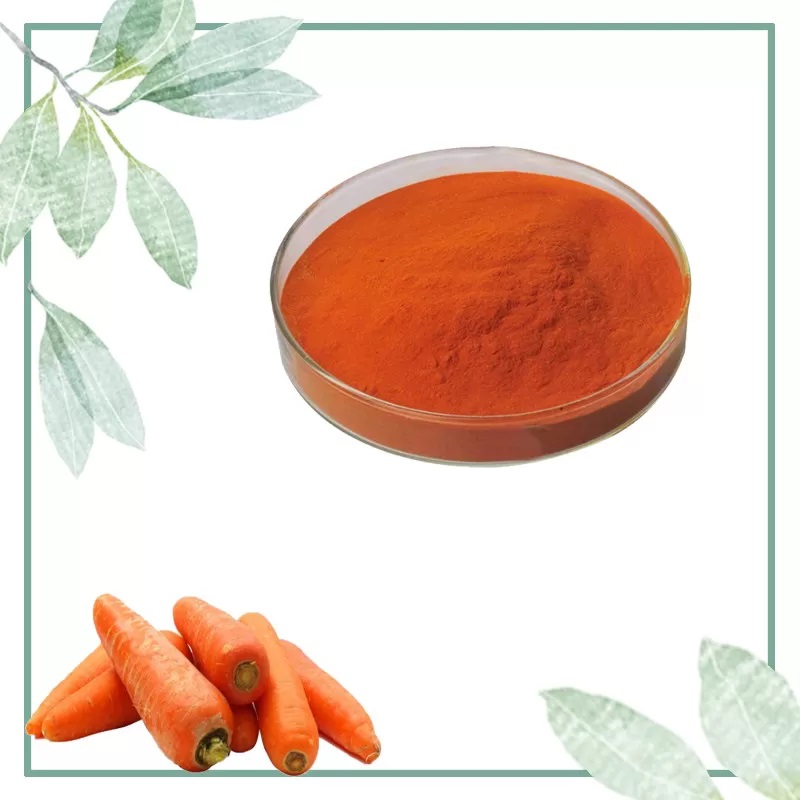
| Appearance | Orange crystalline powder |
| Solubility | Fat-soluble / Oil-soluble |
| Chemical Class | Carotenoid (Provitamin A) |
| Available Concentrations | 1%, 5%, 10%, 30% (and other variations) |
What is it?
Beta-Carotene is a pigment found in plants that gives them their yellow, orange, and red colors. It is also a provitamin A carotenoid, meaning it is converted into vitamin A in the body. It is one of the most widely used natural colorants in the food industry.
Other Names for Beta-Carotene:
| Name | Explanation |
|---|---|
| E160a | Food additive code |
| Provitamin A | Known by this name because it converts to vitamin A in the body |
| β-Carotene | Scientific contexts use the Greek letter beta (β) |
| Carotenoid | Belongs to the carotenoid pigment family |
| Natural Colorant | Common language name |
| Eye Health Supporter | Common language name |
Natural Sources
Beta-Carotene is naturally found in brightly colored vegetables and fruits:
| Food Source | Examples |
|---|---|
| Root Vegetables | Carrots, sweet potatoes |
| Green Leafy Vegetables | Spinach, kale, lettuce |
| Orange/Yellow Vegetables | Pumpkin, red bell peppers |
| Fruits | Cantaloupe, peaches, apricots, mangoes |
Physical and Chemical Properties
| Property | Value |
|---|---|
| Chemical Formula | C₄₀H₅₆ |
| Molecular Weight | 536.87 g/mol |
| CAS Number | 7235-40-7 |
| Appearance | Orange to red-orange crystalline powder |
| Solubility | Fat-soluble / Oil-soluble (insoluble in water) |
| Melting Point | Approximately 180-190°C |
| Light Stability | Sensitive to light and oxygen (requires stabilization) |
| Heat Stability | Moderate |
| Color Range | Yellow (low concentration) → Orange (medium) → Red (high concentration) |
Available Commercial Forms (Concentrations)
Beta-Carotene is available in various concentrations for different applications:
| Concentration | Typical Form | Common Applications |
|---|---|---|
| 1% | Emulsion / Solution | Beverages, light-colored products |
| 5% | Emulsion / Suspension | Dairy products, desserts |
| 10% | Emulsion / Powder | Bakery products, confectionery |
| 30% | Crystalline / Oil suspension | High-concentration applications, supplements |
Note: Lower concentrations (1%, 5%, 10%) are typically stabilized emulsions or oil suspensions. Higher concentrations (30%) are often crystalline or concentrated oil suspensions.
Applications and Usage Areas
Beta-Carotene (E160a) is used across multiple industries:
1. Food Industry
| Product Category | Examples |
|---|---|
| Beverages | Fruit juices, soft drinks, energy drinks, smoothies |
| Dairy Products | Yogurt, butter, cheese, margarine, ice cream |
| Confectionery | Candies, gummies, chocolate |
| Bakery Products | Cakes, cookies, pastries, breads |
| Sauces and Soups | Ready-made sauces, instant soups |
| Processed Foods | Pasta, cereals, snacks |
| Oils and Fats | Margarine, cooking oils (for yellow color) |
2. Food Supplements
| Application | Examples |
|---|---|
| Vitamin Preparations | Multivitamin tablets, capsules, softgels |
| Antioxidant Supplements | Beta-carotene capsules |
| Eye Health Supplements | Formulations for vision support |
3. Cosmetics and Personal Care
| Product Category | Examples |
|---|---|
| Skin Care | Anti-aging creams, lotions, serums |
| Hair Care | Shampoos, conditioners |
| Makeup | Lipsticks, foundations, blushes |
4. Animal Feed
| Application | Examples |
|---|---|
| Poultry Feed | For egg yolk color enhancement |
| Aquaculture | For salmon and fish flesh coloration |
| Pet Food | Natural colorant for pet products |
Health Benefits (As a Nutrient)
| Benefit | Description |
|---|---|
| Antioxidant | Fights free radicals, prevents cell damage |
| Eye Health | Protects eye health, prevents night blindness, supports macular health |
| Immune System | Strengthens the immune system |
| Skin Health | Supports skin health, promotes skin cell renewal |
| Provitamin A Activity | Converts to vitamin A in the body as needed |
Note: As a food additive (E160a), Beta-Carotene is used for coloring purposes only. The health benefits apply to Beta-Carotene as a nutrient, not necessarily to colored food products.
Safety and Regulatory Status
| Question | Answer |
|---|---|
| Is it safe? | Yes, Beta-Carotene (E160a) is considered very safe. It is a natural pigment and provitamin. |
| ADI (Acceptable Daily Intake) | Not specified / Not limited (EFSA – considered safe with no numerical ADI) |
| Allergic Reactions | Extremely rare. Generally well-tolerated even by sensitive individuals. |
| Hyperactivity Concerns | No. E160a is not associated with hyperactivity (unlike many synthetic dyes). |
| Natural vs. Synthetic | Both natural and synthetic forms exist. Natural is derived from plants or algae; synthetic is produced chemically. Both are chemically identical. |
Beta-Carotene vs. Synthetic Yellow/Orange Dyes
| Feature | E160a (Beta-Carotene) | E110 (Sunset Yellow) | E102 (Tartrazine) | E104 (Quinoline Yellow) |
|---|---|---|---|---|
| Source | Natural (plants/algae) or synthetic identical | Synthetic (azo) | Synthetic (azo) | Synthetic (quinoline) |
| Color Shade | Yellow to orange to red | Orange-yellow | Lemon yellow | Greenish-yellow |
| Solubility | Fat-soluble | Water-soluble | Water-soluble | Water-soluble |
| EU Warning Label | No | Yes | Yes | Yes |
| Health Benefits | Yes (provitamin A, antioxidant) | No | No | No |
| ADI (mg/kg) | Not limited | 0-4 | 0-7.5 | 0-10 |
| Allergy Risk | Extremely low | Moderate | Moderate | Moderate |
| Halal/Kosher | Yes | Yes | Yes | Yes |
| Vegan | Yes (synthetic and plant-based) | Yes | Yes | Yes |
Physical and Chemical Properties (Detailed)
| Property | Value |
|---|---|
| Chemical Formula | C₄₀H₅₆ |
| Molecular Weight | 536.87 g/mol |
| CAS Number | 7235-40-7 |
| EINECS Number | 230-636-6 |
| Melting Point | 180-190°C |
| Boiling Point | Decomposes before boiling |
| Solubility | Insoluble in water; soluble in oils, fats, and organic solvents (e.g., dichloromethane, chloroform) |
| Absorption Maximum | Approximately 450-470 nm (in oil) |
| Stability | Sensitive to light, oxygen, and high temperatures |
| Color | Yellow (low concentration) → Orange (medium) → Red (high concentration) |
Sector Suitability Table
| Sector | Application Area | Suitability | Notes |
|---|---|---|---|
| Food (Fat-Based) | Margarine, oils, butter, cheese | ✅ High | Fat-soluble form ideal |
| Food (Water-Based) | Beverages, dairy, jellies | ✅ High | Requires emulsified form |
| Beverages | Juices, soft drinks, energy drinks | ✅ High | Emulsion forms (1%, 5%, 10%) |
| Confectionery | Candies, gummies, chocolate | ✅ High | |
| Bakery | Cakes, cookies, pastries | ✅ High | Heat-stable formulations available |
| Supplements | Vitamins, capsules, tablets | ✅ Very High | Both color and nutritional benefits |
| Cosmetics | Skin care, makeup | ✅ High | Antioxidant and color benefits |
| Animal Feed | Poultry, aquaculture, pet food | ✅ High | For color enhancement |
| Pharmaceuticals | Tablets, capsules | ✅ High | As colorant and nutrient |
Summary
| Question | Answer |
|---|---|
| What is E160a? | Beta-Carotene, a natural orange-yellow pigment from plants. |
| Is it natural or synthetic? | Both exist. Natural is derived from plants/algae; synthetic is produced chemically. Both are identical and safe. |
| Is it safe? | Yes, very safe. No ADI limit (no specified maximum). No hyperactivity warning. |
| What are the health benefits? | Antioxidant, provitamin A (converts to vitamin A), supports eye and immune health. |
| What products contain it? | Juices, dairy, margarine, baked goods, supplements, cosmetics, animal feed. |
| Is it halal/vegan? | Yes (both natural and synthetic forms). |
| What concentrations are available? | 1%, 5%, 10%, 30% (and others). |
| How is it listed on labels? | E160a, Beta-Carotene, Carotene, Natural Color. |
Important Notes
-
Not a Synthetic Dye: E160a is a natural pigment (carotenoid), not a synthetic azo dye. It does not require a hyperactivity warning label.
-
Fat-Soluble: Beta-Carotene is fat-soluble, not water-soluble. For water-based products, it must be used in emulsified form.
-
Stabilization Required: Pure Beta-Carotene is sensitive to light and oxygen. Commercial forms are often stabilized with antioxidants (e.g., tocopherols).
-
Color Variation: The color ranges from yellow (low concentration) to orange (medium) to red (high concentration).
-
Dual Function: In supplements and fortified foods, Beta-Carotene serves both as a colorant and as a nutrient (provitamin A).
-
Synthetic vs. Natural: Chemically identical. Synthetic Beta-Carotene is often purer and more stable, but both forms are considered natural-origin by regulators.
-
E160a vs. E106a: E106a is not an official EU food additive code. Beta-Carotene is correctly coded as E160a. Some confusion may exist with Riboflavin (E101).
Key Takeaway
Beta-Carotene (E160a) is a safe, natural orange-yellow food colorant derived from plants or produced synthetically. Unlike many synthetic yellow and orange dyes (E102, E104, E110, E124, E129), it carries no hyperactivity warning label and has no specified ADI limit (considered very safe). Beyond coloring, it provides health benefits as a provitamin A (converts to vitamin A) and an antioxidant. It is fat-soluble and available in various concentrations (1%, 5%, 10%, 30%) for different applications.