We unleash your business potential by maximize the business innovation.
Send EmailCrystal Menthol, Menthol, L-Menthol, Levomenthol, Neomenthol, Peppermint Alcohol, Hexahydrothymol, 2216-51-5
CRYSTAL MENTHOL (L-MENTHOL)
PRODUCT IDENTIFICATION INFORMATION
| Parameter | Information |
|---|---|
| Product Name | Crystal Menthol |
| Chemical Name | L-Menthol |
| Synonyms (Turkish) | Mentol Kristali, Kristali Mentol |
| Synonyms (English) | Menthol, L-Menthol, Levomenthol, Neomenthol, Peppermint Alcohol, Hexahydrothymol |
| CAS Number | 2216-51-5 |
| EINECS Number | 218-690-9 |
| Molecular Formula | C₁₀H₂₀O |
| Molecular Weight | 156.27 g/mol |
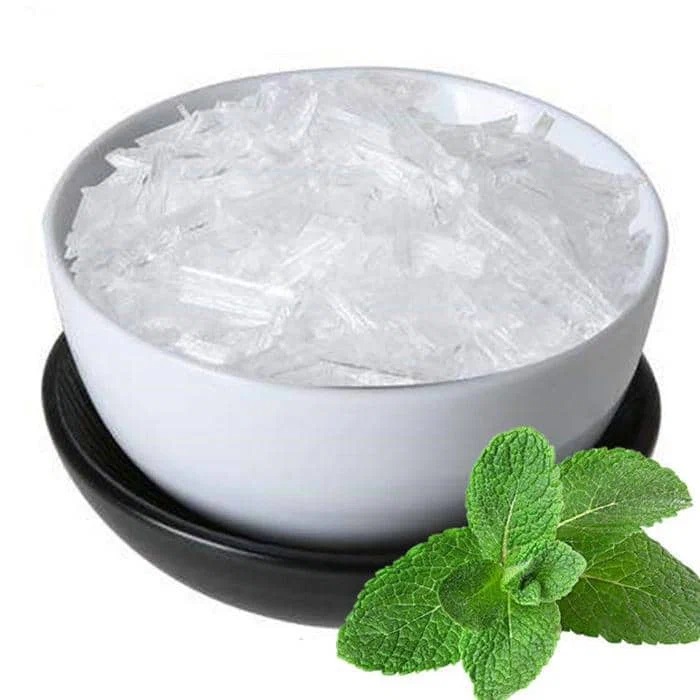
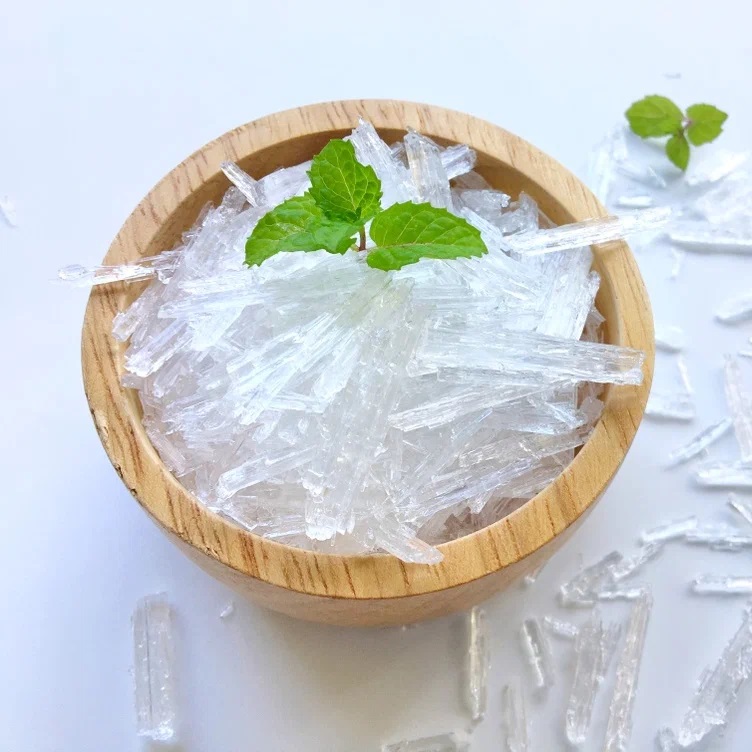
| Appearance | Colorless to white, crystalline solid |
| Odor | Strong, characteristic minty odor |
CHEMICAL STRUCTURE
L-Menthol
OH
|
H₃C—CH—CH₂
|
| CH₂
H₃C—CH—CH₂
|
CH₃
Molecular Formula: C₁₀H₂₀O
SMILES: CC1CCC(C(C1)C(C)C)O
InChI: InChI=1S/C10H20O/c1-7(2)9-5-4-8(3)6-10(9)11/h7-11H,4-6H2,1-3H3/t8-,9+,10-/m1/s1
InChIKey: NOOLISFMXDJSKH-XKYBEWQOSA-N
Structure: Cyclic monoterpene alcohol; Contains a cyclohexane ring with three substituents; Has three chiral centers; Natural L-menthol is the most abundant and active isomer.
SECTION 1: CHEMICAL IDENTITY AND DESCRIPTION
| Parameter | Information |
|---|---|
| Product Name | Crystal Menthol |
| Chemical Name | L-Menthol |
| Synonyms (Turkish) | Mentol Kristali, Kristali Mentol |
| Synonyms (English) | Menthol, L-Menthol, Levomenthol, Neomenthol, Peppermint Alcohol, Hexahydrothymol, 2-Isopropyl-5-methylcyclohexanol |
| CAS Number | 2216-51-5 |
| EINECS Number | 218-690-9 |
| Molecular Formula | C₁₀H₂₀O |
| Molecular Weight | 156.27 g/mol |
| Chemical Class | Cyclic monoterpene alcohol; Natural product |
| Source | Peppermint oil (Mentha piperita) |
| Physical State (20°C) | Solid (crystalline) |
| Odor | Strong, characteristic minty, refreshing |
| Color | Colorless to white |
| Taste | Cool, refreshing, minty |
| Optical Rotation | -49° to -51° (natural L-menthol) |
SECTION 2: PHYSICAL AND CHEMICAL PROPERTIES
| Property | Value | Test Method / Note |
|---|---|---|
| Appearance | Colorless to white crystalline solid or needles | Visual |
| Odor | Strong, characteristic minty | Olfactometric |
| Molecular Weight | 156.27 g/mol | Calculated |
| Melting Point | 41 – 43°C | DSC |
| Boiling Point | 212 – 216°C | – |
| Flash Point | 93°C | Pensky-Martens |
| Density (20°C) | 0.890 g/cm³ (liquid) | ASTM D4052 |
| Optical Rotation | -49° to -51° | Polarimetry |
| Solubility in Water | 0.004% (very slightly soluble) | General Method |
| Solubility in Ethanol | Freely soluble | General Method |
| Solubility in Oils/Fats | Soluble | General Method |
| Solubility in Propylene Glycol | Soluble | General Method |
| Vapor Pressure | 0.0047 mmHg (20°C) | – |
| Refractive Index (20°C) | 1.459 – 1.461 | – |
| pH (in solution) | Neutral | – |
| Purity (L-Menthol) | ≥ 99.5% | GC |
| Heavy Metals | ≤ 10 ppm | AAS / ICP |
| Arsenic (As) | ≤ 2 ppm | AAS / ICP |
| Lead (Pb) | ≤ 5 ppm | AAS / ICP |
| Loss on Drying | ≤ 0.5% | Gravimetric (105°C) |
| Residue on Ignition | ≤ 0.1% | Gravimetric (800°C) |
| Isomer Purity | ≥ 99.5% (L-isomer) | GC |
SECTION 3: MENTHOL ISOMERS
| Isomer | CAS Number | Properties | Natural Occurrence |
|---|---|---|---|
| L-Menthol | 2216-51-5 | Most active; Strong cooling effect; Minty odor | Natural (peppermint) |
| D-Menthol | 15356-60-2 | Less cooling effect; Weaker odor | Rare (synthetic) |
| L-Isomenthol | 23283-97-8 | Similar to menthol | Minor in nature |
| D-Isomenthol | 23283-97-8 | Similar to isomenthol | Synthetic |
| Neomenthol | 2216-52-6 | Less cooling; Different odor | Minor in nature |
| Isoneomenthol | 20747-48-4 | Similar to neomenthol | Synthetic |
L-Menthol vs D-Menthol:
| Property | L-Menthol | D-Menthol |
|---|---|---|
| Cooling Effect | Strong | Weak |
| Odor | Typical minty, pleasant | Harsher |
| Optical Rotation | -49° to -51° | +49° to +51° |
| TRPM8 Activation | High | Low |
| Biological Activity | High | Low |
SECTION 4: CHEMICAL PROPERTIES AND REACTIVITY
| Parameter | Information |
|---|---|
| Chemical Character | Cyclic monoterpene alcohol; Natural product; Non-toxic; Biodegradable |
| Stability | Stable under normal conditions; Light sensitive; Volatile at high temperatures |
| Reactivity | Reacts with strong oxidizing agents; Forms esters with acids; Forms ethers with alcohols; Undergoes oxidation to menthone |
| Incompatible Materials | Strong oxidizing agents, strong acids, strong bases (dehydration) |
| Polymerization | Does not polymerize |
| Degradation Products (Heating) | Carbon monoxide, carbon dioxide, water (combustion) |
| Oxidation | Oxidizes to menthone, mentholactone |
| Esterification | Forms menthyl acetate, menthyl salicylate, etc. |
| Dehydration | Forms menthene (with strong acids) |
| Sublimation | Sublimes at room temperature (slowly) |
| Complex Formation | Forms complexes with cyclodextrins, urea, thiourea |
SECTION 5: PRODUCTION METHODS
Method 1: Natural Extraction (Peppermint Oil)
Process: Peppermint plant → Harvest → Distillation → Peppermint Oil → Fractionation → Crystallization → L-Menthol
Description: Peppermint leaves are harvested and separated; Leaves are steam distilled; Menthol-containing oil is collected; Oil is fractionally distilled to concentrate menthol; Concentrated oil is cooled to crystallize L-menthol; Crystals are purified by recrystallization; This process is natural and does not require chemical synthesis.
Method 2: Synthetic Production (Thymol Route)
Process: Thymol → Hydrogenation → Isomenthol → Isomerization → L-Menthol
Description: Thymol (from thyme oil or synthetic) is hydrogenated to isomenthol; Isomenthol is isomerized to L-menthol; Racemic menthol is obtained; Resolution is used to obtain pure L-menthol. Less common.
Method 3: Synthetic Production (Citronellal Route)
Process: Citronellal → Cyclization → Isopulegol → Hydrogenation → L-Menthol
Description: Citronellal (from citronella oil or synthetic) is cyclized to isopulegol; Isopulegol is hydrogenated to L-menthol; High enantiomeric purity can be achieved. Increasingly common.
Method 4: Crystallization from Peppermint Oil
Process: Peppermint oil → Cooling (−40°C) → Filtration → Washing → Drying → L-Menthol crystals
Description: Peppermint oil is cooled to very low temperatures; L-menthol crystallizes out; Crystals are filtered, washed, and dried; Gives high purity natural L-menthol.
SECTION 6: FUNCTIONAL PROPERTIES AND MECHANISM OF ACTION
| Property | Description |
|---|---|
| Cooling Effect | Activates TRPM8 (cold-sensitive) receptors in skin and mucous membranes; Produces a cooling sensation without actual temperature change; Used in topical analgesics, oral care, and confectionery |
| Local Anesthetic | Blocks voltage-gated sodium channels; Provides mild local anesthetic effect; Reduces pain and irritation in throat and skin; Used in cough drops, lozenges, and topical creams |
| Antiseptic | Exhibits antibacterial and antifungal activity; Effective against oral bacteria, skin pathogens; Used in mouthwashes, toothpaste, and topical antiseptics |
| Anti-inflammatory | Reduces inflammation and irritation; Modulates inflammatory mediators; Used in topical creams and ointments |
| Decongestant | Opens respiratory passages; Relieves nasal congestion; Used in inhalers, nasal sprays, and chest rubs |
| Antitussive | Suppresses cough reflex; Used in cough syrups and lozenges; Provides soothing effect on throat |
| Carminative | Relieves gas and bloating; Used in digestive preparations; Provides soothing effect on digestive tract |
| Antipruritic | Relieves itching and irritation; Used in topical preparations for insect bites, poison ivy |
| Flavoring Agent | Provides refreshing minty taste; Used in food, beverages, confectionery, and oral care products |
| Fragrance | Provides characteristic minty odor; Used in perfumes, cosmetics, and personal care products |
SECTION 7: MAIN APPLICATION AREAS
| Industry / Application | Function | Typical Use |
|---|---|---|
| Pharmaceutical | Active ingredient, flavoring, soothing agent | Cough syrups, throat lozenges, nasal sprays, topical analgesics, chest rubs, decongestant inhalers, muscle pain creams, digestive aids |
| Oral Care | Flavoring, cooling, antibacterial | Toothpaste, mouthwash, dental floss, breath fresheners, chewing gum |
| Cosmetics & Personal Care | Cooling, fragrance, soothing | Lotions, creams, shampoos, conditioners, lip balm, after-shave, deodorants, sunscreens |
| Food & Beverage | Flavoring, cooling agent | Chewing gum, candy, chocolate, mints, beverages, ice cream, baked goods |
| Aromatherapy | Refreshing, calming | Essential oils, inhalers, massage oils, diffusers |
| Confectionery | Flavoring, cooling | Hard candies, soft candies, chewing gum, breath mints, chocolate, pastilles |
| Tobacco Industry | Flavoring | Cigarettes, pipe tobacco, smokeless tobacco (adds refreshing taste) |
| Industrial | Fragrance, cooling | Household products, air fresheners, cleaning products, antiseptic formulations |
| Herbal Medicine | Active ingredient | Herbal remedies, digestive aids, respiratory preparations, topical analgesics |
| Veterinary | Flavoring, cooling | Animal feed, pet treats, veterinary preparations |
SECTION 8: SAMPLE FORMULATIONS
Cough Drop (Lozenges):
| Component | Amount |
|---|---|
| Sugar | 70 – 80% |
| Glucose Syrup | 10 – 20% |
| Menthol (L-Menthol) | 0.5 – 2.0% |
| Eucalyptus Oil | 0.1 – 0.5% |
| Color/Flavor | As required |
Instructions: Cook sugar and glucose syrup to 140-150°C; Add menthol, eucalyptus oil, and other ingredients; Pour into molds; Cool and package.
Topical Analgesic Cream (100 g):
| Component | Amount |
|---|---|
| Menthol | 2 – 10 g |
| Methyl Salicylate | 5 – 15 g |
| Camphor | 1 – 5 g |
| Base Cream | To 100 g |
Instructions: Melt menthol in oil phase; Mix with other active ingredients; Emulsify with base; Cool with mixing.
Mouthwash (1 L):
| Component | Amount |
|---|---|
| Menthol | 0.5 – 1.5 g |
| Thymol | 0.5 – 1.0 g |
| Ethanol | 15 – 25% |
| Glycerin | 5 – 10% |
| Water | To 1 L |
Instructions: Dissolve menthol and thymol in ethanol; Add glycerin and water; Mix well.
SECTION 9: USAGE INSTRUCTIONS
General Dosing Guide:
| Application | Dosage (%) | Form |
|---|---|---|
| Cough Drops | 0.5 – 2.0 | Crystal |
| Toothpaste | 0.1 – 0.5 | Crystal |
| Mouthwash | 0.05 – 0.15 | Crystal |
| Topical Creams | 0.5 – 10.0 | Crystal (dissolved) |
| Nasal Sprays | 0.5 – 5.0 | Crystal (dissolved) |
| Chewing Gum | 0.1 – 0.5 | Crystal |
| Candies | 0.1 – 1.0 | Crystal |
| Cosmetics | 0.1 – 2.0 | Crystal |
Instructions:
-
Dissolution: Dissolve menthol crystals in alcohol, propylene glycol, or oil phase; Heat if necessary (up to 40-50°C).
-
Addition: Add to formulation at the appropriate stage; For emulsions, dissolve in oil phase; For aqueous systems, use solubilizer (ethanol, propylene glycol).
-
Storage: Protect from light and heat; Keep tightly closed; Store in a cool, dry place.
SECTION 10: QUALITY SPECIFICATIONS
| Parameter | Pharmaceutical Grade | Food Grade | Cosmetic Grade | Test Method |
|---|---|---|---|---|
| Appearance | Colorless to white crystals | Colorless to white crystals | Colorless to white crystals | Visual |
| Assay (L-Menthol) | ≥ 99.5% | ≥ 99.0% | ≥ 99.0% | GC |
| Melting Point | 41 – 43°C | 41 – 43°C | 41 – 43°C | DSC |
| Optical Rotation | -49° to -51° | -49° to -51° | -49° to -51° | Polarimetry |
| Loss on Drying | ≤ 0.5% | ≤ 0.5% | ≤ 0.5% | Gravimetric |
| Residue on Ignition | ≤ 0.1% | ≤ 0.1% | ≤ 0.1% | Gravimetric |
| Heavy Metals (as Pb) | ≤ 10 ppm | ≤ 10 ppm | ≤ 10 ppm | AAS / ICP |
| Arsenic (As) | ≤ 2 ppm | ≤ 2 ppm | ≤ 2 ppm | AAS / ICP |
| Lead (Pb) | ≤ 5 ppm | ≤ 5 ppm | ≤ 5 ppm | AAS / ICP |
| Related Substances | ≥ 99.5% | ≥ 99.0% | ≥ 99.0% | GC |
| Chloride | ≤ 0.01% | ≤ 0.01% | ≤ 0.01% | – |
| Sulfate | ≤ 0.01% | ≤ 0.01% | ≤ 0.01% | – |
SECTION 11: TOXICOLOGICAL PROFILE
| Parameter | Value |
|---|---|
| Acute Oral Toxicity (LD50, Rat) | ~ 3,300 mg/kg (moderate toxicity) |
| Acute Dermal Toxicity | May cause mild irritation; Sensitization possible |
| Acute Inhalation Toxicity | May cause respiratory irritation at high concentrations |
| Skin Irritation | Mild irritant; May cause allergic reaction in sensitive individuals |
| Eye Irritation | May cause irritation (cooling effect) |
| Chronic Toxicity | Non-toxic at normal use concentrations; Very high doses may cause gastrointestinal effects |
| Carcinogenicity | Not classified as carcinogenic |
| Mutagenicity | Not mutagenic |
| Reproductive Toxicity | No reproductive toxicity at normal levels |
| Allergenicity | May cause contact dermatitis in sensitive individuals |
| Target Organs | Eyes, skin, respiratory system (at high concentrations) |
| Occupational Exposure Limit (8h TWA) | Not established |
| Special Toxicity Note | Non-toxic in normal use; Food additive approved; Pharmaceutical ingredient approved; Cosmetic ingredient approved; Very high doses may cause gastrointestinal irritation; May cause allergic reaction in sensitive individuals |
SECTION 12: GHS CLASSIFICATION AND LABELING
GHS Classification (in accordance with CLP and UN GHS):
| Hazard Class | Category | H-Statement |
|---|---|---|
| Skin Irritation | Category 2 | H315 |
| Eye Irritation | Category 2 | H319 |
| Specific Target Organ Toxicity (Single Exposure) | Category 3 | H335 |
Signal Word: WARNING
Hazard Pictograms: GHS07 (Exclamation Mark)
Hazard Statements (H-Codes):
| Code | Statement |
|---|---|
| H315 | Causes skin irritation |
| H319 | Causes serious eye irritation |
| H335 | May cause respiratory irritation |
NFPA 704 Hazard Classification:
| Health | Flammability | Reactivity | Special |
|---|---|---|---|
| 2 | 1 | 0 | - |
| (Moderate health hazard – irritation) | (Combustible) | (Stable) | (None) |
SECTION 13: PRECAUTIONARY STATEMENTS (P-CODES)
| Code | Statement |
|---|---|
| P261 | Avoid breathing dust/fume/gas/mist/vapors/spray |
| P264 | Wash hands thoroughly after handling |
| P271 | Use only outdoors or in a well-ventilated area |
| P280 | Wear protective gloves/protective clothing/eye protection/face protection |
| P302+P352 | IF ON SKIN: Wash with plenty of soap and water |
| P304+P340 | IF INHALED: Remove person to fresh air and keep comfortable for breathing |
| P305+P351+P338 | IF IN EYES: Rinse cautiously with water for several minutes. Remove contact lenses if present and continue rinsing |
| P312 | Call a POISON CENTER/doctor if you feel unwell |
| P332+P313 | If skin irritation occurs: Get medical advice/attention |
| P337+P313 | If eye irritation persists: Get medical advice/attention |
| P362+P364 | Take off contaminated clothing and wash it before reuse |
| P403+P233 | Store in a well-ventilated place. Keep container tightly closed |
| P501 | Dispose of contents/container in accordance with local/regional/national/international regulations |
SECTION 14: FIRST AID MEASURES
| Exposure Route | Action to Take |
|---|---|
| Inhalation | Remove to fresh air immediately. If respiratory irritation develops, seek medical attention. |
| Skin Contact | Remove contaminated clothing. Wash with plenty of soap and water. If irritation persists, get medical attention. |
| Eye Contact | Rinse immediately with plenty of water for at least 15 minutes. Keep eyelids open. Remove contact lenses if present. If irritation persists, seek medical attention. |
| Ingestion | Rinse mouth. Drink plenty of water. Do NOT induce vomiting. Seek immediate medical attention if large quantities are ingested. |
SECTION 15: FIREFIGHTING MEASURES
| Parameter | Information |
|---|---|
| Fire Hazard | Combustible solid. Flash point 93°C. May burn if exposed to high heat. |
| Hazards Arising from Fire | Thermal decomposition produces carbon monoxide, carbon dioxide, and water. |
| Suitable Extinguishing Media | Water spray, CO₂, dry chemical powder, foam. |
| Unsuitable Extinguishing Media | Water jet (may spread) |
| Special Protective Equipment | Self-contained breathing apparatus (SCBA), full protective clothing. |
| Special Precautions | Prevent dust from entering sewers and waterways. Keep containers cool. |
SECTION 16: STORAGE AND SHELF LIFE
| Parameter | Information |
|---|---|
| Storage Conditions | Store in a cool, dry, well-ventilated area; PROTECT FROM LIGHT and HEAT; Keep away from direct sunlight, strong oxidizing agents, and strong acids. |
| Container Requirements | Tightly closed, light-proof containers (amber glass, aluminum foil-lined, plastic containers). |
| Materials to Protect From | Light, heat, strong oxidizing agents, strong acids, moisture |
| Shelf Life | 24 – 48 months (in unopened original packaging, under proper storage conditions). |
| Stability Note | Volatile (sublimes at room temperature); Light and heat accelerate volatilization; Keep container tightly closed; Protect from excessive heat. |
| Special Storage Requirements | Store in a dry, well-ventilated area; Protect from light and heat; Opened containers must be resealed immediately. |
SECTION 17: PACKAGING OPTIONS
| Packaging Type | Quantity | Material |
|---|---|---|
| Plastic Bag (inner) | 5 kg, 10 kg, 25 kg | PE bag (moisture-proof, sealed) |
| Fiber Drum | 20 kg, 25 kg | PE-lined fiberboard drum |
| Plastic Drum | 25 kg, 50 kg | HDPE / Polypropylene (light-proof) |
| Aluminum Bag | 5 kg, 10 kg, 25 kg | Aluminum foil laminated bag |
| Small Pack | 100 g, 500 g, 1 kg | Foil-lined plastic bags (laboratory/sample) |
| Glass Jar | 100 g, 500 g | Amber glass (pharmaceutical) |
SECTION 18: TRANSPORT INFORMATION
| Parameter | Information |
|---|---|
| UN Number | Not regulated (non-hazardous) |
| Hazard Class | Not applicable |
| Packing Group | Not applicable |
| ADR/RID | Not regulated |
| IMDG Code | Not regulated (non-hazardous) |
| IATA (Air) | Not regulated (non-hazardous) |
| Marine Pollutant | No |
| Transport Temperature | Ambient temperature; Protect from light and heat. |
SECTION 19: REGULATORY STATUS
| Region / Authority | Status |
|---|---|
| European Union | Food additive approved; Pharmaceutical ingredient (Ph.Eur.); Cosmetic ingredient approved; Not classified as hazardous |
| USA (TSCA) | Listed (TSCA Inventory) |
| USA (FDA) | GRAS (Generally Recognized as Safe) – 21 CFR 182.20; Food flavoring; Pharmaceutical ingredient (USP) |
| Turkey | Food additive; Pharmaceutical ingredient; Cosmetic ingredient; Subject to KKDIK regulation |
| IARC | Not classified (non-toxic, non-carcinogenic) |
| NTP | Not listed |
| OSHA | Not regulated as toxic or carcinogenic substance |
| California (Prop 65) | Not listed |
| USP | Listed |
| Ph.Eur. | Listed |
| FCC (Food Chemicals Codex) | Listed |
SECTION 20: OTHER NAMES AND SYNONYMS
| Type | Name |
|---|---|
| Turkish Names | Mentol Kristali, Kristali Mentol, L-Mentol |
| English Names | Crystal Menthol, L-Menthol, Levomenthol, Neomenthol, Peppermint Alcohol, Hexahydrothymol |
| Chemical Names | 2-Isopropyl-5-methylcyclohexanol; 5-Methyl-2-(propan-2-yl)cyclohexan-1-ol |
| CAS Number | 2216-51-5 |
| EINECS Number | 218-690-9 |
| Molecular Formula | C₁₀H₂₀O |
| HS Code | 2906.11 |
| Synonyms | Menthol, L-Menthol, Levomenthol, Peppermint Camphor, Mint Camphor |
SECTION 21: SUMMARY TABLE
| Parameter | Value |
|---|---|
| Product | Crystal Menthol (L-Menthol) |
| CAS Number | 2216-51-5 |
| Molecular Formula | C₁₀H₂₀O |
| Molecular Weight | 156.27 g/mol |
| Appearance | Colorless to white crystals |
| Odor | Strong, minty, refreshing |
| Melting Point | 41 – 43°C |
| Boiling Point | 212 – 216°C |
| Optical Rotation | -49° to -51° |
| Primary Function | Cooling agent, flavoring, local anesthetic, antiseptic |
| Main Application Areas | Pharmaceutical, oral care, cosmetics, food & beverage, confectionery, aromatherapy |
| Shelf Life | 24 – 48 months |
| GHS Signal Word | WARNING |
| UN Number | Not regulated |
| Special Properties | Natural product; Volatile; Sublimes at room temperature; TRPM8 activator; Provides cooling sensation |
SECTION 22: CRITICAL WARNINGS AND BEST PRACTICES
CRITICAL WARNINGS:
-
Not highly toxic – but may cause skin and eye irritation. Wear protective equipment.
-
Sublimes at room temperature – volatile; Keep container tightly closed.
-
Light and heat sensitive – protect from direct sunlight and high temperatures.
-
Flammable solid – keep away from open flames and high heat.
-
May cause allergic reactions in sensitive individuals (contact dermatitis).
-
High doses may cause gastrointestinal irritation; Avoid ingestion of large quantities.
-
Do not apply to broken skin – may cause irritation; Avoid eye contact (cooling sensation may be painful).
-
Not to be used on infants – may cause respiratory depression.
-
May cause respiratory irritation in high concentrations – use in well-ventilated areas.
-
GRAS status – safe for food and pharmaceutical use at recommended levels.
BEST PRACTICE RECOMMENDATIONS:
Pharmaceutical Applications: Use as active ingredient in cough syrups (0.5-2%), throat lozenges (0.5-2%), nasal sprays (0.5-5%), topical analgesics (2-10%); Provides cooling, decongestant, and soothing effects; Dissolve in alcohol or propylene glycol before addition.
Oral Care: Use as flavoring and cooling agent in toothpaste (0.1-0.5%), mouthwash (0.05-0.15%); Provides fresh breath; Antibacterial effect; Dissolve in alcohol for mouthwash formulations.
Cosmetics & Personal Care: Use as cooling and soothing agent in lotions, creams, lip balms, shampoos, and conditioners; Dosage 0.1-2.0%; Dissolve in oil phase before emulsification; Provides refreshing feeling.
Food & Beverage: Use as flavoring and cooling agent in chewing gum, candy, chocolate, mints, beverages, and ice cream; Dosage 0.1-1.0%; Add during cooking/mixing; Protect from heat where possible.
Aromatherapy: Use as refreshing and calming agent; Essential oil blends; Inhalers; Massage oils; Dosage depends on formulation.
Handling: Use in well-ventilated areas; Avoid dust formation; Use dust masks (N95/FFP2) when handling powder; Use gloves and safety goggles; Wash hands thoroughly after handling.
Personal Protective Equipment: Dust mask (N95/FFP2 or higher), safety goggles, protective gloves (nitrile, neoprene). Not required for solution handling.
Hygiene: Wash hands thoroughly after handling; Do not eat, drink, or smoke while using.
Storage: Store in tightly closed, light-proof containers; Store in a cool, dry, well-ventilated area; Protect from light, heat, and moisture; Opened containers must be resealed immediately; Shelf life: 24-48 months under proper conditions.
Spill Management: Sweep or vacuum (HEPA) and place in suitable sealed container; Avoid dust formation; Do not allow entry into drains or waterways.
Disposal: Dispose of in accordance with local, regional, and national regulations; Non-hazardous waste; Biodegradable; Can be incinerated in compliance with regulations.
MECHANISM OF COOLING EFFECT:
Menthol activates TRPM8 (cold-sensitive) receptors:
-
TRPM8 Activation: TRPM8 is a cation channel on sensory neurons; Activated by cold temperatures and menthol; Increases intracellular calcium; Causes sensation of coolness.
-
No Actual Temperature Change: Menthol does not lower skin temperature; The cooling sensation is a neurological effect; Potency varies among isomers (L-menthol is most active).
-
Therapeutic Effects: Provides relief for muscle pain; Reduces itch; Acts as counterirritant; Local anesthetic effect.
HEALTH AND SAFETY NOTES:
| Age Group | Recommendation |
|---|---|
| Infants (0-2 years) | Not recommended (may cause respiratory depression) |
| Children (2-12 years) | Use at lower concentrations; Under supervision |
| Adults | Safe at recommended levels |
| Pregnant Women | Safe at normal use levels (consult physician) |
| Lactating Women | Safe at normal use levels |
LEGAL DISCLAIMER:
The information provided in this document is based on our current knowledge and experience and is presented in good faith. However, as all conditions of use are beyond our control, it does not constitute a binding specification or warranty. This Technical Data Sheet is for informational purposes only. Users are responsible for testing the suitability for their own applications. For complete safety, storage, use, handling, waste, and regulatory compliance information, please refer to the official Safety Data Sheet (SDS/MSDS) provided by the manufacturer/supplier.