We unleash your business potential by maximize the business innovation.
Send EmailGum Arabic, Acacia Gum, Gum Acacia, Gum Dragon, Gumovaline, Acacia Syrup, Acacia Dealbata, E414, 9000-01-5
GUM ARABIC (ACACIA GUM - E414)
PRODUCT IDENTIFICATION INFORMATION
| Parameter | Information |
|---|---|
| Product Name | Gum Arabic |
| Scientific Name | Acacia senegal / Acacia seyal resin |
| Synonyms (Turkish) | Arap Zamkı, Sakız Ağacı Zamkı, Akasya Gamı |
| Synonyms (English) | Gum Arabic, Arabic Gum, Acacia Gum, Gum Acacia, Gum Senegal, Gum Dragon, Gumovaline, Acacia Syrup, Australian Gum, Acacia Dealbata Gum |
| CAS Number | 9000-01-5 |
| EC Number (EINECS) | 203-028-3 |
| E Number | E414 |
| Molecular Formula | Variable (complex polysaccharide) |
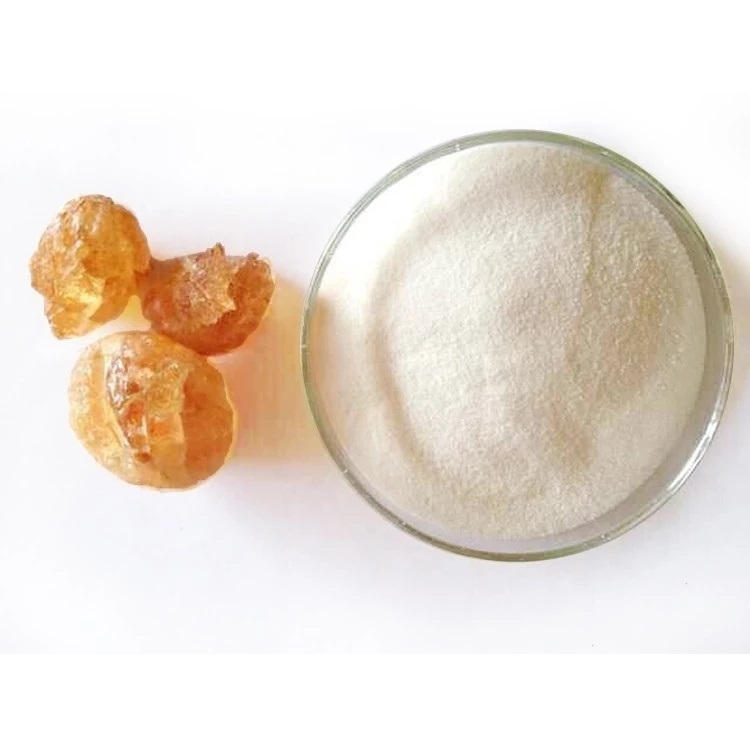
| Appearance | White to yellowish-white powder or granules |
| Odor | Odorless or slight characteristic odor |
| Source | Acacia senegal and Acacia seyal trees (Sub-Saharan Africa) |
CHEMICAL STRUCTURE
Gum Arabic (Acacia Gum)
Complex Polysaccharide Structure
—(Galactose—Arabinose—Rhamnose—Glucuronic Acid)ₙ—
Structure: Natural plant exudate from Acacia senegal and Acacia seyal trees; Complex branched polysaccharide; Contains D-galactose, L-arabinose, L-rhamnose, D-glucuronic acid, and 4-O-methyl-D-glucuronic acid; High molecular weight (200,000 – 600,000 Da); Contains protein fractions (approximately 2-4%).
SECTION 1: CHEMICAL IDENTITY AND DESCRIPTION
| Parameter | Information |
|---|---|
| Product Name | Gum Arabic |
| Scientific Name | Acacia senegal / Acacia seyal resin |
| Synonyms (Turkish) | Arap Zamkı, Sakız Ağacı Zamkı, Akasya Gamı |
| Synonyms (English) | Gum Arabic, Arabic Gum, Acacia Gum, Gum Acacia, Gum Senegal, Gum Dragon, Gumovaline, Acacia Syrup, Australian Gum, Acacia Dealbata Gum |
| CAS Number | 9000-01-5 |
| EC Number (EINECS) | 203-028-3 |
| E Number | E414 |
| Molecular Formula | Variable (complex polysaccharide) |
| Chemical Class | Natural polysaccharide; Plant exudate; Hydrocolloid; Soluble fiber |
| Source | Acacia senegal and Acacia seyal trees |
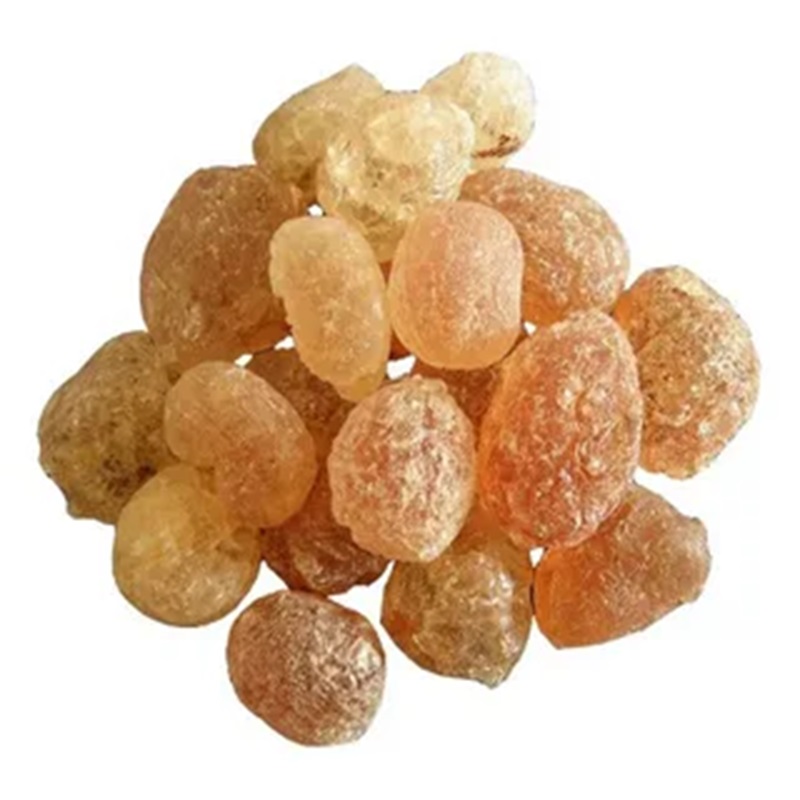
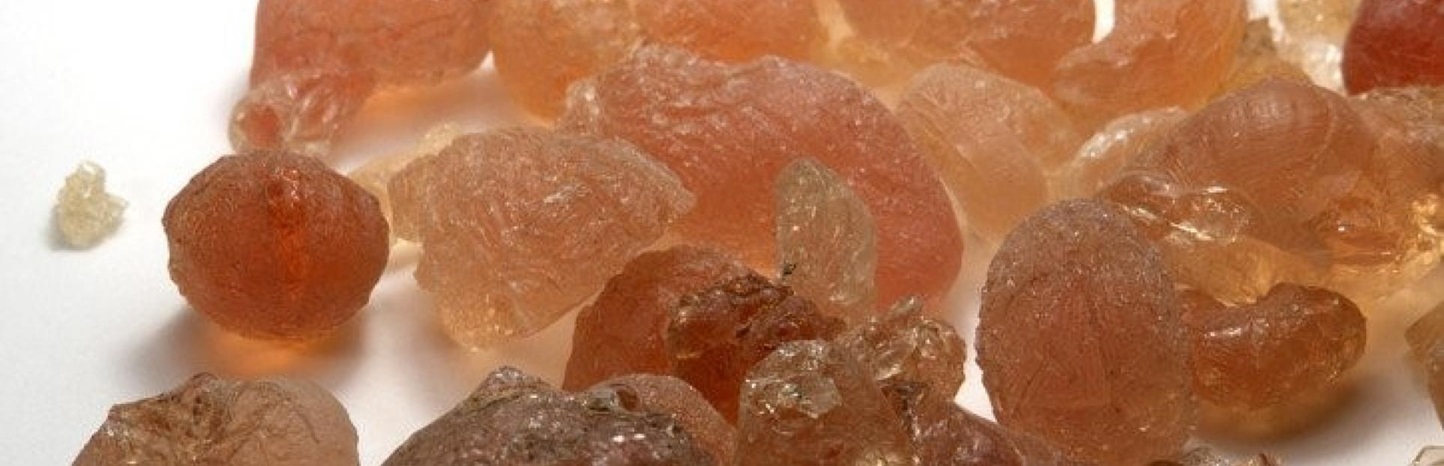
| Physical State (20°C) | Solid (powder, granules, or tears) |
| Odor | Odorless or slight characteristic odor |
| Color | White to yellowish-white |
| Taste | Tasteless |
SECTION 2: PHYSICAL AND CHEMICAL PROPERTIES
| Property | Value | Test Method / Note |
|---|---|---|
| Appearance | White to yellowish-white powder, granules, or tears | Visual |
| Odor | Odorless or slight characteristic odor | Olfactometric |
| Molecular Weight | 200,000 – 600,000 Da | GPC / MALLS |
| Bulk Density | 0.4 – 0.8 g/cm³ | ASTM D1895 |
| pH (10% Solution) | 4.0 – 5.0 (acidic) | pH Meter |
| Solubility in Water | Highly soluble (cold water) | General Method |
| Solubility in Hot Water | Highly soluble | General Method |
| Solubility in Ethanol | Insoluble | General Method |
| Viscosity (10% Solution, 25°C) | 20 – 200 cP (grade dependent) | Brookfield |
| Viscosity (30% Solution, 25°C) | 100 – 800 cP | Brookfield |
| Moisture Content | ≤ 15% | Gravimetric (105°C) |
| Ash Content | ≤ 3.5% | Gravimetric (800°C) |
| Protein Content | 2 – 4% | Kjeldahl |
| Nitrogen Content | 0.2 – 0.5% | Elemental |
| Specific Rotation | -20° to -35° | Polarimetry |
| Galactose:Arabinose Ratio | Variable | HPLC |
| Hydrolysis (Acid) | Galactose, arabinose, rhamnose, glucuronic acid | – |
| Intrinsic Viscosity | 10 – 20 mL/g | – |
| Surface Activity | Acts as emulsifier (protein fraction) | – |
| Solubility in Glycerol | Soluble | – |
| Prebiotic Effect | Yes (soluble dietary fiber) | – |
SECTION 3: GUM ARABIC VS OTHER GUMS COMPARISON
| Property | Gum Arabic | Guar Gum | Xanthan Gum | Carrageenan |
|---|---|---|---|---|
| Source | Acacia tree | Guar plant | Fermentation | Red algae |
| E Number | E414 | E412 | E415 | E407 |
| Solubility | Cold water | Cold water | Cold water | Hot water |
| Viscosity (1%) | Low (5-10 cP) | High (2000-6000 cP) | Very High (1000-2000 cP) | Medium |
| Gel Formation | No gel | No gel (synergy) | No gel (synergy) | Yes |
| Emulsification | Excellent | Good | Good | Good |
| Stability | Wide pH range | pH 4-10 | pH 3-11 | pH 4.5-9 |
| Prebiotic | Excellent | Good | Poor | Moderate |
| Primary Use | Emulsifier, stabilizer | Thickener | Thickener, stabilizer | Gelling agent |
SECTION 4: CHEMICAL PROPERTIES AND REACTIVITY
| Parameter | Information |
|---|---|
| Chemical Character | Natural polysaccharide; Anionic polyelectrolyte; Hydrocolloid; Soluble dietary fiber; Emulsifier |
| Stability | Stable under normal conditions; Stable over wide pH range (2-10); Stable at high temperatures (brief exposure) |
| Reactivity | Forms stable emulsions with oil-water systems; Complexes with proteins and other polymers; May react with some metal ions |
| Incompatible Materials | Strong oxidizing agents, high temperature prolonged (>100°C), strong acids (hydrolysis) |
| Polymerization | Does not polymerize |
| Degradation Products (Heating) | Carbon dioxide, water (combustion) |
| Hydrolysis | Acid hydrolysis to monosaccharides; Enzymatic degradation by colonic bacteria (prebiotic) |
| Emulsification Mechanism | Protein fraction adsorbs at oil-water interface; Polysaccharide fraction provides steric stabilization |
| Surface Activity | Excellent emulsifier and stabilizer; Low viscosity at high concentrations |
| Solubility | Rapidly dissolves in water; Forms clear solutions; Soluble in glycerol, slightly soluble in propylene glycol |
SECTION 5: PRODUCTION METHOD
Process: Acacia trees → Tapping (incision) → Exudation → Collection → Drying → Cleaning → Grinding → Sieving → Gum Arabic powder
Description: Acacia senegal and Acacia seyal trees are tapped (incisions made on the trunk and branches); Natural exudate (tears) flows out and hardens on the tree; Tears are collected by hand; Collected material is sun-dried; Dried tears are cleaned (removing bark, sand, and debris); Cleaned tears are ground and sieved to desired particle size; Final product is white to yellowish-white powder.
Grades: Hand-picked tears (highest quality), spray-dried powder, kibbled (granulated), and standard powder.
SECTION 6: FUNCTIONAL PROPERTIES AND MECHANISM OF ACTION
| Property | Description |
|---|---|
| Emulsifier | Excellent emulsification properties due to protein fraction (arabino-galactan-protein); Stabilizes oil-water emulsions; Used in beverages, flavor emulsions, and sauces |
| Stabilizer | Stabilizes emulsions and suspensions; Prevents sedimentation and separation; Used in soft drinks (flavor oil stabilization) |
| Thickener | Increases viscosity of aqueous solutions; Lower viscosity compared to other gums; Allows high concentration solutions (up to 40%) |
| Film Former | Forms transparent, flexible films upon drying; Used in coatings and edible films; Improves gloss and appearance |
| Binder | Binds particles together; Used in tablet formulations; Used in confectionery (binding sugars) |
| Soluble Fiber | Excellent source of soluble dietary fiber; Prebiotic effects (fermented by gut microbiota); Supports digestive health |
| Encapsulating Agent | Used for microencapsulation of flavors and oils; Protects volatile compounds; Controlled release applications |
| Suspension Agent | Suspends solid particles in liquids; Prevents settling; Used in beverages and liquid formulations |
| Adhesive | Natural adhesive properties; Used in inks, adhesives, and coatings |
SECTION 7: MAIN APPLICATION AREAS
| Industry / Application | Function | Typical Use |
|---|---|---|
| Food Industry | Emulsifier, stabilizer, thickener, binder | Soft drinks (flavor oil stabilization), confectionery (hard candies, marshmallows), sauces, dressings, coatings; Ice cream, frozen desserts; Baked goods; Food additive E414 |
| Beverages | Emulsion stabilizer | Soft drinks (citrus oils, flavors), wine clarification, beer foam stabilization |
| Confectionery | Binder, emulsifier | Hard candies, chewing gums, marshmallows, licorice, glazes |
| Pharmaceutical | Binder, emulsifier, suspending agent | Tablets, capsules, cough syrups, lozenges, pastilles |
| Cosmetics | Emulsifier, stabilizer, thickener | Creams, lotions, toothpastes, makeup, hair care products |
| Inks & Paints | Binder, thickener | Water-based inks, paints, coatings |
| Textile | Sizing agent, thickener | Fabric finishing, printing pastes |
| Ceramics | Binder, plasticizer | Ceramic body formulations, glazes |
| Paper Industry | Surface sizing, coating | Paper coatings, surface sizing |
| Photography | Binder, sensitizer | Photographic emulsions |
| Nutritional Supplements | Soluble fiber, prebiotic | Dietary fiber supplements, prebiotic formulations |
SECTION 8: SAMPLE FORMULATIONS
Soft Drink Flavor Emulsion - 1 L:
| Component | Amount |
|---|---|
| Water | 600 mL |
| Gum Arabic | 100 – 150 g |
| Citrus Oil (Flavor) | 50 – 100 g |
| Preservative | As required |
Instructions: Dissolve Gum Arabic in water; Add flavor oil with high-shear mixing; Homogenize; Use as beverage cloud/emulsion.
Hard Candy (Confectionery) - 1 kg:
| Component | Amount |
|---|---|
| Sugar | 800 g |
| Glucose Syrup | 200 g |
| Gum Arabic | 10 – 30 g |
| Water | 200 mL |
| Flavor | To taste |
Instructions: Dissolve Gum Arabic in water; Add sugar and glucose syrup; Cook to 140-150°C; Add flavor; Pour into molds; Cool.
Tablet Binder - 1000 tablets:
| Component | Amount |
|---|---|
| Active Ingredient | Variable |
| Gum Arabic (as binder) | 2 – 5% of tablet weight |
| Excipients | Balance |
Instructions: Prepare Gum Arabic solution (10-20%); Granulate with active ingredient and excipients; Dry, mill, and compress tablets.
SECTION 9: USAGE INSTRUCTIONS
General Dosing Guide:
| Application | Dosage (g/L or g/kg) | Notes |
|---|---|---|
| Soft Drink Emulsions | 50 – 150 g/L | Flavor oil stabilization |
| Hard Candies | 10 – 30 g/kg | Binder, emulsifier |
| Marshmallows | 10 – 20 g/kg | Stabilizer, texture |
| Chewing Gum | 100 – 300 g/kg | Base component |
| Tablets | 2 – 5% | Binder, granulation |
| Creams & Lotions | 1 – 5% | Stabilizer, thickener |
| Coatings | 1 – 3% | Film former |
| Wine Clarification | 0.5 – 2 g/L | Clarifying agent |
Instructions:
-
Dissolution: Add Gum Arabic powder slowly to water with stirring; Stir until fully dissolved (may take 1-2 hours for complete dissolution); Warm water accelerates dissolution; Do not exceed 40-50°C for optimal dissolution.
-
Concentration: Solutions up to 30-40% concentration can be prepared; Viscosity increases with concentration.
-
pH: Stable over wide pH range (2-10); Acidic conditions do not precipitate gum.
-
Emulsion Preparation: Dissolve gum in water first; Add oil phase slowly with high-shear mixing; Homogenize for stable emulsion.
SECTION 10: QUALITY SPECIFICATIONS
| Parameter | Food Grade (E414) | Pharmaceutical Grade | Test Method |
|---|---|---|---|
| Appearance | White to yellowish-white powder/granules | White to yellowish-white powder/granules | Visual |
| pH (10% Solution) | 4.0 – 5.0 | 4.0 – 5.0 | pH Meter |
| Moisture Content | ≤ 15% | ≤ 15% | Gravimetric (105°C) |
| Ash Content | ≤ 3.5% | ≤ 3.0% | Gravimetric (800°C) |
| Protein Content | 2 – 4% | 2 – 4% | Kjeldahl |
| Nitrogen Content | 0.2 – 0.5% | 0.2 – 0.5% | Elemental |
| Specific Rotation | -20° to -35° | -20° to -35° | Polarimetry |
| Viscosity (10%, 25°C) | 20 – 200 cP | 20 – 200 cP | Brookfield |
| Heavy Metals (as Pb) | ≤ 10 ppm | ≤ 5 ppm | AAS / ICP |
| Arsenic (As) | ≤ 3 ppm | ≤ 1 ppm | AAS / ICP |
| Lead (Pb) | ≤ 5 ppm | ≤ 2 ppm | AAS / ICP |
| Salmonella | Absent | Absent | Microbiological |
| E. coli | Absent | Absent | Microbiological |
| Total Plate Count | ≤ 5,000 CFU/g | ≤ 1,000 CFU/g | Microbiological |
| Yeast & Mold | ≤ 100 CFU/g | ≤ 50 CFU/g | Microbiological |
SECTION 11: TOXICOLOGICAL PROFILE
| Parameter | Value |
|---|---|
| Acute Oral Toxicity (LD50, Rat) | > 10,000 mg/kg (practically non-toxic) |
| Acute Dermal Toxicity | Non-irritating |
| Acute Inhalation Toxicity | Mild irritation (dust) |
| Skin Irritation | Non-irritating |
| Eye Irritation | May cause mechanical irritation (powder) |
| Chronic Toxicity | Non-toxic; FDA GRAS status; Food additive E414 |
| Carcinogenicity | Not classified as carcinogenic |
| Mutagenicity | Not mutagenic |
| Reproductive Toxicity | No reproductive toxicity |
| Allergenicity | Rare; May cause respiratory allergy in sensitized individuals (dust) |
| Target Organs | None (non-toxic) |
| Special Toxicity Note | Non-toxic; FDA GRAS status; WHO JECFA approved; Food additive E414; Excellent soluble fiber; Prebiotic effects; Very well tolerated; Rare allergic reactions (occupational asthma in workers); High doses may cause bloating and flatulence (due to fermentation) |
SECTION 12: GHS CLASSIFICATION AND LABELING
GHS Classification (in accordance with CLP and UN GHS):
| Hazard Class | Category | H-Statement |
|---|---|---|
| Not classified as hazardous | – | – |
SIGNAL WORD: NONE (not classified as hazardous)
Hazard Pictograms: NONE
Hazard Statements (H-Codes): Not classified as hazardous under GHS regulations.
NFPA 704 Hazard Classification:
| Health | Flammability | Reactivity | Special |
|---|---|---|---|
| 1 | 1 | 0 | - |
| (Slight health hazard – dust) | (Combustible – dust may form explosive mixture) | (Stable) | (None) |
SECTION 13: PRECAUTIONARY STATEMENTS (P-CODES)
| Code | Statement |
|---|---|
| P261 | Avoid breathing dust/fume/gas/mist/vapors/spray |
| P264 | Wash hands thoroughly after handling |
| P271 | Use only outdoors or in a well-ventilated area |
| P280 | Wear protective gloves/protective clothing/eye protection/face protection |
| P302+P352 | IF ON SKIN: Wash with plenty of soap and water |
| P304+P340 | IF INHALED: Remove person to fresh air and keep comfortable for breathing |
| P305+P351+P338 | IF IN EYES: Rinse cautiously with water for several minutes. Remove contact lenses if present and continue rinsing |
| P312 | Call a POISON CENTER/doctor if you feel unwell |
| P332+P313 | If skin irritation occurs: Get medical advice/attention |
| P337+P313 | If eye irritation persists: Get medical advice/attention |
| P362+P364 | Take off contaminated clothing and wash it before reuse |
| P403+P233 | Store in a well-ventilated place. Keep container tightly closed |
| P501 | Dispose of contents/container in accordance with local/regional/national/international regulations |
SECTION 14: FIRST AID MEASURES
| Exposure Route | Action to Take |
|---|---|
| Inhalation | Remove to fresh air immediately. If respiratory irritation develops (dust inhalation), seek medical attention. |
| Skin Contact | Wash with plenty of soap and water. If irritation persists, get medical attention. |
| Eye Contact | Rinse immediately with plenty of water for at least 15 minutes. Keep eyelids open. Remove contact lenses if present. If irritation persists, seek medical attention. |
| Ingestion | Rinse mouth. Drink plenty of water. Generally non-toxic. If large quantities are ingested and symptoms (bloating, gas) occur, seek medical attention. |
SECTION 15: FIREFIGHTING MEASURES
| Parameter | Information |
|---|---|
| Fire Hazard | Combustible organic material. Dust cloud may form explosive mixture with air (if finely dispersed). |
| Hazards Arising from Fire | Thermal decomposition produces carbon monoxide, carbon dioxide, and water. |
| Suitable Extinguishing Media | Water spray, CO₂, dry chemical powder, foam. |
| Unsuitable Extinguishing Media | Water jet (may spread dust) |
| Special Protective Equipment | Self-contained breathing apparatus (SCBA), full protective clothing (for surrounding fire). |
| Special Precautions | Prevent dust from entering sewers and waterways. Avoid dust cloud formation. |
SECTION 16: STORAGE AND SHELF LIFE
| Parameter | Information |
|---|---|
| Storage Conditions | Store in a cool, dry, well-ventilated area; PROTECT FROM MOISTURE and high humidity; Keep away from direct sunlight and high temperatures. |
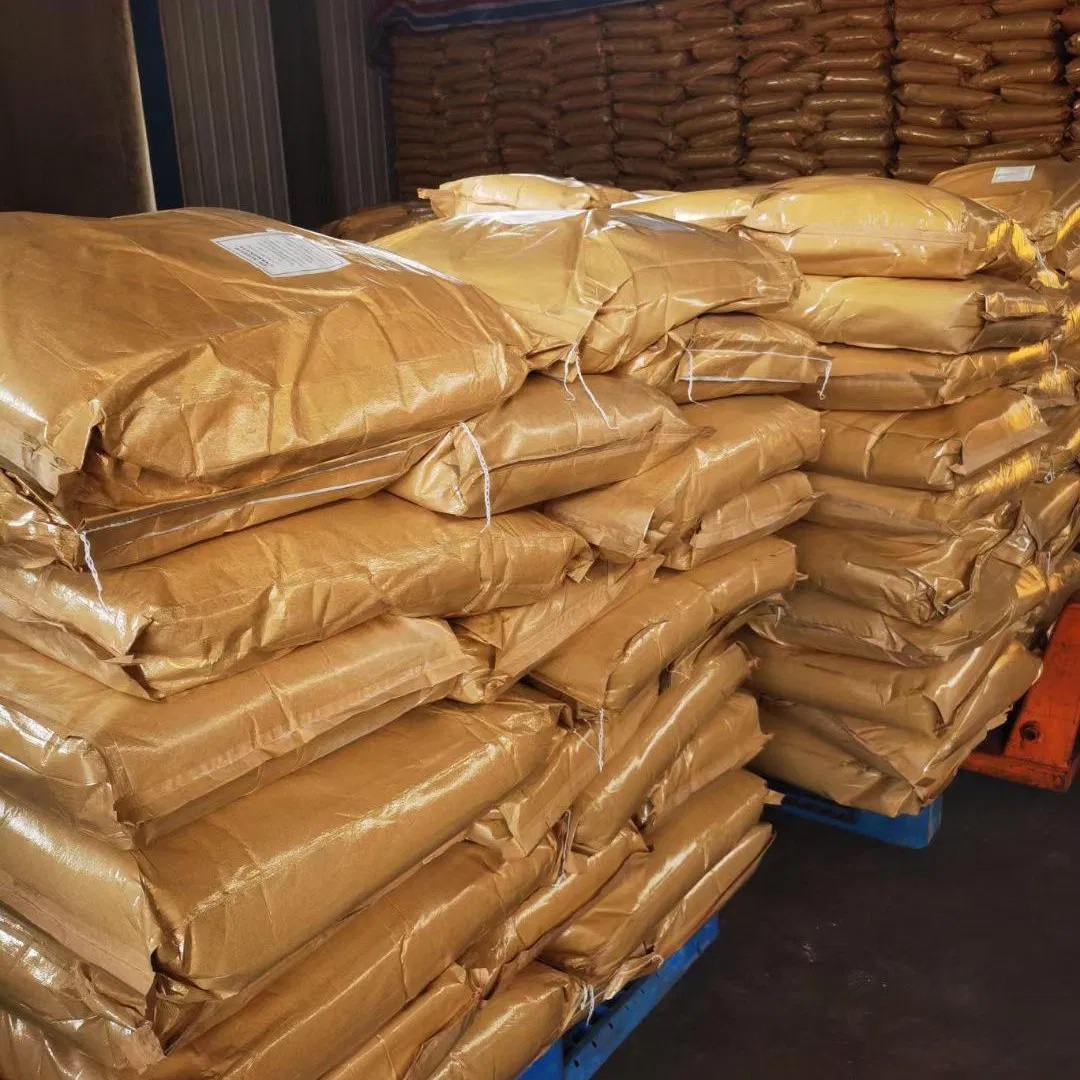
| Container Requirements | Tightly closed, moisture-proof containers (plastic bags, fiber drums, paper bags with PE liner). |
| Materials to Protect From | Moisture, high humidity, strong oxidizing agents, direct heat sources. |
| Shelf Life | 36 – 60 months (in unopened original packaging, under proper storage conditions). |
| Stability Note | Slightly hygroscopic; Keep container tightly closed after opening; Solutions may develop microbial growth if not preserved; Protect from excessive humidity. |
| Special Storage Requirements | Store in a dry, well-ventilated warehouse; Avoid exposure to rain, sun, and moisture; Opened containers must be resealed immediately. |
SECTION 17: PACKAGING OPTIONS
| Packaging Type | Quantity | Material |
|---|---|---|
| Multi-layer Paper Bag | 10 kg, 20 kg, 25 kg | PE-lined kraft paper bag (moisture-proof) |
| Plastic Bag | 5 kg, 10 kg, 25 kg | PE bag (inner-lined, sealed, moisture-proof) |
| Fiber Drum | 20 kg, 25 kg | PE-lined fiberboard drum |
| Plastic Drum | 25 kg, 50 kg | HDPE / Polypropylene (moisture-proof) |
| FIBC / Big Bag | 500 kg, 1000 kg | PE-lined, moisture-resistant PP woven bag |
| Small Pack | 1 kg, 5 kg | Foil-lined plastic bags (laboratory/sample) |
SECTION 18: TRANSPORT INFORMATION
| Parameter | Information |
|---|---|
| UN Number | Not regulated (non-hazardous) |
| Hazard Class | Not applicable |
| Packing Group | Not applicable |
| ADR/RID | Not regulated |
| IMDG Code | Not regulated (non-hazardous) |
| IATA (Air) | Not regulated (non-hazardous) |
| Marine Pollutant | No |
| Transport Temperature | Ambient temperature; Protect from moisture. |
SECTION 19: REGULATORY STATUS
| Region / Authority | Status |
|---|---|
| European Union | Food additive E414 approved by EFSA; Not classified as hazardous |
| USA (TSCA) | Listed (TSCA Inventory) |
| USA (FDA) | GRAS (Generally Recognized as Safe) – 21 CFR 184.1330; Food additive E414 |
| Turkey | Food additive E414 (Food Codex); Subject to KKDIK regulation |
| IARC | Not classified (non-toxic, non-carcinogenic) |
| NTP | Not listed |
| OSHA | Not regulated as toxic or carcinogenic substance |
| California (Prop 65) | Not listed |
| WHO JECFA | Approved (ADI: Not specified) |
| FCC (Food Chemicals Codex) | Listed |
| Halal | Yes (plant-based, with certified grades) |
| Kosher | Yes (plant-based, with certified grades) |
| Vegan | Yes (plant-based) |
SECTION 20: OTHER NAMES AND SYNONYMS
| Type | Name |
|---|---|
| Turkish Names | Arap Zamkı, Sakız Ağacı Zamkı, Akasya Gamı, Gum Arabik |
| English Names | Gum Arabic, Arabic Gum, Acacia Gum, Gum Acacia, Gum Senegal, Gum Dragon, Gumovaline, Acacia Syrup, Australian Gum, Acacia Dealbata Gum |
| Chemical Names | Acacia senegal gum; Acacia seyal gum; Acacia gum; Gummi arabicum |
| CAS Number | 9000-01-5 |
| EC Number | 203-028-3 |
| E Number | E414 |
| HS Code | 1301.20 |
| Synonyms | Arabic Gum, Acacia Gum, Gum Acacia, Senegal Gum, Gummi Arabicum, Gum Arabica, Egyptian Gum, Acacia Resin |
SECTION 21: SUMMARY TABLE
| Parameter | Value |
|---|---|
| Product | Gum Arabic (E414) |
| CAS Number | 9000-01-5 |
| Molecular Formula | Variable (complex polysaccharide) |
| Appearance | White to yellowish-white powder or granules |
| pH (10% Solution) | 4.0 – 5.0 |
| Viscosity (10%, 25°C) | 20 – 200 cP |
| Primary Function | Emulsifier, stabilizer, thickener, binder |
| Main Application Areas | Food (soft drinks, confectionery), beverages, pharmaceutical, cosmetics, inks, textiles, paper, ceramics |
| Shelf Life | 36 – 60 months |
| GHS Signal Word | NONE (not classified as hazardous) |
| UN Number | Not regulated |
| Special Properties | Natural plant-based; Vegan; Cold water soluble; Excellent emulsifier; Prebiotic soluble fiber; Very low viscosity; FDA GRAS |
SECTION 22: CRITICAL WARNINGS AND BEST PRACTICES
CRITICAL WARNINGS:
-
Not classified as hazardous under GHS. Non-toxic, non-carcinogenic. FDA GRAS status.
-
Food additive E414 – Approved by EFSA, FDA, and WHO JECFA.
-
Slightly hygroscopic – absorbs moisture from air. Store in tightly closed, moisture-proof containers.
-
Dust may cause mechanical irritation to eyes, skin, and respiratory system. Use appropriate dust control measures.
-
Combustible (organic material). Keep away from open flames and high heat. Dust cloud may form explosive mixture.
-
Excellent emulsifier – unique protein-polysaccharide structure; Best natural emulsifier for oil-in-water emulsions.
-
Low viscosity – even at high concentrations (up to 40%); Allows high loading without excessive viscosity.
-
Wide pH stability – stable from pH 2-10; Does not precipitate in acidic conditions.
-
Prebiotic effects – fermented by gut bacteria; May cause bloating and gas at high doses.
-
Vegan and plant-based – suitable for vegan, halal, and kosher applications.
BEST PRACTICE RECOMMENDATIONS:
Beverage Emulsions: Use as emulsifier for flavor oils; Dosage 50-150 g/L; Dissolve in water before adding oil; High-shear mixing required; Homogenize for stable emulsion; Used in soft drinks, flavored waters.
Confectionery: Use as binder and emulsifier in hard candies, marshmallows, chewing gum; Dosage 10-30 g/kg; Dissolve in water before cooking; Improves texture and stability.
Pharmaceuticals: Use as tablet binder (2-5%); Granulate with active ingredients; Used in cough syrups, lozenges, pastilles; Excellent binding properties.
Cosmetics: Use as stabilizer and thickener in creams and lotions; Dosage 1-5%; Dissolve in aqueous phase before emulsification; Provides smooth texture; Natural alternative to synthetic emulsifiers.
Coatings and Films: Use as film former; Dosage 1-3%; Forms transparent, glossy films; Used in food coatings and edible films.
Wine Clarification: Use as clarifying agent; Dosage 0.5-2 g/L; Removes tannins and suspended particles; Improves clarity and stability.
Handling: Use in well-ventilated areas; Avoid dust formation; Use dust masks (N95/FFP2) when handling powder; Use gloves and safety goggles.
Personal Protective Equipment: Dust mask (N95/FFP2 or higher), safety goggles, protective gloves (nitrile, neoprene). Not required for solution handling.
Hygiene: Wash hands thoroughly after handling; Do not eat, drink, or smoke while using.
Storage: Store in tightly closed, moisture-proof containers; Store in a cool, dry, well-ventilated area; Protect from moisture, rain, sunlight, and high humidity; Opened packages should be resealed immediately; Shelf life: 36-60 months under proper conditions.
Spill Management: Sweep or vacuum (HEPA) and place in suitable sealed container; Avoid dust formation; Do not allow entry into drains or waterways.
Disposal: Dispose of in accordance with local, regional, and national regulations; Non-hazardous waste; Biodegradable; Can be incinerated in compliance with regulations.
PREBIOTIC EFFECTS (HEALTH BENEFITS):
Gum Arabic is a rich source of soluble dietary fiber with significant prebiotic effects:
-
Prebiotic Mechanism: Not digested in the upper gastrointestinal tract; Fermented by beneficial gut bacteria (Bifidobacteria, Lactobacilli); Produces short-chain fatty acids (SCFA) – acetate, propionate, butyrate.
-
Health Benefits: Supports gut microbiome health; Improves digestive function; May help lower cholesterol levels; May help regulate blood sugar; Promotes satiety (weight management); Supports immune function.
-
Recommended Intake: 10-30 g/day (as dietary fiber).
-
Side Effects: May cause bloating, gas, and abdominal discomfort (at high doses or initial use); Start with low doses (5 g/day) and gradually increase.
EMULSIFICATION MECHANISM:
Gum Arabic is an excellent emulsifier due to its unique structure:
-
Components: Polysaccharide fraction (provides steric stabilization); Protein fraction (adsorbs at oil-water interface, provides surface activity).
-
Mechanism: Protein fraction adsorbs at oil-water interface; Polysaccharide fraction extends into aqueous phase; Steric stabilization prevents droplet coalescence; Stable oil-in-water emulsions are formed.
-
Advantages: Stable over wide pH range (2-10); Stable at high temperatures; Stable in high salt concentrations; Natural and non-toxic.
-
Applications: Flavor emulsions (soft drinks); Essential oil emulsions; Encapsulation of lipophilic compounds.
LEGAL DISCLAIMER:
The information provided in this document is based on our current knowledge and experience and is presented in good faith. However, as all conditions of use are beyond our control, it does not constitute a binding specification or warranty. This Technical Data Sheet is for informational purposes only. Users are responsible for testing the suitability for their own applications. For complete safety, storage, use, handling, waste, and regulatory compliance information, please refer to the official Safety Data Sheet (SDS/MSDS) provided by the manufacturer/supplier.