We unleash your business potential by maximize the business innovation.
Send EmailSodium Alginate, Aljinat, Sodium Polymannuronate, E401, 14984-39-5, 9005-38-3
SODIUM ALGINATE
PRODUCT IDENTIFIER INFORMATION
| Parameter | Information |
|---|---|
| Product Name | Sodium Alginate |
| Chemical Name | D-Galacturonic Acid (Sodium Salt); Alginic Acid Sodium Salt |
| CAS Number | 9005-38-3 (polymer) / 14984-39-5 (monomer unit) |
| EC Number (EINECS) | 232-680-1 (9005-38-3) |
| Food Additive Code | E401 |
| Molecular Formula (Monomer) | (C₆H₇NaO₆)ₙ |
| Molecular Weight (Monomer) | 216.12 g/mol (monomer unit); polymer (variable) |
SECTION 1: CHEMICAL IDENTITY AND DESCRIPTION
| Parameter | Information |
|---|---|
| Chemical Name | Alginic Acid Sodium Salt; D-Galacturonic Acid Sodium Salt |
| Synonyms | Sodium Alginate, Algin, Kelgin, Amnucol, Natriumglucuronat, Aljinat, Sodium Polymannuronate |
| CAS Number (Polymer) | 9005-38-3 |
| CAS Number (Monomer) | 14984-39-5 |
| EC Number (EINECS) | 232-680-1 |
| Food Additive Code | E401 |
| INS Number | 401 |
| Molecular Formula (Monomer) | C₆H₇NaO₆ |
| Molecular Weight (Monomer) | 216.12 g/mol |
| Chemical Class | Natural polysaccharide (alginic acid sodium salt) |
| Source | Extracted from cell walls of brown algae (Phaeophyceae) |
| History | Patented in 1881 by Edward C.C. Stanford |
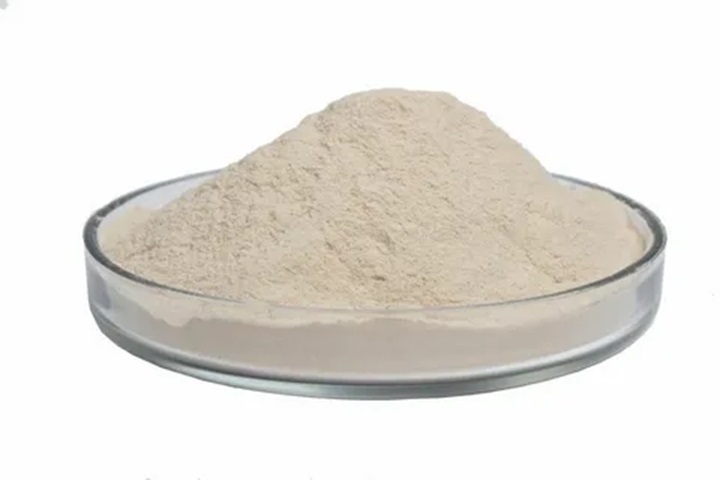
| Physical State (20°C) | Solid (white to yellowish fibers or powder) |
| Odor | Practically odorless |
| Taste | No distinguishable taste |
SECTION 2: PHYSICAL AND CHEMICAL PROPERTIES
| Property | Value | Test Method |
|---|---|---|
| Appearance | White to yellowish fibers or powder | Visual |
| Odor | Practically odorless | Olfactometric |
| Taste | No distinguishable taste | Sensory |
| pH (10 mg/mL H₂O solution, 25°C) | 6.0 – 8.0 | pH Meter |
| Solubility in Water | Slowly soluble; forms viscous colloidal solution | Visual |
| Solubility in Ethanol | Insoluble | General Method |
| Solubility in Ether | Insoluble | General Method |
| Solubility in Organic Solvents | Insoluble | General Method |
| Viscosity (1% solution, 25°C) | 100 – 1,000 cP (grade dependent) | Brookfield |
| Gel Formation | Forms thermally irreversible gel with Ca²⁺ ions at room temperature | Visual |
| Stability | Incompatible with strong bases, strong acids, and oxidizing agents | |
| Flammability | Combustible | |
| Hygroscopicity | Moderate |
SECTION 3: CHEMICAL PROPERTIES AND REACTIVITY
| Parameter | Information |
|---|---|
| Chemical Character | Natural anionic polysaccharide; sodium salt of alginic acid |
| Stability | Stable under normal conditions |
| Gelation Mechanism | Forms egg-box structured gel with divalent cations (Ca²⁺, Ba²⁺, Sr²⁺) |
| Calcium Reactivity | Instant gel formation upon contact with calcium ions; heat-independent |
| Incompatible Materials | Strong acids, strong bases, strong oxidizing agents, quaternary ammonium compounds |
| Chelation | Binds metal ions; chelating properties |
| Thermal Decomposition | Above 200°C: CO, CO₂, Na₂O |
| Hazardous Polymerization | Does not occur |
SECTION 4: HYDROCOLLOIDS COMPARISON
| Property | Sodium Alginate (E401) | Agar (E406) | Carrageenan (E407) | Pectin (E440) | Xanthan Gum (E415) |
|---|---|---|---|---|---|
| CAS Number | 9005-38-3 | 9002-18-0 | 9000-07-1 | 9000-69-5 | 11138-66-2 |
| Source | Brown algae | Red algae | Red algae | Citrus/apple | Fermentation |
| Ionic Character | Anionic | Non-ionic | Anionic | Anionic | Anionic |
| Gelation Trigger | Ca²⁺ ions | Temperature | K⁺/Ca²⁺ + Temp | Sugar + Acid + Heat | No gel (thickener) |
| Gel Type | Thermo-irreversible | Thermo-reversible | Thermo-reversible | Thermo-reversible | Non-gelling |
| pH Stability | 4.0 – 10.0 | 2.5 – 10.0 | 4.0 – 10.0 | 2.8 – 5.0 | 3.0 – 12.0 |
| Primary Use | Gelation, thickening, wound care | Gelling, microbiology | Dairy, meat | Jams, jellies | Suspension, thickening |
SECTION 5: FUNCTIONAL PROPERTIES AND MECHANISM OF ACTION
| Property | Description |
|---|---|
| Thickening Agent | Forms highly viscous solutions at low concentrations; pseudoplastic flow behavior |
| Gelling Agent | Forms heat-stable, thermo-irreversible gels with divalent cations (especially Ca²⁺) |
| Emulsifier/Stabilizer | Prevents phase separation in emulsions and suspensions |
| Film Forming | Forms flexible, transparent films; useful in wound dressings and edible coatings |
| Encapsulation Matrix | Forms microspheres and hydrogels for cell immobilization and drug delivery |
| Water Holding | High water-binding capacity; prevents ice crystal growth in frozen foods |
| Chelating Agent | Binds metal ions; useful in biomedical and industrial applications |
| Biocompatible | Natural, non-toxic, biodegradable; safe for biomedical applications |
SECTION 6: PRIMARY APPLICATION AREAS
| Sector / Application | Use | Typical Concentration / Dosage |
|---|---|---|
| Food - Ice Cream | Stabilizer, prevents ice crystal growth, creamy texture | 0.1 – 0.5% |
| Food - Bakery Fillings, Toppings | Thickener, stabilizer | 0.2 – 0.8% |
| Food - Jellies, Desserts | Gelling agent (with Ca²⁺) | 0.3 – 1.0% |
| Food - Restructured Foods (Meat, Fish) | Binding agent | 0.5 – 2.0% |
| Food - Sugar-Free Tablets | Binder (alternative to Gum Arabic) | 1.0 – 3.0% |
| Pharmaceutical - Wound Dressings | Acute/chronic wound treatment | 2.0 – 5.0% |
| Pharmaceutical - Oral Suspensions | Active ingredient for reflux esophagitis, heartburn | 2.5 – 5.0% |
| Pharmaceutical - Indigestion Tablets | Active ingredient | 200 – 500 mg/tablet |
| Pharmaceutical - Dental Impression Materials | Gelling agent | 10 – 15% |
| Pharmaceutical - Microspheres/Nanoparticles | Drug delivery encapsulation | Variable |
| Cosmetic - Creams, Lotions | Thickener, stabilizer | 0.1 – 1.0% |
| Cosmetic - Peel-Off Masks | Film-forming agent | 1.0 – 3.0% |
| Industrial - Hydrogels | Polyelectrolyte, cell encapsulation | 1.0 – 5.0% |
| Industrial - Textile Printing | Thickener for printing pastes | 1.0 – 3.0% |
SECTION 7: QUALITY SPECIFICATIONS (FOOD GRADE - E401)
| Parameter | Specification | Test Method |
|---|---|---|
| Appearance | White to yellowish fibers or powder | Visual |
| Odor | Practically odorless | Olfactometric |
| pH (10 mg/mL solution, 25°C) | 6.0 – 8.0 | pH Meter |
| Loss on Drying (105°C, 2 hours) | ≤ 15.0% | Gravimetric |
| Ash Content | 18 – 27% (on dry basis) | Gravimetric (600°C) |
| Calcium (Ca) | ≤ 1.5% | AAS |
| Lead (Pb) | ≤ 3 ppm | ICP-MS |
| Arsenic (As) | ≤ 3 ppm | ICP-MS |
| Mercury (Hg) | ≤ 1 ppm | ICP-MS |
| Cadmium (Cd) | ≤ 1 ppm | ICP-MS |
| Heavy Metals (as Pb) | ≤ 20 ppm | ICP-MS |
| Total Microbial Count | ≤ 5,000 CFU/g | ISO 4833 |
| Yeast and Mold | ≤ 500 CFU/g | ISO 21527 |
| E. coli | Negative in 10g | ISO 16649 |
| Salmonella spp. | Negative in 25g | ISO 6579 |
SECTION 8: VISCOSITY GRADES
| Grade | Viscosity (1% solution, 25°C) | Typical Application |
|---|---|---|
| Very Low | 10 – 50 cP | Sugar-free tablets, binder |
| Low | 50 – 150 cP | Food stabilizer, emulsifier |
| Medium | 150 – 400 cP | Ice cream, bakery fillings |
| High | 400 – 800 cP | Thickener, gelling agent |
| Very High | 800 – 1,200+ cP | Dental impression, special applications |
SECTION 9: TOXICOLOGICAL PROFILE
| Parameter | Value |
|---|---|
| Acute Oral Toxicity (LD50, Rat) | > 5,000 mg/kg (very low toxicity) |
| Acute Dermal Toxicity (LD50, Rabbit) | > 2,000 mg/kg |
| Skin Irritation | Not irritating |
| Eye Irritation | Mild mechanical irritation (dust) |
| Respiratory Irritation | Inhalation of dust may cause mechanical irritation |
| Skin Sensitization | Not sensitizing |
| Carcinogenicity | Not classified (IARC, NTP) |
| Mutagenicity | Negative in standard tests |
| Reproductive Toxicity | No known adverse effects |
| ADI (Acceptable Daily Intake) | Not limited (JECFA) |
| GRAS Status | Recognized as GRAS by FDA (21 CFR 184.1724) |
SECTION 10: GHS CLASSIFICATION AND LABELING
GHS Classification (compliant with 1272/2008/EC):
| Hazard Class | Category | H-Statement |
|---|---|---|
| Not classified | - | Not classified as hazardous according to current regulations |
Signal Word: No signal word (not classified as hazardous)
Hazard Pictograms: No pictograms required
Precautionary Statements:
| Code | Statement |
|---|---|
| P261 | Avoid breathing dust |
| P280 | Wear protective goggles (in dusty environments) |
SECTION 11: FIRST AID MEASURES
| Exposure Route | Action to Take |
|---|---|
| Inhalation | Move to fresh air. Seek medical attention if respiratory irritation persists. |
| Skin Contact | Wash with plenty of water and soap. |
| Eye Contact | Rinse immediately with plenty of water for at least 15 minutes. Remove contact lenses if present. Seek medical attention if irritation persists. |
| Ingestion | Rinse mouth with water. Drink plenty of water. Seek medical attention if you feel unwell. |
SECTION 12: FIREFIGHTING MEASURES
| Parameter | Information |
|---|---|
| Fire Hazard | Combustible organic dust |
| Hazards During Fire | CO, CO2, Na2O |
| Suitable Extinguishing Media | Water mist, CO2, dry chemical powder, foam |
| Special Protective Equipment | Self-contained breathing apparatus (SCBA), full protective clothing |
| Special Precautions | Prevent dust accumulation; avoid sparks |
SECTION 13: STORAGE AND SHELF LIFE
| Parameter | Information |
|---|---|
| Storage Conditions | Cool (15-25°C), dry, well-ventilated area; protect from direct light |
| Container Requirements | Tightly closed, moisture-proof containers |
| Keep Away From | Strong acids, strong bases, strong oxidizing agents, moisture |
| Shelf Life | 36 months (unopened original packaging under appropriate storage conditions) |
| Stability Note | Hygroscopic; protect from moisture; stable under normal conditions |
SECTION 14: PACKAGING OPTIONS
| Packaging Type | Quantity | Material |
|---|---|---|
| Kraft bag with PE inner liner | 25 kg | Kraft paper + PE |
| PP woven bag with PE inner liner | 25 kg | PP woven + PE |
| Fiber drum | 25-50 kg | Fiberboard + PE |
| Big-Bag | 500-1000 kg | Polypropylene (with PE inner liner) |
SECTION 15: TRANSPORTATION INFORMATION
| Parameter | Information |
|---|---|
| UN Number | Not regulated (not hazardous) |
| Hazard Class | Not applicable |
| Packing Group | Not applicable |
| ADR/RID | Not regulated |
| IMDG Code | Not regulated |
| IATA (Air) | Not regulated |
| Marine Pollutant | No |
| Transport Temperature | Ambient; protect from moisture |
SECTION 16: REGULATORY STATUS
| Region / Authority | Status |
|---|---|
| European Union | Food additive E401; approved for use quantum satis |
| USA (FDA) | GRAS (21 CFR 184.1724); approved as food additive |
| JECFA (FAO/WHO) | ADI not limited |
| Codex Alimentarius | Listed in GSFA; INS 401 |
| Turkey | Approved under Turkish Food Codex Regulation on Food Additives |
| Halal / Kosher | Available |
| Vegetarian/Vegan | Suitable (plant-derived from brown algae) |
SECTION 17: OTHER NAMES AND SYNONYMS
| Type | Name |
|---|---|
| Common Names | Sodium Alginate, Algin, Kelgin, Amnucol, Sodium Polymannuronate |
| Chemical Names | Alginic Acid Sodium Salt, D-Galacturonic Acid Sodium Salt, Natriumglucuronat |
| Food Additive Code | E401, INS 401 |
| CAS Number (Polymer) | 9005-38-3 |
| CAS Number (Monomer) | 14984-39-5 |
| EC Number | 232-680-1 |
SECTION 18: ALGINATE FORMS COMPARISON
| Property | Sodium Alginate (E401) | Potassium Alginate (E402) | Ammonium Alginate (E403) | Calcium Alginate (E404) | Propylene Glycol Alginate (E405) |
|---|---|---|---|---|---|
| Counter Ion | Na⁺ | K⁺ | NH₄⁺ | Ca²⁺ | Propylene Glycol |
| Solubility | Cold/hot water soluble | Cold/hot water soluble | Cold/hot water soluble | Insoluble | Cold water soluble |
| Gel Formation | With Ca²⁺ | With Ca²⁺ | With Ca²⁺ | Pre-gelled | No gel (thickener) |
| Primary Use | General food, pharma | Low-sodium applications | Specialty food | Immobilization | Acidic food, beverages |
SECTION 19: SUMMARY TABLE
| Parameter | Value |
|---|---|
| Product | Sodium Alginate |
| CAS Number | 9005-38-3 / 14984-39-5 |
| Food Additive Code | E401 |
| Molecular Formula (Monomer) | C₆H₇NaO₆ |
| Molecular Weight (Monomer) | 216.12 g/mol |
| Source | Brown algae (Phaeophyceae) |
| Appearance | White to yellowish fibers or powder |
| pH (10 mg/mL solution) | 6.0 – 8.0 |
| Primary Function | Thickening, gelling, stabilizing, film-forming, encapsulation |
| Shelf Life | 36 months |
| GHS Signal Word | Not classified |
SECTION 20: CRITICAL WARNINGS AND BEST PRACTICES
CRITICAL WARNINGS:
-
Moisture Sensitivity: Hygroscopic; absorbs moisture from air. Store in tightly closed, moisture-proof containers.
-
Dust Explosion: Combustible organic dust; prevent dust accumulation and avoid ignition sources.
-
Calcium Reactivity: Forms gels instantly upon contact with calcium ions; avoid contamination with calcium sources during storage and handling.
-
Acid Incompatibility: Incompatible with strong acids; may precipitate as alginic acid at pH <3.5.
-
Slow Hydration: Dissolves slowly in water; use high-shear mixing for complete hydration.
BEST PRACTICE RECOMMENDATIONS:
-
Hydration: Disperse gradually in vortex of vigorously stirred water to prevent lumping; use warm water (40-50°C) for faster dissolution.
-
Gel Preparation: For calcium alginate gels, use controlled calcium release systems (calcium sulfate, calcium carbonate with acid) for uniform gelation.
-
Food Applications: Use at 0.1-2.0% depending on desired functionality; typical ice cream usage 0.1-0.5%.
-
Pharmaceutical: Use pharmaceutical grade for wound dressings and oral suspensions; ensure sterility for medical applications.
-
Storage: Store in original sealed containers in a cool, dry environment away from moisture and heat sources.
LEGAL DISCLAIMER:
The information provided in this document is presented in good faith based on our current knowledge and experience; however, since all usage conditions are beyond our control, it does not constitute a binding specification or warranty. This Technical Data Sheet is for informational purposes only. Users are obligated to test the suitability for their own applications. For complete safety, storage, handling, transportation, disposal, and regulatory compliance information, refer to the official Safety Data Sheet (SDS/MSDS) provided by the manufacturer/supplier.